Visa
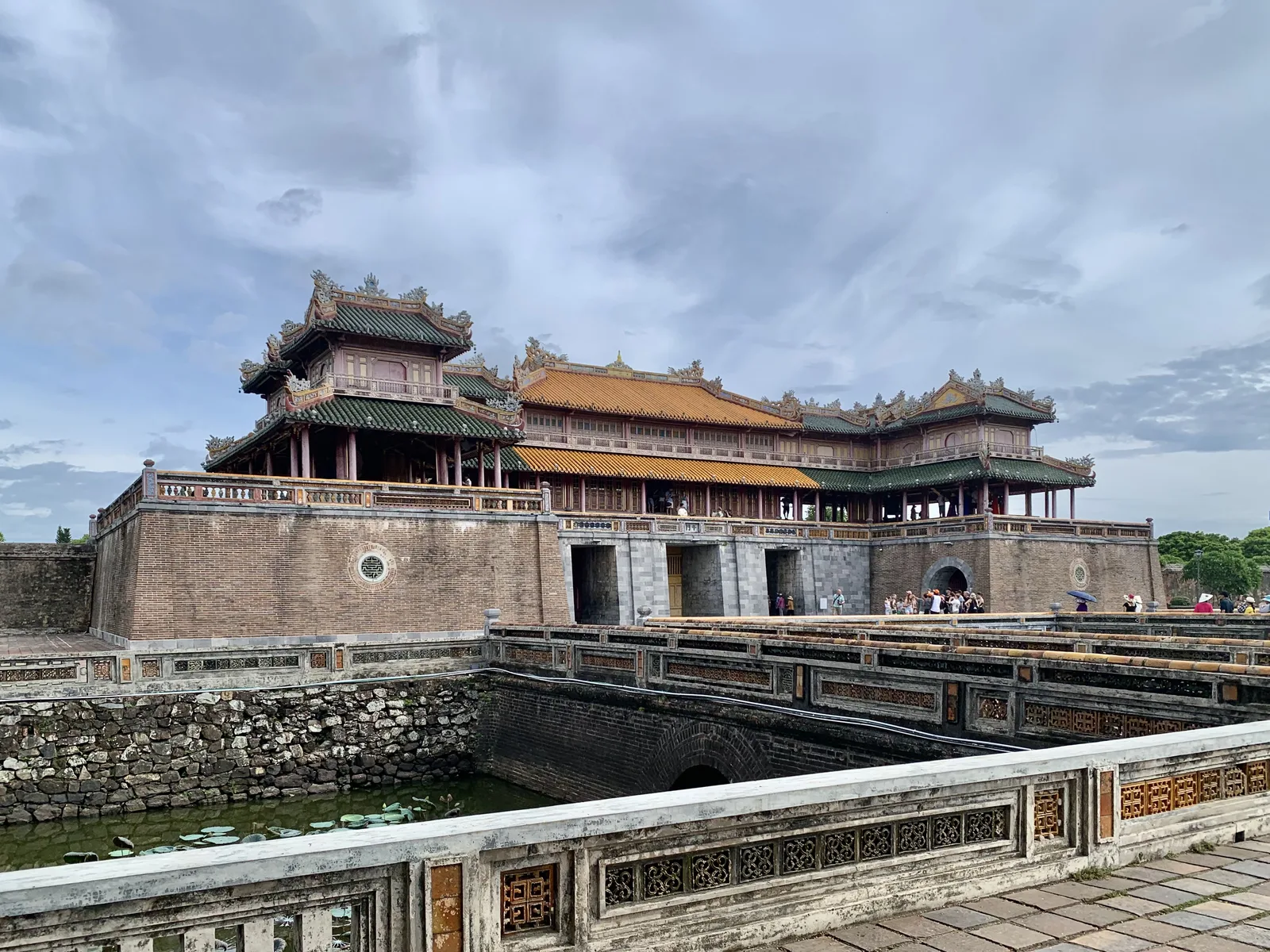
Hue deserves time beyond the Imperial City
Huế makes its strongest impression when you give the monuments room to breathe. A morning among palace courtyards, a small plate of rice cakes, a walk beside the Perfume River and a tomb visit in the wooded outskirts offer different views of the former capital. The city rewards attention to architecture, food and everyday streets, rather than a hurried circuit that treats each emperor’s resting place as another interchangeable stop.
The national tourism introduction to Huế brings together imperial history, Buddhist sites, regional cooking and countryside excursions. For a longer stay, investigate housing, services and seasonal flooding separately from the appeal of a riverside holiday. VisaWand’s Vietnam country guide provides the national context for both kinds of trip.
Distinguish the heritage centre from the wider municipality
“Huế” can describe the familiar urban centre or a much larger administrative territory. The city government portal lists 40 commune-level units under the June 2025 reorganisation, including 21 wards and 19 communes. A property’s Huế address therefore does not establish that it is a short walk from the Imperial City or the central restaurants.
Use the river, the actual street and the attraction entrance when comparing locations. The walled citadel area occupies the north-bank side of central sightseeing, while Lê Lợi and much visitor accommodation lie across the river. Kim Long, the royal tombs and the coast require their own journey planning. Older material may still name previous districts or wards. The Vietnam location directory helps locate other VisaWand destination pages.
Understand what UNESCO recognition covers
UNESCO’s Complex of Huế Monuments listing records the capital established in 1802 and its role under the Nguyễn dynasty until 1945. Inscribed in 1993, the property connects imperial buildings with a wider cultural landscape shaped by the Perfume River and surrounding hills.
Within the citadel, distinguish the larger defended city from the Imperial City and the former Forbidden Purple City. That layered layout helps explain what you are walking through. UNESCO also describes war damage and conservation, so expect a mixture of surviving structures, restored buildings and spaces whose meaning needs interpretation. A guide or carefully read site information can turn an attractive courtyard into a more intelligible account of court life, administration and ceremony.
Give the Imperial City an unhurried morning
Start with the Imperial City when you are fresh, particularly in hot weather. Choose a route through its gates, courtyards and principal buildings, then leave space for the smaller details: roof decoration, inscriptions, the relationship between successive enclosures and the contrast between restored and damaged areas.
The city’s published monument price table lists adult admission at 200,000 dong and 40,000 dong for children aged seven to twelve. Confirm the applicable category and any concession at purchase. Check current opening, last admission and areas affected by work before planning around a fixed finishing time. Ask about the accessible route if steps or uneven surfaces matter. Dress respectfully for religious and ceremonial spaces, follow photography signs and keep away from closed restoration areas.
Compare combination tickets with the places you will actually visit
The same government table lists the Minh Mạng, Tự Đức and Khải Định tombs at 150,000 dong each for adults and 30,000 dong for children aged seven to twelve. Its listed three-site combinations pair the Imperial City with two of those tombs for 420,000 dong per adult, compared with 500,000 dong bought separately. That makes an 80,000-dong saving for that exact plan.
The four-site combination is listed at 530,000 dong and the all-monument option at 600,000 dong. Buy according to your interests, available days and transport, rather than the number of places printed on a ticket. Confirm which sites are included, how long the ticket remains valid and whether separate entries can be spread across days. The price page labels its individual schedule from January 2026 and the combination schedule from 2023; check the final published offer before paying.
Read the ticket conditions before completing a purchase
Use the Hue Monuments Conservation Centre’s official e-ticket service or an authorised ticket counter. Select the actual monument or route, visitor category and quantity, then check what the transaction covers. An admission purchase is different from a guided tour, transport booking, performance or meal.
The centre’s online transaction conditions state that successfully paid tickets ordinarily cannot be cancelled or changed through the website. They also describe support for a payment deducted without a recorded successful booking. Read the terms shown for your transaction rather than assuming a general right to reschedule after a weather change. The conditions ask visitors to carry identification, or an image showing identification and date of birth, for category checks. If your plans are uncertain, clarify the validity and available purchase options before committing to several sites.
Choose the royal tombs for their differences
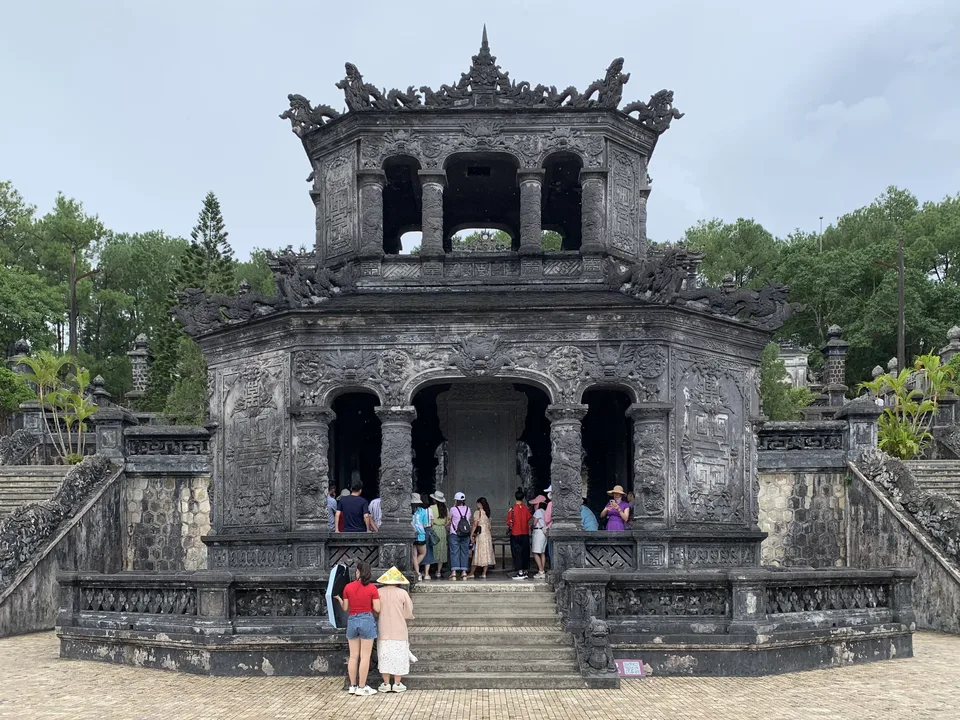
The national tourism guide to Huế’s royal tombs makes the contrast clear. Minh Mạng offers an ordered sequence of architecture, ponds and wooded landscape. Tự Đức has a garden-and-lake setting associated with the emperor’s interest in poetry. Khải Định climbs a hillside through successive platforms, with a striking contrast between its exterior and richly decorated interiors.
For a first visit, choose two that genuinely interest you instead of attempting every tomb. Discuss the route with your driver and agree the waiting time and return address. Khải Định’s ascent deserves particular consideration if stairs are difficult; a ticket price does not describe physical accessibility. Allow time to sit, look and read. Keep the Imperial City on a separate substantial session if you want to examine its buildings properly.
Make time for Thien Mu and the river’s quieter side
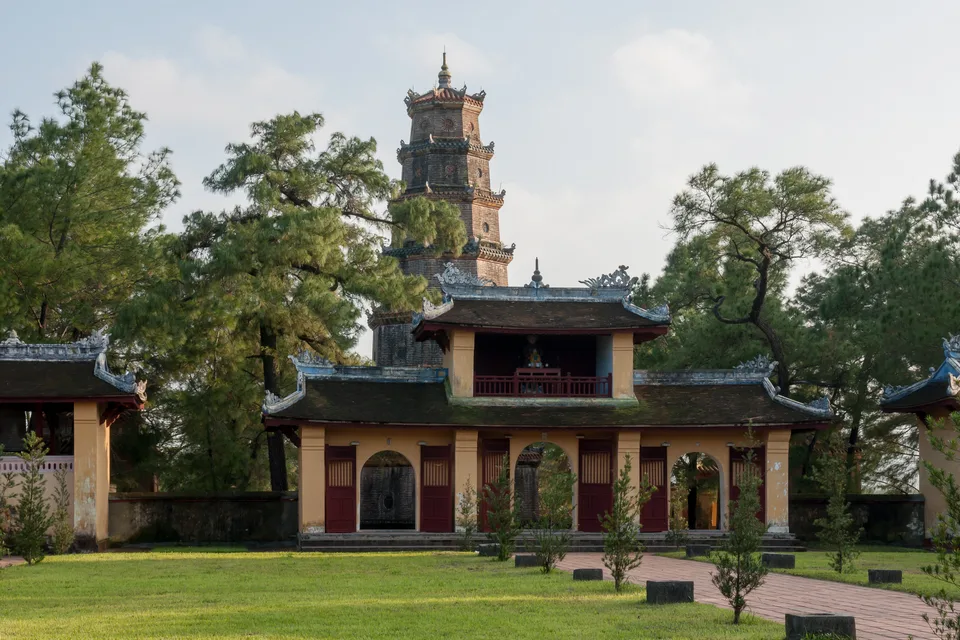
Thiên Mụ Pagoda’s seven-tiered tower is one of Huế’s most recognisable features, but the setting deserves more than a brief photograph. Treat it as a religious place, keeping voices low and following directions about visitor areas.
The tourism authority’s cultural itinerary also points towards Kim Long’s garden houses and Từ Hiếu’s Buddhist setting. These can provide a different pace from the palace and tombs. For a garden-house visit, establish that visitors are welcome, ask about admission and agree any hosted experience; a sign or an attractive gate is not permission to enter a private home. Confirm openings directly. If you hire a bicycle or cyclo for this area, agree the route and return, and consider the weather and your comfort in traffic.
Add a smaller museum or palace when it suits the day
A smaller visit can help balance a large outdoor monument session. The Hue Museum of Royal Antiquities is an option for objects and courtly material culture, while An Định offers a different royal residence setting. Choose according to your interests and the day’s opening arrangements, rather than assuming every museum or palace is covered by one entrance purchase.
The government table lists each at 50,000 dong for adults and a joint museum–An Định option at 80,000 dong. Confirm the actual combination at purchase, including current access and any exhibition-specific conditions. Ask about photography and bags before entering. For travellers who tire after a long morning, one focused indoor or smaller-site visit can be more rewarding than another lengthy drive.
Use the river to organise a central walk
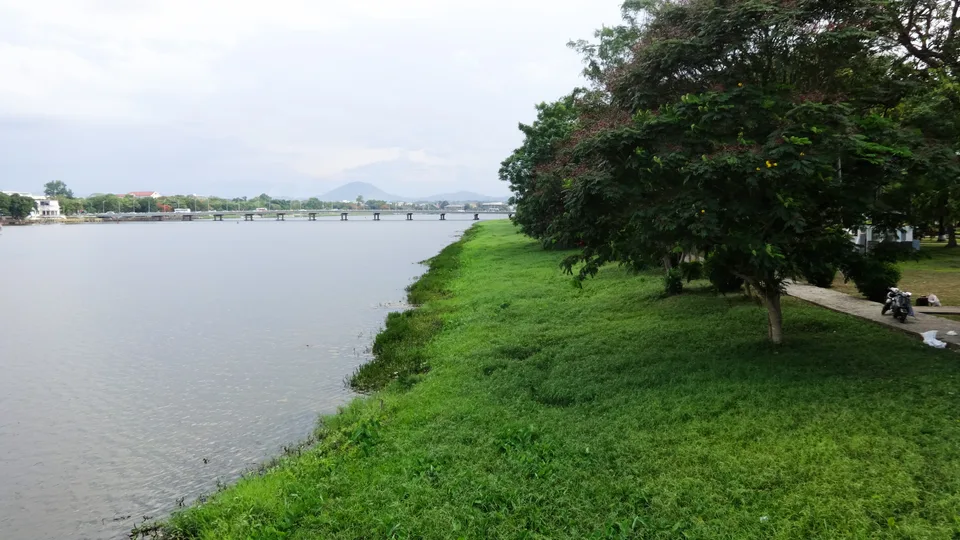
The Perfume River gives a central stay a useful orientation. Choose a manageable section of the banks and a bridge crossing, then connect it with a café, market or neighbourhood walk. Check pedestrian access on your actual route instead of assuming the quickest road connection is also the most comfortable walk.
River activities need their own booking questions. Before paying for a boat trip, establish the departure point, duration, route, passenger arrangements and whether a performance, meal or monument transfer is included. A river cruise does not automatically deliver you to every outlying tomb. Ask what happens in poor weather and allow time to return to your accommodation. Follow local advice about the water and suspend the outing if conditions or official instructions make it unsuitable.
Stay near the services you will use each evening
For a first visit, a central hotel with straightforward access to restaurants and river walks is a practical starting point. Compare both sides of the river against your own programme: proximity to the citadel may suit early heritage visits, while a south-bank base can work well for meals, other services and onward travel. Check the route to a real entrance, not just a monument’s map label.
Ask about street noise, air conditioning, lift access, breakfast hours and luggage storage. A room overlooking a lively street has a different trade-off from one at the back of the same building. If arriving on an overnight train, agree early check-in or a place to rest. Compare the full room bill, including taxes and transfers.
Compare a riverside hotel with a garden resort
Azerai La Residence illustrates a riverfront hotel stay, with its official contact information placing the property at 5 Lê Lợi. Check the room category, view and facilities you intend to use; a riverfront address does not guarantee that every bedroom looks over the water.
Pilgrimage Village, at 130 Minh Mạng Road, offers a garden resort setting farther from the walking-street area. Its published information describes a complimentary scheduled town shuttle, subject to seats and advance booking. Compare those departures with dinner and sightseeing plans, and price private transfers when the schedule does not suit. The property’s different pages use different reference points for “city centre”, so assess the exact destination. Choose a resort when time in the grounds matters; choose central convenience when you expect to be out most of the day.
Plan Phu Bai arrival around the final destination
Phú Bài Airport serves Huế, but the distance varies with your accommodation. The city government’s airport introduction places the Citadel roughly 18 kilometres away and Đông Ba Market around 16 kilometres away. Those reference points are more useful than one universal airport-to-Huế estimate.
Arrange a transfer using the flight number, passenger count, luggage and precise hotel address. Ask whether the quote includes tolls, parking and waiting, and how a delayed flight is handled. At arrival, follow the airport’s marked transport arrangements and confirm the destination and payment basis before departing. If considering a bus, check that the service reaches the terminal itself and operates at your arrival time; a route passing an airport intersection is not the same promise.
Consider rail for the Da Nang connection
Huế is a stop on the north–south railway, and Đà Nẵng is a useful onward connection. Use Vietnam Railways’ timetable and fare information to compare a date and train that fit your trip. Distinguish the advertised heritage-themed service from other trains using the route; do not assume the same departure, carriage experience or fare applies to all of them.
Choose a daylight journey if seeing the coastal landscape is a priority. Check seat or berth type, baggage, cancellation terms and the station named on the ticket. Include the transfer at both ends, especially if your next accommodation is in Hội An rather than beside Đà Nẵng station.
Use buses and hired transport with clear expectations
The city portal’s bus information describes routes linking the central area with bus stations, Thuận An and the direction of Khải Định’s tomb. It also names an airport intersection on a Phú Bài route. That list is useful for understanding the network, but it does not establish today’s timetable, terminal access or the fare for your journey. Confirm the actual stop, last return and current operation locally.
For a driver, agree the complete itinerary, waiting time and final drop-off in writing. Avoid pricing an outing only by the number of monuments: distances and waiting can change the cost substantially. If considering a motorbike, check your legal entitlement, insurance and experience before hiring. For a bicycle, assess heat, rain, traffic and the return distance.
Let food provide a second reason to stay
Huế’s food is worth a programme of its own, with small dishes that invite trying several textures and preparations. The national tourism food guide describes bánh khoái as a crisp stuffed rice-flour crêpe, bánh bèo as small steamed rice cakes and bánh bột lọc as translucent tapioca parcels. Pork, shrimp, fish sauce and other animal ingredients appear in dishes whose names alone may not reveal them.
Try a modest selection before ordering another round, and ask about the serving size. Explain allergies clearly, including peanuts, shellfish and sauces. A dish looking vegetable-based is not enough evidence that it is suitable for a vegetarian diet. Ask about the broth and toppings when ordering noodles. For a more formal meal, establish the menu, number of courses and complete price beforehand.
Explore Dong Ba with a practical shopping plan
Đông Ba combines the interest of a working market with opportunities to understand the city’s food and everyday trade. Approach it as a place to look, ask and compare rather than a list of souvenirs you must buy. Confirm the price and unit before accepting an order, especially for produce, packaged food or a set of small dishes.
For gifts, check ingredients, expiry dates and sealed packaging. Ask about the maker and materials of craft items instead of assuming everything associated with Huế was produced locally. Keep a payment method suitable for smaller purchases and enough money for the return journey. If you want a hosted food or shopping visit, clarify who leads it, what tastings are included and how dietary restrictions are handled.
Build a budget from admissions, journeys and the room
Monument admission is only one part of a Huế budget. Add accommodation for your actual dates, arrival and departure transfers, local travel, meals and any guiding or performance. Compare a packaged outing with independently arranged visits using the same inclusions, rather than assuming a lower headline figure means a lower total.
For a couple or family, ask whether guiding and transport are charged per person or per group. Check children’s admission categories and identification requirements before calculating savings. Match a combination ticket to a route you can realistically complete, and keep an allowance for changing weather or an extra transfer. Hotel rates fluctuate with dates, festivals and room category; no single nightly figure represents the whole city. Before paying, compare cancellation conditions as carefully as the displayed price, particularly for a short visit during the wetter season.
Choose the season with heat and rain in mind
The national tourism climate guidance describes Huế’s warmer, generally sunnier period broadly from March to August and wetter conditions from September into winter. Spring is a useful starting point for planning a first heritage trip, while summer sightseeing needs consideration of heat and exposed walking. Monthly summaries cannot establish the conditions on a specific day.
The local government’s October 2026 flood-preparation guidance points residents towards Hue-S information on rainfall, river levels and flooded routes. Visitors should also follow local warnings, closures and evacuation instructions. Avoid deep or fast-moving water and change the itinerary when access is unsafe. Ask your host about the particular property’s history and arrival route if prolonged rain is forecast. Keep essential documents protected and retain a means of contacting the accommodation. A sunny photograph or a room above ground level does not establish that its access road will remain open.
Allow three days for a balanced introduction
Use day one for the Imperial City and a central walk, with lunch and a rest between sessions. Add the antiquities museum only if its opening and your energy fit. Keep the first day lighter after a long journey rather than feeling obliged to use every hour of a ticket.
On day two, choose two contrasting royal tombs and arrange transport with enough waiting time to explore. On day three, visit Thiên Mụ and a prearranged garden-house or neighbourhood experience, leaving time for food and the river. These are suggested choices, not a promised fixed tour. Swap activities when weather or openings require it. Families and slower walkers may prefer one substantial visit per day. If travelling onward that afternoon, keep the final outing close enough for a comfortable return and luggage collection rather than adding a distant beach stop.
Consider the coast and other central Vietnam bases
A longer stay creates room to compare a coast or countryside outing with another monument day. Thuận An is identified by the tourism authority as a beach excursion from Huế, but a visit and a safe swim are separate decisions: check conditions and local instructions. Arrange the return and avoid adding it casually to a crowded tomb itinerary.
For a wider trip, read VisaWand’s Đà Nẵng guide and Hội An guide before deciding how to divide your nights. A connection through Đà Nẵng does not make Hội An a Huế neighbourhood. Compare the time spent moving hotels with the benefit of staying near the places you most want to explore.
Test the commute and the property before moving
For a prospective move, spend ordinary weekdays doing the things a holiday conceals: travel to the actual workplace or institution, shop for groceries, arrange laundry and return home after dark. Consider bridge crossings and the route in rain, rather than comparing rentals solely by a straight-line distance or river view. Ask which current ward handles the address.
Inspect ventilation, signs of damp, drainage, stairs and electrical equipment. Ask the landlord about past water entry, repair responsibilities and arrangements during severe weather. Request written deposit terms, an inventory and a clear calculation of utilities. No reliable current city-wide rental average was established for this guide, so advertisements should be treated as individual offers to inspect. Confirm that the property can support the residence declaration appropriate to your stay.
Check healthcare and household services directly
Huế Central Hospital lists its address at 16 Lê Lợi in Thuận Hóa ward and describes support for foreign patients and assistance with insurance payment guarantees. Confirm the relevant department, appointment procedure, language needs and your policy’s arrangements directly. A listed support service does not mean every insurer pays every treatment without an upfront charge.
For housing, establish who holds electricity and water accounts, how bills are calculated and whether fixed internet is already installed. Test reception inside the room and check the actual connection instead of relying on a neighbourhood’s reputation. Families should confirm school places, curriculum, fees and the school run before choosing a lease. Compare the location against all household needs, including access to ongoing medical care.
Match immigration permission to the purpose of the stay
Vietnam’s official Immigration Department portal states that an e-Visa can be issued for up to 90 days, single or multiple entry. It lists US$25 and US$50 fees respectively, non-refundable if the visa is not granted. Check eligibility, any exemption, the authorised entry point and the dates actually issued. Hotels and landlords need relevant passport and residence information for temporary-residence declarations; that process does not extend the permission to stay.
Employment, study and permanent relocation need separate assessment. The government’s foreign-worker guidance describes the work-permit process under Decree 219/2025. Establish the appropriate permit or exemption with the employer and authorities before starting. Ask an institution about study documentation, and do not treat online work or a long rental as proof of permission. VisaWand’s Vietnam visa information and consultant directory can help organise further questions and compare the scope of professional advice.
Official planning resources
Reviewed 16 October 2026. Use the official resources linked throughout this guide for admission, transport, housing and immigration decisions. Prices, services and rules can change; confirm the details relevant to your dates. Photography illustrates the locations and is not a live view.
View all official resources
- Viet Nam National Authority of Tourism: Hue
- Hue City Portal: current administration and services
- UNESCO: Complex of Hue Monuments
- Hue City Portal: monument ticket prices
- Hue Monuments Conservation Centre: official e-ticket service
- Hue Monuments Conservation Centre: ticket transaction conditions
- VNAT: Hue imperial tombs
- VNAT: three days in Hue for culture seekers
- Azerai La Residence Hue: property information
- Azerai: La Residence address and contact
- Pilgrimage Village: location, shuttle and guest information
- Hue City Portal: Phu Bai International Airport
- Vietnam Railways: timetables and fare information
- Hue City Portal: bus route information
- VNAT: Hue food traditions
- Viet Nam tourism: regional weather and climate
- Phong Phu ward: October 2026 storm and flood guidance
- Hue Central Hospital: services and contact
- Vietnam Immigration Department: official e-Visa portal
- Vietnam government: foreign-worker permit rules
Plan the next part of your journey
Explore the Vietnam guide, browse other cities or compare consultants for your travel and relocation questions.