Visa
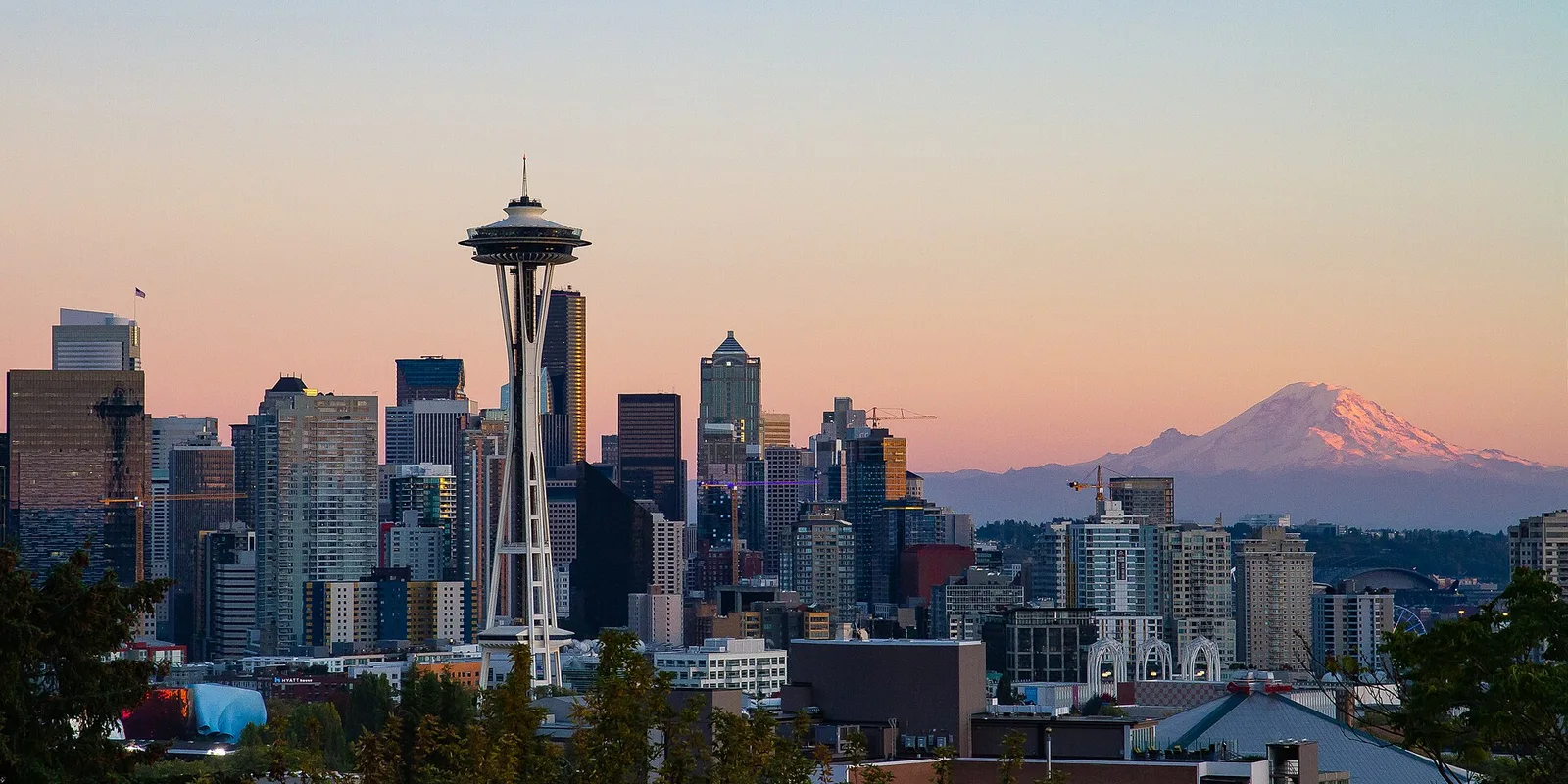
Seattle starts with the water
Seattle’s appeal is easy to recognise from a photograph: a distinctive tower, a dense skyline and, on a clear day, mountains beyond the city. Making the visit work takes a closer look at the streets. Hills separate waterfront stops from downtown hotels; lakes shape journeys between neighbourhoods; ferries turn the water into a transport route as well as a view. A good itinerary leaves room for those connections instead of treating every landmark as an adjacent stop.
This guide concerns Seattle, Washington, on the land between Puget Sound and Lake Washington. An address elsewhere in the metropolitan area can mean a different commute, utility provider or set of housing rules. Visitors can combine markets, museums and neighbourhood walks over several days. People considering a move should also test a weekday journey, inspect homes and check essential services. A city that suits a holiday does not automatically provide the right base for a particular workplace or household.
The history beneath the skyline
The Seattle Municipal Archives describes the city as standing on Coast Salish land, specifically the traditional territory of the Suquamish and Duwamish peoples, whose presence continues today. Settler history is one layer of that longer story. White settlers arrived in 1851, first at Alki and then around what became Pioneer Square. The settlement took its name from the Indigenous leader Sealth, and Seattle was officially incorporated in 1869.
The fire of 6 June 1889 devastated the business district; describing it as the destruction of the entire city exaggerates its extent. Rebuilding changed streets and construction, while maritime activity and successive migrations shaped surrounding neighbourhoods. The 1962 Century 21 exposition left a different legacy at Seattle Center, including the Space Needle and Monorail. These histories offer two useful starting points for a visit: explore Pioneer Square’s streets for the older commercial city, then Seattle Center for the ambitions of the world’s fair era.
Downtown, Belltown and choosing a base
A downtown stay can simplify a first visit organised around Pike Place Market, the waterfront and public transport. Compare the actual hotel entrance with the station exit and the route you will walk with luggage. A short distance on a map can still include a hill, stairs or an indirect crossing. Ask about lift access, luggage storage and the particular accessible facilities you need before choosing a room.
Belltown, north of the downtown core, offers another base for dining and city exploration. The Seattle Center area below Queen Anne Hill can suit an itinerary focused on the Space Needle, museums or an arena event. Upper Queen Anne is a different proposition, with a steep climb toward viewpoints such as Kerry Park. Choose the location that reduces your repeated journeys. For a business visit, confirm the meeting address before selecting a hotel merely because its neighbourhood is associated with a particular industry.
Pike Place Market at a useful pace
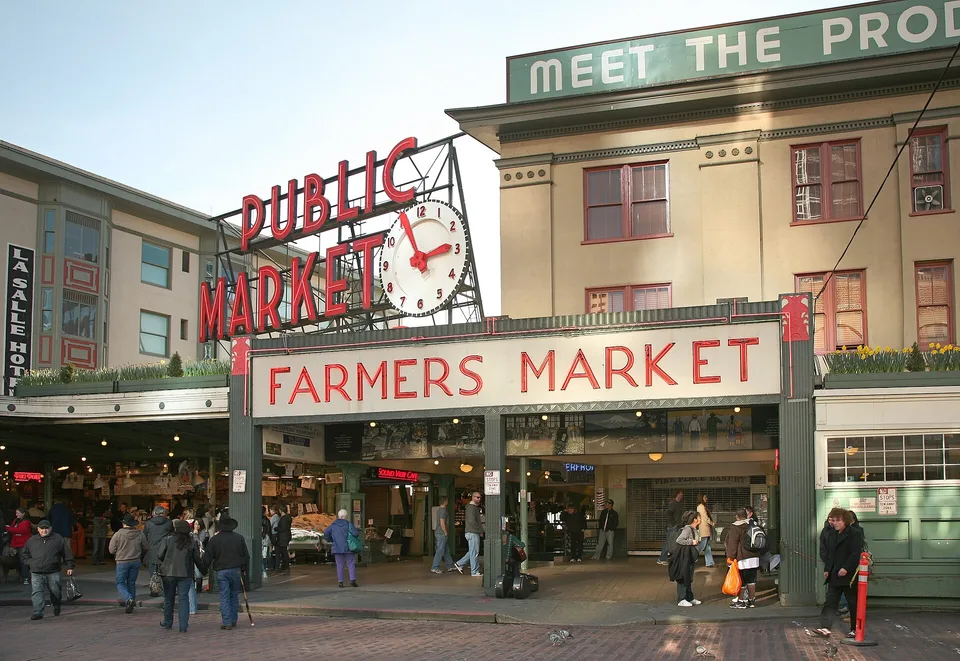
Pike Place Market’s visitor information describes a working historic district with independent shops, farm tables, crafts and food businesses. It opened in 1907 and occupies several levels, so the familiar sign is an introduction rather than the whole attraction. Use the operator’s market map to find businesses, entrances and restrooms. The broad visitor timetable is not the opening time of every stall or restaurant.
Most market activity falls between 10am and 5pm, with some food businesses opening earlier or staying later; Thanksgiving and Christmas Day have different arrangements. Choose the businesses you particularly want to visit and check their own hours. Allow time to browse and eat instead of arriving only for a hurried photograph. If driving, consult current access and parking notices before entering the market streets. A traffic pilot mentioned on an older summer page should not be treated as a permanent rule for every future visit.
The waterfront and Aquarium are different visits
Overlook Walk connects the market area with the waterfront through public paths, steps and places to sit. Its posted hours are 7am–10pm. Ramps along the upper portion and an accessible elevator at the Ocean Pavilion help people who need an alternative to stairs. Check the current route for your needs rather than assuming every waterfront approach is equally convenient. The park’s seasonal shuttle should not be assumed to operate throughout the year.
The Seattle Aquarium is a separately ticketed attraction. A ticket covers Pier 59, Pier 60 and the Ocean Pavilion, with timed-ticket visitors able to start at Pier 59 or the Pavilion. Regular hours are 9:30am–6pm, with last entry at 5pm; check special dates and current admission prices before booking. Keep the QR ticket for re-entry between buildings. This is an outing with indoor and outdoor spaces, so a rainy-day booking still calls for weather-appropriate clothing. Public waterfront access does not confer Aquarium admission.
Seattle Center and the Space Needle
Seattle Center makes a useful cluster of attractions, but each institution needs its own time and budget. The Space Needle’s visitor page currently advertises general admission at $35–$55. That range is a starting point for comparison, not a guaranteed final price for every age, date and ticket. Choose an arrival slot and read the booking terms; the operator assigns a five-minute slot within the broader arrival window and directs early or late visitors to an attendant for the next available time.
Security screening and the building’s bag rules matter if you are visiting between a hotel checkout and a flight. Small backpacks and purses are permitted, while large bags are restricted; arrange luggage storage before arriving with everything you own. Nearby museums and Chihuly Garden and Glass can extend the visit, but compare their current programmes and ticket conditions before buying a bundle. A tower visit is most rewarding when weather permits the views you want; distant mountains are never guaranteed.
Capitol Hill, Pioneer Square and the lakeshore
Capitol Hill combines LGBTQ+ culture, nightlife, shopping and parks. Broadway and the Pike/Pine corridors offer commercial streets to explore; Volunteer Park gives a different, greener outing. Cal Anderson Park and the AIDS Memorial Pathway connect the neighbourhood with community history. Select a few stops that match your interests instead of attempting every park and venue in one evening. Confirm a particular performance or museum’s current opening arrangements separately.
Pioneer Square offers historic architecture and art spaces near the older commercial centre. Galleries and streets can form an outing of their own, while an underground tour or tower visit requires a separate operator booking. South Lake Union brings maritime and industrial history into a neighbourhood also associated with technology and research. For relocation, those associations are less useful than an exact address: verify which office, laboratory or campus you will attend before choosing housing nearby. Neighbourhood names should narrow a search, not substitute for a tested journey.
Ballard’s locks and a park with industrial history
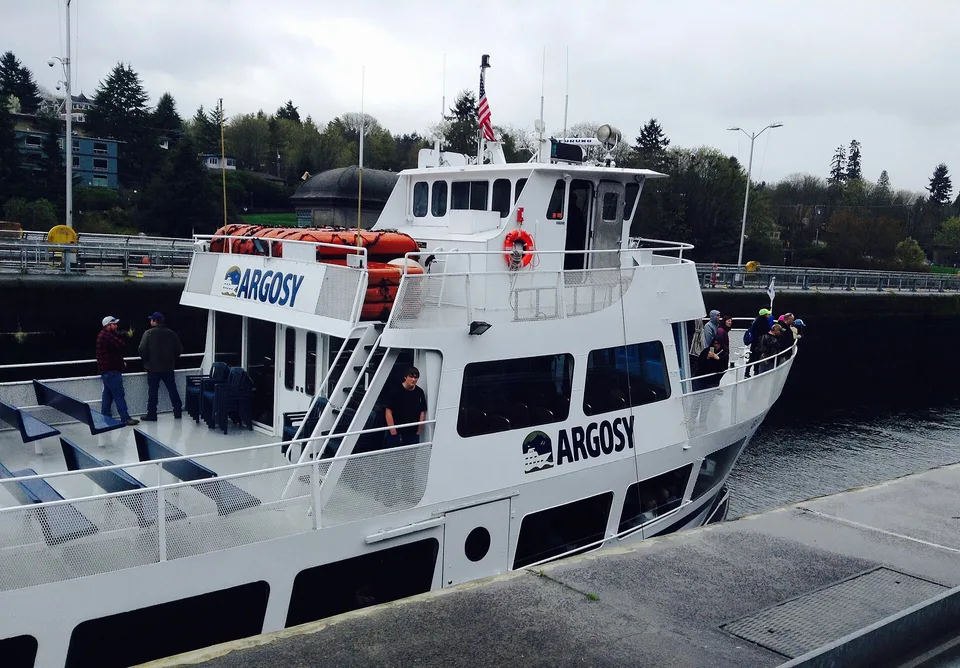
Ballard offers maritime heritage, shops and a route toward the working locks. The Army Corps of Engineers’ visitor information distinguishes vessel operations from public access: the grounds have posted hours of 7am–9pm, while boats operate around the clock. The visitor centre has its own seasonal schedule; for October 2026 through April 2027 it lists Wednesday–Sunday, 10am–3pm. Seasonal tours and fish-viewing access need a current check, and salmon sightings depend on migration rather than an admission promise.
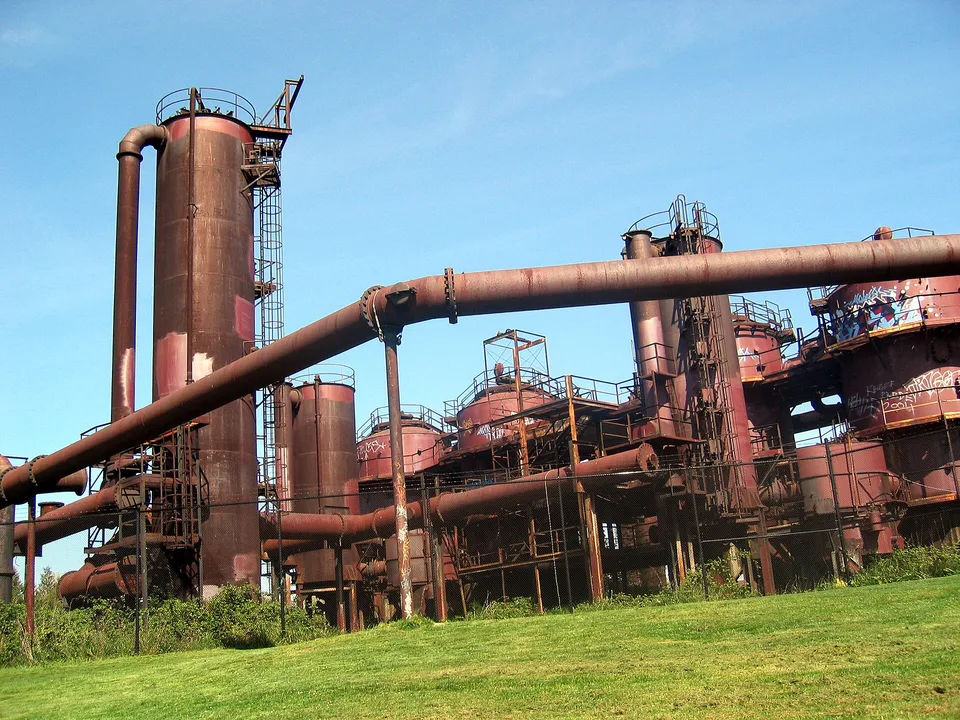
Elsewhere on Lake Union, Gas Works Park retains the striking structures of a former gas plant and offers views, lawns and a kite hill. It is a place to enjoy the shore from land. The city prohibits entering the water, swimming, wading, fishing and launching boats here because of hazardous lake sediment. Follow fences and posted access restrictions around the industrial remains. An archive photograph of towers and ladders does not mean those structures are open for climbing today.
Getting from SEA Airport to your hotel
Seattle–Tacoma International Airport’s light-rail directions explain the connection to SeaTac/Airport station: from baggage claim, go to the fourth floor, cross the skybridge into the parking garage and follow signs. A complimentary Train-to-Plane shuttle operates between the station and the centre of the garage from 5am to midnight. Account for this terminal-to-station connection, especially with luggage or mobility needs; the train ride is only part of the arrival journey.
The 1 Line provides the airport connection toward Seattle. Choose the station and onward route that suit your accommodation, then check the operating timetable for your flight’s arrival time. Do not mistake the Monorail for an airport train: it serves Seattle Center and Westlake Center, with a separate connection to Link. Compare rail with the airport’s official ground-transport alternatives for your group and luggage. A late landing deserves a fallback plan if baggage collection or other arrival formalities outlast your intended service.
Link, Metro and paying for ordinary journeys
The current Sound Transit fare page lists a $3 one-way adult fare on the 1 and 2 Lines, with riders aged 18 and under travelling free. King County Metro’s adult bus fare is also $3. For Link, pay before entering the platform; current instructions require a tap before boarding, without a tap off at the destination. Older distance-based instructions should not determine how you use today’s flat-fare service.
An eligible contactless bank card or digital wallet can pay on participating services, with two-hour transfer credit when the same payment method is used. Each rider needs their own card or device, and bank-card taps charge the adult fare. Eligible reduced-fare riders should use the appropriate ORCA product. The $6 adult regional day pass loaded on ORCA covers eligible fares up to $3 per trip; a physical adult ORCA card costs $3 separately. Compare the pass with your rides and transfers rather than treating it as a universal sightseeing ticket.
The Monorail needs its own fare calculation
The Seattle Center Monorail’s ticket information lists a $4 adult one-way fare and $8 return. The two-station connection is useful for Seattle Center, but it has different payment rules from Link. Bank cards and digital wallets can buy a ticket at a vending machine; they cannot simply be tapped at the Monorail’s ORCA validators. Keep the distinction in mind when transferring from a rail service where contactless boarding worked.
Since 1 January 2026, an ORCA E-purse journey on another service does not provide a free Monorail transfer. The operator accepts regional day and monthly passes, with additional E-purse funds needed when the pass’s fare value is insufficient. A $3-value day pass therefore does not make the $4 adult ride entirely free. Youth aged 6–18 need a valid Youth ORCA card for the free Monorail fare; otherwise the listed youth ticket is $2. Verbal confirmation of age or a student ID does not replace that card.
Food, shopping and a budget you can control
Pike Place Market provides an obvious place to combine food shopping with a meal. Use its current directory to choose a stall or restaurant, and leave time to look beyond the most photographed entrance. Neighbourhood streets offer other options: Capitol Hill’s commercial corridors, Ballard’s shops and restaurants, and Belltown’s dining areas can anchor an outing without a separate cross-city journey for every coffee or lunch. Check the business directly for opening times and essential dietary needs.
Build the budget around your choices rather than a single supposed daily cost. Separate accommodation, transport, meals and paid admissions, then include stated taxes, mandatory booking charges and parking where relevant. Free park or neighbourhood time can balance a tower or Aquarium ticket. Compare the attractions you will actually use before buying a bundle; a discount is less helpful when it adds a visit you did not want. For shopping, check prices, luggage space and airline allowances before turning a browse into a bulky purchase.
Accommodation beyond the neighbourhood name
Seattle’s official accommodation listings include hotels and motels, smaller inns, hostels and extended-stay options. Match the type of stay to the trip: a shared room has different privacy and luggage arrangements from a hotel, while kitchen and laundry facilities can matter more during relocation reconnaissance than a landmark view. Confirm the facilities in your specific room category, not just in the property’s general description.
Compare final prices for the same dates, occupancy and cancellation terms. Ask which charges are mandatory, whether parking is included and when payment becomes non-refundable. An airport-area property may suit a flight schedule but add repeated journeys during a city visit. For a longer stay, read the written agreement and distinguish temporary accommodation from a residential tenancy. A refundable first booking can provide room to inspect prospective homes without committing to an unseen apartment for the entire move.
Weather and the season you choose
The NOAA 1991–2020 climate normals for Seattle Sand Point show a clear contrast between generally wetter, cooler winter months and warmer, drier summer months. These observations come from a specific station; they are not a prediction for every neighbourhood or your travel dates. Check the forecast before departure and before a ferry, viewpoint or outdoor park visit. Visibility determines whether distant mountains appear, regardless of how clear the publicity photographs look.
Summer suits longer outdoor outings, but compare accommodation costs and availability for the dates you want. Spring and autumn offer another balance of neighbourhood exploration and indoor visits, with waterproof layers useful when plans involve walking. In winter, plan a smaller outdoor block around daylight and keep a museum or performance option available. For relocation, inspect heating, ventilation and everyday transport during less favourable weather, rather than judging a prospective home only on a sunny afternoon.
Three days with room to enjoy the city
This is an editorial itinerary suggestion, to adapt to opening days, ticket availability and mobility. On day one, explore Pike Place Market, take the appropriate route down Overlook Walk and spend time beside the waterfront. Add an Aquarium reservation if marine life is a priority; otherwise leave the afternoon for browsing and an unhurried meal. Keep the first evening reasonably close to your accommodation while learning the local transport connections.
On day two, make Seattle Center the main outing, choosing the Space Needle and one museum or other attraction. Add Kerry Park only if the uphill journey and weather suit you. On day three, choose Ballard and the locks, or a Capitol Hill walk with park time. Alternatively, give Lake Union an afternoon, with Gas Works Park enjoyed from land. With another day, consider a Bainbridge ferry outing. Combining every option into three days risks spending more time transferring between places than enjoying them.
Moving: the address matters more than the skyline
Test the commute from a prospective front door to the exact workplace or campus, including transfers, hills and the return journey at your expected hours. A Seattle address and one across the wider metropolitan area can produce very different routines. Compare actual listings and written costs for rent, utilities, internet, laundry, insurance and transport. Shared housing needs clear agreements about occupants and bills.
The city’s move-in cost guidance limits the security deposit and permitted fees together to one month’s rent; additional pet-deposit rules and screening-cost exceptions require a closer read. That limit does not make the entire initial payment equivalent to one month’s rent. Read the current rental guidance, inspect the unit and ask for the initial renter handbook. New rental-fee rules announced in 2026 take effect in July 2027, so their announcement should not be mistaken for their implementation.
Electricity, water and everyday household needs
Seattle City Light’s service setup guidance says property managers often arrange electricity connections for tenants. Check before submitting a duplicate request. New accounts involve identity verification and an administrative fee; confirm the relevant amount and acceptable documentation directly. If online identification fails, the utility guidance for newcomers directs customers to an in-person centre with approved government photo identification, rather than promising that a phone call will resolve it.
For new residential Seattle Public Utilities accounts, water, sewer, garbage, recycling and compost accounts are generally established by owners, rather than tenants. Who holds the account and who ultimately pays are different questions: read the lease’s billing arrangement. Check internet availability at the unit, grocery access, laundry and healthcare-provider networks before committing. When moving out, arrange proper utility closure or transfer and retain the confirmation; handing over the keys alone does not establish that an account has closed.
Schools and library access for newcomers
Seattle Public Schools’ enrolment page lists guardian identification, two recent address-verification documents and immunisation documentation among its requirements. Address evidence should be dated within the previous eight weeks; a recent lease can count with its first and signature pages. Proof of age is requested for specified younger grades and preschool programmes. Ask the admissions team about missing documents and assignment, rather than assuming a nearby school automatically has your chosen place.
Seattle Public Library membership is free for people who meet its service-area or reciprocal eligibility rules, including qualifying Seattle residents, workers and students. Online applications can provide digital access after address verification; physical cards involve valid identification. Immigration status does not itself prevent getting a card, and options exist for people without a permanent address. Visitors should check their own membership category. Library locations also offer services such as Wi-Fi and events without a borrowing card.
Tourism, employment, study and permanent relocation
Seattle has no separate city visa. The State Department’s visitor visa guidance covers tourism and permitted short business activities, with ordinary employment, degree study and permanent residence requiring different arrangements. Eligible travellers under the Visa Waiver Program need advance ESTA approval and must meet the programme’s conditions for stays of 90 days or less. Passport nationality alone does not settle eligibility; check the current requirements and your circumstances.
A job requires the appropriate work route, with an employer petition needed for most temporary worker categories. For study, consult the student visa guidance and the institution’s international office. Permanent relocation needs an appropriate immigration category. Housing or a promising job prospect does not itself confer status. Use VisaWand’s USA country guide and consultant listings to organise further questions, while relying on the official government resources for the application process and current restrictions.
Bainbridge and other places to compare
The Seattle–Bainbridge ferry schedule lists an approximate 35-minute crossing, excluding waits and terminal access. Check both directions for your date before extending the outing. The October 2026 fare table lists $11.35 for an adult walk-on passenger, collected at Seattle and covering the return. Card purchases attract a 3% recovery surcharge. Vehicle travel has separate fares and arrangements; a ticket is not a guaranteed place on a sailing.
For a broader West Coast trip or relocation comparison, the San Francisco guide offers another city to assess on its own costs and journeys. It is a separate destination, not a nearby Seattle excursion. VisaWand’s USA location directory can identify other places to investigate, without implying every listing has a completed guide. Use the USA destination page for consultation options, bringing specific questions about your purpose, dates and household needs.
Official planning resources
Reviewed 13 October 2026. Use the official resources linked throughout this guide for admission, transport, housing and immigration decisions. Prices, services and rules can change; confirm the details relevant to your dates. Photography illustrates the locations and is not a live view.
View all official resources
- Seattle Municipal Archives geography and history
- Belltown neighbourhood visitor information
- Queen Anne and Seattle Center visitor information
- Pike Place Market hours, merchant information and map
- Overlook Walk opening hours, routes and accessibility
- Aquarium timed tickets, campus coverage and entry conditions
- Space Needle current prices, timed arrivals and bag rules
- Capitol Hill culture, parks and commercial streets
- Pioneer Square visitor information and art spaces
- South Lake Union history and visitor information
- Ballard maritime heritage and visitor information
- Army Corps Locks grounds, visitor centre hours and seasonal tours
- Gas Works Park hours and shoreline restrictions
- SEA Airport rail connection and Train-to-Plane shuttle
- Current Link fares, payment and youth travel
- Metro fares, ORCA cards and regional pass values
- ORCA contactless payment, transfer credit and exclusions
- Monorail ticket prices and 2026 transfer changes
- Monorail regional pass acceptance, fare differences and youth rules
- Official Seattle accommodation listings
- NOAA Seattle Sand Point 1991–2020 climate normals
- Seattle move-in charges, deposits and exceptions
- Current Seattle rental guidance and future ordinance dates
- City Light electricity account setup
- Newcomer utility identification and owner/tenant account responsibilities
- Seattle Public Schools enrolment documentation
- Seattle Public Library eligibility and services
- Official visitor visa purposes and exclusions
- Official Visa Waiver Program and ESTA conditions
- Official temporary employment visa categories
- Official student visa and school requirements
- Official permanent immigration categories
- Seattle–Bainbridge ferry schedule and approximate crossing time
- Seattle–Bainbridge passenger and vehicle fare calculator
- Ferry round-trip passenger tickets and card surcharge
Plan the next part of your journey
Explore the United States guide, browse other cities or compare consultants for your travel and relocation questions.