Visa

Plan for the city you want to experience
Minneapolis offers a distinctive combination: a working downtown, a riverfront shaped by milling, substantial art collections and neighbourhoods close to lakes and parks. A visit can be built around a performance and museums, or around longer walks with a few indoor stops. Choosing that balance before booking accommodation will make the city easier to navigate and the budget easier to judge.
The Mississippi River runs through Minneapolis, while Saint Paul is a separate city within the wider Twin Cities region. An airport, hotel or business using Minneapolis–Saint Paul in its name may serve that whole region. Check the actual address before assuming it is near your intended activities or future workplace.
Use Meet Minneapolis's neighbourhood information as an orientation tool. For a prospective resident, explore beyond the sightseeing route: test the commute, find groceries and examine the home itself. A pleasant riverside afternoon is a reason to investigate the city, not enough evidence to choose a long-term address.
The riverfront: Dakota homeland and industrial history
The Minnesota Historical Society's riverfront account places Owamniyomni, or St. Anthony Falls, in Dakota homeland. The falls have long been a place of spiritual and cultural importance. That history precedes the mills and should remain part of how visitors understand the landscape, rather than appearing only as a preface to industrial development.
Commercial lumber and flour milling harnessed the falls' waterpower in the nineteenth century. Minneapolis subsequently became a major flour-producing city, and surviving industrial buildings help explain the riverfront's scale and character. Today's cultural venues and walking routes occupy a landscape whose use has changed repeatedly.
Start with a short riverfront walk, looking at the relationship between water, bridges and former industrial structures. Pair it with a museum if you want more context. Keep heritage interpretation separate from assumptions about access: an old building may be a private residence, working business or venue with its own admission arrangements.
Downtown, the Mill District and North Loop
The Mill District is a practical focus for a first visit, with Mill City Museum and the Guthrie Theater on South Second Street. Plan around the places you want to enter rather than treating every riverfront landmark as another compulsory stop. A museum and a walk can comfortably anchor a day without requiring a performance that evening.
North Loop and the Warehouse District offer a different concentration of shopping, restaurants and places to stay northwest of the downtown core. Browse according to your interests and check individual businesses' current opening times. An evening meal or event may make this district a useful base, but compare the actual hotel entrance with the transport stop you intend to use.
Whittier, the university area and riverside neighbourhoods
Whittier gives an art-focused visit a useful connection between Mia and the dining corridor known as Eat Street. It is a different setting from downtown, with its own daily businesses and residential streets. Combine a museum with a planned meal, but verify the distance rather than assuming that everything described as nearby is beside the entrance.
The university area can make sense for a campus visit or academic appointment. If moving for study, identify the particular building, timetable and housing options before choosing a district. University affiliation does not guarantee that an accommodation listing suits your commute, course or household.
Hiawatha and Howe provide another part of the city to investigate, with access to the Mississippi River Gorge and Blue Line stops. Use neighbourhood descriptions to build a shortlist, then test real routes. For residents, the walk to a stop, grocery access and winter maintenance can matter more than a district's reputation or a scenic photograph.
Mill City Museum: buy ordinary tickets on arrival
Mill City Museum is at 704 South Second Street. Normal hours are Wednesday–Friday, 10am–4pm, and Saturday–Sunday, 10am–5pm; Monday and Tuesday are closed. Adult admission is $15, with $12 for seniors aged 65 and over, veterans, active military and college students. Ages 5–17 cost $8; children four and under enter free.
Ordinary tickets are sold on-site rather than in advance online or by telephone. Groups of ten or more have a separate advance-purchase process, and groups arriving without arrangements are not guaranteed a Flour Tower time. Check the museum's holiday schedule when a particular date is important to your visit.
The museum experience uses the Washburn A Mill's limestone ruins to explore the city's industrial story, with exhibits, labs and the Flour Tower elevator show. Decide which elements matter to your group and allow time on arrival for the available schedule. A museum visit gives the surrounding riverfront more meaning than a quick look at the building alone.
Stone Arch Bridge and a manageable waterfront walk
The Minnesota Department of Transportation's Stone Arch Bridge project page records the major repair project as complete, covering work from April 2024 through July 2025. That is different from outdated advice describing a continuing construction closure. Check current local notices for temporary restrictions, events or changes to adjacent paths before setting out.
Use the bridge and riverfront as part of a walk whose length suits the weather and your group. Choose where you will start, where you might stop indoors and how you will return. An attractive view does not make a route suitable for every person's mobility needs, and a riverside outing need not become a test of how much ground you can cover.

Guthrie Theater: public building hours and performance tickets
The Guthrie Theater is at 818 South Second Street. Its published building hours are Tuesday, Thursday and Friday, 1pm–7.30pm, and Wednesday, Saturday and Sunday, 10am–7.30pm; Monday is closed. The operator warns that performance and event schedules can change access, while the store and box office follow different hours.
A building visit and attending a performance are different plans. Check the production, date, seat, accessibility arrangements and ticket conditions before booking an evening. If a show is the main reason for travelling, secure that part of the trip before arranging a tightly connected restaurant reservation or non-refundable accommodation.
Allow time to reach the correct entrance and collect anything required for admission. A riverfront walk can complement a theatre visit, but leave a weather alternative and a dependable journey home. Someone exploring the building during public hours should follow the staff's current directions rather than assuming every interior space is available.
Mia: free permanent collection, separate special exhibitions
The Minneapolis Institute of Art, known as Mia, is at 2400 Third Avenue South in Whittier. Its permanent collection has free general admission without tickets or reservations. Special exhibitions require tickets and fees, and some programmes have their own booking arrangements. Check the particular exhibition rather than assuming that the free general offer covers everything.
Normal hours are Tuesday–Sunday, 10am–5pm, extended to 9pm on Thursdays; Monday is closed. The museum lists Thanksgiving, Christmas Eve and Christmas Day closures. Paid parking is available in its ramp and surface lots, alongside accessible parking and bicycle racks.
A focused visit can work better than attempting every gallery. Choose a few areas of interest and use the museum's current information to establish what is on display. Contact staff if a particular artwork is essential to your trip. Free admission makes it practical to return, leaving time for a meal or another activity instead of rushing through the collection.
Walker galleries and the free Sculpture Garden
The Walker Art Center is at 725 Vineland Place in Lowry Hill. Galleries normally open Wednesday–Sunday, 10am–5pm, with Thursday extended to 9pm; Monday and Tuesday are closed. On the second Sunday of the month, public gallery opening moves to 11am after Sensory Friendly Sunday. Check holiday and event arrangements.
Standard admission is $18 for adults, $16 for seniors aged 65 and over and $12 for students with identification. Ages 18 and under enter free, with additional concession programmes described by the operator. Gallery tickets include exhibitions, while performances and screenings should be checked separately. Parking in the on-site ramp is paid.
The Minneapolis Sculpture Garden is a separate free outdoor visit, with published daily hours of 6am–midnight. Choose whether to combine it with the galleries according to your interests and the weather. Indoor museum access and an outdoor garden's opening are different things; one being closed does not automatically establish the other's status.
Minnehaha Falls: plan the route, not just the photograph
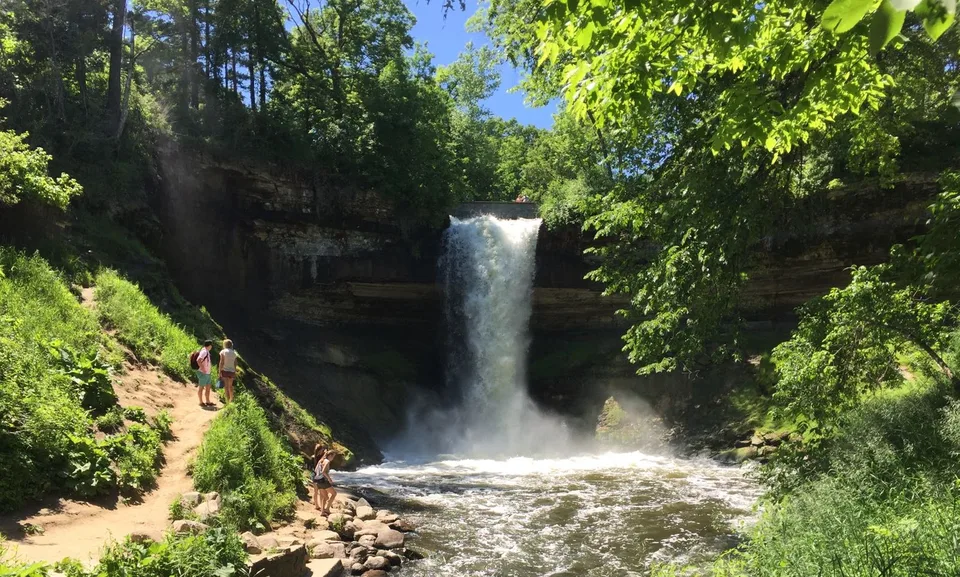
Minnehaha Regional Park is at 4801 South Minnehaha Drive. It offers a waterfall and surrounding parkland within the city, making a worthwhile contrast with the downtown riverfront. Select a route from the park's current information that suits the available time and the people travelling, rather than judging the whole visit from one view of the falls.
Published hours are 6am–midnight in developed areas and 6am–10pm in undeveloped areas. Those park hours do not guarantee that a seasonal business, facility or every path is operating. Follow posted barriers and current access notices, particularly when weather affects surfaces or routes.
The landscape and water conditions change with the season. Allow for suitable footwear, breaks and the journey back from the park. A shorter visit can still be rewarding if steps or uneven ground limit the route. Keep an indoor alternative available instead of making one weather-dependent outing essential to the success of the trip.
Bde Maka Ska and the Chain of Lakes
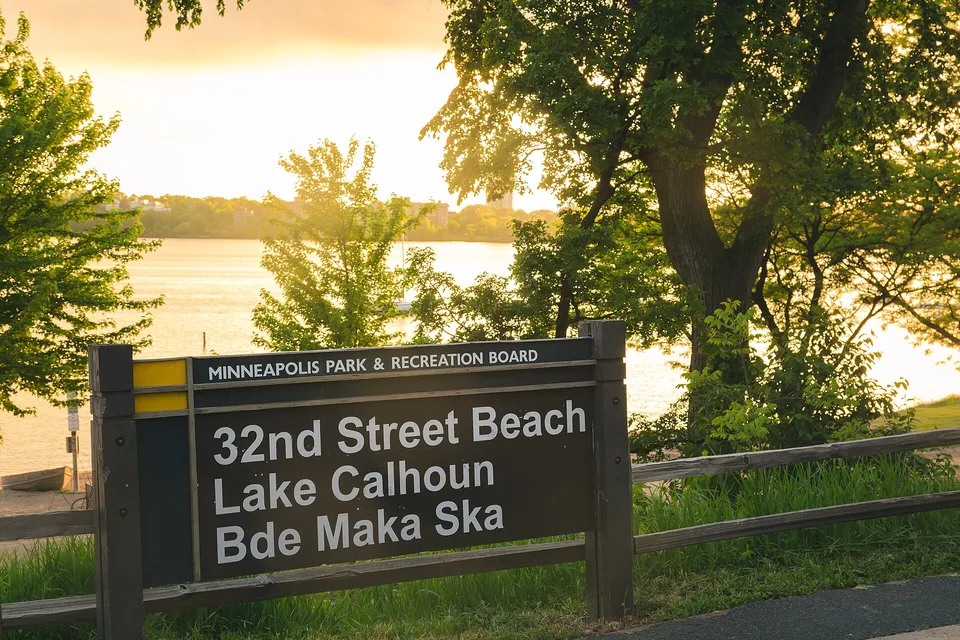
Bde Maka Ska Park is part of the Minneapolis Chain of Lakes Regional Park. Its visitor information identifies beaches, walking and cycling paths, and other recreation facilities. It can anchor a day outdoors, but decide whether your intention is a lakeside walk, a ride or a seasonal water activity before planning equipment and transport.
The park lists developed-area hours of 6am–midnight and undeveloped-area hours ending at 10pm. Thomas Beach has separate 6am–10pm hours, with seasonal lifeguard arrangements and water-quality information. Check those conditions directly before swimming; park opening alone is not a statement that supervised swimming or a particular rental is available.
Choose a realistic stretch of the lakeside rather than assuming you must circle every lake. Plan refreshments and a return connection, and observe the separation and rules of walking and cycling routes. The guide's historical beach photograph includes the former Lake Calhoun name on a sign; use Bde Maka Ska in current searches and directions.
Where to stay: central access or a specific neighbourhood
The official Minneapolis hotel directory groups options by areas including the downtown core, Loring Park and Convention Center, North Loop, Northeast and the university district. These categories help organise a search, but the property itself still needs checking. Compare the exact address with the activities or appointments that matter most.
For a first cultural visit, a downtown base can simplify riverfront and theatre plans. A university-area stay may work better for campus business, while a different neighbourhood can suit family visits or a longer exploratory trip. Ask about step-free access, parking, luggage storage and late arrival where those affect your decision.
Compare a complete bill: taxes, compulsory fees, parking and the cost of journeys, as well as the room. Confirm cancellation conditions and any advertised shuttle directly. For a relocation scouting trip, access to laundry, groceries and a workable kitchen may be more useful than a premium view, especially when testing daily routines.
MSP: choose the terminal before choosing the transfer
Minneapolis–Saint Paul International Airport's rail information confirms that the Blue Line serves both terminals, with downtown Minneapolis to the north and Mall of America to the south. Terminal 1's station is below the Red, Blue and Silver ramps, reached via the tram. Terminal 2 uses the Orange Ramp skyway and a descent to the platform.
Travel between the terminal stations is free and operates around the clock. The full Blue Line route has different operating hours, so do not assume the free inter-terminal service promises an overnight downtown train. Check the actual schedule for your flight, including time to reach the station and the final walk to accommodation.
Ride-app pickups also differ: Terminal 1 uses the Ground Transportation Center on Level 1 of the Green/Gold ramps; Terminal 2 uses Level 2 of the Purple ramp. Follow signs and the app's current instructions rather than using a pickup point remembered from a different terminal or earlier visit.
Transit fares and direct airport alternatives
Metro Transit charges adults aged 13–64 $2 on local buses and METRO services at all times, with a fare valid for two and a half hours. An adult all-day pass costs $4 and ends at 2am the next day, rather than lasting twenty-four hours. Express-bus prices and concession conditions differ; check them for the journey you intend.
Rail tickets are available at station machines and through the operator's app. Build time for waiting and transfers into a plan, and examine the route from your destination's entrance. A low fare does not establish a short commute or frequent service at every hour.
The airport's taxi page publishes an average downtown Minneapolis fare of $39–$49, rather than a guaranteed flat price. Terminal 2 taxis use the ground level of the Purple ramp, a different location from ride-app pickups. Compare a direct transfer with rail by luggage, arrival time and the full door-to-door journey, not only the advertised fare.
Food and shopping: connect them to the day's district
Eat Street gives a Whittier visit a useful dining focus. Explore current menus and opening information rather than treating a neighbourhood name as a restaurant recommendation. Ask the business preparing the meal about ingredients and dietary requirements. A familiar dish's name is not enough to establish how it is made.
The Mill City Farmers Market operates outdoors on Saturdays from May through October: 8am–1pm through September and 9am–1pm in October. Indoor winter markets follow a different pattern, the first and third Saturdays from November through April, 9am–1pm. Museum admission is not required to enter the indoor market.
Check the week's vendors when planning a particular purchase, and keep market shopping distinct from museum admission. North Loop browsing or a neighbourhood meal can fit naturally around other activities. Include tax, service charges and intended tips in a food budget; compare actual menus instead of relying on an invented citywide daily allowance.
Seasons: warm-weather outings and winter logistics
The Minnesota Department of Natural Resources' 1991–2020 Twin Cities normals put January's average temperature at 16.2°F, about −8.8°C, and July's at 74.3°F, about 23.5°C. These airport-based monthly averages are not daily highs or promises about a particular week. They demonstrate why a summer lakeside visit and a winter city break require different preparations.
Choose warmer months if extended outdoor time is the priority, checking seasonal facilities and current weather. Spring and autumn can suit walks and museums, but pack for changeable conditions. In winter, plan suitable footwear and clothing, shorter outdoor segments and a reliable indoor destination rather than treating cold as merely a photographic backdrop.
The city's snow-emergency resources explain changing parking restrictions and alerts. Check them when using a rental car or assessing residential parking. For a move, establish who clears the building's access and where a vehicle can be kept during restrictions before discovering the arrangement after snowfall.
A practical three-day itinerary and its costs
On day one, get oriented along a manageable downtown riverfront route and visit Mill City Museum during opening hours. Keep ordinary admission as an on-arrival purchase. Add a Guthrie performance only if it fits the group's interests and has been booked separately; a full museum afternoon and a walk are already a worthwhile first day.
On day two, choose Mia with an Eat Street meal, or the Walker galleries and Sculpture Garden. These are alternatives for a relaxed art day, not an obligation to visit both collections. On day three, choose Minnehaha or Bde Maka Ska according to weather and mobility, leaving room for neighbourhood browsing.
This is editorial planning advice; rearrange it around Monday and Tuesday closures. Two standard adult Mill City tickets cost $30, two Walker tickets $36, and two adult transit day passes $8. Mia's permanent collection and the Sculpture Garden can balance paid activities, while special exhibitions, performances, meals, parking and accommodation remain separate budget decisions.
Moving: evaluate a home across the seasons
Start a housing search with the real addresses of work, study and household commitments. Test the commute at the relevant time, including the walk to transit and any transfers. Assess how the same journey would work in winter rather than making a long-term choice from a comfortable summer visit.
Obtain rent, deposits, lease length, renewal terms and every compulsory fee in writing. Inspect heating, cooling, ventilation, maintenance procedures and laundry. Ask which utilities are included and how costs are divided in a shared building. Check storage for winter clothing, bicycle arrangements and the responsibility for clearing entrances or sidewalks where relevant.
Use the city's renter resources for screening, deposit and other tenancy questions, with Housing Liaisons available through the official contacts. Seek the applicable rules for the particular property and situation. A useful neighbourhood shortlist should remain provisional until the home, lease and daily route have all been examined.
Utilities, school placement and health coverage
The municipal utility-start page asks for proof of ownership or a lease when establishing water and sewer service. Starting service costs nothing if water is already on; the listed fee to turn it back on is $90. Confirm account responsibility with the landlord, particularly in an apartment building, rather than assuming every tenant establishes an individual account.
Electricity, heating fuel and internet require separate checks with the providers serving the address. Arrange installation and understand billing before moving day. Families can use the official Minneapolis Public Schools finder to see options by address and grade, then follow the request and registration process. A property listing does not guarantee a chosen school placement.
MNsure is Minnesota's official health-insurance marketplace, with resources for comparing plans and investigating eligibility. Check your circumstances and enrolment options directly; moving to Minneapolis does not automatically establish entitlement to a particular plan or financial assistance. Compare networks, prescription cover and out-of-pocket costs alongside routine care needs before selecting coverage.
Visas and other places worth comparing
Tourism, employment, formal study and permanent relocation require different planning. Use the VisaWand USA guide for context and the Department of State's visitor, worker, student and immigration resources for the applicable requirements. Choosing an attractive neighbourhood or signing a lease does not itself provide permission to work or settle.
Compare Saint Paul and Bloomington's location pages when investigating the wider region; these are separate destinations and directory resources. The completed Milwaukee guide offers another upper-Midwest comparison. Check where employment, family ties or education actually lead before assuming that Minneapolis is the best base for every Twin Cities household.
The USA destination page, country location directory and consultant listings can support further research. If buying assistance, obtain a clear written scope and fee and remember that consultants do not decide government applications. Keep travel preferences, a property's suitability and immigration eligibility as distinct decisions, giving each the evidence it needs.
Official planning resources
Reviewed 13 October 2026. Use the official resources linked throughout this guide for admission, transport, housing and immigration decisions. Prices, services and rules can change; confirm the details relevant to your dates. Photography illustrates the locations and is not a live view.
View all official resources
- Official Minneapolis neighbourhood orientation
- Dakota homeland and riverfront milling history
- North Loop and Warehouse District visitor information
- Hiawatha and Howe neighbourhood information
- Mill City Museum hours admission and on-site ticket sales
- Mill City Museum exhibits and visitor experiences
- Completed Stone Arch Bridge repair project
- Guthrie public building hours and exceptions
- Mia free collection admission and special-exhibition tickets
- Walker gallery admission and separate Sculpture Garden access
- Minnehaha Regional Park official visitor information
- Bde Maka Ska park hours and recreation
- Thomas Beach hours lifeguard season and water conditions
- Official hotel directory by district
- MSP terminal station access and rail service
- MSP ride-app pickup locations by terminal
- Metro Transit current fares and day-pass validity
- MSP taxi locations and average fare estimates
- Eat Street dining orientation
- Seasonal outdoor and indoor market schedules
- Official 1991–2020 Twin Cities monthly climate normals
- Minneapolis snow-emergency alerts and parking resources
- Municipal renter rights and housing assistance resources
- Water sewer and waste service activation and transfer
- Official MPS address and grade school finder
- Minnesota official health insurance marketplace
- Visitor visa purposes and restrictions
- Temporary worker visa categories
- Student visa process
- Permanent immigration resources
Plan the next part of your journey
Explore the United States guide, browse other cities or compare consultants for your travel and relocation questions.