Visa
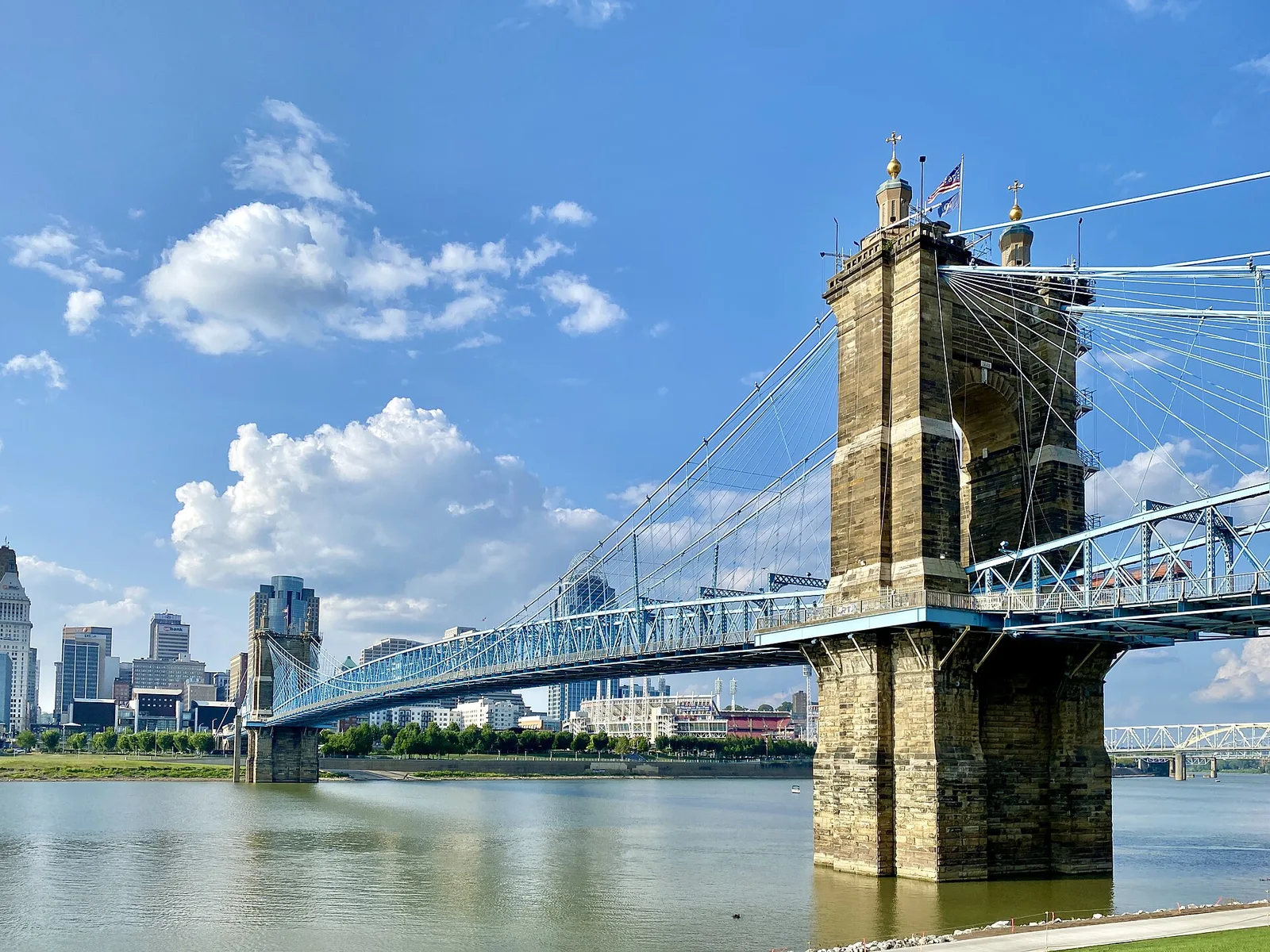
A river city that rewards a well-chosen base
Cincinnati offers a compact downtown, substantial museums and neighbourhoods whose daily rhythms change as the streets climb away from the Ohio River. You can spend a short visit moving between the riverfront, Over-the-Rhine and a few carefully chosen cultural stops. Moving here requires a wider map: a downtown office, an Uptown campus and a suburban workplace produce different housing and transport decisions.
Keep the state boundary in view. Cincinnati itself is in Ohio. Covington and Newport, across the river, are Kentucky cities, while Cincinnati/Northern Kentucky International Airport is also in Kentucky. The visitor region crosses those boundaries; household services, school districts and legal arrangements do not become interchangeable because an address is marketed as being near Cincinnati.
Reading Cincinnati's history through its buildings
The city's transport history places the river at the centre of Cincinnati's early commercial growth, including flatboat trade and the pork industry. The European-American settlement known as Losantiville dates to December 1788; the city's historical account records its renaming as Cincinnati in 1790. That settlement date should not be mistaken for the beginning of human history in the region.
Over-the-Rhine adds another layer. Its nineteenth-century German immigrant history helped shape the neighbourhood's name, buildings and brewing traditions. Explore that heritage through the streets and interpretation rather than assuming every renovated facade tells the same story. Today's residents and businesses are part of the neighbourhood's character too.
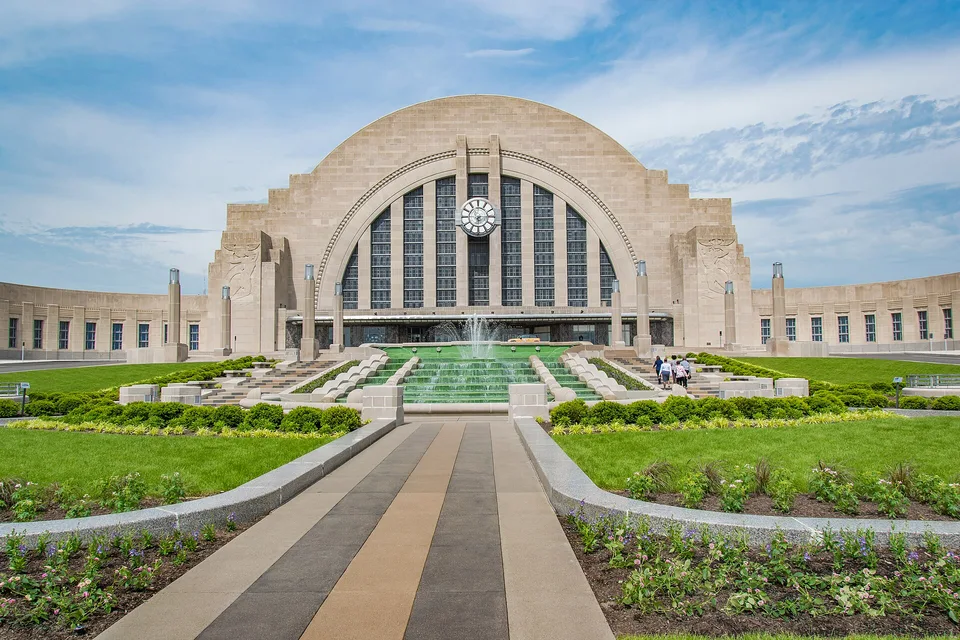
At Union Terminal, an Art Deco railway building opened in 1933 now accommodates Cincinnati Museum Center. The change from transportation landmark to museum destination illustrates how the city reuses its substantial architecture. A visit becomes more interesting when you connect those buildings with the work and movement they once supported.
Downtown, The Banks and Over-the-Rhine
Downtown Cincinnati makes a practical base for a first visit. Fountain Square anchors the central area, while The Banks provides a riverfront setting for entertainment and major sports venues. Choose accommodation according to the events on your dates: being close to a venue can be convenient, but you should investigate parking, arrival arrangements and potential evening noise before booking.
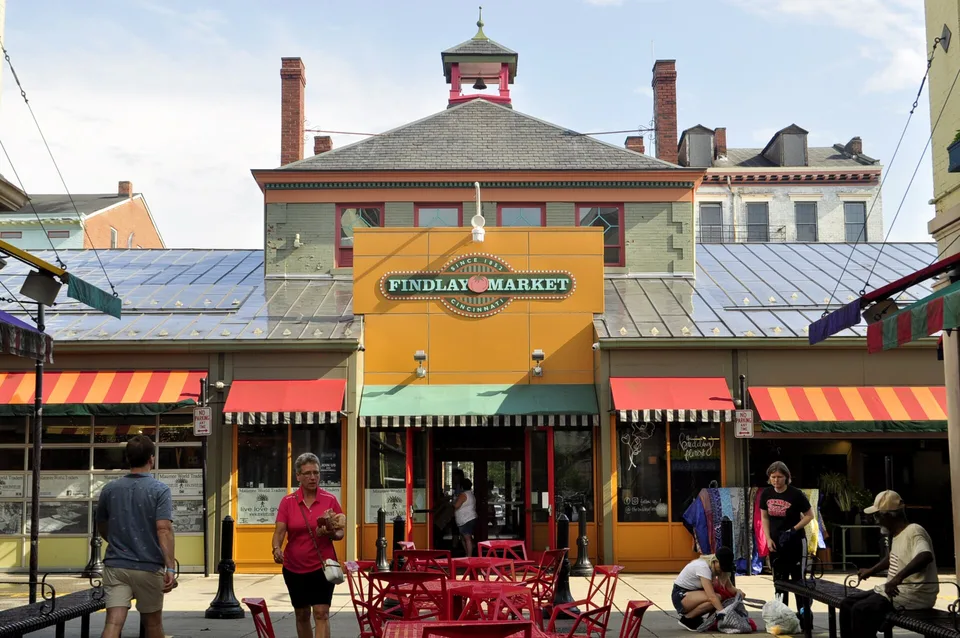
Just north of downtown, Over-the-Rhine brings together historic architecture, restaurants, boutiques, Findlay Market and performing arts. An afternoon here works well without a rigid sequence of paid attractions. Pick a market visit or performance as the anchor, then leave time to walk between the surrounding streets and public spaces.
Uptown and the neighbourhoods beyond the core
Uptown visitor information is useful when a trip centres on the University of Cincinnati, the zoo or nearby institutions. A hotel chosen for a campus visit should be measured against the building you actually need to reach, rather than a broad promise of proximity to the university. Confirm the campus location before reserving.
To the east, Hyde Park and Oakley offer neighbourhood shopping and dining, with Hyde Park Square and nearby commercial areas providing different alternatives to a downtown outing. They are also places to investigate during a housing search, but visitor appeal does not establish affordability or the quality of a particular commute.
Northside offers another collection of independent businesses and neighbourhood activity. Sample areas on foot during a scouting trip, then return to shortlisted addresses at the hours that matter to your household. Terrain, parking and the route to work can outweigh a neighbourhood's reputation in a weekend travel description.
Findlay Market: plan around the market's own clock
Findlay Market is a worthwhile starting point for food shopping and an Over-the-Rhine visit. The market operates Tuesday–Friday from 9am–6pm, Saturday from 8am–6pm and Sunday from 10am–4pm. It closes Monday. Individual businesses may have different arrangements, so check a merchant directly if a specific meal or purchase is essential.
The farmers' market in the Farm Shed has shorter weekend hours: Saturday 8am–2pm and Sunday 10am–2pm. That distinction prevents an afternoon arrival from being mistaken for the full morning produce experience. For visitors with a kitchen, buy according to what can actually be refrigerated and prepared during the stay.
The market's tour options include a downloadable self-guided route. Use it to connect the shopping experience with the site's history, or investigate an organised tour if you want more interpretation. Reach the market by streetcar where convenient and leave enough time to browse without carrying purchases through several later museums.
The Freedom Center deserves an unhurried visit
The National Underground Railroad Freedom Center addresses slavery, resistance and the pursuit of freedom through its permanent and changing exhibitions. It sits on the Ohio River downtown, a setting that makes the history of movement across the border particularly meaningful. Give the subject time rather than adding the museum as a quick diversion between meals.
Published hours are Wednesday–Sunday, 10am–5pm, with last entry at 4:30pm. The museum recommends allowing three to four hours. General adult admission is $21.50, reduced to $20 on Wednesdays and Thursdays; children aged 3–12 pay $18.50, or $17 on those weekdays. On-site ticket sales are card only.
Check the museum's current calendar for community admission days and special exhibitions before purchasing. Its visitor page also links current roadwork advice for the surrounding area. Choose an entry time that leaves room for the films and galleries; arriving before the last admission time does not mean you can experience everything before closing.
Union Terminal and choosing the right museum ticket
Union Terminal is worth considering for its architecture as well as its museum programme. The building's 2018 restoration preserved a landmark whose rotunda and railway history are central to its identity. Cincinnati Museum Center is at 1301 Western Avenue, separate from Cincinnati Art Museum in Eden Park.
Standard Museum Admission includes the Cincinnati History Museum, Museum of Natural History & Science and Children's Museum. Films, special exhibitions and the Holocaust & Humanity Center have their own ticket options. Select the product by its inclusions rather than assuming one purchase covers every experience in the building.
The official ticket calendar uses date-dependent prices and states that online prices are lower than box-office prices. Compare your actual dates. Normal opening is daily 10am–5pm, with Thanksgiving and Christmas closures. The published 2026 schedule also closes at 2pm on November 6, November 25 and December 24. Check those exceptions when planning a full museum day.
Cincinnati Art Museum: a useful free cultural stop
Cincinnati Art Museum offers free general admission and free museum parking, making it a strong choice for a visit with a limited admissions budget. Certain exhibitions and programmes carry charges, so distinguish entering the general galleries from attending a particular ticketed presentation.
The normal public schedule is Tuesday–Sunday, 11am–5pm, extended to 8pm on Thursday; Monday is closed. A Thursday visit can therefore make room for art after daytime sightseeing, provided you check any exhibition's own requirements. The museum's official visitor information explains bag policies and available accessibility arrangements.
The zoo: book the date and entry window
The Cincinnati Zoo & Botanical Garden is on Vine Street, away from the downtown streetcar loop. Plan the journey separately from a riverfront day. The zoo identifies Metro connections in its visitor information, so check the current route and stop against your accommodation rather than assuming an Uptown label means an easy walk.
Admission uses plan-ahead pricing by date and entry window. Read the ticket conditions, including rescheduling arrangements, and judge the available hours before choosing a later entry solely for its price. Parking is charged separately and cannot be guaranteed when the lots fill. The zoo's published pages show differing parking amounts, so confirm the current payment screen before travelling rather than relying on a fixed figure here. Its accessibility information explains the entrances and arrangements for visitors who need assistance with the route.
Arriving through CVG and crossing the river
CVG's ground transport information directs public transport passengers from baggage claim towards Ground Transport East and the Public Transit signs. TANK's 2X Airporter connects the airport with Cincinnati. Consult the operator's timetable for the travel date, including the return trip, instead of treating the bus as an uninterrupted all-night shuttle.
TANK's local cash fare is $2, with exact fare required and no change given. Its payment products and discounts differ from Cincinnati Metro's. For a family travelling with luggage, compare the full onward journey from the downtown stop against a taxi, ride-app vehicle or prearranged transfer.
The airport also places ride-app pickup at Ground Transport East rather than the terminal curbfront. It cautions that walk-up transport after midnight may be limited. For a late flight, arrange a realistic alternative before arrival. Road construction can affect river crossings, so use the Brent Spence Bridge Corridor project updates when planning a drive.
The Connector and Metro solve different journeys
The Connector streetcar is free and follows a 3.6-mile loop linking The Banks, downtown and Over-the-Rhine. Its core hours are Monday–Friday 7:30am–11:30pm, Saturday 8:30am–11:30pm and Sunday 9:30am–9:30pm. It is useful for an urban visitor circuit, rather than a railway to the airport or university.
Metro buses extend the choices beyond that loop. Local rides cost $2.20; express routes marked with an X cost $3. Eligible app purchases include transfers for continuous travel on up to two buses within 120 minutes, whichever limit comes first. Check the payment method before boarding.
Metro's Tap&Save provides local fare caps of $4.40 over 24 hours and $88 over a rolling 30-day period when using the appropriate EZfare account. TANK has separate caps and rules. Match the product to the operator and journey; a shared app does not mean that every fare, discount or transfer works identically across both systems.
Accommodation choices that change the trip
For a short sightseeing break, a downtown hotel can make walking and streetcar journeys simpler. Compare the room price with parking, taxes, breakfast and the cost of reaching attractions beyond the core. A cheaper room farther away can lose its advantage if every outing adds another paid transfer or lengthy drive.
Visit Cincy's accommodation search by area helps distinguish downtown, Uptown and Northern Kentucky options. A Kentucky hotel may suit a cross-river itinerary, but verify the actual connection to the Ohio destinations you plan to visit. A river view does not by itself establish a convenient pedestrian route.
For a relocation trip, consider a flexible booking with laundry or kitchen facilities while you inspect permanent homes. Confirm the equipment and access arrangements rather than assuming every extended stay includes the same amenities. If your visit coincides with a large event, establish cancellation terms before securing several reservations that depend on one another.
Cincinnati chili, goetta and neighbourhood shopping
Cincinnati-style chili is typically served over spaghetti or on a coney, rather than presented as a conventional bowl of chili. Visit Cincy's explanation defines a three-way as spaghetti, chili and cheese; a four-way adds onions or beans, while a five-way includes both. Ask about ingredients and portion sizes when ordering, especially if allergies or dietary requirements apply.
Goetta combines meat and oats and reflects the region's German immigrant food traditions. It appears in breakfast and other dishes. It is not automatically vegetarian because it contains grain. Local ice cream and the market's food businesses provide further ways to explore, with menus and hours checked directly.
For shopping, use Findlay Market for food and browse Over-the-Rhine or Hyde Park for neighbourhood businesses. Budget from current menus and intended purchases, not a claimed universal meal cost.
Weather, daylight and the best time for your plans
The National Weather Service's Cincinnati-area climate normals use the CVG station and the 1991–2020 period. July's average daily high is 86°F, with an average low near 66°F. January's average high is about 40°F and low about 23°F. Those averages describe the regional climate, not the exact conditions downtown on your dates.
For a summer trip, put longer walks earlier in the day and keep an indoor alternative available. In winter, allow for shorter daylight, cold conditions and weather-dependent journeys. Spring and autumn can work well for neighbourhood exploration, but inspect the event calendar before assuming accommodation will be easy to obtain.
Seasonal facilities need their own checks. Smale Park's spraygrounds normally operate from May 1 to Labor Day, so they are not an October promise. Museum hours and transport timetables can also vary around holidays. Build the itinerary around the forecast and confirmed openings shortly before departure, rather than treating a seasonal photograph as live information.
Three days that leave time for the exhibits
This suggested itinerary assumes a downtown base and mixes walking, the streetcar and separate transport for destinations beyond the loop. On day one, explore the riverfront and visit the Freedom Center if it is open. Reserve most of the afternoon for the museum, then choose dinner without another demanding timed attraction.
On day two, take the streetcar towards Over-the-Rhine and visit Findlay Market during its published hours. Add neighbourhood shopping or a prebooked performance. For a Monday arrival, switch this market day to later in the stay rather than expecting the main market to open.
On day three, choose Museum Center for history, science and family interests, or Cincinnati Art Museum and Eden Park for art and an outdoor break. The zoo is another substantial alternative. Avoid trying to complete all three in one day. A Wednesday–Sunday visit fits more of these standard schedules, with date-specific exceptions still requiring a check.
Renting: document the home and the obligations
Compare housing by the entire monthly cost: rent, utilities, internet, parking, insurance and the journey to work or study. Inspect the heating and cooling arrangements, stairs and access to groceries. Older architecture can be appealing, but a visit should establish the actual condition of the unit and how repairs are handled.
Use the city's housing resources and read the lease before paying. Confirm the deposit, fees, utility responsibilities, occupancy terms and renewal arrangements in writing. Photograph the condition at handover and keep a record of reported problems. Ask who manages the building and how to reach them when something fails.
Ohio's security deposit law requires an itemised notice of deductions and the amount due within 30 days after the rental agreement ends and possession is delivered. Provide a forwarding address in writing. That Ohio rule should not be transferred to a Kentucky rental merely because it is across the river from Cincinnati.
Commuting and local tax belong in the housing decision
Test the actual journey from a shortlisted home at the time you will travel. Include walking to a bus stop, transfers and the route from parking to the workplace. If you work shifts, establish the return service after the shift rather than checking only the morning departure. A short straight-line distance can conceal a less convenient route through the hills.
For a cross-river household, construction and bridge routing matter. Check the current project notices, then try the journey instead of relying on a fixed travel-time promise. Parking terms should also be checked at both ends: a residential permit or garage arrangement is a separate question from the cost of a workplace space.
Cincinnati's published municipal income tax rate is 1.8%. Withholding, credits and filing obligations depend on circumstances. Ask the city and a qualified adviser how residence, workplace and any remote work affect your position before using gross salary alone to compare housing on opposite sides of the state boundary.
Household services: verify the address and building
For water and sewer questions, begin with Greater Cincinnati Water Works and confirm who holds the account and what the lease includes. The city's utility request information distinguishes water, sewer and stormwater agencies. Arrange electricity and any gas service with the provider for the address, with a start date that matches possession.
Waste collection depends partly on the building. The city's starting-service guidance covers eligible single-family homes and buildings with four or fewer residential units. Buildings with five or more units require private waste arrangements. Ask the landlord about the collection system, cart access and included charges rather than assuming every apartment uses city curbside service.
Check broadband availability and installation dates directly before relying on a home for remote work. During an inspection, test mobile reception and examine where a work area would fit. Utility records, account responsibilities and the practical ability to receive deliveries should be part of the decision, alongside the view and floor plan.
Schools, study and essential local contacts
Cincinnati Public Schools' enrollment information distinguishes neighbourhood elementary assignment from magnet and high-school selection processes. Use the official school finder for a home's address and confirm eligibility with the district. A Cincinnati postal address or property advertisement should not settle a school placement question on its own.
University visitors and incoming students should identify their campus, department and housing arrangements early. UC International supports the University of Cincinnati's international community with visa and immigration questions. It provides an institutional contact rather than a general immigration office for every new resident.
For household needs, arrange ongoing medical care, insurance and prescriptions before an international move. Keep the landlord's contact, utility details and relevant school or university contacts together. City contact information and 311 help direct local service questions; emergency assistance is separate. A first-week plan for these ordinary tasks is more valuable than assuming everything can be solved after arrival.
Immigration: match permission to the purpose
Use VisaWand's USA country guide alongside the official visitor visa guidance. Tourism and permitted business visits are different from employment, academic study and permanent residence. A hotel booking, tenancy or property purchase does not itself authorise work or long-term residence.
Eligible Visa Waiver Program travellers should use the official ESTA application and review CBP's explanation. ESTA is not a visa and does not guarantee admission. Students should follow the institution's process and federal student visa information, including the appropriate documentation for their programme. Check current rules with the institution before changing a course or relying on work permission.
For employment, review temporary worker visa categories and obtain advice on the applicable requirements. A job offer is not the same as authorisation to begin working. Permanent relocation needs a qualifying immigration pathway. VisaWand's consultant listings can help locate professional support; confirm the person's scope and fees against your circumstances.
Eden Park and other places to consider
Eden Park sits between East Walnut Hills and Mount Adams, with walks, Twin Lakes and views towards the Ohio River and Kentucky. Its published hours are 6am–10pm. Choose a manageable outdoor route after the art museum, allowing for hills and the seasonal availability of facilities rather than assuming every service operates until the park closes.
Across the river, VisaWand's Covington destination page and Newport destination page introduce separate Kentucky locations. They are directory pages for exploring locations and consultants, with their own visitor resources needed for a detailed outing. For another Ohio city, compare the completed Cleveland guide.
Use the USA location directory and USA destination page to explore further. Cincinnati suits a visit combining substantial indoor culture with neighbourhood walks, while a move depends on the particular home, institution or workplace. Choose the base around those priorities and give the places you select enough time.

Official planning resources
Reviewed 13 October 2026. Use the official resources linked throughout this guide for admission, transport, housing and immigration decisions. Prices, services and rules can change; confirm the details relevant to your dates. Photography illustrates the locations and is not a live view.
View all official resources
- Cincinnati river and trade history
- Early Cincinnati history
- Downtown Cincinnati visitor information
- Fountain Square event calendar
- Over-the-Rhine neighbourhood guide
- Uptown visitor information
- Hyde Park and Oakley
- Northside visitor information
- Findlay Market hours
- Findlay Market tour options
- Freedom Center admission and hours
- Union Terminal history
- Museum Center visit planning
- Museum Center dated admission tickets
- Cincinnati Art Museum admission
- Cincinnati Zoo visit planning
- CVG airport ground transport
- TANK 2X Airporter timetable
- TANK fares and payment options
- Brent Spence Bridge Corridor updates
- Free Connector streetcar and hours
- Cincinnati Metro fares
- Metro Tap&Save fare caps
- Accommodation search by area
- Cincinnati chili ordering terms
- Goetta and regional food history
- Cincinnati-area 1991–2020 climate normals
- Smale Riverfront Park seasonal facilities
- Cincinnati tenant and housing resources
- Ohio security deposit law
- Cincinnati municipal income tax
- Greater Cincinnati Water Works
- City water, sewer and stormwater requests
- Starting eligible city waste collection
- Cincinnati Public Schools enrollment
- Official school finder
- University of Cincinnati international services
- Cincinnati city service contacts
- U.S. visitor visas
- Official ESTA application
- CBP ESTA explanation
- U.S. student visas
- U.S. temporary worker visas
- U.S. immigration routes
- Eden Park visitor information
Plan the next part of your journey
Explore the United States guide, browse other cities or compare consultants for your travel and relocation questions.