Visa
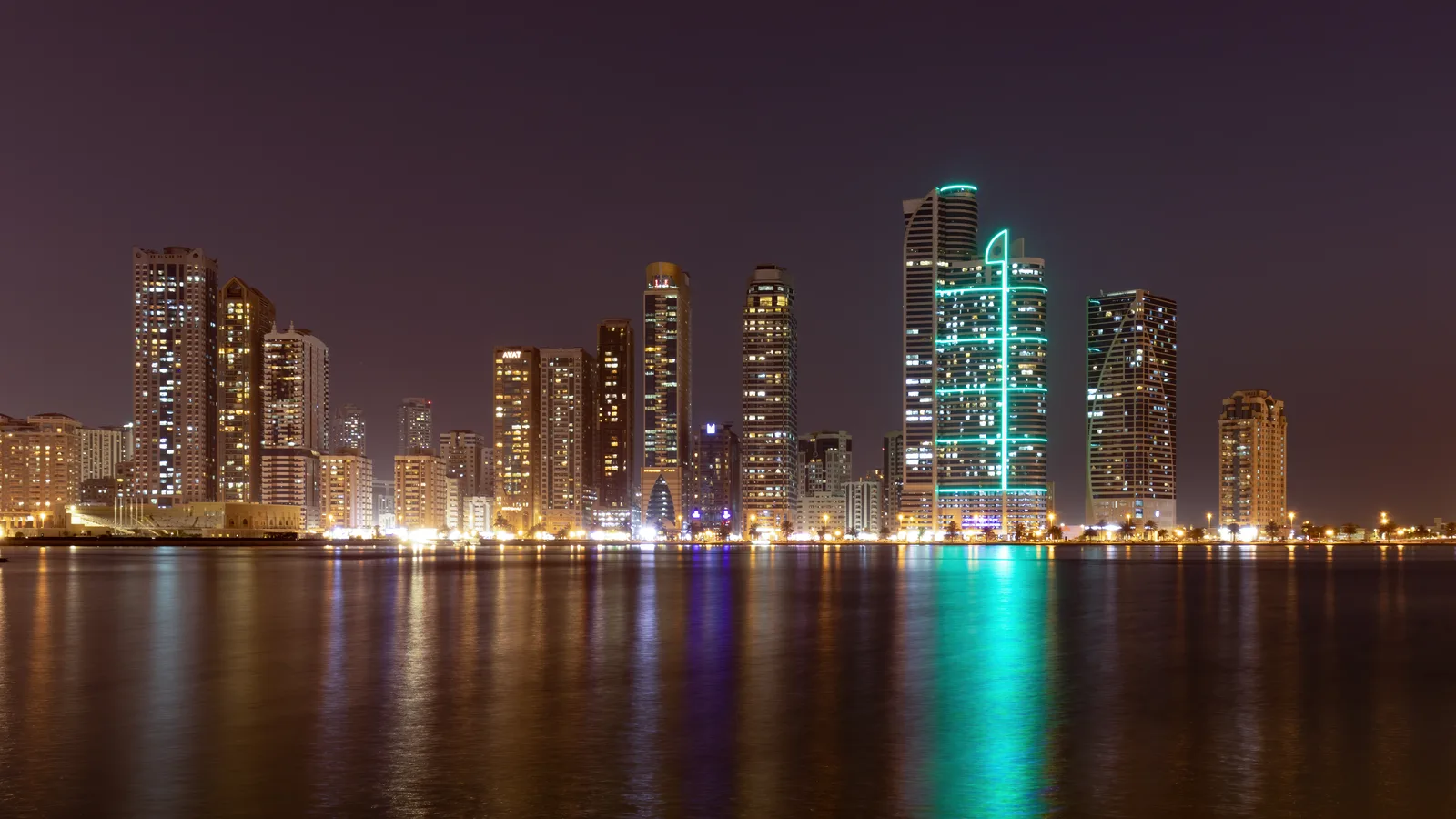
Come to Sharjah for a different kind of UAE city break
Sharjah gives museums, art and family waterfronts a central role in a visit. Its best days can be deliberately modest: a morning among historic houses, a substantial museum visit, then dinner beside a lagoon as the heat eases. The appeal lies in connecting those experiences, rather than trying to imitate a holiday based entirely around Dubai’s best-known landmarks.
Allow two full days for a useful introduction and a third for a beach, another cultural stop or a slower family day. If you are considering a move, add time for ordinary errands and real commuting tests. The official Sharjah city overview also separates the city from the emirate’s central desert and east-coast destinations; they belong to different travel plans.
Understand the port, the fort and the modern cultural city
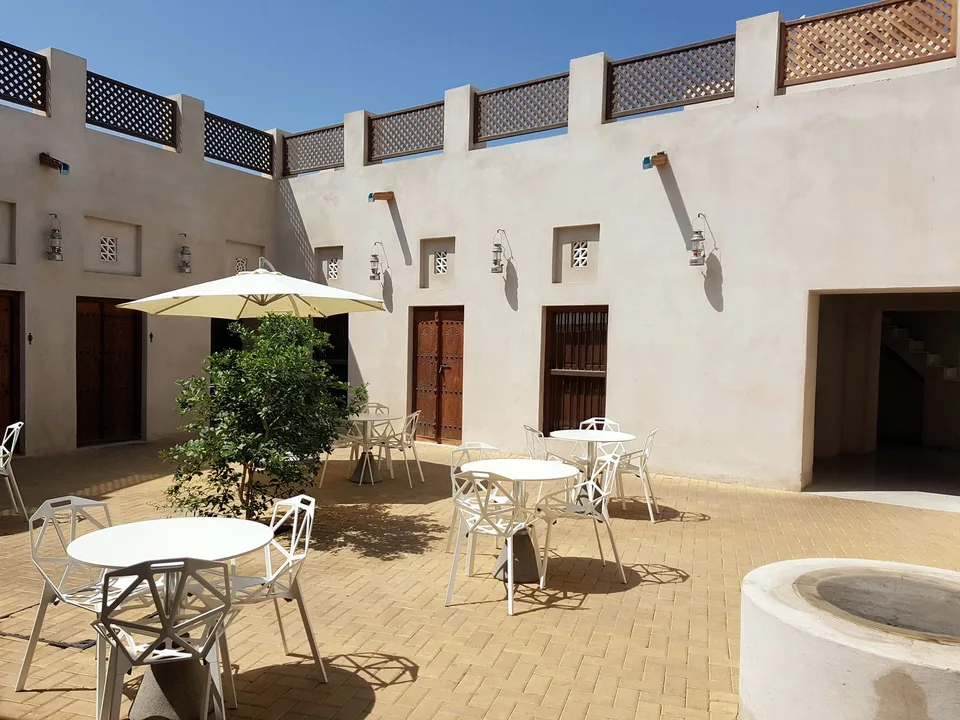
Begin with the relationship between commerce, domestic life and government. The Heart of Sharjah heritage district occupies the old merchant centre, where restored houses, souks and cultural spaces help interpret an earlier urban scale. Its architecture makes a useful counterpoint to the apartment towers and broad roads elsewhere in today’s city. Restoration should not be confused with every building being open to visitors.
Sharjah Fort, Al Hisn, was built in 1823 as the government headquarters and residence of the ruling Al Qasimi family. Visiting the fort and a merchant house gives historical context before a wider museum itinerary. Avoid treating cultural-capital titles or a heritage-restoration project as proof that the whole city is a UNESCO World Heritage Site; those are different designations.
Choose your part of the city before choosing a hotel
For heritage and galleries, prioritise access to the Heart of Sharjah and the northern Corniche. For evening waterfront time, look around Khalid Lagoon and Al Majaz. Al Khan offers another coastal setting, while Al Qasba’s canal provides a useful dining and cultural anchor between the lagoons. The right base depends on which journeys you intend to repeat.
Al Nahda may enter a search because of appointments toward Dubai, while the airport and University City require a different geographical calculation. An address described simply as “Sharjah” tells you too little. Check the map pin, vehicle access and actual entrance, then compare journeys at your likely travel times. A lower room price loses some value when every outing requires a long transfer.
Explore the Heart of Sharjah at walking pace
Give the heritage area one coherent morning instead of scattering its buildings across several days. Start with an open museum or the fort, then connect the surrounding lanes and souks. Courtyards, wind-tower architecture and the relationship between shops and houses reward looking slowly. Stop for a drink and reconsider the next visit before the day becomes a checklist.
Check individual openings rather than assume one district-wide ticket or schedule. Religious observances, programmes and maintenance can change access. In warmer months, shorten outdoor stretches and arrange a clear pickup point for the next leg. Travellers using wheelchairs or pushchairs should ask about the particular building entrance, internal surfaces and toilets; a heritage district’s atmospheric description does not establish a step-free route.
Give the Museum of Islamic Civilization enough attention
The Sharjah Museum of Islamic Civilization stands on the Corniche north of the Heart of Sharjah. Its seven galleries connect Islamic faith, scientific achievement and artistic production. Astronomy, manuscripts, ceramics, textiles and jewellery offer several ways into the collection. Choose a theme that interests you rather than trying to absorb every object at equal speed.
Allow an unhurried visit and keep the following appointment flexible. Someone interested in scientific instruments may want a very different pace from a family concentrating on visual exhibits. Confirm current admission, opening arrangements and any gallery restrictions before setting off; the museum authority’s site could not be reliably reached during this review, so this guide does not repeat unverified ticket prices or schedules from other websites.
See contemporary art beyond a single headline attraction
Check Sharjah Art Foundation’s current programme before choosing a gallery day. Exhibitions and activities use different venues, and listings distinguish free events from paid experiences. A location and date attached to one exhibition should not be extended to every Foundation space. Save the relevant venue name and opening details, especially when you plan several stops.
The Foundation’s programme makes contemporary art a substantial reason to stay in Sharjah, not merely an indoor refuge from the weather. Give one exhibition enough time to develop an idea, then decide whether to continue. Biennial editions have their own dates: a city associated with a major biennial is not necessarily hosting that event during your particular visit.
Book Rain Room as a short timed experience
Rain Room’s official visitor page describes Random International’s installation as a continuous downpour responding to visitors’ movement. The experience lasts about ten to fifteen minutes, with a maximum of seven people per session. That makes it a compact appointment to build into a broader cultural day, rather than a half-day attraction on its own.
The official booking page lists adult admission at AED25 and student or teacher admission at AED15; children aged five and under enter free. Check concession requirements. Published opening is 9am–9pm Saturday–Thursday and 4pm–10pm Friday, with separate arrangements possible for maintenance or seasonal observances. Arrive at least fifteen minutes before your slot and follow staff guidance about movement, belongings and photography inside.
Leave room for a lagoon evening
Al Majaz Waterfront is a sensible place to slow down after museums: choose a walk, a meal and perhaps one family activity instead of adding another cross-city drive. Waterfront views can be enjoyed without making every stop a paid attraction. Check individual activity charges and any performance programme on the day rather than plan dinner around an assumed fountain timetable.
Al Qasba has a different canal-side setting, with pedestrian bridges, restaurants and cultural venues including Maraya Art Centre. Pick one waterfront area for an evening if time is short. Trying to fit both into a tight dinner window adds movement without necessarily improving the experience. When travelling with children, identify toilets, a place to sit and the return pickup point before everyone becomes tired.
Distinguish Al Noor Mosque from Al Noor Island
The Al Noor Mosque visitor information describes an Ottoman-inspired building beside Khalid Lagoon, with guided access for non-Muslim visitors. Arrange the appropriate visit rather than assume the doors operate like a museum entrance. Dress modestly, follow guidance about shoes and photography, and give worship priority. An evening exterior view can complement a lagoon walk even without an interior tour.
Nearby Al Noor Island combines gardens, art and a Butterfly House. These are separate experiences from the mosque. Compare the island’s current ticket packages carefully: different products can include different activities or dining. The operator lists the Butterfly House at 9am–6pm, earlier than the island’s evening hours. If butterflies are your priority, an after-dinner arrival is therefore the wrong plan.
Add the beach when it suits your party and the conditions
Al Khan Beach puts a coastal break within reach of the urban itinerary, near the aquarium and Maritime Museum area. It can work well as a separate morning or a change of pace for children. Check access, charges and facility availability for the precise beach or hotel beach you intend to use; a seafront room does not establish which facilities are included.
Follow flags, lifeguard instructions and designated swimming areas. Check the weather and sea state rather than infer safe swimming from sunshine or a photograph. Water sports have their own operator rules and costs. If you want both a museum and beach time, leave room for changing, meals and transport instead of treating the distance between the two as the whole excursion.
Browse the Blue Souk with a clear shopping budget
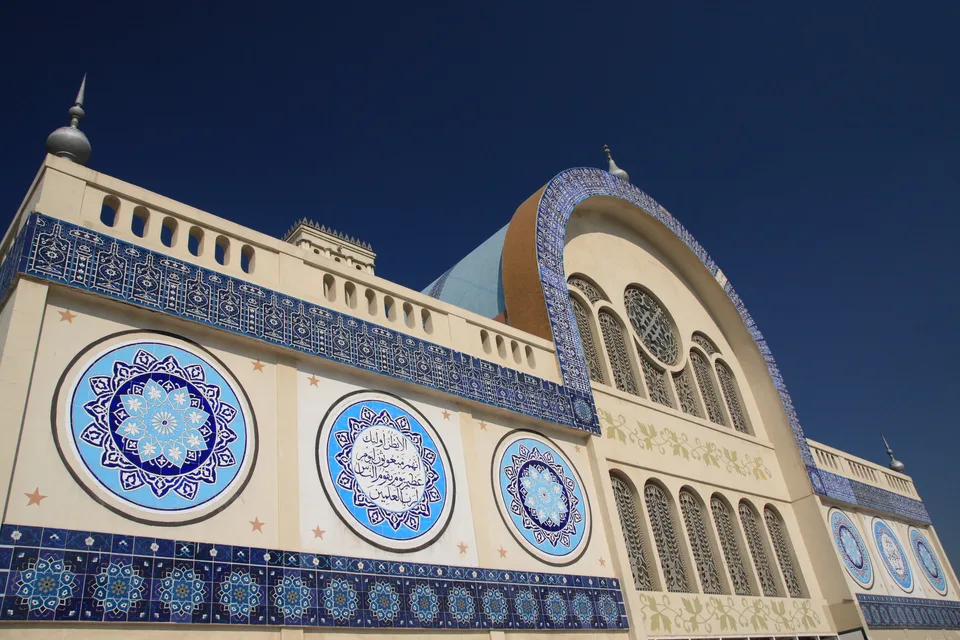
The Central Souk, also called the Blue Souk, is recognisable for its blue-tiled exterior near Khalid Lagoon and Al Ittihad Square. Textiles, carpets, crafts and jewellery make it useful for browsing even when you have no major purchase planned. Look at the building as well as the shop windows, and check the opening of any particular business you intend to visit.
For an expensive purchase, ask what the material is, how the price is calculated and what the written receipt guarantees. Compare like with like before negotiating. Establish packing, delivery, customs and return arrangements before paying for something bulky. For food or spices elsewhere in the souks, check ingredients and the destination country’s import rules; an appealing souvenir is less useful if you cannot take it home.
Match accommodation to heritage, waterfront or transit needs
Use the official hotel directory’s regional filters to distinguish city properties from desert retreats and east-coast resorts. Heritage accommodation in the old town, modern lagoon hotels, beach resorts and serviced apartments support different stays. For an early flight, airport proximity may outweigh the convenience of an evening walk. For repeated museum visits, the reverse may be true.
Compare the final price for your dates, including mandatory charges, breakfast and cancellation terms. Families should clarify bedding, occupancy limits and kitchen facilities; accessible travellers should request measurements and photographs of entrances and bathrooms. Ask whether a pool, beach, parking or shuttle is actually included. A hotel shuttle can be useful only when its destinations, timetable and booking rules match your plans.
For a short stay, being able to return comfortably for a midday rest can matter more than a long facilities list. Check the walking route outside the entrance, not just the room view. If your party needs adjoining rooms, a cot or a particular bathroom arrangement, obtain written confirmation rather than rely on an availability request.
Arrive through the airport named on your booking
Sharjah International Airport, SHJ, serves a different arrival point from Dubai International, DXB. Check the airport code before arranging a meeting or transfer. Allow for immigration, baggage and the onward road journey, and give the driver the full hotel address. A transfer quotation should specify the vehicle, luggage allowance, waiting policy and the final destination.
Sharjah Airport’s taxi information states that taxis operate around the clock and use meters, with an additional AED20 airport surcharge on journeys originating there. That surcharge is not the complete fare to your hotel. Family and ladies’ taxi options are listed too. Ask about the expected total and any relevant extras before departure, particularly when your destination is in another emirate.
Check airport buses against the current route information
The operator’s published route 99 map connects Sharjah airport with Al Rolla Terminal via Al Dhaid Road and Al Zahra Street. It differs from older advice directing all route 99 users to Al Jubail. Confirm the current stop and direction for your destination rather than copying a terminal name from an old itinerary.
There is also a fare discrepancy: Mowasalat’s current routes page shows AED9 cash and AED7 with Sayer, while its linked route PDF displays older AED8 and AED6 figures. Confirm the fare before boarding. The airport’s coach information describes inter-emirate Air Arabia services, but check the airline’s current eligibility, timetable and booking arrangements. These coaches are not interchangeable with a city bus or an on-demand hotel transfer.
Treat inter-emirate travel as a real journey
For journeys beyond the city, consult Sharjah RTA’s intercity schedule service and check the terminals at both ends. Include the transfer between a hotel and the bus station, waiting time and the final connection. A bus may be economical for one passenger but less convenient for a family travelling with luggage or a child seat requirement.
If Dubai is the main purpose of your trip, compare accommodation near those appointments with staying in Sharjah and travelling repeatedly. Test the route at the actual weekday hours you will use. Do not budget from a quiet late-night journey or a straight-line map distance. For a fixed flight, medical appointment or event, build in a meaningful buffer rather than rely on the shortest journey estimate.
Eat well without depending on a restaurant ranking
Sharjah’s food choices range from everyday cafés and shawarma counters to hotel restaurants and waterfront dining. Choose by the occasion: an efficient lunch near a museum, a relaxed family dinner or a longer evening around Al Majaz. Read a current menu, confirm kitchen hours and ask about ingredients when dietary needs are important. A familiar dish name does not guarantee the same preparation everywhere.
The tourism authority’s dining guidance describes Sharjah as a dry emirate, with no alcohol served even in international hotels. Plan for alcohol-free hospitality rather than expect Dubai-style licensed venues. Around Ramadan, confirm each business’s current arrangements. Let the day’s programme account for local observances without assuming every venue follows a single schedule copied from a previous year.
Keep the budget transparent and specific
Start with accommodation and transport, then add the experiences you will actually book. Rain Room provides one verified reference point at AED25 for a standard adult ticket. A couple would therefore allocate AED50 for those admissions before adding transfers or a meal. This arithmetic is a planning example, not a representative daily spend for every visitor.
Request current quotes for beach access, museum admissions, family activities and longer taxi journeys. Distinguish a per-person price from a vehicle or room price. Leave a reserve for a changed plan or a journey that takes longer than expected. For a longer stay, compare groceries, cooling, internet, insurance and commuting costs separately; a cheaper rent should not silently carry the whole affordability argument.
Choose the season around your tolerance for outdoor heat
Sharjah’s cooler months generally make heritage walks and waterfront evenings more comfortable than the height of summer. The official visitor FAQs describe a strong contrast between hot summers and milder winters. Use that seasonal distinction to choose the style of holiday, rather than expect the same outdoor programme to work throughout the year.
Modest, breathable clothing suits public places; keep swimwear for appropriate beach or pool areas. Ask permission before photographing people, and respect restrictions at religious, government and transport premises. These small decisions make a cultural visit easier to navigate.
In summer, plan short outdoor sections around substantial indoor visits and reliable transport. In cooler weather, retain flexibility for rain, wind, haze or a rougher sea. Check the National Center of Meteorology’s Sharjah information near departure and before beach or boat activities. Carry water, arrange shade and rest stops, and adapt the day to children, older relatives and anyone whose health makes heat difficult.
A manageable three-day introduction
On day one, focus on the Heart of Sharjah, the fort and one heritage interior whose opening you have confirmed. Leave the afternoon for the Museum of Islamic Civilization rather than several more buildings. Finish with an uncomplicated dinner. If you arrive late, start the heritage route the following morning instead of squeezing it between airport formalities and closing time.
On day two, choose an Art Foundation exhibition and a booked Rain Room slot, with time between them. Browse the Blue Souk later, then spend the evening around Al Majaz. On day three, choose Al Khan and a suitable family attraction, or Al Noor Island with the Butterfly House’s earlier closing in mind. Swap outdoor portions around weather, and keep the final airport transfer independent of an ambitious last excursion.
Assess a potential move through the commute and the household
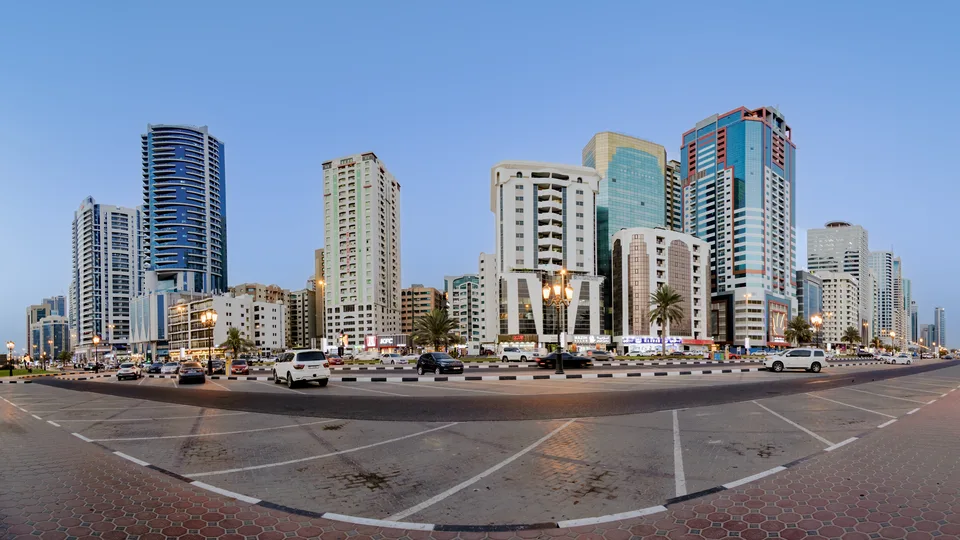
Start with the workplace or campus, then consider school, shopping and regular medical needs. A lagoon view can improve daily life, but it cannot shorten a difficult journey to a job elsewhere. Stay temporarily while testing shortlisted areas on working days. Walk from the actual building to the bus stop, parking space or pickup point rather than assess the neighbourhood only from a car.
Inspect cooling, water pressure, lift reliability, ventilation, noise and the route into the property. Ask about parking allocation, delivery access and maintenance response. Visit again at another time if possible. Establish whether cooling is separately billed and request previous bills for a comparable period. Compare the total commitment, including deposits, moving costs and commuting, before signing for a location you have only experienced on holiday.
Use Sharjah’s tenancy and utility systems
Verify the landlord’s or agent’s authority to let the property, obtain a written agreement and agree the inventory before paying. Sharjah Municipality’s tenancy service directs applicants to its official attestation channels. Confirm current documents, fees and household eligibility through those channels. Dubai’s Ejari process should not be substituted for Sharjah’s requirements simply because a property search crosses the emirate boundary.
SEWA’s move-in service covers owner and tenant applications and requests identity, premises and supporting information. Agree who arranges accounts, photograph meter readings and retain handover records. Use SEWA’s bill calculator only alongside the applicable tariff and actual consumption. Check fixed-internet installation at the exact address, and put responsibility for repairs, termination and deposit return into the agreement rather than leave it to verbal assurances.
Settle school and healthcare needs before a long lease
Families can use the Sharjah Private Education Authority school directory to compare location, curriculum and published information. Check the specific campus, available grade, admission requirements and full fees directly. Add school transport, uniforms and the daily journey to the comparison. A place in the preferred school should be established before a housing decision that depends on it.
Check health-insurance coverage for the hospitals and clinics you expect to use, including outpatient treatment and any ongoing medicines. Ask about referral rules and charges rather than assume a policy covers every provider. Keep prescriptions and important records available offline. During a preliminary stay, try ordinary errands such as groceries and laundry; they often reveal more about a workable household routine than another afternoon of apartment viewings.
Keep tourism, employment and residence permission separate
Use the ICP’s official entry visa information to check whether your nationality needs a prearranged visa or qualifies for another entry arrangement. Confirm current conditions with the issuing authority or authorised provider before paying for non-refundable travel. A visitor permission does not itself establish permission to take employment; the employment law’s work-permit requirement is a separate matter.
Formal study has its own residence arrangements through an accredited institution or eligible parent sponsor. Longer-term relocation requires the appropriate residence route and continuing compliance with its conditions. The ICP Golden Residency guide sets out eligibility for a long-term renewable status; it should not be described as unconditional permanent residence or citizenship. Renting or purchasing a home does not automatically resolve entry, work or residence permission.
Consider nearby cities without confusing their character
VisaWand’s Dubai city guide can help you compare a visit centred on that city with a Sharjah stay. For the neighbouring emirate to the north, the Ajman location page is a directory starting point, rather than a completed travel guide. Check the content and transport connections relevant to your own route before extending the itinerary.
Khorfakkan, Kalba and the desert areas promoted under the Sharjah name are worthwhile possibilities for a separate excursion, with proper travel time and operator arrangements. For wider preparation, consult the UAE country guide, UAE location directory and UAE destination page. For work, study or longer residence questions, use the consultant directory to identify relevant assistance and verify credentials before engagement.
Official planning resources
Reviewed 15 October 2026. Use the official resources linked throughout this guide for admission, transport, housing and immigration decisions. Prices, services and rules can change; confirm the details relevant to your dates. Photography illustrates the locations and is not a live view.
View all official resources
- Visit Sharjah: Sharjah city and the emirate’s regions
- Visit Sharjah: Heart of Sharjah heritage district
- Visit Sharjah: historical context for Sharjah Fort
- Visit Sharjah: Museum of Islamic Civilization
- Sharjah Art Foundation: current exhibitions and events
- Sharjah Art Foundation: Rain Room sessions and opening hours
- Rain Room: official ticket booking and prices
- Visit Sharjah: Al Majaz Waterfront
- Visit Sharjah: Al Qasba canal and cultural venues
- Visit Sharjah: Al Noor Mosque
- Al Noor Island: official gardens, art and visitor information
- Al Noor Island: visitor experiences and ticket options
- Visit Sharjah: Al Khan Beach and nearby attractions
- Visit Sharjah: Central Souk, the Blue Souk
- Visit Sharjah: hotel directory with regional filters
- Sharjah Airport: metered taxis and airport surcharge
- Mowasalat: current Sharjah bus routes and fares
- Mowasalat: route 99 airport and Al Rolla map
- Sharjah Airport: bus and inter-emirate coach connections
- Sharjah RTA: intercity bus schedule service
- Visit Sharjah: weather, dress and visitor etiquette
- Visit Sharjah: dining areas and alcohol-free hospitality
- National Center of Meteorology: Sharjah weather and marine information
- Sharjah Municipality: official tenancy attestation channels
- SEWA: owner and tenant move-in service
- SEWA: electricity and water bill calculator
- Sharjah Private Education Authority: school directory
- ICP: official entry visa application information
- UAE Government: employment law, Article 6 work permits
- UAE Government: residence permission for study
- ICP: current Golden Residency eligibility guidance
Plan the next part of your journey
Explore the United Arab Emirates guide, browse other cities or compare consultants for your travel and relocation questions.