Visa

A capital best planned by district
Abu Dhabi rewards a different sort of planning from a compact historic city. A morning among museum collections, an afternoon beside the water and an evening at a mosque can make a memorable day, but the journeys between them matter. Choose a few geographical clusters instead of treating the map as a checklist. The city’s waterfront, islands and mainland neighbourhoods give each accommodation choice a different set of advantages.
This is the capital of the United Arab Emirates and of the emirate sharing its name. The emirate’s geography extends far beyond the city, encompassing Al Ain to the east and Al Dhafra to the west. A hotel advertised as being in Abu Dhabi therefore needs an exact address. For a first visit, three full days provide a useful introduction; additional days allow beaches, theme parks or an inland excursion without constant transfers.
Check the travel situation before booking
Current travel conditions deserve attention alongside the usual sightseeing decisions. At this guide’s October 2026 review, the US State Department’s UAE advisory was Level 3, “Reconsider travel”, citing terrorism and armed conflict, with warnings about regional aviation disruption. This is a US government assessment; travellers should also consult their own government’s advice and their airline’s latest notices.
Before paying for flights, read cancellation terms and establish whether insurance covers the circumstances relevant to your journey. Keep some flexibility around international connections. An attraction’s published opening hours cannot establish that a flight will operate, and a city itinerary should remain adjustable if transport conditions change.
The history behind the waterfront
Abu Dhabi’s modern profile makes more sense when its maritime past stays in view. Fishing and pearling supported the earlier settlement, while the discovery of oil and subsequent exports transformed its resources and ambitions. The Residents Office’s historical overview records oil discovery in 1958 and the first exports in 1962. Sheikh Zayed became ruler in 1966 and played a central role in the UAE’s formation in 1971.
That history is visible at very different scales: a fortified residence downtown, national collections on Saadiyat and public buildings interpreting statehood. Begin with one of the historical sites before the larger contemporary attractions. It gives the skyline context and helps avoid an itinerary consisting entirely of impressive interiors without a sense of how the city developed.
Choose between downtown, Saadiyat and Yas
The practical first choice is between a city base, a cultural or beach base on Saadiyat, and a leisure base on Yas. Downtown and the Corniche suit visitors who want waterfront walks and access to the established urban centre. Saadiyat suits museum-focused trips and resort stays. Yas is a more deliberate choice for theme parks and island events.
For longer stays, the Residents Office’s neighbourhood overview distinguishes established apartment areas such as Al Khalidiyah from high-rise Al Reem, waterfront Al Raha Beach and the villas and compounds associated with Khalifa City. These descriptions help assemble a shortlist; they cannot establish whether a particular building is quiet, well maintained or convenient for your workplace. Judge the address and daily journeys alongside the area’s reputation.
Start downtown at Qasr Al Hosn
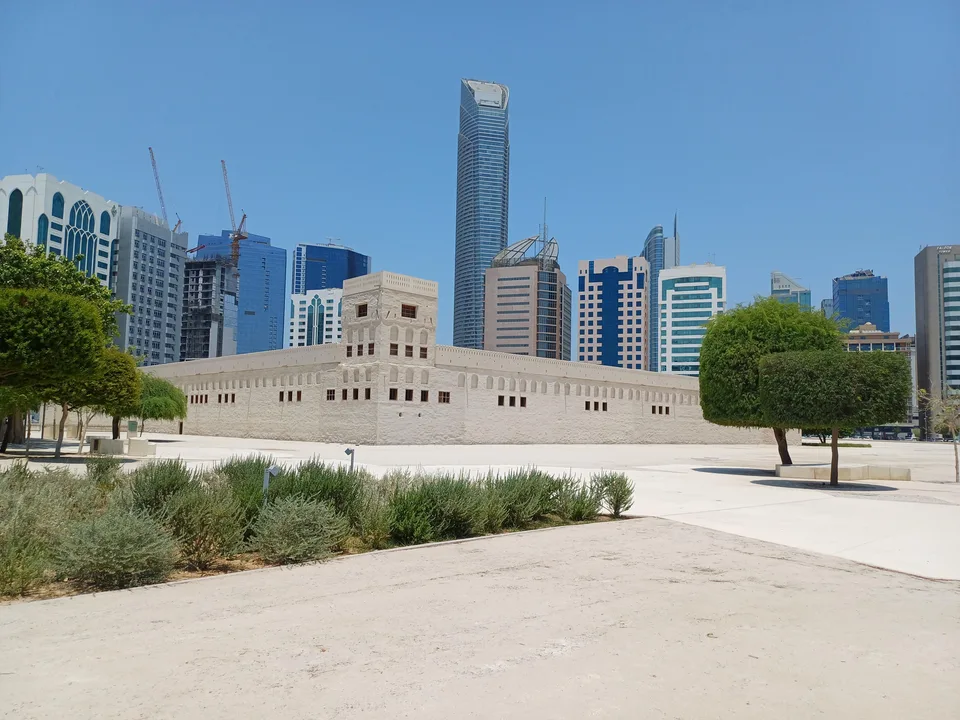
Qasr Al Hosn provides an unusually clear link between the earlier settlement and the surrounding city. The historic complex includes an Inner Fort dating to 1795 and an Outer Palace added between 1939 and 1945, on the site of an earlier watchtower. It opened as a museum in 2018 following conservation work.
Look beyond the white walls. The associated House of Artisans interprets crafts including Al Sadu weaving, palm-leaf work and Talli embroidery; Bait Al Gahwa explores Arabic coffee preparation. The nearby Cultural Foundation adds exhibitions and other arts programming. Check the separate schedules before choosing a day, and leave room for whichever activity interests you most rather than expecting every demonstration to be running continuously. This is a useful opening visit for travellers who want the city’s history in an accessible geographical setting.
Give the Louvre time beyond the photograph
Louvre Abu Dhabi’s visitor information lists adult admission at AED 70 including VAT, with free admission for under-18s and specified concession groups. The museum’s collections and exhibitions deserve time beyond a brief look at the dome. Make it the main cultural appointment of a morning or afternoon, with a break before adding another large museum.
The current main visitor page and admission page list galleries from 10am to 6.30pm Monday–Thursday and 10am to 8.30pm Friday–Sunday, with last entry 30 minutes earlier. The dome has later access hours, so evening access does not mean galleries remain open. Some galleries may close during artwork installation. Check the current page for your date rather than relying on older descriptions of a Monday closure. Confirm ticket inclusions before buying a museum bundle.
Explore the national story on Saadiyat
Zayed National Museum is an operating attraction, with six permanent galleries exploring the UAE’s history and the legacy of Sheikh Zayed. Its current published hours are 10am–8pm daily, with last entry an hour before closing. Use the museum’s own ticket information for the admission category and date you need.
On the same cultural island, Natural History Museum Abu Dhabi offers a different perspective through the history of Earth, ancient life and the region’s changing environments. Its visitor page distinguishes the main museum ticket from the separately ticketed Immersive Theatre. Families should check that distinction before promising children a particular experience. Choose the national museum, natural history or art according to your interests; attempting three substantial collections in one day is likely to leave little time for looking closely.
Visit Sheikh Zayed Grand Mosque prepared
Sheikh Zayed Grand Mosque is an active place of worship as well as a major visitor destination. Obtain the required visitor access pass through the Centre’s official channels and check the current admission categories and mosque manners. Do not assume that older descriptions of free entry still apply. Dress requirements call for long, loose clothing, with a headscarf for women; arrive prepared rather than relying on obtaining clothing at the entrance.
The Centre’s ordinary visiting hours run from 9am to 8.30pm except Friday, when access is split between 9am–11.30am and 2.30pm–8.30pm. Last-entry times precede closing, and Ramadan has a different schedule. Keep your visit separate from a tight airport connection. Security, the approach and the visitor route all need time beyond the moment of arrival.
Understand the arrival process at Qasr Al Watan
Qasr Al Watan’s official visitor guidance explains a more structured visit than an ordinary walk along the waterfront. Arrive at the Visitor Centre, where security checks precede the shuttle to the palace. Its exhibitions focus on governance, knowledge and Arab heritage. Check the date-specific opening schedule and any Palace in Motion performance before arranging transport around an evening show.
Cover shoulders and knees and wear appropriate shoes. Large luggage is particularly impractical: the operator states that there are no cloakrooms or lockers, and oversized bags can be refused. Leave suitcases at your accommodation rather than building a palace visit into a departure journey with all your belongings. The current guidance also notes temporary closures of some dining outlets, so plan your meal independently of assumptions about palace cafés.
Make the Corniche part of ordinary time
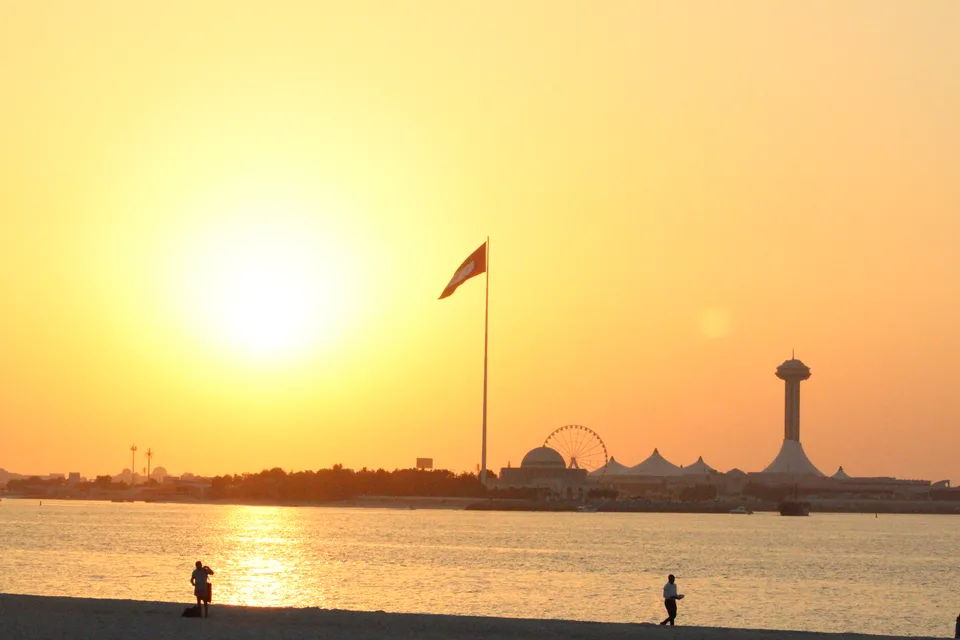
The Corniche waterfront is a useful counterweight to ticketed attractions: landscaped paths, views over the water and places to pause without committing to another indoor visit. The tourism authority describes an eight-kilometre waterfront, but enjoying a shorter stretch is perfectly reasonable. Pick a starting point near your accommodation or next appointment instead of setting yourself an end-to-end walk in the heat.
Public beach access and managed beach sections have different arrangements and charges. Check the entrance you intend to use, rather than assuming one beach price applies along the whole shore. Swim only where permitted and follow current lifeguard instructions. For a family afternoon, budget separately for any shade, loungers or equipment you choose, and carry dry clothing for the journey back.
See the mangroves without confusing the sites
Abu Dhabi’s coastal landscape includes mangroves as well as beaches and built waterfronts. Jubail Mangrove Park lies between Saadiyat and Yas and offers boardwalk and water-based experiences. It is a distinct destination from Mangrove National Park elsewhere in the city; confirm the correct meeting point with any activity provider.
For a boardwalk visit, think about sun exposure, walking comfort and the day’s conditions. For kayaking, ask the operator about the particular session, minimum ages, equipment and weather arrangements before booking. Wildlife is part of a living habitat, so sightings cannot be guaranteed. Treat it as a chance to observe the coast at a different pace, and leave time to travel onward rather than scheduling another admission immediately after the activity.

Decide whether Yas deserves its own day
Yas Island’s official visitor site brings together its theme parks, accommodation and event information. The island makes sense when a specific park, performance or family activity is a reason for the trip. It is less useful to buy a multi-park product simply because several names appear on the same map.
Compare the included parks, validity period, entry conditions and any hotel-package terms. Check height restrictions and the rides that matter to your group directly with the operator. A single park with breaks can be a more satisfying day than several hurried entries. If a major event is the purpose of your stay, establish its transport arrangements before selecting a hotel elsewhere in the city.
Choose accommodation by the journeys it saves
A Corniche hotel, Saadiyat resort and Yas hotel can each be sensible, but for different trips. Use your two or three most important activities to compare locations. Conrad Abu Dhabi Etihad Towers’ official location page, for example, places that property on the West Corniche; it is a concrete reference for that end of the waterfront, rather than evidence that every Abu Dhabi hotel offers the same access.
Request a complete quotation including taxes, breakfast, occupancy and cancellation conditions. For an apartment or extended stay, check cooking facilities, laundry, housekeeping and whether utilities are included. A cheaper room can lose its advantage if it creates repeated long taxi journeys. Conversely, paying for resort facilities has limited value if your itinerary keeps you away throughout the day.
Arrive through Zayed International Airport
Zayed International Airport, code AUH, serves Abu Dhabi. Its official city-bus information lists the A1 towards Al Zahiyah and the A2 towards Khalifa Street, alongside other routes. The airport describes A-series operation as round the clock and places bus stops outside Arrivals. Verify the current route and stop for your exact hotel; “city centre” is not a single interchangeable destination.
Public buses require a Hafilat card, available from machines near the airport stops, and cash is not accepted onboard. The airport quotes a typical fare around AED 4, which should be treated as an indication rather than a universal fixed fare. If travelling with bulky luggage, children or limited mobility, compare the bus journey and final walk with a door-to-door airport transfer.
Use buses selectively and price the whole journey
The Abu Dhabi Mobility public-transport page links current schedules and the Darbi journey-planning service. Check the actual stop, direction and onward connection before leaving. A bus may be economical while still requiring a substantial walk at either end, particularly when a museum entrance or resort is set back from the road.
Tap Hafilat when boarding and leaving. The authority’s fare-integration announcement explains distance-based charging and conditional transfers, so do not budget every journey as the same flat city fare. Compare a suitable pass against your planned trips using current sales information. For taxis or booked transfers, confirm the destination and fare basis before travelling. When comparing accommodation, include both the money and time spent moving between districts.
Eat and shop with a purpose
The city’s trading history is a useful starting point for food exploration. The tourism authority’s local-cuisine page highlights Mina’s fish and produce markets and the spices associated with Emirati cooking, including saffron, cardamom and cinnamon. Markets provide a different experience from hotel dining; visit to understand the ingredients and ask about quantities and preparation before buying anything perishable.
Machboos, a fragrant rice-and-meat dish, is a useful starting point when exploring an Emirati menu. Ask which preparation is available, rather than expecting every restaurant to serve it.
Read menus and ask what a meal includes instead of assuming a particular price from the neighbourhood. For seafood priced by weight, establish the selected weight and cooking charges first. Families and people with allergies should discuss ingredients directly with the restaurant. When shopping for gifts, compare size, materials and packaging rather than judging value only by a discount sign, and check your home country’s food-import rules before choosing edible souvenirs.
Build a budget around actual choices
Start with the costs you can obtain for your dates: flights, the full accommodation quotation and the attractions you definitely want. Then add local journeys, meals and a margin for changes. Keep optional purchases separate. A museum-led visit with waterfront walks has a different cost structure from a resort stay with several theme-park admissions.
Use published prices only for the precise category they describe. An adult museum ticket, a child’s concession, a theatre add-on and a multi-attraction pass are different products. Compare what is included before calling a bundle a saving. For a longer stay, record laundry, groceries and commuting alongside rent; a visitor’s restaurant budget tells you little about the cost of running a household.
Let the season shape your day
Abu Dhabi’s official weather guidance identifies winter as the more comfortable period for outdoor exploration and late May–September as the intense summer season. The practical effect is more important than a single temperature average: an exposed walk, beach session and bus-stop wait feel different from time in an air-conditioned gallery.
In hotter months, put substantial indoor visits in the middle of the day and shorten outdoor transitions. Carry water where permitted, arrange breaks and plan activities around the needs of children and older relatives. Cooler weather makes longer walks more attractive, but still check the forecast before water activities. Review Ramadan and holiday opening arrangements for individual venues instead of assuming the ordinary weekly timetable applies throughout the year.
A realistic three-day introduction
Day one can stay around the established city: Qasr Al Hosn, an unhurried lunch and a manageable Corniche walk or beach visit. Add the Cultural Foundation only if its programme interests you and the opening schedule fits. Avoid making a late arrival flight count as a full sightseeing day.
For day two, choose one major Saadiyat museum as the anchor. Add a second only if your group still has the energy, or use the remaining time for a meal and a gentler waterfront stop. Keep the mosque and Qasr Al Watan for day three, checking Friday access and the palace’s current calendar first. Theme-park enthusiasts can replace that day with Yas. This is a planning framework, not a promise that every attraction will be available in that order.
Test everyday life before choosing a home
A relocation visit should include ordinary journeys rather than only attractions. Travel between a prospective building and the workplace at the relevant time, locate a supermarket and inspect the route to a likely clinic. Check parking access, lifts, deliveries, maintenance procedures and where children would be collected for school.
Obtain current property-specific quotations. The ADREC rental index provides an area-level benchmark, not a legal valuation of an individual home. Inspect the unit before transferring a deposit and establish who is entitled to let it. Compare furnishing, cooling charges, payment instalments and maintenance responsibilities in writing. A furnished short stay while viewing homes can be easier to assess than committing to an annual tenancy from photographs alone.
Check the tenancy rules and registration route
Abu Dhabi’s housing rules need a current check. ADREC’s announcement of 3 June 2026 introduced a temporary 0% annual increase measure until further notice, with reference to the property’s last registered Tawtheeq rent. Ask ADREC how the current directive applies to the particular agreement instead of relying on an older general statement about permitted annual increases.
There is also an important geographical distinction. ADGM’s AccessRP platform covers real-estate services on Al Maryah and Al Reem islands, including tenancy registration and connections with other authorities. Confirm the property’s jurisdiction and registration process before signing. Do not assume that a contract on either island follows exactly the same administrative route as a home elsewhere in Abu Dhabi.
Set up the household as well as the address
Before moving in, establish how water, electricity and cooling accounts will be opened, which deposits are required and who pays outstanding balances. Ask the building manager about gas, internet installation and maintenance access. The Residents Office’s telecommunications guidance points households towards the principal providers; check availability at the exact building and read cancellation terms before agreeing to a package.
For healthcare, use the Department of Health as the local regulator and confirm your insurer’s actual hospital and clinic network. Discuss continuing prescriptions before arrival. Check school places, transport and fees directly with institutions before choosing a family home. These practical confirmations are more useful than a broad claim that an area has good services: capacity, coverage and the daily route are what affect the household.
Separate a visit from work, study and residence
Tourist entry is a different permission from employment or long-term residence. Check nationality-specific entry conditions through ICP’s official immigration information before booking. The authority lists different visit categories and documentary requirements; passport validity, insurance and onward-travel evidence should be checked for the route that applies to you. A ticket or hotel reservation does not itself establish eligibility.
Employment requires appropriate permission before work begins. For study, obtain guidance from the admitting institution: Stern at NYU Abu Dhabi’s published policies, for example, distinguish admission from the necessary security clearance and visa approval. That is a programme-specific example, not a universal university checklist. Renewable long-term residence categories also have eligibility conditions and expiry dates; do not interpret a Golden or Green residence product as unconditional permanent settlement.
Consider Al Ain or a second city
If you have more time, Al Ain’s official visitor information offers a different emphasis: inland oases, forts and the landscape around Jebel Hafit. Allow it a separate day or overnight stay rather than treating it as another downtown neighbourhood. Confirm the opening arrangements for the individual sites you want before setting out.
Dubai is another possible second city, with its own accommodation and transport decisions. Read VisaWand’s Dubai city guide before dividing the trip, and allow a proper transfer margin between emirates. The UAE country guide, destination page and location directory provide wider context. For immigration planning, compare relevant specialists through the consultant listings while using official authorities to confirm the rules that determine your eligibility.
Official planning resources
Reviewed 15 October 2026. Use the official resources linked throughout this guide for admission, transport, housing and immigration decisions. Prices, services and rules can change; confirm the details relevant to your dates. Photography illustrates the locations and is not a live view.
View all official resources
- Where is Abu Dhabi? — Residents Office
- History of Abu Dhabi — Residents Office
- Housing areas — Abu Dhabi Residents Office
- Louvre Abu Dhabi: admission and hours
- Zayed National Museum: official visitor information
- Natural History Museum Abu Dhabi: plan a visit
- Sheikh Zayed Grand Mosque: visiting hours
- Sheikh Zayed Grand Mosque: visitor FAQs
- Qasr Al Hosn — Experience Abu Dhabi
- Qasr Al Watan: arrival, hours and visitor rules
- Corniche waterfront and beach — Experience Abu Dhabi
- Jubail Mangrove Park — Experience Abu Dhabi
- Zayed International Airport: city buses
- Abu Dhabi Mobility: current bus schedules
- Abu Dhabi Mobility: integrated bus fare rules
- Local cuisine and Mina markets — Experience Abu Dhabi
- Weather and seasons — Experience Abu Dhabi
- Conrad Abu Dhabi Etihad Towers: location
- ADGM AccessRP: Al Maryah and Al Reem tenancies
- ADREC rental index and its limitations
- ADREC temporary rent-increase measure, June 2026
- ICP: official immigration and residence FAQs
- US State Department: UAE advisory and travel guidance
- Stern at NYU Abu Dhabi: programme visa policies
- Department of Health Abu Dhabi: regulator information
- Abu Dhabi Residents Office: telecommunications
- Yas Island: official parks, stays and events
- Al Ain — official regional visitor information
- Emirati dishes — Experience Abu Dhabi
Plan the next part of your journey
Explore the United Arab Emirates guide, browse other cities or compare consultants for your travel and relocation questions.