Visa
Ayutthaya rewards a slower visit
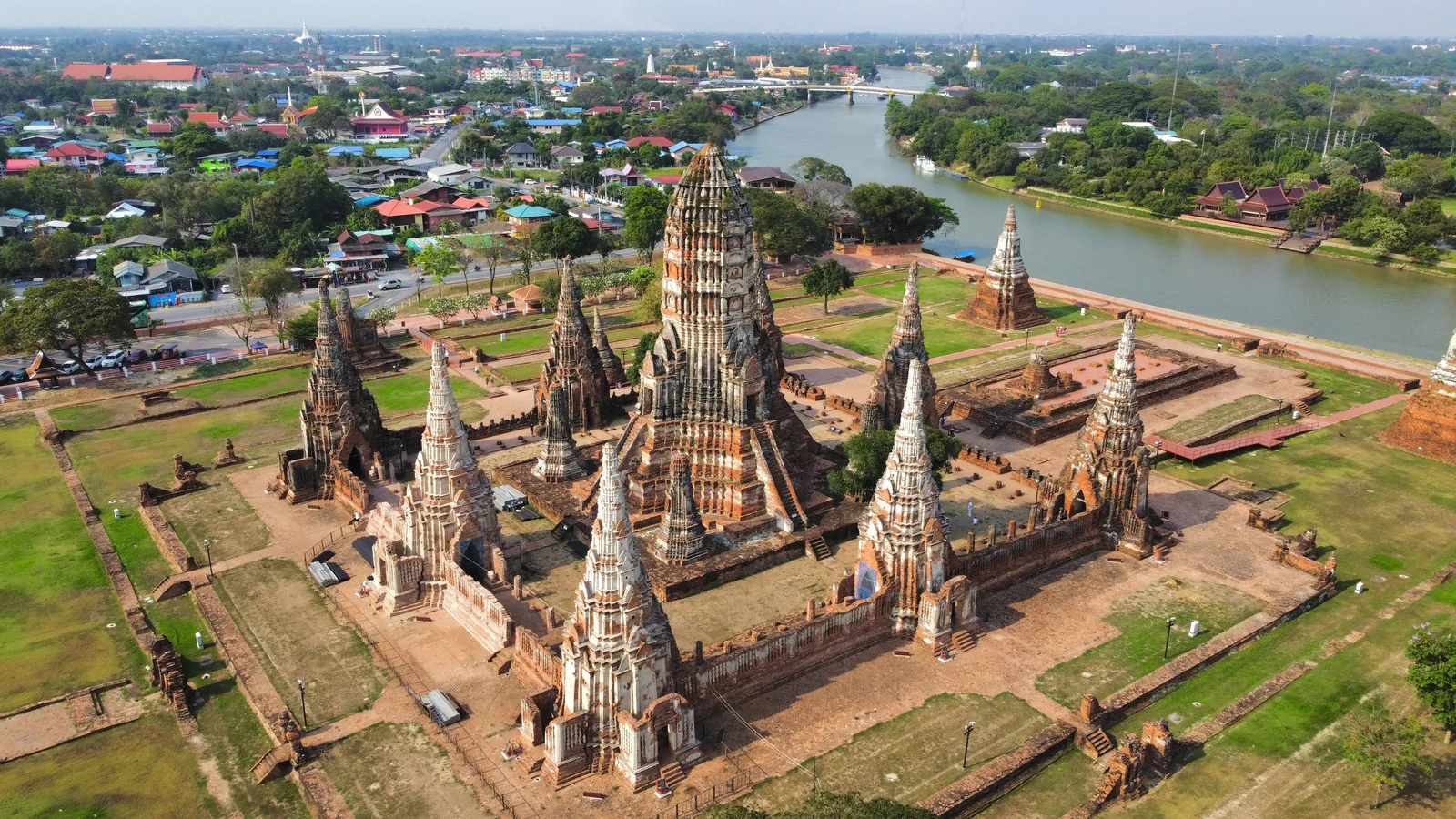
Ayutthaya’s brick towers rise above lawns, roads and neighbourhoods where everyday life continues around the remains of a royal capital. The famous ruins make an achievable excursion from Bangkok, but staying overnight changes the experience: there is room for a museum, a river-facing meal and a second morning outside the busiest sightseeing circuit. Choose the length of your stay around your interest in history and tolerance for outdoor heat.
The name commonly shortens Phra Nakhon Si Ayutthaya, the city covered here. It also labels a much larger province. A hotel advertised as “Ayutthaya” may serve an industrial district or a riverside retreat well away from the principal monuments. Start with the official provincial visitor overview, then compare actual addresses before booking. For national context, read VisaWand’s Thailand country guide.
Read the island before planning the route
The historic centre occupies an island shaped by the Chao Phraya, Pa Sak and Lopburi rivers. That setting explains both its trading past and the practical need to think about bridges, banks and crossings. A monument that looks close across the water may require a considerably longer road journey. Plan visits in geographical groups instead of arranging a list purely by popularity.
Treat three areas separately: the island’s royal and religious ruins, the eastern approach around the railway station, and the sites outside the island along the rivers. Your accommodation need not be beside every attraction, but it should have a workable connection to your first and last stops. VisaWand’s Thailand city and settlement directory helps locate other places; it is a directory rather than a completed guide to every entry.
A capital whose history survives in fragments
Founded in 1350, Ayutthaya became Siam’s second capital after Sukhothai. Its international trading and diplomatic connections helped it flourish for centuries before the Burmese attack of 1767 destroyed the capital. The surviving towers, monastery foundations and artworks are fragments of a much larger urban system. UNESCO’s account of the Historic City of Ayutthaya provides a useful introduction to that significance.
The World Heritage property covers 289 hectares; the designation should not be casually applied to the whole modern city or every attraction in the province. Meanwhile, the Fine Arts Department’s historical account explains how canals, roads and rivers organised settlement and commerce. Look for the relationship between monuments and water, rather than expecting an intact palace city behind one entrance gate. A museum visit makes the missing interiors easier to imagine.
Start with Wat Mahathat and its wider ruins
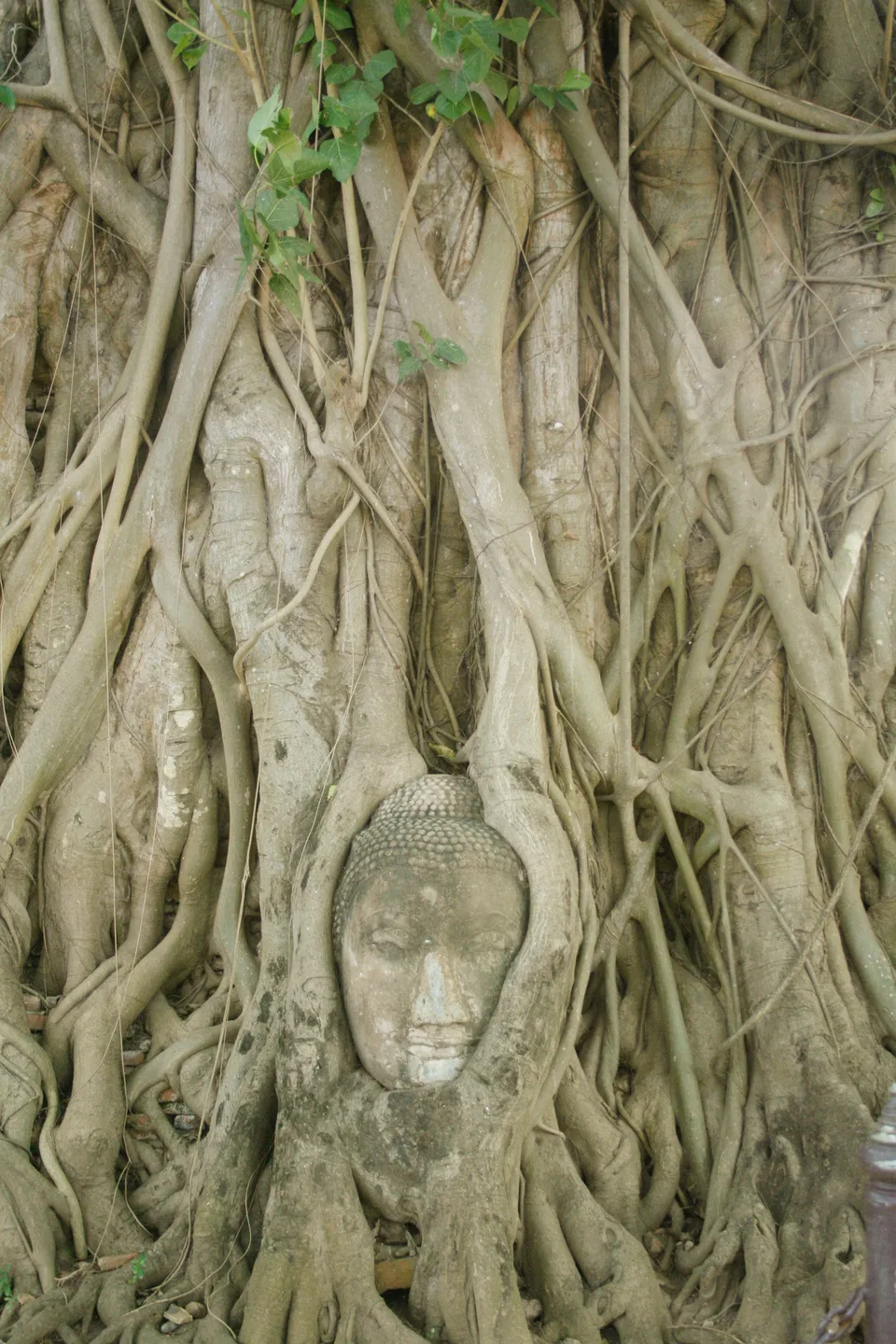
The Buddha head held among tree roots draws attention to Wat Mahathat, but it should be the beginning of your visit rather than its entire purpose. Walk around the surviving walls, foundations and damaged images to understand the scale of the former religious complex. The contrast between one recognisable face and the surrounding fragments is part of the site’s impact.
Allow time to read interpretation and follow the marked visitor route. Keep a respectful distance from religious images and observe the posted photography instructions, particularly around the tree. An early visit is a sensible planning choice when your schedule permits, leaving the hottest part of the day for an indoor stop or rest. There is no need to collect identical photographs at every corner to make this a worthwhile visit.
Understand the royal precinct at Wat Phra Si Sanphet
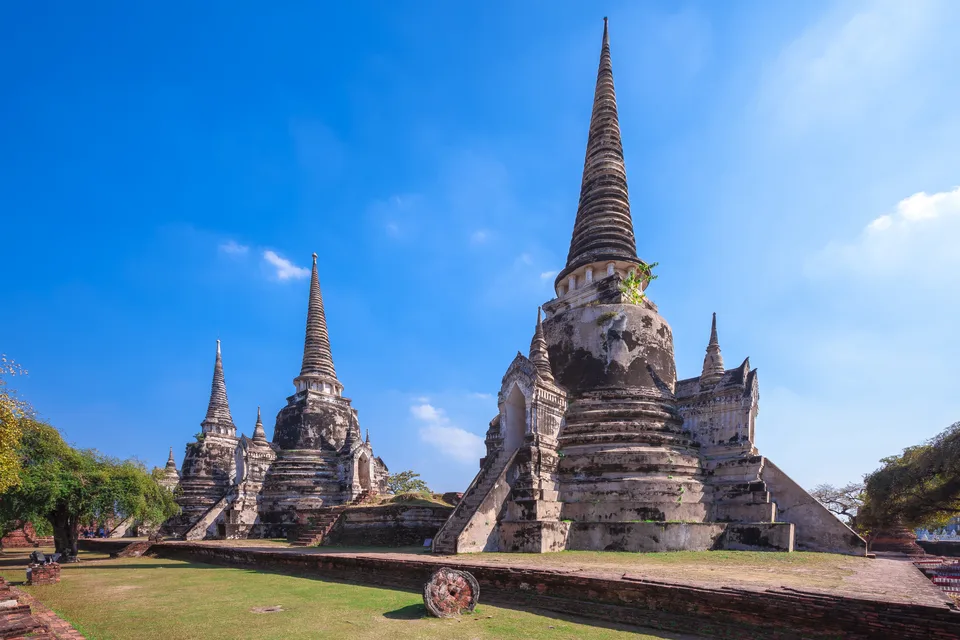
The three chedi at Wat Phra Si Sanphet give the former royal precinct its most recognisable silhouette. This was a temple associated with royal ceremonies, and its surviving structures offer a different perspective from Mahathat’s tree-root image. Read the site information before walking through: the significance lies in the former arrangement of ceremonial space as much as in individual towers.
Group this part of the island into one outing rather than repeatedly crossing town. Compare what remains with what the interpretation describes, and accept that reconstructed understanding is part of an archaeological visit. Travellers with limited energy can choose this precinct and one other major ruin, instead of attempting every paid site. Families should also leave space for water, shade and a proper meal between visits.
Make time for objects recovered from the ruins
Chao Sam Phraya National Museum supplies an important counterpoint to the exposed brick outside. Its collections include gold religious objects, carved doors and other finds associated with excavations at monuments such as Mahathat and Ratchaburana. Seeing the workmanship helps restore a sense of the interiors and ceremonial wealth that the ruins alone cannot convey.
Use the museum as a deliberate part of your itinerary, not simply an emergency shelter from rain. Check the current opening arrangements, galleries and admission directly before setting out; published visitor information does not always distinguish every exhibition or ticket arrangement. This guide therefore does not quote an unconfirmed museum total. If you are deeply interested in the material, reduce the number of outdoor temples that day so you can read the displays without rushing.
Cross to Wat Chaiwatthanaram with a return plan
On the Chao Phraya’s western bank, Wat Chaiwatthanaram offers a strong sense of architectural composition: a central prang, subsidiary towers and surrounding structures arranged as a coherent ensemble. The temple dates to 1630 and is associated with King Prasat Thong. Its position outside the island makes it a natural separate stage in a city visit.
Late afternoon is an appealing option for the river setting, but check that your intended arrival leaves enough time before the ticket counter and site close. Sunset, illumination and special evening access are separate questions; a photograph of a lit monument does not establish today’s opening arrangements. Agree the return journey with your driver before starting. Avoid scheduling this stop immediately before a train you cannot afford to miss.
Budget for the monuments you will actually enter
The Fine Arts Department’s 2026 notice lists foreign admission at 80 baht for an individual ticket or 300 baht for a combined ticket covering seven monuments. These are Mahathat, Ratchaburana, Phra Ram, Phra Si Sanphet with the Royal Palace, Chaiwatthanaram, Maheyong and Kudi Dao. Confirm the applicable category and ticket conditions at purchase.
The arithmetic is useful: three individual admissions total 240 baht; four total 320. A 300-baht combined ticket becomes attractive if four qualifying visits fit your interests and its current conditions. Do not assume it covers museums, every working temple or other attractions. Ask about validity and re-entry before paying. Older tourism pages still display a six-site, 220-baht offer labelled January 2024; that should not be the basis of a current budget.
Follow the trading communities beyond the island
The Japanese Village interpretation site introduces the Japanese trading community and the history of relations between Thailand and Japan. It is a commemorative and exhibition visit, not an untouched street of original houses. TAT lists adult admission at 50 baht; reconfirm current charges and opening arrangements, especially around events announced by the Japanese Village operator.
Across the river, the Portuguese Village archaeological site adds another strand of the capital’s international history through church remains and excavated burials. These sites make most sense when you want to understand who lived and traded around the capital, rather than add two more temple photographs. Arrange road transport between them: opposite riverbanks do not imply a convenient crossing. Check current access rather than relying on older walking directions.
Choose accommodation by purpose and address
For a short historical visit, prioritise access to the island and your planned evening meal. A smaller guesthouse may suit travellers who intend to spend most of the day outside; a larger hotel may offer facilities that make midday rest easier. Compare air-conditioning, stairs, luggage arrangements and the actual route to restaurants, rather than relying on a broad “central” label.
On U-Thong Road in Pratu Chai, sala ayutthaya illustrates the riverside hotel option, with river-facing room categories and dining. This is an example of accommodation geography, not a personal endorsement or a claim that every room has the same view. Confirm the room category, cancellation terms and transfer quote directly. River scenery is an advantage only if the practical arrangements also fit your trip.
Separate longer stays from holiday-room searches
Serviced apartments can be worth considering for a trial stay or an assignment, particularly when cooking space and laundry matter. Kantary Ayutthaya’s accommodation information lists studios and larger suites, while its property fact sheet places it in the Rojana Road business district, with access to industrial areas. That serves a different purpose from sleeping near the principal ruins.
Ask which appliances belong to your specific room, which services are included and how electricity and water are charged. A monthly quotation should spell out taxes, cleaning, laundry and deposits. Published older rate sheets are not a reliable current rental average for the city. Compare the complete monthly cost and commute before choosing a serviced apartment over an ordinary lease, or assuming a larger room automatically suits family life.
Take the train using the correct Bangkok terminal
The State Railway of Thailand’s Northern Line timetable distinguishes Bangkok Hua Lamphong from Krung Thep Aphiwat. Both names appear in the wider service pattern, so “Bangkok station” is insufficient when arranging your departure. Check the specific train, terminal, date and ticket class together. A service convenient for a central Bangkok hotel may differ from the best connection for an airport arrival.
Ayutthaya station is on the eastern side of the river system, outside the historic island. Budget for the onward journey to your accommodation or first monument. Confirm your return service before a long afternoon circuit, and allow a margin for traffic and station access. Keep the timetable accessible on your phone, but obtain current operating information rather than treating an old screenshot as a reservation or a guarantee.
Treat airport transfers as a separate booking
Most international visitors will approach through Bangkok’s airports and continue overland. Choose between a prearranged transfer and a public-transport journey according to arrival time, luggage and how many changes you can comfortably manage. Ask a driver or hotel for a written quotation specifying the airport, terminal, destination address, waiting allowance and toll arrangements.
The Suvarnabhumi public-taxi information describes the official taxi service and an additional 50-baht airport charge. That is a surcharge, not an Ayutthaya transfer price. There is no verified fixed citywide airport fare quoted here. For rail travel after landing, check the onward station and service carefully; an airport train connection is only one leg of the journey. After a late flight, an airport-area overnight stay may make more sense than forcing a complicated arrival.
Get around in manageable groups of stops
Organise each outing around a compact cluster, then use a vehicle for the next area. Walking can work within an individual complex, but a full city circuit requires more planning than its flat map suggests. If considering bicycle hire, assess the actual route, traffic, heat and your own confidence before committing to a day’s riding.
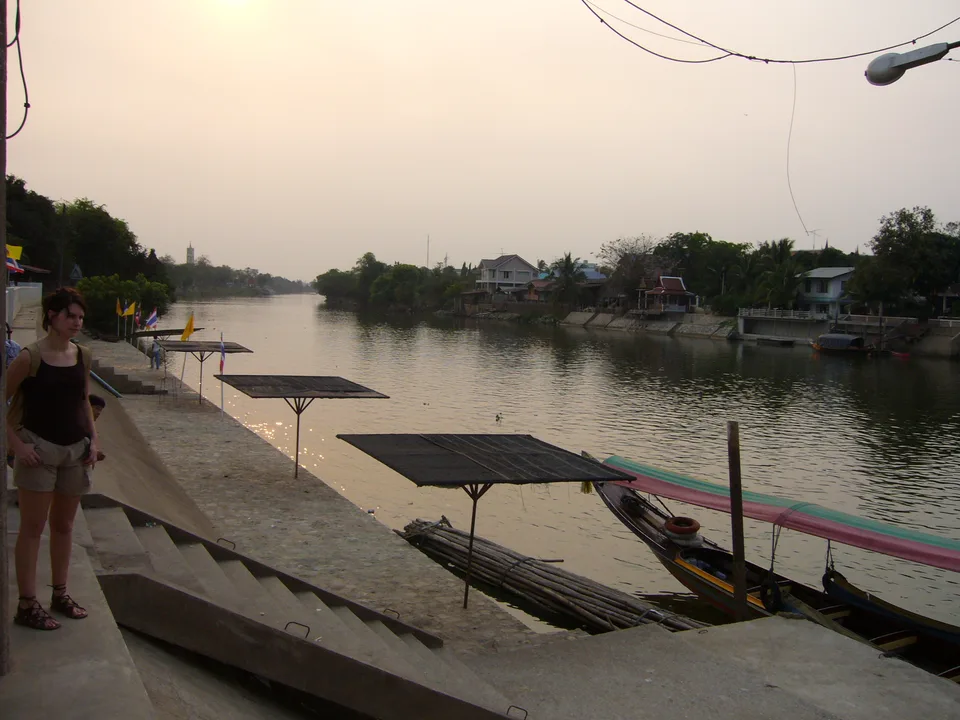
For a hired tuk-tuk or car, agree whether the quote is per journey, per hour or for a defined circuit. Write down included stops, waiting time, passenger numbers and where the trip ends. A cheap initial quote is difficult to compare if these details remain vague. Boats offer a different view of the river setting, but check the operator, boarding arrangements, lifejackets and weather conditions; availability should not be assumed from historical photographs.
Eat local dishes without losing sight of the bill
River prawns, fish noodles and roti sai mai, the cotton-candy-filled wrap, appear in the official visitor introduction. They offer different kinds of meal: a noodle stop, a sweet snack and a potentially more substantial restaurant order. Ask how prawns are priced and what size or weight the quoted amount covers before ordering.
Keep the food budget flexible rather than assuming every local dish is inexpensive. Compare menu prices, portion sizes, service charges and drinks. A riverside setting may be worth paying for on one evening, while a simpler lunch leaves more money for transport and admissions. Travellers with allergies or dietary restrictions should confirm ingredients with the kitchen; a familiar dish name does not establish its stock, sauce or preparation. Carry drinking water during outdoor sightseeing and plan a seated break.
Distinguish souvenir shopping from an ordinary market
Ayothaya Floating Market is a purpose-built attraction around an artificial pond, with shops, food and a retro presentation. It can suit visitors who want a concentrated shopping stop, provided they understand the experience being offered. It should not be presented as an unchanged ancient trading market. Check any entrance, boat or activity charges before joining a queue.
For purchases anywhere, compare an item’s material, dimensions and transportability as well as its price. Fragile souvenirs need packing space, while food gifts require checking your destination’s import rules. Leave shopping optional if your main interest is archaeology: it is more useful to enjoy fewer places than spend an entire afternoon moving between unrelated stops. Keep enough cash available for small purchases and ask about payment methods before ordering.
Build a budget from confirmed components
Start with accommodation for your actual dates, return intercity transport, local journeys and the attractions you have chosen. Add food, water and a contingency for changing plans. The monument-ticket calculation above is a firmer planning tool than a supposed universal “daily cost” that mixes guesthouses, luxury hotels and different transport styles.
For a group, compare a shared driver quotation with the total of separate journeys, while checking that everyone wants the same circuit. For a solo traveller, staying where you can comfortably reach dinner may reduce evening transport needs. Keep accommodation and admission quotations separate: a sightseeing package may bundle services differently. Exchange-rate changes and card fees also affect your home-currency total. Recheck the important prices when you book, rather than treating this guide as a locked package price.
Choose seasons around outdoor comfort
The Thai government’s seasonal overview broadly places the hotter period between mid-February and mid-May and the rainy period between mid-May and mid-October. Cooler-season travel is generally a more comfortable starting point for planning long outdoor visits, although central Thailand remains tropical and seasonal transitions vary. These broad seasons are not a promise of a dry day.
Arrange strenuous sightseeing early, protect against sun and leave an indoor alternative available. During wetter months, check conditions near the travel date. Ayutthaya’s provincial water and road-warning portal links water reports and weather warnings. A hotel’s statement about its own access cannot establish that every road or monument is unaffected. Ask about your specific route and property, and keep enough flexibility to change a river outing when conditions require it.
A realistic two-day introduction
For day one, choose an early train or arrive the previous evening. Visit Mahathat, then take a proper break before exploring the royal precinct at Phra Si Sanphet. Keep the afternoon flexible for the museum, subject to its current opening arrangements. Finish with dinner near your accommodation, leaving time to rest instead of adding distant stops simply because a vehicle is available.
On day two, choose the Japanese and Portuguese interpretation sites if trading history interests you, or another qualifying monument if you bought the combined ticket. Leave a separate late-afternoon slot for Chaiwatthanaram only when your return journey allows it. This is a suggested sequence, not a timed tour: check openings and distances, reduce stops for children or limited mobility, and avoid combining an ambitious final visit with a tight departure.
Assess daily life before signing a lease
Moving here calls for a different reconnaissance trip. Test the journey to the actual workplace, school or recurring appointment, including bridge crossings and the final stretch of road. An address useful for sightseeing may be inconvenient for an industrial assignment. Ask prospective employers about the precise worksite and any staff transport before selecting a neighbourhood.
Inspect a rental in person where possible. Check drainage, water pressure, ventilation, cooling, noise, internet performance and a practical route to groceries. Request a written inventory, deposit conditions and repair responsibilities. Ask about past water entry and access during high river levels, then compare the answer with official local information. Reliable current citywide rent statistics were not established for this guide, so individual listings should not be presented as an authoritative housing average.
Check household services and healthcare locally
For a longer stay, clarify whether utility accounts are direct or managed by the landlord, and record starting meter readings. The Provincial Electricity Authority and Provincial Waterworks Authority offer official service information; confirm the provider for the exact property. Test mobile reception indoors and ask about an installed fixed connection before assuming a headline internet package is available.
Rajthanee Hospital’s contact page distinguishes its Rojana Road hospital in Khlong Suan Phlu from Rajthanee Rojana Hospital in Bang Pa-in. Check the right location, relevant clinic, language support and payment arrangements before a routine appointment. Families should similarly verify school places, curriculum, fees and transport directly. A pleasant scouting holiday cannot answer these household questions, and accommodation availability does not establish access to every essential service.
Match immigration permission to your purpose
Ayutthaya has no separate visitor visa. Thailand’s September 2026 visa-exemption revision revoked the former 60-day exemption scheme and introduced revised tourism arrangements from 15 September. Eligibility depends on nationality and circumstances; check your passport against the current official rules instead of applying an older internet summary. Use the official Thai e-Visa service where an application is required.
The Thailand Digital Arrival Card instructions explain the free arrival-card process and information needed before entry. The card is not a visa. Keep the current submission window and applicable requirements in view when preparing your journey. A tourism admission is permission for its stated purpose and duration; it should not be treated as an automatic route to employment, study or permanent residence simply because you have booked a long stay.
Keep work, remote work and residence distinct
For Thai employment, review the official Non-Immigrant B employment requirements with your employer, including the supporting employment and work-permission documentation relevant to your case. Obtain advice before starting work rather than assuming an entry stamp settles the question. For study, confirm the appropriate category and institution’s documentation directly with the responsible Thai mission.
The Destination Thailand Visa information describes a separate route for qualifying activities, including eligible remote-work circumstances. It does not provide general permission to take a Thai job or a promise of permanent residence. Check where you may apply, the evidence required and your permitted stay. VisaWand’s Thailand visa destination information and visa consultant directory can help organise further enquiries; official authorities determine eligibility and admission.
Consider nearby alternatives without overloading the visit
Bang Pa-In Palace, a former royal summer residence with gardens and varied architectural influences, offers a different outing from the city-island ruins. It is a separate destination in Bang Pa-in, so check access and opening arrangements before adding it to a transfer day. A rushed detour can consume time better spent understanding Ayutthaya itself.
Travellers choosing a base should compare VisaWand’s Bangkok city guide for a wider urban itinerary and Chiang Mai city guide for a different northern setting. Neither replaces the specific experience of Ayutthaya’s archaeological landscape. Choose an overnight stay here when history and a measured pace are priorities; choose a focused day visit when your wider schedule matters more. The strongest itinerary is the one with enough time to engage with what remains.
Official planning resources
Reviewed 16 October 2026. Use the official resources linked throughout this guide for admission, transport, housing and immigration decisions. Prices, services and rules can change; confirm the details relevant to your dates. Photography illustrates the locations and is not a live view.
View all official resources
- Tourism Authority of Thailand: Phra Nakhon Si Ayutthaya
- UNESCO: Historic City of Ayutthaya
- Fine Arts Department: Ayutthaya history and conservation
- Tourism Authority of Thailand: Wat Mahathat
- Tourism Authority of Thailand: Wat Phra Si Sanphet
- Tourism Authority of Thailand: Chao Sam Phraya National Museum
- Tourism Authority of Thailand: Wat Chaiwatthanaram
- Fine Arts Department: 2026 Ayutthaya monument tickets
- Tourism Authority of Thailand: Japanese Village
- Japanese Village: operator announcements
- Ayutthaya provincial tourism: Portuguese Village
- SALA Hospitality: sala ayutthaya
- Kantary Ayutthaya: accommodation types
- Kantary Ayutthaya: property fact sheet
- State Railway of Thailand: Northern Line timetable
- Airports of Thailand: Suvarnabhumi public taxis
- Tourism Authority of Thailand: Ayothaya Floating Market
- Thai government: Thailand seasons
- Ayutthaya province: water and road warnings
- Provincial Electricity Authority: service contacts
- Provincial Waterworks Authority: service and water information
- Rajthanee Hospital: locations and contacts
- Thai government: revised visa exemption rules
- Thailand: official e-Visa service
- Thai Immigration: Digital Arrival Card manual
- Royal Thai Consulate-General: employment visa
- Royal Thai Embassy: Destination Thailand Visa
- Tourism Authority of Thailand: Bang Pa-In Palace
Plan the next part of your journey
Explore the Thailand guide, browse other cities or compare consultants for your travel and relocation questions.