Visa
Start with a Bangkok you can actually reach
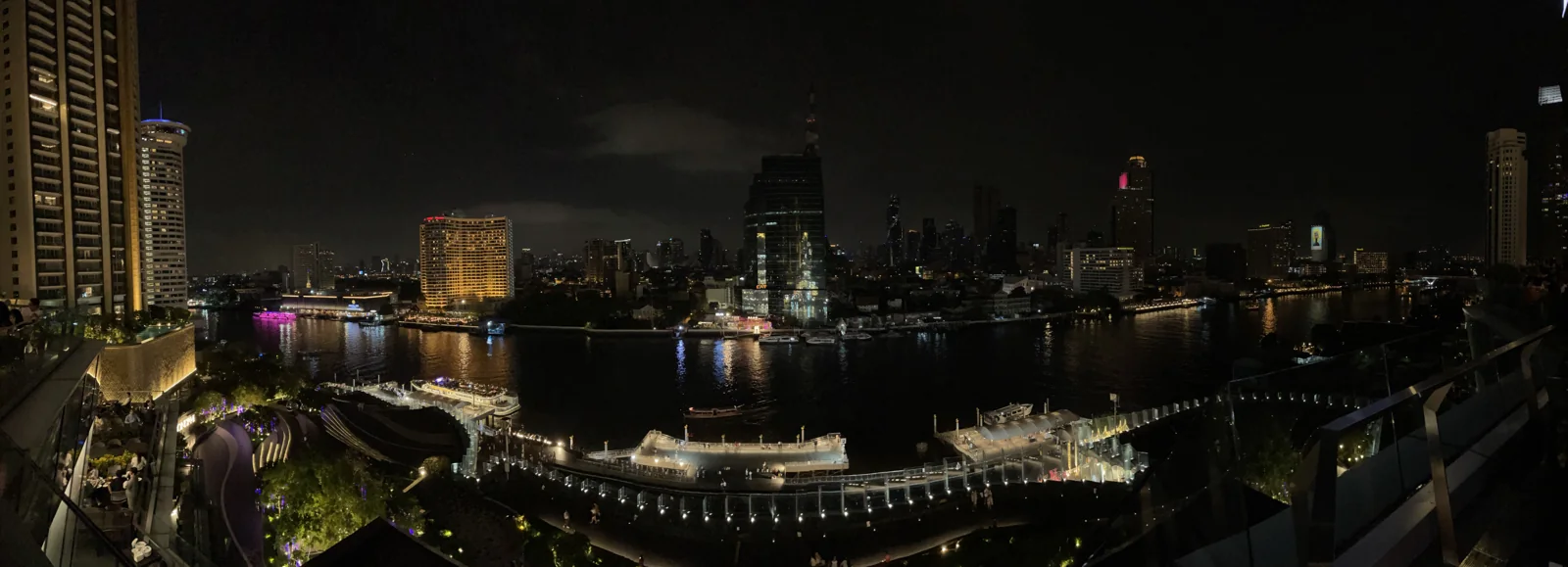
Bangkok offers two quite different maps. One follows the Chao Phraya River past temples, piers and older commercial streets. The other follows elevated and underground railways through offices, shopping districts and residential neighbourhoods. A useful visit connects these maps without spending every afternoon crossing the city in a taxi.
For a first stay, choose several substantial experiences and leave room around them: a palace morning, a riverside journey, Chinatown after exploring the older streets, and a museum or market day. These are editorial suggestions, not a requirement to cover the entire city. Bangkok becomes easier when each day has a geographical centre and a realistic return journey.
For a move, start with the workplace or school instead of the attraction list. The useful question is how the home works during an ordinary week, including the final walk from the station. VisaWand’s Thailand country guide provides the national context; the decisions below concern Bangkok itself.
Understand the river, the old town and the rail corridors
Phra Nakhon contains the Grand Palace and Wat Pho, while Wat Arun stands across the river on the Thonburi bank. These neighbouring places make a coherent sightseeing area, even though visiting all three without a break can become tiring. Chinatown provides another nearby focus, with Yaowarat Road rather than a single monument as its centre.
Siam, Silom and Sukhumvit belong to the rail-connected side of the itinerary. Use the BTS route map to locate the actual station and interchange, then compare it with the address you intend to visit. An accommodation description that simply says “Sukhumvit” covers too much ground to establish an easy journey.
Keep the river crossing and station walk in your plan. A home or hotel may look close to a destination across the water while requiring a particular pier or road connection. Save the address in Thai as well as English whenever the property supplies it.
Visit the Grand Palace with the correct entrance and ticket
The Grand Palace is a substantial visit rather than a quick photo stop. Begin with the Royal Household’s visitor information, choose your date and leave time for entry and the grounds. The published foreign-visitor ticket is THB 500; children below 120 centimetres are admitted free under the stated height rule.
The official FAQ records the change to Mani Noppharat Gate from January 2024. Older directions to Viset Chaisri Gate may therefore mislead a visitor. Follow the current entrance notices and bring the ticket or booking confirmation rather than relying on somebody’s directions outside the compound.
Arrive early and dress for a religious and royal site. Ticket sales end at 15:30 according to the site’s information; do not build a late-afternoon visit around conflicting closing-time wording elsewhere on the same website. Online tickets have restrictions on refunds and changing dates, so settle the itinerary before purchasing.
Give Wat Pho time beyond the Reclining Buddha
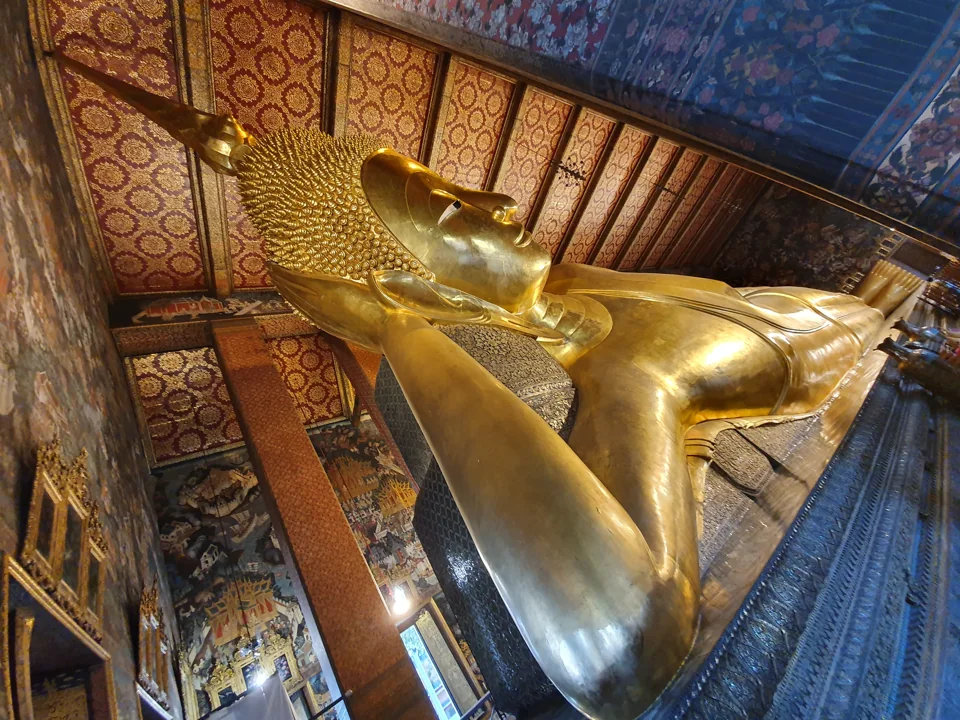
Wat Pho is adjacent to the palace area along Sanam Chai and Maharaj roads. The enormous Reclining Buddha is the obvious focus, but the surrounding courtyards and temple buildings make the stop more satisfying when you have time to look beyond that hall.
The temple’s own visitor page currently lists THB 300 admission for foreign visitors, reviewed in October 2026. Thai nationals enter under its stated ID arrangement. Dress respectfully, follow the directions for footwear and keep the visit considerate of worshippers. A religious complex continues to serve purposes beyond sightseeing.
An early palace visit followed by lunch and Wat Pho is one workable combination. Alternatively, choose Wat Pho as the principal visit and leave the palace for another day. If travelling with children or somebody who tires quickly, the second plan provides more room for a comfortable pace.
Cross to Wat Arun and see the river from both banks
Wat Arun lies on the Thonburi side opposite Wat Pho. Its central prang gives the skyline a different scale from the palace compounds and the tall commercial buildings farther along the river. Looking closely at the decorated surfaces is part of the visit, rather than treating the tower only as a distant landmark.
The Tourism Authority’s current Wat Arun page lists THB 200 foreign-adult admission. Use that named attraction page instead of an older listing with a different fee. Establish which boat and pier serve your planned crossing before leaving the first bank.
The river view and temple visit can be separate experiences. You might visit the grounds during the day, then enjoy the view from the opposite side later. A sunset photograph does not establish that the grounds remain open, or that your return boat still runs at the same frequency.
Use Museum Siam to put the visit in context
Museum Siam offers a useful indoor counterpoint to a day of temple grounds and waterfront walking. It is also a convenient place to think about the country’s identity beyond the familiar sightseeing images, without adding a cross-city transfer to an old-town itinerary.
Its current visitor page lists Tuesday–Sunday opening, 10:00–18:00, and THB 100 for an individual foreign adult. That current page differs from older archive prices. It also identifies Sanam Chai MRT Exit 1 as the rail approach, making the museum an accessible starting or finishing point.
Choose the museum for a day when it is actually open; Monday should not be the default indoor fallback. Read the ticket conditions for age-related concessions rather than assuming every member of the household pays the same amount. Leave room to look at the exhibits instead of arriving immediately before closing.
Pair a central museum visit with the Siam area
The Jim Thompson House Museum and adjoining Art Center provide another focused cultural visit near the central shopping area. The Art Center’s own visitor information lists a THB 250 combined House Museum and Art Center ticket, while Art Center-only admission is a different THB 50 product.
Its directions identify BTS National Stadium Exit 1 and Hua Chang canal pier as approaches. Choose the ticket for the experience you want: a lower-priced gallery ticket should not be mistaken for access to the house museum. Read the current exhibition and visitor information before deciding how much time to reserve.
This works well as one principal stop rather than an obligation to see every mall afterwards. Add lunch or a short look around Siam according to your interests. If a rainy afternoon changes the plan, confirm the available entry arrangements before travelling there.
Explore Chinatown as streets and food stops
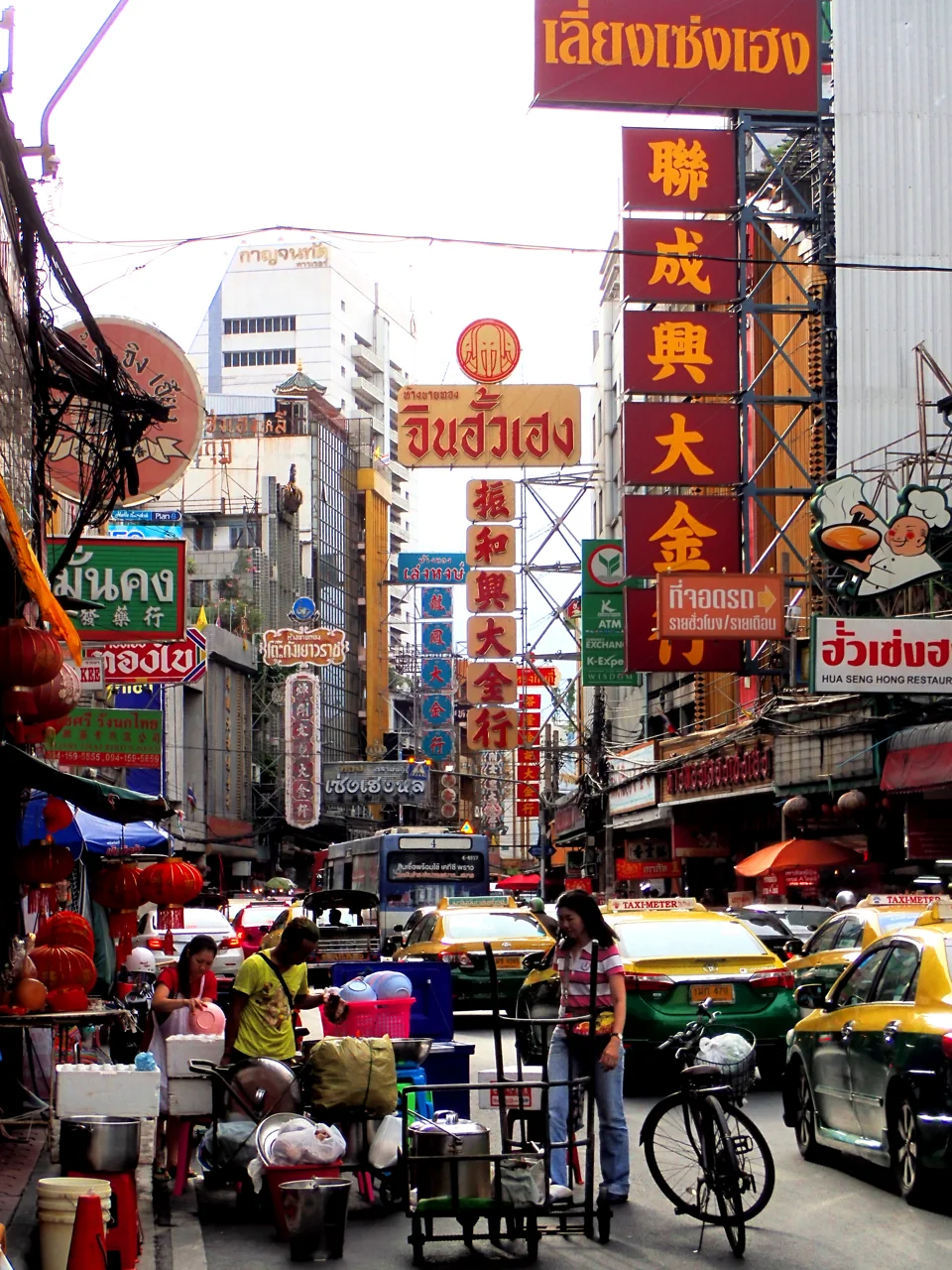
Yaowarat is best approached with time to walk, look and choose a few food stops. The interest lies in the relationship between busy roads, shopfronts and narrower streets, rather than in a checklist of restaurants somebody says every visitor must try.
Plan the return journey before the evening becomes crowded. Use the rail maps to locate the appropriate station and save the hotel address. Choose several manageable dishes or stops, asking about ingredients when dietary needs matter, instead of ordering a large amount before you understand portions.
The photograph here records Yaowarat in 2016; it illustrates the streetscape rather than guaranteeing that a particular pictured business still operates. For a longer stay, return at another time of day. A neighbourhood you know only through its evening food activity can feel quite different during ordinary shopping and deliveries.
Make a market visit selective
For Chatuchak, start with the Tourism Authority’s market listing and the transport map, then decide what you actually want to browse. Clothes, household items and gifts create different shopping routes. Photograph the section or entrance where you begin so you can find the way back.
Treat the visit as a few chosen areas with breaks. Carry payment options appropriate to the stall, confirm the price before agreeing a purchase and consider how bulky items will travel home. For anything intended for export, distinguish ordinary shopping from items that may need documentation or be restricted by the destination country.
Ask about the opening of the particular section you need. A market name does not mean every seller trades at the same hours throughout the week. If shopping is optional, leave this day flexible instead of allowing it to crowd out the palace or museum you most want to see.
Build a three-day introduction without crossing town repeatedly
For an illustrative first day, give the old town the morning and afternoon. Start with the palace if it is your priority, break for lunch, then choose Wat Pho or Museum Siam according to energy and the museum’s opening day. Add the river crossing only if it still leaves a comfortable return.
On a second day, choose the Jim Thompson visit and the Siam area, then leave the evening open for Chinatown. Save the station and hotel details beforehand. That is a plan to connect two areas, not a suggestion to walk the entire distance between them.
For the third day, choose the market or revisit the river rather than doing both by default. Rearrange the days for the market section’s trading schedule and any booked admission. Travellers with fewer days can remove a whole area; keeping the remaining visits unhurried is more useful than shortening every stop.
Choose accommodation by the exact station, pier and street
Compare accommodation around the journeys you will repeat. A central sightseeing stay might prioritise a convenient BTS connection; a riverside stay should establish the nearest usable pier. For an old-town hotel, calculate the connection to rail instead of assuming an elevated station is nearby.
Ask the property for the walking route from the station, the entrance address and any access limitations for luggage. Read the final booking total, including taxes, breakfast arrangements and cancellation terms. A cheap room that requires repeated paid transfers may be a different proposition from a more convenient one.
For a relocation visit, temporary accommodation should make inspections and appointments manageable. Keep the first booking flexible enough to compare actual rentals. A holiday hotel is useful during that search, but its daily rate does not provide a reliable monthly housing budget.
Arrange the airport transfer for your actual flight
Check whether the ticket arrives at Suvarnabhumi or Don Mueang. They are different airports, and a transfer planned for one should not be copied to the other. Save the flight details, arrival terminal and destination address together before departure.
At Suvarnabhumi, Airports of Thailand identifies the Airport Rail Link on Level B1. Its official taxi arrangements use Level 1, Gates 4–7, with a queue ticket and the metered fare plus a THB 50 airport surcharge; additional permitted baggage charges can apply. Follow the airport’s signage for the service you choose.
The free shuttle between Suvarnabhumi and Don Mueang is for passengers connecting between flights, with the required travel proof. It is not a general free city transfer. If the first night is late or luggage makes rail connections awkward, compare the appropriate airport taxi or booked service before arriving.
Learn the BTS and MRT as separate systems
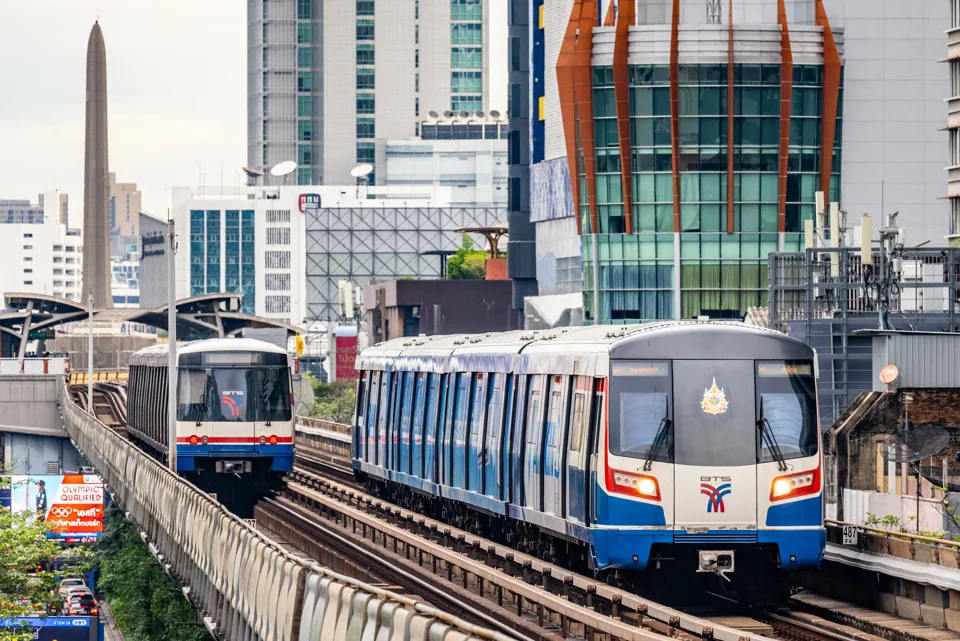
The BTS planner lets you calculate the route and fare for the actual stations. Use it before choosing a transport budget: the cost depends on the journey rather than a single citywide flat fare. Locate the interchange, platform direction and exit as well as the destination station.
For the MRT Blue and Purple lines, BEM’s contactless guidance specifies supported cards. Its acceptance of international credit cards does not mean every foreign debit card will work. Tap the same supported card for entry and exit, keeping other contactless cards away from the reader.
The MRT ticket instructions also explain buying a single-journey token at the counter or machine. Keep a payment alternative while establishing what works for you. An interchange can involve walking and a separate fare; do not assume a BTS ticket automatically covers a journey on another operator.
Choose the river service rather than just the nearest boat
Express boats, tourist boats and short crossings serve different needs. The Express Boat operator’s schedule effective 6 October 2026 lists an Orange Line THB 19 flat fare. Earlier June schedules show a different price, so keep the dated current service page with the journey plan.
The Chao Phraya Tourist Boat is a separate sightseeing-oriented service with named piers, including Sathorn, ICONSIAM and Wat Arun. Compare its route and ticket conditions with the express service. A ticket sold beside the river should be identified by operator and product before you pay.
At the pier, confirm the direction and whether the boat stops where you intend to get off. Check the return service before a late visit. If a pier is temporarily unavailable, use the operator’s alternative rather than relying on a photograph or an old printed map.
Budget the experiences and the transfers separately
Build the sightseeing budget from the named tickets you plan to buy. The reviewed foreign-adult prices are THB 500 for the Grand Palace, THB 300 for Wat Pho and THB 200 for Wat Arun. Visiting all three therefore gives a calculated THB 1,000 admission total before meals and transport.
Museum Siam’s current THB 100 individual-adult price and the THB 250 combined Jim Thompson product are separate choices. These figures were reviewed in October 2026; they are not an inclusive tour price or a promise that every concession applies to your party.
For recurring living costs, obtain a particular rental quote and add electricity, water, phone, transport, insurance and schooling if relevant. Separate setup money for temporary accommodation, the rental payment at handover and household equipment. Bangkok has no single useful monthly total that can replace those household-specific decisions.
For illustration, a quoted THB 25,000 monthly rent, THB 25,000 prepaid first month and THB 50,000 deposit would require THB 75,000 at handover. This is hypothetical arithmetic, not an advertised property or endorsement of those terms. Record the refundable amount separately from spending, and assess the demand against the applicable rental rules before paying it.
Complete the entry preparation and the free arrival card
Use the official Thai e-Visa service to determine the appropriate category and nationality requirements. Its application notice says applicants must be outside Thailand. A visa’s validity and the period granted at entry are different dates; keep both visible in the travel folder.
The Immigration Bureau’s TDAC FAQ says the arrival card is free and should be submitted within the three days before arrival, including the arrival date. Use the official arrival-card service with passport, flight, accommodation and other requested details. Complete a new card for each entry, including children when required.
TDAC does not replace a visa or grant work permission. Save its confirmation with the immigration approval and accommodation address. Once admitted, record the actual stay expiry so that a long booking does not accidentally become a plan to remain beyond the permission issued.
Separate local employment from a remote-work stay
For a Bangkok job, establish the employer, role and work-authorisation process before starting. The Embassy’s non-immigrant category guidance distinguishes employment-related arrangements from tourism and retirement. Ask the employer which visa, work permission and subsequent immigration tasks apply to the specific post.
The Destination Thailand Visa includes a workcation category for qualifying remote workers and freelancers. Its five-year multiple-entry validity should not be read as five years of uninterrupted residence: the stated stay is 180 days per entry, with the applicable extension process.
Use the checklist for the mission serving your legal place of application, including its financial and professional evidence. A remote-work category is not a general authorisation to take Thai employment. If the job or clients change, establish the appropriate permission before treating the previous visa as sufficient.
Inspect the home and agree the whole rental bill
For a permanent base, inspect the exact unit and travel the commute from its entrance. Look at ventilation, air-conditioning, water pressure, drainage and the route after leaving the station. Ask which furniture, appliances and building facilities are included in the quoted rent.
Request an itemised handover amount and a written agreement covering term, rent, deposit, utilities, repairs, notice and the inventory. OCPB’s current standard-contract material is the practical reference for covered rental businesses. Its rules should not be assumed to apply identically to every private-owner arrangement.
The Government’s rental guidance addresses utility charges and deposit protection. Retain meter readings, condition photographs and receipts. Ask how bills are calculated and who handles a failed air-conditioner before signing; these details determine the actual household cost as much as the advertised rent.
Arrange banking and keep income records
Start with the bank used by the employer if salary arrangements make that relevant. Bangkok Bank’s current savings page directs foreign customers to a branch for their documentation requirements. Obtain that current checklist for your visa and circumstances rather than treating a years-old online list as a universal entitlement.
Bring the requested original identity, status, address and income evidence to the appointment. Confirm card, online-service and transfer charges separately. The bank’s e-Savings product is restricted to Thai nationals under its published criteria, so a foreign resident should not assume its online onboarding is the appropriate route.
For tax planning, keep arrival dates, salary records and the origin of overseas transfers. The Revenue Department’s foreign-income guidance distinguishes the year income was earned, the residence-day test and remittance. A visa category or foreign payee does not settle the tax treatment of every transfer.
Choose schools and care before committing to the neighbourhood
Families should locate the school before accepting a lengthy lease. Bangkok Patana’s admissions service provides a named starting point, while its La Salle Road address in Bangna shows why a city-centre property should be assessed against the actual school journey.
Request the complete fee schedule, year placement, support assessment and available start date. Provide prior reports and the requested household documents. An international school’s presence in Bangkok is not a promise of admission, a suitable place or immigration approval.
For medical needs, Bumrungrad’s contact page gives appointment and third-party payer contacts at its Sukhumvit 3 location. Use it to establish the service, records and insurance arrangements required. Compare the policy’s residence, employment and pre-existing-condition terms with your actual stay rather than assuming short holiday cover remains adequate after moving.
Use the first month to turn the plan into a routine
Keep one household list of immigration dates, employer tasks, school papers and service appointments. After settling into the rental, compare the budget with real bills and journeys. Save the agreement, receipts and photographs where both adults can find them.
Build ordinary routines around a manageable shopping route, a care contact and the people you meet at work, school or nearby activities. Learn the local address format and useful Thai phrases for the situations you repeat. Familiarity grows through those practical tasks rather than through completing more attractions.
Before another flight, confirm the airport and transfer again, and prepare the new arrival documentation when returning. Use VisaWand’s Thailand city and settlement directory to compare another location if the household’s work or study changes. A successful Bangkok base is one whose journeys, permissions and costs continue to fit your life.
Official planning resources
Reviewed 13 October 2026. Use the official resources linked throughout this guide for admission, transport, housing and immigration decisions. Prices, services and rules can change; confirm the details relevant to your dates. Photography illustrates the locations and is not a live view.
View all official resources
- Grand Palace — visitor FAQ and admission
- Wat Pho — visitor information
- Tourism Authority — current Wat Arun visitor information
- Museum Siam — admission and travel
- Jim Thompson Art Center — visitor information
- BTS Skytrain — route and fare calculator
- BEM — MRT contactless payment
- BEM — MRT ticket purchase
- Chao Phraya Express Boat — October 2026 fares
- Chao Phraya Tourist Boat — routes
- Airports of Thailand — Suvarnabhumi transport
- Tourism Authority — Chatuchak Market
- Immigration — free Thailand Digital Arrival Card FAQ
- Immigration — Thailand Digital Arrival Card service
- Ministry of Foreign Affairs — Thai e-Visa
- Royal Thai Embassy — Destination Thailand Visa
- Royal Thai Embassy — non-immigrant visa categories
- OCPB — June 2026 standard residential rental contracts
- Thai Government — rental utilities and deposit protection
- Revenue Department — foreign-source income guidance
- Bangkok Bank — savings and foreigner enquiries
- Bangkok Bank — e-Savings eligibility
- Bumrungrad — hospital appointments and payer services
- Bangkok Patana School — admission
- Bangkok Patana School — location
Plan the next part of your journey
Explore the Thailand guide, browse other cities or compare consultants for your travel and relocation questions.