Visa
Zanzibar City rewards a stay of its own
Zanzibar City deserves time between the airport, ferry terminal and beach. Its strongest introduction is Stone Town: a historic trading quarter where the interest lies as much in doorways, streets and waterfront spaces as in individual monuments. Staying here lets you return to the same lanes at different hours, fit heritage visits around meals and avoid treating the city as a hurried excursion from a distant resort.
Be precise when booking. Zanzibar can mean the archipelago, its principal island Unguja or this city. Stone Town is the historic core, rather than a synonym for the whole urban area. UNESCO's Stone Town description places the heritage property on Unguja's western promontory. A hotel advertised simply as being in Zanzibar could therefore be entirely wrong for a walking visit here.
Allow two full days if architecture, history and food are your priorities. Add nights when you want a slower pace or meetings connected with a possible move. For countrywide planning, read VisaWand's Tanzania country guide alongside this city guide. Decide separately how much of the trip belongs in town and how much belongs by the coast; those experiences need different accommodation and transport arrangements.
Read the trading town through its buildings
Stone Town's World Heritage inscription dates from 2000. UNESCO describes a Swahili trading town shaped by African, Arab, Indian and European exchanges. Its designated property covers 96 hectares, a useful reminder that the protected historic fabric represents only part of the contemporary city. Coral stone, timber and richly worked doors give an architectural walk a more specific focus than simply getting lost.
The Stone Town Heritage Society's architectural account is useful background for looking closely at carved woodwork. Examine the frame, arch and surrounding masonry together. Avoid assigning a confident religious or family meaning to every motif unless a knowledgeable guide can explain the evidence. A beautiful doorway may also be someone's entrance: stand aside, avoid blocking deliveries and ask before photographing people.
Hire a guide for interpretation rather than a race between photo stops. Before agreeing, ask which buildings are currently accessible, what admissions cost separately and how the route handles stairs or uneven surfaces. Historic importance does not establish present access. This guide does not schedule an interior visit to the House of Wonders because reliable current visitor access was not established during research.

Choose a base by the journeys you will make
For a short visit, compare addresses within Stone Town before comparing hotel photographs. A waterfront location may suit someone who wants evening walks and an obvious meeting point. An interior address may place you closer to particular streets or restaurants, while making the final luggage transfer more complicated. Ask the property to identify the nearest usable vehicle drop and describe the remaining approach.
Kiponda and Shangani appear in the addresses of the dining and museum operators linked below. Treat these as practical search areas, then check the actual building on a map. Across the historic core's eastern edge, investigate Ng'ambo and Michenzani when assessing the wider city. UNESCO's account includes parts of those surrounding urban areas in the heritage buffer; this does not make every accommodation listing there equivalent to a Stone Town stay.
For relocation scouting, choose temporary accommodation near the places you must visit repeatedly, rather than the most photogenic terrace. Test the proposed home-to-work journey with the luggage, children or mobility needs that apply to you. A convenient holiday base and a workable household address can be different choices. Record those differences before paying a long deposit.
Give the former slave market a thoughtful visit
Christ Church Cathedral occupies the former slave-market site. The Diocese of Zanzibar's cathedral history explains the connection, while its continuing religious role matters to visitors today. Approach this as a place of remembrance and worship, allowing time to read interpretation rather than reducing a difficult history to a quick photograph.
The diocese's visitor information warns that services may restrict access to part or all of the building. Its published opening-time notation is ambiguous, and its admission information is dated, so confirm current hours and charges directly before arranging the day around them. Personal photography is permitted subject to the stated altar restriction; commercial work requires prior agreement. Ask staff if your intended photograph is appropriate.
Discuss the guide's approach beforehand if visiting with children. Request a clear explanation of the site's history and space for questions, without sensational presentation. Leave a quiet interval afterwards rather than stacking several demanding visits back to back. If a service changes the plan, move another activity forward and return at an agreed time. That flexibility is more useful than relying on a fixed timetable copied from an old travel article.
Make room for the fort and the seafront
The Old Fort provides a different way into Stone Town's past. The Zanzibar government's historical-sites account relates it to Omani fortification and earlier Portuguese occupation. Use that history to understand its position and defensive form, but check current entry arrangements locally. A historical description of performances or courtyard facilities is not a dependable programme for the week you arrive.
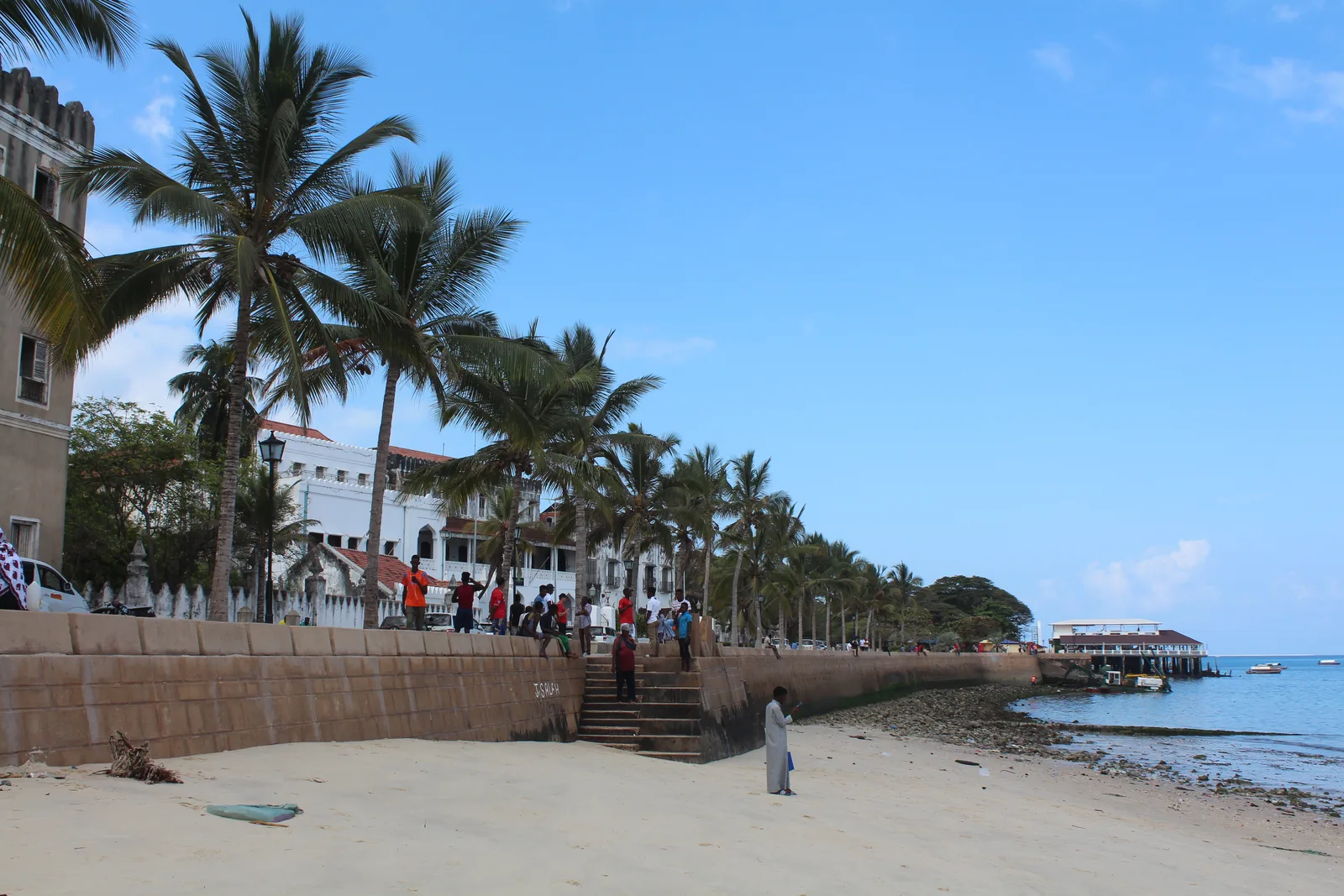
Forodhani offers a public-space counterpoint to enclosed sites. The Aga Khan Trust for Culture's restoration brief records the 2009 rehabilitation of the gardens and seafront, including walkways, seawall work and facilities for vendors. This is evidence of a major restoration project, rather than a guarantee about today's maintenance or any particular food stall.
Keep part of the waterfront visit unprogrammed. Sit when you find somewhere suitable, watch the changing light and decide whether you want a meal, a short walk or an early return to your accommodation. Follow barriers and avoid stepping onto an unfamiliar shore simply because it looks accessible. If an organised event changes access, adjust the route rather than expecting the gardens to function as a permanently reserved visitor attraction.
Browse Darajani without turning it into a performance
Darajani works best when you give ordinary trading priority. The government's historical account describes the early twentieth-century market along the road formerly called Creek Road, with fruit, spices, seafood and surrounding household trade. Look for what people are buying and how goods move through the market, rather than expecting every stall to be a souvenir display.
Start with a modest purchase and ask the price and unit clearly. A price for one item, a pile or a measured quantity can mean different things. Keep purchases manageable for the rest of your walk; delicate fruit and elaborate souvenirs are awkward companions for several more hours of sightseeing. Ask before close photographs of vendors, and accept a refusal without negotiation.
For spices, distinguish a city purchase from a plantation excursion. The government's account of Zanzibar's spice heritage provides background, but an attractive packet does not establish where its contents were grown. Ask about origin, packing and the product you are actually buying. Check your home country's food and plant import rules before purchasing quantities to take abroad; a vendor's reassurance cannot settle those requirements.

Pick meals for the setting and the schedule
A meal can provide a useful pause between walks, especially when the accommodation is inconvenient to return to. Choose the format before the view: a courtyard lunch, a rooftop dinner and casual food bought while walking require different amounts of time and planning. Ask about ingredients and preparation directly when allergies or dietary restrictions matter.
Emerson Spice's dining information gives a verifiable example of those choices. Its Tea House offers rooftop dining, with lunch advertised from 12:30 to 16:00 and dinner beginning at 19:00. The Secret Garden is a separate courtyard option, advertising service from noon to 22:00. Reserve ahead and reconfirm the current menu, price and arrival instructions; a named venue here is an option to investigate, not a claim of personal experience or a best-restaurant ranking.
Do not let an evening meal create a difficult journey home. Arrange a meeting place with your driver if needed and keep the property's contact details available offline. When buying food from a stall, assess the handling you can see and ask for the total before ordering. A busy setting alone is insufficient evidence of food safety.
Compare accommodation beyond the nightly headline
Evaluate a room as a place to sleep, wash, cool down and leave belongings securely. Request photographs of the exact room category, clarification about air conditioning or ventilation, and a description of stairs. If step-free access is essential, ask for the complete route from vehicle drop to bedroom and bathroom. A general accessibility label may leave crucial details unanswered.
Check whether breakfast, taxes, service charges, transfers and cancellation rights are included in the written total. This research did not establish a reliable current citywide accommodation-tax schedule or representative room-price average, so obtain the applicable charges from the property before payment. Compare quotes for identical dates, occupancy and refund terms.
For a first stay, flexibility can be worth paying for. A refundable booking leaves room to change plans after a delayed arrival or an unsuitable room assignment. For a longer scouting trip, ask about laundry, cooking facilities, workspace and dependable internet in the room itself. Test these needs during a temporary stay before converting a holiday impression into a long tenancy. Keep the agreement and payment record somewhere you can access if your phone is unavailable.
Travelling with children changes the room comparison. Ask about an extra bed, bathroom privacy and whether the building offers somewhere suitable to rest between outings. For light sleepers, request information about the particular room and neighbouring uses rather than accepting a promise that an entire district is quiet. Confirm checkout and luggage storage if your onward departure is late.
Arrive with a confirmed transfer and a backup plan
Use the Zanzibar Airports Authority's contact information for Abeid Amani Karume International Airport when checking airport details. Arrange the onward journey separately from the flight booking, specifying the exact property, passenger count, luggage and a working contact number. Ask what happens if the flight is delayed and where the driver will wait.
Zanzibar Airport Taxi Services' published fare table lists the airport-to-Stone-Town journey at TZS 40,000, USD 15 or EUR 15 per vehicle for one to seven passengers. These are that operator's displayed planning figures, not a universal regulated fare or a promise that every vehicle fits your party and bags. Confirm the total, currency, vehicle and final drop before booking. Leave timing flexible rather than building an attraction reservation around an unverified transfer duration.
For a ferry arrival, have the hotel's directions saved before boarding. Check whether someone can help with the final approach and agree any charge in advance. Keep essential medication, documents and a change of clothes with you. A transfer that reaches the correct street still needs a workable plan for getting the final distance to reception.
Cross from the mainland and travel locally with care
Azam Marine's fare information lists nonresident adult economy tickets at USD 35 and a 25-kilogram baggage allowance per person. Its adult category begins at 12; the listed economy fare for children aged five to eleven is USD 30. Confirm arrangements for younger children directly. Select the correct residency category, check the actual sailing offered and complete payment before treating an online reservation as confirmed.
Avoid a tightly timed international-flight connection after a sea crossing. Leave space for disruption and keep an alternative overnight plan affordable. Before boarding any ferry, assess loading and locate safety equipment and exits. The UK government's Tanzania safety advice highlights ferry and road-transport risks; consult its current detail rather than assuming every service has the same standards.
Within town, combine walking routes with a prearranged vehicle where useful. Dala-dalas, motorcycle taxis and three-wheelers require consideration of road-safety risks, rather than automatic selection as the cheapest option. If hiring a car, check Zanzibar's additional local driving-permit requirement as well as the licence and insurance accepted by the rental firm. A holiday is a poor time to discover missing paperwork at the roadside.
Download the accommodation address and a small area map before setting out. Agree a recognisable meeting point with companions, especially if your group separates for shopping. If a walk becomes uncomfortable, shorten it: the purpose is to understand the town, not to complete a distance target. Ask your host to help arrange an appropriate pickup from a reachable place.
Build a budget around decisions you control
Start with the costs you can verify: dated accommodation quotes, the ferry category that applies to you and a confirmed transfer. Then allow separate amounts for admissions, guiding, meals, drinking water, communications, laundry and an unplanned journey. The transport examples above help compare options; they are not evidence for a single daily budget that fits every traveller.
Ask whether a guide's price includes site tickets and whether a transfer quote includes waiting. Record amounts in the currency actually requested, rather than treating currencies printed side by side as a permanent exchange-rate guarantee. Agree card or cash payment beforehand and retain receipts for significant purchases. Keep enough accessible funds for a changed travel plan without carrying every payment in one place.
For shopping, buy what you can inspect and transport responsibly. An attractive object may be difficult to pack, insure or import. Ask for a receipt identifying the item and seller when spending substantially. If moving, keep an initial household budget separate from holiday spending: temporary housing, deposits, essential equipment and repeated journeys can outweigh the sightseeing costs that first attracted your attention.
Plan around rain, heat and the pace of the day
A study by Tanzania Meteorological Authority and university researchers identifies Zanzibar's long rains, Masika, with March to May and the shorter Vuli rains with October to December. This climatological pattern is useful for choosing dates; it cannot predict the weather on your visit. June to September falls outside those usual rainy periods, but should not be treated as a guarantee of dry days.
Put longer walks earlier in your personal schedule and leave a generous break for a meal or rest. Carry water and suitable footwear, protect documents from rain and keep one indoor alternative available. During wet weather, reassess the actual street and entrance rather than assuming a route remains equally comfortable or accessible.
Check the week's forecast close to departure, then refine plans each day. If your priority is photography, build in another opportunity for the waterfront rather than depending on one sunset. If your priority is meeting prospective employers, schools or landlords, arrange those appointments first and fit tourism around them. Travel dates should serve the purpose of the trip, rather than a generic claim about the perfect season.
Spend two days in town before adding the coast
On the first morning, take an introductory architecture walk and establish the route back to your accommodation. After lunch, visit the cathedral site if current access permits. Leave the waterfront for a flexible late-afternoon interval, with dinner booked only if you want a structured evening. This sequence keeps orientation and a substantial historical visit apart without filling every hour.
Use the second morning for Darajani, then fit the fort around confirmed access. Music enthusiasts could substitute the Freddie Mercury Museum on Shangani Street: its operator describes photographs and memorabilia, including material loaned by Queen Productions, and advertises daily opening from 09:00 to 20:00. Check the current ticket price directly. Choose it for that interest rather than adding another admission merely to complete a list.
For a longer trip, compare a coastal stay. The government's coastal information places Nungwi at Unguja's northern end; it is a separate destination, not a neighbourhood within walking distance of Stone Town. VisaWand's Nungwi location directory and Dar es Salaam location page offer further places to investigate. Confirm transport and accommodation separately before extending the itinerary.

Check visitor permission and insurance before departure
Consult the official Tanzania visa guidelines for your nationality, purpose and first arrival point. One Tanzanian visa covers mainland Tanzania and Zanzibar. Passports generally need six months' validity and an unused visa page. The ordinary visa is listed at USD 50 for visits up to 90 days; US passport holders visiting as tourists must apply for the USD 100 multiple-entry category. Its validity does not permit uninterrupted residence. Visa-exempt and referral categories need separate attention; referral applicants should obtain approval before travelling.
ZIC's 7 October 2026 clarification explains first-entry insurance: Zanzibar arrivals use ZIC, mainland arrivals NIC. A valid qualifying policy can cover subsequent travel between them during its applicable period; retain the certificate and QR code rather than automatically buying duplicate cover. Confirm your particular journey and exemptions. The ZIC inbound-insurance page lists the adult premium at USD 44; private travel insurance does not replace the compulsory policy.
Use the current government entry advice to check conditional yellow-fever certification and other requirements. Allow time to resolve discrepancies before departure, especially when your route includes another country. Keep copies accessible without relying on airport internet.
Assess everyday life before committing to a move
A tourist visa does not authorise employment. Start work, study or investment planning with the appropriate institution and official residence-permit guidance. Class A concerns investors, Class B specific employment and Class C other qualifying purposes. Work permission is normally a separate prerequisite where applicable, and applications commonly need completion before arrival. Renting or purchasing accommodation does not establish immigration eligibility or permanent residence. VisaWand's Tanzania destination information and consultant directory can support finding help; official authorities determine permission.
Inspect prospective housing in person. Test locks, drainage, ventilation, water storage, internet and the electricity arrangements. The regulator identifies ZAWA for water and ZECO for electricity; ask who holds each account, how bills are calculated and who handles faults. Price the actual commute and verify school places before choosing an address.
A useful scouting day contains ordinary errands: buying household supplies, checking laundry options, finding a pharmacy and testing a video call from the proposed home. Request a written inventory and repair responsibilities before signing a lease. Establish the payment schedule and deposit-return conditions, and have unfamiliar contract language reviewed independently before committing substantial funds.
Medical needs deserve similar preparation. Government health advice notes limited facilities, particularly outside Dar es Salaam; emergency ambulance assistance uses 112. Discuss travel health and evacuation cover with qualified providers. Respect local dress expectations in Stone Town and understand that same-sex sexual activity is illegal, including in Zanzibar. These practical and legal considerations belong in a relocation decision alongside the city's considerable appeal.
Official planning resources
Reviewed 16 October 2026. Use the official resources linked throughout this guide for admission, transport, housing and immigration decisions. Prices, services and rules can change; confirm the details relevant to your dates. Photography illustrates the locations and is not a live view.
View all official resources
- UNESCO: Stone Town of Zanzibar
- Stone Town Heritage Society: architecture
- Diocese of Zanzibar: Christ Church Cathedral
- Diocese of Zanzibar: visiting information
- Zanzibar Government: historical sites
- Aga Khan Trust for Culture: Forodhani restoration, July 2009
- Zanzibar Government: spices
- Emerson Spice: dining and reservations
- Zanzibar Airports Authority: contacts
- Zanzibar Airport Taxi Services: published fares
- Azam Marine: fares and booking terms
- UK FCDO: Tanzania safety and security
- TMA and University of Dar es Salaam researchers: Zanzibar rainfall study
- Freddie Mercury Museum: visitor information
- Zanzibar Government: coastal tourism
- Tanzania Immigration: visa guidelines
- ZIC: 7 October 2026 mandatory insurance clarification
- Zanzibar Insurance Corporation: inbound insurance
- UK FCDO: Tanzania entry requirements
- Tanzania Immigration: residence permit guidelines
- ZURA: water services
- ZURA: electricity services
- UK FCDO: Tanzania health
Plan the next part of your journey
Explore the Tanzania guide, browse other cities or compare consultants for your travel and relocation questions.