Visa
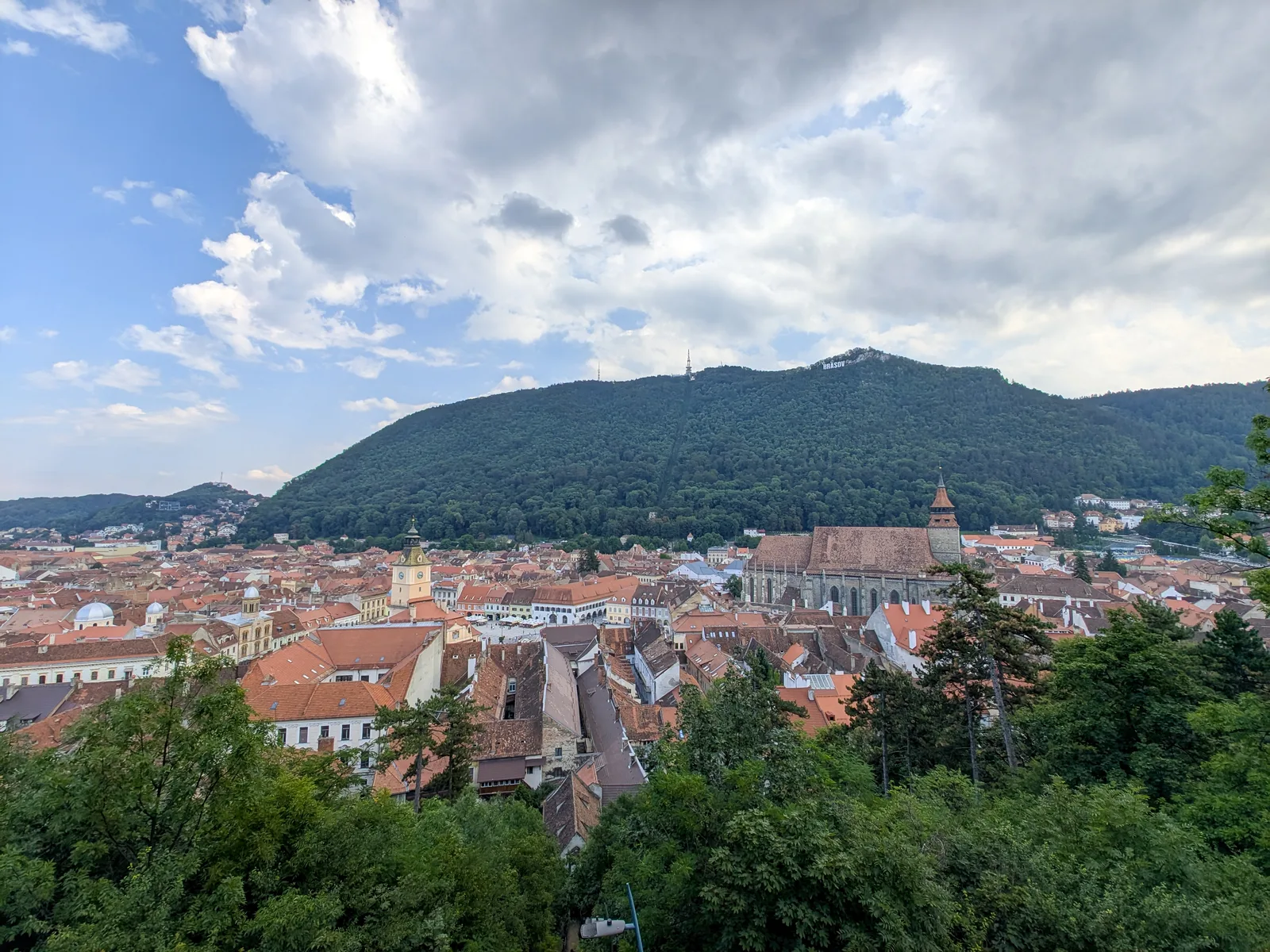
A city break with the mountains in view
Brașov is a strong choice when you want historic streets and access to the outdoors in the same trip. Roofs, church towers and the wooded outline of Tâmpa establish its setting immediately. Yet the useful distinction is between enjoying that mountain backdrop from town and organising a mountain day: they require different time, equipment and weather decisions.
This is a substantial Romanian city, not simply a cluster of guesthouses around a famous square. A visitor can concentrate on the old centre, while someone considering a move needs to understand the wider geography of housing, work, university buildings and transport. Poiana Brașov, the mountain resort associated with the city, is another accommodation choice rather than an interchangeable address for central sightseeing.
Allow three nights for a first stay if possible. That provides space for the centre, a suitable outdoor outing and one excursion without spending every morning packing for transport. A shorter visit still works if you choose a clear priority. Consult VisaWand’s Romania country guide and Romania destination page alongside the city details when planning a longer Romanian journey.
Read the history through its communities
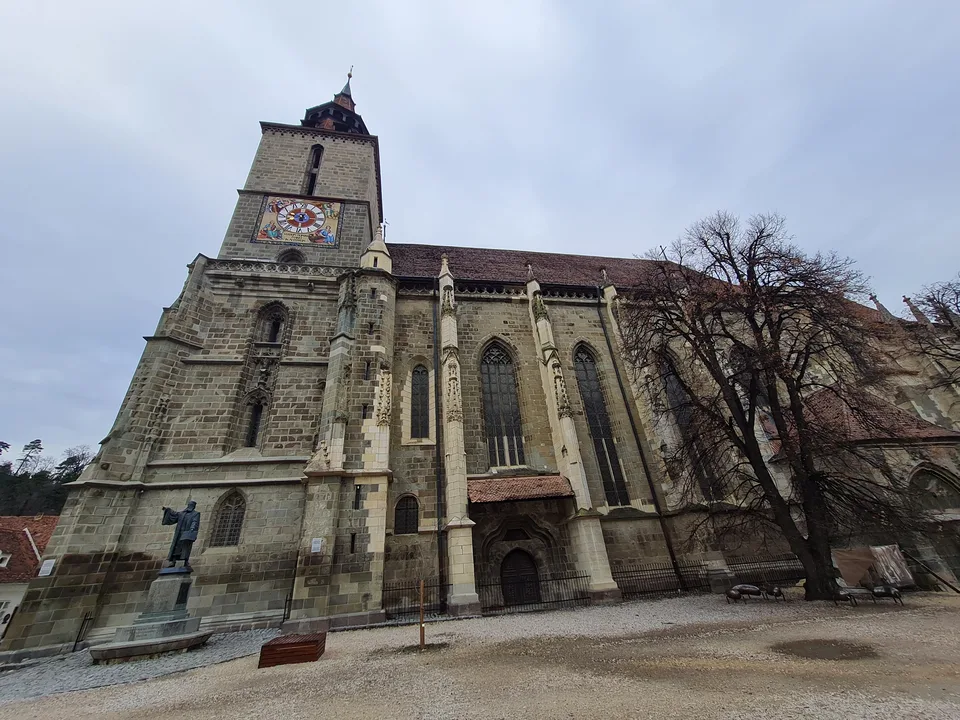
Brașov’s architectural character reflects a trading city shaped by different communities. The Black Church community’s historical account describes the German, Hungarian and Romanian populations that contributed to nineteenth-century urban life, and the German community’s later contraction through emigration. The living congregation matters: this heritage is more than a collection of attractive façades.
The church’s own history records construction beginning in the late fourteenth century, a process lasting almost a century. The Reformation transformed its religious life, with a Lutheran service held here in October 1542. A devastating fire in April 1689 destroyed the great roof and badly damaged the interior; the familiar explanation of the church’s name links it to walls darkened by fire and smoke.
Look beyond the exterior when interpreting the building. Its surviving bronze font dates from 1472, and Anatolian rugs donated by members of the community connect religious furnishings with the city’s trading networks. These details make a slower visit rewarding. They also offer a better introduction to Brașov than treating every old building as a backdrop to Dracula stories or compressing centuries into a single “medieval” label.
Choose between the old centre and a practical base
Piața Sfatului, the Council Square, is the natural starting point for a first visit. The Romania Tourism visitor page describes its surrounding merchant houses and the historic Șchei district southwest of the old town. A walk between these areas gives you a manageable introduction without requiring an excursion out of the city.
Staying near the square suits someone who wants repeated access to the historic centre. Check the particular room, though: a celebrated address can bring evening voices, deliveries or difficult vehicle access. A property in Șchei may appeal for its setting, but establish the gradient and luggage route. “Walking distance” does not explain whether the final stretch is comfortable for your group.
For a train-based trip, compare a station-side property with the additional journeys it creates for sightseeing. Prospective residents should also investigate the wider city instead of assuming that the tourist centre is the best place for every household. Map the actual work or teaching address, groceries and everyday transport. Judge a home by that routine; a photograph of the square cannot establish whether the apartment is convenient for your life.
Make time inside the Black Church
The official Black Church visiting page lists adult admission at 30 lei, with 25-lei pensioner and student tickets and 20-lei school-pupil admission, subject to the relevant evidence. Children under seven enter free. Check the operator’s categories before buying for a family or group rather than assuming that every young visitor qualifies for the same reduction.
The published winter schedule, beginning 16 October 2026 and continuing into April 2027, is Sunday and Monday 12:00–18:00, Tuesday–Saturday 10:00–18:00. Last admission is twenty minutes before closing. On concert days, ordinary visiting ends thirty minutes before the concert; religious ceremonies and concerts can interrupt visits. Check your date rather than relying on a general map listing.
Treat the church as an active religious space and allow time to read its interpretation. Guided explanations are offered without an additional guiding charge when available; private arrangements should be requested beforehand. Availability is not a guarantee of an immediate tour in your preferred language. If hearing the organ is a priority, consult the separate concert programme and ticket arrangements. A sightseeing ticket and a music event are different choices, even when they use the same building.
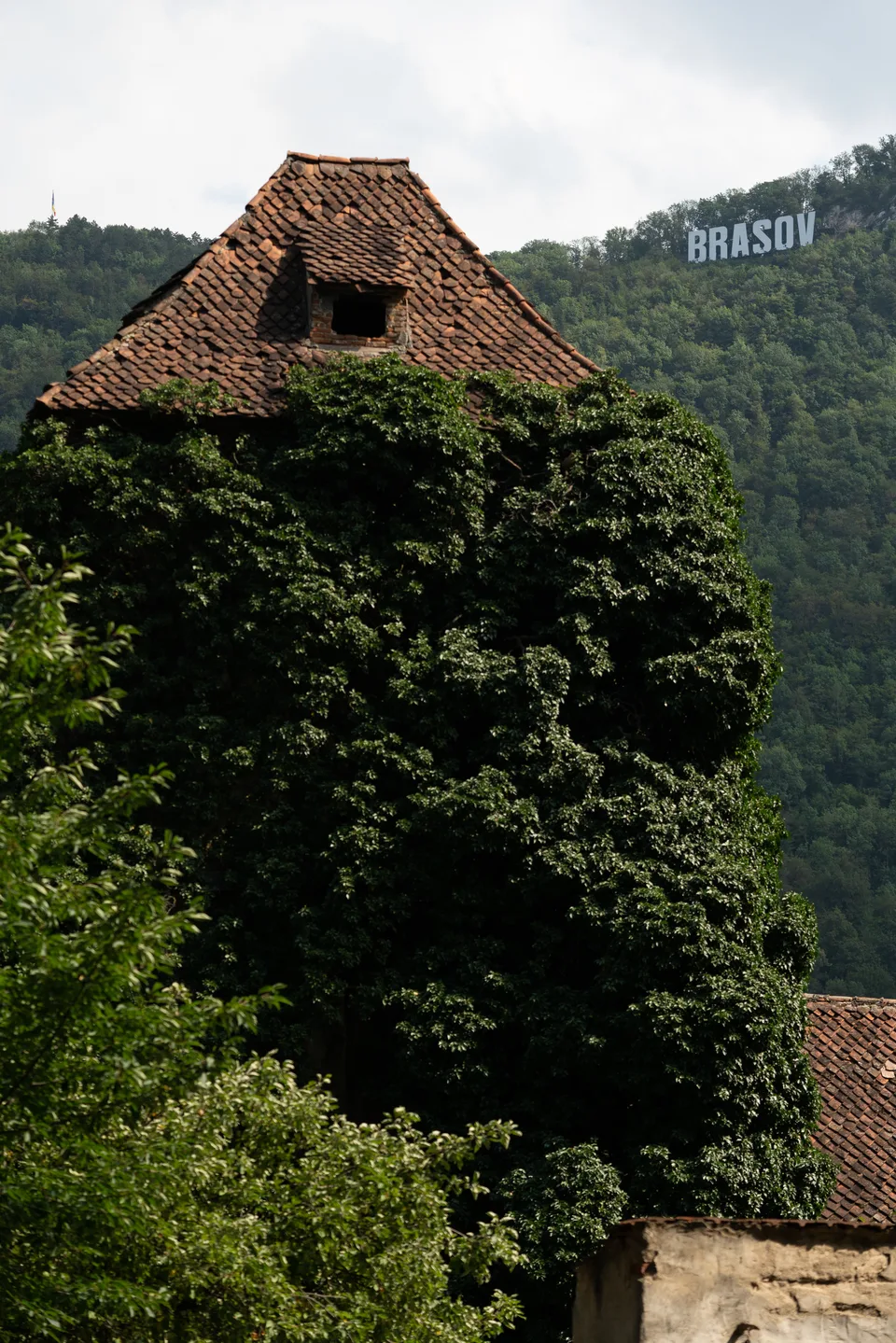
Tâmpa is a mountain beside the city
The Tâmpa cable-car operator currently lists an adult return at 45 lei and a one-way journey at 30 lei. Children aged six to twelve pay 30 lei return or 20 lei one way. Choose the ticket around a realistic return plan: buying a single ascent does not make the walk down an automatic or suitable option.
The operator advertises ramps, a dedicated lift and adapted access towards the panoramic area and restaurant, with free transport for people with locomotor disabilities. Ask about your particular requirements before travelling. Those facilities do not establish that every viewpoint or woodland path beyond the station is accessible.
For walking, use Salvamont Brașov’s mountain advice to prepare for the route, conditions and your group’s abilities. Carry suitable footwear, layers, water and navigation, and plan the return while there is adequate daylight. Check the cable car’s current operating arrangements if you intend to rely on it in either direction. A service interruption can change the whole outing. If visibility is poor or conditions are unsuitable, keep the mountain for another day and enjoy the city without forcing an ascent simply because it appears on the itinerary.
Take wildlife and changing conditions seriously
The local mountain-rescue service’s wildlife guidance advises keeping to marked paths, avoiding solo walks, keeping dogs on a lead and avoiding late-evening or nighttime outings. Never feed wild animals or approach their young. The guidance is relevant near a city too; the presence of buildings or a popular viewpoint is not a reason to abandon preparation.
Before leaving, check local notices and tell someone your intended route and expected return. If your experience does not match the conditions, choose a guided outing or a less demanding activity. The sensible comparison is between suitable days out, not between a supposedly brave hike and a wasted day. A view enjoyed comfortably is worth more than an itinerary completed reluctantly.
For a mountain emergency, the service lists 112 and the national Salvamont dispatch number, 0725 826 668. Keep your phone charged and be able to describe where you are. Do not rely on a photograph of a trail junction as your only means of navigation. In winter, daylight, footing and weather can limit a route that appears straightforward in summer photographs; seek current advice before committing to it.
Museums provide a different perspective
The Brașov Art Museum’s visitor information lists the Romanian Art Gallery’s adult admission at 12 lei and temporary-exhibition admission at 8 lei. Decide which exhibitions interest you before comparing a wider museum pass. A combined product only saves money when you actually visit its included places within the validity period.
The museum normally lists Tuesday–Sunday visiting, but its published seasonal date ranges overlap in October. Confirm the hours directly for a visit around the seasonal change. This is preferable to presenting one of two conflicting timetables as certain. Leave a margin before closing rather than expecting admission at the last minute.
For wheelchair access to the upstairs permanent gallery, the museum specifies a tracked stairlift available without an appointment Wednesday–Friday, 10:00–14:00. Other times, including weekends, require arrangements three calendar days ahead. Ask the museum about the complete access route relevant to you. This makes it possible to plan an indoor alternative with useful detail rather than simply labelling a museum accessible. Keep an exhibition visit in reserve for a day when an outdoor plan no longer makes sense, while checking its opening day first.
Arriving at the right airport and station
Brașov-Ghimbav International Airport serves the city, with GHV as its airport code. Compare the live flight schedule for your dates before assuming a particular route operates throughout the week or year. The arrival airport should be explicit on your booking: Bucharest’s Henri Coandă airport is a separate proposition with a longer onward journey.
RATBV’s current route and stop timetables cover the A1 airport connection between Brașov railway station and the airport, with city stops along its route. Check the airport departure stop itself and your travel day. A time displayed for an intermediate stop is not the time the bus leaves the terminal, and early route-launch announcements may no longer describe the timetable.
For a Bucharest arrival, CFR documents the Henri Coandă airport rail link to București Nord. From there, search the CFR Călători journey planner for an onward Brașov service. These are separate parts of the journey. Leave a practical margin for immigration, luggage, walking and delays, and check the final connection if landing late. Compare total travel time and transfer costs with any saving on the flight.
Buses are useful when you understand the ticket
The current RATBV tariff table lists a 5-lei urban journey valid for ninety minutes, including urban routes serving Poiana Brașov. A one-day Urban Pass costs 20 lei and is valid on the day issued, rather than for a rolling twenty-four hours. Three-day and seven-day urban passes are 50 and 90 lei respectively.
The same table lists a personal monthly urban subscription at 110 lei. Metropolitan products have their own coverage and prices, so establish whether a prospective home falls within the urban network or requires another product. Do not infer a commuting budget from the price of a central-city ticket. Older airport announcements quoting 4 lei for sixty minutes are not the current tariff reference.
Read the operator’s payment and validation instructions before boarding. Bank-card payment is available at onboard validators; a paper receipt is not required, and inspectors can check the last four digits of the card used. Follow the instructions for your particular ticket or app. Do not assume that the driver sells tickets on every route. Keep the payment method you used available for inspection rather than packing it away in inaccessible luggage.
Accommodation should match the purpose of the stay
For a city break, prioritise the entrance location, comfortable sleep and straightforward luggage arrangements. Ask whether your booked room faces a busy street or courtyard, whether the building has a lift and how late arrival works. In an older building, “upper floor” may mean several flights of stairs; a good location cannot compensate for access that your group cannot manage.
For an apartment, examine the practical equipment rather than the decorative photographs. Confirm heating controls, hot water, cooking facilities, laundry and the beds actually provided. For a longer winter stay, ask to see representative utility bills and how the building’s charges are allocated. Establish whether the advertised price includes everything or has consumption limits and separate fees.
Poiana Brașov can make sense when mountain-resort activities are the main purpose of the trip. The municipality places it about thirteen kilometres from Brașov; it should not be booked as though it were a hotel just off the central square. Compare the daily transfers your chosen plan creates. Someone dividing time between work and sightseeing may prefer a different base from someone organising several consecutive days around the resort.
Food, shopping and a useful spending plan
Look for Romanian dishes without assuming that every familiar name is unique to Brașov. The Romania Tourism food guide describes sarmale as stuffed cabbage rolls, commonly with meat and rice; mămăligă is a cornmeal preparation, while ciorbă refers to soups with a sour character. Zacuscă provides another useful menu term for a vegetable-based spread. Recipes and accompaniments vary between kitchens.
Ask about stock, meat, dairy and garnishes if you follow a restricted diet. Read portion sizes and whether side dishes are included before ordering. A menu photograph does not establish either the current price or the ingredients. Choose places by the actual offering and your needs rather than treating a general destination guide as a personal restaurant endorsement.
For shopping, allow time to distinguish everyday purchases from gifts. Ask about the origin of an item if local craftsmanship matters, and think about packing fragile goods before buying them. An apartment’s kitchen may reduce some meal costs, but only if you want to cook and have the equipment. Price that choice against a hotel stay with the facilities you would actually use.
Compare costs using your own dates
Start with accommodation quotations for the exact party, dates and cancellation conditions. Then add arrival transport, local journeys, paid visits and meals. A day involving a castle excursion has different costs from a day spent walking through the centre. Keep optional additions visible instead of hiding them inside a single daily figure.
For a simple sightseeing break, compare individual admissions with any pass you are considering and count the visits you can comfortably complete. For a mountain outing, include equipment or guiding if needed. A cable-car ticket is not the whole cost when reaching the station or arranging a return adds another journey. Leave room for a weather-related change of plan.
For prospective residents, separate the rent from utilities, building charges, internet, transport and household setup. Ask what the deposit secures and when it can be returned. A furnished short-term quotation is not a reliable monthly rent benchmark for the whole city. Inspect several comparable homes and assess their condition. Do not transfer money merely because an advertisement says demand is high; verify the property, the person’s authority to let it and the written terms.
Choose a season for your activities
Brașov’s foothill setting gives the seasons practical consequences. Winter travel needs attention to warm clothing, traction underfoot and heating in the accommodation. A ski trip requires confirmation that the relevant facilities are operating, suitable instruction where needed and a realistic transport plan. A winter booking is not a promise of snow or open slopes on every date.
For warmer-month travel, allow for rain and changes in mountain weather rather than treating a pleasant city morning as a forecast for the whole outing. Check the Romanian National Meteorological Administration’s warnings and local mountain advice. Carry a layer even when the start of the day feels mild, and keep an indoor option that does not depend on an attraction being open every day.
Spring and autumn can suit a trip centred on walking and architecture, provided you check daylight and conditions for excursions. Choose dates around what you most want to do, then price accommodation. A flexible booking may be worth more than a small saving if the main activity depends on weather. Avoid a rigid sequence of prepaid outdoor commitments that leaves no room to respond to conditions.
Three days without an exhausting checklist
Day one: settle in and explore Council Square, leaving time for the Black Church during its confirmed visiting hours. Continue through the historic streets at an easy pace, with a meal break and an opportunity to return to your room. Use this day to understand the centre’s layout rather than beginning with a long excursion immediately after arrival.
Day two: choose Tâmpa if conditions are appropriate, using the cable car or a walking route matched to your abilities. Keep the afternoon flexible. An art-museum visit can provide a different experience if its opening day and access arrangements work, or use the time to explore towards Șchei. Avoid reserving the afternoon so tightly that a queue or weather change creates a chain of missed appointments.
Day three: take one out-of-town excursion, with transport and return arrangements established in advance. Alternatively, stay within Brașov for another neighbourhood walk and a slower departure. With two days, combine the centre and one principal extra; omit the excursion if it would consume the time you wanted for the city. With children or less mobile travellers, shorten the walking circuits and use breaks as part of the plan.
Moving here means testing ordinary routines
Use a trial stay to travel the actual commute at the times you would use it. Check the walk to a stop, frequency on your working days and what happens if you miss the last convenient service. For remote work, test the connection in the unit itself and ask about a practical workspace. A citywide reputation for connectivity is not evidence about one apartment.
Students should confirm faculty locations before choosing housing. Transilvania University’s dormitory application information makes clear that requesting accommodation does not guarantee allocation; places depend on the allocation process and availability. Its published 2026 application periods are already past. Contact the university for the relevant intake instead of assuming that an old deadline applies to the next academic year.
For household services, Compania Apa Brașov’s customer channels provide a starting point for questions about the property’s water arrangements. Clarify the landlord’s responsibilities, meters, heating, internet installation and building charges before signing. Use Brașov’s municipal website for local administrative services. Families should establish school admission arrangements, while everyone planning a move should confirm healthcare entitlement and insurance separately from simply having an address.
Keep tourist entry separate from relocation
Romania became a full Schengen member on 1 January 2025, as explained by the European Commission. Do not plan a Romanian visit as a separate ninety-day allowance outside the rest of Schengen. The Foreign Ministry’s visa-category information describes the short-stay framework of up to ninety days in any 180-day period, with requirements depending on nationality and circumstances.
Work and study require their own checks. Consult the immigration authority’s employment and posting guidance or study information for the appropriate route and residence steps. EU, EEA and Swiss citizens have a different framework from other nationals. A university offer, apartment lease or tourist admission does not itself settle your right to work or remain permanently. VisaWand’s consultant listings can help locate professional assistance for your situation.
For an excursion, use Bran Castle’s official site to compare actual visitor products, keeping its royal history separate from fictional Dracula associations. For a wider itinerary, compare the Sinaia location page, Sibiu location page and Bucharest location page. These are navigation resources; check each for available editorial coverage. The Romania location directory provides further places to consider.
Official planning resources
Reviewed 17 October 2026. Use the official resources linked throughout this guide for admission, transport, housing and immigration decisions. Prices, services and rules can change; confirm the details relevant to your dates. Photography illustrates the locations and is not a live view.
View all official resources
- Black Church community: Brașov’s German heritage
- Black Church: history and heritage
- Romania Tourism: Brașov visitor information
- Black Church: official hours and admission
- Tâmpa cable car: operator hours, fares and access
- Salvamont Brașov: mountain walking advice
- Salvamont Brașov: avoiding wildlife encounters
- Brașov Art Museum: admission and accessible visits
- Brașov-Ghimbav International Airport
- RATBV: route and stop timetables
- CFR: Henri Coandă airport and București Nord connection
- CFR Călători: trains and booking
- RATBV: current urban and metropolitan fares
- RATBV: paying and validating fares
- Romania Tourism: Romanian food and wine
- Romanian National Meteorological Administration: warnings
- Transilvania University: requesting dormitory accommodation
- Compania Apa Brașov: online customer services
- Brașov municipal visitor and resident information
- European Commission: Romania joins Schengen fully
- Romanian Foreign Ministry: visa categories
- Romanian immigration authority: employment and posting
- Romanian immigration authority: studies
- Bran Castle: official visitor information
Plan the next part of your journey
Explore the Romania guide, browse other cities or compare consultants for your travel and relocation questions.