Visa
Oslo rewards a city break with room to breathe
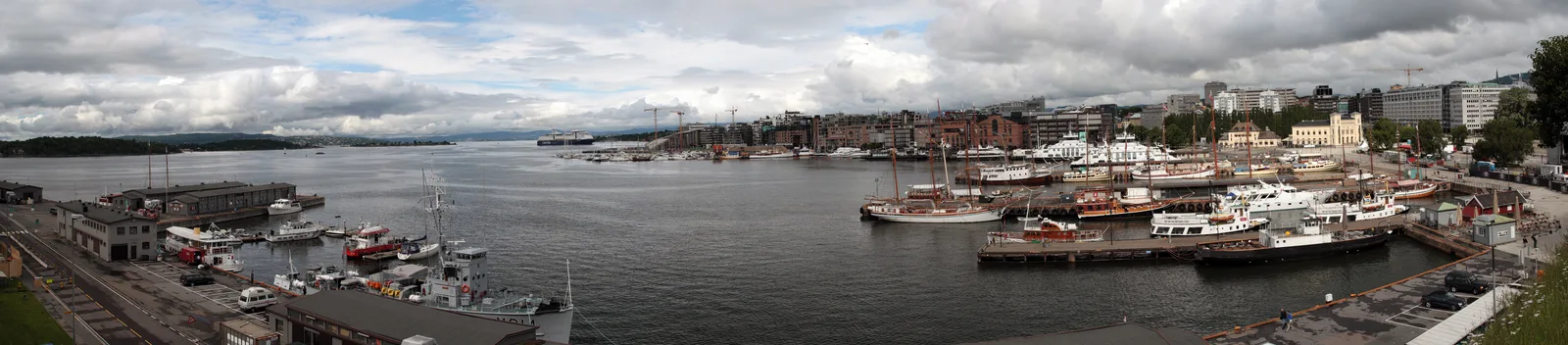
Oslo puts major art collections, a working harbour and forest outings within reach of the same short visit. Norway’s capital faces the inner Oslofjord, with its central streets behind the waterfront and wooded hills beyond the residential districts. Come for Munch, architecture and museums; leave time for the ordinary pleasures of a riverside walk or a ferry journey. The city works particularly well when you alternate substantial indoor visits with unhurried time outside.
Three full days give a first visit a useful shape. Two days require choosing between collections; a longer stay allows Bygdøy and neighbourhood exploration without rushing. This is a capital-city itinerary, rather than a shortcut to Norway’s western fjords. For wider planning, use VisaWand’s Norway country guide and Norway location directory, which serves a different purpose from this completed city guide.
Read the city through its changing waterfront
The waterfront helps explain Oslo’s changing priorities. Akershus represents defence and royal power; the Opera House and Bjørvika place culture and public space beside the water. Inland, the Akerselva corridor reveals another city, shaped by industry and later reuse. These are connected parts of Oslo’s story, best understood on foot rather than as isolated photo stops.
After the great fire of 1624, Christian IV established Christiania in the area now known as Kvadraturen. Its streets provide a useful historic counterpoint to the newer harbour districts. VisitOSLO’s city-centre introduction explains this geography. Avoid trying to reconstruct every period in one afternoon: choose the fortress and old centre first, then compare their street pattern with the modern waterfront on another walk.
Choose a neighbourhood for your actual plans
Around Oslo Central Station, usually written Oslo S, convenience is the main advantage: arrival transport and the eastern waterfront sit close together. Bjørvika suits a museum-led visit, especially for the Opera House and MUNCH. Aker Brygge and Tjuvholmen suit travellers who want the western waterfront and easy access to the National Museum. Compare the exact building and street, rather than assuming every room in a named area shares the same outlook.
Grünerløkka offers cafés, independent shops and a different evening atmosphere. Frogner provides a useful base for the sculpture park and western residential streets. VisitOSLO’s area directory helps locate these districts; its visitor areas do not all correspond to formal administrative boroughs. For a short stay, a quieter room on a convenient route can be more valuable than a prestigious address requiring repeated transfers.
Start Bjørvika at the Opera House
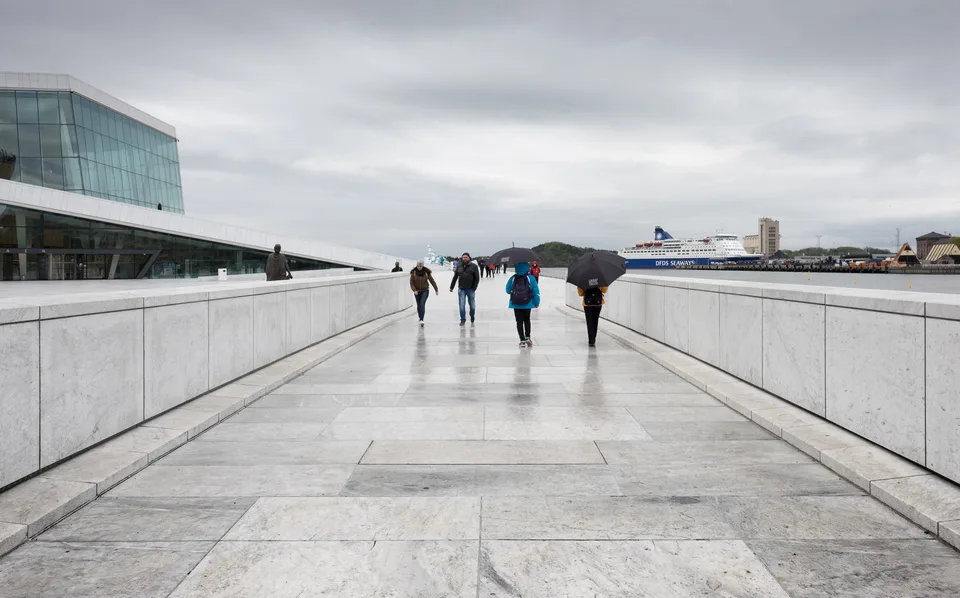
The Opera House, designed by Snøhetta and opened in April 2008, invites visitors onto its sloping exterior and into the foyer. Its appeal lies partly in this relationship between building and public space: the architecture becomes a place to pause above the harbour. Follow barriers and weather notices; an invitation to explore the roof does not guarantee every surface is available in every condition. The Opera’s account of its building supplies the architectural context.
A performance, a guided tour and a casual architectural visit are different experiences. Official Opera House tours introduce spaces and operations beyond an exterior walk. For a show, check the production, seat and access information before buying. Foyer hours also vary with performances, so use the Opera’s practical visitor information when planning an evening rather than expecting unrestricted access throughout the night.
Give MUNCH time beyond its most famous image
MUNCH in Bjørvika offers a concentrated encounter with Edvard Munch’s work. The adult admission listed at review is NOK 220; visitors under 25 pay NOK 100, while ages 0–17 enter free. Booking a time is advisable. Do not arrive directly from the airport with oversized luggage: the museum specifies locker dimensions and restricts bags in exhibitions. Check MUNCH’s ticket and bag information before departure.
The Scream requires a little expectation-setting. MUNCH rotates a painting, drawing and print, with one visible while the others are protected from light. Buying admission therefore does not promise all three together, or your preferred version at a particular moment. The museum explains how The Scream is displayed. Allow time for other works and exhibitions, then continue along the waterfront instead of stacking another major collection immediately afterwards.
Use the National Museum for a broader cultural picture
The National Museum combines art, architecture and design, making it a useful choice when your interests extend beyond one artist. It is near the western waterfront at Brynjulf Bulls plass. At review, standard adult admission is NOK 220; under-18s enter free. The regular schedule closes on Mondays, which matters if your entire city break falls around a weekend. Confirm exceptions and exhibition arrangements through the National Museum’s official visitor page.
Choose several galleries or themes rather than attempting every room. This makes the visit more satisfying and leaves energy for the surrounding city. A family with younger children may prefer one museum and an outdoor afternoon; an art-focused traveller may want separate days for this collection and MUNCH. Check concession documentation before calculating savings, since student and age-based categories are not interchangeable.
Walk Vigeland Park without confusing it with the museum
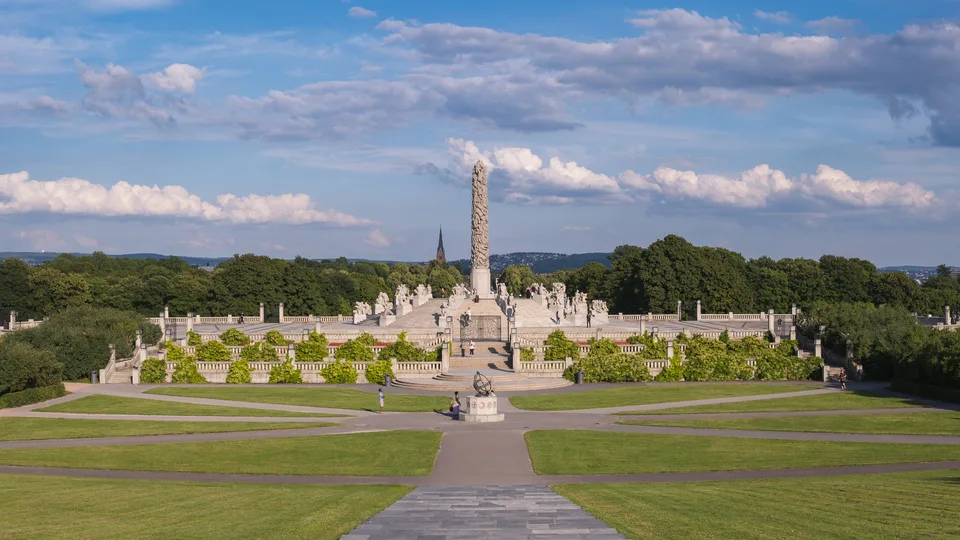
Vigeland’s sculptures occupy an outdoor setting within Frogner Park. The park is free and open around the clock, making it a flexible counterweight to ticketed collections. Walk through the sequence towards the Monolith, noticing how individual figures and larger groupings work with the paths and landscape. The separate Vigeland Museum has its own admission and opening arrangements; a park visit does not require a museum ticket.
Accessibility needs closer inspection than the word “park” suggests. Paths include gravel, asphalt and stone, and the steps towards the Monolith have no ramp, although the sculpture can be approached and viewed from below. The museum has different access limitations. Consult the Vigeland Museum’s detailed park and access questions to plan the route. Leave the sculptures untouched rather than treating polished bronze as an invitation to handle it.
Explore Akershus as a fortress, not an unrestricted park
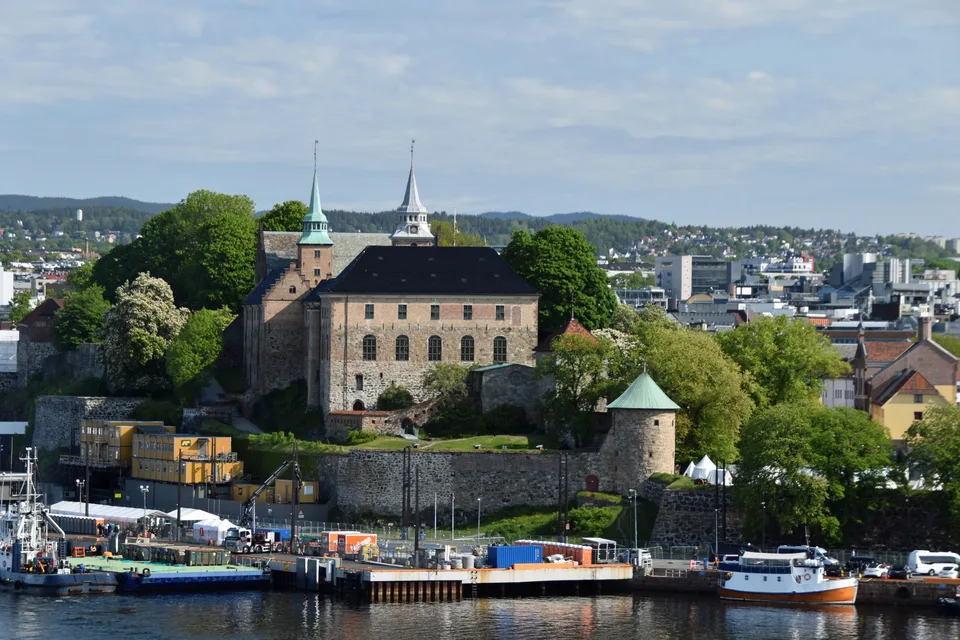
Akershus gives Oslo’s harbour a much older frame. The fortress began in the late thirteenth century and developed through successive military and political eras. Today the complex contains the castle, military-history collections and Norway’s Resistance Museum, while remaining an active military site. The official Akershus Fortress introduction explains these overlapping functions.
An outdoor walk, entry to the castle and a museum visit are separate decisions. Check the particular venue you intend to enter, and respect closed areas or operational restrictions. Stone surfaces, gradients and steps also deserve consideration when choosing footwear or planning with limited mobility. Leave enough daylight to appreciate the harbour setting; trying to add every interior after a long museum morning usually turns an atmospheric place into a hurried checklist.
Reserve Bygdøy for the museums you most want
Bygdøy is a peninsula, despite the “museum island” shorthand sometimes used in visitor marketing. Its museum cluster and outdoor spaces make it a substantial excursion rather than a quick central-city detour. Use VisitOSLO’s Bygdøy overview to choose a focused combination, then confirm the individual museums’ opening hours. One major collection with a walk can be more rewarding than several admissions with little time inside.
Do not follow an old itinerary promising entry to the Viking Ship Museum. At this review, the former museum remains closed while the new Museum of the Viking Age is prepared. The museum’s own construction and visitor updates direct people towards Viking-age objects at the Historical Museum in central Oslo meanwhile. Seasonal boats and ordinary public transport also have different arrangements; verify the service operating on your date before choosing the outward journey.
Follow Akerselva into Grünerløkka
For a change of pace, make the river the organising line of an afternoon. Around Grünerløkka, former industrial buildings, parks, cafés and small shops reveal a city less dominated by monument visits. VisitOSLO’s Grünerløkka introduction describes the area’s working-class past and the riverside route past Vulkan and Mathallen. Walking here creates space for discoveries without inventing a list of supposedly secret local favourites.
Choose one stretch and explore its side streets rather than committing to the entire river corridor. Vintage shopping and browsing independent stores work well alongside a café stop, but opening times determine what you will actually find. On a scouting visit for relocation, return at commuting time and again in the evening: a pleasant afternoon walk cannot establish how a particular flat will feel throughout the week.
Pick accommodation by total cost and arrival needs
Hotels near Oslo S simplify a short visit with luggage; waterfront accommodation can reduce travel around the principal cultural sites. An apartment or room with a kitchen becomes more attractive for longer stays, provided its location and conditions suit the itinerary. Calculate breakfast, cleaning charges, baggage storage and cancellation terms alongside the headline rate. A small saving can disappear if every outing requires extra transport or a taxi after a late arrival.
Check whether the advertised unit has a private bathroom, lift access and the sleeping arrangement you need. For families, usable kitchen equipment and a nearby grocery shop may matter more than a larger lobby. For remote administration or study, ask about an actual desk and internet provision. Obtain written confirmation of late check-in, especially when a delayed flight would put you outside reception hours.
Separate the airport train from the whole arrival journey
Oslo Airport at Gardermoen has rail connections with both Vy and Flytoget. Avinor’s airport transport page describes the options; the train journey towards central Oslo can take about twenty minutes, but that excludes walking, waiting and reaching your accommodation. Check your arrival terminal, departure time and final stop before deciding which ticket to buy. Operator disruption notices matter more than a timetable copied into an old article.
An airport name on a flight search is not enough to establish the transfer. Check the airport code and ground route before paying for a seemingly cheaper fare, particularly if the flight uses another airport serving the wider region. With a late arrival, verify the last practical onward connection and a fallback. A central hotel can justify a higher room price when it removes uncertainty from the final part of the journey.
Use Ruter tickets for the journeys you will make
Ruter connects buses, trams, the metro and ferries, with ticket validity also extending to specified Vy services. VisitOSLO’s current zone-one table lists an adult single at NOK 46, a 24-hour ticket at NOK 137 and a seven-day ticket at NOK 379. Check the official visitor transport information and live journey planner for your route, zones and ticket conditions. A ticket for central Oslo should not be assumed to cover every regional outing.
Compare your likely rides before selecting a duration. Three separate NOK 46 singles total NOK 138, almost the same as the listed day ticket, but transfers and ticket validity affect the calculation. Walking between nearby central attractions may reduce the number you need. Activate or validate the appropriate ticket before travel, keep the required proof available and allow extra time when changing between street-level services and underground platforms.
Calculate the Oslo Pass rather than buying automatically
At review, adult Oslo Pass prices are NOK 580 for 24 hours, NOK 845 for 48 hours and NOK 995 for 72 hours. The current official price page is the place to check revisions. Add only admissions and journeys you genuinely intend to use. A walking-heavy day around the harbour and free sculpture park produces a different calculation from a day with several included museums.
The current pass covers the stated zones, including the airport journey on Vy local trains when the pass is active; this does not mean every airport operator is included. Verify the Pass transport questions before buying another ticket. Activation starts a continuous period. Museum access does not guarantee priority entry, and timeslots or supplements may apply. The digital pass must be shown in the app, not as a screenshot: read the full conditions before relying on it.
For example, the two NOK 220 standard museum admissions above plus a NOK 137 zone-one day ticket total NOK 577, just below the NOK 580 day pass. That comparison changes if you add another included attraction or use the covered airport train, and changes again for someone entitled to concessions. It also assumes both museums fit comfortably into the same active period. Make the arithmetic serve the itinerary: paying separately can be sensible when it lets you spend longer in one collection.
Eat and shop with a practical spending plan
Mathallen at Vulkan offers specialist food shops and places to eat, making it a useful stop during an Akerselva afternoon. Treat it as a food destination rather than a promise of the cheapest meal. Its current practical information lists regular Monday closure, with some traders keeping different hours and seasonal exceptions. Check the particular business if you are travelling specifically for it.
For a seasonal Norwegian dish, VisitOSLO highlights fårikål in autumn. Ask what is available on the day and confirm ingredients with the restaurant; a regional speciality is not a promise that every menu serves it. VisitOSLO’s current seasonal advice offers a useful starting point.
For everyday control of spending, combine accommodation breakfast or groceries with one meal you particularly want. Compare actual menus, portion sizes and drinks rather than relying on a universal daily allowance. Grocery shopping also supports a picnic or an early departure when cafés are closed. Carry a refillable bottle and follow any local water notices. For gifts, browse the design and vintage shops around Grünerløkka, checking luggage space before buying bulky objects.
Build the budget in separate lines: accommodation, airport transfers, local transport, admissions, food and a contingency. Keep the currency in Norwegian kroner until comparing the final total, since conversion fees depend on your payment method. Obtain accommodation quotes for your actual dates rather than interpreting an advertised starting price as a citywide norm. For a household, price groceries and transport for every member; a visitor’s three-day museum budget says little about the monthly cost of living in Oslo.
Choose the season for the experience
Summer suits longer outdoor days, harbour walks and a flexible mixture of museums and water-based activities. VisitOSLO’s summer planner helps identify seasonal options, but rain or wind can still alter a boat or bathing plan. Pack a waterproof outer layer and keep one indoor alternative available. Spring and autumn work well for a culture-led trip when you are comfortable moving outdoor walks around the forecast.
Winter changes both the pace and the equipment needed. The official winter guide highlights skiing and sledding reached from the city, but suitable snow is a condition to check, not a booking guarantee. Shorter daylight makes an early start valuable for outdoor sightseeing. Footwear with traction, warm layers and flexible timing matter on icy streets. Schedule a museum or café break rather than assuming you will enjoy an uninterrupted day outdoors.
A realistic three-day first visit
Day one: settle in, explore Bjørvika and visit MUNCH at a reserved time. Leave the Opera House exterior and harbour walk flexible around weather and available access. This keeps the first day coherent without crossing the city repeatedly. If arrival is late, shift the museum to another day rather than rushing from the airport to a timed admission.
Day two: visit the National Museum, then walk the western waterfront and Akershus area. Check the museum’s Monday closure when placing this day. Day three: choose Bygdøy for a museum-focused excursion, or combine Vigeland Park with Grünerløkka and Mathallen for more neighbourhood time. Do not squeeze both versions into the same day. With a fourth day, add the omitted option; with only two, remove a major collection instead of compressing every stop.
With children or limited stamina, choose a shorter walking segment and identify a sheltered break before setting out. An itinerary should leave room for meals, changing weather and the journey back to the hotel, not merely the attractions’ opening hours.
Moving to Oslo starts with a workable home and commute
A relocation visit should test everyday journeys as carefully as cultural attractions. Run the commute from the actual address at the hours you expect to travel, including transfers and the final walk. Compare a central flat with a larger home farther out using total monthly costs and time. Check grocery access, laundry, storage, childcare or school arrangements, and how the route would feel in winter.
The City of Oslo’s renting guidance recommends a written agreement and explains deposits: three months is common, while six months’ rent is the legal maximum. A deposit belongs in a regulated deposit account, not a personal transfer to the landlord. The Consumer Council’s tenancy guidance explains permitted charges and contractual protections. Inspect the property, record its condition and clarify what rent includes before committing. Avoid treating a paid deposit guarantee as identical to refundable savings.
Plan household services and registration early
Ask how heating and electricity are billed and whether internet is included or must be arranged for the address. Winter consumption can change a household budget considerably. Oslo’s utilities and public-services guidance also explains sorting: purple bags for plastic packaging, green for food waste and separate provision for paper. Confirm the building’s arrangements and appropriate collection points for glass, metal, electronics and bulky waste.
Immigration permission, population registration and access to services involve different authorities. The city’s arrival-registration explanation distinguishes UDI, the police and the Tax Administration; appointments and identification can affect subsequent banking and digital access. Healthcare entitlement depends on your status, with user fees for many services. Read the municipal healthcare introduction and check the official health service for your circumstances rather than assuming arrival produces immediate free care or a regular doctor.
Keep visiting, working and studying legally distinct
For visitors subject to Schengen short-stay rules, the usual ceiling is 90 days in any rolling 180-day period across the area, not a fresh allowance for Norway. A visa may authorise less. Use UDI’s visitor-visa questions and the nationality-specific application instructions before booking. Visitor permission should not be treated as permission to take employment.
Start employment planning with UDI’s work-immigration routes and study planning with its study-permit information. EU/EEA residence arrangements differ; the city flags police registration for stays exceeding three months. Remote work also needs attention: UDI’s remote-work guidance distinguishes limited incidental tasks during a visit from making work the purpose of the stay. Permanent residence has separate eligibility requirements. A VisaWand consultant listing can help locate professional support, while official authorities determine applications and rights.
Leave space for the wider region
For a smaller-town contrast, consider Drøbak and the fortress island of Oscarsborg. VisitOSLO’s regional introduction explains the combination; check current bus and ferry arrangements, particularly outside the summer season. Allow a separate day and a reliable return connection. A nearby destination is worthwhile when you have time to experience it, rather than simply adding another place name.
For a different Nordic city break, compare VisaWand’s completed Helsinki city guide or Stockholm city guide. For Norway-wide options, the Norway destination page offers another planning starting point. Choose according to the trip you want: Oslo is strongest when art, neighbourhood life and accessible outdoor space share the itinerary, with enough flexibility to enjoy each on its own terms.
Official planning resources
Reviewed 15 October 2026. Use the official resources linked throughout this guide for admission, transport, housing and immigration decisions. Prices, services and rules can change; confirm the details relevant to your dates. Photography illustrates the locations and is not a live view.
View all official resources
- VisitOSLO: current Pass prices
- VisitOSLO: Pass conditions
- VisitOSLO: Pass questions
- Avinor: airport ground transport
- VisitOSLO: getting around
- National Museum: visiting
- MUNCH: visitor information
- MUNCH: viewing The Scream
- Vigeland Museum: park and museum questions
- Norwegian Opera and Ballet: practical visiting
- Norwegian Opera and Ballet: guided tours
- Defence History Museum: Akershus Fortress
- UDI: work immigration
- City of Oslo: renting a home
- Norwegian Consumer Council: tenancy rights
- City of Oslo: household utilities
- City of Oslo: healthcare services
- City of Oslo: registering arrival
- VisitOSLO: neighbourhoods
- VisitOSLO: Grünerløkka
- VisitOSLO: Bygdøy
- UDI: visitor visa questions
- UDI: remote work in Norway
- UDI: study permits
- VisitOSLO: summer in Oslo
- VisitOSLO: winter in Oslo
- Mathallen: practical visitor information
- VisitOSLO: historic city centre
- Norwegian National Opera: the Opera House
- Museum of the Viking Age: closure and construction
- VisitOSLO: Drøbak and Oscarsborg
- VisitOSLO: current seasonal food advice
Plan the next part of your journey
Explore the Norway guide, browse other cities or compare consultants for your travel and relocation questions.