Visa
Give Skopje more than a riverfront walk
Skopje is most rewarding when you move between its different scales: the large buildings and monuments beside the Vardar, the narrower lanes of the Old Bazaar, and neighbourhood streets where an ordinary lunch or evening out takes precedence over sightseeing. The contrast is part of the city’s interest. A photograph of the central square cannot explain the whole place.
Plan three nights for a first visit with museums and one outing beyond the centre. Two full days work if you choose selectively. Someone considering a move needs additional working days to test housing and daily journeys. The City of Skopje’s geographical overview locates the capital on the Vardar in the north of the country; the administrative city and a visitor’s walkable central area are different things.
Understand the earthquake and its aftermath
The earthquake of 26 July 1963 is essential to understanding modern Skopje. It affected buildings, planning and the city’s international relationships. Look beyond the contrast between “old” and “new”: different periods of reconstruction and redevelopment have left their own physical evidence, sometimes next to each other.
The Museum of Contemporary Art’s history describes how donations after the disaster helped create its collection and institutional identity. That makes a gallery visit part of the city’s history, rather than an optional detour unrelated to it. Set aside time for both the works and their context. The story of solidarity gives substance to buildings that might otherwise appear as isolated architectural curiosities.
Use the Stone Bridge to orient yourself
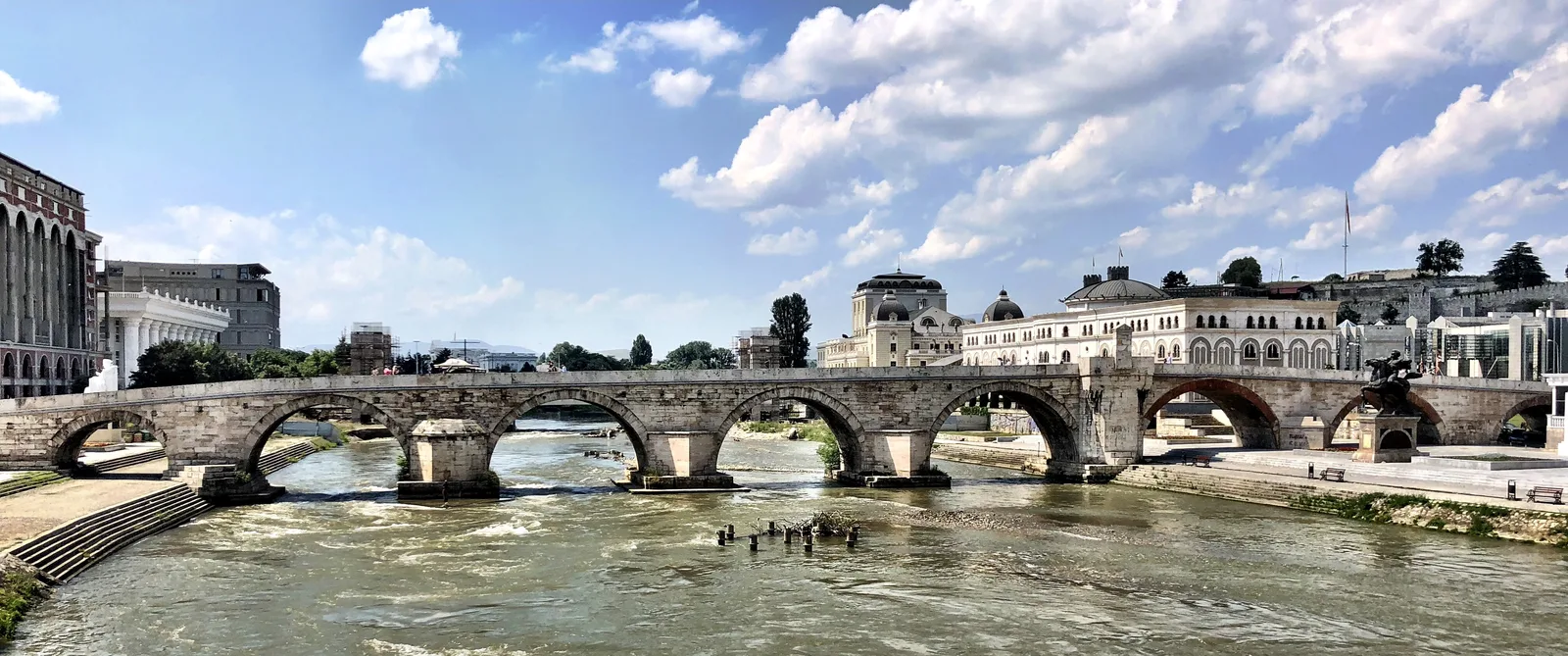
Begin with a circuit of the riverfront and the Stone Bridge. Notice how the crossing connects the scale of the central square with the approaches to the bazaar. It is a useful first walk before deciding which side of the river to explore in depth. Return later if a different light or quieter period appeals.
Do not try to identify every monument from appearance alone. The city’s layers include both historic structures and much more recent interventions. A knowledgeable guide can help distinguish them, but ask what a tour covers before booking. Plan an indoor stop or a café break when weather makes a long exposed walk uncomfortable, and keep important connections independent of an optimistic sightseeing schedule.
Explore the Old Bazaar through working streets
Give the Old Bazaar a separate morning rather than passing through it only on the way to a museum. Walk slowly enough to notice shops, workshops, courtyards and the transitions between commercial and religious spaces. Ask before photographing someone at work or entering an area whose public access is unclear.
The municipal cultural-institutions directory identifies the Old Bazaar museum display at Suli An as a branch of the City Museum. Confirm access if you want to see it, rather than assuming every courtyard contains an exhibition open all day. When visiting a mosque or church, distinguish worship arrangements from sightseeing access. Dress and behave appropriately, follow local instructions and regard an invitation to enter as something to respect rather than a photographic entitlement.
Choose a base with a useful daily route
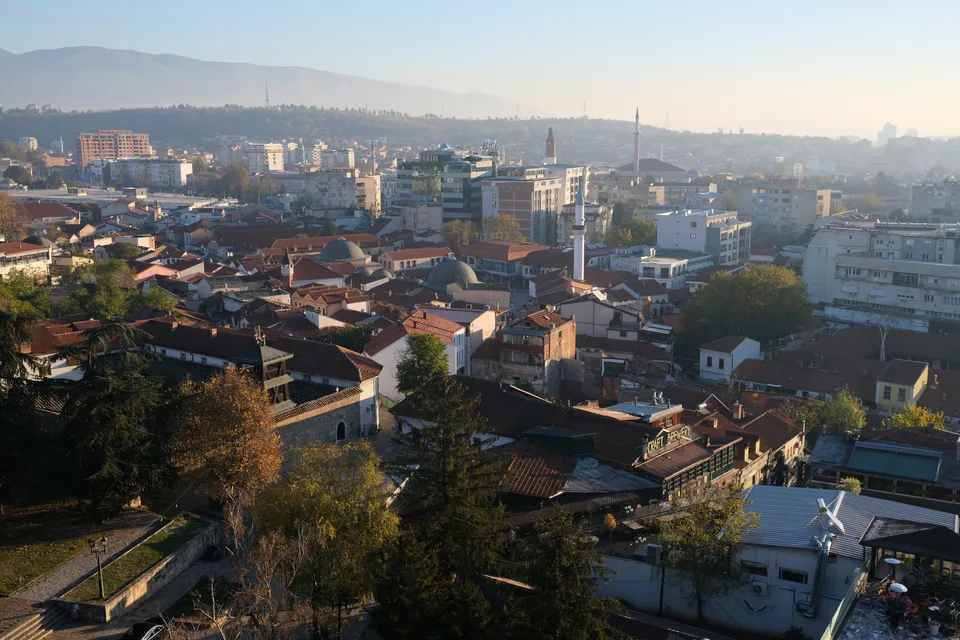
For a short first visit, a central address can simplify walks between the river, museums and dinner. Ask where the entrance actually is, whether a vehicle can stop nearby and whether a room faces a busy road or an interior courtyard. The word “central” is less useful than a confirmed walking route with your luggage.
Compare Debar Maalo if cafés and a neighbourhood evening appeal, and investigate Karpoš or Aerodrom for a longer stay with a specific workplace or family routine. Aerodrom is also an urban municipality: its name should not be read as a promise that accommodation there is beside the international airport. Check every candidate against your intended destination, bus stop and evening return rather than choosing from a district’s reputation alone.
Visit the former station for the city’s history
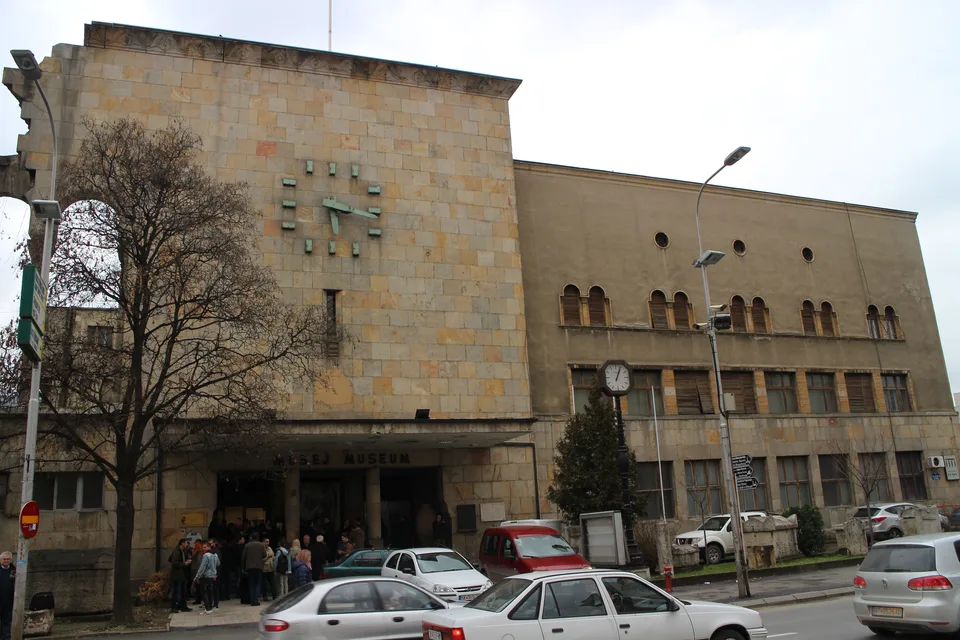
The Museum of the City of Skopje occupies part of the former railway station. Its building belongs in the story of the earthquake, but the institution’s scope is wider: archaeology, history, ethnology and art help explain the city and its surroundings. Give it a deliberate visit rather than treating the façade as the entire attraction.
The municipal directory includes contact information, but its listed working hours should not be assumed to describe current visitor access to every exhibition. Confirm directly when a particular gallery matters to your plans. Allow roughly an hour as a starting allocation, then adjust to your interests and the displays actually open. This is a useful central visit to pair with a slower walk rather than a timed dash to another institution.
Put contemporary art into the itinerary
The Museum of Contemporary Art provides a strong reason to continue towards the hillside above the bazaar. Its programme changes, so check the current exhibition rather than expecting a particular famous work to be permanently on display. Allow time for the ascent or arrange transport if the route would be uncomfortable for your party.
The museum currently publishes admission of 100 denar. Its listed hours are Tuesday–Saturday, 10:00–17:00, and Sunday, 09:00–13:00. Do not assume a late Sunday afternoon visit will work. Confirm holiday changes and any special exhibition arrangements before travelling specifically for them. A quieter gallery visit also offers a useful contrast to the streets below, especially when you want time to concentrate rather than add another outdoor landmark.
Check the National Gallery’s actual venue
The National Gallery operates through distinctive spaces and changing exhibitions. Confirm which building houses the show you want to see. An institution’s main contact address and the entrance to a particular exhibition are not necessarily the same destination, and a general opening-hours header should not replace venue-specific information.
Use the programme to choose a manageable visit. You do not need to see every exhibition to understand that the city’s cultural life extends beyond monumental architecture. If you are combining a gallery with a meal or another museum, leave time to find the correct entrance. Ask directly about steps, lifts or other access requirements; the historic character of a building alone tells you little about the facilities available inside.
Make the Mother Teresa Memorial House a focused stop
The Mother Teresa Memorial House offers a different kind of central visit. Read its displays as a memorial and interpretation of her life, rather than assuming it is an intact childhood home. Allow time to look at the documents and objects, and treat any religious activity with consideration.
The institution publishes free entrance and free guiding, with advance booking required for groups. Weekday hours are 09:00–20:00, with last entrance at 19:45; weekend hours are 09:00–14:00, with last entrance at 13:45. Recheck for holidays or exceptional arrangements. The shorter weekend window matters when constructing an itinerary: it is better to visit comfortably in the morning than arrive expecting weekday evening access.
Keep Vodno separate from a casual city stroll
Vodno can give a visit a different perspective, but a mountain outing requires more planning than crossing the centre. Decide whether you want a short visit around the cable car or a substantial walk. Check the weather, daylight and the return journey before setting out, and choose a route that suits your ability.
JSP’s published Millennium Cross cable-car tariff lists an adult return ticket at 100 denar. That is separate from getting to the lower station. Verify current operation and last-return arrangements with the transport operator; a fare document is not proof that the service runs on your chosen day. Keep a city alternative available if wind, maintenance or poor visibility changes the value or feasibility of the outing.
Give Matka its own half-day
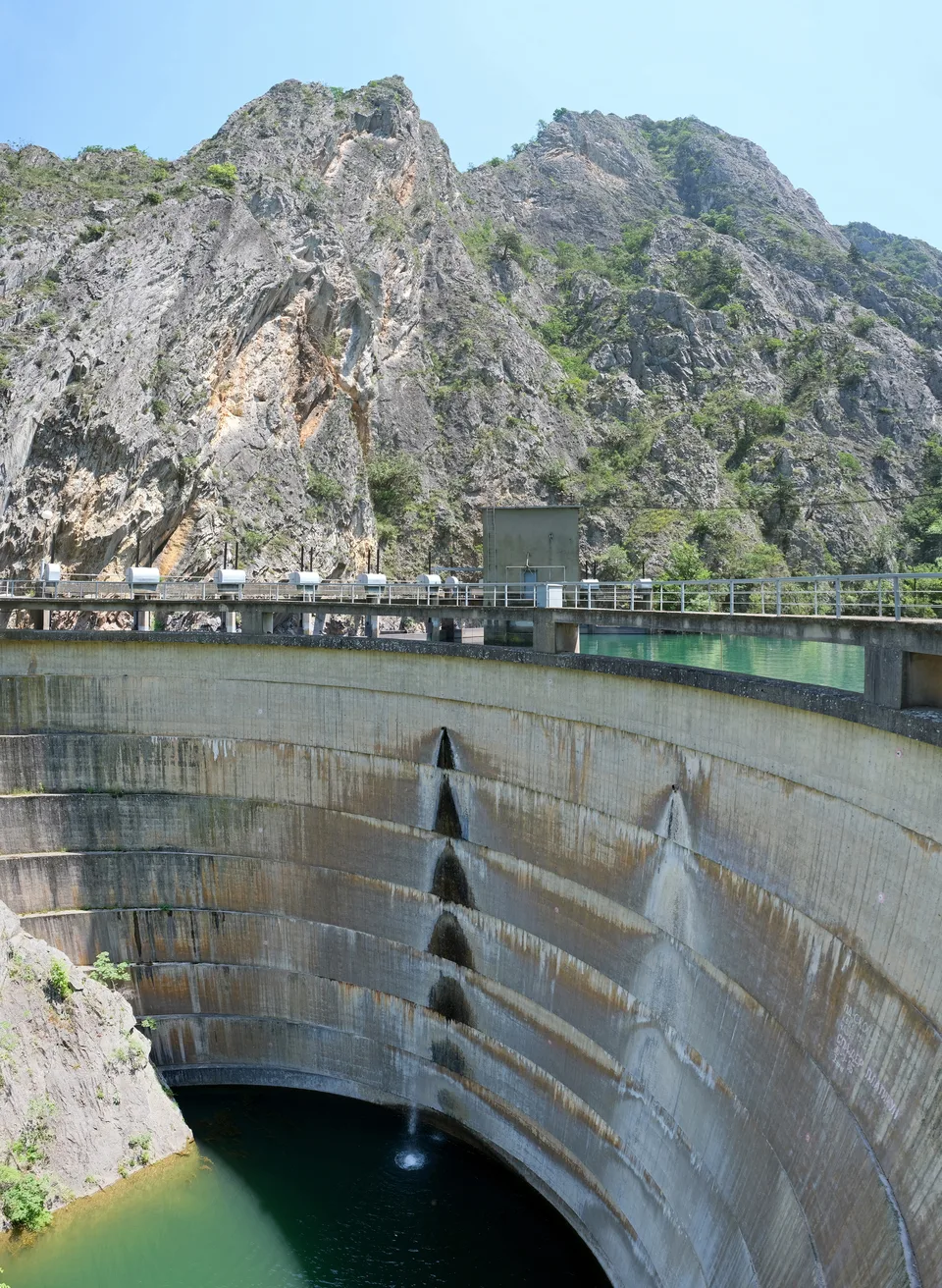
Matka is an excursion outside central Skopje, not something to insert between two city museums. Decide whether the purpose is a short look at the landscape, a boat outing or a longer walk. The Canyon Matka operator’s information introduces available activities, but confirm the particular service, price and departure arrangements directly.
Ask whether a boat price includes the stop you expect, how long you will be away and what happens if conditions change. Do not assume equipment hire includes instruction or that every path suits every visitor. Wear footwear appropriate for the route, keep children close near exposed edges and water, and establish how you will return to town before leaving. A simple excursion with time to sit can be more rewarding than combining too many activities.
Arrive using the dated airport schedule
The airport’s current bus guidance directs passengers to Erak Transporter. The operator’s timetable and ticket information is the source to use, rather than an old airport PDF naming a previous service. At this review, the published one-way fare is 199 denar. Confirm your boarding point and the stop most convenient for your accommodation.
The operator has separate summer and winter tables, with the winter 2026/27 schedule starting on 25 October 2026. Departures differ by day; do not assume an hourly service or that a bus will leave immediately after your flight. Compare a timetable-compatible bus with a confirmed taxi or transfer when arriving late. For your return flight, allow time for the road journey and the airline’s reporting requirements, not simply the bus’s advertised departure.
Understand local ticketing before boarding
JSP’s current tariff page links its published fare information. Different products and payment methods have different conditions, so establish what you are buying rather than expecting an ordinary bank-card tap to behave like a local stored-value card. Ask at an official sales point if you need help choosing a ticket for repeated journeys.
Group your central sightseeing into walks when that is convenient, and check the route, direction and return service for journeys farther out. A destination name on a map is not enough to establish where to board. Keep a small practical allowance for an alternative journey if a connection is important. If driving, consult the official zone-parking information and verify the zone and payment method at the place you actually park.
Eat with specific dishes and clear prices in mind
Tavče gravče, grilled dishes and vegetable-based sides provide useful starting points when reading menus. Ask how a kitchen prepares a particular dish, especially if you avoid meat or dairy. A familiar name does not establish every ingredient, and a side dish may not be a complete meal on its own.
For an example you can inspect before deciding, Kafana Debar Maalo publishes its own location and restaurant information. Its menu includes tavče gravče and grilled vegetables alongside meat dishes. Use that as a source of actual choices and prices, not a claim that one restaurant is the city’s best. Compare portions, accompaniments and drinks when budgeting, and confirm your order clearly before assuming a quoted amount covers the entire table.
Buy something with a clear origin
The bazaar is worth exploring for shopping as well as lunch. Ask who made an object, what material it uses and whether the price includes any packaging you need for travel. Compare items before buying, and request a receipt. An attractive display does not establish that every product was made locally or that an older-looking object is an unrestricted souvenir.
The contemporary-art museum’s shop is another place to investigate for publications and exhibition-related purchases. If you are buying original art or an object presented as an antiquity, establish any export requirements before paying. Do not rely solely on a seller’s informal assurance at the last minute before departure. For edible gifts, check packaging, luggage limits and the destination’s import rules. Keeping a small purchase unhurried also gives you time to decide whether it is something you actually want to carry through the rest of your trip.
Build a budget in denar
Plan everyday spending in Macedonian denar, abbreviated MKD. Use date-specific accommodation quotes, current menus and the admissions for the attractions you actually want. A low museum ticket price does not establish that a whole trip will be inexpensive once transport, meals and your chosen room are included.
As a limited example, two airport-shuttle journeys at the published one-way fare and one standard Museum of Contemporary Art ticket total 498 denar per adult. This is a subtotal, not a daily budget. It excludes food, accommodation and local travel. Before buying any pass, compare the eligible benefits with the visits you can fit into its validity. Keep some accessible funds for an unexpected transfer or a payment method that differs from what you anticipated.
Choose dates with outdoor comfort in mind
Spring and autumn are sensible periods to investigate for a visit centred on walking and galleries. In summer, plan exposed walks around breaks and confirm that the accommodation’s cooling serves the room where you will sleep. A park or a mountain excursion should be selected for the actual conditions rather than assumed to solve every hot day.
For winter or a longer stay, investigate heating and air quality as well as the tourist programme. The Environment Ministry’s monitoring portal provides station measurements and an air-quality index. Treat a current hourly reading as a short-term indicator, not a complete assessment of annual exposure at a proposed home. Check the forecast separately before travelling to Vodno or Matka, where conditions and access may differ from those in the centre.
A three-day first visit without rushed transfers
On day one, orient yourself along the river and Stone Bridge, then give the Old Bazaar a substantial part of the day. Choose a gallery or museum whose opening fits, followed by an unhurried meal. Leave space to return to streets that interested you rather than following a route only once.
On day two, visit the City Museum and Mother Teresa Memorial House, adjusting the order around their confirmed access. Add contemporary art if you want a fuller museum day, or keep the afternoon for a neighbourhood walk and a café. Avoid placing the Memorial House after its shorter weekend closing time.
Use day three for Matka or Vodno. Choose one as the main outing, with the transport and return arranged first. With two days, keep the central programme and select the excursion only if it matters more to you than a second museum day.
Test a home through your own working week
For relocation, start with temporary accommodation and inspect longer-term options in person. Walk the route to the bus stop, grocery shop and your actual workplace or faculty. Repeat it at commuting time. The convenience of a holiday address does not automatically translate into a practical home, particularly if you need to cross the city each day.
Ask for clear terms covering duration, rent, deposit, notice and bills. Establish the payment currency and who handles maintenance. Inspect heating, cooling, hot water, ventilation and signs of damp. Obtain written agreement about any address or tenancy documents required for your immigration application. Compare total monthly household costs rather than choosing from the rent alone, and do not treat a verbal promise about future paperwork as a substitute for confirmation.
Look behind the apartment photographs
Test broadband inside the home, including a video call if remote work matters. Check mobile reception as a potential backup, and establish who holds the service account. Ask how water or electricity faults and urgent repairs are reported. A furnished listing describes possessions, not how effectively the household operates.
At handover, record the inventory, condition and meter readings with the landlord. Keep receipts and copies of the agreement where you can access them independently. Check the lift, entrance lighting, locks and rubbish arrangements. If parking is offered, establish whether the space is reserved or shared. For families, test the everyday journey with shopping or a pushchair rather than judging an address from a short viewing without luggage.
Confirm healthcare, study and school arrangements separately
Use current healthcare guidance to plan insurance, access to continuing treatment and essential medication. The emergency ambulance number listed by the FCDO is 194. Check how a particular provider expects payment, and do not generalise a nationality-specific reciprocal arrangement into free healthcare for every foreign resident.
Students should identify their faculty rather than assume all teaching takes place at one campus. The Ss Cyril and Methodius University campus map is a practical starting point for that comparison. Confirm programme language, fees, recognition of previous qualifications and accommodation support directly. Families should similarly establish school places, documents and language support before signing a lease around an assumed enrolment. Admission and suitable housing are important steps, but neither grants immigration permission.
Check entry eligibility before making commitments
Start with the Foreign Ministry’s current entry requirements. Visa-free access based on nationality differs from the conditional concessions available through certain foreign residence permits or visas. Some of those concessions allow only 15 days per entry, and the published 2026 arrangement for qualifying British, American or Canadian visas is temporary. Check the precise document and validity conditions for your case.
Where a visa is required, follow the official application procedure. Permission to visit does not establish a right to take local employment, study indefinitely or settle permanently. The Ministry’s visa-type and temporary-residence guidance identifies purpose-specific routes. Consult the appropriate authority before committing to work or a long tenancy, and confirm the order of residence approval and any long-stay visa application. A property purchase should not be represented as automatic permanent residence.
Make accommodation registration explicit
The Interior Ministry’s visitor-registration guidance distinguishes providers of paid accommodation, who must report a foreign guest’s stay within 12 hours, from other hosts, who have a 48-hour reporting deadline. Ask your hotel or host how the requirement is being completed and retain the appropriate confirmation.
The electronic form is not a reason to assume every private-host obligation ends online: the Ministry says natural persons must still report to the responsible police station within the legal deadline to obtain certified confirmation. Clarify the arrangement when staying with friends or in a private rental. Visitor registration, immigration residence permission and a tenancy contract are separate matters. Completing one should not be presented as satisfying the others.
Keep onward travel and daily safety realistic
For a longer itinerary, consider Ohrid as a separate stay rather than trying to turn every place into a day trip from the capital. Check journey times, departure points and the opening of the attraction that motivates the journey. Leave enough margin if you intend to cross an international border or connect with a flight.
VisaWand’s North Macedonia country page provides broader context, while the North Macedonia consultant listings can help you investigate individual professional support. Consult current safety advice and local notices for demonstrations, road conditions or disruption. Keep belongings secure at busy transport points and arrange important transfers clearly. A good Skopje visit balances its memorable contrasts with the practical details that make the chosen route work.
Official planning resources
Reviewed 17 October 2026. Use the official resources linked throughout this guide for admission, transport, housing and immigration decisions. Prices, services and rules can change; confirm the details relevant to your dates. Photography illustrates the locations and is not a live view.
View all official resources
- City of Skopje: facts and symbols
- Museum of Contemporary Art: origins
- City cultural institutions and City Museum
- Museum of Contemporary Art current admission and programme
- National Gallery current exhibitions
- Mother Teresa Memorial House
- Millennium Cross cable-car admission tariff
- JSP Skopje transport operator
- Canyon Matka visitor and activity operator
- Skopje Airport bus operator guidance
- Erak Transporter airport shuttle
- JSP current tariff landing page
- City Parking: zone parking arrangements
- Debar Maalo restaurant primary information
- Kafana Debar Maalo menu
- Environment Ministry air-quality monitoring
- FCDO healthcare guidance
- Ss Cyril and Methodius University campus map
- Foreign Ministry entry requirements
- Visa application procedure
- Visa types and temporary-residence purposes
- Interior Ministry visitor registration
- FCDO safety guidance
Plan the next part of your journey
Explore the North Macedonia guide, browse other cities or compare consultants for your travel and relocation questions.