Visa
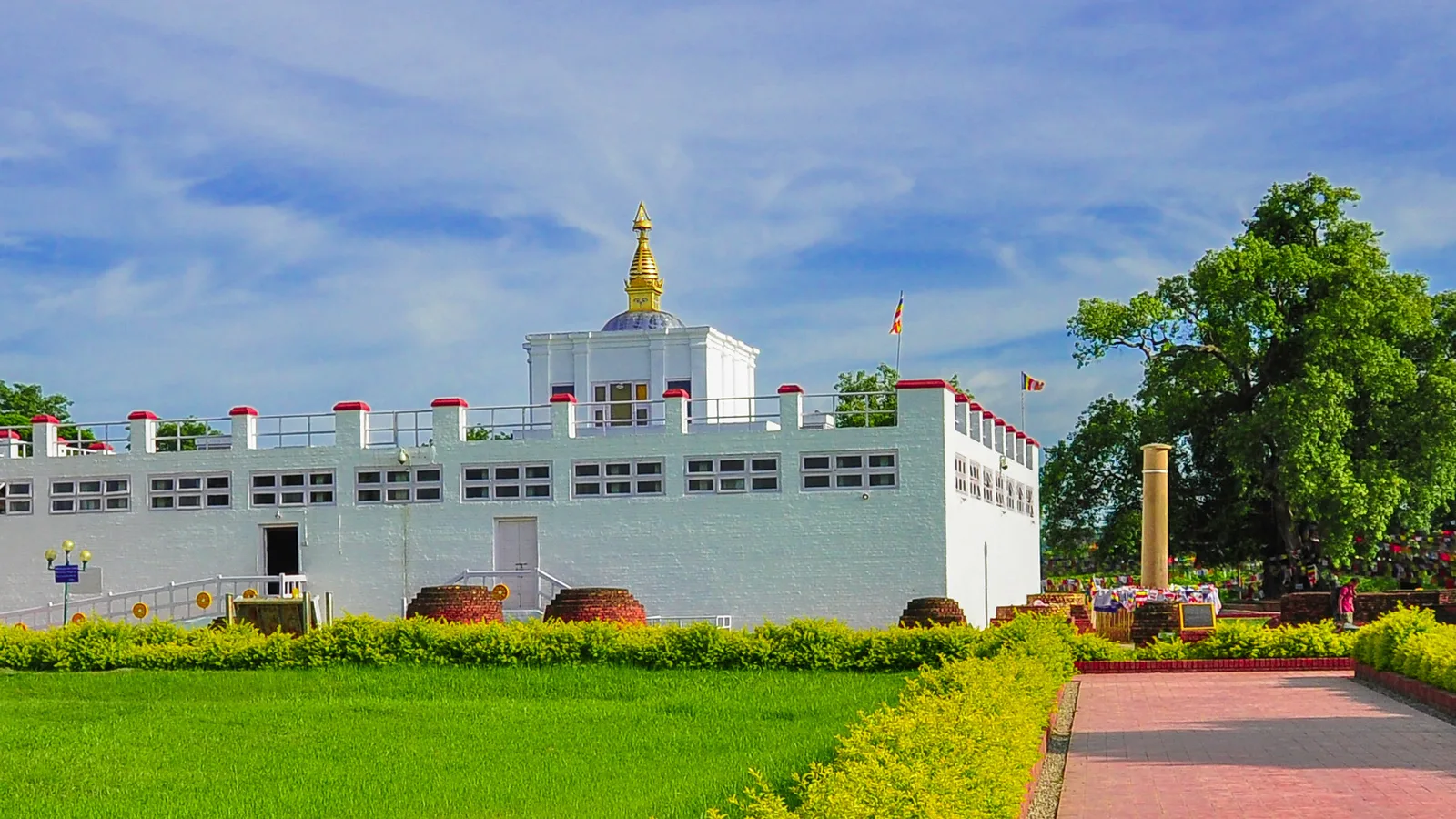
Lumbini is a pilgrimage landscape, not a mountain town
Lumbini asks for a different kind of Nepal itinerary: shaded pauses, long distances between monasteries and time spent looking closely at a remarkably important archaeological site. In the southern Terai, near the Indian border, this is the place revered in Buddhist tradition as the Buddha's birthplace. The existing destination record uses Rummin-dei, an alternative name identified with Lumbini by GeoNames. This guide covers Lumbini and its visitor landscape, while keeping nearby Bhairahawa distinct.
Come for the Maya Devi Temple, the Ashokan pillar and the experience of encountering Buddhist institutions from different countries within one planned landscape. Two nights allow a more considered visit than an airport excursion. A longer stay makes sense for an arranged retreat, research or study; it needs a purpose and confirmed accommodation rather than an assumption that every monastery receives overnight guests.
Understand the archaeology before entering the garden
The UNESCO World Heritage listing concerns a defined archaeological property, inscribed in 1997, rather than every building bearing the Lumbini name. Its importance rests on physical evidence, including the pillar inscription and the remains protected around the Maya Devi Temple. Modern shrines, excavated structures and living religious practice meet here; they belong to different periods and should not be presented as one unchanged ancient complex.
Buddhist traditions and historical scholarship do not use a single uncontested chronology for the Buddha's life. A useful visit focuses on what the site preserves instead of treating an exact birth year as settled. Read the interpretation before photographing the temple, then look at how the archaeological remains are protected. The most significant features are not necessarily the largest or most photogenic.
Read the master plan as a practical map
The Lumbini Development Trust's account of the master plan explains the scale: Kenzo Tange's plan, approved in 1978, extends across a landscape approximately one mile wide and three miles long. The Sacred Garden, Monastic Zone and Cultural Centre with New Lumbini Village serve different functions. A room advertised as being in Lumbini can therefore be convenient for one part and inconvenient for another.
Make the Sacred Garden your first geographical anchor. Then group monastery visits by side of the central axis instead of repeatedly crossing the site. The full north–south length is almost five kilometres before detours. That distance matters in heat, with children or for anyone who finds extended walking difficult. A map pin, entrance choice and agreed return pickup are more useful than a vague promise of being near the temples.
Give the Sacred Garden an unhurried visit
Allow time for the Maya Devi Temple, the pillar, the surrounding archaeological setting and quiet observation. This is an active sacred place, so follow instructions about footwear, clothing and restricted areas. The Trust's visitor formalities require shoes to be removed in the relevant premises and food and drink to be kept outside. Carry water for the wider journey, while respecting the rules at the monument itself.
Check current visitor hours with the Trust or your accommodation before setting out. Office hours, a monastery's opening times and access to the archaeological temple are different things. Photography permission also needs checking where you intend to use a camera; an outdoor photograph does not establish that photography is permitted inside. Avoid blocking worshippers or treating a prayer gathering as a performance arranged for visitors.
For families, explain the purpose of the visit before entering: this is somewhere to look, listen and move considerately. Bring what children need for the journey, then follow the site's rules about what can enter the sacred premises. Travellers requiring step-free access should ask about the specific route, surfaces and temple arrangements. A broad description of a flat lowland landscape does not establish that every doorway or archaeological viewing area is accessible.
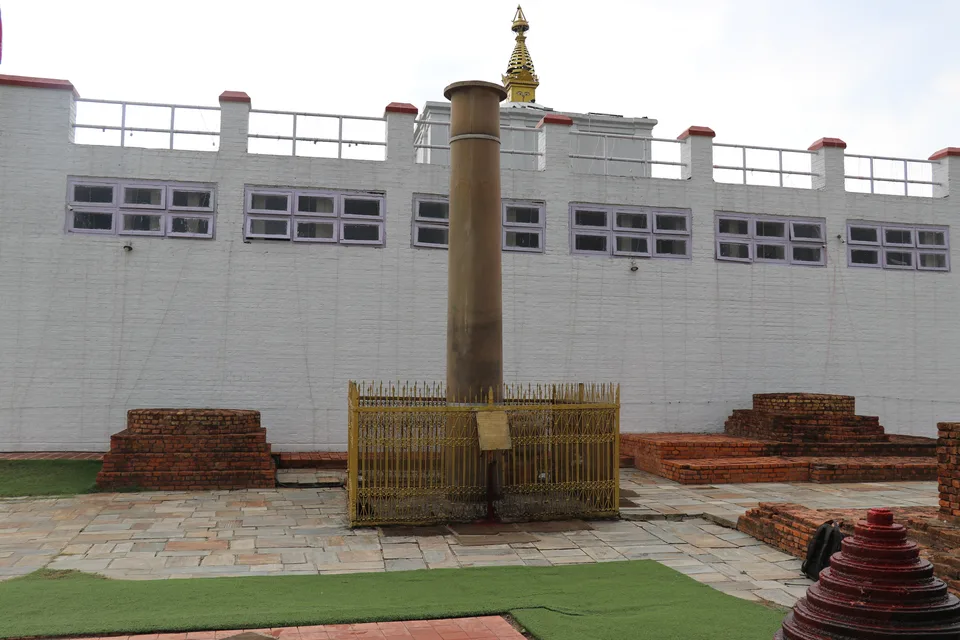
Budget for the published conservation charge
The Trust's published daily conservation charges are NPR20 for Nepali visitors, NPR80 for Indian visitors, NPR400 for visitors from other SAARC countries and Myanmar, and NPR700 for other passport holders. Confirm the applicable category and current amount before paying. These are conservation charges for the relevant visit, not a price for an unrestricted package covering every activity in the wider landscape.
The same official page lists additional camera charges and exemptions for specified visitors. Ask how those rules apply to your equipment instead of assuming a phone, still camera and professional filming setup receive identical treatment. Use the official ticket portal or the authorised counter, retain the receipt and check what it covers. Do not build an itinerary around an unverified child discount or assumed free re-entry on another day.
Explore monasteries by tradition and distance
The Trust's Monastic Zone information places Theravada institutions on the eastern side and Mahayana institutions on the western side, divided by the central walkway and canal. That distinction offers a starting point for an interested visitor, although individual institutions deserve to be understood on their own terms. Choose a manageable group rather than trying to collect photographs of every national building in one afternoon.
Look for differences in architecture, devotional practice and the way public space is used. Enter only where visitors are welcome, dress appropriately and ask before photographing people. A monastery can be closed for practice, maintenance or a private event even when the surrounding landscape remains accessible. A shorter visit with time to sit quietly will often be more rewarding than a rushed circuit of entrances.
Decide whether meditation belongs in your stay
A retreat is a commitment to an institution's timetable and conduct rules, not simply an inexpensive alternative to a hotel. Contact the specific centre about language, teaching, duration, meals, accommodation and the experience expected of participants. The Trust's published formalities include a meditation-pass category, but a pass is not a confirmed place on a residential course. Arrange the course and lodging with the institution itself.
If you want only an introduction, ask whether a short public session is actually offered on your dates. If you are joining a residential programme, arrange arrival around its check-in requirements and disclose any practical needs beforehand. Keep a hotel fallback until acceptance is confirmed. Do not assume that a donation replaces a reservation or that the same conditions apply across different Buddhist organisations.
Choose accommodation around your actual daily route
Staying in Lumbini suits visitors who want repeated access to the sacred landscape and an early start without a transfer from another town. Compare the property's precise location with the entrance you will use. Ask about air conditioning, hot water, mosquito protection, backup electricity, drinking water and meals. Those details can matter more to a comfortable lowland stay than decorative photographs of a courtyard.
Buddha Maya Gardens provides one example of locally advertised hotel accommodation with several room categories; compare its current terms with other properties rather than treating a category name as a guarantee of particular amenities. Request a total quote including taxes, meals and transfers. For a quiet stay, ask where your room faces and whether a group or event is expected during your dates.
Consider Bhairahawa as a separate base
Bhairahawa, also known as Siddharthanagar, is the nearby service town and airport gateway. The Nepal Tourism Board places Lumbini about 22 kilometres from Bhairahawa town. That is a town-to-destination reference, not a precise distance from every terminal, hotel or temple entrance. Staying there may suit a late arrival, onward journey or someone prioritising access to town services over repeated visits to the garden.
The trade-off is the daily transfer. Obtain the price and pickup arrangement before deciding that a cheaper room saves money overall. For two consecutive mornings at Lumbini, a closer property may be more practical. For one visit followed by an early flight, a Bhairahawa base may be easier. Compare complete days, including waiting and return journeys, rather than room prices alone.
Reach Lumbini through the right airport
Gautam Buddha Airport at Bhairahawa is the relevant air gateway. Check your actual destination when booking; a flight into Kathmandu still leaves a separate domestic connection or overland journey. Buddha Air's flight information gives a scheduled Kathmandu–Bhairahawa flying time of approximately 30 minutes. That is airborne schedule time, not the complete hotel-to-hotel journey, and schedules remain subject to change.
Leave room for check-in, baggage collection and the road transfer. On separate tickets, avoid making a narrow connection the foundation of an international departure. Agree where the driver will meet you and specify the accommodation or entrance, since simply requesting Lumbini may not identify the right stop. Obtain a fresh transfer quote; no verified fixed airport taxi tariff is assumed here.
Make local transport arrangements explicit
Walking works best for a selected part of the landscape. For a longer circuit, ask locally about an available bicycle or vehicle and establish its condition, allowed routes, price and return point. Check whether the arrangement includes waiting, multiple stops or only a one-way transfer. Keep the driver's contact details and agree the final pickup before entering somewhere that may take longer than expected.
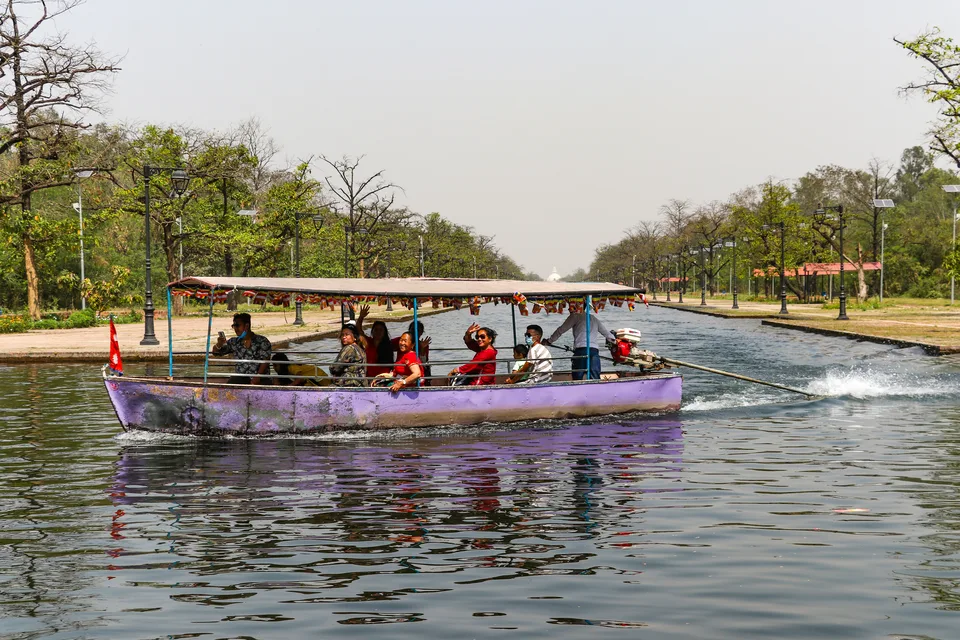
The canal is a useful landmark, but an older photograph of a passenger boat is not evidence of a current service or fare. Confirm any activity on the day. Overland arrivals from elsewhere in Nepal also need a current operator itinerary, including the actual arrival stop. A travel time copied from an older tourism page should not be treated as a promise about today's road conditions.
Eat simply and shop with a clear purpose
The provincial tourism council's introduction to local food includes dal bhat, momos, sel roti and gundruk among regional dishes. Dal bhat offers a straightforward starting point: rice with lentils and accompanying dishes. Ask what is included, how spicy it is and whether a particular meal meets your dietary needs. A Buddhist destination does not mean every restaurant, kitchen or dish is vegetarian.
Choose places where food is prepared and served in conditions you are comfortable with, and arrange safe drinking water. For early starts or a retreat, confirm meal times the evening before. When buying religious objects or souvenirs, ask about material, origin and price without inventing a story about who made them. Purchase contemporary work rather than assuming an apparently old object can legally or responsibly be taken abroad.
Build a budget from the costs you can verify
Use four separate categories: accommodation, meals and water, transport, and admission or organised activities. The published conservation fee is a useful anchor; hotel and vehicle prices require current quotations. Currency conversion changes, so compare offers in the same currency and ask whether taxes or service charges are included. A lower room rate can be outweighed by repeated transfers across the landscape.
Keep a payment fallback appropriate to your plans, and ask about accepted cards or digital payments before relying on them. Carry manageable denominations for agreed local expenses. Price a guide separately and establish the language, duration and places covered. Paying for interpretation can be worthwhile, but a guide should distinguish established archaeological evidence from religious tradition and personal explanation rather than claiming certainty about everything.
One practical comparison is a close hotel with breakfast and a modest local circuit against a town hotel plus two return transfers and separately purchased meals. Write out both totals for your actual party size. Solo travellers cannot assume that a vehicle price divides as favourably as it does for a family. Likewise, the cheapest advertised bed may exclude the cooling or bathroom arrangement you consider essential. Ask for the final cancellation terms before paying a deposit.
Plan for the Terai rather than Himalayan weather
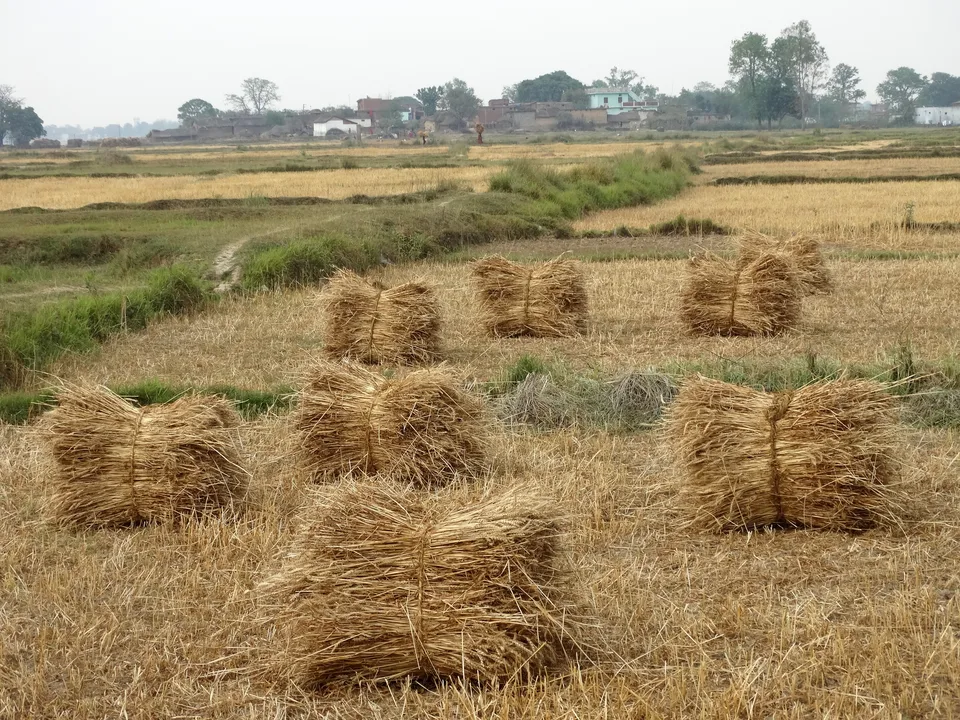
Lumbini is a lowland destination. The Nepal Tourism Board's regional overview describes hot summers and mild winters, a very different setting from Nepal's high mountain routes. Schedule longer outdoor stretches around your tolerance for heat and leave time for shade and rest. Accommodation cooling, drinking water and a workable transport plan deserve attention before arrival, especially for an extended stay.
Use a current forecast when finalising travel days; a seasonal description cannot predict a particular afternoon's rain or visibility. In cooler periods, bring a layer for early starts as well as clothing suitable for religious sites. Around major Buddhist observances, confirm accommodation, access arrangements and programme times directly. An event can be the reason to come, but it can also change the quiet visit you imagined.
A realistic two-day first visit
On the first morning, visit the Sacred Garden and Maya Devi Temple, allowing time for interpretation and the pillar rather than racing onwards. Break for a meal and rest, then choose a limited monastery group on one side of the central axis. Return before fatigue makes the journey feel longer than the map suggested. Keep the evening simple and confirm the next day's arrangements.
Use the second day for the other side of the Monastic Zone, with space for a confirmed meditation session or a slower return to a place that interested you. If archaeology is your priority, substitute a pre-arranged regional excursion instead of adding it to an already full day. An arrival or departure flight belongs outside this programme unless the actual timings leave enough margin for a satisfying visit.
Moving here starts with an address and a reason
Living in Lumbini calls for a different assessment from staying near its monuments for two nights. Identify the place you will attend regularly: a university campus, institution or employer. Then test the journey from a prospective home. An address advertised broadly as Lumbini may not give you a convenient daily commute. Visit at the times you would actually travel, including the return after dark.
Inspect a rental before committing to a long agreement. Establish who owns or manages it, what the deposit covers, notice terms and responsibility for repairs. Check water storage and quality, sanitation, drainage, cooking facilities, cooling, electricity backup and the internet connection inside the room. Ask which bills are separate. A furnished holiday room can provide a temporary landing place, but its price and facilities may not suit a household.
Test household services before signing a lease
For a longer stay, make a short practical circuit: food shopping, pharmacy, laundry, cash access and the route to an appropriate medical facility. Ask how a delivery driver finds the address and whether someone can help with maintenance when you are away. Test mobile reception and video calls at the property instead of relying on a general claim that internet is available in the area.
Bhairahawa Multispeciality Hospital's contact page identifies a regional facility in Mayadevi Rural Municipality, not inside the Sacred Garden. Confirm the services you need and how you would reach care; a website does not establish clinical suitability or emergency transfer capacity. People with continuing treatment needs should arrange medication and medical advice before relocating, then assess whether the available local support fits their situation.
If children are moving with you, investigate the actual school, teaching language, admissions and journey before choosing housing. Do not infer that an international pilgrimage destination automatically provides a suitable international school nearby. For household administration, keep copies of your passport, immigration permission, rental agreement and institutional contacts securely available. Ask the landlord and relevant providers which documents they need rather than assuming a tourist booking receipt establishes a residential account.
Study requires a programme offer and a visa route
Lumbini Buddhist University is relevant to prospective students, but an interest in Buddhism is not an admission offer. Start with the actual programme, teaching language, campus and entry requirements. Its official application portal provides a route to current admissions information. Confirm where classes take place before choosing housing; an institution's central office address does not necessarily identify your daily destination.
The central campus guidance for international students describes an entrance process and documentation requirements, with hostel accommodation subject to application. Obtain a written fee schedule and accommodation decision rather than assuming a bed is included. University guidance and immigration requirements serve different purposes: ask which recommendation and visa steps apply to your circumstances. Conflicting published student fee figures make a current official confirmation preferable to a fixed figure here.
Keep visiting, employment and residence separate
Nepal's Department of Immigration visa information publishes tourist visa fees of USD30 for 15 days, USD50 for 30 days and USD125 for 90 days. Eligibility for arrival procedures depends on nationality; Indian citizens have a different visa position. Check the official requirements for your passport and entry route before buying travel. An online form or receipt should not be mistaken for permission already granted.
The department's current visa guidance describes a tourist stay limit of 150 days in a calendar year. That allowance does not authorise employment or create permanent residence. Work requires the appropriate immigration and labour permissions, while formal study follows its own route. Consult the official service charter for the relevant category. Renting a home, receiving an offer or repeatedly visiting does not by itself settle your legal status.
If you need professional help, VisaWand's consultant listings provide a starting point for finding an adviser. Check the person's relevant experience, scope of service and fees, then verify the proposed route against government requirements. Consultation cannot substitute for an official decision. Keep practical destination planning separate from promises about approval, particularly when a trip is being used to investigate a possible longer stay.
Add the surrounding region selectively
Tilaurakot can extend an archaeology-focused visit, but it is a separate destination requiring its own transport and interpretation. Do not describe it as already included in Lumbini's World Heritage inscription: the 2026 state-party conservation report records that its nomination was deferred in 2025. Check the present visitor arrangements before travelling rather than assuming the same ticket, hours or facilities apply across the region.
For a broader Nepal itinerary, compare Lumbini's pilgrimage landscape with Kathmandu's urban heritage or Pokhara's different setting, using the Nepal country guide for the wider planning context. Add places because they serve your interests and available time, not because they appear close together on a national map. Lumbini works best when its scale, religious purpose and practical distances shape the visit from the outset.
Use the Kathmandu destination page and Pokhara destination page to locate those places within your planning, and the Nepal destination directory to explore other locations. A destination listing is a geographical starting point; it does not by itself establish a current transport connection or a completed travel guide. Before extending your route, check which journeys are actually bookable, where they terminate and how much of each day they consume. Leaving an uncommitted afternoon can make room for a deeper visit, a delayed arrival or simply the rest that an ambitious itinerary overlooks.
Official planning resources
Reviewed 28 October 2026. Use the official resources linked throughout this guide for admission, transport, housing and immigration decisions. Prices, services and rules can change; confirm the details relevant to your dates. Photography illustrates the locations and is not a live view.
View all official resources
- GeoNames: Rummin-dei / Lumbini
- UNESCO Lumbini World Heritage property
- Lumbini Development Trust: master plan and historical background
- Lumbini Development Trust: entry fees and formalities
- Lumbini Development Trust official ticket portal
- Lumbini Development Trust: sacred garden and monastic zones
- Buddha Maya Gardens official accommodation information
- Nepal Tourism Board: Lumbini in Rupandehi
- Buddha Air flight information
- Nepal Tourism Board: Lumbini visitor overview
- Bhairahawa Multispeciality Hospital official contacts
- Lumbini Buddhist University international admissions
- Lumbini Buddhist University official admissions portal
- Lumbini Buddhist University Central Campus: international student requirements
- Nepal Department of Immigration visa information
- Nepal Department of Immigration tourist visa guidance
- Nepal Department of Immigration current citizen charter
- Nepal 2026 state-of-conservation report hosted UNESCO
Plan the next part of your journey
Explore the Nepal guide, browse other cities or compare consultants for your travel and relocation questions.