Visa
Essaouira is best experienced beyond a day trip
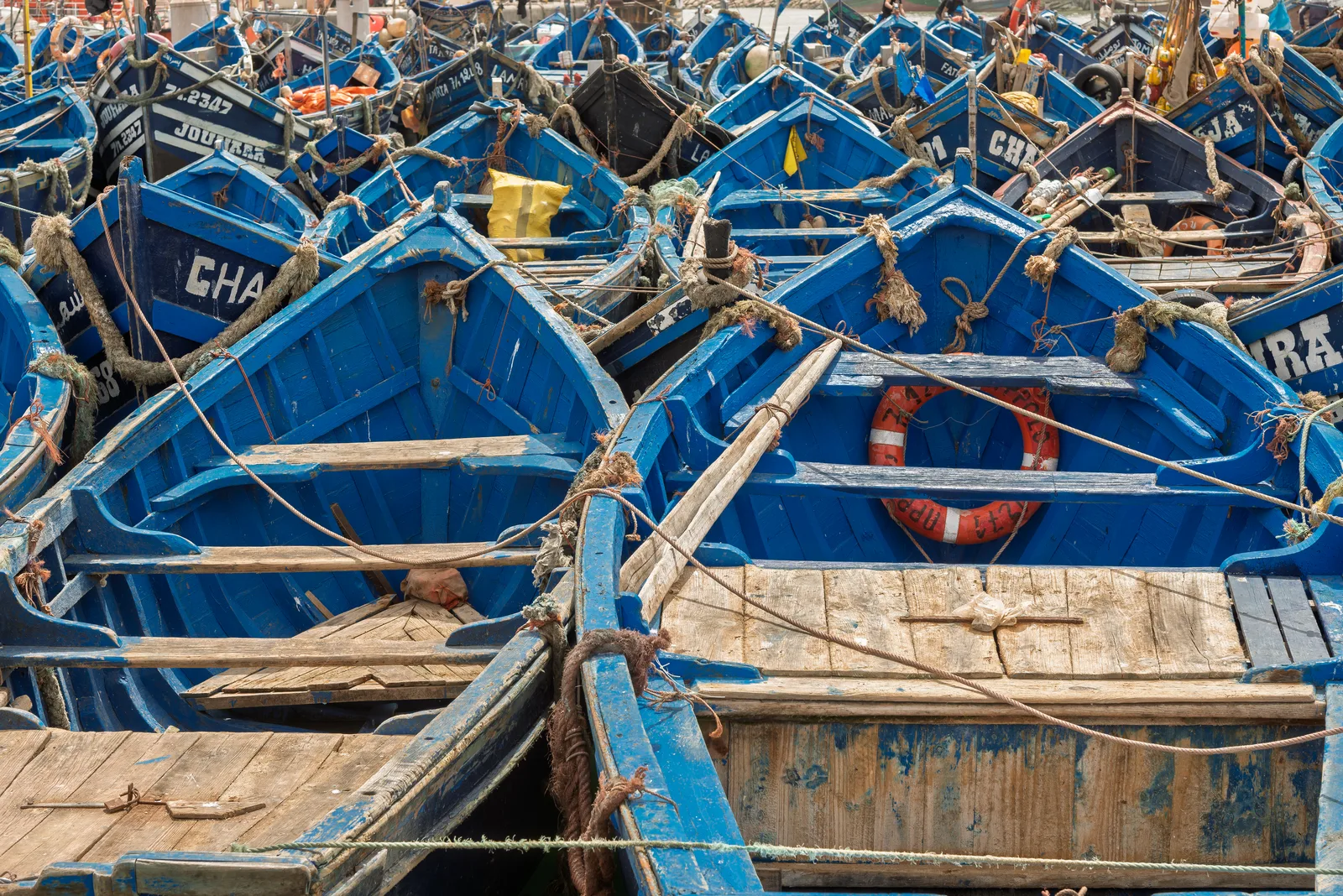
Blue fishing boats, sandy stone walls and lanes opening towards the Atlantic give Essaouira an immediately recognisable setting. Yet the strongest reason to stay is the combination: a working port beside a walkable medina, regional craft traditions, Jewish heritage and a music scene with an international audience. You can alternate between them without organising each day around a vehicle.
Two nights allow a useful first visit; three leave room for a coastal outing or a weather change. A rushed excursion from Marrakech gives a glimpse, but sacrifices the quieter morning and evening hours that help you understand the place. If the beach is your main priority, remember that wind is part of the attraction for some visitors and a frustration for others.
For prospective residents, the questions become more practical: access through the medina, damp in older buildings, reliable internet and journeys to essential services. Start with the Morocco country guide, then assess the city on its own terms.
A planned Atlantic port with a layered history
Essaouira’s medina is a UNESCO World Heritage property, inscribed in 2001. UNESCO describes an eighteenth-century fortified seaport combining European military influences with a North African setting. Sultan Sidi Mohamed Ben Abdallah wanted an outward-looking royal port, linking Moroccan and Saharan trade with Europe and beyond. This is a more useful historical starting point than imagining an unchanged medieval settlement.
The UNESCO account of the medina also recognises the city’s multicultural history, including Amazigh, Arab, African and European communities and Muslim, Jewish and Christian traditions. Look for these histories in institutions and architecture rather than assuming a picturesque doorway tells the whole story.
Allow time to notice the relationship between walls, streets and water. Essaouira’s character depends on that arrangement as much as on individual monuments. An informed guide can help distinguish periods of construction and explain trading connections; check credentials and agree the scope and fee before setting off together.
Get oriented around the medina and beach
For a first stay, use three anchors: the medina, the fishing port and the beach promenade. The tourism council describes most visitor activity as concentrated around these areas. The medina is pedestrianised, so the final part of a journey to a riad generally involves walking, even when the booking includes an airport transfer.
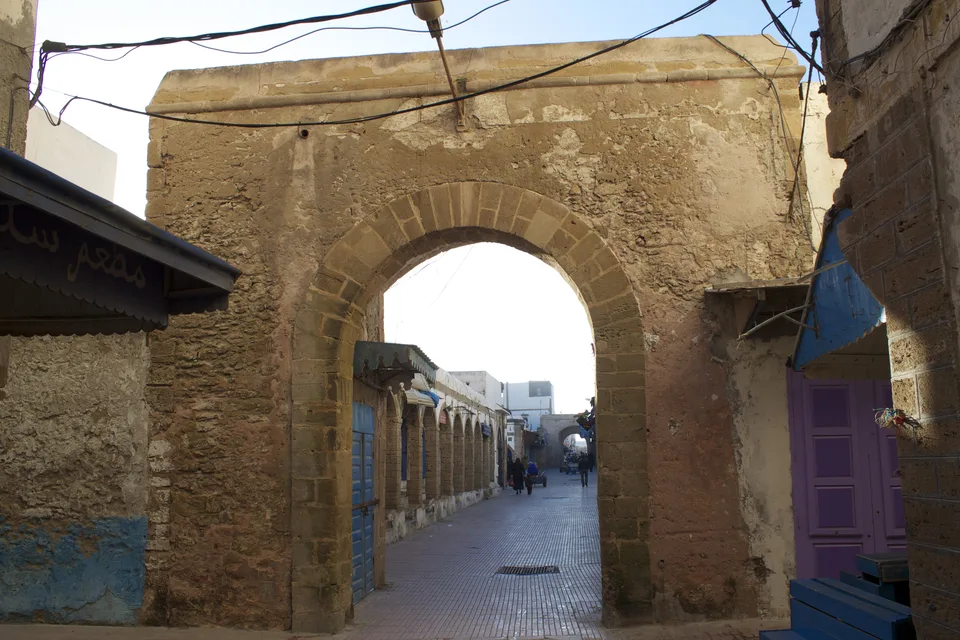
Inside the walls, identify your accommodation’s nearest gate and save the route before arrival. Place Moulay Hassan makes a useful point of reference near the port side. The old kasbah and the Jewish heritage associated with Bayt Dakira add different dimensions to a walk, while newer neighbourhoods deserve attention when comparing residential addresses.
Outside the medina, the beachfront offers another accommodation setting. A rural property marketed under Essaouira may be much farther away. Use the tourism council’s local transport guide to understand the layout, then compare actual walking distances, access and evening return arrangements rather than relying on the destination name.
Explore the walls without rushing the medina
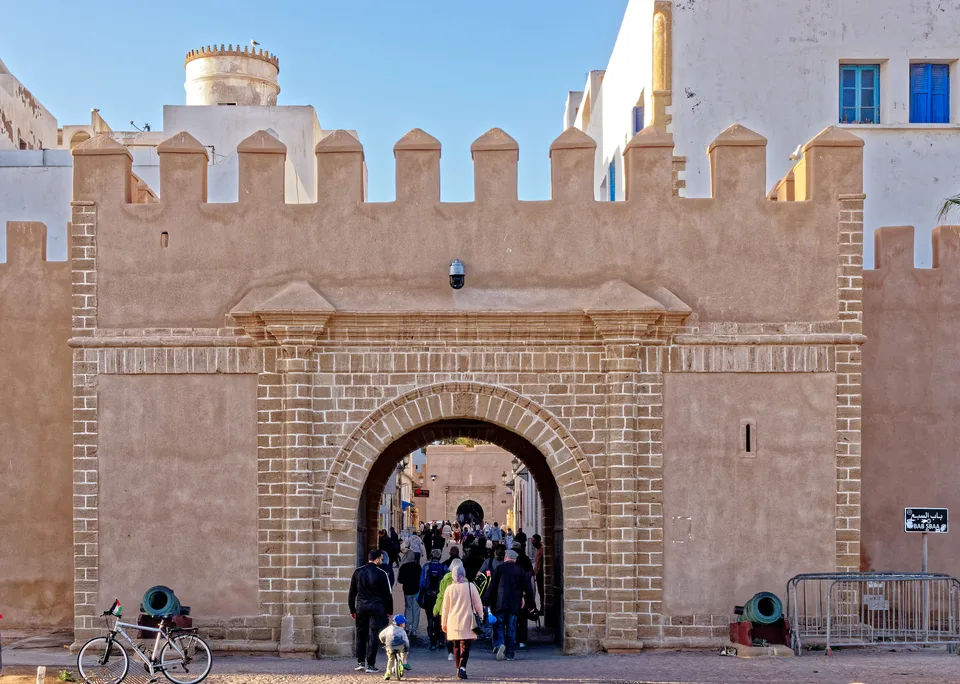
The fortifications frame the city, but make them the beginning of a walking day rather than its entire purpose. Move between open spaces and lanes, leaving time for workshops, a gallery or a café. The local tourism council’s medina description explains the planned kasbah and the architectural influences behind the walls.
Public access to the medina is free. That does not establish free admission to every tower, exhibition or separately managed viewpoint. Check the entrance notice at the particular site you want to visit; current monument charges were not consistently available from authoritative sources during this review.
Wear shoes with grip and approach exposed edges cautiously, especially in wind or wet conditions. If stairs are difficult, ask what the route actually involves before buying a ticket. An attractive terrace photograph cannot demonstrate step-free access. A shorter circuit with time to look closely often gives more than repeated crossings of the same shopping streets.
Give the fishing port space to work
The blue boats are an obvious photographic subject, but the harbour is also a workplace. Watch from a position that leaves access clear, follow instructions around operational areas and ask before photographing people at close range. Do not climb into vessels or assume that every quay is intended for sightseeing.
The national tourism office’s Essaouira introduction connects the port with the fish market and seafood. A visit can help you understand why fish features so prominently on local menus, without requiring you to buy or eat at the first stand you encounter. Compare what is offered before agreeing to a meal.
Keep your camera secure and pay attention to the surface underfoot rather than walking backwards for a photograph. Early and late visits can produce different light, but neither is a guaranteed quiet period. Combine the harbour with the adjacent medina instead of turning it into a separate transfer-based excursion.
Use the museums to understand local culture
The Sidi Mohammed Ben Abdellah Museum occupies a nineteenth-century residence and presents the region’s history alongside traditional jewellery, instruments, costumes and woodwork. Its value is the connection between objects and the surrounding city: you can return to the streets with a better sense of the craft and cultural traditions you have been seeing.
The tourism council’s museum listing publishes opening from 08:30 to 18:30, closed Tuesday. Reconfirm before a special journey: the page is undated, and the National Museums Foundation announced a new partnership concerning the museum in April 2026. A partnership announcement alone does not establish changed opening arrangements.
No reliable current general-admission price was established for this guide. The council’s note about free visits for Moroccan citizens on Fridays and public holidays should not be read as universal free entry. Ask about the charge and current exhibitions, particularly if a museum visit is central to your itinerary.
Visit Bayt Dakira for the city’s Jewish memory
Bayt Dakira, the House of Memory, is associated with the restored Simon Attias synagogue in the old kasbah. The provincial tourism council’s listing places it on Rue Ziry Ibn Atiyah and explains the synagogue’s nineteenth-century origins. It provides a focused way to engage with Essaouira’s Jewish history rather than treating the former Jewish quarter simply as scenery.
Check current visiting arrangements locally before setting your day around it. Online directories offer specific hours and fees, but an authoritative current timetable was not established in the sources reviewed here. Allow some flexibility and approach it as a cultural and religious heritage space, with respectful clothing and photography practices.
For a fuller visit, ask a qualified guide to connect what you see with the city’s commercial history and changing communities. Avoid assuming that historical coexistence means every community has the same presence today, or that every building associated with Jewish heritage is open to visitors.
Plan music travel around the organiser’s calendar
Essaouira’s Gnaoua and World Music Festival is a major reason to organise a visit around particular dates. As checked in October 2026, the festival organiser announces 24–26 June 2027. The local tourism homepage still carries an older festival banner, so use the organiser’s current announcement rather than an undated search result when reserving travel.
Check the programme, venue arrangements and ticket conditions separately as they are published. A date announcement does not establish that all performances are free, that a particular artist will appear or that a previous year’s ticket offer applies. Compare accommodation availability and cancellation terms before committing to non-refundable transport.
Outside the festival, look for an actual current programme at cultural venues rather than expecting a headline event every night. If music is the purpose of your trip, ask about the performance format and start time. A restaurant advertising background music and a dedicated concert offer different evenings.
Choose between a riad and the beachfront
A medina riad or guesthouse can put walking routes and evening meals close at hand. Ask about the room itself: floor, windows, ventilation, stairs and noise from shared areas or terraces. Photographs of a courtyard do not show whether your bedroom receives daylight or how luggage reaches it.
A beachfront hotel may simplify vehicle access and offer facilities that matter to families or travellers with limited mobility. Compare its exact position on the promenade and the walk back from dinner. A pool, spa or restaurant should be confirmed for your dates rather than inferred from a property’s general description.
The tourism council’s riad and guesthouse listings can help build a shortlist, with each property checked directly afterwards. For a rural stay, establish the distance to town, food provision and transport costs. A lower nightly price outside Essaouira can become a different proposition once repeated taxi journeys and restricted meal choices are included.
Arriving through Essaouira Mogador airport
Use ONDA’s Essaouira Mogador airport information to check the airport serving your flight and its current arrivals. Compare the entire journey with arriving elsewhere in Morocco: a convenient fare can lose its advantage if it creates a long road transfer or an overnight wait. Do not rely on an old airline list as proof of a flight on your dates.
ONDA’s airport taxi page publishes a recommended MAD 150 fare between the airport and Essaouira, with taxis available on request. The tourism council separately lists MAD 150 by day and MAD 200 at night. Both pages are undated; treat these as published benchmarks checked in October 2026 and obtain a current quote, including the destination and passengers.
If staying inside the medina, agree the drop-off gate and the final walk with your host. For late arrivals, confirm how you will enter the property and whether luggage assistance is available, rather than discovering the arrangements after unloading.
Marrakech connections need a proper travel window
For an overland arrival, check coaches with the operator for your date and exact departure point. CTM’s official booking site is one starting point; the local tourism council’s practical directory also lists contacts for CTM and Supratours. Search results from ticket resellers are not a substitute for confirming the service and its terms.
The festival organiser’s travel guidance gives roughly two and a half to three hours for a coach journey from Marrakech. Use that as a planning indication, not a guaranteed arrival or a promise about airport connections. Add time for reaching the coach departure point, check-in, stops and your final walk to accommodation.
Avoid combining an inflexible flight connection with the last possible road departure. For a short break, an overnight stay can be more rewarding than spending much of one day travelling in both directions. Confirm baggage charges, ticket changes and the correct Essaouira arrival stop before paying.
Walk centrally and reserve taxis for the right journeys
A central Essaouira stay often makes a car unnecessary for ordinary sightseeing. The tourism council describes a roughly two-kilometre beachfront esplanade and warns that medina parking can be difficult in busy periods. If you drive in, establish where the car can remain and how parking is charged.
Local blue petits taxis and longer-distance grands taxis serve different needs. The council describes petits taxis as having three passenger places, with shared journeys possible. Do not assume a family of four can fit into one; ask about an appropriate alternative and child restraints where required.
For a rural excursion, agree whether the quote covers a dedicated vehicle, waiting time and the return, rather than only the outward fare. Set a meeting point that remains clear if mobile reception fails. Road conditions, daylight and unfamiliar driving practices also matter when deciding whether to rent. Convenience should be assessed against the particular itinerary, not a blanket assumption that every visitor needs a car.
Eat beyond the obvious grilled-fish stop
Seafood is an accessible introduction, but Souiri cooking has a broader range. The tourism council’s food guide describes goat tagine using argan oil, sardine-ball tagine, grilled and fried fish, and couscous with variations including raisins and caramelised onions. Ask what a kitchen is preparing that day rather than expecting every regional dish everywhere.
At a fish stand or restaurant, establish the species, quantity and full price before preparation. Clarify whether the quote is by weight, portion or shared platter and what accompaniments cost. A busy port setting does not remove the need to understand the bill.
For allergies, explain the ingredient and cross-contact risk directly; a translated menu label may be insufficient. Alternate more elaborate meals with simpler breakfasts or lunches if that suits your budget. A cooking class can offer another perspective, but check the menu, dietary suitability, language and inclusions before booking, especially if shopping for ingredients forms part of the activity.
Shop for workmanship and clear provenance
Thuya woodwork, local art, raffia shoes and argan products are among the goods highlighted by the official local shopping guide. Browse more than one workshop or shop to understand differences in material, finish and price. Buying slowly can be part of the visit, rather than an interruption to sightseeing.
For woodwork, inspect hinges, joins and surfaces; for a larger purchase, ask about packing and shipping separately. For argan oil, distinguish culinary from cosmetic products and read the ingredients. A shop’s location or sales pitch does not establish organic certification, cooperative ownership or suitability for every use.
Agree a price before accepting a service, personalised work or delivery. Keep a receipt with the description and contact details for anything substantial. If you are comparing similar objects, check that the item handed over is the one inspected.
Build a budget from actual bookings
Use Moroccan dirhams, shown here as MAD, when comparing local costs. Keep currency conversion and card-provider charges separate from the quoted price. Accommodation, meals, transfers and activities should each have their own line in the budget; a hotel’s low room rate does not tell you the cost of reaching it repeatedly.
The airport’s published MAD 150 recommended taxi fare is a useful reference to discuss, while public medina access is free. Neither establishes a comprehensive daily allowance. Museum admission, surf tuition and restaurant bills need current quotes, and some premises may require cash. Carry enough for a practical margin without displaying large amounts.
Festival dates can change what is available at a given budget, so compare exact dates and equivalent cancellation terms. For a longer stay, ask whether utilities, laundry and cleaning are included. Build a reserve for a changed road connection or an extra night rather than spending the whole budget on the initial reservation.
Choose the season with wind in mind
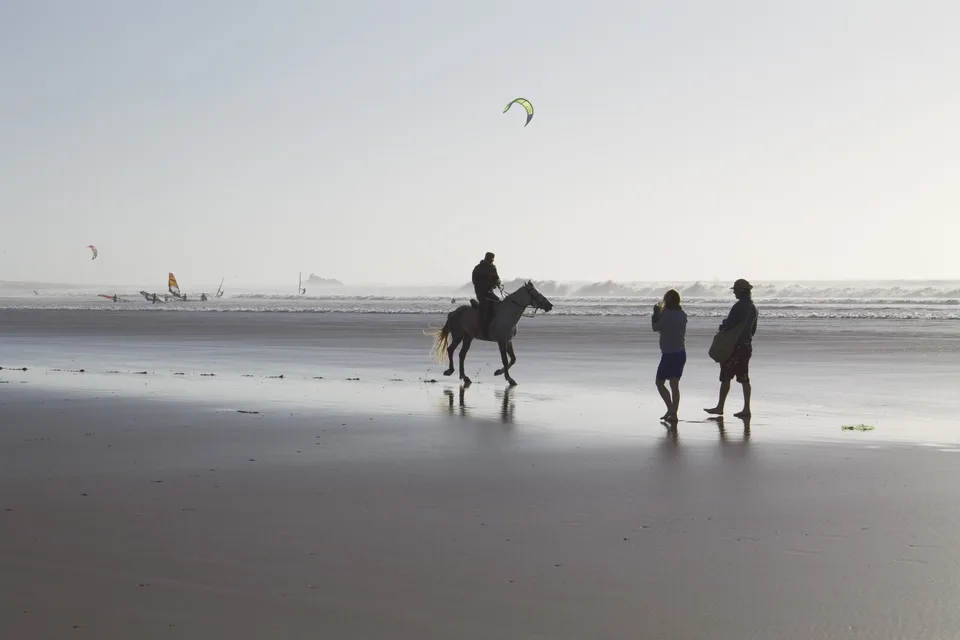
Essaouira’s coast has a different feel from inland Marrakech. The local tourism council’s weather information identifies trade winds particularly between April and August. That makes the destination interesting for wind sports, but a beach holiday here should not be planned as an uninterrupted sequence of sheltered sunbathing afternoons.
For a walking-focused visit, spring or autumn is worth comparing, with a forecast checked close to departure. Pack a windproof layer even when the daytime outlook looks warm. Winter visitors should plan for wet or cool spells and check room heating; a pleasant terrace is less useful when the weather keeps you indoors.
For surf or kitesurfing, choose dates in discussion with a qualified school, your ability and the activity you want to learn. More wind is not automatically better for a beginner. For cultural events, let confirmed dates guide the booking. Religious observances such as Ramadan can alter opening patterns, so verify meals and transport arrangements for the relevant period.
A three-day itinerary with room to linger
Day one: arrive, learn the route between your accommodation and its nearest gate, then explore the medina towards the port. Keep the afternoon flexible for the walls, a gallery and an early meal.
Day two: give the Sidi Mohammed Ben Abdellah Museum a focused visit, subject to confirmed opening, then investigate Bayt Dakira and nearby streets. Avoid Tuesday for the museum under its published timetable. Leave time to revisit a workshop or browse slowly rather than filling every gap with another paid stop.
Day three: choose a supervised watersports lesson, a beach walk or an excursion towards Sidi Kaouki according to conditions. A non-swimming day can still be worthwhile. If travelling onwards, keep the final part of the day free for collection of bags and the departure point. With only two days, keep the focus in town rather than compressing this entire plan.
Test a home for coastal living, not holiday appeal
For relocation, inspect both medina properties and homes outside the walls. A central address may simplify errands but make deliveries, parking and mobility more complicated. Walk from the property to groceries and transport carrying what you would normally need, and test the route after dark as well as during a sunny inspection.
Check for damp, ventilation, usable heating, water pressure and noise. Confirm the internet connection inside the actual rooms where you would work; a listing’s general Wi-Fi claim is insufficient for a working household. Ask how electricity and water are metered, whose name appears on the accounts and how outstanding bills are handled.
Get the tenancy period, deposit, repairs, inventory and all included charges in writing, with independent help for unfamiliar terms. For families, investigate school places and the daily journey before signing. For employment or study elsewhere, test whether the commute is realistic; a pleasant short visit does not establish an affordable weekly routine.
Separate a visitor stay from work or settlement
Check your nationality and circumstances through Morocco’s official consular visa information. Some travellers are exempt from a visitor visa; others require an appropriate application. The Acces Maroc portal has its own eligibility rules. Its published eVisa terms describe a single-entry visit of up to 30 days within a maximum 180-day validity, for tourism or business; they also state that holders may not apply for residency.
Do not substitute a general 90-day visitor rule for the permission actually issued to you. Employment, study and long-term residence require separate checks before accepting commitments. The FCDO’s living guidance, written for British nationals, explains work authorisation and residence procedures; other nationalities should confirm their route with Moroccan authorities.
Seek individual advice through the responsible consulate or qualified professionals, with VisaWand’s Morocco consultant listings as a place to look for assistance. Buying property, signing a lease or holding a remote job does not by itself establish the right to settle or work.
Keep practical safety and nearby alternatives in view
Read the current official safety guidance before departure: medina and beach theft, licensed guides, local laws and activity insurance all deserve attention. Avoid isolated areas after dark and keep belongings supervised. The official health guidance gives 150 for an ambulance and recommends insurance covering treatment and evacuation. Establish a medication plan and seek prompt care after an animal bite or scratch.
For a nearby change, compare Sidi Kaouki and the national tourism office’s surrounding-beach information. The local countryside guide introduces argan and thuya landscapes; arrange suitable transport and confirm access rather than assuming every track is a visitor route.
For a broader trip, explore Marrakesh, Agadir or Safi as distinct destinations. The Morocco location directory helps orient those choices. Give Essaouira time for its own combination of port, heritage and Atlantic weather before turning it into a series of departures elsewhere.
Official planning resources
Reviewed 26 October 2026. Use the official resources linked throughout this guide for admission, transport, housing and immigration decisions. Prices, services and rules can change; confirm the details relevant to your dates. Photography illustrates the locations and is not a live view.
View all official resources
- UNESCO: Medina of Essaouira
- Tourism Council: walking, taxis and parking
- Tourism Council: the medina
- Moroccan National Tourism Office: Essaouira
- Tourism Council: Sidi Mohammed Ben Abdellah Museum
- Tourism Council: Bayt Dakira and Simon Attias synagogue
- Gnaoua and World Music Festival: 2027 announcement
- Tourism Council: riads and guesthouse listings
- ONDA: Essaouira Mogador airport
- ONDA: Essaouira airport taxis
- CTM: official coach booking
- Tourism Council: local contacts and practical services
- Festival organiser: travelling to Essaouira
- Tourism Council: Souiri food traditions
- Tourism Council: crafts and shopping
- Tourism Council: Essaouira weather and wind
- Moroccan consular service: visa categories
- Acces Maroc: official eVisa portal
- Morocco eVisa: official terms
- FCDO: living in Morocco, updated February 2026
- FCDO: Morocco safety and local laws
- FCDO: Morocco healthcare and medicines
- Tourism Office: Essaouira beaches
- Tourism Council: nature and surrounding countryside
Plan the next part of your journey
Explore the Morocco guide, browse other cities or compare consultants for your travel and relocation questions.