Visa
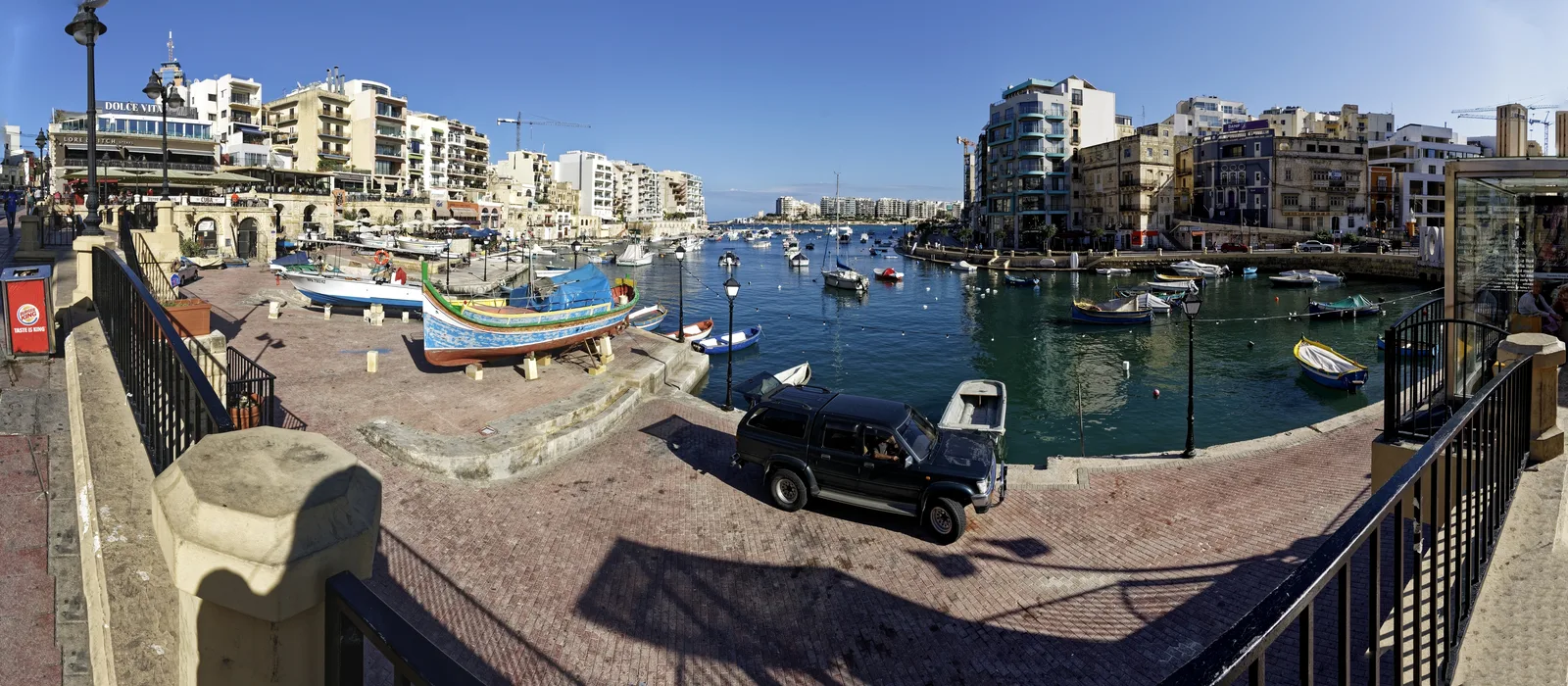
Decide which St. Julian’s you want
St. Julian’s offers several different holidays within a small stretch of Malta’s northeast coast. You can watch boats in Spinola Bay, follow the waterfront towards Balluta, dine beside a marina or spend an evening in Paceville’s entertainment streets. The advantage is choice close together. The trade-off is that a seafront address does not necessarily deliver quiet nights, easy parking or a large beach.
The town is called San Ġiljan in Maltese, a name worth recognising on transport and service information. Allow three nights for an introduction combining local walks with a day in Valletta. A longer stay makes sense if you want more of Malta without changing accommodation. For a potential move, spend time away from the promenade and test the routines that a holiday overlooks.
Understand the older town behind the hotels
The local council’s historical account traces the locality through successive churches, rebuilding and the development of its communities. It explicitly acknowledges uncertainty over the earliest foundation of the old Lapsi church. That is a useful reminder that the town’s history deserves more care than a neat founding date repeated from a travel summary.
Older religious buildings and the bays sit alongside recent hotels, apartments and commercial development. This is a working residential and visitor town, with traffic and everyday services as well as attractive views. Explore ordinary streets alongside the waterfront.
Choose your base by area and entrance
Spinola is a useful starting point for waterfront dining and orientation. Balluta suits visitors who want to combine the bay with walks towards Sliema. Paceville places entertainment closer at hand, while the marina and larger hotel developments offer another style of stay. None of these descriptions replaces checking the actual building.
The Local Councils’ Association’s neighbourhood study distinguishes these areas from inland residential districts including Ta’ Ġiorni and the older core around Lapsi church. Use the names to understand a listing, then inspect its street, gradient and entrance. A room facing an internal courtyard can feel very different from one above a busy frontage. For a rental, visit both during the day and after dark before deciding that the neighbourhood suits your household.
Start with an unhurried Spinola walk
Spinola Bay is the most useful first stop for getting your bearings. Walk around the waterfront, notice the boats and the relationship between the water, restaurants and rising streets, then choose somewhere to sit rather than immediately searching for the next attraction. It is a compact urban waterfront, so the experience changes with traffic, weather and the hour.
Keep working boat areas clear. A harbour edge is not automatically a swimming entrance, and steps can be slippery. Early or late light may be more comfortable for photography than midday. Return in the evening to compare the atmosphere around dinner service.
Follow the coast towards Balluta
Balluta provides a rewarding continuation of a waterfront walk, with a church, distinctive buildings and places to pause around the bay. Treat the promenade as an outing in itself rather than simply a route between accommodation and a restaurant. Allow time for crossings, stops and the return journey, especially with children or anyone who needs frequent rests.
The official bathing-site profiles distinguish individual coastal locations around St. Julian’s and Sliema. That precision matters: a notice for one monitored site should not be casually applied to an entire coast, nor should a photograph be treated as evidence of clean water. You can enjoy Balluta’s setting without making a swim the condition for a successful visit.
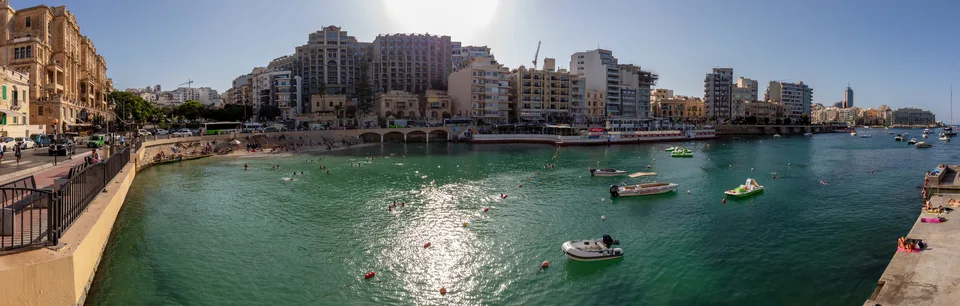
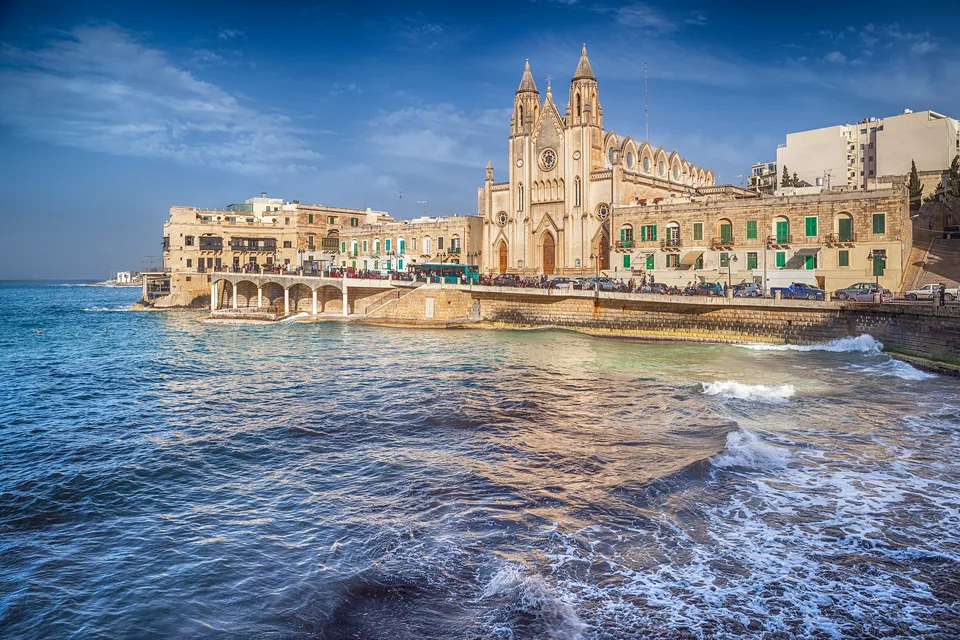
Look closely at the Balluta church
Our Lady of Mount Carmel is a prominent landmark on the waterfront, its twin towers giving the bay an unmistakable silhouette. It is also an active place of worship. A visit should fit around services and local notices rather than an assumption that the doors are open throughout the sightseeing day.
Look from across the bay before approaching. Inside, keep conversations low, be considerate with photography and follow access instructions. Check current arrangements if attending a service. The exterior remains worthwhile when interior access is unavailable.
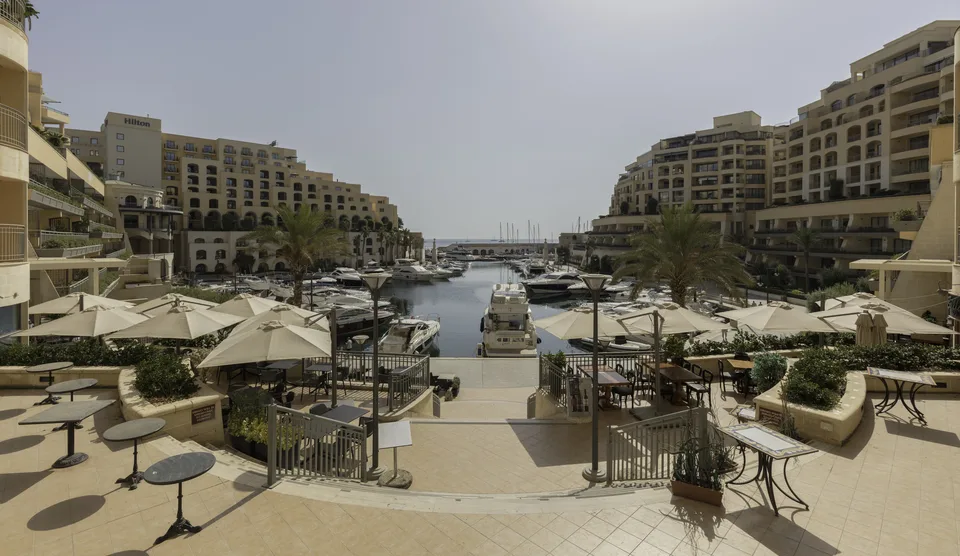
Compare Portomaso with the older bays
Portomaso Marina introduces a more deliberately planned waterfront, bringing yachts, residences and dining together. It is worth seeing because it changes the scale and character of a town walk: the setting differs from the boats and curved frontage at Spinola, despite being part of the same general visitor area.
Keep the distinction between public circulation and private facilities clear. A hotel pool, residential terrace or berth is not included simply because it is visible from a walkway. Ask before entering restricted areas, and check a restaurant’s menu before choosing a table for its view. For accommodation here, compare the actual room outlook and included facilities; an address in a marina development does not guarantee a marina-facing room or complimentary access to every amenity.
Plan Paceville as an evening choice
Paceville is the area to investigate if bars, clubs and late entertainment are a priority. It can be convenient to stay close, but make that a deliberate choice rather than discovering the surrounding nightlife after checking into a room. Ask about sound insulation, room orientation and nearby venues before booking.
The FCDO’s Malta safety guidance records incidents involving drugged drinks in parts of Paceville and theft on busy transport routes. Keep drinks in sight, stay connected with companions and arrange a clear way home. Check admission conditions directly with a venue, including age and identification requirements. There is no need to make a late night the centre of every stay: dinner by a bay and an early return are equally workable ways to enjoy the town.
Make swimming depend on current conditions
St. Julian’s is coastal, but it is not a resort built around one long sandy beach. If swimming is important, examine the exact beach or rocky access point near your accommodation, including entry, exit, shade and facilities. St. George’s Bay and Balluta should be considered individually rather than grouped under a general promise of beach access.
Consult the Environmental Health bathing-water programme and signs at the site before entering. Official classification, the latest sampling result, temporary warnings and conditions on the day answer different questions. The department’s monitoring guidance also explains the seasonal programme. Rough water or difficult exits can make a swim unsuitable even when water-quality information is satisfactory. A hotel pool can provide an alternative, but check its opening season and supervision arrangements.
Choose accommodation for sleep as well as location
The official Malta accommodation directory provides a starting point for comparing hotels, guesthouses and other options. Look beyond the headline star rating or a carefully framed balcony photograph. Check the licence details where relevant, the precise address and what the rate includes.
For a short stay, a staffed hotel may simplify late arrival and luggage storage. An apartment can suit families or anyone planning some meals at home, provided the kitchen and laundry arrangements meet actual needs. Confirm air conditioning, heating, lift access, staircases, bathroom layout and cancellation terms. A quieter room may be a better purchase than a larger one facing a busy street. If construction or neighbouring premises could affect your stay, ask specific questions and retain the written response.
Include the current accommodation contribution
Malta’s environmental contribution on accommodation changed on 1 July 2026. The Malta Tourism Authority now specifies €1.50 per person per night for guests who are 18 or older at the start of the visit, capped at €22.50 per person per visit. Older references to a smaller nightly amount are no longer an adequate budget basis.
Ask the property whether this contribution is included in the quoted total or collected separately. Compare the full cost for your party, including breakfast, cleaning, parking and any optional facilities. A cheaper room can lose its advantage if it creates daily transport costs or requires restaurant meals for every breakfast. Keep a contingency for a delayed arrival or a change of plans, particularly when accommodation and flights have separate cancellation conditions.
Get from the airport to the correct stop
Malta International Airport’s public-transport information directs passengers to the bus operator for services around the island. For St. Julian’s, investigate the current Airport Direct TD2 timetable and the alternative TD3 routing rather than following older advice about discontinued airport routes. Choose the stop from your accommodation’s actual entrance.
The operator’s current fare table lists €3 for an ordinary Tallinja Direct journey such as TD2 or TD3. Confirm the ticket you need before boarding. A taxi or pre-booked transfer can be useful with luggage, children or a late arrival, but ask for the full price and suitable luggage capacity. Traffic and the final uphill walk can matter more than the island’s small size; avoid promising yourself a fixed door-to-door transfer time.
Read bus-pass inclusions carefully
Malta Public Transport offers several products with similar names and different coverage. At the October 2026 check, its standard Explore Adult seven-day card cost €25 and excluded Tallinja Direct routes, while the seven-day Explore Flex bus offer was €27 and listed Airport Direct among its inclusions. Read the current product conditions before choosing.
For daily use, plan the precise stop, direction and return. The same road can carry services towards several destinations, and a short-looking trip can still require a wait. Residents should investigate the personalised Tallinja card and its eligibility and validation rules; free-transport arrangements should not be assumed to cover every visitor product or premium service. For an important appointment or flight, leave a margin and identify a workable alternative.
Use Sliema’s ferry for a Valletta day
The Sliema–Valletta ferry is useful for combining a coastal base with the capital. Its departure point is in Sliema, so include the journey there from St. Julian’s. Do not arrive at Spinola expecting the scheduled harbour ferry to depart from whichever waterfront is closest.
Check the operator’s seasonal timetable, fare and disruption notices, then plan the final sailing you would comfortably use. Transport Malta’s ferry information describes the service and the operator’s responsibility to publish changes, including weather disruption. Keep a land-transport alternative available. Once in Valletta, choose a focused visit rather than trying to cover every major site; the ferry journey, walking and a museum can already make a satisfying day without a rushed evening return.
Add one substantial cultural visit
St. Julian’s is a useful accommodation base for Malta’s cultural attractions, but many major museums and historic sites are elsewhere. Make that distinction when allocating time. A town waterfront walk and a museum day in Valletta are different outings with different transport needs.
MUŻA, the National Community Art Museum, is one option in Valletta. Consult Heritage Malta’s current exhibition, admission and opening information, especially on a holiday. Allow time for the capital’s streets afterwards. With mixed interests, agree on one shared priority and leave some independent time.
Keep shopping and groceries convenient
Bay Street offers a shopping-complex option near St. George’s Bay, while everyday purchases need not revolve around a sightseeing trip. Check individual outlet hours and stock if you are making a special journey. Entertainment in the surrounding district does not mean every shop remains open late.
For self-catering, Arkadia’s Portomaso foodstore information gives one practical supermarket option to check against your address. Compare opening times and the walk home with bags. A small basket bought conveniently may make more sense than paying for transport to chase a minor price difference. For gifts, look at origin, materials and packing requirements. Food souvenirs also need to comply with the import rules at your destination; a product sold locally is not automatically permitted in every country.
Build a budget from your own plans
Accommodation, restaurant meals, excursions and nightlife shape the budget. Collect current quotes for your dates and room type. A summer weekend and a quiet weekday visit are different purchases.
List meals, transport and intended activities, then add fixed costs separately. Families should check child prices and room occupancy rules. Longer visitors need a separate budget for rent, utilities, insurance and household setup. Retain some flexibility for changes to outdoor plans.
Choose a season that fits your priorities
Summer suits travellers who want a lively coastal stay and long evenings, but heat changes the usefulness of a walking itinerary. Put longer walks earlier or later, carry water and make time indoors. Spring and autumn can suit visitors interested in combining town life with sightseeing, provided expectations about swimming remain flexible.
Winter offers a different coastal experience, with shorter days and the possibility of rain, wind and rough sea conditions. Confirm pool operation and outdoor facilities rather than assuming summer photographs describe a winter booking. Consult the Malta Meteorological Office forecast and warnings before a boat trip or exposed walk. A sunny morning does not establish conditions for the rest of the day. Choose accommodation comfortable enough for time indoors if the weather changes.
A manageable three-day introduction
Day one: settle in, orient yourself around Spinola and walk towards Balluta if time and conditions suit. Pause for a meal and decide whether you want a quiet evening or a deliberate visit to the entertainment district. Keep arrival day light if the flight is late.
Day two: travel to Sliema for the ferry or use a suitable bus connection to Valletta. Combine a cultural visit with time in the capital, checking the return before the day begins. Leave dinner flexible rather than tying it to a tight connection.
Day three: explore the marina area and whichever local streets you missed. Add swimming only if the current conditions and notices support it. A longer coastal walk, shopping or a leisurely lunch provides an alternative. With fewer days, choose between a full Valletta outing and a more relaxed local stay rather than rushing both.
Evaluate a home at ordinary hours
For a move, inspect the building as carefully as the area. Test the lift, water pressure, ventilation, windows and air conditioning. Ask about heating, damp, internet installation, laundry space and waste collection. View the bedroom when nearby businesses are operating, and investigate construction or delivery activity that a midday appointment might miss.
Compare several current offers with similar furnishings, contract length and included charges. An advertised monthly price does not establish the cost of a household’s actual routine. Before paying a deposit, verify who is entitled to let the property and obtain written terms covering the deposit, inventory, repairs and notice. If sharing, establish whether you rent a room or jointly take responsibility for an entire dwelling, including how household changes are handled.
Register the lease and understand utility bills
The Housing Authority’s residential rent-registration guidance explains the registration process and documentation, including an inventory. A holiday booking and a primary residential lease should not be treated as interchangeable. Obtain the signed agreement and evidence of registration, and ask the authority for clarification if the arrangement is unclear.
Agree how water and electricity will be charged before moving in. ARMS provides utility-account guidance covering billing and household details. Record meter readings, establish which account serves the property, and request actual bills rather than accepting an unexplained estimate. Check the relevant tariff and registered household information with the provider. Internet, building charges and air-conditioning use may be separate costs. Keep records of payments and correspondence so later questions can be resolved against documents rather than memory.
Test work, study and household journeys
Walk or take the bus to your prospective workplace at the time you would normally travel, then test the return. A nearby office can make St. Julian’s convenient, but a job elsewhere may alter the calculation. Include the route from the stop to the building and what happens after an evening shift.
For a course, confirm the teaching address, timetable and accommodation arrangements directly. Families should establish education and childcare arrangements before committing to a home; short distances do not guarantee a place. Locate a pharmacy and groceries, check internet coverage, and allow time for administrative appointments.
Keep visiting, studying and working distinct
Start with Identità’s official visa information for nationality-based entry requirements. Where Schengen short-stay rules apply, the allowance is generally up to 90 days in a 180-day period across the area, not a fresh allowance on arrival in Malta. A visa’s validity and permitted days also need to be read together.
EU and EEA nationals have a different residence framework: Identità’s registration guidance covers stays exceeding three months. Non-EU workers should examine the Single Permit route and the employer’s application procedure. It ties permission to the specified employment rather than creating unrestricted access to any job. For education, check the study-residence rules, including the correct entry purpose where required. Paying for a course or signing a lease does not itself supply immigration permission.
Plan a longer move around the right permission
Identità’s current employment guidance distinguishes an approval in principle from permission to start work and explains when pre-departure certificates or sector requirements apply. Confirm the requirements for your application and role before travelling. Do not build a relocation plan around an assumed conversion from an ordinary tourist stay.
Permanent settlement is a separate question. The long-term residence guidance sets conditions beyond simply spending time in Malta or buying an apartment. Check how your residence history, absences and other requirements are assessed. For individual help, compare the Malta consultant listings and the wider consultant directory, asking about experience, scope and fees. Keep official decisions and application instructions central to the plan, including any steps needed by accompanying family members.
Arrange healthcare and consider alternative bases
The official Gżira Health Centre information includes St. Julian’s in its catchment, but check the service, appointment arrangements and your entitlement before attending. Healthcare guidance explains the importance of suitable insurance and valid reciprocal documents where eligible; these do not replace cover for every private treatment or repatriation. For emergencies, call 112.
Consider whether another base better fits your trip. The Sliema city page provides a neighbouring coastal option to compare, while the Valletta city page suits planning around the capital. Use the Malta country page for the wider destination. St. Julian’s works best when its mix of dining, waterfront life and entertainment matches your priorities, with the room and daily routes chosen as carefully as the view.
Official planning resources
Reviewed 17 October 2026. Use the official resources linked throughout this guide for admission, transport, housing and immigration decisions. Prices, services and rules can change; confirm the details relevant to your dates. Photography illustrates the locations and is not a live view.
View all official resources
- San Ġiljan council: geography and history
- Local Councils’ Association: St Julian’s neighbourhoods
- St Julian’s and Sliema bathing-site geography
- Portomaso Marina visitor and operator information
- FCDO Malta safety advice
- Environmental Health bathing-water monitoring
- Official bathing-water questions and monitoring
- Official Malta accommodation directory
- MTA accommodation environmental contribution
- Malta International Airport public-transport guidance
- Malta Public Transport fares and ticket coverage
- Valletta Ferry Services routes and schedules
- Transport Malta harbour-ferry information
- Heritage Malta MUŻA art museum
- VisitMalta Maltese food traditions
- Gululu restaurant current menu links
- Bay Street shopping complex information
- Arkadia Foodstore Portomaso
- Malta Meteorological Office forecast
- Housing Authority lease registration guidance
- ARMS household utility billing information
- Identità visa and entry questions
- Identità EU and EEA residence registration
- Identità Single Permit
- Single Permit application by employer
- Identità study-residence requirements
- Identità current employment application guidance
- Identità long-term residence conditions
- Gżira Health Centre catchment and services
- FCDO healthcare and insurance advice
- Airport Direct TD2 current timetable
Plan the next part of your journey
Explore the Malta guide, browse other cities or compare consultants for your travel and relocation questions.