Visa
Choose Sliema for the way you want to use Malta
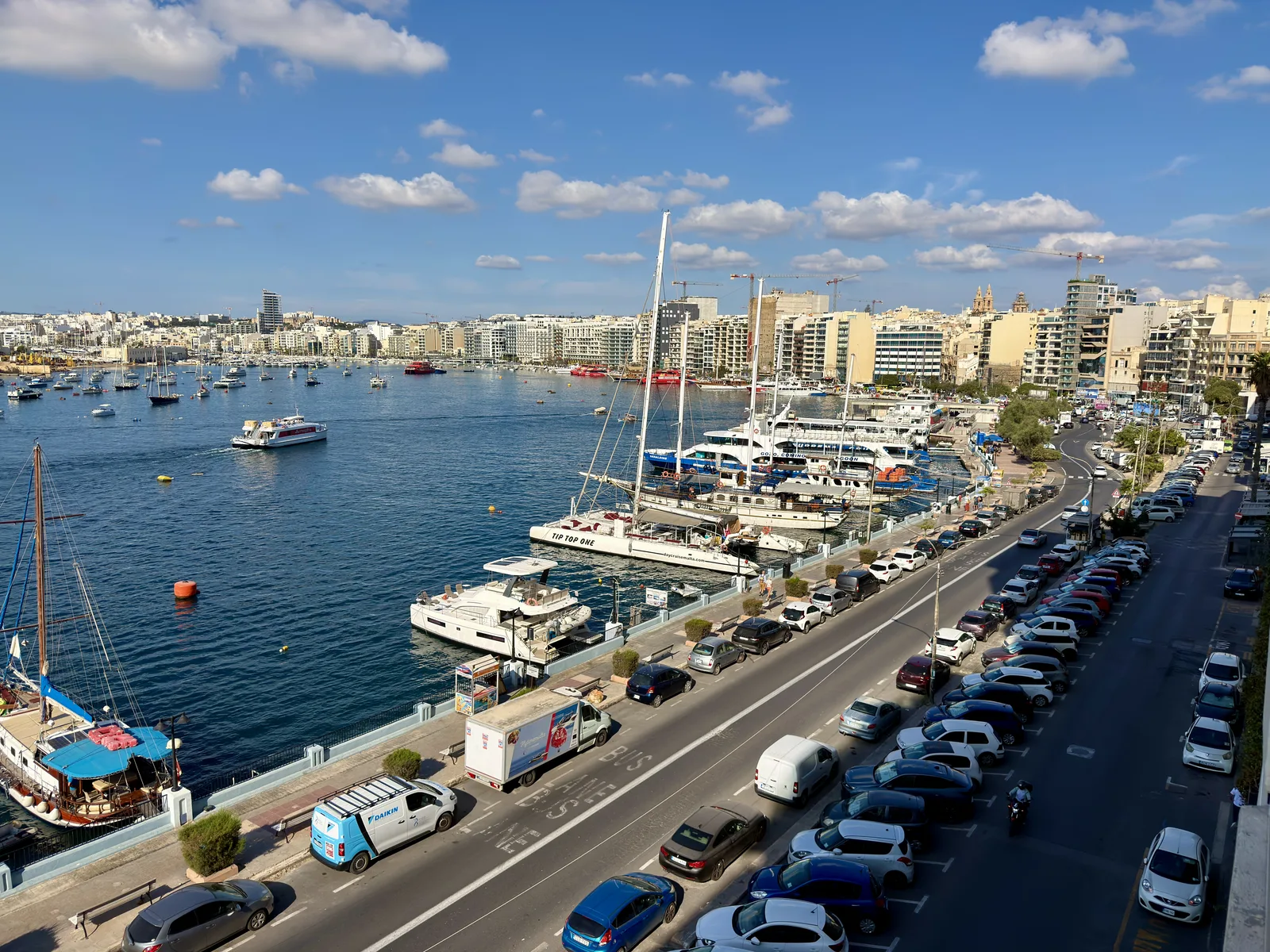
Sliema is a practical base for a Malta visit: a busy waterfront town with shops, restaurants, accommodation and a ferry across to Valletta. Its appeal lies in the combination. You can walk beside the sea, cross the harbour for a substantial cultural visit and return to a choice of places to eat without changing accommodation.
The first decision is whether that kind of town suits you. Sliema is built up, with traffic and urban activity close to much of the waterfront. Its bathing places are largely rocky. If your priority is a broad sandy beach outside a secluded hotel, inspect alternatives before assuming a sea-view room here delivers that experience.
Use VisaWand’s Malta country guide for national planning. For Sliema itself, choose the side of town, room orientation and transport access together. Those details influence a visit more than the simple promise of being close to the sea, especially for families, light sleepers or anyone considering an extended stay.
Learn the difference between the two waterfronts
The harbour-facing Strand is the practical starting point for the Valletta ferry and many boat departures. It offers a different setting from the open-sea side around Tower Road and Fond Għadir. Before booking, mark the actual ferry landing, your accommodation and the places where you expect to spend the evening.
Tigné Point sits towards the tip of the peninsula, with shopping and views across the water. Qui-Si-Sana and the rocky coast beyond lead into the open-sea promenade. Farther around, Independence Garden and the approach towards Balluta give a walk another focus. Balluta and Spinola should be understood in their relationship with neighbouring St Julian’s, rather than every coastal stop being labelled Sliema.
An inland street may offer a different balance of price, quiet and access, but check the gradient back from the waterfront. Walking distances are useful only when you understand the route. For limited mobility or a pushchair, ask about crossings, steps and the final approach to the property, not simply its distance from a map pin.
Find the older town behind the waterfront
The local council’s history of Sliema describes rapid growth in the second half of the nineteenth century, when the town became a summer resort for wealthier Valletta residents. Villas and townhouses belonged to that phase of development. Looking inland helps place the modern waterfront within a longer story of settlement and leisure.
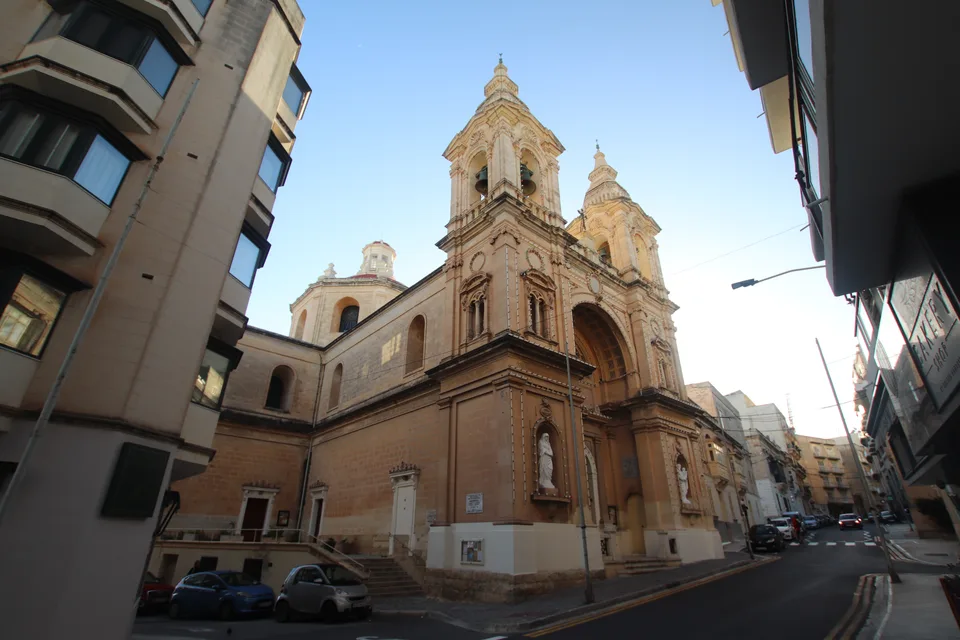
Stella Maris is an important landmark in that account: the council dates the church to 1855 and its establishment as a separate parish to 1878. Include its exterior and surrounding streets in a town walk, with any interior visit dependent on current access and religious activity. Dress appropriately and avoid disrupting worship.
The council’s historical-places list also identifies the Strand, Il-Fortizza and St Julian’s Tower on Tower Road. Despite its name, that tower is listed within Sliema. These are useful points around which to shape a walk, but a council listing does not itself establish a museum opening time or a public ticketed interior.
Make the promenade an activity in its own right
A coastal walk is one of Sliema’s simplest pleasures, and it does not need to become a timed endurance circuit. Choose a section, pause to look at the shore and leave room for a drink or meal. The harbour side and open-sea side reward different viewpoints; exploring both is more informative than staying beside the first row of restaurants you encounter.
Independence Garden provides another destination along the coast. The council traces its creation to 1990, following the transformation of former farmland. Combine it with a shorter stretch of promenade if your party would prefer a gentle outing rather than walking around the whole peninsula.
Carry drinking water and think about shade and wind before setting out. A waterfront route can be exposed even when it is close to cafés and shops. If anyone tires easily, plan a return option and a specific meeting point. The town’s compact map should not pressure you into a longer walk than is comfortable.
Treat the rocky shore as a real swimming decision
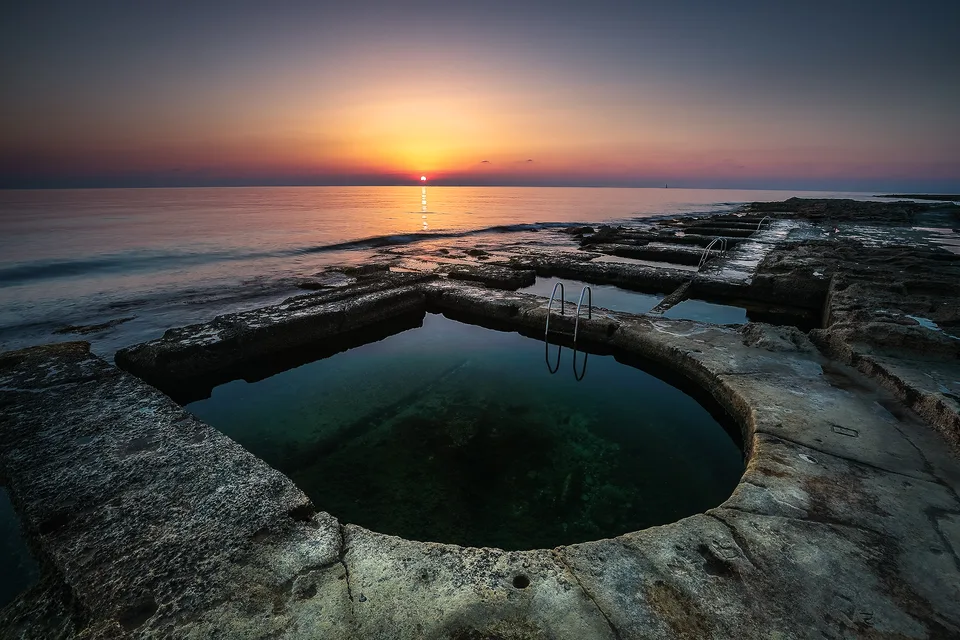
The Blue Flag Malta description of Fond Għadir identifies a rocky shoreline and rock-cut pools, with accessibility varying along the coast. This is useful orientation, but it should not be treated as proof that every swimming entrance is easy, supervised or suitable for children on your date.
Look at the entry and exit before entering the water. Waves, slippery surfaces and the ability to climb out matter as much as how inviting the sea appears. Respect barriers, warning flags and local instructions. A historical photograph of people using a pool cannot establish present conditions or permission.
Consult the Environmental Health Directorate’s bathing-site reports and notices rather than relying on an old beach description. The directorate’s monitoring guidance explains its seasonal testing arrangements; water-quality testing and safe sea conditions remain separate questions. If swimming is unsuitable, a promenade walk or another activity can still make a worthwhile day. Do not feel committed to entering the sea simply because the accommodation was booked for a coastal holiday.
Use Tigne for views and shopping, with realistic access expectations
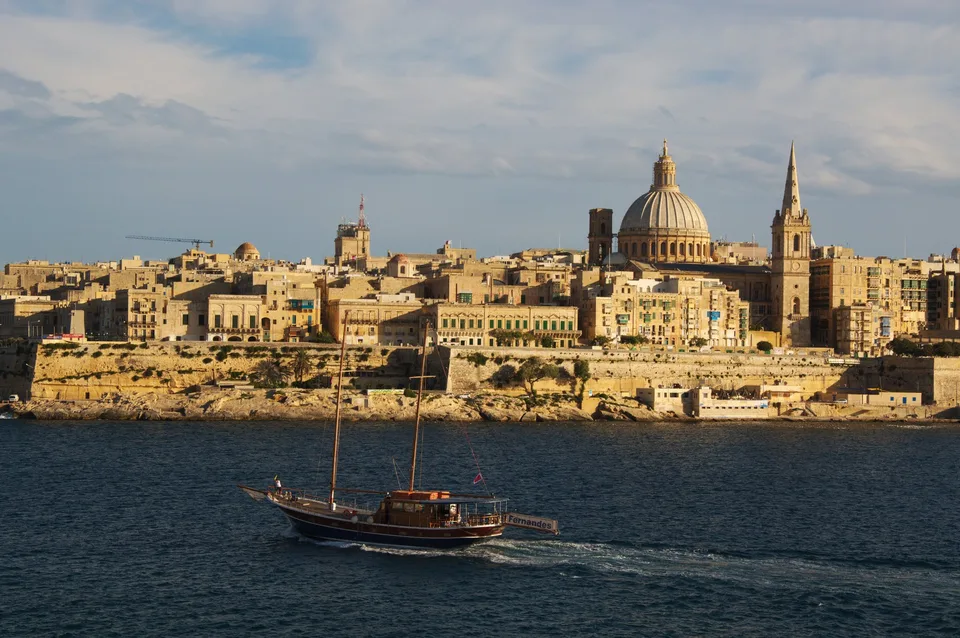
Tigné Point gives a useful perspective towards Valletta and an obvious shopping stop. The Point’s own visitor information lists centre opening from 10:00 to 19:30 daily at review. Confirm an individual shop, restaurant or holiday schedule if your visit depends on it; management-office hours are a separate matter.
Fort Tigné has a longer military history than the surrounding development. A May 2026 government announcement records an agreement returning Fort Tigné and Manoel Island to government responsibility, with Heritage Malta involved in their future management. That announcement does not establish a daily museum timetable or unrestricted access to every part of either site.
Enjoy the publicly accessible surroundings and check current arrangements before planning an interior visit. Keep Manoel Island geographically separate in your planning rather than treating it as part of the same fort complex. If shopping is the main purpose of an afternoon, set a spending and luggage limit before adding a cruise or a long walk afterwards.
Cross to Valletta with a focused plan
Sliema’s relationship with Valletta is one of its strongest advantages. The crossing makes a substantial cultural day possible while retaining a waterfront base, but allow for the walk from the landing to your chosen sights. Valletta’s terrain and entrances deserve their own attention, particularly with mobility needs or in hot weather.
For one major interior, consult St John’s Co-Cathedral’s visitor information. At review, adult entry is €15, with visitor hours Monday to Saturday from 09:00 to 16:45 and last admission at 16:00. It is closed to tourist visits on Sundays and public holidays. The operator separately notes a museum extension closure, so do not assume every associated space is included and open.
Choose a small number of sights, allow a proper meal break and leave time to return comfortably. VisaWand’s Valletta destination page helps place the capital in a wider itinerary. Valletta’s museums and churches are across the water; they should not be described as attractions within Sliema itself.
Read the ferry timetable in the right direction
Valletta Ferry Services publishes its seasonal timetable and fares. At review, the adult daytime fare is €3 one way or €5 return. The published night service begins at 19:30, with adult fares of €3.50 single and €5.20 return. Check the conditions for the ticket you choose, especially when returning at a different time of day.
Read the Sliema and Valletta departure columns separately, and check Sunday and public-holiday notes. Summer and winter services differ. The operator’s late-night wording is not entirely consistent across all schedule notes, so confirm a late return directly rather than relying on the latest time visible in a table.
Have an alternative route back when a journey matters. A scheduled harbour crossing remains dependent on operating conditions. The Three Cities ferry uses a separate route from Valletta; do not assume that continuing there means remaining at the same landing or staying aboard the Sliema service. Build in the transfer and the walk it requires.
Arrive by TD3 or an agreed transfer
Malta Public Transport’s Airport Direct information identifies TD3 as the airport service covering St Julian’s, Sliema, Gżira and Msida. It publishes a frequency of every 30 minutes and a €3 fare without an eligible unlimited travel card. Cash and contactless payment are accepted on board, and the airport departure point is the signed bus terminal outside arrivals.
The actual TD3 route is circular, so the journey to a Sliema stop and the journey back to the airport do not simply mirror each other. Check the stop, direction and timetable for your accommodation. A frequent service is not a guarantee of a particular door-to-door journey time.
For a taxi or private transfer, obtain a current quote that identifies passengers, luggage, destination and any waiting charge. This guide does not invent a fixed airport taxi fare. With an early flight, confirm collection and allow a buffer appropriate to the journey rather than treating the bus frequency as the only factor in deciding when to leave.
Compare bus tickets with how much you will travel
The operator’s current fare page states that the €2 winter single fare for ordinary daytime services applies from 18 October 2026 to 12 June 2027, with two-hour validity. Airport Direct and other services have their own conditions. Keep the travel date and service type attached to any quoted price.
At review, the seven-day Explore Flex bus option is €27 and includes Airport Direct. Compare it with your expected journeys rather than buying automatically. A bus product does not necessarily include unlimited harbour-ferry travel; check whether a ferry trip requires separate payment or credit.
Use the operator’s Sliema and St Julian’s information and journey planner for current connections. Confirm the exact stop before boarding, and check service alerts on the day. A rental car can help with a particular island itinerary, but establish parking at the accommodation first. For a stay centred on Sliema and Valletta, the practical value of a car depends on more than the rental price.
Book the room, not just the sea view
Hotels, guest accommodation and apartments serve different needs. A hotel may simplify reception, breakfast and luggage storage; an apartment can provide more space and a kitchen. Compare those services with the precise location, floor, lift access and the route from the vehicle drop-off.
For a quieter stay, ask which direction the room faces and what evening activity, traffic or current building work is nearby. A higher floor or a waterfront address does not automatically resolve noise. Check that the category you are booking actually includes the view shown in the photographs.
For a longer visit, inspect the kitchen equipment, laundry arrangements and cleaning schedule. For accessibility, ask about the whole route through the property, including the bathroom. Save late-arrival instructions offline and obtain written cancellation terms. When a flight, ferry excursion or other connection changes, those terms determine the real flexibility of the booking.
Account for the current accommodation contribution
The Malta Tourism Authority’s environmental-contribution guidance states that, from 1 July 2026, the charge is €1.50 per person per night for visitors aged 18 or over at the start of the visit. The maximum is €22.50 per person per visit. It must appear separately from the accommodation rate on the invoice or fiscal receipt.
The meaning of a visit matters if you change properties or combine Malta and Gozo. Do not assume the cap starts again at each hotel. Ask the provider how the applicable charge will be recorded for your itinerary and keep the relevant receipts.
For example, two qualifying adults staying seven nights incur €21 in this contribution, before any other charges. Use the full accommodation quotation when comparing options, including cleaning, parking and deposits where applicable. A headline nightly rate is less useful than the total payable for your whole party and the dates you intend to stay.
Build a budget in euros around actual offers
Malta uses the euro, as the European Union’s country profile confirms. Check withdrawal charges and card-conversion terms before paying, and carry a modest cash reserve for situations where your preferred method is unavailable. Currency membership does not establish that every transaction or cash withdrawal is free of fees.
Separate accommodation, arrival transfers, local travel, food and optional excursions. The verified bus, ferry and cathedral prices provide useful anchors, but they do not constitute a universal daily budget. A shopping afternoon, a boat trip and a day spent walking the promenade involve different choices.
For an excursion, ask what is included, how long each stop lasts and what happens if the weather changes. Keep a contingency for altered transport rather than spending the entire available budget on advance bookings. For souvenirs and food gifts, check materials, ingredients and the rules at your next destination. Keep receipts for more substantial purchases.
Choose the season for your preferred pace
Malta’s surrounding sea shapes its Mediterranean climate, as the Agriculture Directorate notes. For Sliema, season affects walking comfort, time by the water and the likelihood that a boat plan needs changing. This guide does not turn national summaries into precise temperatures for a particular seafront room or promise a fixed number of sunny days.
In summer, plan shade, water and breaks into longer walks. Effective room cooling can matter as much as the view. Spring and autumn may suit a visit focused on walking and cultural excursions, provided you remain flexible about sea conditions. Winter calls for a layer against wind and a check of the property’s heating.
Keep an indoor alternative available, such as a planned Valletta visit on an appropriate opening day or time at the shopping centre. Good weather for a promenade stroll is not necessarily suitable for swimming or a boat excursion. Decide those activities from the forecast, local notices and conditions you actually encounter.
Give three days a useful shape
On day one, orientate yourself around the Strand and ferry area, then explore some inland streets and Stella Maris. Add a manageable promenade section and a meal without an excursion deadline. If arriving late, shorten the walk and leave the longer coastal outing for another day.
Use day two for Valletta, with a confirmed ferry plan and one substantial interior such as St John’s if the day and opening arrangements fit. Allow time between the landing and the attraction, and return before your connection becomes a worry. Trying to add the Three Cities as well may leave too little time in either place.
On day three, explore the open-sea side, Independence Garden and Tigné, or choose a properly checked boat excursion. Swimming remains optional and condition-dependent. With only two nights, protect arrival and departure rather than treating this outline as a checklist. With more time, separate excursions and leave an unscheduled morning beside the water.
Test the everyday neighbourhood before moving
Sliema’s convenience on holiday is worth testing under ordinary living conditions. Try your likely commute at the time you would make it, including a ferry alternative if the crossing is suspended. Walk to food shopping, a pharmacy and any prospective school rather than evaluating an apartment solely from its balcony.
For a lease serving as your primary residence, consult the Housing Authority’s registration guidance. It describes written contract requirements and registration, including an inventory. Establish who handles the process and keep the approval evidence; a holiday-accommodation booking and a residential lease are different arrangements.
Record rent, deposit, utilities, notice and maintenance responsibilities clearly. Inspect ventilation, damp, cooling, heating, water arrangements and appliance condition, and ask to see recent bills. Test internet service at the exact address. No representative current Sliema rent series has been verified for this guide, so compare actual offers with equivalent terms instead of relying on an invented average.
Arrange healthcare and household services early
The UK government’s Malta healthcare guidance lists 112 for an ambulance. Eligible EHIC or GHIC holders can access medically necessary state treatment under the applicable rules, but the cards do not replace insurance or cover every private service and repatriation cost. Residence brings a separate entitlement question that needs checking for your circumstances.
Plan ongoing medication before travelling. The same guidance notes that UK prescriptions are not recognised in Malta, so someone relying on them may need a local practitioner. Establish where routine care would be obtained and how specialist needs would be handled before committing to a long stay.
Contact schools directly about language, admission and capacity before arranging housing around an assumed place. Ask communications and utility providers for the documents, installation terms and cancellation conditions applying to your address. A successful hotel stay cannot establish that every household service will be equally straightforward to set up as a resident.
Separate a Schengen visit from work, study and residence
Malta belongs to Schengen. Identità’s short-stay visa information explains the 90-days-in-any-180-days framework; time in other Schengen countries matters too. Check the rules for your nationality and travel document, including any shorter allowance on the visa issued. Tourist entry does not by itself authorise employment or permanent relocation.
For non-EU employment, Identità’s work-and-residence guidance describes the Single Permit process, normally involving an employer and job offer. EU and EEA nationals have a different framework, explained in its free-movement information, with residence-document obligations where applicable. Do not apply one group’s rules automatically to another.
Longer study also needs the appropriate route; consult the official student-residence guidance and confirm the institution and course requirements. A lease or property purchase does not establish that immigration permission has been granted. For broader alternatives, explore the Malta destination directory. If seeking help through VisaWand’s Malta consultant listings, assess credentials, relevant experience and a written scope before engaging an adviser.
Official planning resources
Reviewed 24 October 2026. Use the official resources linked throughout this guide for admission, transport, housing and immigration decisions. Prices, services and rules can change; confirm the details relevant to your dates. Photography illustrates the locations and is not a live view.
View all official resources
- Sliema Local Council: town history
- Sliema Local Council: historical places
- Blue Flag Malta: Fond Ghadir coastal description
- Environmental Health Directorate: bathing-site closure reports
- Environmental Health Directorate: bathing monitoring guidance
- The Point shopping centre: visitor hours
- Government of Malta: Manoel Island and Fort Tigne agreement
- St John’s Co-Cathedral: visitor information
- Valletta Ferry Services: schedule and fares
- Malta Public Transport: Airport Direct
- Malta Public Transport: TD3 route
- Malta Public Transport: dated bus fares and travel cards
- Malta Public Transport: Sliema and St Julian’s connections
- Malta Tourism Authority: accommodation environmental contribution
- VisitMalta: Maltese food traditions
- Agriculture Directorate: Maltese wine origins and climate
- European Union: Malta country profile
- Housing Authority: private residential lease registration
- UK foreign travel advice: Malta healthcare
- Identita Central Visa Unit: Schengen short stays
- Identita: working and residing in Malta
- Identita: EU and EEA residence information
- Identita: third-country student residence
Plan the next part of your journey
Explore the Malta guide, browse other cities or compare consultants for your travel and relocation questions.