Visa
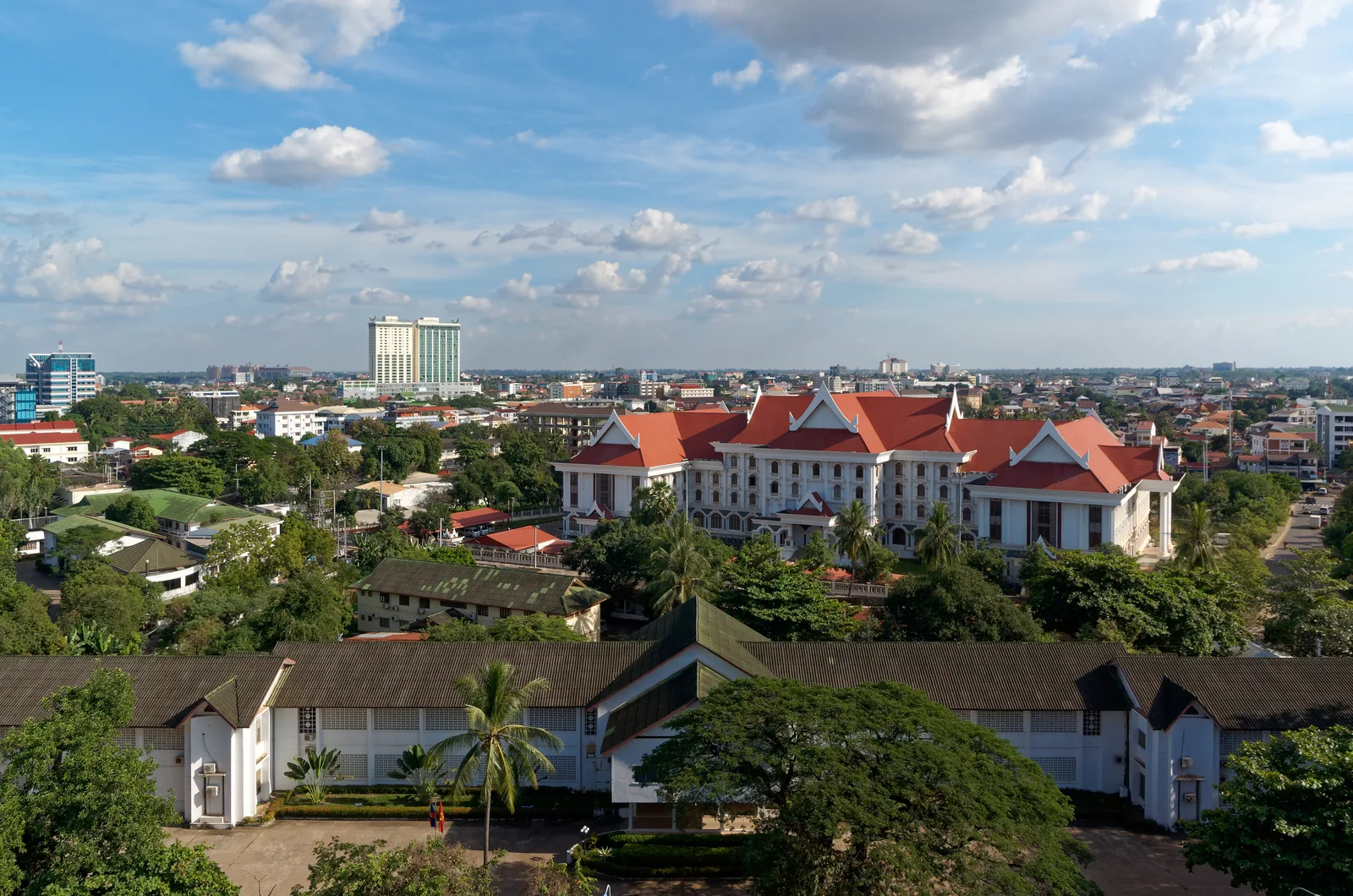
A capital best explored at a human pace
Vientiane rewards a different rhythm from the region’s larger capitals. Build a visit around a temple courtyard, a thoughtful exhibition and an evening beside the Mekong, rather than a succession of headline attractions. Two or three nights give you room to explore without treating the city as a waiting room between a flight and a train.
The essential geographical distinction is between Vientiane Capital and Vientiane Province. Vang Vieng belongs to the latter; booking accommodation there does not put you in the capital. This guide concerns the city beside the Mekong, at the location recorded by VisaWand as 17.96667°N, 102.6°E. Its administrative territory extends beyond the central sightseeing streets, so a metropolitan population figure says little about how busy your chosen neighbourhood will feel.
Start with the Laos country guide for broader planning. Vientiane suits travellers interested in contemporary Lao life as well as religious heritage. For prospective residents, the useful question is whether a particular address connects comfortably with work, healthcare and household errands, rather than whether it looks attractive on a short holiday.
Read the city through its monuments
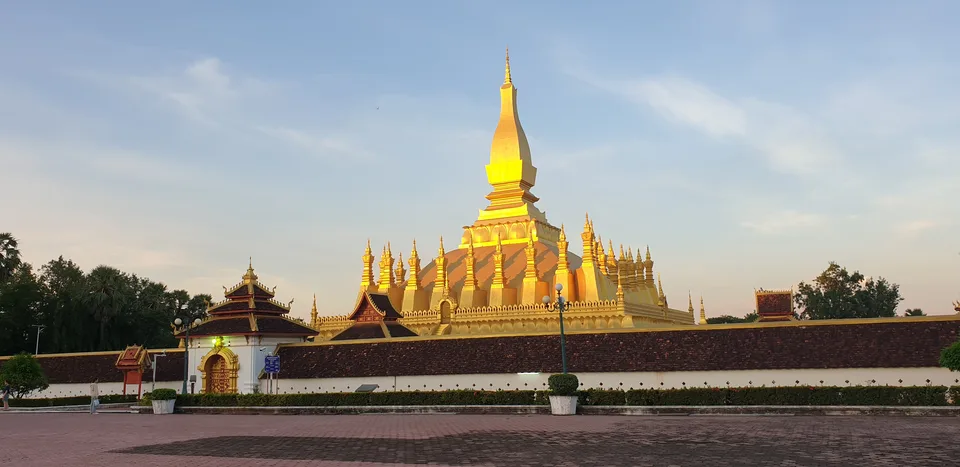
Vientiane became the capital around the middle of the sixteenth century. Its buildings tell overlapping stories of royal authority, Buddhist devotion and national identity. Wat Sisaket dates to 1818; Patuxai combines a triumphal arch form with Lao decorative motifs. That Luang is the national monument around which much of the city’s symbolic identity gathers. These are useful starting points from the national tourism department’s capital overview.
Give each place enough attention to notice what distinguishes it. A courtyard lined with devotional images asks for a different kind of looking from a monument designed to be seen across an avenue. Avoid making every stop into a quick photograph taken from the entrance. Equally, you need not enter every religious building to understand that temples remain part of the living city.
Carry clothing that covers shoulders and knees, follow posted instructions and remove shoes wherever required. Keep worshippers’ access clear and ask before photographing people closely. If a ceremony is taking place, let its participants set the pace. Visiting respectfully often means accepting that a building, viewpoint or passage is temporarily unavailable.
Choose a base by the streets you will actually use
For a first visit, compare addresses around the central riverside streets, Setthathirath Road and Samsenthai Road. Search the actual hotel pin rather than relying on “city centre” in a listing. A central base is most useful when you can reach breakfast, dinner and your planned sights without arranging a vehicle for every outing.
Lane Xang Avenue provides another useful orientation, with Patuxai as a conspicuous landmark. Properties around That Luang make more sense if your appointments or interests lie in that direction. Neither an airport hotel nor accommodation near a railway station is automatically convenient for a leisurely evening in the historic core. Treat these as different location choices with different purposes.
Before committing, inspect the route between your accommodation and the places you expect to use. Check crossings, shade, entrances and the final approach after dark. Families should ask whether a room faces a busy road and whether a pool has controlled access. Travellers with reduced mobility need specific answers about steps and bathroom access; “central” and “accessible” describe entirely different things.
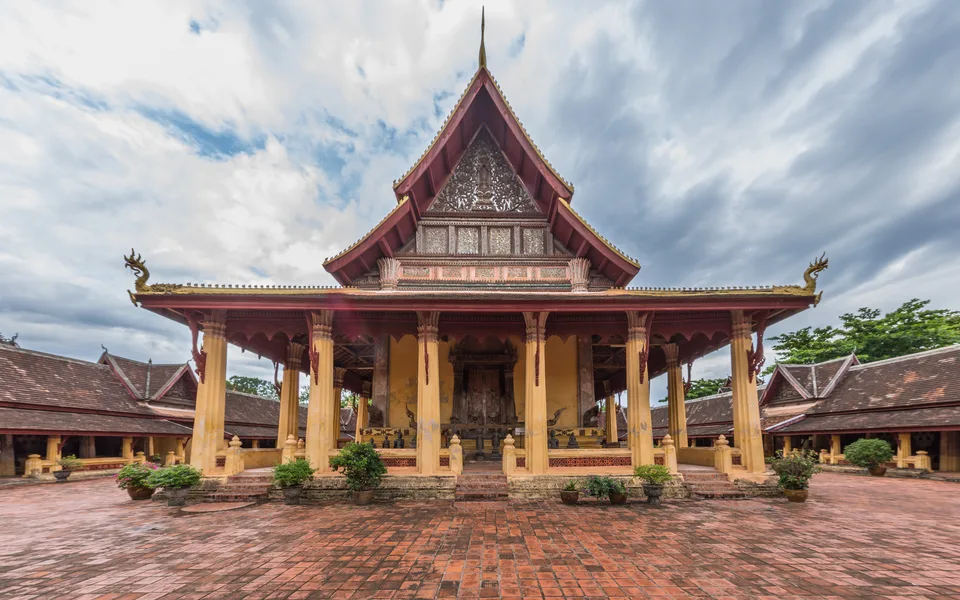
Make Wat Sisaket a focused morning visit
Wat Sisaket and nearby Hor Phra Keo make a manageable introduction to the centre. The tourism department lists both at 30,000 kip admission. Its published schedules include a midday break, so arrange a morning visit instead of assuming uninterrupted access. Confirm the entrance notice before paying, particularly around holidays or religious events.
Pick one building for close attention before deciding whether to continue. Look at the relationship between the main hall, surrounding galleries and courtyard, rather than simply ticking off an interior. For children, choose a small observation task—spotting repeated shapes or different roof details—so the visit has a focus beyond following adults around.
Leave time afterwards for a seated drink and a short walk. This is a better place to preserve flexibility than to add another distant attraction solely because it appears nearby on a city map. If the weather is already oppressive, stop early and return to the streets later. A satisfying first morning can be quite short without being superficial.
That Luang and Patuxai need their own allowance
Plan That Luang and Patuxai as a separate outing from the riverside core. The tourism department currently lists 30,000 kip admission for each. That Luang’s listed opening days are Tuesday to Sunday, with a lunch closure; Patuxai is listed daily. Check the gate for the precise area covered by admission and any temporary restrictions.
The broad surroundings make a hat, drinking water and realistic expectations about shade useful. At Patuxai, decide whether you want to climb before purchasing access. Anyone with difficulty on stairs should ask about the route rather than assuming that a prominent city monument has a step-free viewpoint. Looking at the exterior can still be worthwhile.
Combine these stops only if you have enough energy to enjoy both. An early start leaves space to return for lunch without pushing an exposed outdoor visit into the hottest part of the day. During a festival, the practical experience may be very different from an ordinary sightseeing morning: allow additional time and follow arrangements on site.
COPE offers an essential contemporary perspective
The COPE Visitor Centre explains unexploded ordnance and the work of rehabilitation, prosthetics and orthotics. It is on the Centre for Medical Rehabilitation grounds on Khouvieng Road, opposite the Green Park Hotel. Admission is free. The organisation’s own page publishes conflicting closing times, so contact it before building a late-afternoon visit around a particular hour.
Make room to read the personal accounts as well as looking at objects. The subject deserves attention without being treated as an unusual photo opportunity. For a family visit, consider children’s readiness for material about injury and war, and give them space to ask questions afterwards. A quieter activity later in the day may be more appropriate than immediately rushing to another attraction.
COPE also describes short documentary screenings; ask staff what is available during your visit. Allow roughly an hour as a planning choice, with the freedom to stay longer. The centre’s account of rehabilitation is also a reminder that contemporary Laos cannot be understood solely through temples, landscape photographs or a list of things to buy.
Add an experience beyond sightseeing
For a closer look at textiles, consider the Lao Textile Museum. The tourism department lists it at Nongthatai Village, with antique silk pieces displayed in a traditional wooden house. Check current visiting arrangements before leaving your hotel. Do not assume that a museum visit includes a hands-on workshop, transport or an opportunity to buy every object on display.
A textile visit changes the focus of a stay: you spend time looking at materials and technique instead of moving between monuments. Ask which pieces were made locally, how the fibres were dyed and whether a demonstration is available during your visit. If you want a practical class, establish its availability and what participants do themselves before paying. For children or someone with limited hand movement, describe the relevant needs and ask about suitability.
For another outdoor outing, consider Buddha Park, also called Xieng Khuan. Keep this as a dedicated excursion rather than a casual extra between central stops. Arrange a return journey and check access before leaving. In strong heat, your interest in the sculptures should determine the pace; completing every corner of a site is not a requirement for a worthwhile visit.
Use the riverside for an unhurried evening
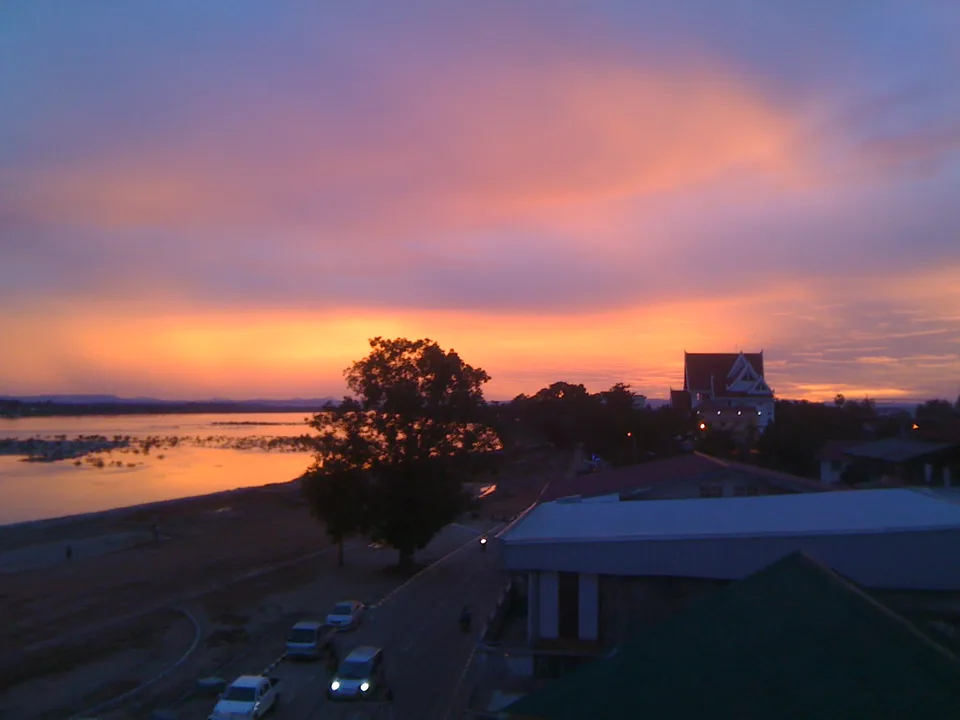
An evening beside the Mekong is an effective counterweight to a day of museums and religious buildings. Keep the plan simple: a walk, a place to sit and dinner within a comfortable return distance. Choose a public, well-used route and remain attentive at crossings instead of assuming that a riverside setting removes traffic hazards.
Separate browsing from serious craft buying. If a textile catches your eye, ask about its fibre, origin and production method. Compare the answer with the price and finish, and buy something you will actually use. For an expensive piece, request a receipt identifying the item and seller. A decorative object’s appearance alone cannot establish its age or provenance.
Leave antiques, wildlife products and questionable cultural objects out of an impulse purchase. A vendor’s willingness to sell does not establish that an object can legally leave Laos or enter your next country. For ordinary souvenirs, allow luggage space and check fragile packaging before departure, rather than discovering the problem at the airport counter.
Eat Lao food with a little curiosity
Sticky rice, laap and tam mak hung offer a useful introduction to Lao cooking. Laap is a seasoned minced meat or fish dish; tam mak hung is green papaya salad. The tourism department’s food guide also describes chilli dips, bamboo-shoot soup and the Vietnamese and Chinese influences evident in everyday meals. Order a small range to share instead of choosing several substantial dishes without knowing their size.
Ask how hot a dish is and whether fish sauce, fermented fish or other animal ingredients are included. A vegetable-based appearance does not make a dish vegetarian. Choose fully cooked meat and fish, and discuss allergies directly rather than relying on an English dish name. If communication is difficult, carry a clear translated explanation of the ingredient you must avoid.
The UK government’s Laos safety advice warns of fatal methanol poisoning, including cases involving drinks bought in licensed establishments. It also reports a prohibition on Tiger Vodka and Tiger Whisky. Do not treat a familiar venue, a low price or an apparently normal taste as proof of safety. Seek urgent medical care if someone becomes unwell after drinking.
Budget from real bookings, not a universal daily figure
The Lao kip is the working currency for a local spending plan. The national tourism department’s preparation advice describes card acceptance mainly in larger hotels, restaurants and shops. Carry usable cash alongside a backup payment method, and check bank charges before relying on repeated withdrawals. Count notes discreetly and keep an emergency reserve separate from your daily wallet.
Build your estimate around accommodation, transfers, meals, admission and discretionary activities. Three separately ticketed visits at the published 30,000-kip level would total 90,000 kip, before transport or refreshments. That arithmetic is a starting point for the specific visits described above, not a city pass, package price or guarantee that every attraction charges the same amount.
Compare a central room with a cheaper outlying room after adding the journeys you would actually make. Ask whether breakfast, taxes, cancellation and late arrival are covered. Keep quoted prices in their original currency until you compare the final payable amount. This is more useful than a precise dollar budget assembled from old menus and unrelated booking dates.
Arriving by air: settle the whole transfer
Wattay International Airport is the city’s air gateway. The Lao–Japan Airport Terminal Services transport page describes airport taxis, buses and a Vientiane Bus reservation counter in the arrivals lobby. It does not provide a sufficiently clear current timetable and fare for a guaranteed bus connection in this guide. Ask at arrivals what is actually operating for your destination.
For a hotel transfer, establish the full price, vehicle capacity and meeting point before accepting. Include late arrival, luggage and child-seat requirements in that conversation. LOCA’s ride service also advertises Vientiane airport pickup; compare the live quote and actual pickup instructions rather than assuming a fixed citywide tariff. Keep the hotel name and map pin available offline.
For departure, work backwards from the airline’s check-in requirement and allow time for the road journey and airport procedures. Proximity on a map is not a reason to arrive late. If continuing by train after a flight, leave enough flexibility for immigration and baggage delays; a separate rail reservation will not automatically protect a missed connection.
Check the railway station before booking a vehicle
Vientiane has distinct railway arrangements. Thailand-linked trains use Vientiane (Khamsavath), as documented in the Thai Department of Rail Transport’s regional railway presentation. The Laos–China Railway has its own Vientiane station. Write the full station name into your transfer request and match it to the ticket. “Take me to Vientiane station” leaves too much room for misunderstanding.
For the Laos–China Railway, LCR Ticket’s official app listing identifies Laos-China Railway Company Limited as the seller. Check current departures and ticket conditions through the railway’s own channels. Allow for the transfer to the station and boarding procedures when comparing rail with a road journey. The time spent on the train is only one part of the trip.
Around town, combine short walks with booked rides or an agreed vehicle fare. Confirm whether a tuk-tuk quote covers the whole party, one direction or a return wait. Avoid packing a day so tightly that every small delay requires an expensive rescue journey. Travellers needing seat belts or step-free access should specify those requirements before the vehicle arrives.
Choose your season around heat and rain
The city’s Green City Action Plan, published with GGGI, describes a monsoon season from May to October and a dry season from November to April. December to February are relatively cooler; heat intensifies towards the March-to-May period. These are seasonal patterns, not a forecast or a promise that an individual day will be dry.
For a first visit centred on walking, start by considering the cooler months. In hotter weather, put outdoor visits early and use the middle of the day for lunch, rest or an indoor stop. During the monsoon, leave room to rearrange an excursion rather than booking every hour. Waterproof protection for a phone and documents is more useful than carrying an inflexible itinerary.
The action plan identifies flooding as a major urban climate risk. For a longer stay, ask about the specific property’s drainage and access during heavy rain. Holiday photographs cannot answer that question. Check forecasts and current local conditions before an outlying trip, and avoid walking or driving into floodwater simply because your navigation application continues to show the route.
A realistic three-day introduction
Day one: settle into a central base, then give Wat Sisaket a focused morning or early-afternoon visit around its published break. Add Hor Phra Keo if you still want another interior. Leave the evening for the riverside and dinner. After a tiring arrival, move the paid visits to another day rather than forcing them into the remaining daylight.
Day two: visit Patuxai and That Luang, adapting the order to opening days and weather. Return for lunch, then spend time at COPE if its confirmed hours allow. Keep the evening easy. This grouping is a suggested pace, not a claim that the sites form a single walking circuit or share a ticket.
Day three: choose between a textile museum visit and a dedicated Buddha Park excursion. Do not schedule both merely to fill the day. Confirm visiting arrangements or return transport in advance, then allow a final meal and time to pack. With only two days, prioritise the centre and COPE, and select the monument or excursion that most interests you.
Moving here starts with a trial address
Begin a prospective move with temporary accommodation and an ordinary working-week test. Travel to the actual office or campus at the times you would commute. Locate groceries, laundry and a suitable clinic, and test the evening journey home. A pleasant three-day stay gives useful impressions but does not establish whether a neighbourhood supports your household’s routine.
Before signing a rental agreement, inspect cooling, water pressure, drainage, locks and mobile reception. Ask for the electricity billing method, meter readings, internet installation arrangements and responsibility for repairs. Record the deposit, inventory, notice period and payment currency in writing, with a translation you understand. These are due-diligence questions, not a claim that one standard lease applies throughout Vientiane.
Lao Telecom advertises tourist SIM products, but a visitor package is not automatically the right household internet solution. Test reception where you will sleep and work, and ask about a longer-term connection separately. Families should confirm school admission, transport and healthcare arrangements before treating a property as suitable. Avoid committing large sums on the strength of a listing alone.
Healthcare and legal status deserve separate planning
The UK government’s Laos health guidance says medical care can be basic and medical evacuation expensive. Arrange insurance suitable for your activities and intended length of stay, establish how to contact assistance and keep funds accessible for treatment. Discuss ongoing prescriptions and relevant travel-health precautions with a clinician before departure. Mosquito precautions and air-quality awareness matter beyond a brief sightseeing visit.
The official Lao eVisa FAQ describes a single-entry tourist permission with a 30-day stay. Its approval letter is valid for entry for 60 days; that does not mean a 60-day stay. It requires a printed letter and the passport used for the application, with more than 180 days’ validity on arrival. Check nationality eligibility and the precise approved entry port, including Wattay, Friendship Bridge I or Khamsavath where relevant.
Tourism, employment, study and permanent residence are different purposes. The Department of Immigration’s categories include labour and student visas; renting a home does not resolve immigration status. Employers and educational institutions should establish the appropriate process. The government’s investment guidance separately discusses visas, work permits and stay permits. Use qualified advice for your circumstances; VisaWand’s consultant listings provide a place to begin enquiries, without guaranteeing eligibility.
Decide what should come after Vientiane
For a contrasting Lao destination, read the Luang Prabang city guide and compare its heritage-focused stay with time in the capital. Vang Vieng is another possibility, but it belongs in a separate travel plan rather than being described as a Vientiane neighbourhood. The official Vientiane Province overview helps establish that distinction and the surrounding landscape options.
If crossing to Thailand, check the entry conditions for that country as well as your Lao departure arrangements. An easy-looking connection does not remove border formalities or guarantee permission to return to Laos. Keep the next booking flexible enough for the journey you are actually taking, including station transfers and any required check-in.
Use VisaWand’s Laos destination page to continue planning, or the Laos location directory to explore other listed places. The directory includes location records and should not be mistaken for a completed guide to every settlement. Choose fewer places if that gives each one enough time: Vientiane works best when its everyday streets receive some attention alongside its monuments.
Official planning resources
Reviewed 17 October 2026. Use the official resources linked throughout this guide for admission, transport, housing and immigration decisions. Prices, services and rules can change; confirm the details relevant to your dates. Photography illustrates the locations and is not a live view.
View all official resources
- Laos tourism: Vientiane Capital
- COPE Laos: visit us
- Laos tourism: food and flavours
- UK FCDO: Laos safety and security
- Laos tourism: before you go
- Lao-Japan Airport Terminal Services: transport
- LOCA operator: ride and taxi services
- Thai Department of Rail Transport: regional railway connectivity
- LCR Ticket: railway operator app listing
- Vientiane Capital Green City Action Plan
- Lao Telecom: tourist SIM service
- UK FCDO: Laos health
- Lao official eVisa FAQ
- Lao Department of Immigration: visa categories
- Lao investment authority: visa and stay permits
- Laos tourism: Vientiane Province
Plan the next part of your journey
Explore the Laos guide, browse other cities or compare consultants for your travel and relocation questions.