Visa
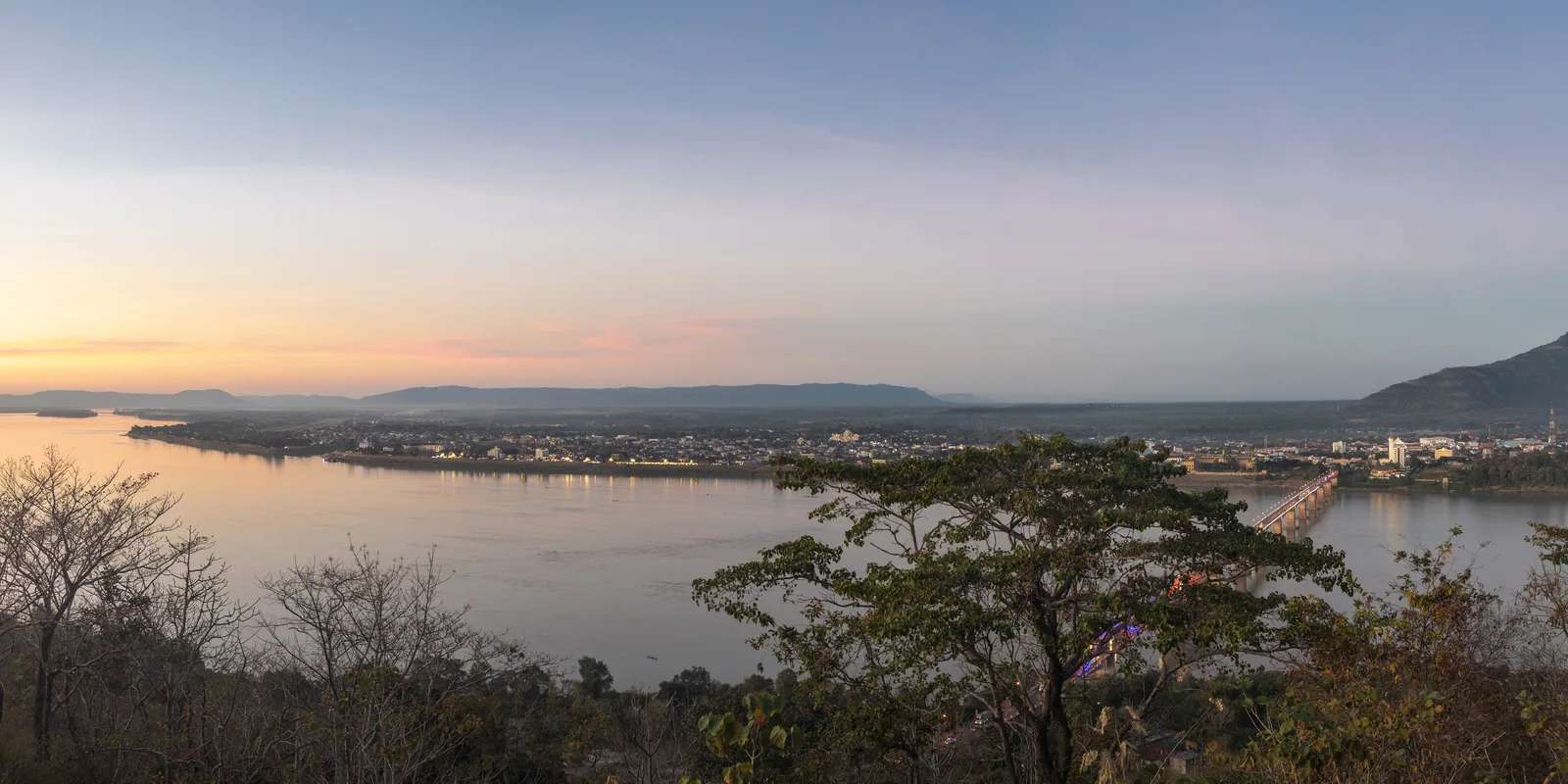
Decide what Pakse will do for your southern Laos trip
Pakse makes sense when you want a manageable city base with access to southern Laos’s rivers, coffee country and archaeological landscape. Its own rewards are quieter than a long list of major monuments: a morning market, a temple visit, a river view and time to understand the region before travelling farther. Give the city some daylight rather than using it only as an overnight interchange.
Two nights can accommodate a local introduction and one regional outing. To explore both the Bolaven Plateau and Vat Phou without combining them into a hurried driving exercise, allow additional days. Travellers who dislike changing hotels may prefer a longer Pakse stay; those seeking rural evenings can divide their nights between the city and another destination.
Start with VisaWand’s Laos country guide, then choose the arrival route and overnight stops around the places you actually want to see.
Understand the city and the province as different places
Pakse is the capital of Champasak Province, at the meeting of the Mekong and Sedon rivers. UN-Habitat’s city profile describes its role in regional trade, tourism and services. The plateau, temple landscapes and river islands promoted under Champasak are not all within the city.
That distinction matters when comparing accommodation or excursions. Champasak town is a separate destination associated with visits to Vat Phou. Paksong and the Bolaven highlands offer a different elevation and landscape. The Four Thousand Islands lie farther south. An attractive photograph labelled southern Laos may therefore tell you little about the view from a Pakse hotel.
Pakse’s identity also extends beyond one architectural period. Its temples, riverside shrines, trade and contemporary businesses are parts of a living city. Spend time observing those connections instead of expecting every street to resemble a preserved historic quarter.
Choose a useful part of town before choosing a room
For a first stay, compare addresses around the central streets near Wat Luang and the Sedon side of town with locations farther along the main roads. The question is practical: can you reach meals, a café and the departure point for your excursion without arranging a vehicle for every short errand?
The Dao Heuang market area suits a purposeful shopping or food visit, while a riverside address may appeal to someone prioritising the view. However, proximity on a map does not establish a comfortable walking route. Check the actual entrance, crossings, lighting and distance from the vehicle drop-off.
If arriving late, favour a property that confirms reception arrangements and a reliable transfer. If leaving before dawn, ask whether you can settle the bill and arrange breakfast the evening before. Those details can matter more than a room upgrade during a brief stop between longer journeys.
Visit Wat Luang without turning worship into a performance
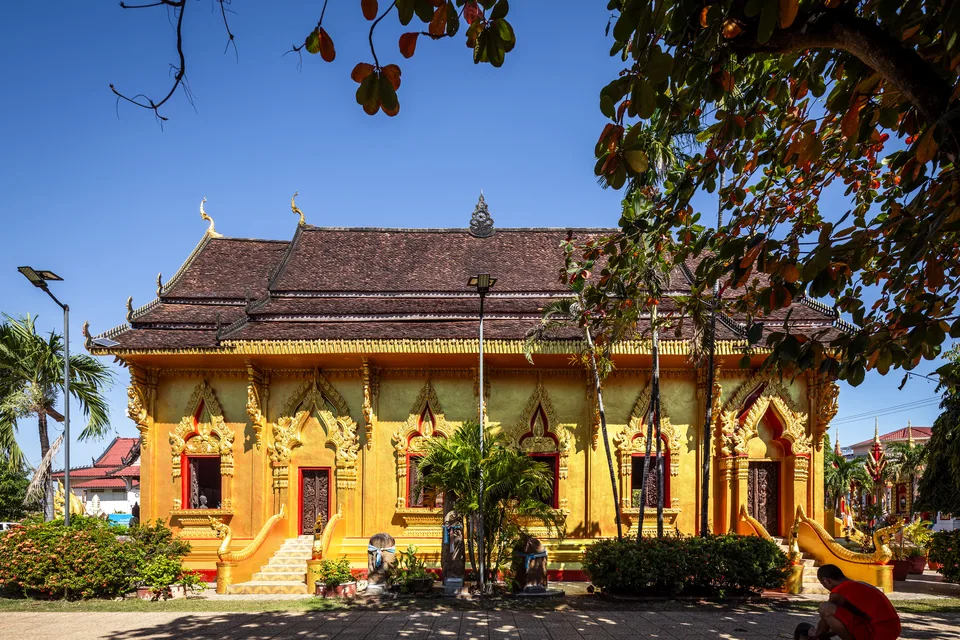
Wat Luang is a useful place to begin a central walk. A local operator’s account of Pakse’s sights identifies its role in worship and Buddhist education. Appreciate the architecture and the grounds that are open to visitors, while recognising that daily religious life determines access.
Wear clothing appropriate to a temple, follow signs about shoes and ask before entering a hall or photographing people closely. A novice’s presence does not create an invitation to interrupt a lesson. Quiet observation is enough; there is no need to manufacture a conversation or ceremony for the visit to be worthwhile.
Keep the walk short enough to enjoy it in the heat. Combine it with a café or riverside pause rather than attaching a distant excursion simply because both places appear on a city-tour list. Confirm any opening arrangements locally if an interior is particularly important to you.
Cross the Mekong for the Phou Salao view
Wat Phou Salao occupies a hill across the Mekong from the central city. The appeal includes the view back over Pakse and the river, as well as the temple setting. It is a separate outing rather than another doorway on the same central walking circuit.
Arrange the outward journey and the return together, particularly if you hope to remain until sunset. Confirm where the driver can wait, what the fare includes and whether the quoted route involves stairs or a higher vehicle drop-off. The best arrangement depends on your mobility and the conditions that day.
For a packaged example, Watphou Travels’ half-day city programme combines several stops using transport. Its published terms distinguish the vehicle service from an optional English-speaking guide. Ask for that distinction in any quote: a driver who brings you to a viewpoint is not necessarily contracted to interpret the city’s history.
Make time for a market and ordinary purchases
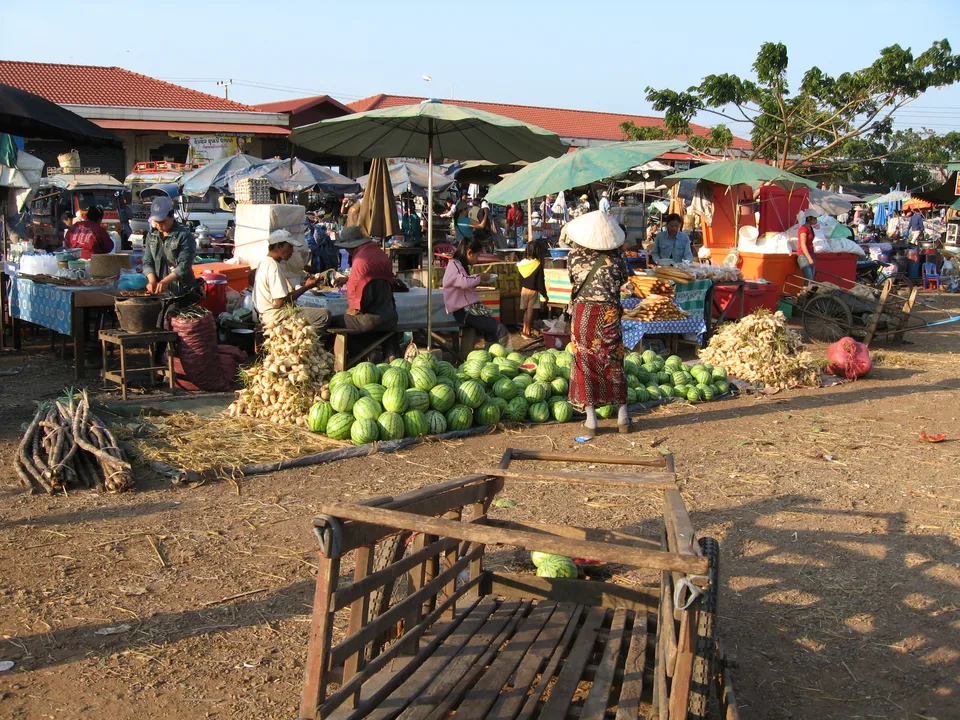
Dao Heuang is a substantial market stop where the interest lies in trade as much as souvenirs. Go with time to look at produce and everyday goods, rather than expecting a curated craft display. Ask before photographing a vendor at close range and keep enough space for people carrying purchases or working.
Buy something you can use or carry comfortably. Coffee, textiles and small household objects require different questions: origin and roast date for beans, fibre and dimensions for cloth, and packing for anything fragile. A product sold in Pakse is not automatically made within the city.
For a longer stay, a market visit also tests whether the daily shopping routine suits you. Notice what is available, where you can find familiar ingredients and how you would carry shopping home. That is more useful evidence for living here than judging the city entirely through restaurant menus.
Use coffee to connect the city with the highlands
Pakse provides an accessible introduction to the Bolaven Plateau’s coffee economy. A café can be a place to compare beans and ask where they were grown before committing a day to visiting the producing area. Distinguish the growing location from the place where coffee was roasted or packaged.
Café Sinouk’s own Pakse page lists its location on Thanon 11 in Ban Lakmuang and describes coffee, food and retail products. It is a concrete option to investigate, rather than a claim that one café is the city’s best. Check the current menu and opening arrangements before making a special journey.
For gifts, ask whether the bag contains whole beans or ground coffee, and choose a grind that suits the recipient’s equipment. For yourself, a smaller purchase lets you try the coffee before carrying several bags through the rest of the trip.
Try Lao dishes with attention to ingredients
Common Lao menu terms include laap, dipping sauces known as jaew, sticky rice, papaya salad and French-influenced baguettes. These provide useful names to recognise on a menu, rather than a promise that every establishment serves the same version. Ask which protein a dish contains and how it is prepared.
If you avoid meat or fish, explain the ingredients you cannot eat instead of assuming a vegetable dish contains no animal products. Ask about sauces as well as the visible ingredients. For anyone with an allergy, a clear explanation understood by the kitchen matters more than an unfamiliar menu description.
Build meals around the rest of the day. A substantial breakfast can help before an excursion, but confirm whether lunch is included rather than arriving at a remote stop expecting it. Keep the current menu price separate from any old document found online: a café’s downloadable menu may remain available long after its prices have changed.
Give the Bolaven Plateau an outing of its own
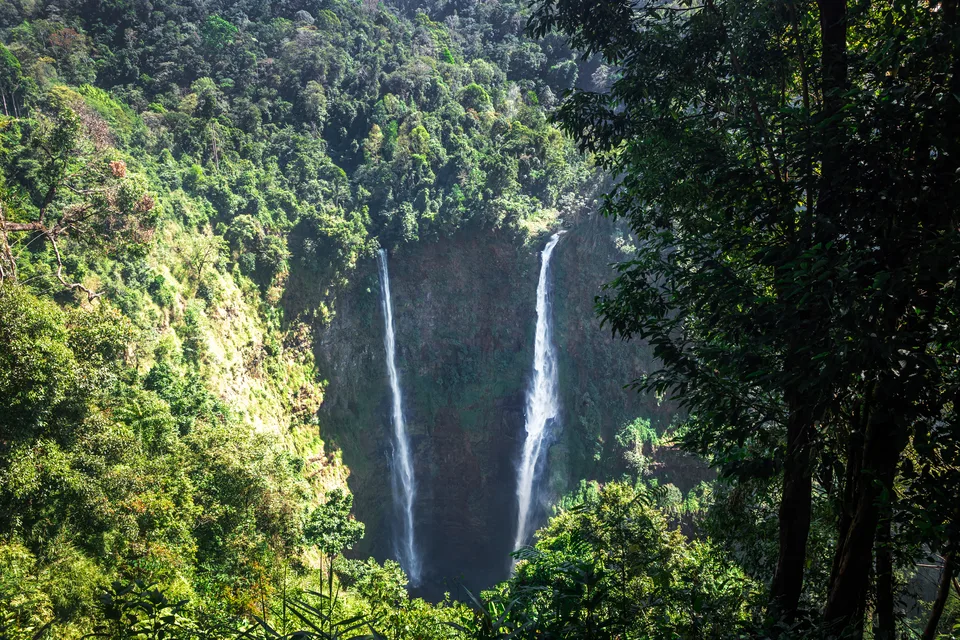
The Bolaven Plateau offers waterfalls and coffee-growing landscapes beyond Pakse’s lowland setting. Choose a few stops with time between them. Tad Fane and Tad Yuang are different waterfalls, and seeing one does not mean you have experienced the other. Conditions at paths and viewpoints matter more than a checklist of names.
Compare an organised trip, a private vehicle and independent driving around the access you need. The published Bolaven programme from Watphou Travels illustrates the distinction between included entrances, transport and water, and extras such as a guide or meals. Obtain a dated total for your party and make optional activities explicit.
A viewpoint visit does not require a zipline, a swim or a demanding descent. Do not infer safety from an old photograph of someone near the water. Follow current barriers and local instructions, and choose a shorter route if rain has made steps or tracks unsuitable.
Treat Vat Phou as a landscape rather than a single ruin
UNESCO’s description of Vat Phou and its associated settlements explains a designed cultural landscape connecting mountain, plain and river. Temples, waterworks, roads and settlement remains express a history much wider than the central monument. Its World Heritage inscription dates from 2001.
Set aside enough time to understand the approach and surrounding setting, not just reach the highest point for a photograph. The site’s association with the Khmer world is a reason to read some background before travelling. It is not a reason to treat it as an interchangeable substitute for a different archaeological site elsewhere.
Confirm current admission, transport and access arrangements before departure. Ask how much walking and climbing your chosen visit involves, and whether alternatives suit a traveller who cannot manage the full route. If the main purpose of your southern Laos trip is this landscape, compare staying in Champasak town with returning to Pakse every evening.
Choose accommodation around the next morning
Pakse accommodation needs vary sharply between an overnight transport stop and a longer base. For a short stay, prioritise a confirmed room, check-in arrangements and access to the next departure. For several nights, ventilation or air conditioning, room position, laundry and somewhere comfortable to rest become more significant.
Pakse Hotel’s operator publishes its accommodation and restaurant information through Watphou Travels. Its central Ban Wat Luang address is an example to compare with other guesthouses and hotels; it does not establish that every room has a river view or the same access arrangements. Ask about the actual category you are booking.
Before paying, establish whether taxes, breakfast and airport collection are included. A rooftop restaurant photograph does not show the room, and a property’s location near a booking office does not mean your bus leaves there. Save both addresses separately, especially when reception or transport arrangements rely on a message sent before arrival.
Check the current air timetable rather than an old route map
Lao Airlines’ published winter timetable covers 25 October 2026 to 27 March 2027. It lists Pakse connections with Vientiane and Luang Prabang, together with international services involving Siem Reap and Ho Chi Minh City. Some routes operate only on selected days, so the travel date may determine the order of your itinerary.
The timetable is a planning reference, not a seat reservation. Search the airline’s booking system and confirm baggage and connection conditions before arranging accommodation around a flight. A route appearing on an older map or a baggage-charge page is not sufficient evidence that it operates on your dates.
Arrange the airport transfer with your exact flight and accommodation stated. Ask whether the quote is for the vehicle or each passenger, whether waiting is included and how a delay changes the arrangement. Keep the hotel’s address available offline so that a short local journey does not become an unnecessary negotiation.
Read overnight bus terms as carefully as the fare
Road travel can link Pakse with other Lao destinations, but the ticket needs to identify the departure point, arrival station, vehicle type and connections. A service sold under one destination name can still involve a change. Ask whether a hotel pick-up is included or must be requested separately.
As a budgeting example checked in October 2026, Green Paradise Travel’s booking page advertised a Pakse–Vientiane sleeper service at 550,000 kip per adult, arriving at Vientiane Southern Bus Station. Reconfirm the price and available departure for your date. The seller also discloses shared double beds; a solo traveller should establish the berth arrangement before buying.
Do not assume the arrival station is within walking distance of your next hotel. Include the onward ride in the comparison with flying. Keep medication, documents and something warm accessible during the journey, and leave a sensible margin before an onward flight rather than treating a published arrival estimate as guaranteed.
Match your entry permission to your actual border
The official Lao eVisa FAQ lists Pakse International Airport among its designated entry points. The nearby Vang Tao land crossing used for journeys involving Thailand is absent from that list. An eVisa suitable for arriving by air must therefore not be assumed usable for an overland arrival near Pakse.
Check eligibility for your nationality and chosen crossing before paying for transport. Visa exemptions, a visa obtained in advance and visa-on-arrival arrangements are different possibilities with different conditions. Do not rely on a transport seller to establish that your passport qualifies.
For an eVisa, the official FAQ describes a single-entry tourist permission with a thirty-day stay and requires a printed approval letter. Check the expiry on the actual approval separately from the length of stay granted at entry. Keep the passport used for the application with that approval and verify the stamp before leaving immigration.
Complete arrival formalities and check onward routes
Lao immigration’s digital arrival and departure guidance includes Pakse airport. Complete the required information within the stated three-day window before the relevant arrival or departure. The government’s LDIF information confirms that this registration is free. It is separate from obtaining the visa or exemption applicable to your passport.
Overland journeys also require checking the next country’s permission and the exact crossing. Read current government travel advice for Laos and its border region before committing to a southern route. Restrictions affecting Thailand–Cambodia crossings do not automatically describe a Laos crossing; equally, a route sold online is not proof that every border arrangement remains unchanged.
Keep an alternative overnight stop and contact details available if a journey is disrupted. If plans change, check your remaining authorised stay promptly. Avoid treating an extension as automatic simply because a guesthouse or agency offers to help with paperwork.
Budget in kip and separate the expensive decisions
Use Lao kip for your working budget and check BCEL’s current exchange-rate table when comparing foreign-currency quotes. Buying and selling rates differ, and a figure saved at the beginning of planning may be unsuitable by the time you pay. Confirm the currency and final total before accepting a quote.
The major choices are accommodation, longer transfers and regional excursions. Add meals, local rides, admissions and optional activities separately. Ask whether a tour price is per person or per vehicle, and whether a coffee stop includes the drink. These distinctions produce a more realistic budget than an unsupported universal daily allowance.
Banks publish location information, including ACLEDA’s Lao ATM directory, but a listed machine does not guarantee cash or acceptance of your card when you arrive. Have a second way to access money and smaller notes for routine purchases. Do not leave the return journey dependent on one successful withdrawal immediately before departure.
Let weather change the pace and the route
Japan Meteorological Agency’s Pakse climate table shows a strong contrast between the drier winter months and the much wetter middle of the year. For city walking and outdoor visits, the drier part of the year is usually the simpler starting point. Heat remains a consideration, particularly when planning long exposed walks.
Treat the elevated plateau and Pakse as different settings when packing. Bring a layer and rain protection for a regional day rather than assuming the conditions outside your hotel will persist throughout the journey. During wet periods, allow extra time and ask about the condition of the actual road or path you intend to use.
Use current forecasts, warnings and local advice close to departure. Long-term averages cannot settle whether a particular outing is appropriate. If heavy rain changes access, shortening a waterfall visit or substituting a city day is more sensible than trying to preserve an itinerary written months earlier.
A realistic plan for three full days
Use the first morning for Wat Luang, central streets and a market visit at a comfortable pace. Pause for lunch and a rest, then arrange the Phou Salao outing with a clear return plan. Someone arriving tired from a night bus should reduce this programme rather than forcing every stop into the first afternoon.
Give the second day to selected Bolaven stops. Combine a waterfall viewpoint with a coffee visit and another stop only if the journey leaves enough time to enjoy them. Confirm opening arrangements and inclusions before setting out; leave optional adventure activities outside the essential plan.
Use the third day for Vat Phou and the Champasak area, or move there for a different overnight setting. Four nights around three full days offer flexibility when flight timings are awkward. With only two nights, choose either the plateau or Vat Phou as the substantial regional outing and retain a shorter introduction to Pakse itself.
Test a household routine before committing to a lease
Living in Pakse requires looking beyond the visitor circuit. Start with a short stay and test the journey to your workplace, school or regular appointments at the times you will actually travel. Compare walking and hired transport with any plan to drive; rental availability alone does not establish that your licence and insurance cover the vehicle.
Ask a landlord to state the rent, deposit, notice period, repair responsibilities and included furniture in writing. Inspect water pressure, drainage, electrical fittings, air conditioning and signs of previous leaks. Clarify how utility accounts and meter readings are handled, and test the internet connection inside the proposed room.
For healthcare, read the FCDO’s assessment of medical provision in Laos and establish what can be treated locally. Serious care may require an expensive transfer, so check insurance and accessible funds before choosing the city for a long stay. Families should verify schooling and any continuing treatment directly rather than inferring availability from the city’s regional importance.
Keep tourism, employment and permanent relocation separate
A tourist stay does not establish permission to work, enrol on any course or settle permanently. Lao immigration’s work and study guidance distinguishes employment documentation, while the investment authority’s visa and stay-permit overview identifies separate tourist, student, technical-employee and investor categories. The correct route depends on your proposed activity and circumstances.
Discuss employment with the sponsoring organisation and relevant authorities before starting duties. Study requires confirmation from the institution and the appropriate immigration channel. Renting accommodation, repeatedly visiting or receiving an offer from an employer does not by itself establish a permanent right to remain. Obtain case-specific advice when the plan goes beyond a holiday.
For comparisons, explore VisaWand’s Laos location directory, Laos destination page, and the pages for Vientiane and Luang Prabang. Keep the official eVisa, immigration, airline, climate and travel-advice resources linked above handy. Review consultant listings for individual assistance, checking qualifications, scope and fees before booking a consultation.
Official planning resources
Reviewed 28 October 2026. Use the official resources linked throughout this guide for admission, transport, housing and immigration decisions. Prices, services and rules can change; confirm the details relevant to your dates. Photography illustrates the locations and is not a live view.
View all official resources
- UN-Habitat: Pakse city profile and urban resilience
- Watphou Travels: Pakse city sights
- Watphou Travels: half-day city tour terms
- Café Sinouk Pakse: official location and menu links
- Watphou Travels: Bolaven day programme
- UNESCO Vat Phou cultural landscape
- Pakse Hotel and Watphou Travels: official hospitality information
- Lao Airlines winter 2026–27 timetable
- Green Paradise Travel: bus and van offers
- Official Lao eVisa FAQ
- Lao Immigration digital card notice
- Lao government conference visa information
- UK FCDO current Laos travel advice
- BCEL official exchange-rate table
- ACLEDA Bank Lao ATM locations
- Japan Meteorological Agency: Pakse monthly normals
- UK FCDO Laos healthcare advice
- Lao Immigration work, study and investment guidance
- Lao Investment Promotion: visas and stay permits
Plan the next part of your journey
Explore the Laos guide, browse other cities or compare consultants for your travel and relocation questions.