Visa
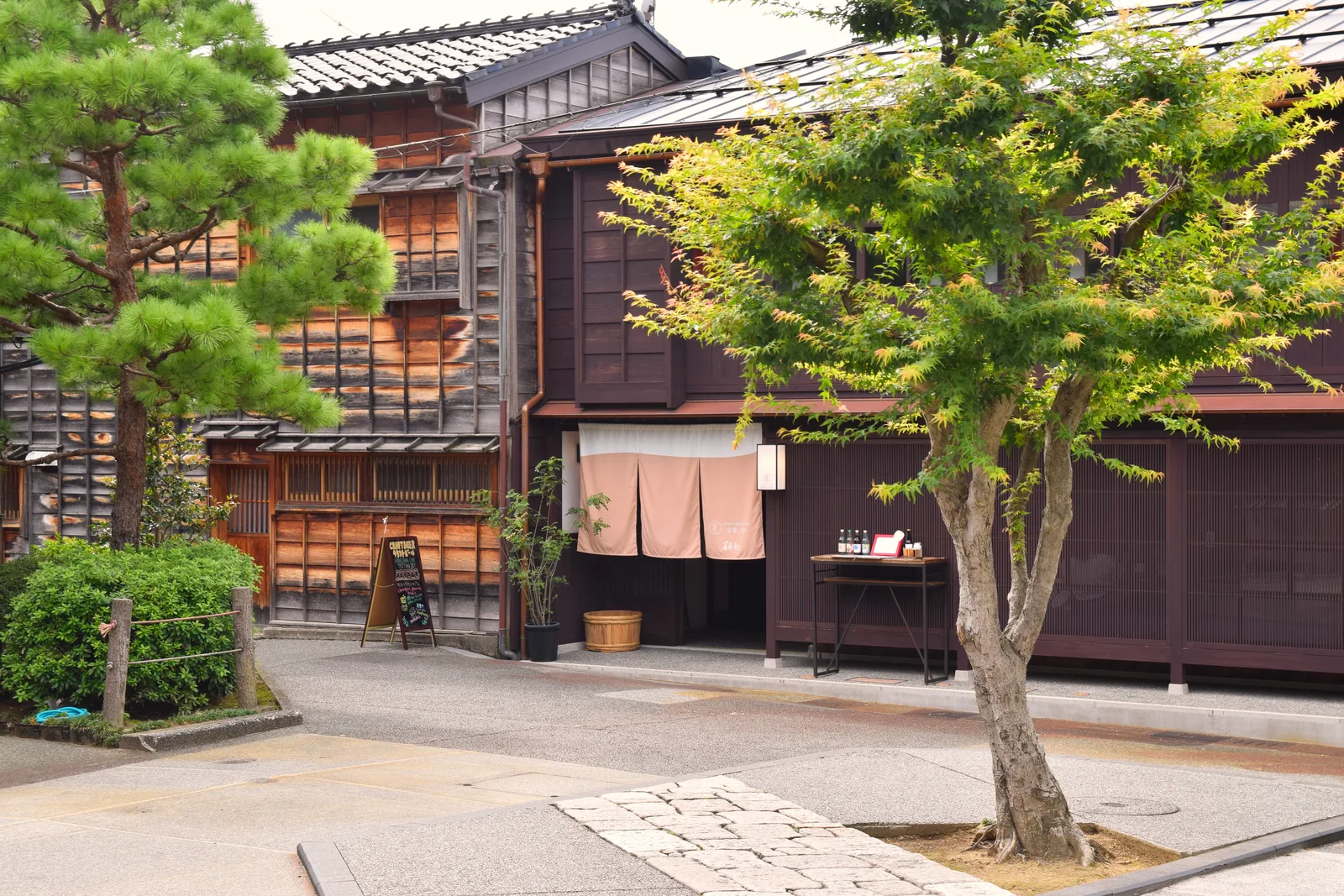
A city best experienced at walking pace
Kanazawa rewards people who enjoy looking closely: at a timber lattice, a garden arranged around water, or the difference between a souvenir and a craftsperson’s work. The Ishikawa prefectural capital brings together historic neighbourhoods, contemporary art and a working food market. It suits a two-night cultural stop particularly well, with enough variety to change plans when the weather intervenes.
Its attractions form several clusters rather than one continuous pedestrian precinct. Choose a base around your arrival arrangements and evening plans, then explore one area at a time. For a broader journey, VisaWand’s Japan country guide provides national context; the Japan location directory helps you compare destinations without implying that every listed place already has a completed guide.
Read the Maeda legacy in the streets
Maeda Toshiie took over Kanazawa Castle in 1583. Under the Maeda family, the Kaga domain became an important centre of patronage for scholarship, tea, Noh theatre and crafts. That history helps explain why a relatively compact sightseeing programme can connect military administration, domestic architecture and carefully cultivated artistic traditions.
The city survived the bombing that destroyed so many Japanese urban centres during the Second World War. Nevertheless, avoid imagining an entirely untouched historical town. Buildings have been repaired, repurposed and reconstructed, while a modern city operates around them. The tourism association’s historical overview is useful background; dates and descriptions at individual sites help distinguish an original feature from a later reconstruction.
Choose between the station and the historic centre
The station area makes sense for an evening arrival, an early train or luggage-heavy travel. Before booking, check the walking route from the actual exit to the accommodation: a map pin near a railway line does not tell you whether the entrance is convenient. A straightforward first night can be more valuable than a picturesque address reached after several transfers.
Korinbo and the Nagamachi side suit a programme combining central sightseeing with meals and shopping. Higashi Chaya appeals to visitors prioritising historic streets, but assess the accommodation’s evening food options and transport individually. For any district, compare the final walk, stairs, room size, breakfast arrangements and cancellation terms rather than judging value by the headline nightly rate.
Give Kenrokuen an unhurried morning
Kenrokuen is the garden around which many first visits take shape. Give yourself time to notice changes in elevation, water and planting rather than treating it as a photograph stop between larger bookings. Comfortable footwear matters, and visitors with limited mobility should discuss a suitable entrance and route with the operator; the Kodatsuno side offers a flatter approach.
The current garden information lists adult admission at ¥320. Hours are 07:00–18:00 from March 1 to October 15, then 08:00–17:00 from October 16 through February, with last admission thirty minutes before closing. Shorter hours therefore apply from October 16, 2026. Arrange lunch and onward plans around the season you are actually visiting.
Separate castle park access from interior tickets
Kanazawa Castle Park allows a different kind of visit from the garden: open space, defensive architecture and an opportunity to understand the former administrative centre. Park admission is free, while selected reconstructed interiors require tickets. The castle’s admission page lists ¥320 for the Hishi Yagura, Gojikken Nagaya and adjoining paid facilities, or ¥500 for the combination including Kenrokuen.
Do not expect a completed Ninomaru Palace interior. The reconstruction update describes a project whose first phase began in 2025 and is scheduled through fiscal 2033; its woodworking facility is not currently open to the public. Choose the existing visitor facilities for today’s itinerary, and treat future reconstruction displays as something to check nearer departure.
Walk Nagamachi with attention to boundaries
Nagamachi’s narrow lanes, earthen walls and water channels make the former samurai district particularly rewarding on foot. Its preserved character does not turn every doorway into a visitor entrance. Follow public routes, keep conversations considerate and allow residents space to pass, especially when stopping for photographs at a narrow corner.
The district’s official visitor page provides useful orientation near Korinbo. For an interior, consider the Nomura Samurai Residence, whose garden and decorated rooms offer a different perspective from the streets. The listed adult fee is ¥550; opening is 08:30–17:30, shortened to 16:30 during October–March. Check its holiday closures before making it the fixed point of a short visit.
Understand what a chaya district offers
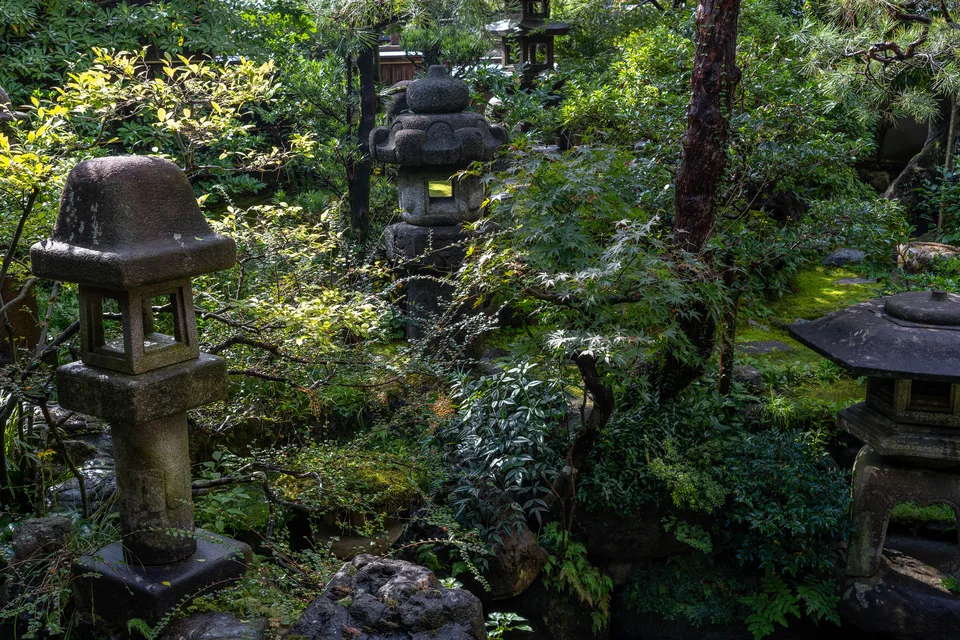
Higashi Chaya is associated with Kanazawa’s traditional entertainment culture, but an ochaya is not simply an ordinary café with an old façade. Some premises are private establishments, while others offer public exhibitions, shops or separately arranged experiences. Decide whether you want architecture, a café break or a performance; these require different amounts of time and preparation.
The official Higashi Chaya guide distinguishes the public streets from individual businesses. There is no general district entrance ticket, and shop opening times vary. Explore the Asano River surroundings and consider Kazue across the water, but avoid making a performance sound guaranteed without a confirmed booking. Eat purchases where the seller permits, and request permission before photographing people or private interiors.
Shop Omicho as a market, then choose lunch
Omicho is a working market with food shops and restaurants, not a single attraction operating to one schedule. The official market listing describes around 170 businesses and gives indicative hours of 09:00–16:00, explicitly varying by shop. Go earlier in your sightseeing day if particular purchases matter, rather than arriving near evening and expecting every counter to remain open.
Look at menus and portion sizes before joining a queue. A seafood bowl may be a worthwhile planned meal, but it need not become an unexamined daily expense. Ask about cooked alternatives when raw fish is unsuitable. If you buy perishable food before sightseeing, establish how it will be kept chilled and whether your accommodation can store it.
Check the art museum’s actual calendar
The 21st Century Museum of Contemporary Art requires more planning than simply turning up at its circular building. Public areas and ticketed exhibitions have different arrangements. The visitor information lists exhibition hours of 10:00–18:00, extended to 20:00 on Fridays and Saturdays, with the exhibition zone generally closed on Mondays and holiday exceptions. It also announces renovation closure from May 6, 2027, through March 2028.
The Swimming Pool is specifically closed October 19–30, 2026. When operating, its underground space requires an exhibition ticket plus a same-day waiting-list number, with a five-minute visit limit. Do not build a non-refundable day around an assumed photograph; confirm availability and the exhibition programme first.
Make craft purchases more meaningful
Kanazawa’s historical association with crafts makes shopping more interesting when you ask how an object was made and how you will use it. Compare a small functional purchase with a larger decorative piece, and ask the shop to explain materials, care and packing. The price of something delicate is only part of its cost if transporting it safely requires additional arrangements.
A workshop can provide a more memorable purchase than rushing between counters, but check the actual activity before booking. Ask about the teaching language, minimum age, duration, accessibility and whether the finished item is ready to take away. Leave enough time for collection if drying or finishing is involved; do not assume every advertised experience produces a same-day souvenir.
Arrive by rail with the correct transfer
From Tokyo, the Hokuriku Shinkansen is the principal rail approach; the tourism association describes a journey of approximately two and a half hours. From Osaka or Kyoto, current routing uses the Thunderbird to Tsuruga, followed by the Hokuriku Shinkansen to Kanazawa. Older descriptions of a direct Thunderbird journey can lead to the wrong expectations.
Use the official access overview to understand the route, then check your exact train and connection before purchase. Allow a comfortable transfer if travelling with children, mobility needs or large luggage. Compare the complete fare and arrival time with flying rather than comparing only the quickest train segment. Keep accommodation check-in instructions accessible offline in case your arrival is delayed.
Use Komatsu Airport’s current bus information
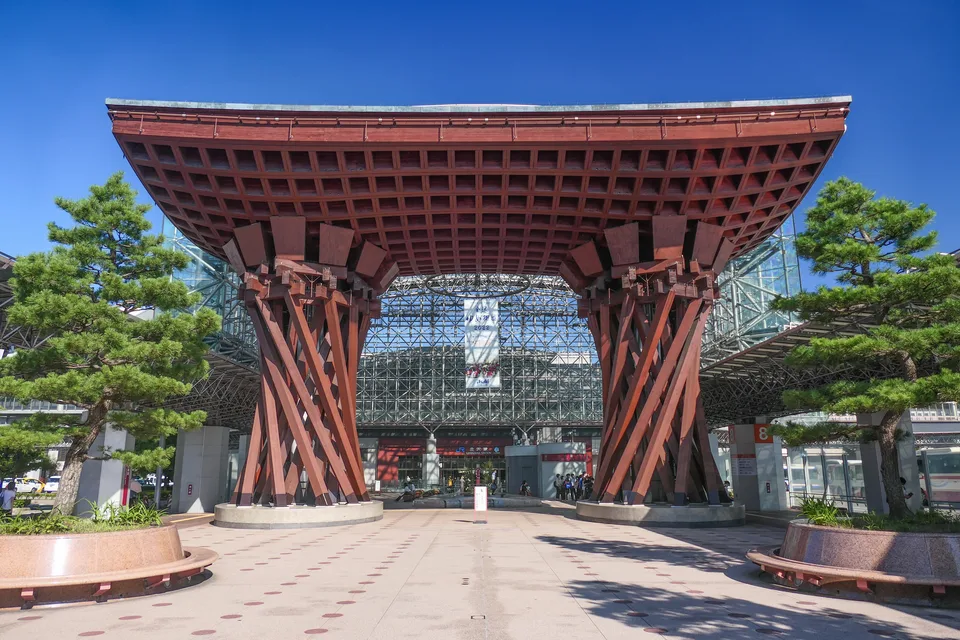
Komatsu Airport serves the Kanazawa area, but the city transfer is a separate part of the journey. Hokutetsu’s airport bus information lists the Kanazawa Station and Korinbo service at ¥1,400 for adults and ¥700 for children. At Kanazawa Station, use the west side for the airport bus, rather than assuming the photogenic Tsuzumi-mon side is the departure point.
Timetables change by date, and the published timetable headings and displayed date ranges should be checked carefully. Confirm your service against your flight, with additional room for road delays and airport procedures. A bus’s scheduled running time is not a safe estimate of the interval needed between leaving your hotel and boarding an aircraft.
Combine walking with selective bus journeys
Plan sightseeing around clusters, using a bus to bridge the gaps when another long walk would reduce the pleasure of the day. Keep the return journey in mind before staying out late, and check the destination display rather than relying only on a familiar-looking bus colour or stop name.
Hokutetsu’s Kanazawa one-day pass costs ¥800 for adults and ¥400 for children on its designated services. It is valid for one calendar date, with exclusions, rather than a rolling twenty-four hours or unlimited access to every regional route. Compare the journeys you actually intend to take before buying. The operator’s boarding and payment instructions are especially useful because payment arrangements differ between services; carry an alternative payment method.
Eat local dishes without guessing ingredients
A seafood meal is one way into Kanazawa’s food culture, but the range is broader. Kaisendon combines rice with seafood toppings; jibuni is associated with a thickened duck preparation. Hanton rice brings together an omelette-style rice dish and fried seafood. Kanazawa oden offers another option, with local ingredients that differ from the versions visitors may know elsewhere.
Use the official cuisine introduction to recognise dishes, then ask the restaurant about its own preparation. Kuruma-fu contains wheat gluten, and a vegetable-looking ingredient or clear broth does not establish that a meal is vegetarian or allergen-free. For dietary requirements, bring a clearly written explanation and confirm ingredients, stock, sauces and preparation with staff before ordering.
Build a budget from choices, not averages
An illustrative adult day combining the ¥800 bus pass with the ¥500 garden-and-castle combination starts at ¥1,300 before meals, accommodation, extra admissions or shopping. That is a specific combination of published prices, not a claim that a complete day costs ¥1,300. If you mainly walk and visit free streets, another spending pattern may be more sensible.
Set separate allowances for a seafood meal, craft purchases and weather-related taxis. Check whether accommodation includes breakfast and whether a cheaper room creates extra daily transport costs. Keep a small contingency for an exhibition you particularly want to see rather than buying a pass merely because it appears prominently in a sales display. Recheck all fares before travel.
Include accommodation tax in the room comparison
Kanazawa’s municipal accommodation tax is calculated per person, per night using the eligible room charge before tax. Since October 1, 2024, charges below ¥5,000 are exempt; ¥5,000 to below ¥20,000 attracts ¥200, and ¥20,000 or more attracts ¥500. Meals and taxes are excluded from that room-charge calculation, while relevant service charges are included.
Confirm whether the booking total already includes this tax or whether it will be collected at the property. A package with meals should not be assessed simply by treating its entire price as the room component. For families or multiple nights, ask for the full payable total so that seemingly similar offers can be compared on the same basis.
Let the season shape the walking plan
Choose dates for the experience you want, then allow the weather to influence each day’s sequence. Garden visits and historic streets deserve daylight; museums, meals and booked indoor activities provide useful flexibility. Avoid relying on an exact flowering or colour-change date when making non-refundable arrangements, and look at forecasts again shortly before departure.
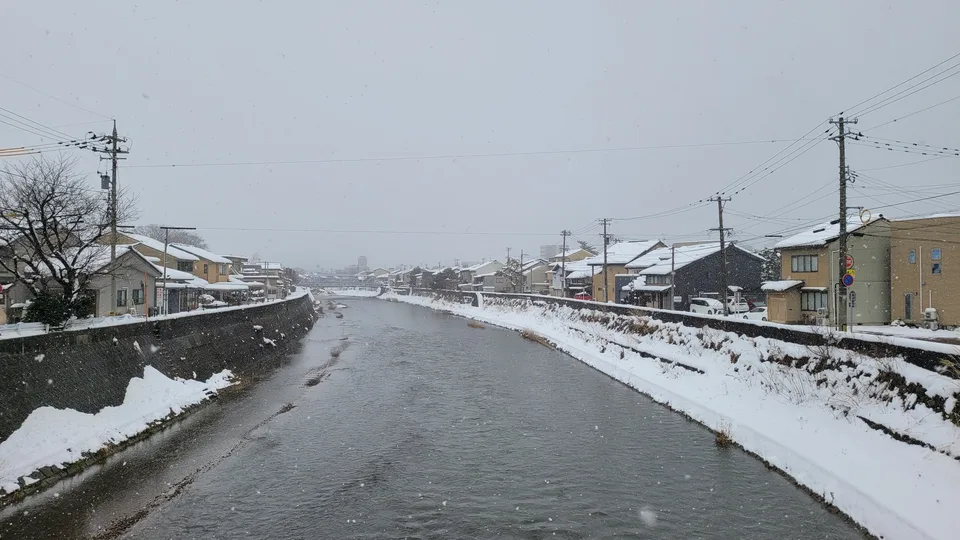
The tourism association’s winter advice highlights snow, wet streets and changeable conditions. Waterproof footwear and adjustable layers are practical choices. Snow is not guaranteed on every winter day, while attractive snowy photographs do not show how comfortable the same route will be underfoot. Kenrokuen’s yukitsuri ropes protect branches against snow loads; in Nagamachi, straw coverings help protect earthen walls.
A realistic first day
Start with Kenrokuen, using the correct seasonal opening time, then continue to the castle park and whichever paid interiors interest you. Take a proper lunch break before deciding whether to add a museum visit. If the exhibition calendar or weather makes that unattractive, give the central area more time instead of replacing one unavailable highlight with several hurried stops.
Later, walk Nagamachi while there is enough time for an interior visit before closing. Choose dinner near your accommodation or a clearly understood return route. This programme works best when arrival and departure are on other days; if you arrive at midday, remove an attraction rather than pretending the full morning can be recovered by walking faster.
A second day with room to linger
Begin at Omicho, checking the businesses you want to visit rather than assuming the whole market follows identical hours. Continue towards Higashi Chaya for architecture, shops and a deliberate café stop. Cross towards Kazue if conditions and energy allow. A booked cultural experience can be the day’s main event, with the streets providing context around it.
Leave the last part of the afternoon for purchases, luggage collection and your onward journey. A two-day plan does not need an additional distant excursion to feel complete. Travellers who prefer fewer transitions could reverse the two days according to the weather and museum calendar, while preserving any confirmed booking and avoiding an overly tight final train connection.
Consider living here through an ordinary weekday
A scouting visit for relocation should include tasks that sightseeing avoids: reaching a prospective workplace, finding everyday groceries and returning home after dark. Test the actual commute at the relevant time. A central visitor address may be convenient for museums yet have little connection to the campus, office or household routine that determines your working week.
Before choosing a neighbourhood, map the employer or institution, a suitable medical service and the shops you expect to use regularly. Repeat the route in poor weather if possible. Ask how the household would manage shopping and appointments without a car, then price any necessary transport separately. Holiday enjoyment is useful evidence of personal preference, but it does not establish employment prospects or long-term affordability.
Assess a rental beyond its monthly price
Use the government housing checklist to prepare for discussions with an agent. Ask about deposits, any key money, agency charges, management fees and guarantor arrangements, then request a written total for moving in and recurring costs. There is no verified citywide rent figure here: the practical comparison is between currently available homes that fit your household and commute.
Inspect storage, ventilation, heating, window condition and the route from street to front door. Establish what appliances are included and who arranges repairs. Clarify internet installation, parking, bicycle storage and any restrictions affecting pets or additional occupants. If the agreement is difficult to understand, obtain an explanation before signing rather than relying on the familiarity of a translated listing.
Organise services and household routines early
The city’s 2026 living guide covers practical matters including housing, waste and medical services. Waste collection depends on the local schedule and collection point; designated bags are required for specified categories, and oversized items require separate arrangements. Ask the landlord to identify your actual collection point instead of following a neighbouring building’s routine.
Prepare a household checklist covering utilities, address-related procedures, health coverage, school arrangements and language support, then confirm which steps apply to your residence circumstances. Keep the medical information you need before an urgent situation arises. The city guide’s foreign-language medical directory is dated January 2026, and a clinician’s language ability does not necessarily mean reception staff can provide the same language; call ahead.
Find support before a problem becomes urgent
The Ishikawa Foundation for International Exchange provides free multilingual information and consultations for foreign residents, including routes to advice on employment, residence matters, healthcare and children’s needs. Its office is in Rifare at 1-5-3 Honmachi. Legal consultations have separate booking arrangements, so check the relevant service rather than assuming every enquiry can be handled immediately on arrival.
For a planned move, contact support with a specific question and the relevant documents available. An adviser can be more useful when you can explain the proposed employment, household or housing problem clearly. Confirm the language and appointment arrangements beforehand. Keep copies of important correspondence, especially where different organisations are responsible for immigration, employment conditions and municipal procedures.
Distinguish a visit from work or study
Japan’s short-stay visa exemptions depend on nationality, passport conditions and the permitted period; ninety days is not universal. Others need an appropriate visa before travel. The Ministry of Foreign Affairs visa portal explains that short-term visits exclude remunerative activities and that a visa does not itself guarantee landing permission. Establish the correct route before paying for non-refundable arrangements.
Employment, study and longer residence require a separate assessment under the official work and long-term categories. A student route does not by itself establish permission for unrestricted work, and a favourable scouting trip creates no entitlement to permanent residence. Use VisaWand’s Japan destination page and consultant directory to organise further enquiries, then verify requirements with the responsible Japanese authority.
Choose onward travel without overfilling the stay
Kanazawa can sit between Tokyo and the Kansai region, but choose the order using the actual Tsuruga connection and your onward bookings. VisaWand’s Tokyo city guide offers a larger metropolitan comparison, while its Yokohama guide can help travellers weighing a different urban base. They are alternatives for a broader trip, not nearby neighbourhoods of Kanazawa.
For an excursion, the official access overview identifies connections towards Shirakawa-go, Gokayama and Takayama. Check the transport for the specific date and return before committing, particularly in difficult weather. A hot-spring stay in the wider region is another possibility, but add it because it serves your interests; keeping two calm days in Kanazawa may provide more value than another hotel change.
Before finalising the trip, write down your three priorities and the conditions each needs: an open exhibition, a confirmed experience or suitable walking weather. Protect time for those first. Keep optional stops on a separate list so that an unexpected queue does not unravel the whole visit. Travelling companions should agree on the pace and spending limit before arrival, especially when one person wants detailed museum visits and another prefers shopping or food. This small planning exercise makes a short stay easier to enjoy together.
Official planning resources
Reviewed 16 October 2026. Use the official resources linked throughout this guide for admission, transport, housing and immigration decisions. Prices, services and rules can change; confirm the details relevant to your dates. Photography illustrates the locations and is not a live view.
View all official resources
- Visit Kanazawa: history
- Kenrokuen: current visitor information
- Kanazawa Castle: opening hours and ticket prices
- Ishikawa: Ninomaru Palace reconstruction
- Visit Kanazawa: Nagamachi district
- Visit Kanazawa: Nomura residence
- Kanazawa Tourism: visiting the chaya districts
- Visit Kanazawa: Omicho Market
- 21st Century Museum: visitor information
- 21st Century Museum: Swimming Pool temporary closure
- 21st Century Museum: Swimming Pool reservations
- Visit Kanazawa: intercity connections
- Hokutetsu: Komatsu Airport buses and fares
- Hokutetsu: Kanazawa sightseeing and one-day pass
- Hokutetsu: riding buses and trains
- Visit Kanazawa: local cuisine
- Kanazawa City: accommodation tax
- Visit Kanazawa: winter planning
- MLIT: finding rental housing
- Kanazawa City: 2026 living guide in English
- IFIE: free multilingual resident consultations
- MOFA: short-stay visa exemptions
- MOFA: visas and permitted activities
- MOFA: work and long-term stays
Plan the next part of your journey
Explore the Japan guide, browse other cities or compare consultants for your travel and relocation questions.