Visa
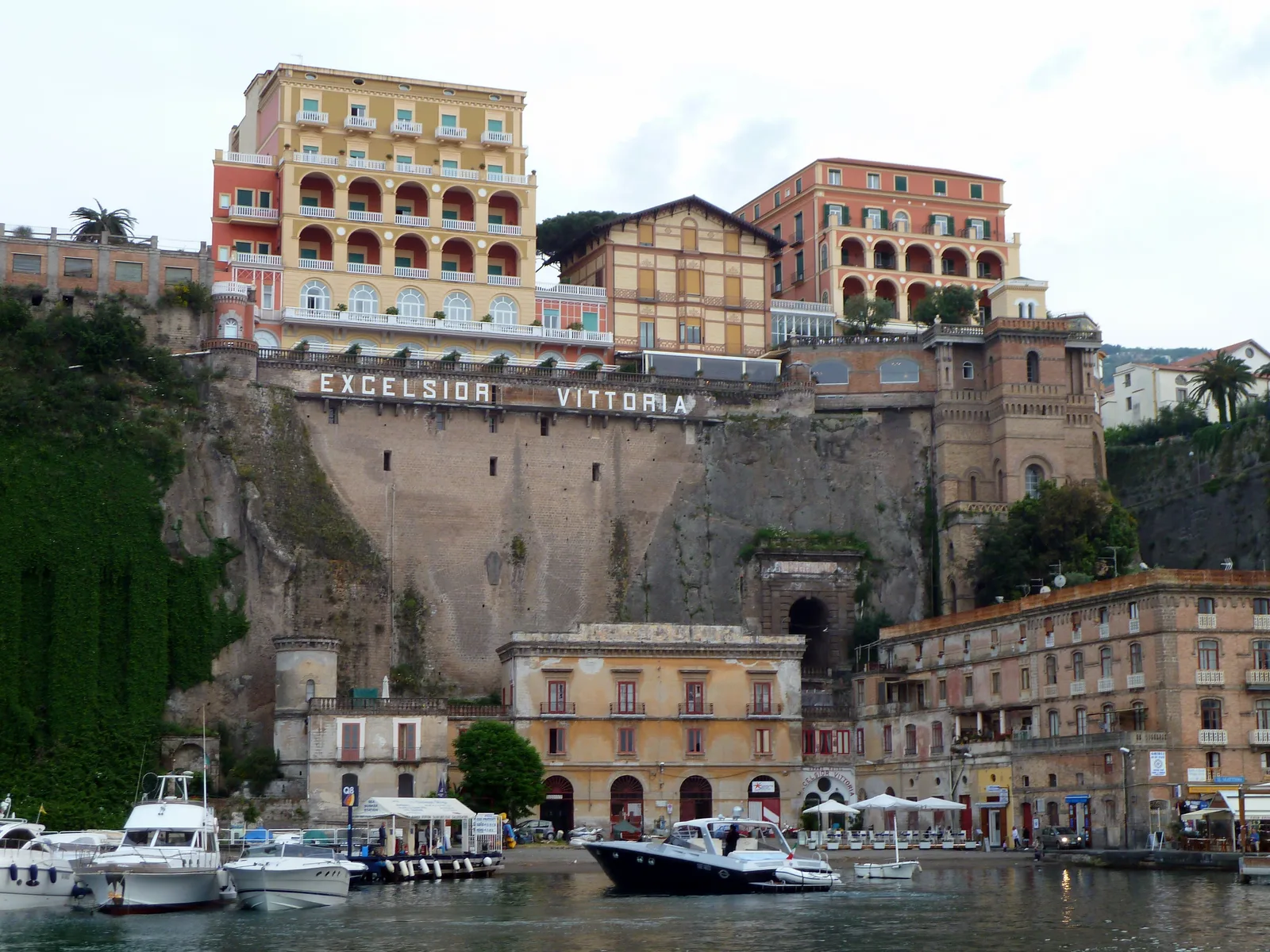
A coastal base with a town of its own
Sorrento works best when you want sea views and a walkable historic centre, with excursions available rather than compulsory. The town sits above the Gulf of Naples on the northern side of the Sorrento peninsula. It is a useful distinction: this is not one of the Amalfi Coast's cliffside villages, even though visitors often combine the two areas.
Come for the waterfront views, wood-inlay tradition, small museums and meals that make good use of the peninsula's lemons and dairy produce. Stay long enough to spend a day in Sorrento itself. A holiday that sends you elsewhere every morning misses much of the point, while a relocation decision needs an even slower look at transport, housing and everyday services beyond the seafront.
Understand the coastline before booking
The Italian tourism board's peninsula overview describes a coast of cliffs, small beaches and bathing platforms. Expect a different experience from a resort arranged behind a long sandy shore. The upper town and the water are separate levels, so the last part of a journey can involve a slope, steps, a lift or another vehicle.
Marina Piccola is the ferry-port area, while Marina Grande is a fishing quarter to the west. Check the address rather than choosing from the names alone. A room described as close to the sea may be high above it; a waterfront room may leave you with an uphill journey for dinner or the train. Ask the property to explain the actual route with luggage and any mobility requirements.
History through crafts, collections and the old streets
Sorrento's character is easier to understand through its collections than through a list of famous visitors. At Museobottega della Tarsialignea, the story connects Grand Tour travellers, citrus cultivation and the development of local wood inlay. The museum also maintains a working workshop, making the craft a living part of the town rather than merely a souvenir-shop theme.
The poet Torquato Tasso was born in Sorrento in 1544. His name is an everyday point of orientation in Piazza Tasso. Elsewhere, the Correale family collections show another side of the town's cultural life: paintings, porcelain, furnishings and archaeology assembled within a former family villa. These are worthwhile counterweights to the assumption that Sorrento is simply somewhere to sleep before Capri or Pompeii.
Where to stay: match the address to your plans
Choose the historic centre around Piazza Tasso and the adjoining streets if evenings on foot are the priority. A hotel or guesthouse near the station can simplify rail excursions and the airport bus. An apartment may suit a longer stay when cooking and laundry matter, but check its facilities and access carefully rather than inferring them from the accommodation category.
Marina Grande offers a waterfront setting with a distinct fishing-quarter atmosphere. Marina Piccola is more directly relevant to ferry departures. For both, investigate the journey back to the upper town. If comparing Sant'Agnello, Piano di Sorrento or Meta, remember that these are separate neighbouring towns served along the railway, not interchangeable addresses in Sorrento's old centre. Compare complete journeys and dated accommodation totals before deciding that a cheaper room represents a saving.
A first walk: Piazza Tasso to San Francesco
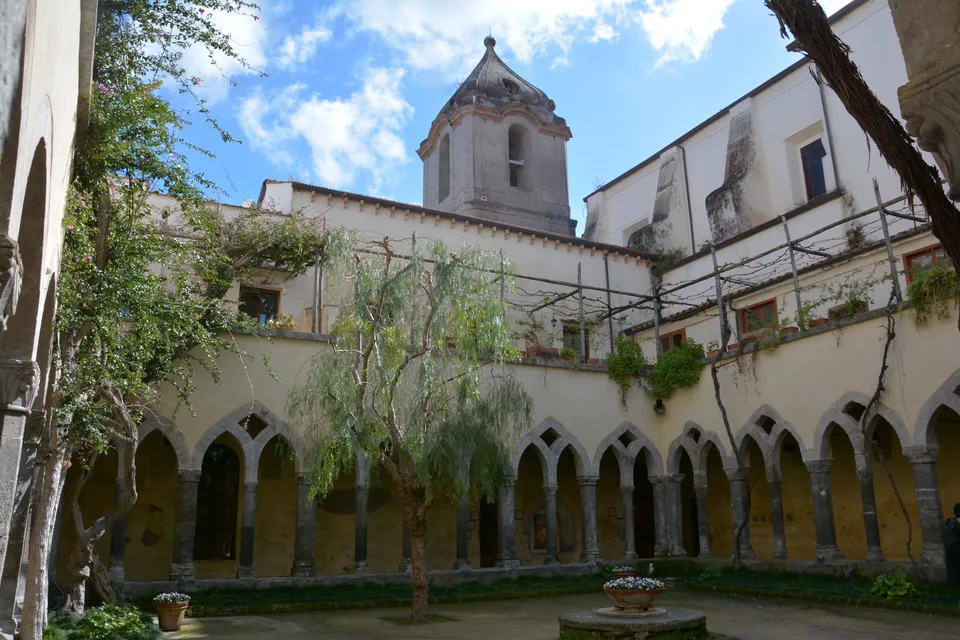
Use Piazza Tasso as your orientation point, then allow time for the smaller streets and the area around San Francesco and Villa Comunale. The national tourism overview places the cloister and public gardens together among Sorrento's principal sights. This makes a manageable first outing when you want to get your bearings without committing to a long excursion.
The cloister photograph in this guide shows its garden, arches and adjoining buildings in March 2024. Treat the image as a record of the place, not a guarantee about access during a wedding, event or maintenance work. Keep the walk flexible, pause at a viewpoint and notice the route you will need for the port. That practical orientation pays off when you later have a departure time to meet.
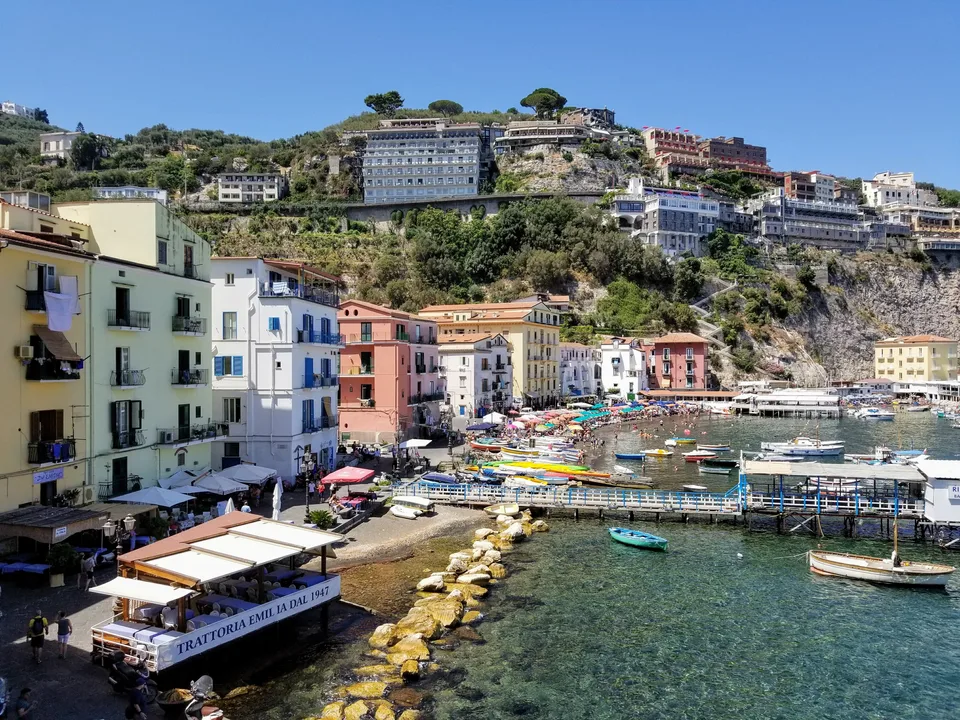
Marina Grande: make time for the waterfront
The Italia.it description of Marina Grande traces the descent through the old gateway into the seafaring quarter. Visit as an outing in its own right: look at the relationship between boats, buildings and the small beach before choosing whether to eat, swim or simply sit by the water.
Do not head here assuming that your Capri ferry leaves from the larger-sounding marina. Passenger departures need the correct port, operator and boarding point. If staying above the waterfront, assess the return climb before setting out in afternoon heat or after a late meal. The quarter's appeal is partly that it feels different from the upper town; that change of level is also a real consideration for pushchairs, limited mobility and anyone carrying bags.
Museo Correale: a quieter cultural morning
Museo Correale's collection overview describes a museum created from the donation of Alfredo and Pompeo Correale and opened in 1924. Its villa setting, European porcelain, Neapolitan painting and archaeological material make it a useful choice when you want more than viewpoints. The garden continues through citrus trees towards a belvedere over the Gulf of Naples.
On the published visitor page, adult admission is €15, with free entry for children through age ten. Listed seasonal hours are Tuesday to Saturday 09:30–17:30 and Sundays and holidays 09:00–14:00; Monday is closed, and last admission is an hour before closing. Check the schedule for your dates. The Sorrento Musei combination ticket is listed at €31 for Correale, Sorrento Experience and MUTA, valid for six months from purchase. Compare that with the visits you will actually make.

MUTA: look beyond the finished souvenir
At MUTA, old and contemporary inlaid furniture share the wider story of materials, techniques, training and design. The workshop and shop provide a more informed starting point for understanding wood inlay before browsing elsewhere. You can appreciate the craft without committing to a purchase or assuming that every object sold around town was made locally.
The museum is at Via San Nicola 28 in the historic centre. Its current contact and visitor information lists daily opening from 10:00 to 18:00, with ticket sales and last entry ending at 17:00. Reservations are recommended for groups, workshops and guided visits. If you want a demonstration or organised activity, confirm that specific arrangement; an open museum is not a promise that a workshop session is running whenever you arrive.
Food: lemons are only part of the story
The national tourism board's account of Sorrento's cooking introduces gnocchi alla sorrentina: potato gnocchi baked with tomato, basil and cheese, including fiordilatte. Delizie al limone bring sponge cake and lemon cream into the picture, while limoncello is an alcoholic drink rather than a lemon soft drink. Check ingredients where allergies, dietary preferences or alcohol avoidance matter.
Let the actual menu guide the budget. A waterfront table, a pastry stop and an apartment meal solve different needs; none requires a claim that one restaurant is universally the best. Ask about the preparation and origin of seafood rather than assuming that a harbour setting answers those questions. When buying lemon products, compare ingredients and labelling. Sorrento's protected lemons have an IGP designation, but a lemon picture on packaging tells you little by itself.
Naples Airport: the direct bus option
Curreri's airport shuttle connects Naples Capodichino with Sorrento station, with a published Sorrento fare of €13. At the airport, the operator identifies the tourist-bus parking area as the boarding location. Check its map before arriving. The station terminus matters when deciding how to reach your accommodation; do not assume the bus ends at your hotel or on the waterfront.
The displayed schedule allows about 75 minutes towards Sorrento and 90 minutes on the return, but road traffic can extend these times. Curreri advises taking a bus at least five hours before the flight departure. Online booking closes four hours before each bus departure, and services do not run on 1 January or 25 December. Build the airport day around the operator's current advice rather than the shortest theoretical driving time.
Naples by rail: use the new EAV timetable
The local railway is an important alternative when travelling through Naples. EAV's announcement of the new Vesuvian programme says the timetable changes from 17 October 2026, with Sorrento services planned every 30 minutes. Older tables and descriptions of tourist express trains should not determine a booking without a fresh operator check.
In the timetable effective from 17 October, a journey between Napoli Piazza Garibaldi and Sorrento takes approximately 72–73 minutes. The trains also serve Pompei Scavi Villa dei Misteri and other peninsula towns. Read the correct direction and station name when planning an excursion. Leave a connection margin for a separate long-distance train in Naples, and check EAV service notices and current timetables before departure. A printed schedule is a plan, not a guarantee that every service runs punctually.
Ferries: check season, operator and ticket conditions
Marina Piccola's port consortium identifies the harbour on the Gulf of Naples, below the town. For travel to Naples, Alilauro's dated route page lists a €19 adult fare. It also distinguishes the autumn schedule through 3 November 2026 from the programme beginning 4 November, whose listed departures exclude Saturdays and holidays. That is a significant limitation for a winter weekend plan.
Before paying, confirm the sailing, baggage allowance and return option. Alilauro's passenger guidance asks passengers to arrive at least 30 minutes before departure. Ticket-printing requirements vary by operating company: its guidance specifically requires printing and a ticket-office visit for Alilauro Gruson services. Follow the instructions for the operator on your ticket. Its published allowance includes one hand bag up to 50 × 35 × 20 centimetres and nine kilograms; extra or oversized baggage costs €3.50. Keep a land-based alternative in mind when a cancellation would otherwise jeopardise an onward flight or train.
Capri or the Amalfi Coast: choose one substantial outing
Capri is a natural excursion to consider, but it still involves reaching the port, boarding, onward movement on the island and a return sailing. Choose the return before filling the day with attractions. Do not treat an old winter timetable displayed on a route page as proof of today's departures; use the date-specific booking information from the operating company.
The Amalfi Coast is a different outing across the peninsula. A scenic destination does not make road or sea connections instantaneous. For either choice, reduce the number of stops if travelling with children, luggage or limited mobility. Spending the night elsewhere may be more satisfying than a rushed circuit. Sorrento becomes a useful base when the excursions fit your priorities, rather than an obligation to collect every nearby place in one holiday.
Pompeii: select the right admission product
For an archaeological day, the EAV stop to check is Pompei Scavi Villa dei Misteri. The archaeological park's official ticket page distinguishes the €20 Pompei Express ticket, covering the ancient city without the suburban villas, from the €25 Pompei Plus product. Buying the cheaper option and adding the villa route later is not the same price as choosing Plus initially.
Admission tickets are named, and the park has a daily visitor limit. Use the official booking link and check the included areas before paying. Winter hours, from 15 October to 15 March, are 09:00–17:00 with last admission at 15:30; the longer summer schedule does not apply year-round. Give the site a generous day, with time for the train and entrance procedures. The standard admission ticket does not permit exit and re-entry. Specific houses and areas can have their own temporary closures.
A coastal walk needs more than a beach bag
For a walk beyond town, the Punta Campanella protected-area authority's Ieranto route starts from Nerano and is rated medium difficulty. Its estimates are 40 minutes descending and an hour climbing back. The rocky, steeper sections make this a hiking decision rather than an effortless extension of a beach afternoon.
Arrange transport to the start, carry water and use footwear suitable for uneven ground. Check current route and access information before setting out, particularly after poor weather. The return climb belongs in both your energy budget and your connection plan. If that combination does not suit your party, choose time around Sorrento's viewpoints and museums instead. There is no benefit in describing every coastal path as an easy outing merely because the destination is the sea.
Seasons: choose what you want to do
For a trip centred on walking and museums, consider spring or autumn, while keeping room for rain and changes to sea services. In summer, plan exposed walks earlier, build in shade and check the room's cooling arrangements. A winter stay can suit a quieter programme, but confirm the businesses and transport you depend on rather than assuming the summer routine continues.
Use ARPAC's regional weather resources close to departure, especially before a boat trip or hike. Climate averages cannot settle whether a particular sailing will operate, and conditions on an exposed headland can differ from a sheltered street. Keep at least one museum or town-based day movable. That flexibility is more useful than a tightly packed itinerary whose success depends on several consecutive clear days.
Budget with a few verified anchors
Some useful costs are clear: two €13 Curreri journeys and one €15 Correale admission total €41 for an adult before accommodation, food and other transport. This is a sample basket, not a complete daily budget. Ferries, extra baggage, beach facilities and organised experiences can change the total substantially.
Compare accommodation using the complete payable amount for your dates, including any applicable local charges, cancellation terms and parking if needed. For a longer stay, include laundry and cooking facilities in that comparison. A room with a view is worth paying for only if it supports the holiday you want; an inconvenient final journey can outweigh a modest saving. Keep a separate contingency for a transport change instead of assuming the most economical connection will always remain available.
A realistic four-day stay
Day one: arrive, settle in and walk between Piazza Tasso, the historic streets and the San Francesco area. Learn the route to the station or port before you need it. Keep dinner near your base if the travel day has been long.
Day two: visit Correale or MUTA, then spend an unhurried afternoon around Marina Grande. Adjust the order to opening days, weather and how much climbing you want. These are enough ingredients for a worthwhile Sorrento day without another transfer.
Day three: make Pompeii the main outing, returning with enough time for a relaxed evening. Day four: choose Capri, a coastal excursion or another day in town, depending on the season. This is an editorial framework rather than a promise of connections. If you have only two nights, retain the Sorrento day and choose one excursion instead of trying to compress all four days into two.
Moving: test the journey on an ordinary day
For relocation, start with the precise workplace or school address and the hours you need to be there. A peninsula railway connection is useful, but the full commute includes the walk, waiting time, transfers and the return after work. Trial it with your normal bag and at the relevant time, rather than judging it from an enjoyable daytime excursion.
Inspect the home in relation to the upper town, the coast and everyday errands. Check stairs, lift access, noise, ventilation and where deliveries can reach. If the property is outside central Sorrento, compare its actual transport link rather than accepting a broad description such as near Sorrento. For families, confirm school arrangements and childcare needs before treating a holiday rental location as a practical permanent base.
Housing: distinguish a holiday let from a home
Ask explicitly whether the offer is for holiday accommodation or an appropriate residential tenancy. Establish the term, registration arrangements, renewal and notice conditions, deposit and all recurring charges before paying. A listing that is available for a month does not establish that it can support a longer stay or the paperwork your household needs.
The municipal archive's agreed-rent notice provides background on Sorrento's territorial rental agreement. It is an archived document, so confirm the applicable current agreement and contract with the relevant parties rather than using it as a live rent quotation. Agreements for neighbouring Piano di Sorrento concern a different municipality. During viewings, ask about damp, heating, summer cooling and internet at that address. Obtain an inventory and a written breakdown of what the advertised rent includes.
Household setup and essential services
Clarify whether utilities remain in the owner's name, need an account transfer or are managed collectively through the building. GORI's instructions for an active water-account transfer distinguish a voltura from a new connection and request details including identification, tax code, account number, meter reading and the basis for occupying the property. Ask which arrangement applies before moving in.
Record readings and keep copies of the tenancy and handover documents. Check internet availability for the specific property, especially if work depends on it. Healthcare administration for Sorrento belongs to ASL Napoli 3 Sud's District 59, whose main district address is in neighbouring Sant'Agnello. Confirm your coverage and the procedure appropriate to your status. Being near a medical service and being entitled to a particular form of public coverage are separate questions.
Registration and immigration: separate the processes
The municipal archive's residence-registration instructions require identification for the people moving, signatures from adults and evidence of the basis for occupying the home. They distinguish documents for EU and non-EU citizens. Confirm the current submission arrangements with the municipality before relying on archived office hours or forms.
For entry and immigration, use the Italian Foreign Ministry's guidance and its Visa for Italy tool, selecting nationality, residence, purpose and length of stay. Eligible visa-free tourism is generally limited to 90 days in any 180 across Schengen; it does not grant permission to work or settle permanently. Study, employment and other long stays have their own requirements. A national visa permits entry, with residence-permit procedures following arrival. Resolve the appropriate route before committing to a move.
Other bases worth comparing
Compare Sorrento with the purpose of your trip in mind. VisaWand's Naples city guide helps assess a larger urban base, while Rome's guide may be useful when combining the peninsula with a wider Italian journey. For local alternatives such as Meta, Piano di Sorrento and Sant'Agnello, compare the station, accommodation and waterfront route separately.
Use the Italy country guide for broader travel and relocation planning, and the Italy location directory to find other destination records. The directory does not mean that every listed settlement has a completed editorial guide. For Sorrento itself, the strongest plan leaves time to enjoy the town and enough flexibility to make a sensible decision when weather, seasonal services or household needs change.
Official planning resources
Reviewed 16 October 2026. Use the official resources linked throughout this guide for admission, transport, housing and immigration decisions. Prices, services and rules can change; confirm the details relevant to your dates. Photography illustrates the locations and is not a live view.
View all official resources
- Curreri: Naples Airport to Sorrento shuttle
- Museo Correale: collection and garden
- Museo Correale: admission, seasons and accessibility
- Italia.it: Marina Grande in Sorrento
- Italia.it: Sorrento peninsula geography, sights and food
- Marina Piccola consortium: port identity
- EAV: new Vesuvian railway programme from 17 October 2026
- Alilauro: boarding, luggage and passenger assistance
- Alilauro: Naples Beverello to Sorrento seasonal service and fares
- EAV: current railway timetables and service notices
- EAV: Napoli-Pompei-Sorrento timetable from 17 October 2026
- ASL Napoli 3 Sud: District 59 and primary-care administration
- MUTA: opening, last entry and location
- MUTA: Sorrento wood inlay, history and contemporary workshop
- Punta Campanella protected-area authority: Ieranto walking route
- Pompeii Archaeological Park: 2026 admission and seasonal hours
- City of Sorrento archive: residence-registration documents
- ARPAC: regional weather bulletins and climate monitoring
- City of Sorrento archive: agreed-rent territorial agreement
- Italian Foreign Ministry: visa and residence requirements
- Italia.it: Sorrento food and protected lemons
- GORI: changing an active water account
Plan the next part of your journey
Explore the Italy guide, browse other cities or compare consultants for your travel and relocation questions.