Visa
Rome at a glance: ancient sites, art and neighbourhood walks
Rome rewards travellers who want ancient architecture, major art collections and a city walk that keeps changing historical period. Its strongest itinerary is selective: an amphitheatre, a museum and an evening neighbourhood walk can each deserve more attention than a checklist allows. Decide which experience justifies the journey before fitting the remaining days around it.
For a first visit, distinguish seeing a monument from entering it. A view of the Colosseum, a paid visit inside and a tour with additional archaeological areas are different commitments. The same principle applies to churches, museums and fountain access. For a longer stay, make a second map showing the workplace or campus, possible homes and daily services. The visitor's map explains where the memorable sights are; the household map establishes whether an address fits ordinary life. Continue with VisaWand's Italy country guide, its Italy destination page and consultant listings for broader planning. The Italy location directory helps compare places.
A city built in historical layers
UNESCO’s description of Rome’s historic centre connects the city of the Roman Republic and Empire with the Christian city that reused older spaces and materials, and the later Renaissance and Baroque renewal promoted by the popes. This layering is more useful for a walk than treating everything old as belonging to one period. An ancient building, a church interior and a monumental fountain tell different parts of the city’s story.
UNESCO identifies the traditional founding by Romulus and Remus in 753 BCE as legend. It records the historic centre’s World Heritage inscription in 1980 and the property’s extension in 1990, including specified Holy See properties and St Paul’s Outside the Walls. These are particular heritage boundaries, not a designation covering every address described as Rome. Choose a few buildings from different periods and look at how the surrounding streets connect them; understanding the sequence makes a short visit richer without requiring every major monument.
The Colosseum and ancient Rome
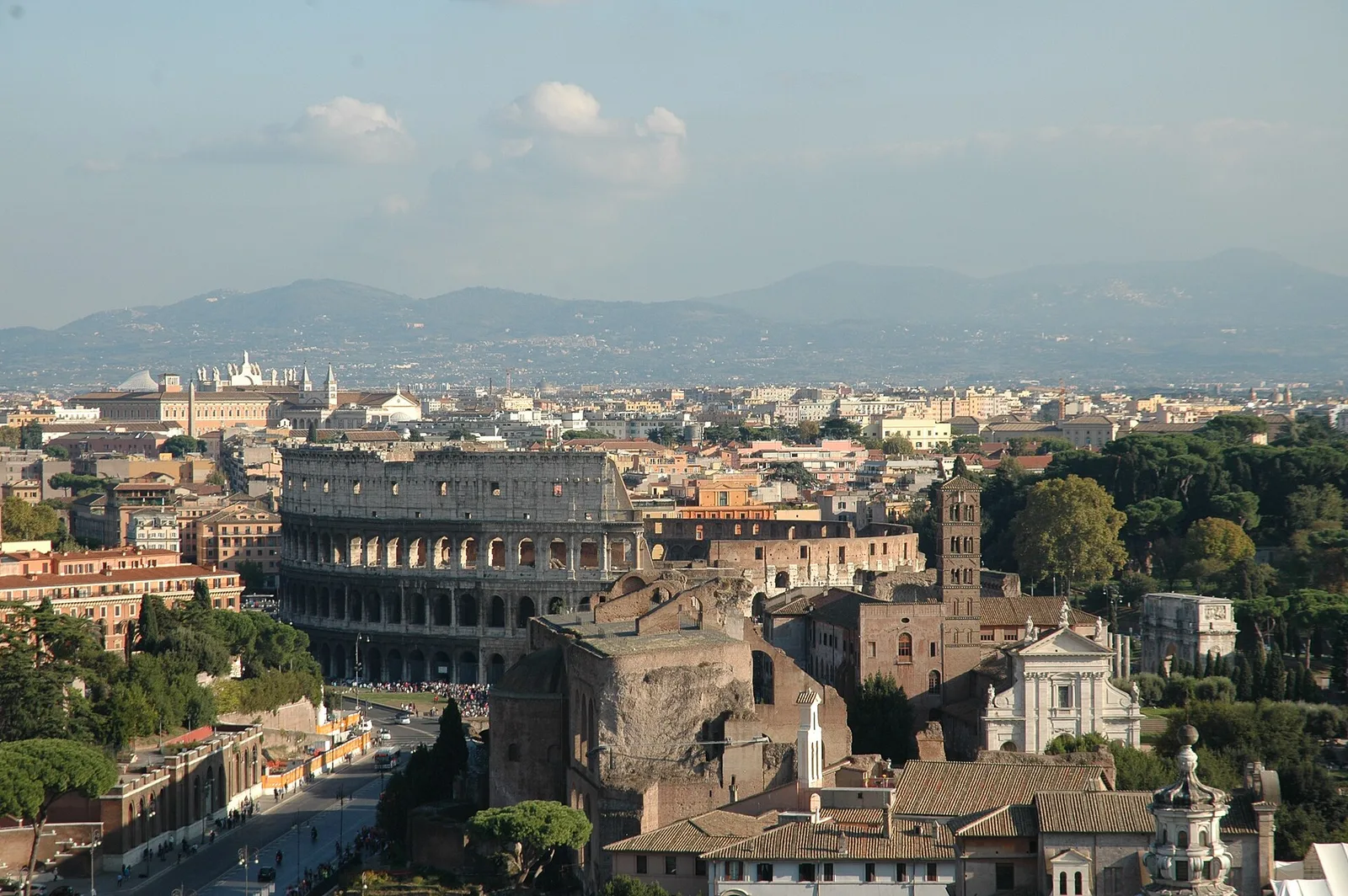
Rome’s tourism authority describes the Flavian Amphitheatre as commissioned by Vespasian and completed under Titus in 80 CE. Its arches, seating structure and arena belonged to a building designed for public spectacles. The surviving monument deserves time to understand as architecture, rather than simply serving as the background for a photograph before moving on to the next attraction.
Choose the visit you actually want before comparing ticket products. Access to different parts of the monument and surrounding archaeological areas should be established through the park’s official arrangements, with the date and entry time kept clear. A guided package’s headline does not show that every possible area is included. Leave sufficient time for the visit, entry procedures and the route afterwards; combining it with a nearby archaeological outing can be worthwhile, but does not make several substantial sites a brief morning walk. Obtain the current price directly from the operator, since the ticket type matters to the comparison.
Inside the Pantheon
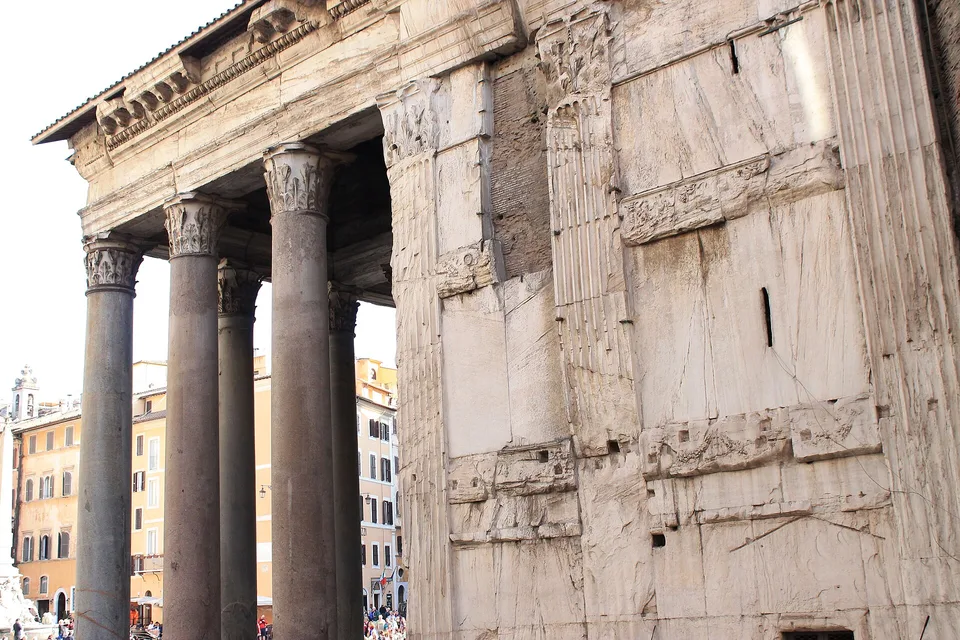
The official Pantheon overview distinguishes Agrippa’s earlier temple from the surviving building’s reconstruction under Hadrian. Its columned portico leads to a circular interior beneath a coffered dome, with an open oculus overhead. That relationship between the approach, enclosed space and light is the reason to give the interior time, rather than treating the façade as the whole visit.
The building became the church of Santa Maria ad Martyres in 609. It also contains tombs including Raphael’s and those of Italian monarchs. This is both a historic monument and a religious place, so follow current visitor directions and allow for changes around services. Check the admission product and opening arrangements before making it the fixed centre of a day. A timed attraction elsewhere should not force the visit into a hurried interval. Keep the surrounding walk flexible so there is room to appreciate the building and then continue at a comfortable pace.
Trevi Fountain and paid basin access
Rome’s official tourism notice says that, from 2 February 2026, a €2 ticket applies to access the Trevi Fountain’s basin, the area closest to the monument. Understand what the payment covers rather than treating it as a charge for every view of the fountain or for the surrounding city walk. Use the linked official service for the current access arrangements and the applicable visitor category before arriving.
The same notice dates the fountain’s construction to 1732–1762, with Nicola Salvi’s design completed by Giuseppe Pannini. That history gives the stop more substance than a hurried photograph: leave time to look at the composition before continuing through the area. If close access is a priority, make it a deliberate choice in the day’s plan. Check the current arrangements for maintenance or public-order changes rather than assuming the paid area follows an unchanging schedule. Keep any booking or payment distinct from another attraction’s ticket; a small admission charge does not establish a general city pass.
Vatican Museums: tickets and visiting time
The Vatican Museums’ official information publishes Monday-to-Saturday hours of 08:00–20:00, with final entry at 18:00. The last Sunday of the month has different hours, 09:00–14:00 with final entry at 12:30, subject to the operator’s opening and closure calendar. Select the date and product through the official ticket portal linked there rather than treating all Sundays or every guided package as equivalent.
The current admission schedule lists full-price entry at €20 without online booking, or €25 when reserved through the official website, including its €5 booking charge. Admission covers the museums and Sistine Chapel on the ticket’s specified day; tickets are not refundable. This gives a useful baseline when comparing a guided package: establish what the additional charge buys, such as a guide, language or particular experience. Allow the museums their own substantial portion of the day. Final entry at 18:00 is a deadline, not an ideal start for a long visit. Keep lunch and the journey back flexible rather than booking a distant attraction immediately afterwards.
Trastevere and Testaccio, on opposite banks
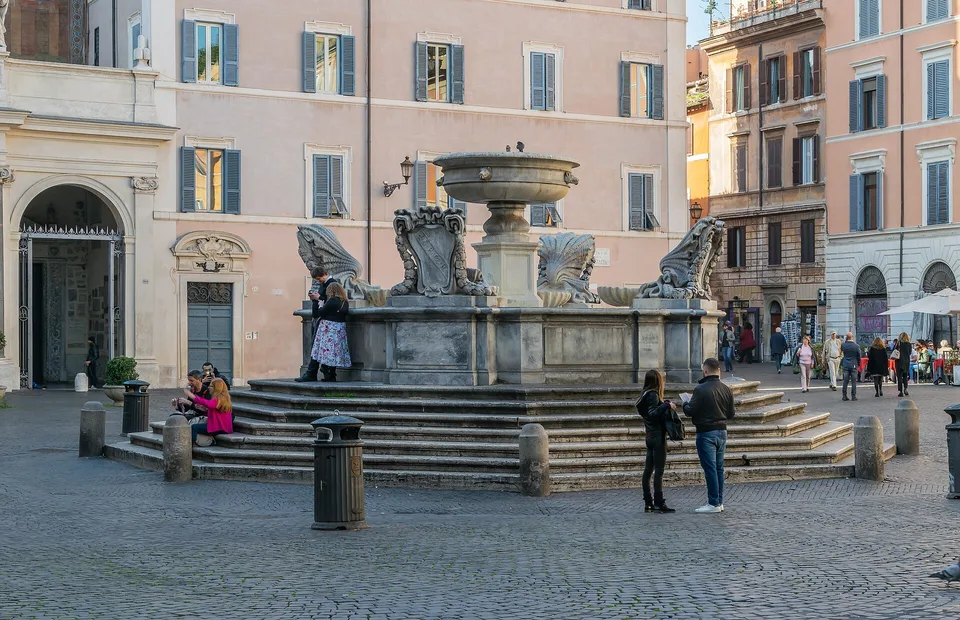
The tourism authority’s district overview places Trastevere on the Tiber’s right bank, with Piazza Santa Maria in Trastevere and Piazza Trilussa among its landmarks. Palazzo Corsini and Villa Farnesina offer reasons to plan a cultural visit as well as a meal or evening walk. Select the interiors that interest you and check their individual access arrangements rather than expecting every building encountered on a district walk to be open.
Testaccio lies on the left bank. Its Monte dei Cocci is an artificial hill made from discarded amphorae, a reminder of ancient Rome’s river-port economy. The district’s Mattatoio, a former slaughterhouse, now provides a setting for culture and contemporary art. For a different afternoon in Trastevere, Villa Farnesina makes Renaissance painting the focus: the residence built for banker Agostino Chigi contains Raphael’s Galatea and the Loggia of Cupid and Psyche, decorated by Raphael and his school. Choose between a district walk and a substantial art visit according to the time available.
Monti and Prati: different bases for a visit
Rome's official Monti overview describes a district of art galleries, wine bars and substantial archaeological heritage, including Trajan's Column and Markets. Use that combination to plan an outing that moves between ancient remains and contemporary streets, rather than treating the area simply as somewhere to sleep near a monument.
The Prati and Vatican area overview gives another useful reference point: Piazza Cavour, the Palazzo di Giustizia and the shopping street Via Cola di Rienzo. Prati can enter the accommodation shortlist when the Vatican Museums are a priority, but compare the actual museum entrance and onward journeys from each property. Monti and Prati offer different starting points; neither broad district name establishes a room's condition, price or quietness.
Roman food beyond the familiar pasta dishes
The city’s traditional-cuisine overview introduces carbonara, amatriciana and gricia alongside a cooking tradition that makes use of vegetables, legumes and less expensive cuts. Its discussion of the “fifth quarter” explains the importance of offal, with dishes such as Roman-style tripe and coda alla vaccinara, an oxtail preparation. These are useful names to recognise on a menu, rather than an instruction to order every speciality.
Vegetable dishes broaden the meal beyond pasta and offal. The tourism authority highlights artichokes, chicory and puntarelle; spring vignarola combines broad beans, peas, artichokes and lettuce with other ingredients, including bacon in the recipe described. Arrabbiata brings tomato, garlic and chilli to pasta. These examples help with menu choices, but a vegetable name does not guarantee a vegetarian preparation: ask about meat, stock, anchovies and cheese when dietary requirements matter. Read the menu before ordering. An unhurried meal in the neighbourhood you are exploring makes more sense than crossing the city for an unverified restaurant recommendation.
Where to stay and what to compare
Rome’s official accommodation directory covers hotels, residential hotels, guesthouses, B&Bs, holiday accommodation and hostels. Use it to understand the available categories, then compare individual properties for the trip you intend. A private hotel room, shared hostel space and self-catering apartment provide different routines; the lowest visible nightly figure does not make those arrangements equivalent.
Start with the airport arrival and the experiences you will repeat from that base. Check the final walk, entrance, lift arrangements and room occupancy before deciding that an address is convenient. For a longer stay, establish cooking, laundry and internet provision and any associated charges. Keep cancellation terms, arrival instructions and the complete quotation together, including applicable local charges. For a possible move, temporary accommodation can give you time to inspect homes and test a commute. A pleasant visitor base is useful for that visit, while a residential choice needs a separate assessment of daily needs.
Fiumicino Airport and the Leonardo express
Trenitalia’s Leonardo express information describes the non-stop connection between Fiumicino Airport and Roma Termini, with a published journey time of 32 minutes and a single-ticket price of €14. The station is inside the airport. That makes the service useful to compare with the accommodation’s onward route, rather than treating Termini as the destination of every traveller’s arrival.
Include immigration, baggage collection, reaching the train and the final trip to the room when comparing the total journey. Check the departure that fits your flight and the ticket’s current conditions before buying. A train-running time is not a door-to-door estimate or proof that the intended late-night connection operates. For the return, confirm the airport and terminal from the booking first, then protect the airline’s required arrival time. Keep any onward bus, metro or taxi costs separate from the airport rail fare, especially when comparing the complete cost for several people with luggage.
Local transport and the BIT ticket
ATAC’s occasional-travel guidance prices the Metrebus Roma BIT at €1.50, valid for 100 minutes from first validation. Within that period, its metro or urban-train use is limited to a single journey, while other covered public transport allows multiple journeys. The time allowance should therefore not be read as an entitlement to unlimited separate metro trips.
Choose the payment method and validate it correctly before relying on the ticket. Compare the routes you actually intend to take rather than assuming that every railway or airport service belongs to the same fare system. A walk between nearby sights can change whether a pass is useful, while a day with repeated journeys calls for a different calculation. Keep the current operator maps and notices with the plan, particularly where an accessibility requirement makes a particular station entrance important. A ticket solves the fare question; it does not establish that a lift, platform or intended connection is available on the day.
A practical budget built from verified fares
Use the verified fares as building blocks, rather than as an all-inclusive daily allowance. One €14 Leonardo express journey and two €1.50 BIT tickets total €17 per person before accommodation, meals or admissions; this is a sample calculation, not a transport package. Put the return airport journey on its own line.
Compare rooms for the same dates, occupancy and cancellation conditions. Add each attraction you actually intend to enter, and distinguish paid interiors from walks through public streets. For food, read the menu and any stated additional charges before ordering. Set the shopping allowance separately so purchases on Via Cola di Rienzo do not disappear into an undefined daily estimate.
Weather and the best season for walking
Rome’s visitor climate guidance identifies July and August as the hotter part of the year and points to spring and autumn for milder conditions. For a trip built around exposed archaeological areas and long district walks, that seasonal difference should influence the daily plan. Use current forecasts rather than treating a general description of a mild climate as a guarantee for the arrival date.
During a summer visit, allow breaks between outdoor stops, carry water and plan sun protection. A shorter outdoor route with one indoor cultural visit can be more practical than trying to complete the same walk in every season. Rain also deserves a place in the plan: retain an alternative for a booked outdoor experience and check local instructions before an excursion. Compare accommodation and ticket availability for the actual dates you can travel. Pleasant-weather expectations and a low advertised room price are separate questions, and neither establishes the conditions of a particular week.
A realistic three-day Rome itinerary
This suggested itinerary groups experiences rather than promising fixed journey times. Build it around confirmed admission slots, then leave room for lunch and slower walking.
Day one centres on ancient Rome. Give the Colosseum and the archaeological areas included in your chosen ticket their main allocation of time. Continue into Monti for a change of setting, rather than adding another distant museum. Keep the evening flexible after a day outdoors.
Day two belongs to the Vatican Museums. Start with the collections that interest you most, then use Prati for lunch, shopping or a walk around Piazza Cavour. Vatican City is a separate sovereign state within Rome's surroundings; a museum booking does not cover every religious site or experience associated with it.
Day three combines the Pantheon and Trevi with time in Trastevere. Choose whether you want interior or close-access visits before setting the pace. A household with young children, limited walking capacity or a particular art interest can replace one component with a longer break or a deeper visit. Tivoli is better treated as an additional day's choice than squeezed between these commitments.
Tivoli: villas, gardens and waterfalls
Rome's official Tivoli overview introduces a town on the Aniene with several distinct reasons to travel beyond the city. Villa Adriana is Hadrian's extensive architectural complex; Villa d'Este offers a Renaissance residence and gardens organised around monumental fountains. They provide different experiences, so choose the site that best matches your interests before planning the journey.
The fountain engineering at Villa d'Este used gravity and the slope of the ground, adding a practical dimension to the garden's spectacle. Villa Gregoriana offers another approach, with a nature park of waterfalls, terraces and archaeological remains managed by FAI. Do not assume the three visits share one entrance, ticket or walking requirement. Use the operators linked from the tourism page for current access and opening arrangements, and allow for travel between the selected site and your accommodation. For a short Rome stay, compare this excursion with the city experience it would replace. VisaWand also lists a Tivoli location page.
Housing and commuting for a longer stay
For a residential move, compare properties using the same total-cost sheet: rent, building charges, utilities, any agency fee and the initial deposit requested in the proposed agreement. Ask which costs are fixed and which are reconciled later. Keep the quoted terms with the draft contract so an attractive monthly figure does not obscure the cash needed at the start.
Inspect the room layout, ventilation, heating and cooling arrangements, storage and laundry provision. Walk the route to the intended transport stop and test the journey at the time you would actually commute. A central address can suit sightseeing while being inconvenient for a particular workplace. Agree an inventory and record the condition at handover. Where the contract or registration obligations are unclear, obtain qualified local advice before signing; a holiday reservation is insufficient evidence of the terms appropriate to a long residential stay.
Water accounts and household services
Acea Ato 2's water-account transfer guidance explains that a voltura changes the holder of an active contract without interrupting supply. For an individual applicant, the information includes identity and tax-code details, contact information, the account number, evidence of possession, cadastral details and an updated meter reading where applicable. Establish with the landlord whether the property's water is individually billed before choosing the relevant process.
Keep the account details and handover readings together, and clarify who manages electricity, gas and internet separately. Ask about connection appointments before making the arrival date dependent on immediate service. A longer stay also needs a plan for healthcare coverage, medicines and any school or childcare requirement. Resolve these with the appropriate provider or institution rather than assuming a furnished apartment includes the household services you need.
Schengen entry for a short visit
The EU’s travel-document guidance for non-EU nationals describes short stays in the Schengen area as up to ninety days in any 180-day period. Time in other Schengen countries matters to that calculation; a Rome stop is not an independent allowance that starts again after a visit elsewhere. Visa requirements depend on nationality and circumstances, so establish the applicable route before committing to travel.
The guidance also says the passport should have been issued within the preceding ten years and remain valid for at least three months after the intended departure, subject to the rules applicable to the traveller. Border authorities may request supporting documents about the stay. Keep the accommodation, onward arrangements and purpose clear, and consult the relevant consulate for the individual requirements. A short visit to investigate Rome is different from starting work or a longer course of study. Make the permission decision separately from the attractions and housing you would like to include.
Work and study require separate permissions
For non-EU applicants, the EU Immigration Portal’s Italy employment page separates work authorisation, an entry visa and residence procedures. It identifies an employer’s role in applying for the appropriate authorisation and notes that some employment categories have different arrangements. A job conversation or a city address cannot establish that the proposed work is approved. Obtain the actual offer, workplace and benefits in writing before building the housing budget around them.
The Italy student-route overview treats study permission and the subsequent residence process separately from admission to an institution. Confirm the course, campus, timetable and documents with the institution and relevant authority before selecting accommodation. Include tuition, health arrangements and transport in the calculation, and establish what must be paid before an immigration decision. Accompanying household members need their own assessment. Keep a temporary visitor stay, work, study and a permanent relocation plan distinct, and use the route appropriate to each person rather than assuming one approval resolves every purpose.
Official planning resources
Reviewed 14 October 2026. Use the official resources linked throughout this guide for admission, transport, housing and immigration decisions. Prices, services and rules can change; confirm the details relevant to your dates. Photography illustrates the locations and is not a live view.
View all official resources
- UNESCO Rome historic-centre history and boundaries
- Rome tourism authority Colosseum history
- Rome tourism authority Pantheon history and visitor information
- Rome traditional dishes and culinary history
- Rome official accommodation categories and directory
- Rome visitor climate guidance
- EU non-EU travel documents and Schengen short stays
- EU Immigration Portal Italy employed-worker route
- EU Immigration Portal Italy student route
- Rome tourism authority Trevi access notice
- Vatican Museums official visiting information
- Trenitalia Leonardo express airport connection
- ATAC BIT tickets and validity
- Rome tourism authority Trastevere, Tiber Island and Testaccio
- Monti heritage and neighbourhood character
- Prati, Vatican and Gianicolo area information
- Tivoli villas and official operator links
- Acea Ato 2 active water-account transfer
- Vatican Museums admission prices and booking conditions
- Rome tourism authority: Villa Farnesina and its Renaissance frescoes
Plan the next part of your journey
Explore the Italy guide, browse other cities or compare consultants for your travel and relocation questions.