Visa
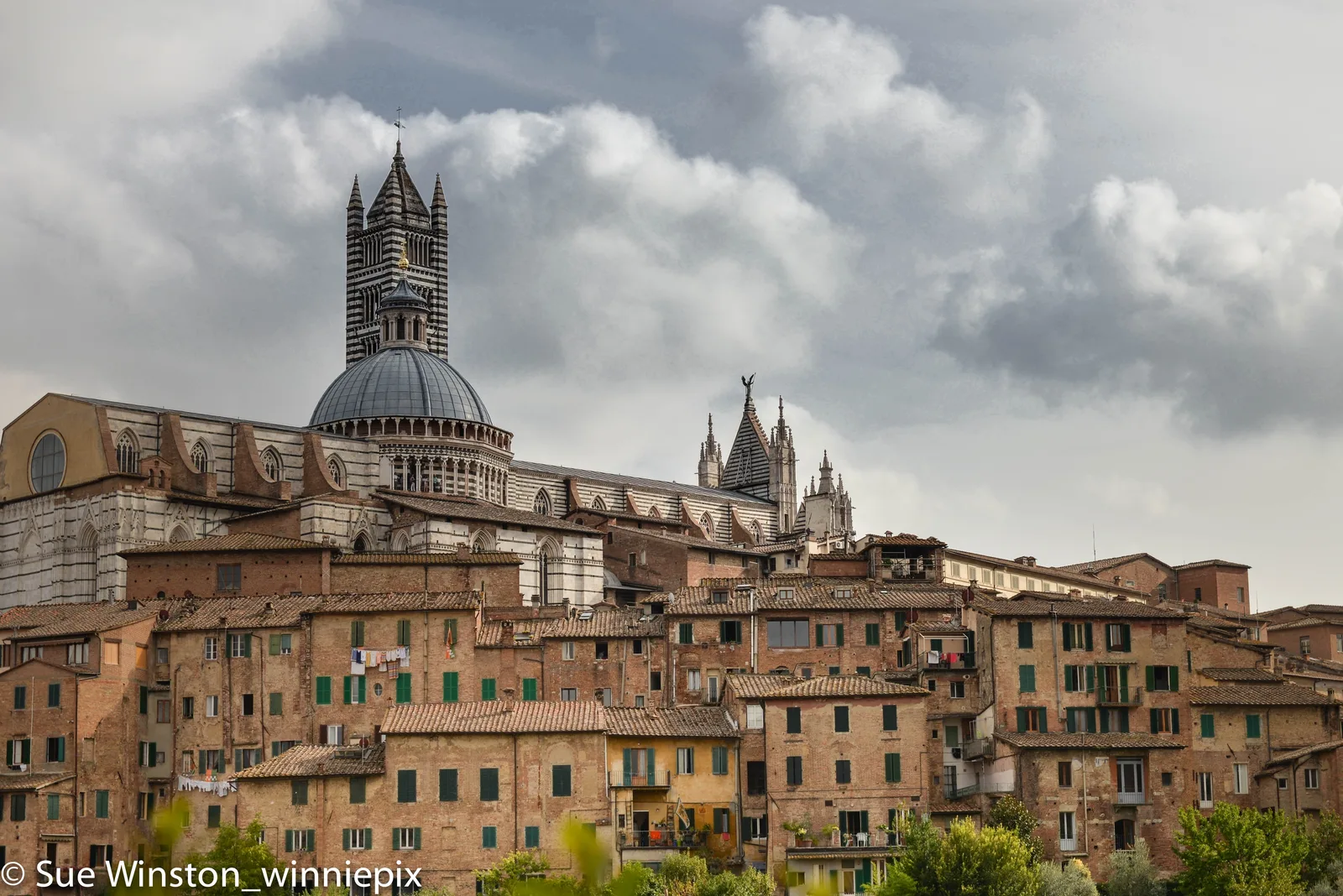
A Tuscan city worth staying in after the day trips leave
Siena’s appeal begins with the way its streets fit together. Brick buildings, steep lanes and sudden views converge on Piazza del Campo, while the cathedral rises above another part of the historic centre. In this Tuscan city, walking between places is a substantial part of the visit. The distances can look modest on a map, but gradients, paving and the temptation to stop make a slower schedule sensible.
Stay two or three nights if you want time for the major interiors, an evening in town and a less hurried look at everyday Siena. A day trip can provide an introduction; it leaves less room for ticket availability, a long lunch or a change in weather. For a potential move, allow additional weekdays to investigate a specific home and commute. The experience of a central hotel differs considerably from managing a household outside the walls.
Read the medieval streets without treating the city as a museum
The UNESCO Historic Centre of Siena listing, inscribed in 1995, recognises a remarkable urban landscape shaped between the twelfth and fifteenth centuries. The city developed across three hills, with major streets converging towards the Campo. Its architecture and the work of artists including Duccio, Simone Martini and the Lorenzetti brothers belong to a history that extends beyond individual monuments.
The municipal tourism account of Siena’s past connects medieval prosperity with the Via Francigena, commerce and the Government of Nine, followed by the devastating plague of 1348 and later political decline. It also distinguishes the legendary founding story involving descendants of Remus from historical evidence. Enjoy the symbols and stories without mistaking them for established fact. Today the same streets support homes, university life, shops and community traditions, so treat doors, neighbourhood gatherings and working spaces accordingly.
Choose a district by its approach as well as its name
The area around the Campo suits visitors who want Siena’s principal square nearby, but check noise, stairs and luggage access before paying for a room. The cathedral side places several major attractions close together, although that convenience still involves slopes. Streets towards Camollia offer another approach to the centre, useful to understand if arriving from the railway-station direction.
Beyond the historic core, compare individual addresses rather than assuming every “Siena” property has the same relationship with town. Map the route to your intended entrance, bus stop and evening destination. For a longer stay, a property near a workplace or course may be more useful than one selected entirely for its view. If sharing accommodation, check that each person’s daily journey works; a convenient trip for one household member can conceal a difficult connection for another.
Spend time in Piazza del Campo before buying another ticket
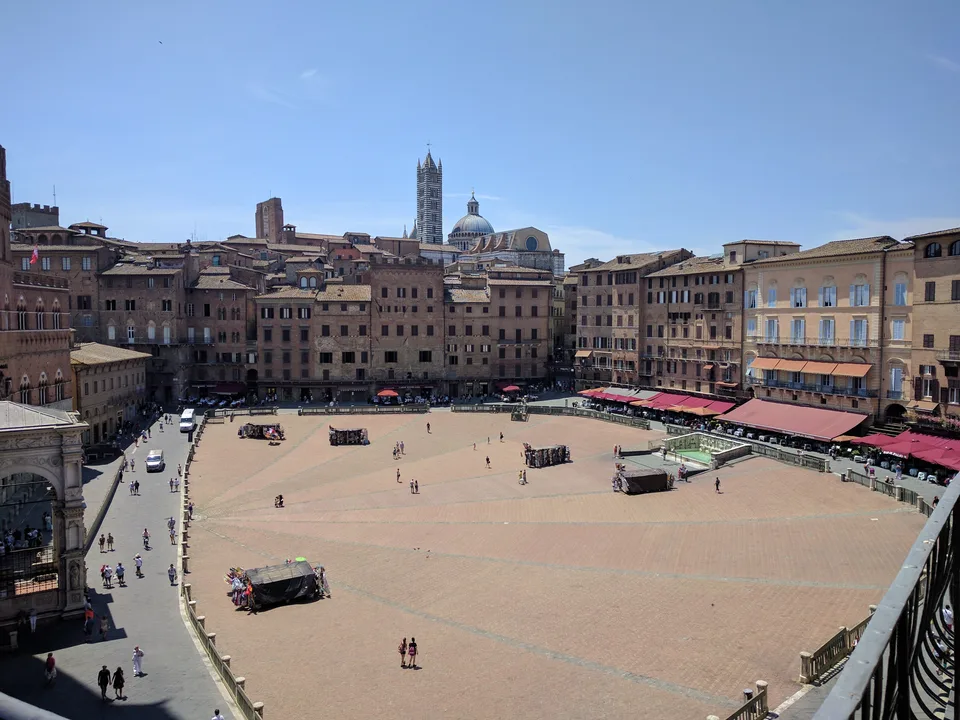
The Campo is a good place to begin understanding the city’s layout. Its sloping, shell-like space opens beneath the Palazzo Pubblico and Torre del Mangia, surrounded by streets that lead away in different directions. Make one circuit to orient yourself, then return later rather than treating a first photograph as the end of the visit.
Notice how the square changes with ordinary activity, visitors and preparations for events. A café stop can be worthwhile if you choose it deliberately: inspect the menu and table-service prices first, especially when comparing a seated drink with a quick purchase elsewhere. Leave space for people moving through narrow exits and avoid climbing on monuments for a view. During the Palio period, the Campo becomes a very different environment, with access controlled for the event. An ordinary sightseeing plan should not assume unrestricted passage on those dates.
Pair the Civic Museum with a realistic tower decision
The Civic Museum’s visitor information lists ordinary museum admission at €10, or €11 with reservation. A combined Civic Museum and Torre del Mangia ticket costs €15 and is valid for one day. Tower tickets cannot be reserved: they are sold in person on the day, with limited places. Do not build a train connection around an ascent you have not secured.
The tower involves roughly 400 steps without a lift. Choose it because everyone taking part wants the climb, rather than because a skyline view seems compulsory. The museum provides a different experience inside the Palazzo Pubblico, with access arrangements to discuss with staff if needed. Check which rooms are open and allow time to look at the art. A combined ticket is useful only when the visits fit your interests and available time; it is not a reason to rush both.
Understand the cathedral tickets before booking
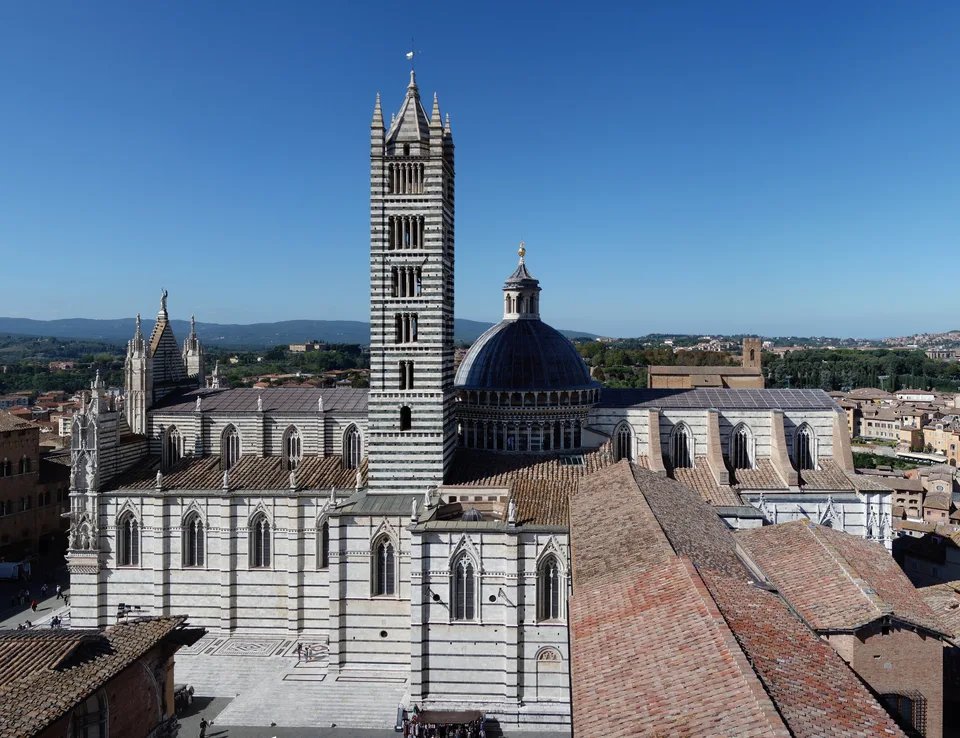
The Opera Duomo’s official visitor page distinguishes the ordinary Opa Si Pass from the Porta del Cielo experience that includes the cathedral’s upper spaces. The ordinary pass currently costs €14, rising to €16 during the stated floor-uncovering periods; the roof-inclusive ticket is €21. Confirm the exact product and availability through the operator’s own booking link rather than relying on an independent site with a similar name.
The Opa Si Pass is valid for three consecutive days, so the complex need not become one breathless session. Separate the cathedral interior, library and museum elements according to your interests and the day’s arrangements. Worship, seasonal opening and restoration can affect access. Ask in advance about stairs and mobility: access to the cathedral does not mean every part of the complex is accessible in the same way. Dress and behave appropriately for a functioning religious building.
Add Santa Maria della Scala for a different perspective
Across from the cathedral, Santa Maria della Scala offers another substantial interior visit. The former hospital’s conversion into a museum complex provides a useful change from seeing only churches and civic architecture. Give it a distinct part of the day rather than assuming you can absorb it while waiting for another appointment.
The museum’s official planning page currently lists full admission at €9, or €8 with reservation, and describes accessible routes with staff assistance needed for some passages and lift use. Check the programme and the route that suits your group. Winter hours differ between weekdays and weekends, and Tuesday closure applies during the stated winter period. Combined municipal tickets have their own terms and occasional sales restrictions. Establish those before comparing them with separate admissions; a cathedral pass is not a universal ticket for all Siena’s museums.
Leave room for gardens, fountains and an unbooked walk
A stay dominated by major interiors can miss the contrast between Siena’s dense streets and its green spaces. The municipal tourism parks and gardens information points towards places such as the Orto de’ Pecci area, while the official attraction guidance identifies viewpoints and outdoor alternatives including the Fortezza Medicea and Orti dei Tolomei. Choose one that fits your route and energy.
Check the approach before setting out: a garden below the centre can mean an uphill return. A short walk followed by time to sit may be more satisfying than crossing town for a long list of viewpoints. Historical fountains also offer a way to notice how the city functioned, beyond its grand façades. If interested in the underground Bottini, seek a confirmed authorised visit; access is limited and requires advance arrangements. Do not interpret a visible entrance as permission to explore independently.
Decide whether the Palio is the purpose of your trip
The municipal Palio website gives the traditional dates as 2 July and 16 August. This is a community occasion that changes the city’s rhythm, not simply a short performance inserted into a normal sightseeing day. Accommodation, movement through the centre and the atmosphere around the Campo all need different planning.
The official visitor information explains that standing inside the square is free, subject to entering before access closes and within capacity. Paid stands, windows and balconies are arranged with their individual operators or owners; there is no single central ticket office for them. Read the current event leaflet before committing, especially with children. The August 2026 instructions prohibited under-tens even with adults and restricted what spectators could bring. Future editions require their own checks. The standing area should not be assumed suitable for every family or mobility need.
Arrive with a plan for the final climb into town
Siena’s railway station and the historic centre are not the same arrival point. The station-to-Antiporto mechanised route connects through the Porta Siena shopping centre towards the Camollia side, after which there is still a walk into the historic streets. Check current service notices if that route is important to your luggage or mobility arrangements.
The University of Siena’s arrival information links to rail and coach operators and identifies Florence and Pisa among the airports used for reaching the city. Compare the complete journey for your date: flight, onward connection, final arrival stop and access to the accommodation. Some routes require changes, and a rail operator’s national presence does not establish a direct high-speed train to Siena. For an evening arrival, confirm check-in and the last local connection before buying. A taxi quotation may be useful when the final transfer otherwise becomes awkward.
Use local buses without confusing regional fares
Autolinee Toscane’s urban capital ticket includes Siena and currently costs €2, valid for 70 minutes from validation or activation. The 90-minute rule shown for Florence is a different provision. The operator’s current fare page distinguishes urban tickets from regional and faster interurban products; a low starting price does not describe the entire Siena–Florence journey.
Plan a specific route and check the boarding stop and return service. Paper and digital products have their own validation arrangements, so read the operator’s instructions when buying. Do not assume purchasing a ticket completes every step required before travel. The driver-sold urban ticket currently costs €3, making advance purchase useful when practical. For an outlying hotel or prospective home, investigate evenings and weekends as carefully as the daytime outward journey. A bus stop nearby is valuable only if its actual service fits your routine.
Keep the car outside restricted streets unless authorised
Much of the visitor core lies within a ZTL, or limited-traffic zone. A navigation app’s route and a room reservation are not permission to drive through a camera-controlled entrance. Ask your property for the correct approach, luggage arrangements and parking instructions before arriving at the boundary.
The municipal lodging-guest access rules allow eligible accommodation businesses to register guest vehicles for restricted luggage operations, with route and stopping limits. That is not unrestricted driving or long-term parking permission. Confirm that the property can arrange what you need and that the registration details are correct. Also check Sigerico’s current access notices: its 26–30 October 2026 closure affects the pedestrian passage between San Marco and the Duomo car park, while the car park itself remains accessible. Treat a dated passage closure separately from the status of the whole parking facility.
Match accommodation to your evenings and luggage
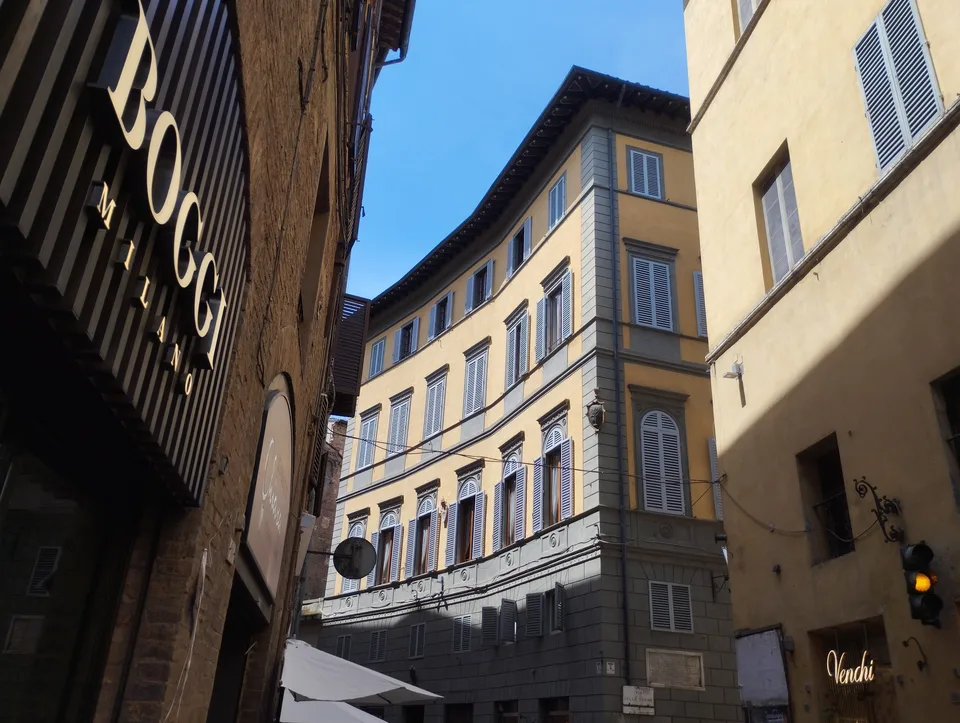
A central hotel or guesthouse suits a visit built around walking, museum appointments and dinner in town. Before booking an older building, confirm the actual room floor, lift, bathroom arrangements and whether staff can help with late arrival. “Historic character” does not establish step-free access or quiet windows. Ask how far you will carry luggage from the permitted drop-off point.
An apartment can work well for several nights when you will use a kitchen and laundry. Compare cleaning charges, minimum stays and check-in conditions with a hotel’s total price. A rural property outside Siena is a different holiday choice, particularly if you want to spend time there or explore by car. Include the cost and practicality of returning after dinner. For families, review the sleeping layout and food preparation facilities rather than deciding entirely from a balcony photograph or a broad location label.
If your group includes a light sleeper, ask which rooms face the street and whether there are internal alternatives. Confirm heating or cooling for the dates you are booking, and keep the written response with the reservation. These details are easier to settle before arrival than after unpacking in an unsuitable room.
Build a budget around the visits you will actually make
Published ticket prices offer useful anchors without establishing one universal daily budget. Two ordinary Opa Si Pass admissions currently total €28 outside the floor-uncovering periods or €32 during them. Two Civic Museum and tower combinations total €30 if the tower places are available. Four standard urban tickets bought through the ordinary advance channels total €8.
Add accommodation, meals and arrival transport before comparing optional excursions. Check whether a room quotation includes parking, breakfast, cleaning and any applicable visitor tax. If driving, include tolls, fuel and parking rather than treating the rental rate as the full cost. If travelling without a car, calculate the journeys from your precise accommodation. Keep some flexibility for an indoor alternative in poor weather, and avoid paying for overlapping passes whose included attractions you will not have time or interest to visit.
Choose the season for walking and opening hours
Siena’s hilly setting gives the seasons a practical importance. The municipal tourism weather guidance describes hot summers, cooler winter conditions and opportunities for outdoor visits in spring and autumn. Broad expectations are more useful than a promise of a particular temperature on your dates. Heat can make repeated climbs tiring even when the distances remain short.
Plan longer walks earlier or later in a hot day, with water and breaks. In winter, check daylight and the shorter opening of individual attractions; the tower and museum do not necessarily close together. Rain can change an outdoor plan, and the official attraction guidance notes that bad weather can close the tower. Event dates also deserve a separate check. Decide whether you want the intensity of the Palio period or a visit focused on ordinary town life, then choose accommodation and reservations accordingly.
A three-day introduction without racing between museums
Use day one to orient yourself around the Campo, then visit the Civic Museum if it suits your interests. Investigate tower availability early if the climb matters, leaving the rest of the day adjustable. Finish with a walk through nearby streets and dinner without adding a distant excursion immediately after arrival.
Dedicate day two to the cathedral complex, choosing the correct pass and allowing a generous break. Add Santa Maria della Scala only if you still have the attention for another substantial interior; otherwise save it for day three. That final day can combine the former hospital with a garden, fountain route or viewpoint. Swap the order for opening days, worship or weather, and check ticket validity before postponing a visit. Anyone planning a countryside outing should consider an additional night rather than compressing the city’s main experiences into the remaining hours.
Test Siena as a home during an ordinary week
A reconnaissance stay should include a normal commute, groceries, laundry and time near the prospective address after visitor hours. Compare the route to your workplace or course with the route to the Campo; they may pull your housing search in different directions. Check stairs, storage, heating, ventilation and broadband at the actual property.
The University of Siena’s accommodation guidance describes private rentals and DSU Toscana student housing, the latter subject to application criteria and availability. Admission to a course does not automatically secure a room. Students should use the institution’s current housing channels and investigate a listing and landlord before transferring money. For any household, clarify the lease duration, deposit, charges and notice terms. Photograph the condition at entry and establish who handles maintenance. A furnished temporary stay can buy investigation time, but compare its total cost with your settling-in budget.
Treat essential services as part of the housing decision
Ask which utilities need individual contracts and which are included in building charges. Record meter readings when moving in and establish the heating arrangement before comparing rents. A lower monthly figure can conceal different energy, connectivity or transport costs. If you need reliable internet for work or study, verify the address’s service and the room where you will use it.
Investigate healthcare registration and insurance for your legal status, and confirm how to access any continuing treatment. Families should check school admission and the journey independently of tourist information. Consider a home’s access on a day involving shopping bags, a pushchair or limited mobility, not just a pleasant walk with a small backpack. Living in a hill city can work well, but the everyday route needs to suit the people who will actually use it.
Separate tourism from work, study and permanent relocation
Begin with the Italian Foreign Ministry’s Visa for Italy portal, using your nationality, residence and purpose. The ordinary Schengen short-stay framework for relevant non-European visitors is generally 90 days in any 180 across the area. EU citizens have a different framework. Tourist entry does not grant unrestricted employment or permanent residence, and a lease does not establish an immigration entitlement.
Italy has a specific route for qualifying digital nomads and remote workers. The official embassy checklist describes professional, income, insurance and accommodation conditions; confirm current thresholds with the mission handling your application rather than relying on an older figure reproduced online. Study has its own procedures. The University of Siena’s permit guidance tells first-time non-EU arrivals with a study visa to apply for the relevant residence permit within eight working days. Match each application and arrival formality to your actual status before making long-term commitments.
Compare nearby bases and keep countryside plans realistic
VisaWand’s Italy country guide provides wider context, while its Italy location directory helps compare destinations. Florence may suit a journey centred on its own museums and onward connections. San Gimignano and Montepulciano are other Tuscan locations to investigate, each requiring its own transport and accommodation decisions.
Do not assume a map full of nearby hill towns translates into an effortless sequence of bus trips. Check each connection and return before adding a winery or village reservation. For broader planning, use the Italy destination page and consultant listings when immigration advice would help. A coherent few days in Siena, with time between the major visits, is often more useful than a schedule that spends most of its daylight transferring elsewhere.
Official planning resources
Reviewed 28 October 2026. Use the official resources linked throughout this guide for admission, transport, housing and immigration decisions. Prices, services and rules can change; confirm the details relevant to your dates. Photography illustrates the locations and is not a live view.
View all official resources
- UNESCO Historic Centre of Siena
- Visit Siena official history
- Siena Civic Museum official visitor information
- Opera Duomo Siena official visitor information
- Santa Maria della Scala official visitor information
- Visit Siena parks and gardens
- Visit Siena official attraction questions
- Comune Siena Palio dates
- Comune Siena Palio visitor information
- Sigerico railway station mechanised route
- University of Siena arrival operators
- Autolinee Toscane urban capital ticket
- Autolinee Toscane current tariffs
- Comune Siena lodging guest ZTL access
- Sigerico October2026 pedestrian passage works
- Visit Siena official local food
- Visit Siena official seasonal planning
- University of Siena accommodation guidance
- Italian Foreign Ministry Visa for Italy
- Italian Embassy Washington digital nomad remote worker checklist
- University of Siena residence permit guidance
Plan the next part of your journey
Explore the Italy guide, browse other cities or compare consultants for your travel and relocation questions.