Visa
A city of lava stone, markets and substantial discoveries
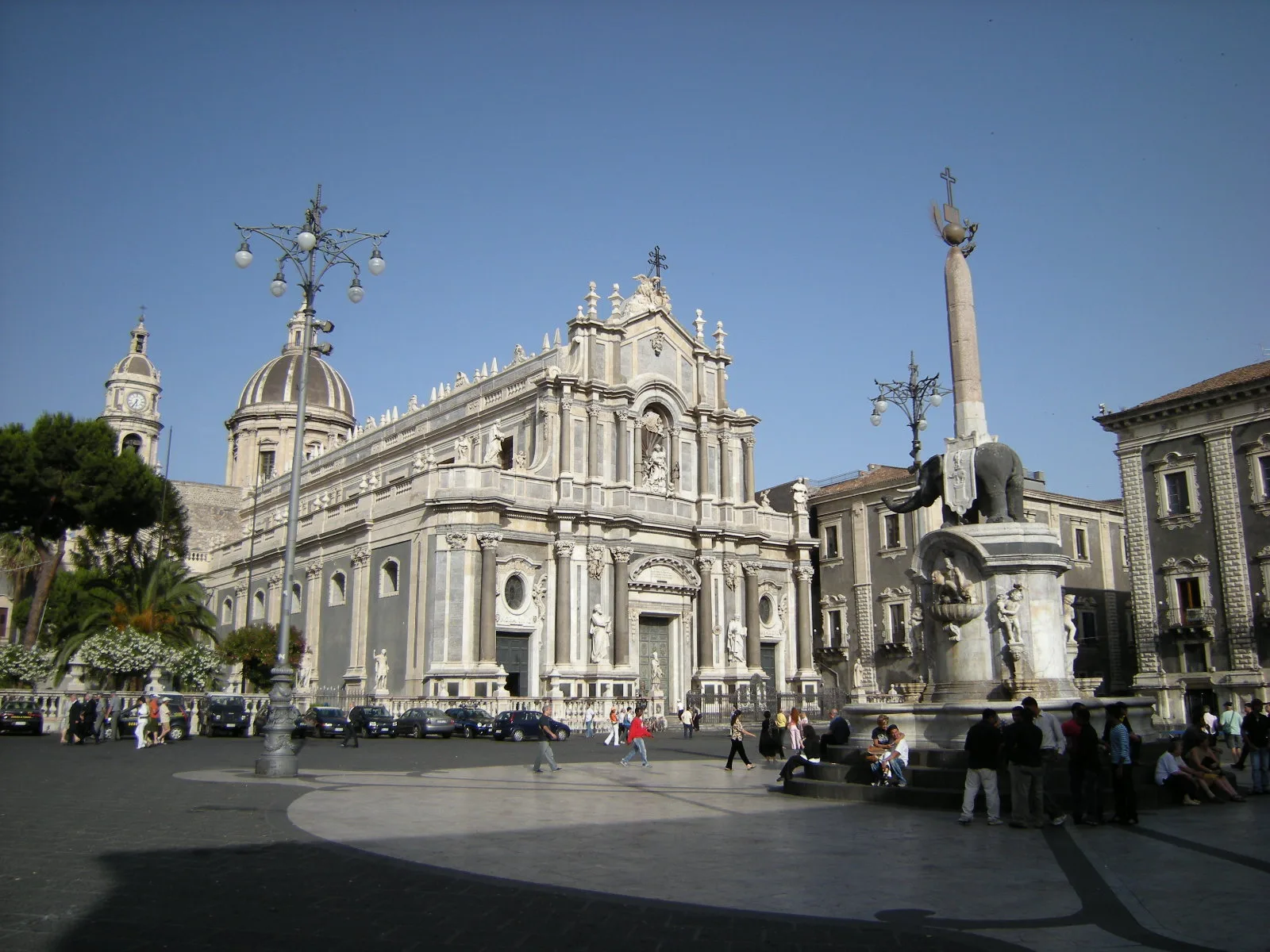
Catania rewards a stay that gives the city itself priority. The basalt elephant in Piazza Duomo, the Pescheria behind the cathedral and the drink kiosks described by Sicily’s official tourism board introduce three different sides of the place: monumental, commercial and sociable. This is a useful base for eastern Sicily, but treating it only as an airport gateway means missing much of its appeal.
Choose it for a break built around architecture, food and excursions, with enough flexibility to change an outdoor plan. A central address can make a short visit straightforward; a mountain outing or a beach day needs separate planning. A room near a celebrated square is not automatically the right address for a university department or a daily commute.
For two nights, concentrate on Catania. With three or four, add one regional outing while leaving time for the city’s interiors. If you are considering moving, use part of the stay to test ordinary routines. VisaWand’s Italy country guide provides the national context for the more local choices below.
Read the rebuilding in the streets
Catania’s history extends well beyond its Baroque appearance. Italy’s national tourism portal traces its Greek foundation to 729–728 BC and identifies two later disasters that shaped the modern city: Etna’s 1669 eruption and the 1693 earthquake. Its account of the reconstruction highlights the contrast between white marble and dark lava stone, a combination that makes a walk through the centre unusually distinctive.
The UNESCO listing for the Late Baroque Towns of the Val di Noto covers eight towns and specific urban areas in Catania. Inscribed in 2002, it recognises the architectural response to the earthquake. The designation should not be understood as covering every neighbourhood within the modern municipal boundary.
Look beyond a single postcard view. Compare the scale of a palace entrance with a nearby street, notice how buildings frame squares, and leave time to study details above shopfronts. This is also an occupied city: churches, university buildings and private residences have purposes beyond receiving visitors. An impressive exterior does not establish that every room is publicly accessible.
Choose an area by the journeys you will repeat
For an initial sightseeing stay, compare addresses around Piazza Duomo and the central stretches of Via Etnea. They make sensible starting points for organising a walking visit, provided the actual property entrance suits your needs. Do not read “historic centre” as a guarantee of a lift, quiet bedrooms or vehicle access to the door.
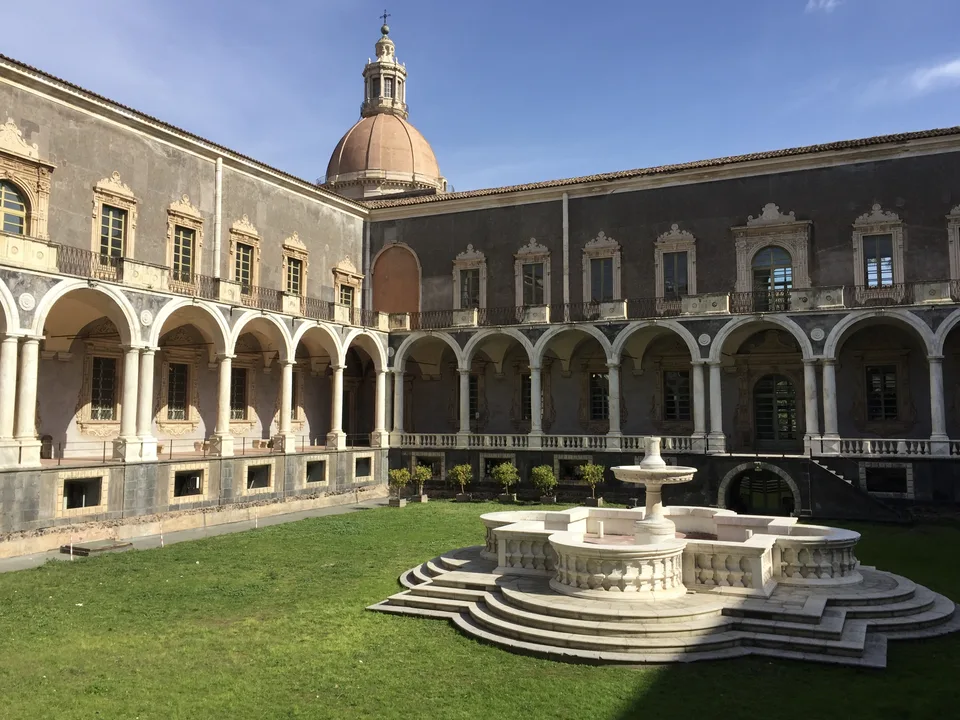
Around Piazza Dante, the Benedictine complex gives the area a clear cultural and university focus. Around Piazza Carlo Alberto, the Fera ’O Luni market offers a different shopping experience from the Pescheria. The national tourism portal places this market between Piazza Carlo Alberto and Piazza Stesicoro; its name should not be taken to mean that it operates only on Mondays.
For a longer stay, compare the route to your particular workplace or department with the location of a metro station and food shops. If you prefer the coast, investigate San Giovanni Li Cuti separately rather than assuming a seaside address offers the same convenience for central sightseeing. Visit a prospective street in the evening as well as during the day before committing to a lengthy tenancy.
Start with Piazza Duomo and leave room for the market
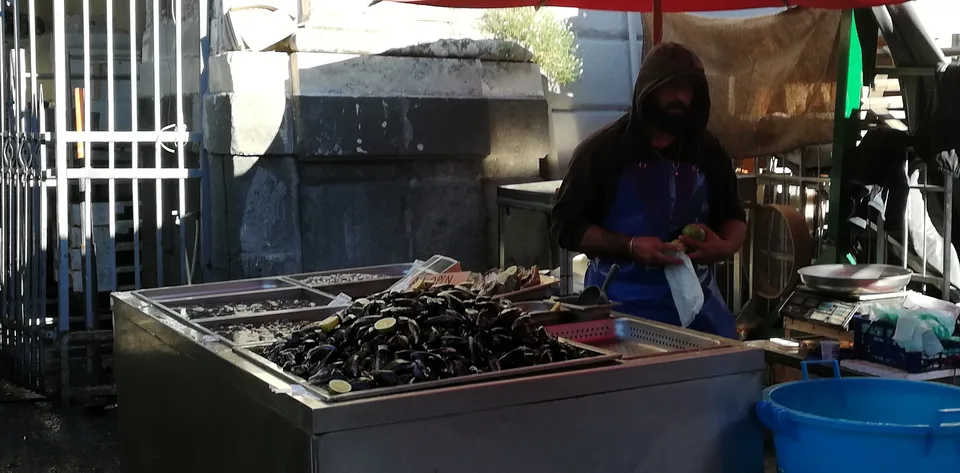
Piazza Duomo makes an effective first orientation point. See the elephant fountain, locate the cathedral, and then turn towards the Pescheria. The regional tourism board describes a market that is partly sheltered and partly open, with fish, meat and fruit among its goods. It is a working shopping space, so keep passageways clear and ask before photographing people at close range.
Go in the morning rather than building your market visit around an unverified afternoon schedule. If market activity is essential to your plans, confirm the trading day locally; a lively photograph cannot establish Sunday or holiday opening. Decide whether you are browsing, buying ingredients or stopping for food, because each calls for a different amount of time.
Later, make room for Villa Bellini. The national visitor listing describes gardens spread across two hills, with fountains, sculptures and an entrance from Via Etnea. That makes a pleasant change of pace after stone interiors, although the stairway at the principal approach matters if steps are difficult. Ask about an appropriate entrance rather than assuming the most photographed approach is the easiest.
Reserve the monastery route you actually want
The Benedictine Monastery’s official visitor information distinguishes a guided visit from access to university spaces. During the humanities department’s opening hours, entry to areas used by the university community can be free. That does not give unrestricted access to the guided visitor route. If the monastery is a priority, reserve the appropriate tour.
The operator lists a full guided-visit price of €10, category-specific concessions and tours in Italian and English. Places are limited and booking is required. Check the calendar for your language and date: the information page describes general daytime hours alongside an August extension, so confirm a particular departure through the booking schedule.
Allow time to reach Piazza Dante and find the meeting point. Ask about stairs, walking distances and access requirements before choosing a departure. Keep the next appointment flexible enough to enjoy the visit without watching the clock.
The San Nicolò l’Arena complex should not be confused with San Benedetto on Via Crociferi. The regional tourism board describes the latter as a separate monastic site where cloistered nuns still live. Confirm the building name when arranging a visit or asking for directions.
Add a palace, the castle and a careful theatre check
Palazzo Biscari’s own visitor page lists a €10 full ticket, €7 concessions for specified groups and free entry for children under ten. It describes visits of approximately thirty minutes, with Italian, English and French available. Its calendar applies to the current week, and private events can alter opening unexpectedly. Contact the palace for a future date instead of treating the displayed weekly table as a permanent timetable.
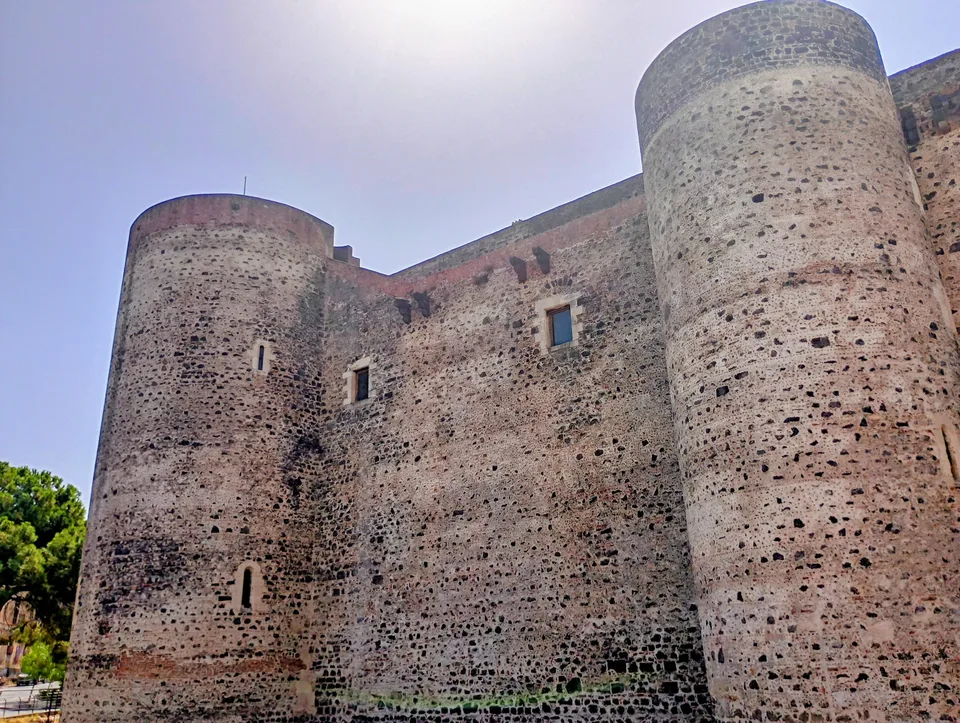
Castello Ursino offers a different architectural experience: a thirteenth-century fortress founded by Frederick II and now a civic museum. Make it a separate stop rather than trying to fit every substantial interior into one morning. Check the exhibition and ticket arrangements before arrival; temporary displays can affect what a museum visit includes.
One important current limitation concerns the Teatro Massimo Bellini guided tours. At the time of review, the theatre’s page still carries a suspension notice beginning 10 May 2026 for extraordinary maintenance. Older tour prices and general visiting descriptions remain further down the page. Do not treat them as evidence that tours have resumed. Ask the theatre directly before making an interior tour part of your itinerary.
Compare the airport bus with the railway connection
The AMTS Alibus costs €4, with a total validity of ninety minutes that also covers other urban AMT services. Ordinary urban tickets, FCE tickets and ordinary AMT passes do not themselves cover Alibus. Buy the airport product rather than assuming a city pass will be accepted.
Follow the operator’s specific payment instructions. Airport machines accept coins or cards, with tickets validated aboard. Onboard machines accept coins or cards and validate automatically; staff-operated payment devices accept cards, rather than cash handed to staff. App purchases also require onboard validation. Have a payment method ready before joining the boarding queue.
The airport’s railway information places Catania Aeroporto Fontanarossa station about 600 metres away along a pedestrian route. It lists a €1 shuttle at ten-minute intervals between 04:30 and 22:40. An integrated Trenitalia destination named “Catania Aeroporto Fontanarossa Bus” includes that shuttle; a railway ticket without “Bus” in the destination does not.
Compare the complete journey to your accommodation, including the walk after arrival. The airport railway station and Catania Centrale are different places. For a very late arrival, confirm an operating connection before choosing accommodation on the assumption that public transport will deliver you nearby.
Understand metro tickets before choosing a pass
The current Circumetnea urban fare table is particularly useful because ticket names can mislead. A €1 metro ticket covers one journey. The €1.40 ticket allows two journeys within 120 minutes, while the €3 twenty-four-hour ticket allows four journeys. The last is not an unlimited day pass.
An integrated MetroBus ticket costs €2 for 120 minutes, allowing one metro journey and unlimited travel on the covered AMTS services during that period. Alibus and line 524S are excluded. Compare your intended trips with the conditions before paying; a pass that sounds comprehensive may not cover the airport or every bus.
Check Circumetnea’s current service hours when planning evenings. Its published metro schedule runs later on Fridays and Saturdays, whereas its railway and bus sections state that those services are suspended on Sundays and public holidays. Those are separate service categories: a statement about the railway should not be applied automatically to the metro.
For sightseeing, group nearby stops and walk between them where practical. For a commute, test both directions at the relevant hour. A station name on a map is less useful than knowing the walk from its entrance to the building you need.
Treat Etna as a conditional mountain day
Etna deserves a plan of its own. Italy’s Civil Protection guidance explains that conditions change sharply with altitude and that eruptive activity can alter the terrain. It recommends hiking footwear, wind protection, water and food, as well as checking volcanic activity before an excursion. Authorised guides are recommended for visitors without continuously updated knowledge of the area and its hazards.
Choose the experience you actually want: a lower-altitude landscape visit and a demanding high-altitude excursion are different purchases. Before paying, request the meeting place, walking distance, elevation profile, equipment arrangements and cancellation terms. Ask which access orders apply to the proposed route on your date. A broad description such as “Etna tour” does not establish permission to reach a particular crater.
Keep a city alternative available. Weather, volcanic activity and local restrictions can change the achievable itinerary, and a photograph of an earlier ascent proves nothing about today’s access. Do not schedule an ambitious mountain outing immediately before an essential flight. The purpose of leaving flexibility is to enjoy the landscape without making a risky timetable the deciding factor.
Make food and shopping part of the visit
Pasta alla Norma is a good introduction to the local table. Italy’s national food guide describes tomato, fried aubergine and ricotta salata in the Catania speciality. Its discussion of the name’s association with Bellini’s opera is qualified, so the appealing story should not be presented as an established historical quotation.
For a less formal meal, explore what is available rather than choosing a vendor solely because a queue looks photogenic. The national tourism board’s Catania food itinerary highlights caponata, aubergine parmigiana, arancini and cipolline, alongside market produce, citrus granitas and almond sweets. Check fillings and preparation if you avoid meat, dairy or gluten; a vegetable-based name is not a complete ingredient statement.
Markets are useful for comparing produce and buying manageable quantities. An apartment kitchen only saves money if you intend to use it and have somewhere to store purchases. For gifts, compare labels, quantity and transport requirements before buying preserves or perishable food. At a drinks kiosk, ask what goes into the preparation you choose. Taste and ingredients are more useful guides than unverified claims about health benefits.
Budget from verified costs and actual accommodation quotes
Build a budget in separate parts: accommodation, airport journeys, local transport, meals, admissions and one chosen excursion. The published fares above make small costs predictable; accommodation and guided outings require quotes for your dates. A single claimed daily budget would conceal too many differences between a hostel bed, a private room and an apartment shared by a family.
Two full-price monastery and palace tickets total €20 per adult before any concessions. Use that as an example of a planned cultural spend, then add meals and transport separately. It is not an estimate of a complete day in Catania.
For a hotel or apartment, request the final amount including cleaning, arrival arrangements and any applicable accommodation tax. Municipal tax material has changed, and older published tables should not be carried forward without checking the rules for the booked property and dates. Obtain the itemised figure from the accommodation provider before paying.
Keep a modest contingency for a changed connection or an indoor alternative. Cutting every allowance until an itinerary only works under perfect conditions usually produces a fragile budget, especially when a mountain outing is involved.
Choose accommodation for the stay you are making
A staffed hotel can be useful for an uncertain arrival time; an apartment may suit a family that needs cooking facilities and separate sleeping space. Compare a hostel’s room type and shared facilities carefully, and ask a guesthouse how check-in works when there is no continuously staffed reception. These are booking choices rather than guarantees attached to a category.
For the coast, distinguish a small volcanic bay from a sandy beach holiday. The regional tourism board’s beach information includes Catania’s Playa in its 2026 Green Flag list of child-friendly beaches. The distinction between a small volcanic bay and a beach resort still matters. Choose the setting first, then check transport, seasonal services and current sea conditions. Neither a coastal photograph nor a room’s “near the beach” description establishes suitable swimming conditions.
Choose a season around your main activity
Sicily’s tourism board describes hot summers, shorter winters and rainfall concentrated more in winter. That regional pattern is useful for planning, but its island-wide figures should not be treated as precise Catania weather normals. Check the city forecast close to departure and the mountain forecast separately if Etna is included.
For an architecture-led visit, spring or autumn is a sensible starting choice: organise longer walks when conditions are comfortable and keep an interior available if the weather changes. In summer, allow a substantial break between morning sightseeing and the evening. In winter, choose accommodation for comfort indoors as well as its address.
The main Sant’Agata celebrations fall on 3–5 February, according to the regional visitor information. Choose those dates deliberately if religious traditions are central to your trip. Confirm procession arrangements and access with your accommodation rather than assuming ordinary street movements will apply. If you prefer an uncomplicated first orientation, compare other dates before booking. No season guarantees a mountain ascent, a swimming day or a clear view from a particular viewpoint.
A workable three-day introduction
Day one: begin with Piazza Duomo and a morning market visit, then take a proper lunch break. Spend the afternoon walking a manageable section of the centre and include Villa Bellini if time and energy allow. Keep the evening open for dinner rather than adding another timed admission.
Day two: use a confirmed monastery departure as the fixed point. Add either Palazzo Biscari, if its opening is confirmed, or a castle visit. Between appointments, leave room for the walk and a café stop. Trying to combine every interior usually turns the day into a sequence of arrivals rather than a satisfying exploration.
Day three: take the Etna outing only if the operator confirms the route and conditions. Otherwise, use the day for an unvisited city interior and a coastal outing appropriate to the forecast. Keep the return arrangements clear before leaving central Catania.
With only two days, keep both in the city unless the mountain is your overriding reason for coming. With four, give a separate regional destination its own day. This itinerary is a suggested pace, not a promise that every venue opens daily or that all excursions operate in poor conditions.
Test housing and household routines before moving
For a longer stay, begin with a short booking while you inspect neighbourhoods and properties. Compare the actual commuting route, bedroom noise, ventilation, heating, cooling and internet connection. Ask whether a lift serves the apartment’s floor and whether any steps remain between the street and front door. Attractive photographs do not answer these questions.
Request written terms covering rent, deposit, duration, notice, utilities and shared building charges. Confirm the landlord’s identity and the property before transferring a substantial payment. Compare complete monthly costs rather than a nightly holiday quote multiplied by thirty, and obtain independent advice if contract language is unclear.
For water, SIDRA’s official service portal provides account, bill and consumption functions and information about contracts and changes of customer. Establish who holds the account and record meter readings at handover. Check the electricity arrangement separately, along with rubbish instructions and the reliability of the property’s internet for your own work.
Map essential shops and services during the trial stay. If schools, healthcare or accessibility are decisive, verify the relevant provision before choosing a lease. A pleasant holiday street is only one part of a workable household address.
Keep tourism, study and employment permissions separate
Use the Foreign Ministry’s Italy entry guidance and Visa for Italy application database to check requirements for your nationality, residence, purpose and duration. Eligible visa-exempt short visits generally fall within the Schengen limit of ninety days in any 180; time elsewhere in Schengen counts too. That limit is not permission to take employment or settle permanently.
For a qualifying long stay, establish the correct national visa route before relocating and follow the applicable residence-permit process after arrival. The visa database describes an eight-working-day application obligation for the relevant residence permit. Do not assume a tourist entry can be converted into whatever status you later prefer.
Students should use the University of Catania’s international-student information for admissions and support, then consult its current document guidance for the codice fiscale, health cover and residence formalities. EU citizens follow different residence-registration rules from non-EU students. Confirm the arrangements for your circumstances before paying for a long tenancy.
VisaWand’s consultant listings can help you identify professional support. Verify the adviser’s relevant authorisation and scope of service; an appointment or university admission is not itself an immigration approval.
Compare the coast and other Sicilian bases
San Giovanni Li Cuti offers a small coastal setting within Catania’s wider urban experience; Aci Castello and Aci Trezza provide options further along the lava coast described by the regional tourism board. Decide whether you want a short change of scenery or a different overnight base. Confirm the outward and return transport before assuming any coastal stop is effortless without a car.
For a wider trip, compare VisaWand’s Taormina city page with the practicalities of staying in Catania. More time in one base can be preferable to changing accommodation for every outing. Browse the Italy location directory for other places and the Italy destination page for related planning resources. A location listing should not be mistaken for a completed travel guide.
Make the final choice around your priorities: central cultural visits, a particular regional excursion or the routines of a possible future home. Catania can serve each purpose, but the strongest plan gives the city enough time and treats the travel beyond it as a deliberate addition.
Official planning resources
Reviewed 17 October 2026. Use the official resources linked throughout this guide for admission, transport, housing and immigration decisions. Prices, services and rules can change; confirm the details relevant to your dates. Photography illustrates the locations and is not a live view.
View all official resources
- Official Sicily tourism: Catania
- Italy tourism: Catania history and sights
- UNESCO Late Baroque Towns of the Val di Noto
- Villa Bellini visitor information
- Benedictine Monastery official visits and ticket information
- Palazzo Biscari official guided visits
- Teatro Massimo Bellini tour suspension notice
- AMTS Alibus fare and validity
- AMTS Alibus payment instructions
- Catania Airport railway and shuttle information
- Circumetnea current urban tickets
- Circumetnea current service hours
- Civil Protection Etna hiking guidance
- National tourism guide to Sicilian food
- Catania markets and food itinerary
- Sicily official 2026 Green Flag beach list
- Sicily official seasonal visitor advice
- SIDRA water accounts and customer services
- Foreign Ministry entry into Italy
- Visa for Italy official application database
- University of Catania international students
- University residence documents and health cover
Plan the next part of your journey
Explore the Italy guide, browse other cities or compare consultants for your travel and relocation questions.