Visa
Isfahan’s appeal comes with a serious present-day decision
Isfahan’s great square, tiled mosques, Armenian heritage and historic bridges explain its place in journeys through Iran. It is a city to understand through architectural details and ordinary encounters with craft, food and neighbourhood life. Yet those attractions cannot be separated from present conditions: at this guide’s review, the UK government advised against all travel to Iran.
The US State Department’s advisory issued on 23 October 2026 also said not to travel for any reason and urged US citizens in Iran to leave immediately. It highlighted risks including arbitrary arrest and wrongful detention. These warnings belong at the beginning of any decision about visiting or relocating, not beneath a list of beautiful buildings.
This guide explains the destination and the questions that matter if circumstances permit a future visit or you already have a necessary connection there. It does not establish that a leisure trip is currently advisable. Start with VisaWand’s Iran country guide, your own government’s advice and an insurer willing to confirm the exact cover available for your circumstances.
Understand the city beyond its postcard view
Isfahan lies in central Iran, with the Zayandeh Rud running through its urban geography. The city’s historic monuments are part of a much larger place shaped by commerce, manufacturing, education and residential life. Do not confuse Isfahan city with the wider province, whose destinations and landscapes require separate journeys.
The national tourism portal’s Isfahan overview is useful for its broad setting and cultural context. Some online summaries mix administrative areas and undated population figures, however.
For a visitor, think in clusters: the main square and bazaar, older religious architecture farther through the historic centre, the Chaharbagh corridor and river bridges, and Jolfa’s Armenian heritage. For a prospective resident, add the exact campus or workplace, access to household services and the practicality of reaching essential appointments. Those are different maps of the same city.
Read Naqsh-e Jahan as an urban composition
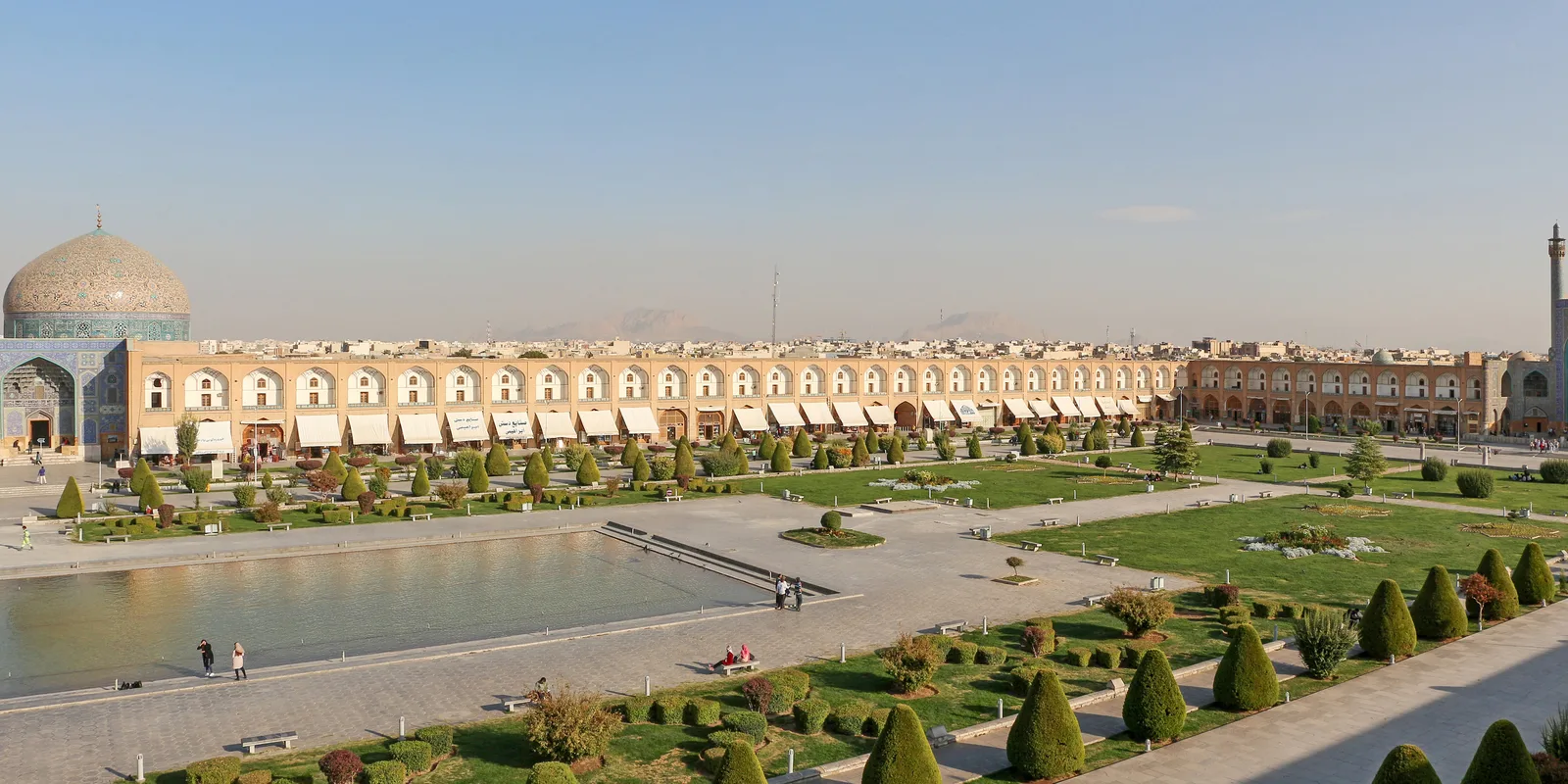
Naqsh-e Jahan Square, also called Meidan Emam, is the clearest introduction to Safavid Isfahan. The UNESCO World Heritage account explains how Shah Abbas I’s early seventeenth-century project brought religious, commercial and royal functions into a single planned ensemble. Look across the space before concentrating on an individual façade.
The Sheikh Lotfollah Mosque stands on the eastern side, Ali Qapu on the west, the Qeyssariyeh gateway to the north and the Royal Mosque on the south. These relationships are more useful for orientation than memorising a string of architectural superlatives.
Treat the square itself and admission to individual monuments as separate arrangements. Check which interiors are accessible, what each ticket covers and whether restoration affects the route. A historical designation confirms significance, not today’s opening hours. Do not purchase an ambitious multi-site schedule until its practical assumptions have been checked.
Give the mosques different kinds of attention
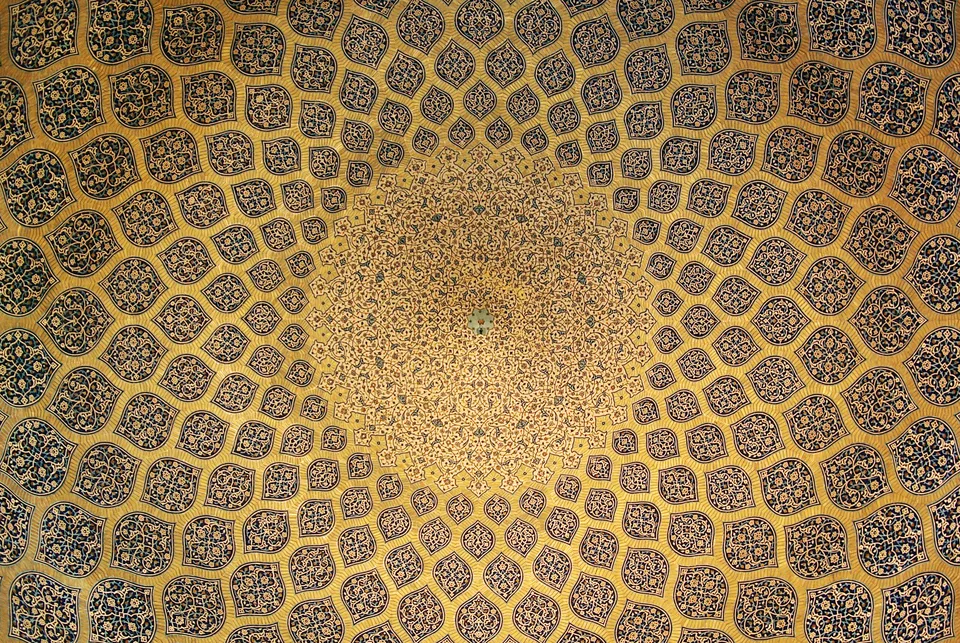
At Sheikh Lotfollah Mosque, the dome’s intricate patterns offer a reason to look patiently rather than move quickly between photographic positions. The Royal Mosque answers a different set of questions about scale, ceremonial space and the relationship between the square and worship. If interiors are accessible, allow time for those contrasts to register.
The UNESCO-listed Masjed-e Jame is a separate monument, not another name for the Royal Mosque on the square. Its fabric illustrates building and decorative changes across twelve centuries, including important Seljuq developments and the arrangement of four iwans around the courtyard. That longer architectural sequence rewards a different visit.
A qualified local guide can help distinguish periods, later interventions and religious practice. Ask about language, qualifications, the intended route and restrictions before agreeing a fee. For independent visits, use a written plan with the exact monument names; translated spellings vary and can otherwise lead to confusion when arranging a pickup.
Chehel Sotun needs an up-to-date access check
Chehel Sotun’s garden and palace belong to the city’s historical landscape, but older descriptions need a substantial present-day qualification. In May 2026, UNESCO’s cultural emergency-response report identified damage affecting Chehel Sotun among heritage sites exposed to hostilities. A photograph taken before that period cannot establish the condition a visitor would encounter now.
On 13 October 2026, UNESCO approved emergency assistance for damage assessment, structural analysis and stabilisation at Chehel Sotun. The record identifies it as a component of the World Heritage property called the Persian Garden. It does not provide a general assurance that normal sightseeing access has resumed.
Ask the responsible local heritage authorities or your accommodation to confirm current arrangements before making it a fixed itinerary stop. If access is restricted, respect barriers and conservation work. Avoid substituting a claim that the whole site is permanently closed: the reliable evidence establishes damage-related intervention, while the access position needs its own current answer.
Follow the bridges without promising flowing water
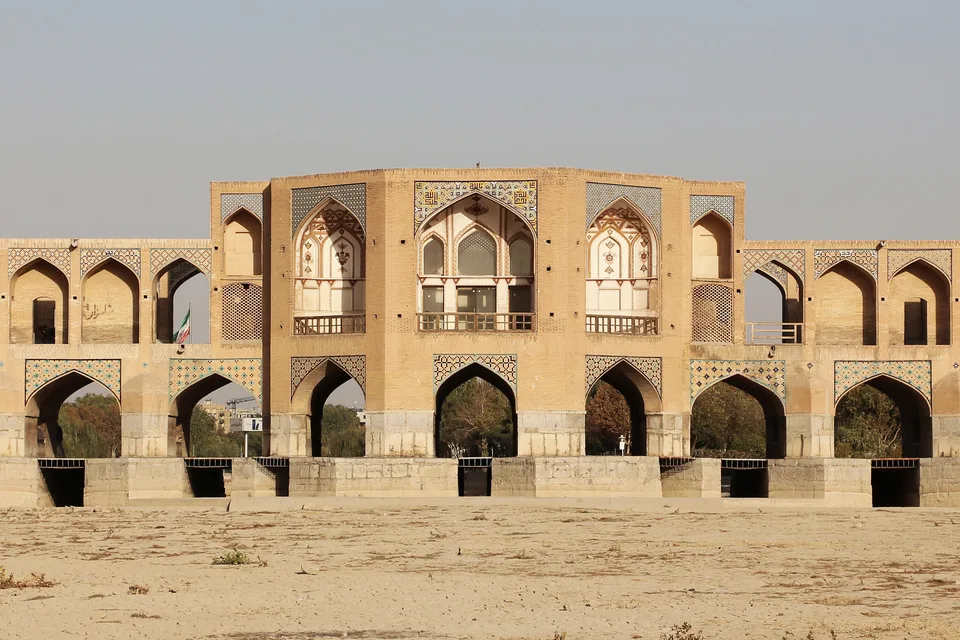
The river corridor gives Isfahan another way to be understood, connecting urban spaces through a sequence of historic crossings. The national tourism account of Si-o-Se-Pol identifies its association with Allah Verdi Khan and its thirty-three arches. It also notes drought-related concerns, a reminder that river photographs can represent very different conditions.
Khaju Bridge is another distinctive structure to investigate when planning a river-focused walk. Compare the architecture and setting rather than expecting water to reproduce a familiar travel image. The dry riverbed in this guide’s historical photograph is a documented past scene, not a forecast of flow during your visit.
Check the permitted walking route and current local conditions before setting out. Do not descend into an apparently accessible channel, approach restricted areas or assume lighting makes every evening route suitable. A short walk that ends with a confirmed return arrangement is more useful than a lengthy circuit built around an unverified transport connection.
Make Jolfa more than a quick church stop
Jolfa offers a different historical perspective through Isfahan’s Armenian community and its religious buildings. Vank Cathedral is the principal place many visitors investigate, but the surrounding streets deserve attention as part of a living district. This is not the northern border town also called Jolfa; save the full Isfahan address when arranging travel.
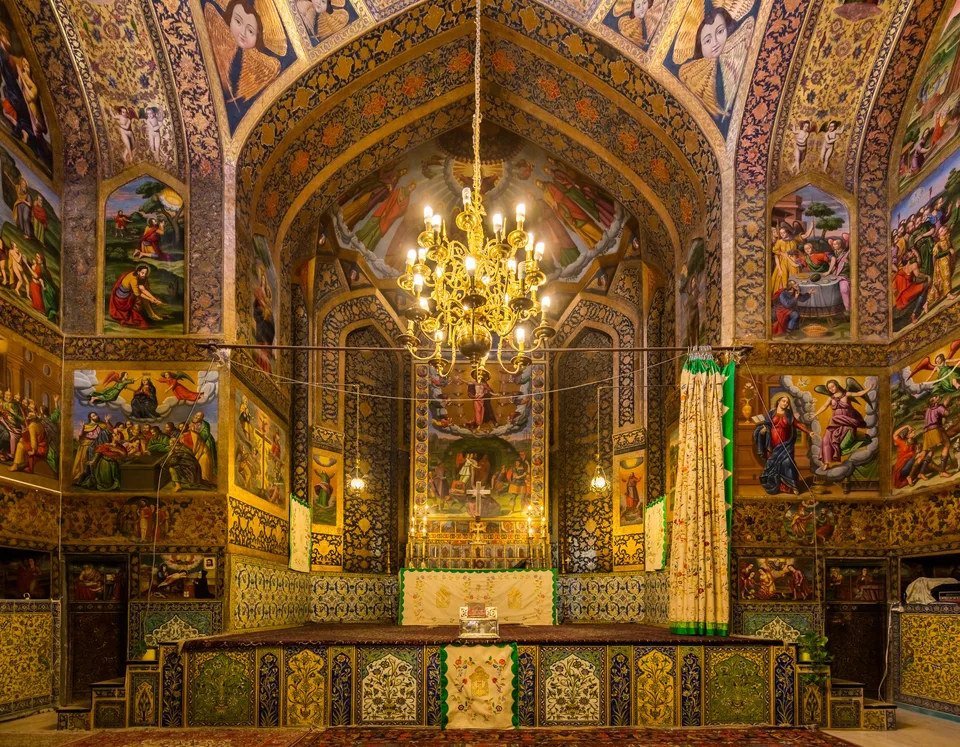
The national tourism page for Vank Cathedral describes the combination of Armenian and Iranian architectural influences, painted interiors and the associated museum. Its decorative richness contrasts with the simpler impression of the exterior. Avoid assuming that access to one part of the complex includes every collection or building.
Confirm the present visiting arrangements directly and respect worship and photography instructions. Allow time to absorb the paintings rather than treating the interior as a backdrop for portraits. Around the visit, choose an ordinary café or meal according to current menus and your needs; a district’s reputation does not verify any individual business’s availability or quality.
Shop for craft with questions, not pressure
Isfahan joined UNESCO’s Creative Cities Network for crafts and folk art in 2015. The UNESCO city profile identifies traditions including carpet weaving, metalwork, ceramics, painting, woodwork and inlay. This offers a useful starting point for looking at objects closely rather than treating every decorated item as the same kind of souvenir.
Ask what material is used, where the object was made and which stages were done by hand. Compare similar pieces, examine finishing and request a written description for a substantial purchase. A workshop visit is most informative when the maker can explain the technique; it need not end in a sale.
Before buying anything expensive, establish payment, shipping, insurance and import conditions for your home country. Sanctions and financial restrictions may affect what is possible. A seller’s willingness to accept an order does not establish that you can lawfully pay for it or bring it home. Leave time to verify those points independently.
Choose food around ingredients and appetite
The national tourism overview of Isfahan province identifies beryuni, kashk-e bademjan and khoresht mast among local dishes, and gaz containing pistachios or almonds among familiar edible souvenirs. Use those names as starting points for a conversation about ingredients rather than assuming every preparation is identical.
A sensible meal plan alternates simple food with an occasional longer restaurant visit. Ask how large a portion is, whether bread or accompaniments cost extra and which dishes suit your appetite. A meat dish may be substantial enough without ordering several additional courses because a menu photograph looks appealing.
For allergies or vegetarian requirements, ask specifically about nuts, dairy, meat stocks and shared preparation. Do not infer suitability solely from the translated dish name. When buying sweets for travel, check ingredients, packaging and storage advice, then confirm the import rules at your destination. Choose quantities you can carry and keep in good condition.
Select accommodation by the route outside the door
A base near the square suits an architecture-focused plan, while the Chaharbagh area can help connect different parts of a central stay. Jolfa may appeal if Armenian heritage is a priority. These are areas to investigate, not promises that every hotel within them offers the same walking conditions, quietness or access.
Compare a conventional hotel, a smaller guesthouse and any heritage-style property on practical terms: stairs, bathroom arrangements, heating, cooling, vehicle access and reception availability. Ask whether luggage must be carried through lanes and whether a late arrival is possible. Check cancellation terms against the uncertainty of the wider journey.
For a directly sourced example, Abbasi Hotel’s own website gives its location on Amadegah Street by Chaharbagh Abbasi and advertises rooms, suites and airport pickup. Confirm availability and the service actually offered for your dates. Its historical setting may be part of the appeal, but that does not replace checking the room category and final written quotation.
Budget without misleading currency conversions
Iran’s rial is the official currency, while prices may be discussed in tomans. The Iranian Cultural Institute’s currency explanation describes the familiar convention of ten rials to one toman. Ask the seller to write the amount and unit in full, especially before a large payment; an apparently small misunderstanding can multiply the total.
Exchange rates are volatile, and a foreign-currency conversion copied from another traveller can quickly become misleading. The Belgian foreign ministry’s practical guidance warns that foreign debit and credit cards and foreign-bank cash withdrawals are not available as an ordinary fallback. Establish a lawful, workable means of paying before departure rather than depending on an emergency transfer.
As a dated comparison only, Abbasi Hotel’s website displayed a standard room from 12,600,000 tomans per night at review. That is an advertised starting figure, not a confirmed booking or citywide average. Obtain a dated total stating occupancy, currency, inclusions and cancellation conditions before making any payment.
Plan arrival before comparing sightseeing days
An arrival plan begins with a confirmed operating service, not a route that appeared in an older itinerary. Check the airline directly for the exact flight and date, including the return journey. Current regional conditions can affect flights and other transport even when an accommodation booking remains valid.
If arriving through Isfahan’s airport, arrange the final transfer in advance with a legitimate provider and obtain the driver’s identification, meeting point, contact method and full price. Confirm who will handle a delay or cancellation. A hotel advertising pickup is a useful enquiry route, but does not prove that your particular flight is covered.
For an overland arrival, identify the actual station or terminal and the onward connection to your lodging. Avoid a tight same-day international connection built around an unverified domestic timetable. Reliable current airport-transfer tariffs and complete local operating schedules could not be established for this review, so this guide does not present old fares as current ones.
Use local transport for a specific journey
Walking can work well within a compact sightseeing cluster, but the wider city needs deliberate connections. Compare the complete journey from your room to the entrance you need, including heat, crossings, waiting and the return.
Ask locally which metro or bus service is operating for the exact trip, how payment works and when the last useful return departs. Do not assume a future line on a network diagram has opened. Save the destination name and address in Persian as well as your preferred transliteration.
The Canadian government’s Iran guidance recommends official, pre-booked taxis and establishing the fare in advance or using the meter where applicable. Arrange a named service through a legitimate agency or accommodation, with an agreed destination and payment unit. Keep the arrangement available offline rather than depending entirely on an unfamiliar app working when you need it.
Weather changes the shape of the day
The WMO World Weather Information Service for Esfahan provides historical climate data supplied through the national meteorological service. Its available series is for 1961–1990: useful evidence of seasonal patterns, but not a description of a typical day in 2026. It shows hot summers, cold winter nights and very little summer precipitation.
If future conditions allow a visit, spring or autumn may suit sustained walking better than the hottest part of summer. Plan shade, drinking water and shorter outdoor blocks whenever heat is a concern. In winter, check heating rather than assuming an attractive courtyard property will remain comfortable after sunset.
Use a current forecast for packing and daily decisions. Do not confuse dry weather with a guarantee of comfortable temperatures or clear air. A light additional layer can be useful when the day cools, while shoes suited to prolonged standing and uneven surfaces matter in every season.
Let the calendar guide opening-hour checks
Nowruz brings particular cultural significance and can change domestic travel demand and business schedules. Religious observances follow a different calendar and also affect daily routines. Check the actual dates relevant to your stay instead of treating a generic “best month” recommendation as a complete plan.
During Ramadan, the UK government’s guidance on Iranian laws and customs warns against eating, drinking, smoking or chewing gum in public during daytime. It also explains that dress requirements are enforced: women must cover their hair and wear covering clothing, while men should use long trousers and appropriate shirts. Check any additional religious-site requirements.
Alcohol restrictions and the severe legal risks affecting same-sex relationships are essential considerations for deciding whether the destination is appropriate for you. Photography around sensitive installations can lead to detention. Do not use social-media images as evidence that an activity is permitted. Obtain current official guidance relevant to your identity and plans before making commitments.
A conditional three-day outline
This outline is for a future trip only if current advice, permissions and access allow it; it is not a recommendation to travel against existing warnings. Keep each day adaptable and confirm the next day’s arrangements before leaving your accommodation.
The first day can focus on Naqsh-e Jahan, one accessible major interior and a measured look at craft shops. Choose depth over purchasing every available ticket. A second day could examine Masjed-e Jame and another confirmed heritage visit; Chehel Sotun should only enter that plan after its access and conservation arrangements have been established.
A third day can combine Jolfa and Vank with a separate, permitted river-corridor walk if conditions allow. Do not force every bridge and church into a single continuous route. Add time for rest, meals and changes of plan. Keep the final day’s transport straightforward rather than adding an outlying excursion immediately before departure.
Moving requires a different set of assurances
A necessary work or family move should be assessed separately from sightseeing. Establish your legal basis to live in Iran, your employer’s responsibilities if applicable, insurance and a realistic way to meet household payments. A tourist visa and an apartment lease do not together create permission to work or settle.
Begin with temporary accommodation if feasible, then inspect a prospective home and its actual commute. Ask for a written breakdown of deposit, rent, bills, maintenance responsibilities and the payment currency. Confirm how the deposit is returned and seek independent help understanding a contract before signing it.
Check heating and cooling, water storage or supply arrangements, internet availability and access to essential shops and medical services. Canadian travel guidance reports water shortages and power outages in Iran; investigate the position for the actual building instead of assuming every neighbourhood is affected equally. Include the needs of children, older relatives and anyone dependent on regular treatment.
Study and employment need their own permissions
The Iranian foreign ministry’s directory of visa categories distinguishes tourism from education and temporary work. Its education category calls for eligibility documentation from the relevant ministry or an accredited academic institution. Temporary work requires a sponsor employer’s labour certificate approved by the labour ministry. Neither should be replaced by an assumption that a tourist application is sufficient.
For a university connection, the Isfahan University of Technology’s international office provides an institutional contact point. Verify your offer, actual campus, teaching language, housing availability, payment process and immigration support directly. Isfahan University of Technology and the University of Isfahan are distinct institutions; using the city name alone will not resolve your commute or application.
Do not commit to tuition, employment or long-term housing without establishing the permission required for your circumstances. Admission is not a guarantee of visa approval, and an employer’s verbal offer does not establish residence rights. Permanent relocation needs an independently verified legal pathway rather than repeated short visits.
Check nationality-specific entry and household needs
Use the official Iranian Ministry of Foreign Affairs eVisa portal and the responsible consulate to establish the correct procedure. Nationality, travel purpose and identity circumstances matter. Avoid applying a visa exemption or airport-visa claim from someone else’s passport to your own situation.
For British citizens specifically, UK entry guidance describes a visa requirement, a six-month passport-validity requirement on arrival and an organised-tour or sponsor condition reported by the Iranian embassy. It also explains that Iran does not recognise dual nationality and may treat a dual national as Iranian. Read the complete guidance if relevant to your circumstances.
Before a necessary stay, discuss health needs and insurance with qualified providers using the official health guidance. Save Iran’s emergency numbers offline: ambulance 115, police 110 and fire 125. Keep essential addresses, documents and contacts in a form you can access without mobile data. A working phone connection should not be your only contingency.
Compare other places without rushing the region
VisaWand’s Iran destination directory can help identify other locations to research, including Tehran, Shiraz and Yazd. Those destination pages are directory resources, not guarantees of a suitable current itinerary. Each additional leg needs its own operating transport, accommodation and risk assessment.
For professional assistance, investigate the Iran consultant listings and check the adviser’s qualifications and the exact service offered. A consultation should clarify documents and responsibilities, not promise that a visa removes travel risks or that investment automatically confers permanent residence.
For now, the most useful outcome may be understanding Isfahan well enough to postpone a leisure journey responsibly. Its architectural and cultural importance will remain worth studying. When circumstances change, return to current primary information and build a fresh plan around confirmed access, lawful permissions and the practical needs of the people travelling.
Official planning resources
Reviewed 26 October 2026. Use the official resources linked throughout this guide for admission, transport, housing and immigration decisions. Prices, services and rules can change; confirm the details relevant to your dates. Photography illustrates the locations and is not a live view.
View all official resources
- UK government: Iran travel advice
- US State Department: Iran advisory
- Visit Iran: Isfahan city
- UNESCO: Meidan Emam, Esfahan
- UNESCO: Masjed-e Jame of Isfahan
- UNESCO: cultural emergency response
- UNESCO: Chehel Sotun emergency assistance
- Visit Iran: Si-o-Se-Pol
- Visit Iran: Vank Cathedral
- UNESCO: Isfahan Creative City
- Visit Iran: Isfahan province
- Abbasi Hotel: rooms and reservations
- Iranian Cultural Institute: currency questions
- Belgian foreign ministry: practical information for Iran
- Government of Canada: Iran travel advice
- WMO World Weather Information Service: Esfahan
- UK government: safety, laws and transport
- Iran MFA: directory of visa categories
- Isfahan University of Technology: international office
- Iran Ministry of Foreign Affairs: eVisa portal
- UK government: Iran entry requirements
- UK government: health in Iran
- Visit Iran: emergency telephone numbers
Plan the next part of your journey
Explore the Iran guide, browse other cities or compare consultants for your travel and relocation questions.