Visa
Stay for the city as well as the journey onward
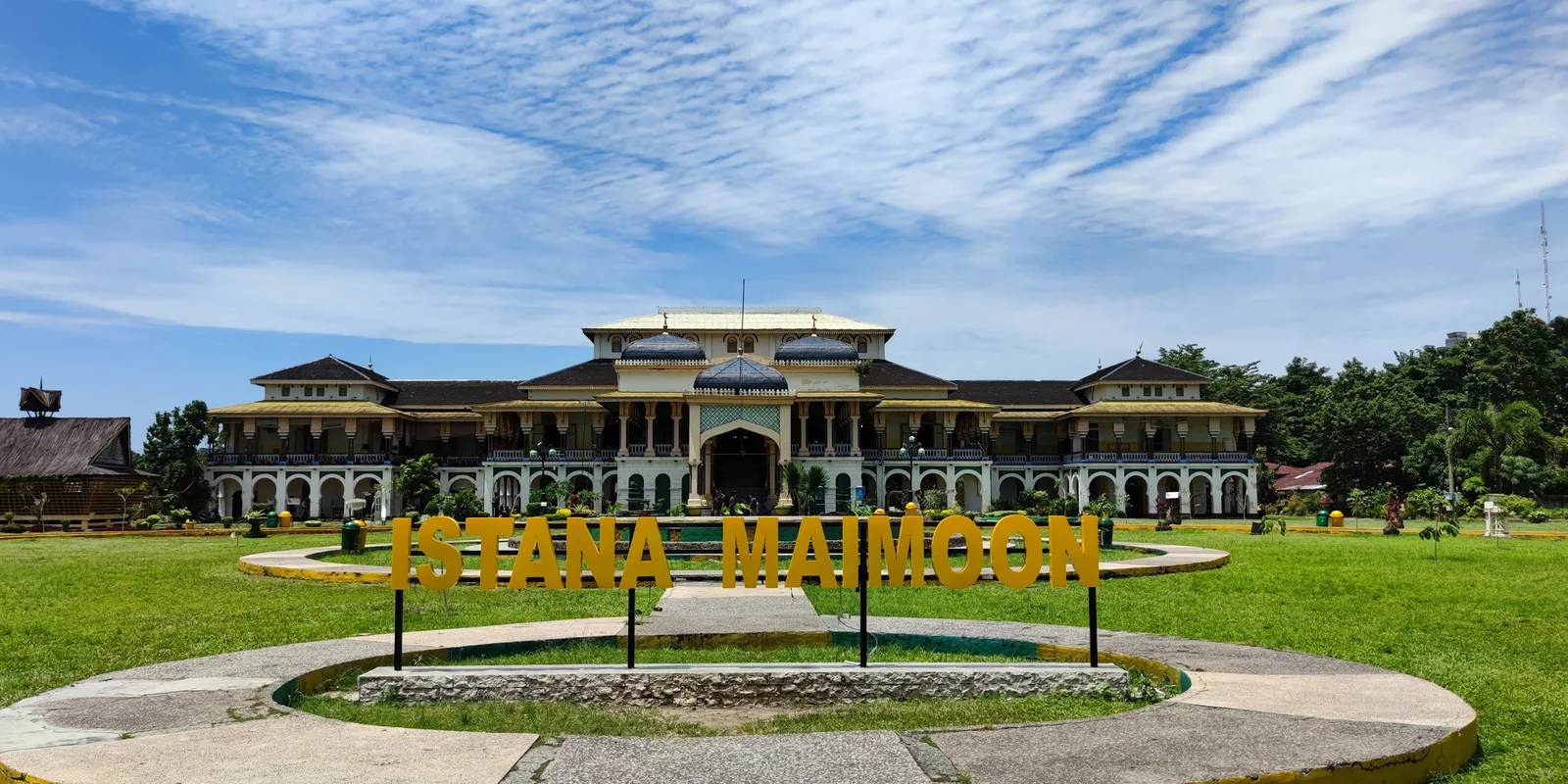
Medan offers a different introduction to North Sumatra from the lake, forests and highlands that draw many visitors onwards. Here the rewards are urban: a Deli sultan’s palace, a merchant’s mansion, places of worship from different communities and meals that can shape a whole day’s itinerary. Give the city time between transport connections and its appeal becomes easier to understand.
Two nights allow a useful first look, with a full day for heritage and an evening devoted to food. Add another night if you prefer slower sightseeing, have appointments or want to assess daily life before a longer stay. Medan is a practical base for services and onward planning, but it does not make every North Sumatran destination a convenient day trip. Read VisaWand’s Indonesia country guide alongside this guide when deciding how the city fits your overall route.
Get the geography right before choosing a hotel
The most useful visitor map separates central Medan from the airport and the wider region. The civil aviation authority’s airport record places Kualanamu International Airport, code KNO, in Deli Serdang rather than within Medan city. A hotel chosen for airport convenience may therefore be inconvenient for the palace, Kesawan or an evening meal downtown.
Within the city, the Medan railway station and Merdeka area provide a transport reference point; Kesawan centres on historic commercial streets around Jalan Ahmad Yani. Maimun Palace and the Grand Mosque form another logical sightseeing cluster. University-related visits may instead revolve around Padang Bulan. Compare the actual address and entrance with your main destination, including the final walking section. For a short stay, a central room can reduce transfers; for repeated campus visits, proximity to the correct gate can matter more than being near a visitor landmark.
Read Medan’s history through two very different houses
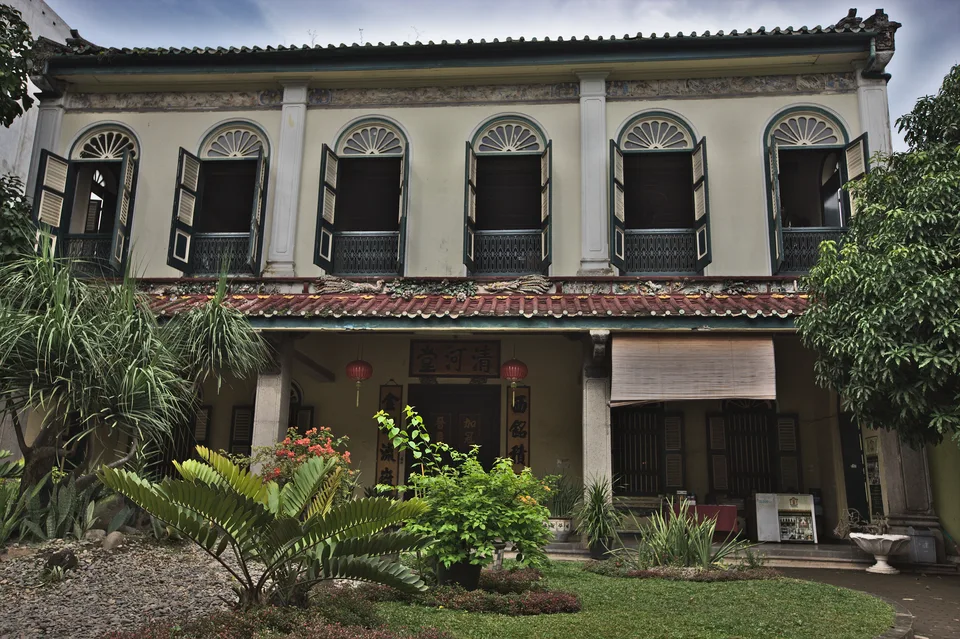
Maimun Palace and Tjong A Fie Mansion show complementary parts of the city’s development. The palace represents the Deli Sultanate and its ceremonial life, while the mansion reflects the influence of a prominent Chinese merchant, banker and philanthropist. Seeing both gives more context than visiting either as an isolated architectural curiosity.
The city tourism office’s account of Tjong A Fie’s house dates it to 1895 and places it in Kesawan. Its mixture of cultural influences helps explain why Medan cannot be reduced to one architectural tradition. Look at the surrounding streets as well as the landmark interiors: commercial activity continues around these heritage places. Leave time afterwards to compare what you have learned with the palace’s different setting and purpose.
Choose a base for your actual routine
For a first visit, compare the station–Merdeka area with Kesawan and accommodation closer to the palace. The station side suits an airport-rail arrival and central appointments; Kesawan suits travellers who want heritage and food nearby. A property’s description as “central” does not establish that every route from it is pleasant on foot, so inspect the map and recent access information.
For longer stays, shortlist homes around the workplace, institution or household routine that brings you to Medan. A larger room farther away may be worthwhile, but calculate the time and cost of returning every evening. Families should consider school journeys and groceries alongside the commute. Ask about noise at different times, lift access and the route after heavy rain.
Visit Maimun Palace with its limits in mind
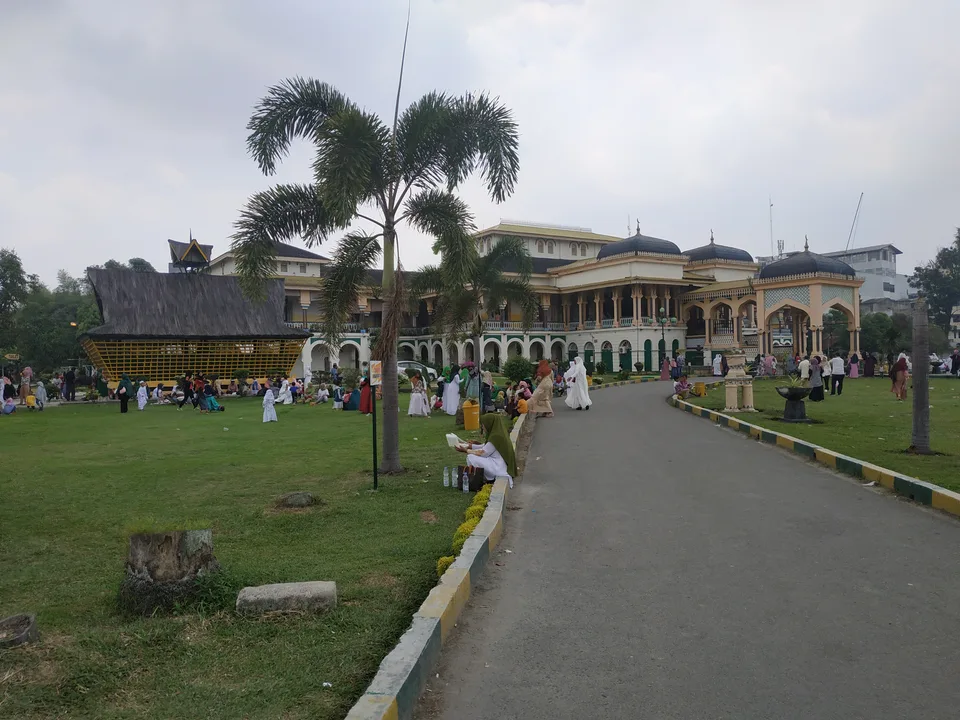
The Medan Tourism Office’s palace listing records construction in 1888–1891 under Sultan Ma’mun Al Rasyid. The yellow building combines several architectural influences and remains one of the clearest introductions to the Deli Sultanate’s presence in the city. The national tourism authority’s explanation also makes an important distinction: only parts are open to visitors, while other areas remain associated with the sultan’s descendants.
Published visiting hours are 08:00–17:00 daily, with a listed admission range of Rp10,000–15,000 per person. The listing does not explain every price category, so confirm the charge that applies rather than treating the lower figure as universal. Allow time to look at the visitor areas and grounds, then continue to another nearby sight. Respect barriers and private sections. Any optional costume, photography or other service should be agreed separately; access to the palace does not imply every activity is included.
Approach the Grand Mosque as a place of worship
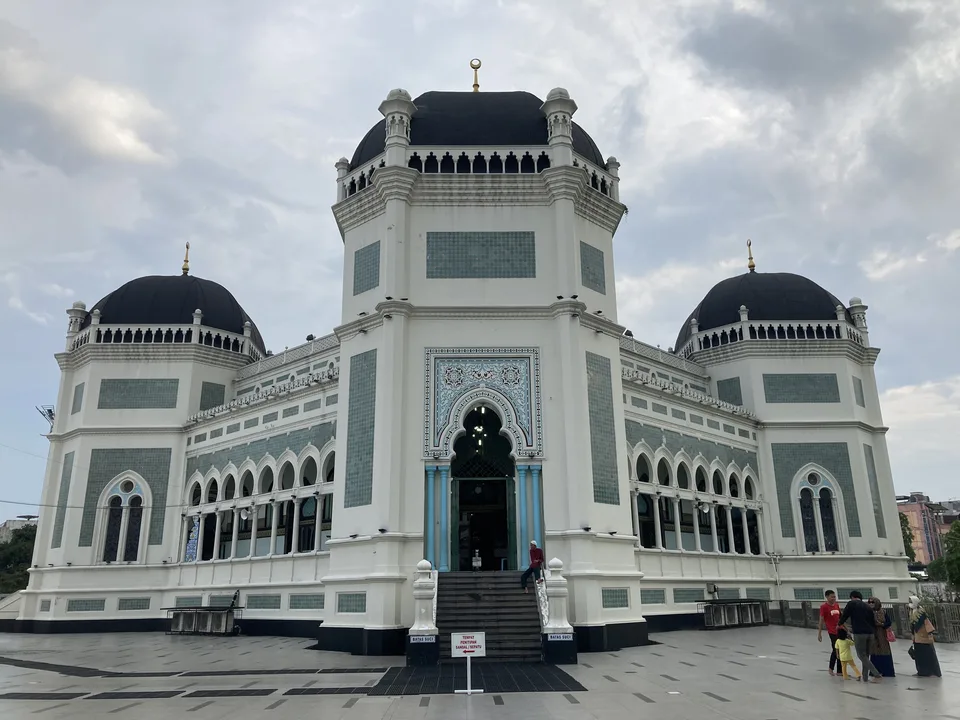
Al Mashun Grand Mosque stands on Jalan Sisingamangaraja and was built in 1906–1909. The city tourism office connects it historically with the palace complex, making the two a sensible pairing. Its domes, entrance and ornament deserve a careful look, but a visitor schedule must work around the religious purpose of the site.
Ask locally when sightseeing is appropriate, follow instructions about clothing, shoes and photography, and avoid interrupting prayer. The long opening hours shown on a tourism listing are not a promise of unrestricted tourist access throughout the day. If access is limited when you arrive, adjust the order of the palace and mosque stops or return at a suitable time. Do not photograph worshippers closely without permission or assume that a quiet moment makes every part of the building available.
Make time for Tjong A Fie Mansion
The mansion’s own visitor page lists admission at Rp35,000, including a guided tour, with English- or Indonesian-speaking guides available on request. Regular hours are 09:00–17:00 Monday–Sunday, with no entry after 16:30 and closure on Chinese New Year’s Day. Check announcements before travelling especially for this visit.
Arrive with enough time for the tour instead of treating the last admission as an ideal starting point. The guide can help connect the house’s rooms, family story and collections to Medan’s broader history. Ask about photography restrictions and which spaces are accessible if stairs or uneven surfaces are a concern. For two adults, the listed admission totals Rp70,000 before transport or any separate purchases. Pairing the mansion with a Kesawan meal gives the area a coherent half-day, while allowing time to absorb the visit rather than moving immediately to another distant landmark.
Notice the city’s different cultural communities
Medan’s religious buildings offer a way to understand its variety without pretending that one short visit can represent every community. The national tourism authority identifies Kampung Madras, also known as Little India, as the setting for Sri Mariamman Temple on Jalan Teuku Umar. This adds a different perspective to the palace, mosque and Chinese merchant’s house.
Choose a small number of places and visit them attentively. Confirm present access and any ceremony-related restrictions instead of relying on an old description of weekly opening arrangements. At active places of worship, observe before taking photographs and follow the instructions given on site. If a particular festival interests you, verify its current date and public arrangements before making travel plans around it.
Let meals shape a day without overloading it
Jalan Selat Panjang’s food scene includes Chinese-Indonesian noodles, Hainan-style chicken rice, steamed buns, martabak and other snacks. The national tourism authority also points to Kesawan, Kampung Madras and Jalan Pagaruyung as food areas. Choose one area for an evening rather than spending the night moving between distant recommendations.
Menus and ingredients matter more than a dish’s reputation. Some establishments serve pork, while other kitchens cater to halal requirements; ask directly about preparation when it matters to you. Vegetarians and travellers with allergies should explain sauces, broth and garnishes as well as the main ingredient. Start with an amount you can comfortably eat, then decide whether to add another stop. Keep smaller rupiah notes for modest purchases and check prices before ordering unpriced items.
Shop for something you can actually use or carry
Food gifts are an obvious temptation, but decide how they will travel before buying. Ask about ingredients, storage and shelf life, especially when the purchase will spend hours in a car or aircraft. Check the rules at your next border for fruit, meat and other restricted products. Attractive packaging does not settle those questions.
For other purchases, compare the product, condition, return terms and payment method rather than assuming a market or mall automatically offers the better deal. Travellers setting up a household should separate immediate essentials from items best bought after choosing a home. Bedding, cooking equipment and storage needs depend on what the rental includes. The city tourism directory provides a starting point for exploring local services and destinations; describe any listing accurately and confirm current opening information with the business. Keep receipts for purchases where warranties, returns or proof of value may matter later.
Book accommodation for comfort between outings
Check the room’s cooling, noise, hot water, lift access and reception arrangements, not simply the hotel’s star category or frontage. Ask whether breakfast timings suit an early departure and whether luggage can be stored after checkout. For families or travellers with mobility needs, establish the practical route from the vehicle drop-off to the room.
For a stay of a week or more, laundry and reliable internet can matter more than a larger lobby. Check the cancellation terms and final rate for your actual dates, occupancy and payment method. If the airport is your reason for a one-night stop, ask the property which airport it serves and confirm the transfer time and charge. A hotel near a railway station can be convenient, but the train’s operating timetable still determines whether that advantage helps with a very early flight. Plan the whole departure, including checkout, luggage and the final walk to transport.
Use airport rail when its timetable fits
The airport’s rail guide explains that Kualanamu station is connected to the terminal area and signposted for airport trains. The link to central Medan can simplify arrival, especially when your hotel is conveniently reached from Medan station. The train journey is only part of the transfer: allow time for entry procedures, luggage, reaching the platform and travelling onwards from the station.
Consult Railink’s current timetable in the correct direction and use the official reservation service for the applicable ticket and departure. Not every train shown in the wider regional table serves the airport; check both the origin and destination. Avoid building a tight connection around an old fare or remembered departure time. If the available train does not fit your flight, compare an official road transfer. On departure day, include the airline’s check-in requirement when deciding which service is usable, rather than arriving at Kualanamu just before take-off.
Compare airport buses with a direct road transfer
The airport’s current bus information lists a DAMRI route to Plaza Medan Fair via corridors including Amplas, Sisingamangaraja and Gatot Subroto, with a published Rp40,000 fare. Confirm the service and fare on the day; the stated operating window does not establish a guaranteed departure every few minutes or identical arrangements in both directions.
Compare the bus stop with your hotel entrance, including luggage and the last connection. The airport transport directory also describes official taxis and app-based pickup arrangements. For those options, confirm the vehicle, pickup zone, fare basis and any toll or airport charges before starting. A direct journey can be simpler for a family or late arrival, while a bus may suit a traveller staying near its destination. Keep the address available in Indonesian and verify that the driver has the right hotel branch or street.
Keep local journeys realistic
Walk selected central sections, then use transport where the distance, heat or traffic makes a longer walk unattractive. Group nearby sights rather than crossing the city repeatedly.
For a longer stay, test the commute at the time you expect to travel, including the return after evening work or classes. Check how you would manage the trip if rain delayed your usual connection. Hiring a motorbike requires the appropriate legal entitlement and insurance; a rental offer is not proof that you meet those conditions. The government guidance on living in Indonesia is a useful starting point for checking driving and employment arrangements. If you prefer not to drive, choose accommodation that supports that decision rather than assuming a vehicle will become necessary after arrival.
Build a budget from checked prices
Heritage admissions can be a modest part of the budget compared with accommodation, airport transfers and regional travel. Use the mansion’s Rp35,000 ticket as a confirmed component and the palace’s published range as an item to clarify. Keep optional activities and meals separate.
Compare room rates for your dates and read displayed menus rather than assuming every meal has one typical price. Carry some cash while confirming card acceptance for larger payments. For longer stays, calculate recurring expenses separately from arrival costs: rent, utilities and commuting are different from a deposit, temporary lodging and household setup. Keep a reserve for a changed transfer or medical payment. An apparently inexpensive home can become a poor choice if the daily journey is tiring, and an airport bargain can disappear once the final taxi is added.
Plan for warmth and rain rather than a perfect season
Use BMKG’s Medan forecasts for the neighbourhoods and days you will visit. Warm, humid conditions make breaks and manageable walking distances useful. Carry rain protection that also covers documents and electronics, and leave an indoor alternative when an outdoor plan depends on the weather.
North Sumatra has varied rainfall patterns; BMKG’s regional climate explanation is a reminder that a simple wet-season calendar copied from another Indonesian island is not precise enough for every trip here. Check current forecasts again before leaving for the highlands or a long road journey. When comparing travel dates, weigh your wider route, holiday demand and preferred activities alongside rainfall. Put the sight you most want to see on an early suitable day so a disruption leaves another opportunity.
A realistic itinerary for a short stay
On arrival day, check in and explore a manageable section near your hotel. If staying centrally, make Kesawan and dinner the focus rather than adding a distant outing after a flight. Confirm the next day’s opening arrangements and onward travel while you have time to adjust.
Use the full sightseeing day for Maimun Palace and the Grand Mosque, followed by a meal and a break. Fit the mansion into the afternoon only if you can arrive comfortably before its last entry; otherwise give it a separate morning. A guided heritage visit deserves more than the final minutes before closing.
With a third night, add Kampung Madras, another cultural stop or time for shopping and ordinary city life. On the departure day, keep the airport transfer as a scheduled part of the itinerary. Travellers assessing relocation should replace an optional attraction with housing appointments and a commute test, rather than trying to complete both agendas at once.
Inspect a home before committing to a longer stay
Start with temporary accommodation while comparing homes and neighbourhoods. Inspect ventilation, cooling, damp, water supply, security, access and emergency exits. Ask what happens during heavy rain and who handles maintenance. Clarify whether the advertised accommodation is a whole home, a serviced apartment or a room with shared facilities; those arrangements create different household routines.
Get rent, deposits, utility charges, management fees and internet arrangements in writing. Have terms you cannot understand explained by a competent reader, record existing damage and keep payment receipts. For students, Universitas Sumatera Utara’s dormitory information provides an institutional option to investigate, with priorities and eligibility conditions; it does not guarantee a vacancy. Confirm the correct campus and application process. For any private rental, ask the host which residence-reporting procedures apply to your stay and ensure these can be completed before you commit to an address.
Organise healthcare and everyday services
Find groceries, a pharmacy, laundry, drinking-water arrangements and suitable medical services near the home you are considering. Test internet availability at the address and ask providers what identification is needed for a phone plan or account. Confirm rubbish collection and shared-building responsibilities with the manager, rather than discovering an unexpected household task after moving in.
The Health Ministry’s hospital directory lists Murni Teguh Memorial Hospital on Jalan Jawa, providing a concrete local contact to investigate. Confirm the service, language support, appointment and payment arrangements you need directly; a directory entry is not a guarantee of suitability or insurance acceptance. The official travel-health guidance recommends appropriate cover, including possible evacuation, and gives 118 as the ambulance number. It also advises against drinking tap water. Arrange continuing prescriptions and any specialist care before arrival, particularly if Medan will be a base for travel into areas with fewer services.
Check your entry route and arrival declaration
Start with the official immigration nationality and entry-point lists, which distinguish visa-on-arrival eligibility from visa-free arrangements. Kualanamu is listed as an e-VOA entry point. Your passport, travel purpose and intended length of stay determine the relevant route; do not assume every foreign visitor needs the same document.
As a nationality-specific example, the UK government’s entry guidance for British citizens describes a single-entry, 30-day visa on arrival costing Rp500,000, with onward or return travel requirements. Other passport holders should check their own eligibility through Indonesia’s official e-visa service. The portal also states that travellers must submit an arrival card within the three days before arrival. Use the official All Indonesia website; this declaration is separate from obtaining the appropriate visa. Check the approved dates and conditions before travelling, and resolve an extension or longer-stay plan before the permission expires.
Keep employment, study and residence permissions separate
The immigration authority’s visa categories distinguish tourism from employment, education, family and other purposes. A visitor stay does not automatically permit a job, commercial content production or permanent relocation. Confirm the correct immigration route and any labour authorisation with the employer or relevant authority before starting work; buying or renting accommodation does not settle those requirements.
For university study, Universitas Sumatera Utara’s international office explains its study-permit, visa and stay-document process. Ask the institution for the requirements matching your programme and start date rather than reusing a tourism checklist. Families should also resolve schooling, healthcare and the status of accompanying members before committing to a move. Medan can be assessed during a preliminary visit, but that visit and a later lawful residence are different stages. Use VisaWand’s Indonesia consultant listings to identify appropriate support, then confirm the person’s service scope, fees and advice against official requirements.
Give the highlands and Lake Toba their own time
Berastagi’s Karo highland setting offers markets, flowers, produce and cooler surroundings as a contrast with Medan. Compare it through VisaWand’s Berastagi destination page, then plan the actual road journey and accommodation. Do not turn an old driving-time estimate into a guaranteed connection, especially before a flight.
Farther regional travel deserves similar care. UNESCO’s Toba Caldera information describes Lake Toba and Samosir within a distinctive volcanic landscape and Batak cultural setting. A separate stay lets you appreciate that setting without spending most of a supposed city day on the road. Use the Indonesia destination directory to compare other places, or the Jakarta destination page for a different urban stop. Choose extensions that add something you value and leave enough time to return, collect luggage and make your onward connection.
Official planning resources
Reviewed 24 October 2026. Use the official resources linked throughout this guide for admission, transport, housing and immigration decisions. Prices, services and rules can change; confirm the details relevant to your dates. Photography illustrates the locations and is not a live view.
View all official resources
- Directorate General of Civil Aviation: Kualanamu airport
- Medan Tourism Office: Tjong A Fie house
- Medan Tourism Office: Istana Maimun
- Indonesia Tourism: Maimun Palace history and access
- Medan Tourism Office: Al Mashun Grand Mosque
- Tjong A Fie Mansion: visitor hours and tickets
- Indonesia Tourism: Medan cultural landmarks
- Indonesia Tourism: Jalan Selat Panjang food
- Medan Tourism Office: local visitor directory
- Kualanamu Airport: rail connection and terminal access
- Railink: current Medan–Kualanamu timetable
- Railink: official airport train reservation
- Kualanamu Airport: bus operators and Plaza Medan Fair route
- Kualanamu Airport: onward transport choices
- UK government: longer stays, employment and housing
- BMKG: Medan neighbourhood forecasts
- BMKG Medan: regional climate patterns
- Universitas Sumatera Utara: dormitory applications
- Ministry of Health: Murni Teguh Memorial Hospital directory
- UK government: healthcare and health planning
- Indonesian Immigration: visa eligibility and entry points
- UK government: Indonesia visitor entry requirements
- Directorate General of Immigration: official e-visa services
- Directorate General of Immigration: All Indonesia arrival card
- Indonesian Immigration: visa categories
- Universitas Sumatera Utara: student visa procedures
- Indonesia Tourism: Berastagi and Karo highlands
- UNESCO: Toba Caldera Global Geopark
Plan the next part of your journey
Explore the Indonesia guide, browse other cities or compare consultants for your travel and relocation questions.