Visa
Plan Jakarta as a collection of districts
Jakarta makes more sense when you organise it by area rather than by a list of famous buildings. A morning around the old trading city, an afternoon in a museum and an evening beside an MRT station can work well. Crossing the metropolitan area repeatedly to save a little on accommodation can consume much of a short visit.
On Java's northwestern coast, this is a place for understanding urban Indonesia: Betawi food, colonial-era streets, independence monuments, contemporary shopping and the movement between them. The national tourism overview of Jakarta introduces that range. Allow three days for a first visit, or choose one coherent district during a stopover. For a move, start with the workplace and daily journey; a successful holiday base is not automatically a suitable long-term home.
Understand the geography behind the address
Jakarta's administrative area includes five administrative cities and the Thousand Islands regency. The much larger urban region also reaches surrounding places such as Tangerang, Bekasi and Depok. A booking described as Jakarta may therefore sit well outside the district you actually intend to visit. Check the full address before paying, particularly for an airport hotel or an apartment advertised for commuters.
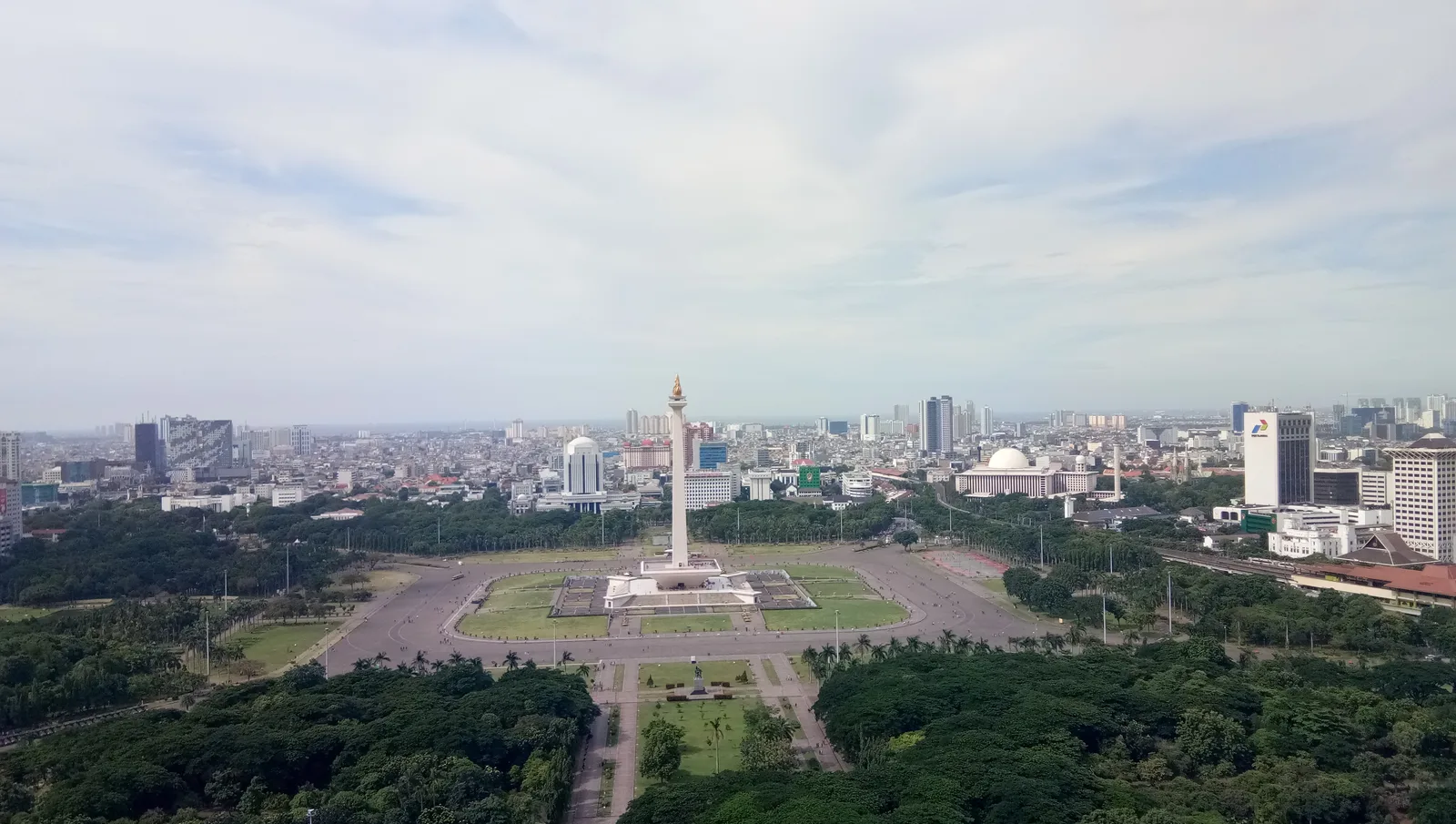
The historic centre developed around a trading port, and Dutch colonial rule reshaped it as Batavia from 1619. Kota Tua preserves part of that history, while Monas gives the national independence story a different focus. Neither alone represents the city today. Use them as starting points for understanding how commercial, residential and ceremonial spaces developed, without treating colonial buildings as a complete account of the people who lived and worked here.
Choose a hotel around an actual station entrance
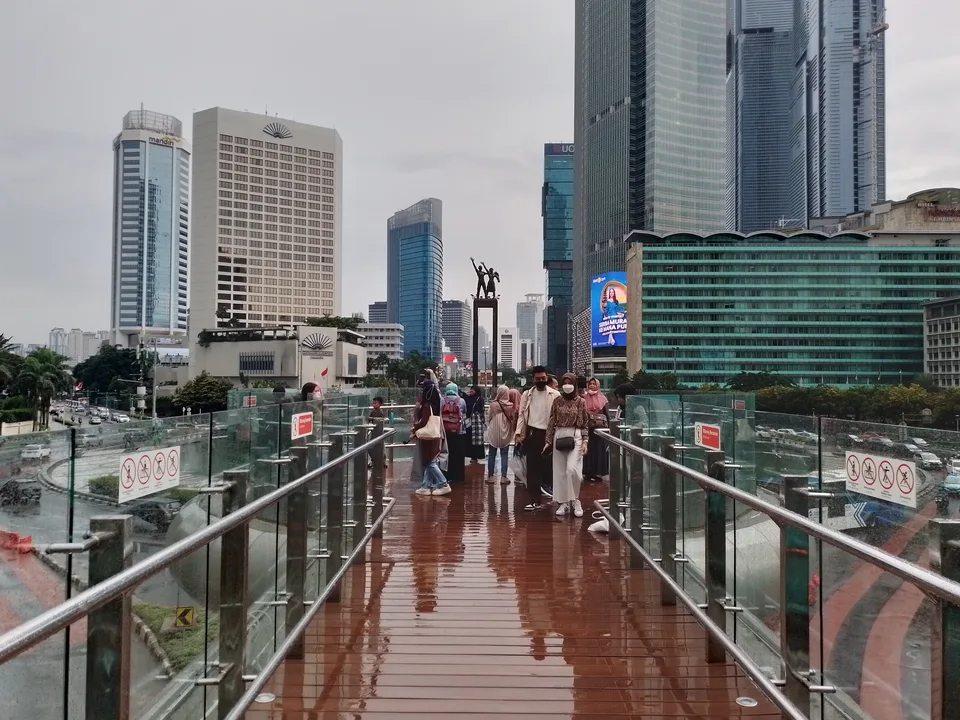
The tourism board's guide to hotels near the MRT identifies the Bundaran HI–Sudirman corridor, Dukuh Atas, Senayan and Blok M as useful areas to compare. Bundaran HI and Thamrin suit visitors wanting central shopping and onward transport. Dukuh Atas can be practical when several rail services feature in the itinerary, although transfers still involve walking between distinct facilities.
Menteng and Cikini offer another central search area for accommodation and dining. Blok M can suit a stay focused on southern districts and evening meals. Kota Tua works differently: proximity to the historic square is useful for sightseeing but does not make every business district convenient. Inspect the route from the actual entrance, including crossings and luggage access. A straight-line distance to a station tells less than the walk you will make in rain or heat.
For a late arrival, confirm reception hours and how the property handles a delayed flight. A serviced apartment may provide useful cooking or laundry facilities, but establish whether these belong to the booked unit or a shared area. Compare the cancellation deadline with the rest of your journey, especially when Jakarta is a connection between international and domestic travel.
Start with Monas, but distinguish park and tower access
Monas stands in Merdeka Square as a monument to Indonesia's independence struggle. The grounds, museum spaces and journey to the upper viewing platform are different parts of the experience. Decide whether your priority is a view, historical interpretation or time outdoors before joining a queue.
Jakarta's government visitor report on Monas describes separate museum and summit ticket categories and card-based payment. Confirm the current gate, ticket availability and accepted card before arrival. A park opening time should not be assumed to be the tower's last admission, and a public-holiday notice is not a permanent timetable. Leave room in the day for queues rather than promising yourself a specific lift departure. Pair Monas with one nearby cultural visit, keeping exposed walking for a cooler part of the day when possible.
Walk Kota Tua with time for one museum
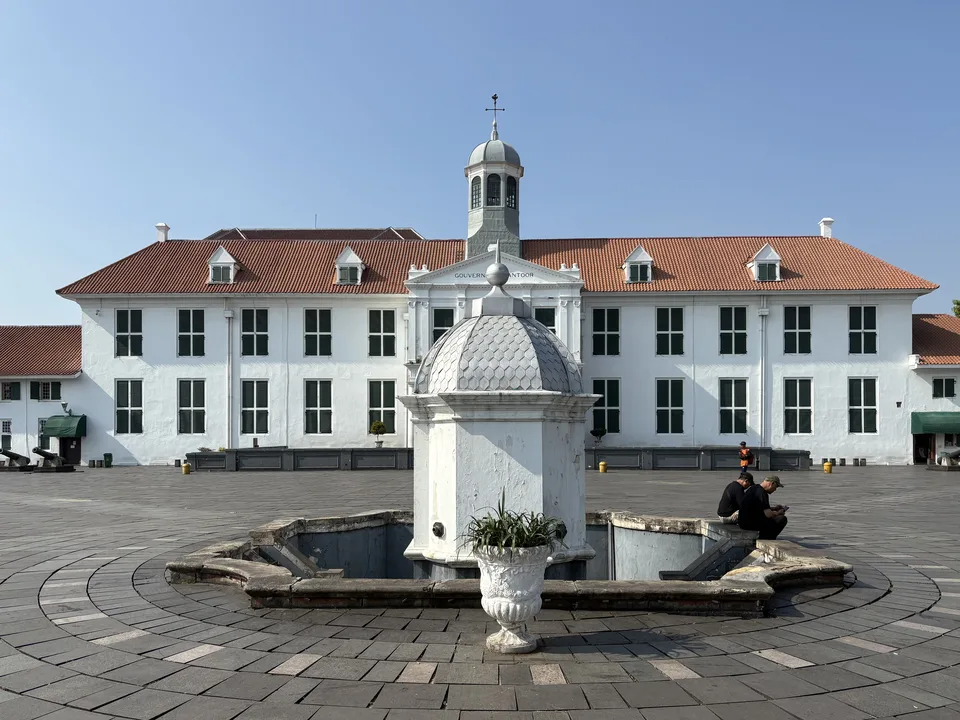
The official Kota Tua visitor guide places Fatahillah Square at the centre of the old town. The former city hall, now Jakarta History Museum, gives the square its distinctive backdrop. Nearby museums cover puppetry, fine arts, ceramics and finance; choosing one carefully is more rewarding than hurrying through every doorway.
Start with the square and the surrounding façades, then build an indoor break into the outing. Jakarta Kota railway station provides a useful reference point when planning the journey. The Maritime Museum and harbour-related sights extend beyond the immediate square, so check the next leg before adding them. Treat lanes, crossings and public spaces as a working neighbourhood, not a sealed historic set. Ask before photographing identifiable people, and separate an advertised bicycle hire or guided walk from museum admission costs.
Use the National Museum to widen the story
Museum Nasional Indonesia offers a broader cultural and historical perspective than a tour limited to Jakarta's landmarks. Check the museum's current notices for exhibitions, admission and operating arrangements: older directories can retain prices and hours that no longer match the operator's information. Allow enough time to follow a few themes rather than attempting every gallery.
For a particular evening opportunity, the museum's ARAMSA programme announcement describes free regular admission on the second Wednesday of each month, from 16:00 to 20:00, with registration at the site. Additional experiences are excluded. Confirm that the programme is running for your date before planning around it. The monthly wording matters: this is not a promise of free entry every Wednesday, nor does it mean all exhibitions and optional services are included.
Consider Bank Indonesia Museum for a focused visit
The Bank Indonesia museum visitor page lists individual admission at IDR 5,000, with free admission for students presenting valid student identification. Its published visitor hours are Tuesday to Sunday, 08:00–15:30; Mondays and public holidays are closed. Check exceptional notices before leaving for Kota Tua.
The subject is Indonesia's monetary and banking history, including historical currency and interactive interpretation. It is a useful choice when you want one defined museum visit near the old-town sights. Individual visitors can buy tickets on site; organised groups have a separate registration process. Do not confuse the museum with free educational visits to Bank Indonesia's headquarters, which have different purposes and booking requirements. Combining the museum and Fatahillah Square keeps the day geographically coherent, with time left for lunch rather than another cross-city transfer.
Visit Istiqlal as an active place of worship
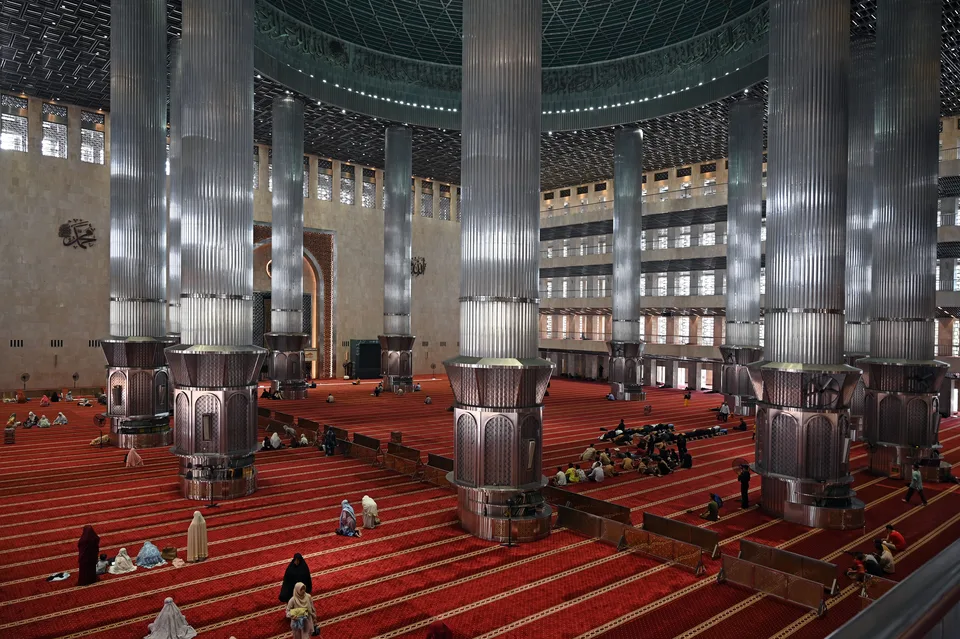
Istiqlal Mosque's official website provides visitor information and arrangements for organised visits. Plan around worship and the instructions of staff, rather than assuming that general mosque opening hours establish tourist access to every space. Modest clothing and appropriate head covering are part of preparing for a respectful visit.
The scale of the interior, columns and prayer spaces is a reason to slow down. Ask which areas you may enter, where footwear should be left and whether photography is permitted at that moment. A tour should accommodate prayer, not compete with it. Group organisers should confirm arrangements beforehand; independent visitors should ask at the visitor reception about the available process. The cathedral nearby can provide another perspective on the district's religious architecture, subject to its own access and service arrangements.
Give Taman Mini a substantial block of time
Taman Mini Indonesia Indah's operator information distinguishes the main park ticket from separately priced museums, rides and other attractions. Published general entry is IDR 25,000 on weekdays and IDR 35,000 at weekends. Check the dated booking options for your party, and add vehicle charges if relevant.
Regional pavilions and museums make TMII useful for an introduction to Indonesia's cultural variety, but its scale calls for a selective plan. Choose a few interests and establish how you will move between them. Internal transport is available; check what is included and what requires separate payment. Gate hours differ from individual attraction hours, so an early park entry does not guarantee that a chosen museum has opened. Treat this as a separate outing, particularly with children, rather than a brief addition after Kota Tua.
Choose Ancol for the experience you actually want
Ancol combines coastal recreation with separately ticketed attractions, including Dunia Fantasi and Sea World. The operator's booking guidance distinguishes entry to the Ancol area, attraction admission and vehicle tickets. Buying one should not be assumed to include the others. Domestic and foreign visitor categories also appear in the booking system.
Decide whether you want a shoreline outing or a full attraction day, then compare the correct dated package. For families, check each attraction's child age or height conditions; one threshold does not apply throughout the complex. Arrange a realistic return journey and identify the pickup point before you separate from a driver. A visit to Ancol is an urban recreation choice, not a substitute for checking conditions and arrangements for an offshore island trip. Leave enough time to enjoy the booked activity without rushing between distant venues.
Allow a proper transfer from Soekarno–Hatta
Soekarno–Hatta Airport, CGK, is in Tangerang, outside Jakarta's administrative boundary. The city government's airport-access information outlines rail, bus and road options. Compare the complete journey to your accommodation, including the terminal connection, any station change and the last walk or vehicle ride.
The airport rail service can be useful for a central stay near its city connections. Use current operator information for the actual train and fare; older tourism booklets may retain previous arrangements. A taxi or arranged car can simplify luggage handling, but ask about tolls, parking and the authorised meeting point. Traffic makes a fixed driving-time promise unreliable. Check the airport code on domestic bookings too: Halim Perdanakusuma is a different airport, and an airport hotel at one is not a convenient connection to the other.
Use the MRT corridor as a planning tool
The current MRT Jakarta journey planner lets you compare station pairs. A checked example from Bundaran HI Bank Jakarta to Blok M BCA showed IDR 8,000. Use the live result for your own route and confirm payment arrangements; a rail fare does not include the cost or time of reaching your final address.
The operating north–south corridor links useful visitor areas, but proposed extensions should not be treated as available journeys. In particular, do not assume a line drawn towards Monas or Kota Tua means you can already ride it there. Check station entrances and service notices as well as the map. Sponsored station names can change, so retain the underlying place name when discussing directions. For an accommodation decision, the corridor is most useful when it connects places you will visit repeatedly.
Distinguish buses, suburban rail and other lines
Transjakarta operates BRT corridors, other bus routes and neighbourhood feeder services. The network can reach places beyond the MRT corridor, but not every service uses the same boarding arrangements. Check the current route, direction, payment method and interchange before setting out. Special anniversary fares are not the normal year-round tariff.
Jakarta’s official commuter-rail overview explains the regional KRL network. KRL services, the airport train, MRT and the different LRT networks should be treated as distinct services, even where connections are possible. A transfer may require leaving one facility and walking to another. Keep enough card balance or a suitable ticket for the actual trip, and ask staff before passing a gate if unsure. For visitors with limited mobility, check the specific station and street connection rather than assuming an interchange is effortless.
Make room for Betawi food and everyday meals
Jakarta's food reflects both Betawi traditions and the wider movement of people through the city. Soto Betawi commonly combines beef or offal with a rich coconut-milk or milk-based broth. Bir pletok is a spiced, non-alcoholic drink, despite its name. Ask about the version being served rather than assuming every kitchen uses the same ingredients.
The national tourism street-food guide describes kerak telor, made with sticky rice, egg, dried shrimp and coconut, and distinguishes sweet martabak from its savoury egg counterpart. Those ingredients matter for allergies and dietary restrictions. Choose freshly prepared food and keep drinking water available during outings. Instead of chasing several distant recommended stalls, select a dining area near your day's final stop. A shared martabak or a market snack can fit naturally into the evening without becoming a separate transport project.
Shop for something specific
Thamrin City's visitor information highlights a central shopping complex associated with batik and woven textiles. Elsewhere, Tanah Abang, Sarinah and the large malls offer different settings for browsing. Choose the type of shopping you want before travelling: comparing fabric stalls is a different task from visiting a department store or seeking a particular international brand.
For textiles, ask about fibre, production method, care and the basis of any handmade claim. A printed pattern and a labour-intensive wax-resist process should not be priced or described as the same product. Keep receipts and check baggage allowance before buying bulky items. Compare the complete price, including any delivery or tax, and avoid treating a sales demonstration as independent authentication. Mall dining and sheltered facilities can also make a shopping stop a practical break during heavy rain.
Build a budget from real choices
Two checked examples illustrate the scale of individual costs: the MRT journey from Bundaran HI to Blok M was IDR 8,000, and Bank Indonesia Museum lists IDR 5,000 individual admission. A return on that MRT route plus one standard museum ticket would therefore total IDR 21,000, before food, other transport or accommodation. This is arithmetic from specific prices, not a complete daily budget.
The larger variables are the room, repeated car journeys and separately ticketed recreation. Compare hotel totals with taxes, breakfast and cancellation terms included. For an apartment, establish whether cleaning, electricity and building charges are extra. Keep a modest cash reserve and confirm that your own payment method works before relying on it. A local QR-payment sign does not establish that every foreign wallet or bank card can pay through it.
Choose dates with rain and heat in mind
Indonesia's official climate guidance describes Java's broadly drier April–October period and wetter November–March period, while acknowledging variation. Jakarta stays a warm, humid destination; a drier month does not remove the need for shade, water and breaks. Plan exposed walking earlier or later, with indoor options available.
Use BMKG's current rainfall outlook for the season you are actually booking, rather than treating a usual calendar as a forecast. Heavy rain can affect road access and transfers, while bright weather can make an overfilled walking day uncomfortable. For an island excursion, check marine conditions as well as the city forecast. Around major holidays and events, verify attraction schedules and intercity bookings separately. A quieter road on one day does not guarantee that museums, restaurants or transport services follow their ordinary arrangements.
A realistic three-day introduction
On day one, explore Kota Tua and choose one museum, such as Bank Indonesia Museum when its calendar allows. Keep lunch and the afternoon in the same part of the city. On day two, organise Monas, the National Museum and an Istiqlal visit around current access, reducing the list if queues or heat slow the morning.
Use day three for one larger choice: TMII, an Ancol attraction day, or a southern-district outing using the MRT and time for food around Blok M. Do not try to combine all three. Switch days when Monday or a public holiday affects museum access. An evening that fits the National Museum's confirmed ARAMSA programme can create another option. For a short stopover, choose the district that fits your actual arrival point and return deadline, keeping airport-transfer time separate from sightseeing time.
Test the commute before signing a lease
For relocation, spend the first period in temporary accommodation and test the journey to work or study at the hours you will use it. Living near a convenient MRT station can help when the destination shares that corridor. A cheaper address requiring several changes and a long final road leg may be a poor saving.
The Jakarta revenue agency's explanation of kost accommodation describes rented rooms that may include furniture and shared facilities. Compare a kost, an apartment and a house on their actual terms, not a presumed hierarchy of comfort. Inspect noise, ventilation, cooling, cooking facilities, laundry, visitor rules and internet provision. Check the landlord's authority, inventory, deposit conditions, maintenance responsibilities and payment schedule in writing. Obtain receipts and understand termination arrangements before committing to a long advance payment.
Check flood access, utilities and essential services
Consult Jakarta BPBD's flood-monitoring information and ask about the building's history and surrounding access roads. A flat above flood level can still become difficult to reach. Check drainage, emergency exits, lifts and backup power rather than relying on a broad claim that a whole district is safe.
For electricity, PLN's customer-service page provides official customer and tariff information. Establish whether the landlord or tenant controls the account. PAM Jaya provides water-service information; ask how the building stores and supplies water. Test mobile reception and confirm installation at the exact address. Identify appropriate healthcare and insurance arrangements before a long stay; Jakarta's official emergency-services page lists the 24-hour 112 service. Families should confirm school admission, fees and the actual school journey before deciding on housing.
Separate entry permission from the arrival declaration
Use Indonesia's official e-Visa website to identify the category appropriate to your passport and activities. The Indonesian Embassy's visitor-visa guidance explains why visa-on-arrival eligibility is limited and why permitted purpose matters. Tourism, employment, study and permanent relocation require different planning; buying accommodation does not confer a right to remain or work.
Separately, complete the official All Indonesia arrival card within the three days before arrival, following the current instructions. Immigration's declaration guidance explains that the service is free and combines arrival information for immigration, customs, health and quarantine. It is not a visa application or a substitute for permission to enter. For a longer stay, confirm the relevant sponsorship, residence and reporting conditions before accepting work or paying course fees. Keep the granted conditions and expiry date accessible after arrival.
Decide where to go after Jakarta
An offshore stay in the Thousand Islands requires a specific island, operator, departure point and return plan. It is not an interchangeable day trip from any waterfront pier. Check weather, accommodation and boat arrangements together, and avoid placing a vulnerable return connection immediately before an international flight.
For a different pace on Java, consider Bogor or Bandung after checking current onward transport and the location of your accommodation. The Bogor botanical garden visitor website provides a concrete starting point for an outing; VisaWand's Bogor location page helps identify the destination. Compare the time available with what you want to do there; adding another city is not automatically better than a second unhurried Jakarta district. VisaWand's Indonesia country guide provides broader planning context, while the Indonesia location directory helps compare places. The Indonesia destination page and consultant listings can help with choosing professional support; verify an adviser's credentials and the written scope before booking.
Official planning resources
Reviewed 15 October 2026. Use the official resources linked throughout this guide for admission, transport, housing and immigration decisions. Prices, services and rules can change; confirm the details relevant to your dates. Photography illustrates the locations and is not a live view.
View all official resources
- Indonesia Travel: Kota Tua Jakarta
- Indonesia Travel: Jakarta overview
- Indonesia Travel: choosing hotels near MRT
- Jakarta government news: Monas visitor information
- Museum Nasional Indonesia: visits and exhibitions
- Bank Indonesia: museum visits
- Istiqlal Mosque: visitor information
- Taman Mini Indonesia Indah: tickets and opening times
- Ancol: admission and attraction booking
- MRT Jakarta: official journey planner
- Transjakarta: routes and passenger information
- Jakarta government: KRL commuter-rail overview
- Jakarta government: airport connections
- Indonesia Travel: Jakarta street food
- Indonesia Travel: Thamrin City shopping
- Indonesia Travel: seasons and climate
- BMKG: current monthly rainfall outlook
- Jakarta BPBD: flood monitoring
- PLN: current customer and tariff information
- PAM Jaya: water and customer services
- Jakarta government: emergency services
- Government of Indonesia: official e-Visa applications
- Government of Indonesia: All Indonesia arrival card
- Indonesian Embassy: visitor-visa conditions
- Jakarta revenue agency: understanding rented kost rooms
- Indonesian Immigration: All Indonesia declaration rules
- Museum Nasional: ARAMSA free-admission programme
- Kebun Raya Bogor: official visitor information
Plan the next part of your journey
Explore the Indonesia guide, browse other cities or compare consultants for your travel and relocation questions.