Visa
Decide which Batam trip you want
Batam can be a quick ferry break, a resort stay or a place to investigate a longer working assignment. Those trips need different addresses and budgets. Shopping and meals around the urban districts do not produce the same holiday as a pool villa in Nongsa, and neither automatically gives you time to explore the roads south towards Galang. Decide the purpose before booking the ferry terminal or hotel.
Batam belongs to Indonesia’s Riau Islands province, south of Singapore across the strait, as the municipal geography information confirms. It is an industrial and transport centre as well as a leisure destination. The municipality extends beyond the main island, including Rempang and Galang, so “Batam” on a listing can describe a much wider area than a compact city centre. Start with VisaWand’s Indonesia country guide, then choose a base that fits the journeys you actually want to make.
Industry and island history belong in the same picture
Batam’s modern shape owes much to industrial development rather than to the gradual growth of a traditional sightseeing centre. The municipal legal-information service’s history describes the industrial authority established under the 1973 presidential decision, the administrative municipality created in the 1980s and autonomous city status in 1999. That background helps explain its infrastructure, spread-out development and close economic connections with neighbouring countries.
It also explains why a visitor should resist presenting the whole island as an untouched tropical retreat. Roads serve residents, factories, logistics and business appointments alongside resorts and ferry passengers. There are coastal settings and opportunities to slow down, but finding them requires a deliberate choice of location. A rewarding visit can combine that contemporary working landscape with Malay food and the history preserved at Galang, rather than borrowing an itinerary intended for Bali or treating Batam as a smaller Singapore.
Match the neighbourhood to your arrival terminal
For shopping, urban dining and a short stay, compare the Nagoya and Penuin areas with properties around Harbour Bay and Batam Centre. These names are not interchangeable. A hotel near the terminal you actually use may simplify arrival, while a room closer to your chosen restaurants may save repeated evening transfers. Check the street entrance and walking route instead of relying on an accommodation search result labelled “central”.
Nongsa suits travellers whose main purpose is a resort, marina or golf-oriented break. It is a different decision from staying close to the urban shopping districts. Sekupang can be practical when your ferry or western-side plans point that way. For employment or a family move, put the workplace and school run on the map first. The most useful base is the one that reduces your repeated journeys, not necessarily the district most often mentioned in weekend itineraries.
Choose the ferry route before paying for the room
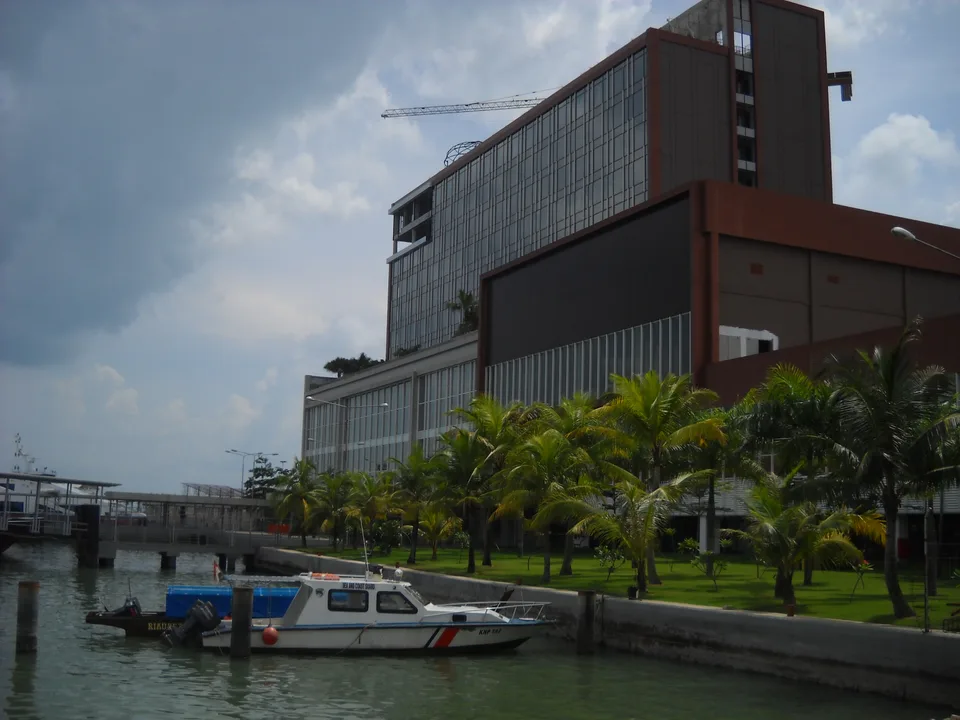
Batam has several terminals, and a ferry ticket is not simply a ticket to an undifferentiated island. Sindo’s current route information includes Singapore HarbourFront services to Batam Centre and Sekupang, with other routes and operating-day conditions. Horizon Fast Ferry serves Harbour Bay from HarbourFront. Confirm the departure terminal in Singapore and the arrival terminal in Batam against your hotel’s location before comparing prices.
Batam uses Western Indonesian Time, one hour behind Singapore. Operators label timetables with the local time at each end, so subtracting an arrival clock from a departure clock can give a misleading journey duration. Save the booking with both terminals and local dates clearly visible. Reserve the return sailing too, particularly for a short weekend. If connecting from a flight in Singapore, allow for immigration, travel to the correct ferry terminal and the operator’s check-in deadline; a short sea crossing does not make the whole connection short.
Read the ferry total beyond the advertised fare
Sindo’s published fare page lists S$28 one way and S$56 return on its Singapore–Batam routes, but excludes separate charges. It lists a S$10 Singapore passenger departure fee and a Batam terminal departure fee of Rp100,000 or S$10. The temporary fuel-surcharge notice, effective from 12 March 2026, adds S$6 when departing Singapore and Rp65,000 when departing Indonesia, per journey.
Using the rupiah option for Batam’s terminal fee, that published return example totals S$72 plus Rp165,000 before visas, local transfers or optional extras. Confirm the final checkout total because temporary charges can change. Avoid comparing one operator’s base fare with another operator’s completed booking total. Families should check infant tickets and baggage allowances as well as seat prices. Keep return-transfer money separate from shopping money, and ask how any fee collected at the terminal must be paid. An inexpensive hotel can lose its advantage if the selected port creates additional long transfers.
Boarding details matter for families and limited mobility
Horizon’s passenger FAQ asks travellers to arrive at least one hour before departure. Its stated allowance is one hand-carry bag up to 10kg and one checked bag up to 20kg per passenger; additional baggage has separate arrangements. It also states that children and infants require tickets at the adult rate. These are Horizon’s conditions, so verify the corresponding rules if choosing another carrier.
For wheelchair users, the same FAQ describes lifts at the terminals and staff assistance, but Business and VIP seats are upstairs and reached by stairs. Ask for the actual boarding arrangement before buying a particular class. Complimentary boarding assistance should be requested at the office an hour before departure. Horizon also asks for a printed e-boarding pass when leaving Singapore, while a phone pass is accepted when leaving Batam. Keep each passenger’s correct outward or return pass available; a booking confirmation and an issued boarding pass serve different purposes.
Flying in means planning the onward road journey
Hang Nadim International Airport has the code BTH, as identified in Indonesia Tourism’s Nongsa service information. It provides an alternative arrival route for visitors coming from elsewhere in Indonesia or on an available international service. Check the airline’s actual schedule for your dates rather than relying on an old list of carriers. The airport operator’s information is a starting point for passenger enquiries and current arrangements.
Agree the onward pickup with your hotel or use the airport’s current authorised transport arrangements. Confirm the complete fare, the meeting point and how the driver handles a delay. Batam’s municipality announced Trans Batam expansion and preparations for airport integration in May 2026; that announcement alone does not establish a current airport timetable. Ask for the operating route, stop, payment method and last service before depending on a bus. Late arrivals and travellers with substantial luggage should have an arrival plan that remains workable if a proposed bus connection is unavailable.
Expect road transfers between clusters of activity
Batam works better as several clusters of activity than as one continuous walking itinerary. Combine errands, meals and shopping in the same district, then make a deliberate transfer to the next. Before committing to a driver for a longer outing, agree the hours, destinations, waiting time, parking costs and return location. A quoted vehicle price may cover a different number of hours or passengers from the package beside it.
Trans Batam provides a public-transport option, but check the current corridor and the walk at both ends. The 2026 municipal announcement describes cashless payment changes, making it particularly important to establish which payment method you can use. An overseas visitor should not assume a domestic payment application works with their account. For short local walks, inspect the pavement and road crossings first. A hotel described as near a mall can still leave an inconvenient route between the entrance and the place you want to reach.
Barelang is an outing, not a stop on every transfer
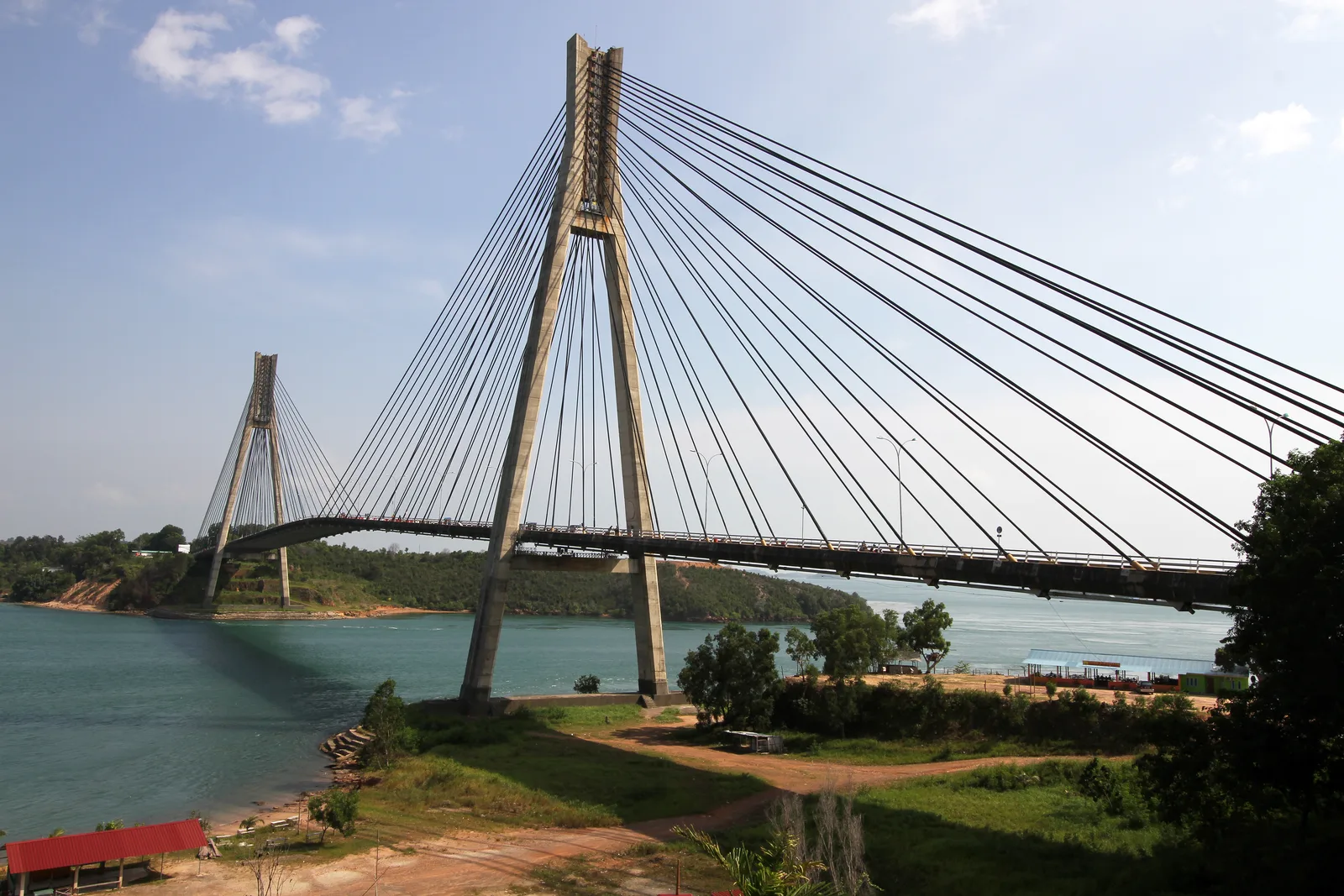
The BP Batam infrastructure overview describes Barelang as a series of six bridges linking the island chain associated with Batam, Rempang and Galang, completed in 1998. The prominent cable-stayed first bridge is the familiar photograph, but it represents only the beginning of a longer southern excursion. Decide whether the bridge view is your destination or whether you intend to continue towards Galang.
Arrange safe stopping places off the carriageway and keep the return journey in your plan. Do not ask a driver to park on a working bridge simply for a photograph. Heat, showers and the time spent at individual viewpoints can change how much of the route is comfortable in a day. A bridge-and-lunch outing is a reasonable choice on a short break; adding a museum and several beaches calls for more time. Avoid a tightly timed excursion immediately before an international ferry departure.
Give Galang’s refugee history a respectful visit
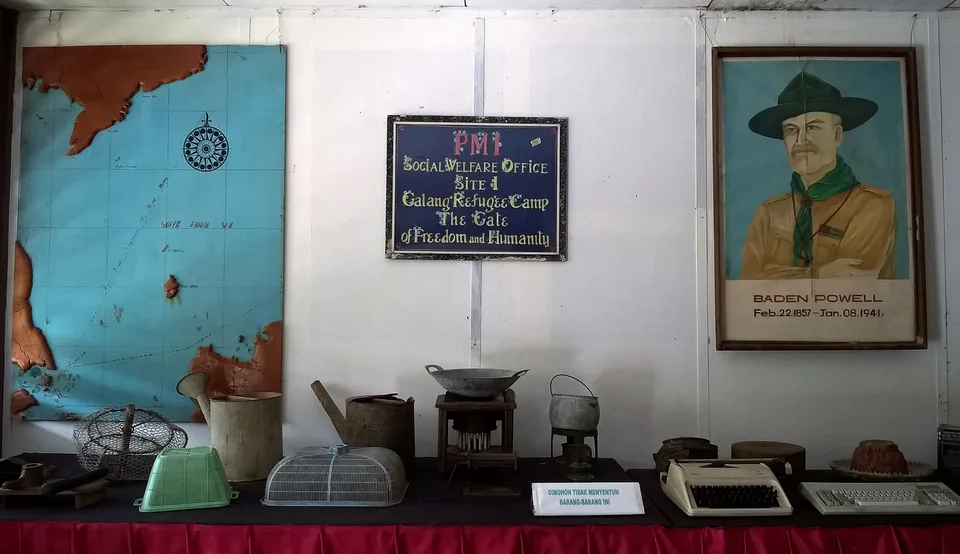
The former refugee camp on Galang offers a different kind of experience from shopping or a resort afternoon. The municipality’s account of its preservation work describes its role as temporary shelter for Vietnamese refugees from the 1970s to the 1990s. In 2025, local authorities began a cultural-heritage designation initiative and outlined improvements to visitor access and interpretation. That initiative should not be confused with a UNESCO designation or a guarantee that every proposed facility is finished.
Confirm current access, opening arrangements and admission before making the journey south. Approach the remaining buildings and displays as evidence of displacement and everyday survival rather than as scenery for a novelty excursion. Allow time to read the interpretation, follow photography instructions and leave objects untouched. The visit makes most sense when combined with the southern island route, with sufficient daylight and a planned return, rather than squeezed between unrelated appointments in the urban districts.
Nongsa is best when the resort is part of the plan
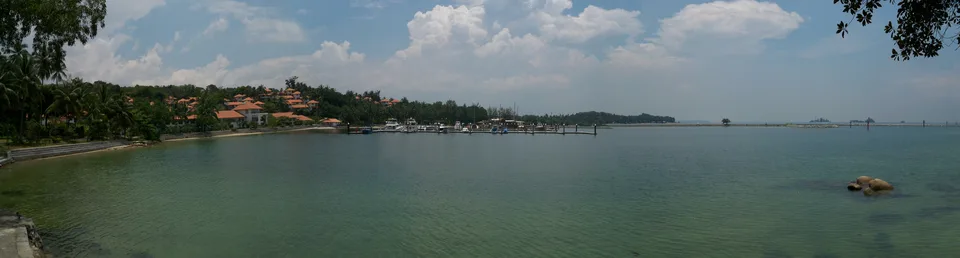
Nongsa’s appeal depends partly on spending time where you stay. Montigo Resorts Nongsa describes accommodation ranging from private-pool studios to larger villas and residences, along with dining and activities. That is useful evidence of the type of stay available, not a reason to assume a promotional nightly rate includes taxes, meals, transfers or every activity. Request a complete quote for your party and dates.
The marina setting provides another perspective on this coast. Check which facilities are for overnight guests, which accept day visitors and whether advance arrangements are needed. For a pool villa, ask about depth, supervision and child access. For a beach or water activity, confirm current conditions and the operator’s restrictions rather than assuming every waterfront permits swimming. Resort transfers and meals can shape the budget as strongly as the room price. Choose this side of Batam because you want time there, allowing urban shopping to be an optional excursion.
Add a garden visit without promising a full-day attraction
Batam Botanical Garden’s own introduction places it on Jalan Hang Lekiu in Sambau, Nongsa. It can suit visitors who want an outdoor pause and an interest in plants alongside coastal or resort plans. Its published visiting schedule lists 8am–4pm Monday to Friday and 8am–6pm on Saturday and Sunday. Confirm holiday arrangements and the current admission charge before travelling; the schedule does not establish that all facilities operate throughout those hours.
Go with suitable shoes, drinking water and protection from sun or showers. Ask which paths and facilities suit your group, particularly with a wheelchair or pushchair. A botanical garden is not automatically a shaded, fully accessible park at every point. Keep the visit proportional to your interests and the conditions on the day. Combining it with another Nongsa activity is usually more coherent than crossing the island solely to fill a brief gap between urban appointments.
Make room for Malay food and seafood
Batam’s food offers more than a generic seafood dinner. Indonesia Tourism’s Riau Islands food introduction describes gonggong, sea snails commonly boiled and served with a spicy accompaniment, and otak-otak made from seasoned fish wrapped in leaves and grilled. Mie lendir offers another direction: noodles with a thick sauce, commonly accompanied by egg and bean sprouts. These provide useful starting points for reading menus without pretending every kitchen prepares them identically.
Ask how seafood is priced before ordering: a price per portion and a price by weight can produce very different bills. Confirm preparation charges, portion sizes and any tax or service charge. State allergies clearly, including shellfish, fish, peanuts and egg; a vegetable-looking dish may still contain seafood ingredients or a peanut-based sauce. Choose drinking water from a safe source and freshly prepared food. For a short stay, leave time for an ordinary breakfast or lunch rather than limiting every meal to a bundled tour stop.
Shopping is easier with a list and a baggage allowance
The national tourism overview identifies shopping as part of Batam’s visitor appeal, but a free-trade setting does not remove the rules of the country you return to. Check those rules before buying alcohol, tobacco, food or other restricted goods. A shop’s statement about a bargain is not advice on your personal customs allowance. Keep receipts and avoid purchases whose origin or authenticity you cannot assess.
Set a shopping budget after ferry charges, accommodation and transfers are covered. Compare the final price in rupiah, including any card conversion offered at checkout, rather than assuming a Singapore-dollar display makes comparison simpler. For bulky purchases, review the ferry’s baggage conditions first. Give yourself time to return to the correct terminal without turning the final hour into a race. If shopping is the main purpose, a suitably located urban hotel can be more practical than repeated trips from a distant resort.
Plan for warmth, showers and occasional haze
Batam’s tropical setting calls for light clothing, sun protection and plans that can absorb rain. Avoid building a holiday around a promise that a particular month will remain dry. Check BMKG’s Hang Nadim weather information close to departure and follow the operator’s instructions when conditions affect a sailing or outdoor activity. A daily airport observation is useful operational information, not a long-term climate average for your whole stay.
The UK government’s Indonesia health guidance notes that smoke haze can affect the Riau Islands, with consequences for health and regional air travel. Travellers with respiratory conditions should discuss appropriate precautions with a clinician and review current conditions before committing to demanding outdoor plans. Wet weather need not erase a short visit: keep an indoor meal, shopping period or rest break available. On a southern excursion, allow extra return time instead of using the shortest mapped drive as your ferry-connection buffer.
A realistic two-night itinerary
Day one: arrive at the terminal chosen for your hotel, check in and keep the first outing local. Explore your urban district or settle into the resort, then make dinner the main event. Avoid booking a long island transfer immediately after an international arrival whose immigration and baggage timing you cannot control.
Day two: choose one substantial outing. A southern day can include Barelang and, with confirmed access and enough time, Galang’s former refugee camp. A Nongsa day can combine the garden with time at your accommodation or a prearranged activity. Do not attempt both full programmes simply because their locations appear on the same island map.
Day three: leave time for breakfast and a final nearby purchase or waterfront pause, then return to the correct departure terminal. Apply the carrier’s check-in requirement and remember the time difference. For a one-day trip, select one district and one main purpose; the longer island route deserves a separate visit.
Moving requires a trial stay and an honest commute
For a move, begin with temporary accommodation and inspect prospective homes in person. Test the journey to your actual workplace at the time you would travel, including any security gate, parking arrangement and last-mile transfer. The address convenient for a Singapore weekend visitor may be poorly placed for a daily assignment elsewhere in the municipality. Ferry access also does not establish a practical or lawful cross-border commuting arrangement.
Ask for a written lease that identifies the landlord’s authority, deposit, payment currency, notice period, inventory and repair responsibilities. Establish whether maintenance, electricity, water, internet and parking are included or billed separately. Check ventilation, damp, drainage, locks, mobile reception and internet provision in the particular unit. Families should confirm school places and the real school-run route before choosing housing. A development brochure or nearby school marker is not evidence that your child can enrol or that the commute is comfortable.
Water and electricity deserve specific questions
Ask a landlord or hotel how the building handles interrupted water and power supplies. This is a current practical issue: BP Batam’s 14 October 2026 update reported electricity restored after the 12 October outage, while water had returned to around 80–85% of customer areas by 6am on 14 October. That dated figure does not establish today’s supply at every address. Check the latest local notice and the property’s actual situation.
Air Batam Hilir provides water-service information and customer channels, while PLN Batam is the relevant starting point for electricity enquiries. Establish account ownership, meter arrangements, recent bills, storage tanks and any backup supply before signing. Budget for safe drinking water separately. Identify a suitable medical facility and insurance arrangements as well; a ferry route to Singapore is not an emergency-care plan. Keep documents and essential contact information accessible if a service interruption affects connectivity.
Keep arrival declarations separate from immigration permission
The official All Indonesia arrival service explains the free All Indonesia declaration, integrating immigration, customs, health and quarantine information for international arrivals. It can be completed from three days before arrival. Keep the resulting confirmation available for arrival. Completing an arrival declaration does not grant a visa or establish a right to work, study or reside in Indonesia.
Eligibility depends on nationality and purpose. The Directorate General’s visa-classification announcement distinguishes eligible visa-exempt travel from the B1 visa-on-arrival route, which provides an initial 30-day stay with one extension. The immigration service guidance lists the standard visa-on-arrival fee as Rp500,000. Check the official eVisa portal for your nationality, entry point and current application requirements before booking. UK government entry guidance usefully explains restrictions for British visitors, including that not all business or commercial online activity fits visitor permission. Employment, formal study and longer residence require the appropriate separate basis; property rental does not supply it.
Decide whether to extend the island trip
A longer stay can justify another day in Nongsa or along the southern island route, rather than adding a new border crossing. If considering Bintan or another regional destination, verify the actual service and arrival terminal; a route to Tanjung Pinang is not automatically a transfer to every Bintan resort. Treat accommodation, transport and immigration arrangements as a new journey, with enough time to return.
For a wider urban itinerary, compare VisaWand’s Singapore city guide and Jakarta city guide. The Indonesia location directory introduces other cities and settlements, while the Indonesia consultant destination page helps locate relevant services. For a complex employment, study or family move, compare experienced consultant listings and verify advice against official requirements. Batam works best when you choose its practical role in your trip clearly: an urban weekend, a coastal stay or a carefully assessed place to live.
Official planning resources
Reviewed 15 October 2026. Use the official resources linked throughout this guide for admission, transport, housing and immigration decisions. Prices, services and rules can change; confirm the details relevant to your dates. Photography illustrates the locations and is not a live view.
View all official resources
- Batam municipality: geographical location
- Batam municipal legal-information service: history
- Indonesia Tourism: Batam
- Sindo Ferry: routes, schedules and service notices
- Horizon Fast Ferry: Harbour Bay services
- Directorate General of Immigration: visa classifications
- Indonesian Immigration: visa-on-arrival service
- UK government: Indonesia entry requirements
- BP Batam: infrastructure and Barelang bridges
- Batam municipality: Trans Batam expansion, May 2026
- Hang Nadim Airport operator
- Batam municipality: Galang former refugee camp
- Sindo Ferry: published fares and excluded fees
- Horizon Fast Ferry: boarding, baggage and accessibility
- Sindo Ferry: temporary fuel surcharge from March 2026
- BP Batam: power and water recovery update, 14 October 2026
- Air Batam Hilir: water accounts and service notices
- PLN Batam: electricity customer contact
- Batam Botanical Garden: visiting hours
- Batam Botanical Garden: location and background
- BMKG: Hang Nadim airport weather
- UK government: health in Indonesia
- Indonesia Tourism: gonggong and Riau Islands food
- Montigo Resorts Nongsa: accommodation and activities
- Indonesia Tourism: Nongsa marina and surrounding services
- Government of Indonesia: official eVisa applications
- Government of Indonesia: All Indonesia arrival declaration
Plan the next part of your journey
Explore the Indonesia guide, browse other cities or compare consultants for your travel and relocation questions.