Visa
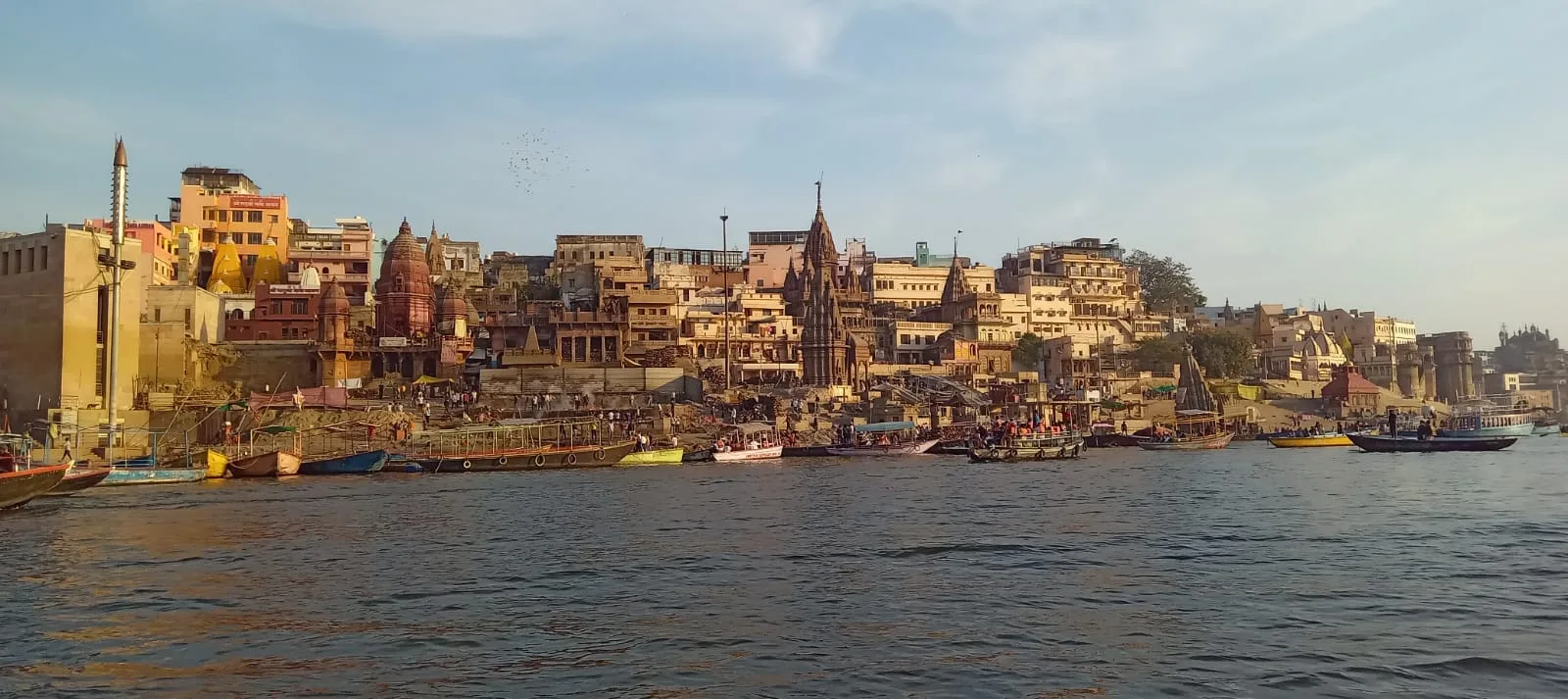
Plan around the river, then look beyond it
Varanasi's riverfront is the reason many travellers come, but the address where you sleep can determine how much of the city you enjoy. A room close to the ghats puts early walks within reach. A hotel with straightforward road access can make arrivals, family travel and appointments easier. Neither choice is automatically right for everyone.
Allow three nights for a first visit if possible: enough for the Ganga, the old lanes and a separate outing to Sarnath without arranging every hour around a transfer. A shorter pilgrimage may focus on one temple and a river ceremony; a relocation visit needs time for housing inspections and ordinary journeys as well.
This is Varanasi in Uttar Pradesh, also known as Banaras, Benaras or Kashi. Start with VisaWand's India country guide for national planning, and use the India location directory when comparing other possible stops.
History here is also daily life
The district administration's introduction to Varanasi describes a city associated with religion, learning, art and culture. Those strands are visible together: a religious building may sit beside a shop, while a route to the river passes homes and workplaces. Visit with time to observe rather than assuming every activity is staged for travellers.
Varanasi's antiquity is part of its appeal, but precise claims that it is the world's oldest city require more evidence than a tourism slogan. Its continuing traditions are a more useful starting point. Ask a guide to distinguish a building's documented history from religious belief and later retelling.
The city is also a UNESCO Creative City of Music, a designation held since 2015. That recognition concerns musical culture; it should not be confused with an inscription of the whole city on the World Heritage List. A confirmed recital can add another dimension to a visit dominated by temples and river views.
Get your bearings: ghats, lanes and road access
The ghats are flights of steps leading to the Ganga, serving different religious and everyday purposes. The old riverside city is best approached as a sequence of manageable areas, not one continuous attraction to be completed in a morning.
Dashashwamedh is a useful reference point for a central riverfront visit. Assi lies farther south and offers another base for riverside time. Sarnath is a separate excursion northeast of the city, while Ramnagar is across the river. Put these places on a map before accepting an itinerary that compresses them into a single outing.
For accommodation, distinguish proximity to the water from proximity to a vehicle-accessible road. Ask for the actual drop-off point and the remaining walk, including steps. This matters with wheeled luggage, young children or reduced mobility, and again when you leave before dawn for a train.
Dashashwamedh: leave space for the evening ceremony
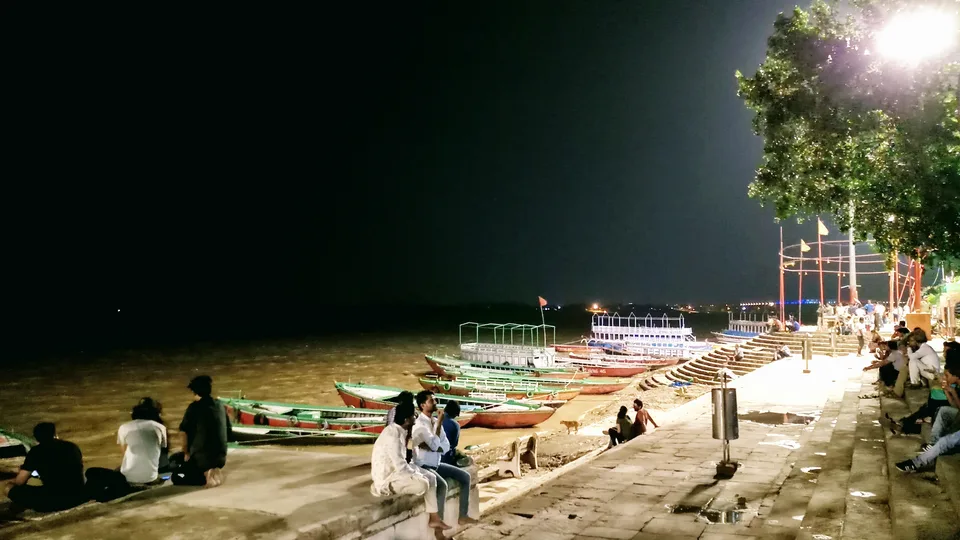
The Ganga Aarti at Dashashwamedh Ghat brings lamps, chanting and ritual together at the river's edge around dusk. It is a religious ceremony, and the practical aim should be to find a suitable place without obstructing worshippers or other visitors.
Check that day's arrangements locally. A published sunset time is not a confirmed ceremony starting time, and festival crowds or river conditions can alter access. Arrive with sufficient margin to understand the layout, and agree a meeting point with your companions before the area fills.
Viewing from a boat and watching from the steps are different decisions. A boat adds boarding, river conditions and a return arrangement; a seat sold by a private business may have its own conditions. Clarify what any payment includes. Keep the rest of the evening light so a delayed departure does not disrupt a tightly timed dinner or onward connection.
Assi: make room for an early start
Assi Ghat offers another introduction to the riverfront, including the early-morning Subah-e-Banaras programme of chants, prayer and related activities. Check the current programme before setting an alarm: participation and timings should come from the organisers or local visitor information, not an old social-media clip.
Base a morning around a short walk and breakfast rather than trying to do every riverside experience at once. If you stayed up late at an evening ceremony, choose whether another early start will improve the trip or simply leave everyone exhausted.
Assi is worth considering as an accommodation area when southern riverside walks are a priority. Inspect the actual street and room, however, rather than assuming every property carrying the name has the same setting. Ask about early access, reception arrangements and how to reach the agreed vehicle pickup point before sunrise.
Kashi Vishwanath: separate general entry from booked services
The Shri Kashi Vishwanath Temple Trust identifies the present temple with Maharani Ahilyabai Holkar's construction in 1780. For visitors, the essential planning distinction is between general darshan and specifically booked services. A paid product is not proof that everyone must buy it to enter.
The Trust's visitor FAQ states that general entry is free and gives separate darshan windows within the temple's wider opening day. It also prohibits phones and other gadgets inside and identifies locker facilities. Read those arrangements before joining a queue, particularly if your tickets, contacts and meeting details are all stored on one phone.
The actual booking catalogue showed Sugam Darshan at ₹300 when checked on 16 October 2026. Confirm the price and availability for your date there; an older schedule page still displays a different amount. Use the Trust's own links and keep a copy of any booking conditions and confirmation.
Foreign visitors: check the temple's specific process
The Trust publishes a separate foreign-devotee ticket process through its head-office helpdesk. It asks visitors to show an original passport and provide copies of the passport and visa. The described assisted service is priced at ₹600 and includes additional items and Shastri assistance.
That is a particular service with its own procedure, rather than the same product as the ₹300 catalogue listing. Contact the helpdesk about your circumstances before planning the visit, including access eligibility, documents and current arrangements. Do not infer permission for every visitor from a general travel article.
Arrange secure storage for belongings you cannot take inside. Share a meeting location and write down your accommodation address before leaving a phone in a locker. When travelling with older relatives, discuss queuing, walking and assistance needs beforehand; a booking should not be treated as a promise of a fixed total visit duration.
Boat trips: buy a defined journey
A boat can provide a useful view of the riverfront's scale. Decide first whether you want a small-boat excursion, a particular ceremony viewpoint or a larger cruise. The official Kashi Darshan cruise page describes vessels with different deck arrangements; it does not establish one fare or departure schedule for all river travel.
Before paying, settle the boarding ghat, duration, route, private or shared basis, and return point. Ask how cancellations caused by river conditions are handled. Wear an appropriate life jacket and decline an overloaded boat or an arrangement that makes boarding unsafe for your group.
Keep an alternative land-based plan. If local authorities restrict boating, change the outing rather than seeking someone willing to ignore the restriction. A dawn departure also requires a realistic route from your hotel to the correct boat, with time to identify the operator and board without rushing on unfamiliar steps.
Respect privacy at the cremation ghats
Varanasi's riverfront includes places used for cremation. These are working religious spaces where families are grieving, not performances for visitors. Observe from a respectful distance, avoid funeral photographs and do not use a guide's encouragement as a substitute for the family's privacy.
Discuss the route before a walk or boat trip if you prefer not to pass close to these areas. Parents can make that decision with their children's needs in mind rather than encountering an emotionally difficult scene without preparation.
More generally, ask before making close portraits of people praying, bathing or working. Keep doorways and narrow passages clear. A good guided walk should help explain the city's traditions while setting appropriate boundaries; it should not depend on gaining intrusive access. If a conversation becomes a request for money, clarify the situation and decide calmly whether you want to participate.
Sarnath: give the archaeology a separate half-day
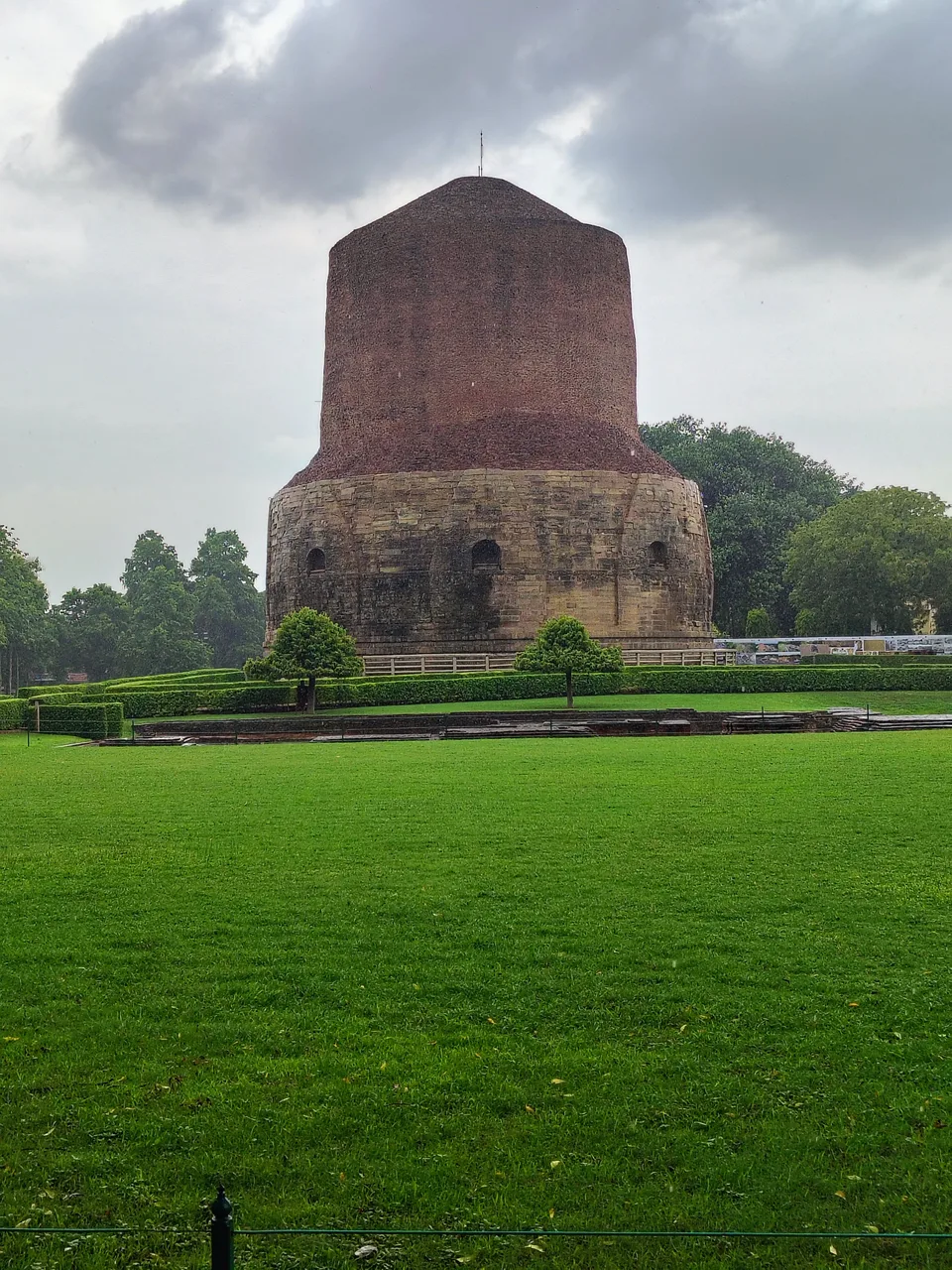
Sarnath is associated with the Buddha's first teaching of the Dhamma and lies roughly 10 kilometres northeast of Varanasi according to the district administration. Its archaeological remains, stupas and museum make it a distinct outing rather than a quick addition between riverfront stops.
The ASI ticket portal for the excavated site distinguishes monument-only, museum-only and combined options. It also explicitly states that the site museum closes every Friday. Do not assume the museum and outdoor remains share identical opening arrangements, or that one ticket automatically covers everything you want to see.
Use the official Kashi museum information and current ticketing arrangements to plan the visit; confirm hours and admission for your dates. Begin with the outdoor area or museum according to weather and access, leaving time to read the interpretation. A half-day with a meal break is more useful than a brief photograph of a stupa before returning to traffic.
BHU and Bharat Kala Bhavan: an art-focused outing
On the Banaras Hindu University campus, Bharat Kala Bhavan adds paintings, sculpture, textiles and other collections to a city itinerary. It offers a different emphasis from the archaeological visit at Sarnath, so choose according to your interests rather than treating the museums as interchangeable.
The university currently lists Monday-to-Saturday visiting from 10.30am to 4.30pm, with May and June hours of 7.30am to 1pm. Sundays and national holidays are closed. Published admission is ₹20 for Indian visitors and ₹250 for foreign visitors; students from outside BHU pay ₹10 with valid identification, while BHU students and staff enter free.
Check for changes before travelling and allow time to locate the museum within the campus. A room chosen for convenient university access may suit a study-related visit better than a riverside hotel. Ask your department or host for the exact building and current visitor arrangements before fixing the day's transport.
Ramnagar and the craft museum: choose your extra outing
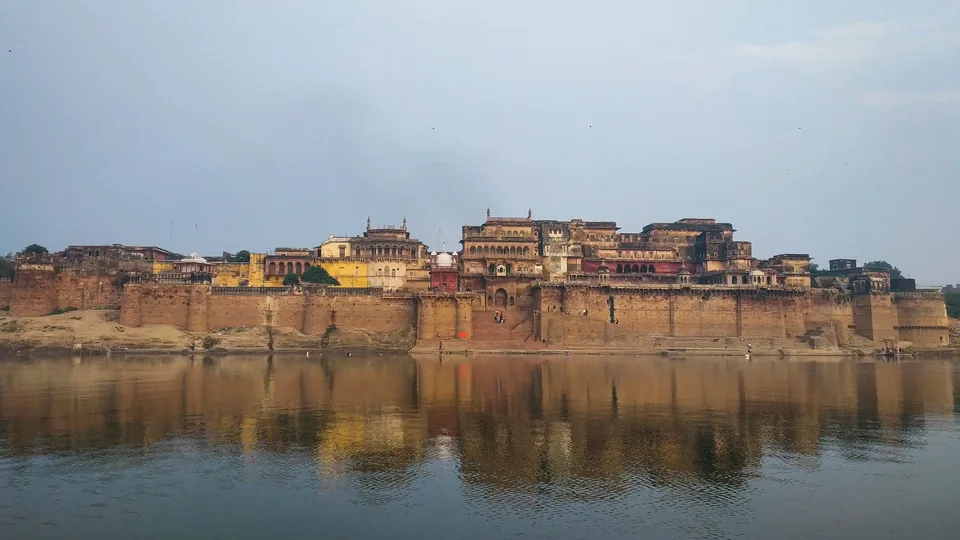
Ramnagar Fort stands on the eastern bank of the Ganga opposite Tulsi Ghat. The eighteenth-century fort associated with Maharaja Balwant Singh contains a museum of royal objects, vehicles and weapons. It suits travellers who want architecture and courtly collections beyond the central riverside neighbourhoods.
In another direction, the craft museum at Deendayal Hastkala Sankul in Bada Lalpur focuses on the region's textiles, weaving and other crafts. This can provide context before a shopping visit, particularly if you want to understand materials and production rather than simply compare finished souvenirs.
Choose one of these as an optional extension and check access before setting out. Neither should be described as a short stroll from the central ghats. Build the return journey into the plan, especially if an evening temple booking or a train departure makes the finishing time important.
Accommodation: match the room to the visit
For riverfront walks, shortlist properties around your chosen ghat and ask how you reach them from the road. For a pilgrimage, the relevant temple approach and your group's walking needs may matter more than a panoramic terrace. For university or work appointments, start with the address you must reach routinely.
The official Kashi accommodation directory includes different accommodation types. Use it as a starting list rather than a quality guarantee or proof of live availability. Compare the total price, cancellation terms, bathroom arrangements, lift access, air conditioning and breakfast before booking.
A river-facing label does not explain which room you will receive, how many steps lead to it or whether noise carries into it. Request details for the exact room category. Ask about reception and luggage assistance for late arrivals and early departures. Families should confirm beds and usable floor space; travellers with limited mobility should request entrance and bathroom photographs.
Getting here: read the station name carefully
Varanasi is served by Lal Bahadur Shastri International Airport, VNS, at Babatpur. The national Incredible India destination page places it approximately 25 kilometres from the city centre. Your actual transfer depends on the accommodation address and final vehicle access, not that broad distance alone.
Arrange the complete arrival journey, including the last walk if a car cannot reach the property. Obtain a clear transport quote and agree where the driver or hotel representative will meet you. Allow separately for baggage collection, immigration where relevant and the road transfer.
Rail passengers should distinguish Varanasi Junction, BSB; Banaras, BSBS; Kashi, KEI; and Pt Deen Dayal Upadhyaya Junction, DDU. These names appear in official visitor information but represent different arrival points. Use the station and code on your own ticket when arranging pickup, and recheck the departure station for your onward journey rather than assuming it is the same one.
Getting around: plan the final approach
Organise each day around a compact area and use road transport for transfers between areas. For an old-city outing, identify a practical meeting point before separating from a driver. Do not rely on a hotel name alone if several businesses use similar wording.
Agree the fare, waiting arrangement and return plan before an autorickshaw or taxi journey. If an app provides a quote, check that the pickup point is accessible and that the driver understands the exact destination. Keep the property's number available in case you need help with the final approach.
Walking involves more than distance: steps, crowds and the need to turn back can change the effort considerably. Take a shorter route when conditions warrant it. Travellers using mobility aids should obtain specific information about surfaces and access from their hosts rather than interpreting a short map distance as an accessible journey.
Food, shopping and practical spending
The national tourism board's Varanasi food introduction points to kachoris, lassi and baati chokha among the city's characteristic tastes. Build breakfast or a proper lunch into the itinerary rather than relying entirely on snacks between visits. Ask what is available and what ingredients are used, especially with allergies or dietary restrictions.
For textiles and other crafts, compare materials, workmanship and written descriptions. A demonstration may be interesting without obliging you to buy. Establish whether a quoted price includes alterations, packing or delivery, and keep an itemised receipt for a substantial purchase.
Budget from actual bookings: room, arrival and departure transfers, meals, local journeys and the admissions you choose. The verified temple services and BHU prices provide useful reference points but cannot produce a credible citywide daily average. Keep optional shopping separate from essentials and retain enough payment flexibility for small businesses and transport.
Compare a private boat quote with its full passenger capacity and duration, not just a per-person headline. For families, the total can differ markedly from the first number mentioned. Ask accommodation providers for a complete checkout amount too, including any extra bed or breakfast charges, so that comparisons reflect the stay you will actually book.
Weather and festivals: decide what you want to experience
The cooler part of the year generally suits extended walks, but winter mornings can be cold and foggy. IMD's historical 1981–2010 climate table gives January mean daily temperatures of about 9–23°C, compared with roughly 26–40°C in May. These are historical averages, not a forecast for your trip.
The same table shows the wetter summer period, particularly July to September. Plan for river-related restrictions and leave flexibility in boat arrangements. Use IMD Lucknow's weather services for current forecasts and warnings rather than a seasonal photograph or an old downloadable bulletin.
Festival travel requires a separate decision about crowds, room availability and access. Check confirmed dates before paying for non-refundable transport. If quiet walks and predictable transfers matter most, avoid building the trip around its busiest celebration. Pack layers for early winter starts, sun protection for exposed steps and footwear that grips well when surfaces are wet.
A realistic three-day itinerary
Day one: arrive, settle in and take a short orientation walk around your chosen riverside area. Attend the evening ceremony at Dashashwamedh if the arrival time and your energy allow. Keep the first day flexible instead of attaching a paid booking to an uncertain flight or train connection.
Day two: start at Assi or take a confirmed boat trip, then have breakfast and rest. Make the temple visit according to your documents, booking and darshan arrangements. Leave time for lockers and the approach on foot. An afternoon museum visit works only if its opening day and travel time fit.
Day three: devote a separate half-day to Sarnath, choosing a day other than Friday if the museum is important. Alternatively, focus on BHU's art museum and one further interest. With more time, add Ramnagar or the craft museum rather than squeezing both into the final hours before departure.
Living here: test the address during an ordinary week
A successful visit does not automatically identify a suitable long-term neighbourhood. Start a housing search from the workplace, university department or school that determines your regular journeys. Ask the host institution about its current accommodation options and access rules before assuming a private rental is the only choice.
Use temporary accommodation while viewing properties if feasible. Test the commute at the times you expect to travel, including the final walk and the return after dark. Check grocery shopping, deliveries and laundry from the actual address; a holiday terrace view will not solve an awkward daily routine.
Inspect water supply and storage, ventilation, electrical fittings, mobile reception and internet performance. Ask about the approach during heavy rain and the building's arrangements for interruptions. Obtain a written breakdown of rent, deposit, maintenance, utilities and any agent's fee, with clear notice and deposit-return terms. Photograph the inventory and meter readings when taking possession.
A room offered for a few weeks may have different terms from an annual tenancy. Establish the permitted occupancy and whether cooking, visitors and regular home working are acceptable before paying a deposit.
Essential services and permission to stay
The district electricity directory identifies Purvanchal Vidyut Vitaran Nigam as the local provider. Establish who holds the rental's account and how bills are calculated. For healthcare, the district hospital directory lists facilities including Sir Sunderlal Hospital at BHU and Shiv Prasad Gupt Hospital in Kabir Chaura. Confirm services, costs and insurance arrangements directly.
International travellers should consult the official Indian e-Visa portal for eligibility, purpose and entry conditions. Its e-Arrival card is arrival information, not a visa. Tourist permission does not authorise employment or create permanent residence; study, work and family circumstances require the appropriate route.
Use the Government's regular-visa instructions and your responsible Indian mission for applications, and e-FRRO where registration or other foreigner services apply. VisaWand's India destination and consultant listings can help you compare support. For another Indian city, explore the published Delhi guide or Kochi guide, choosing the next stop for the different experience it adds.
Official planning resources
Reviewed 16 October 2026. Use the official resources linked throughout this guide for admission, transport, housing and immigration decisions. Prices, services and rules can change; confirm the details relevant to your dates. Photography illustrates the locations and is not a live view.
View all official resources
- Varanasi district administration
- UNESCO: Varanasi Creative City of Music
- Varanasi district: Ganga ghats
- Incredible India: Dashashwamedh Ghat
- Incredible India: Assi Ghat
- Shri Kashi Vishwanath Temple Trust
- Kashi Vishwanath Temple Trust: visitor FAQ
- Kashi Vishwanath Trust: live booking catalogue
- Kashi Vishwanath Trust: foreign-devotee booking
- Kashi Darshan: Ganga river cruise information
- Varanasi district: Sarnath
- ASI: Excavated Site, Sarnath ticket portal
- Kashi official portal: Sarnath Museum
- BHU: Bharat Kala Bhavan museum visitor information
- Incredible India: Ramnagar Fort
- Kashi Darshan: craft museum
- Kashi official portal: accommodation directory
- Incredible India: Varanasi
- Incredible India: Varanasi cuisine
- IMD: Varanasi historical climate normals
- IMD Lucknow: Uttar Pradesh weather services
- Varanasi district: electricity provider
- Varanasi district: hospitals
- Government of India: e-Visa and arrival information
- Government of India: regular-visa instructions
- Government of India: e-FRRO services
Plan the next part of your journey
Explore the India guide, browse other cities or compare consultants for your travel and relocation questions.