Visa
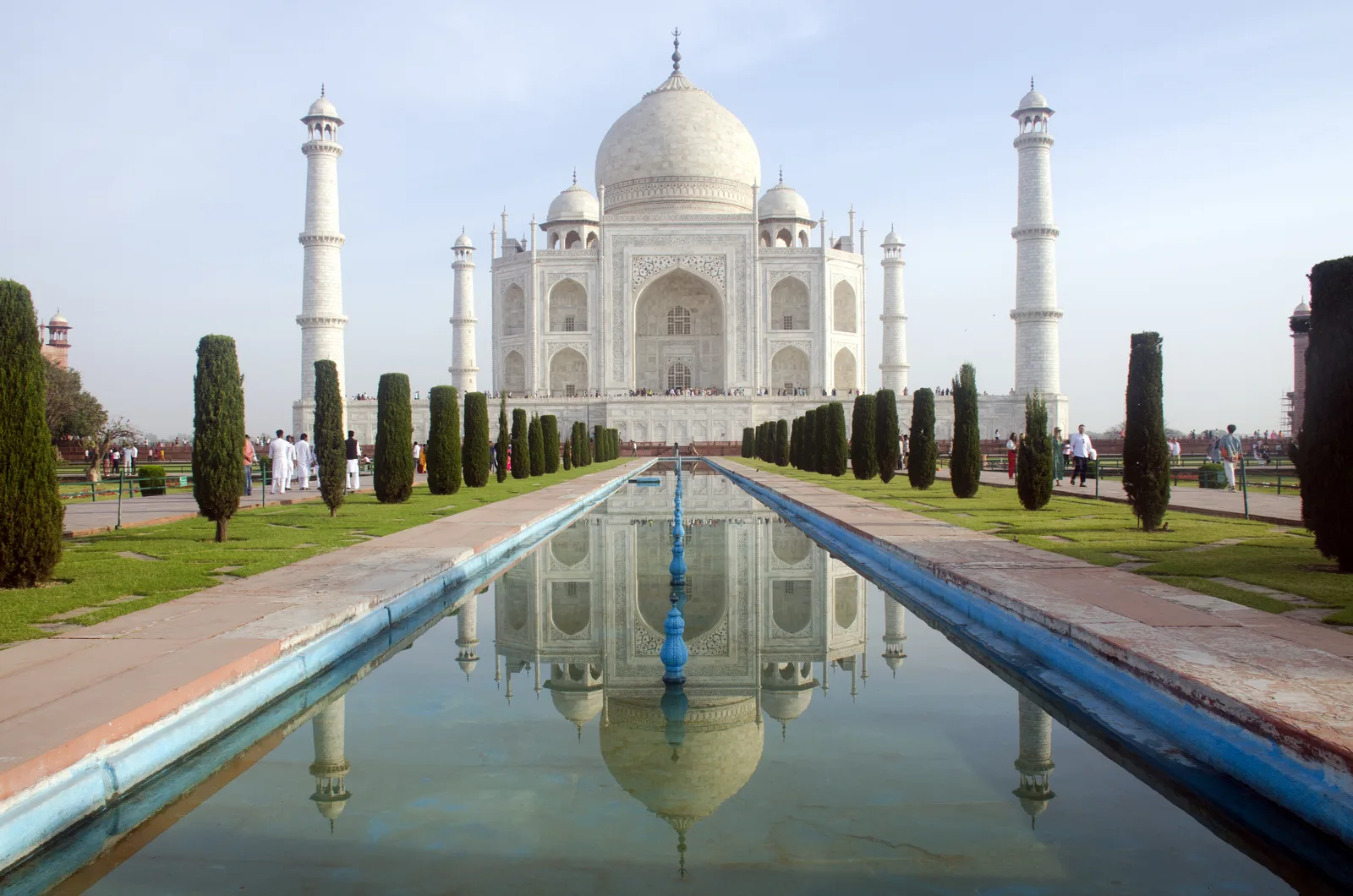
Give Agra more than a hurried Taj Mahal stop
Agra rewards an overnight stay because its most famous monument dictates the timetable. An early Taj Mahal visit is easier when you sleep nearby, while a second day creates room for the fort, riverside tombs and markets. A same-day excursion can work, but squeezing everything between trains leaves little protection against queues, heat or delays.
This is a working city beside the Yamuna in Uttar Pradesh, with busy roads and neighbourhoods extending well beyond its monuments. The official Agra visitor overview introduces its place on the Delhi–Agra–Jaipur circuit. Choose Agra for Mughal architecture, craft traditions and a concentrated history lesson. For relocation, judge a particular home, workplace and commute rather than treating the visitor enclave as representative of everyday life.
Read the Mughal city through its buildings
Agra's major sights explain different aspects of imperial life: fortifications and government, palace architecture, family remembrance and landscaped gardens. Seeing them together is more revealing than collecting photographs of unrelated landmarks. Differences between red sandstone, marble screens and decorative inlay become easier to recognise as the visit progresses.
The UNESCO account of the Taj Mahal describes Shah Jahan's memorial to Mumtaz Mahal, with the main mausoleum completed in 1648 and other elements of the complex continuing afterwards. Its garden leads towards a riverfront tomb rather than placing the tomb at the garden's centre. Upstairs are ceremonial cenotaphs; the actual burials lie below. Stories about a planned black-marble counterpart should be treated as legends, not a second palace awaiting discovery.
Choose a base around the journey you will repeat
Tajganj and accommodation near the Taj's eastern approach suit visitors prioritising an early entry. Check the actual walking route and vehicle drop-off point: a hotel advertising a Taj view does not necessarily provide convenient gate access. Ask which rooms have that view, whether construction affects it and whether breakfast is available after an early departure.
Fatehabad Road and Taj Nagri provide another useful hotel search area, especially when you want several accommodation options to compare. The Cantonment and Sadar side can be practical for railway arrivals or an itinerary extending beyond the Taj. Older commercial areas around Kinari Bazaar offer a different setting, with narrower lanes and more complicated luggage access. Choose an address from a map and recent practical information, not the neighbourhood name alone.
Ask accommodation providers about stairs or lift access, street noise and the arrangements for a late railway arrival. A rooftop photograph cannot answer those questions. If travelling during hotter months, confirm that the booked room category has the cooling you expect, rather than relying on a general description of hotel facilities.
Build the Taj visit around its opening rules
The official Taj Mahal visiting information gives normal daytime access from 30 minutes before sunrise until 30 minutes before sunset. General viewing closes on Fridays. Check again immediately before travel for exceptional restrictions, and make Friday a fort, market or onward-travel day instead of discovering the closure at the gate.
East and west are entry approaches; the south gate is for exit. Decide which approach fits your accommodation before arranging a driver. Allow time for security and the final approach on foot or authorised transport. A first-light visit offers a different experience from a late afternoon one, but neither guarantees clear skies, empty paths or a particular photograph. Leave enough time to look closely at the gateway, garden, calligraphy and inlay rather than rushing straight to the main platform.
Understand admission before paying for a tour
Published counter tariffs distinguish nationality categories: Indian citizens and OCI cardholders pay ₹50, foreign visitors ₹1,100, and eligible SAARC/BIMSTEC visitors ₹540. Entry to the main mausoleum costs an additional ₹200. Online discounts are published separately; confirm the actual amount through the official booking route before paying. These are published admission figures, not a guaranteed checkout quotation for your visit.
The ASI Agra Circle admission table also lists other monuments, with separate admission and development-toll arrangements. Keep receipts and ask the authorised counter about any applicable same-day adjustment. Do not assume one Taj ticket grants entry everywhere. When comparing a tour, separate monument tickets, guiding, transport and optional purchases. Under-15 daytime admission concessions should not be confused with the different child categories for night viewing or assumed to cover every optional component.
Pack lightly and arrange realistic access
Read the official Taj visitor restrictions before leaving the hotel. Food and large bags complicate entry, drones are prohibited, and photography is prohibited inside the main mausoleum. A water bottle is permitted. Keep luggage at your accommodation and ask about anything unusual, including specialist camera equipment, before reaching security.
Polluting vehicles are restricted within 500 metres of the monument. Agree a recognisable meeting point beyond the controlled approach, and establish whether your transfer includes the final permitted vehicle connection. Travellers with mobility needs should ask about the precise gate, gradients, steps and wheelchair arrangements; available assistance does not make the entire complex independently accessible. Use an approved guide who can show identification, agree the scope and price beforehand, and make clear whether shopping stops are wanted.
Treat moonlight viewing as a separate booking
Official Taj night-viewing information describes viewing around the full moon, normally on the full-moon night and two nights either side, excluding Fridays and Ramadan. Access uses separate tickets and timed, half-hour batches. A daytime ticket does not automatically include an evening return.
Check the current calendar, ticket availability, identification requirements and reporting instructions before fixing an itinerary around it. Official pages contain differing older slot information, so use the instructions attached to the current authorised booking rather than an old schedule copied into a tour advertisement. Moonlight viewing is a controlled visit, not permission to wander throughout the monument after dark. If dates do not align, a normal daytime visit remains the dependable basis for planning; do not add an extra night solely on an unconfirmed promise.
Give Agra Fort its own unhurried visit
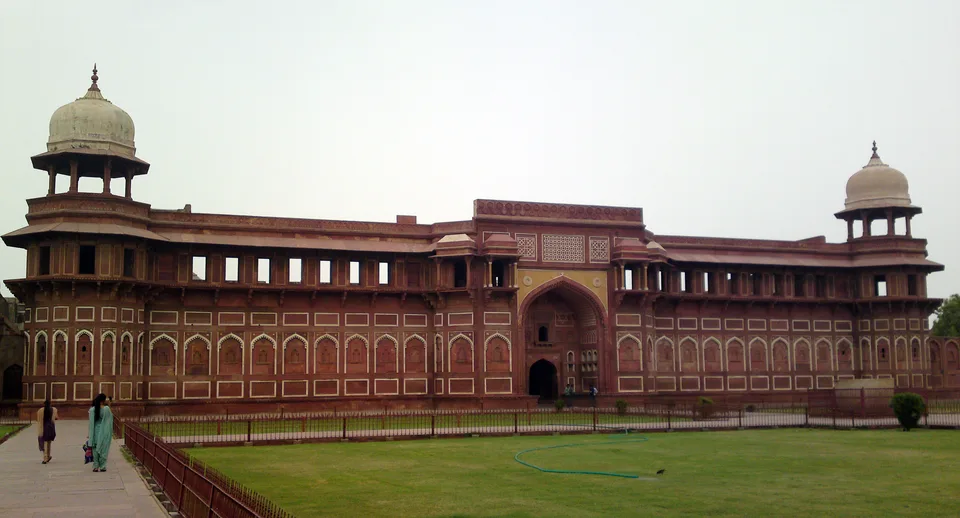
Agra Fort's UNESCO listing explains the scale of this fortified Mughal complex, where red sandstone walls enclose palaces and audience spaces. It deserves a separate visit rather than a brief stop justified only by a distant Taj view. The contrast between sandstone façades, courtyards and later marble work makes the succession of imperial tastes visible.
Plan a substantial walking visit and ask which sections are open on the day; the entire fortified site is not a public attraction. A guide can help distinguish ceremonial spaces from residential ones, but agree a meeting point and duration before entry. Pair the fort with the old commercial city when energy permits, or return to the hotel during the hottest part of the day. Avoid assigning the same hurried hour to both the fort and the Taj.
Cross the river for Itimad-ud-Daulah's tomb
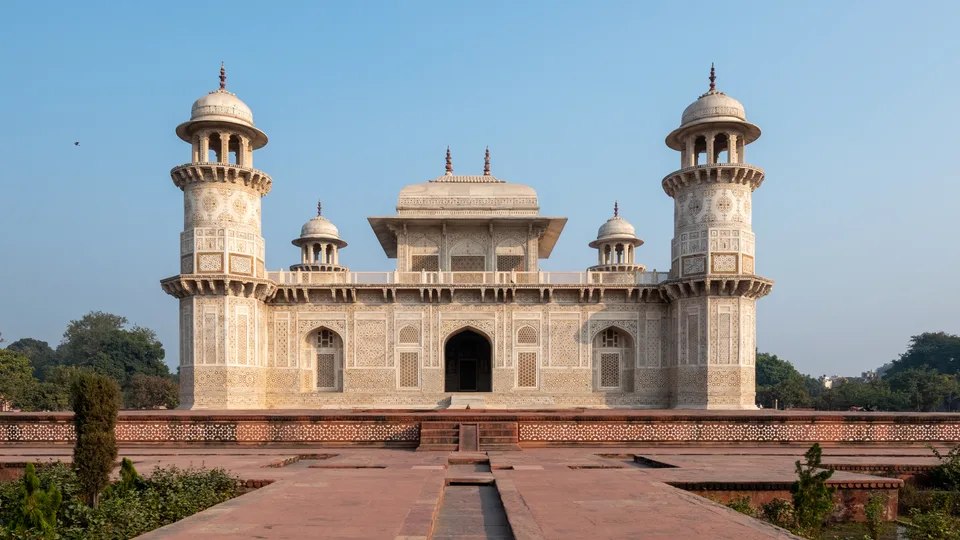
The ASI account of Itimad-ud-Daulah's tomb identifies its patron as Nur Jahan, who commissioned it for her father, Mirza Ghiyath Beg, a minister under Jahangir. Completed in 1628, it offers a different scale of encounter: a garden mausoleum whose marble, latticework and decoration reward patient examination.
Its popular nickname, Baby Taj, is convenient but can obscure the fact that it predates the Taj Mahal. Visit it as an independent work rather than an imitation. Group it with another stop on the river's opposite bank to reduce repeated crossings, while checking the actual route and opening conditions with your driver. Allow time to walk the garden as well as inspect the building. For visitors who find the principal monuments overwhelming, its smaller dimensions provide a useful change of pace.
Use Mehtab Bagh for a different perspective
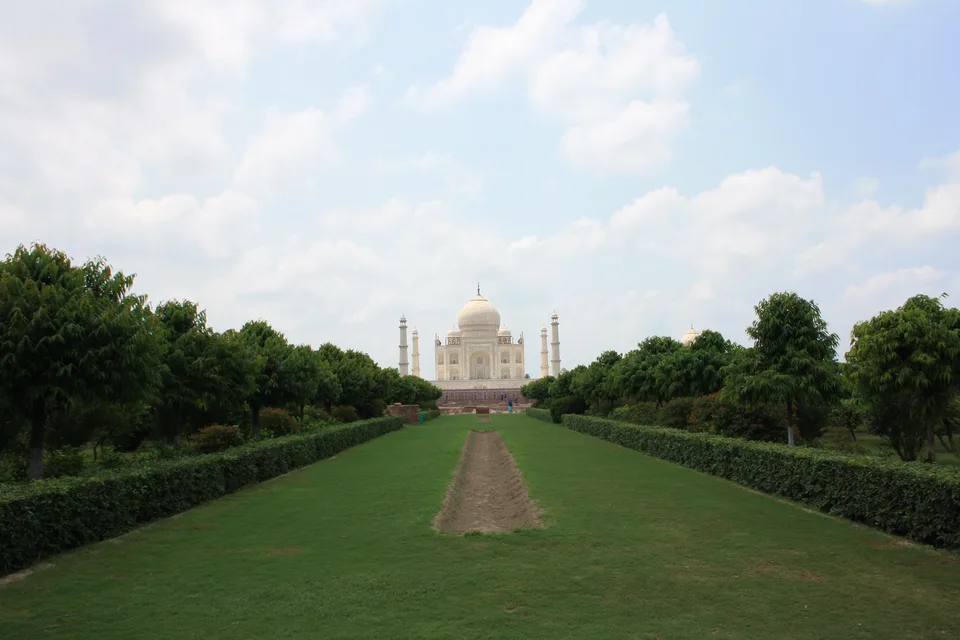
Mehtab Bagh's archaeological description places the garden opposite the Taj across the Yamuna and records excavated garden features. The appeal is the relationship between river, garden and mausoleum: a view back towards a building you have already explored from within. Conditions vary with weather and visibility, so regard the photograph as a possibility rather than a purchase guarantee.
Check closing time before travelling across town for late light. The name Moonlight Garden does not establish public access at night, and admission here is separate from Taj night viewing. Stay on authorised paths and respect barriers along the riverside. Combine this stop with Itimad-ud-Daulah when practical, rather than assuming the two are adjacent or easily reached by walking between them in the heat.
Decide whether Sikandra fits your available time
Akbar's tomb at Sikandra adds another garden mausoleum to the itinerary, on the city's outskirts. Its red sandstone tiers and marble upper portion offer a useful contrast with the Taj's composition. It is especially worthwhile for visitors interested in how the imperial architectural vocabulary developed across different rulers and generations.
Choose it because you want that comparison, not because every landmark must be completed. With only one full day, the Taj and fort usually make a more coherent core. With three days, Sikandra can occupy a separate outing or fit an onward journey if your actual route allows. Ask a driver about traffic and luggage arrangements before treating it as a convenient station stop. Do not assume every level or architectural feature is open for access.
Reserve a separate outing for Fatehpur Sikri
Fatehpur Sikri lies outside Agra's urban area and should be planned as an excursion. Akbar's court occupied this imperial centre in the sixteenth century; the court moved to Lahore in 1585. The surviving palaces, audience spaces and religious buildings reward attention to how a capital functioned, rather than a single explanation about why it was left behind.
Distinguish the ticketed palace areas from the active mosque precinct, including the tomb of Salim Chishti and Buland Darwaza. Ask about current access, dress and footwear requirements, and request permission before photographing worshippers. Arrange the return journey before setting out. A compressed visit followed immediately by a tightly timed train adds avoidable uncertainty; a dedicated morning with a flexible afternoon is easier to manage.
Arrive at the station actually printed on your ticket
Agra has several railway stations. The district transport overview distinguishes Agra Cantonment, Agra Fort, Raja Ki Mandi and others; they are not interchangeable names for one terminal. Match your hotel transfer to the station printed on the reservation, and repeat it clearly when arranging pickup.
Use Indian Railways passenger information for train enquiries and follow its official booking links. Compare the actual service, date, class and reservation status rather than relying on a generic Delhi–Agra journey time. Leave a buffer before an onward connection, especially after a monument visit. Road arrivals also need a specific terminal or hotel address: Idgah and ISBT are different bus locations. A private transfer can simplify luggage handling, but confirm tolls, parking, waiting time and the destination included in its quoted price.
Check flights and metro coverage for your exact trip
Airports Authority of India identifies Agra's airport as the Civil Air Terminal at Kheria, airport code AGR. Flight availability must be checked for your travel date; older descriptions of a single Delhi service should not determine a booking. Confirm the operating airline, baggage terms and arrival arrangements before choosing flights over rail.
The Uttar Pradesh Metro Rail Corporation provides the operator's current journey information. Its Agra planner includes stations serving the Taj and fort areas, but a planned network map is not proof that every proposed corridor is open. Check the actual station pair and final walking connection. Do not assume the railway station, airport and hotel are all connected by metro. For short visits, compare the whole door-to-door journey with an agreed auto-rickshaw or car fare.
For station pickups, arrange where the driver will wait and how you will identify one another. Download the accommodation address and booking details for use without a mobile connection. If using a hired vehicle between cities, distinguish a one-way transfer from a sightseeing day with multiple stops; they may carry different waiting and return arrangements.
Eat locally without turning every meal into a checklist
UP Tourism's Agra information introduces petha, the ash-gourd sweet, and dalmoth, a savoury mixture associated with nuts and lentils. Bedhai with potato preparation and jalebi offers another route into the city's food traditions. These are things to sample according to appetite, not a requirement to fit several heavy dishes into one breakfast.
Choose food that has been freshly prepared and served appropriately hot, and ask about ingredients if you have allergies or dietary restrictions. For packaged sweets, check the date, storage advice and journey ahead; a box destined for a long, hot transfer needs different handling from something eaten immediately. Keep drinking water available during sightseeing. Hotel dining may be convenient after an early start, while a separate market meal gives more time to compare options without a driver waiting.
Shop with a purpose in the old commercial city
The national tourism account of Agra's bazaars highlights Kinari Bazaar's textiles and accessories and Raja Ki Mandi's everyday shopping. Sadar offers another commercial setting. These areas are useful for seeing the city's trading life, but they should not be presented as a single pedestrian precinct adjoining the Taj.
For marble inlay, leather goods or embroidered work, compare workmanship and prices at more than one seller. Ask what the object is made from, what repairs are possible and whether delivery costs and import obligations are included. Obtain a written receipt identifying the purchased item. A demonstration explains a technique; it does not independently establish an object's age or value. Tell a guide or driver in advance if shopping is outside your plan, and leave space to decline politely.
Budget for the parts that change the total
Start with the correct monument admission category, then add accommodation, meals and the transport actually needed between separate clusters. A foreign visitor's Taj counter tariff plus optional mausoleum entry totals ₹1,300 before other sightseeing or travel. A room close to a convenient gate may reduce early transfer complications, even when its nightly price is higher.
Compare hotel totals including taxes, breakfast, cancellation terms and luggage storage. For a car day, specify hours, stops, parking, tolls and overtime. For a guide, establish whether the quoted fee covers one monument or the whole itinerary. There is no defensible single daily budget covering every nationality, season and hotel standard, so build a dated quotation for your own trip. Keep a contingency for changing plans rather than spending the entire allowance on headline bookings.
Match the season to your tolerance for heat
The India Meteorological Department's historical Agra climate table shows the contrast between winter and intense late-spring heat, with the main rains concentrated in the monsoon period. Its figures describe a historical baseline, not the forecast for your dates. Cooler months generally make long outdoor visits easier, while mornings become more valuable as temperatures rise.
In hot weather, reduce the number of exposed sites in one day and plan an indoor or hotel break. During rain, expect wet paths and allow more time for transfers. Winter can still require warm clothing for an early start; clear skies are never assured. Check current forecasts and transport notices shortly before departure. Choose dates around both weather and Friday closure, rather than buying a cheap room first and discovering your only Taj day is unavailable.
A practical two-day stay, with an optional third
Arrive the evening before your first full day, settle in and confirm the Taj approach. On a non-Friday morning, visit the Taj early, then have breakfast and rest before giving Agra Fort a separate afternoon visit. Keep the evening flexible for dinner rather than adding another distant attraction simply to fill the timetable.
On day two, combine Itimad-ud-Daulah with Mehtab Bagh, adjusting their order around opening conditions and the light. Add one market area if energy permits. A third day creates room for Fatehpur Sikri; choose Sikandra instead if you prefer a shorter architectural outing. Reverse days when Friday intervenes. With children or limited mobility, remove a stop before shortening every visit. An itinerary should protect the experiences you came for, not turn a delayed breakfast into a missed train.
Test a home and commute before committing
For a longer stay, start with temporary accommodation and travel to your workplace at the hours you will actually commute. A tourist-friendly address near the Taj may be inconvenient for a job elsewhere. Compare access to groceries, pharmacies, schools where relevant and regular transport before deciding that a spacious property is good value.
Inspect water supply and storage, drainage, ventilation, cooling, backup electricity, internet availability and the condition of locks and wiring. Clarify rent, deposit, maintenance, meter readings, repairs and notice arrangements in writing. The Uttar Pradesh Stamp and Registration Department provides official registration and stamp information; use the applicable process rather than assuming an informal rental receipt settles every legal requirement. Verify the landlord's authority and avoid paying a large deposit before inspecting the property and reviewing the agreement.
Visit the street as well as the flat. Check whether the approach remains usable when it rains and whether regular shopping requires crossing a difficult main road. If a family member has limited mobility, inspect the route from vehicle drop-off to the room itself. Small daily obstacles matter more over a long tenancy than a decorative balcony.
Establish services before relying on a long stay
The district electricity directory lists both DVVNL and Torrent Power. Check the supplier on the property's actual bill, how the meter is read and which charges the tenant must pay. Test mobile reception and ask the internet provider about service at the exact building, rather than assuming a citywide coverage claim guarantees installation.
The district hospital directory includes District Hospital and S.N. Medical College. Identify appropriate care near your accommodation and confirm relevant services and payment arrangements directly; a directory entry is not proof of round-the-clock specialist treatment or insurance acceptance. For families, establish school admission requirements before signing a lease. Keep copies of the rental agreement and essential travel documents accessible, and agree practical arrangements for rubbish, deliveries and building access with the property manager.
Separate tourism from permission to live and work
Consult the Government of India's e-Visa portal for eligible categories and application conditions. Nationality, purpose and the specific permission granted determine what is allowed. A sightseeing visit should not be treated as permission to take employment, enrol on any course or settle permanently. Check the appropriate work or study route before making financial commitments.
For a longer stay, consult the official e-FRRO portal and the conditions attached to your visa about registration, extensions and other formalities. Deadlines are not universal, and an available online service does not guarantee approval or conversion. VisaWand's India country guide provides wider context; consultant listings can help locate advisers whose credentials you should verify. For the next journey, compare the India location directory and India destination page with your remaining time and onward transport. The Delhi city guide helps plan a longer stay in the capital before or after Agra.
Official planning resources
Reviewed 14 October 2026. Use the official resources linked throughout this guide for admission, transport, housing and immigration decisions. Prices, services and rules can change; confirm the details relevant to your dates. Photography illustrates the locations and is not a live view.
View all official resources
- Incredible India: Agra
- UP Tourism: Taj Mahal visiting hours and entry charges
- Taj Mahal: visitor restrictions
- Taj Mahal: night viewing
- UNESCO: Taj Mahal
- UNESCO: Agra Fort
- ASI Agra Circle: monument admission
- ASI: Mehtab Bagh
- ASI: Itimad-ud-Daulah’s tomb
- ASI: Akbar’s tomb at Sikandra
- UNESCO: Fatehpur Sikri
- UP Tourism: Agra attractions and food
- Incredible India: Agra bazaars
- Agra district: getting there
- Airports Authority of India: Agra airport
- Uttar Pradesh Metro Rail Corporation
- India Meteorological Department: Agra climate
- Agra district: hospitals
- Agra district: electricity services
- Uttar Pradesh Stamp and Registration Department
- Government of India: e-Visa
- Government of India: e-FRRO
- Indian Railways passenger information
Plan the next part of your journey
Explore the India guide, browse other cities or compare consultants for your travel and relocation questions.