Visa
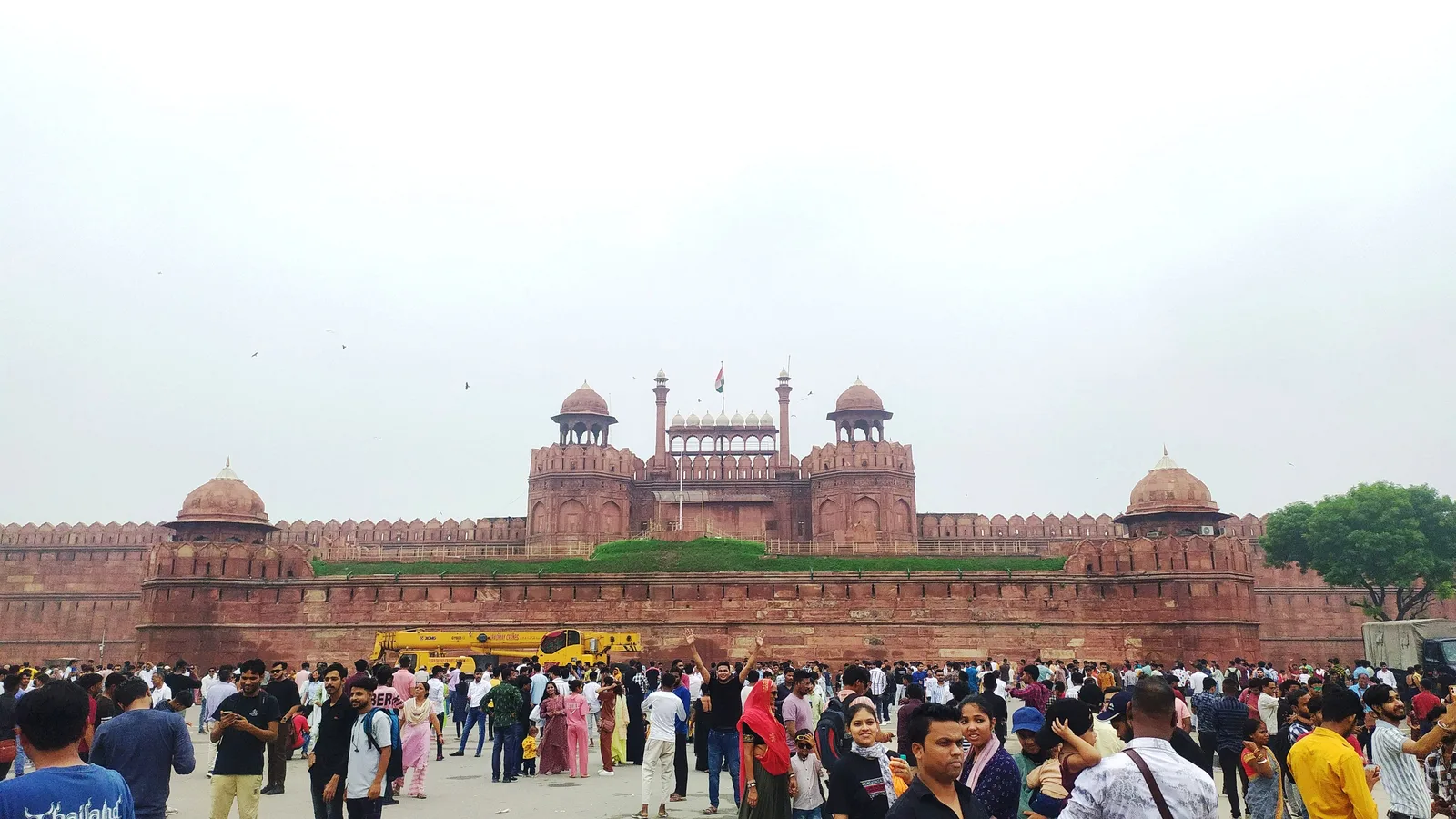
Delhi offers several kinds of city visit
Delhi's appeal lies in the ability to put different periods of architecture alongside living markets and modern commercial districts. The official tourism overview identifies forts, tombs, Old Delhi's lanes and havelis, and the avenues and public buildings associated with the planned central area. Visitors do not need to make all of these interests compete within a single day.
A first visit can be organised around one principal monument and a nearby or separately planned food-and-shopping experience. Someone interested in Mughal architecture may prioritise the Red Fort and Humayun's Tomb; Qutb Minar adds an earlier architectural period. Chandni Chowk and Connaught Place offer contrasting street and commercial settings. For a prospective resident, those sightseeing choices are only a starting point: commuting, household conditions and the appropriate entry route determine whether a longer stay is workable. Delhi and the New Delhi district should not be used as identical geographical terms throughout a plan.
Chandni Chowk: an Old Delhi walk with food along the way
Chandni Chowk was a major street in Shah Jahan's seventeenth-century Shahjahanabad. The official tourism introduction to Chandni Chowk connects that history with its present role as a market and food destination. It identifies the Yellow Line's Chandni Chowk station for access, and food such as stuffed parathas in Parathe Wali Gali and kachoris, chhole bhature and aloo tikki around Nai Sadak.
Make this a walk with time to browse and eat, rather than a route whose only aim is reaching the next monument. Choose food by the actual preparation, ingredients and portion you want. The trading streets also mean individual outlets keep their own hours. If a particular purchase or meal is important, plan around that business, while leaving the wider walk flexible. A market district is an experience in itself, not simply a transfer corridor to the fort.
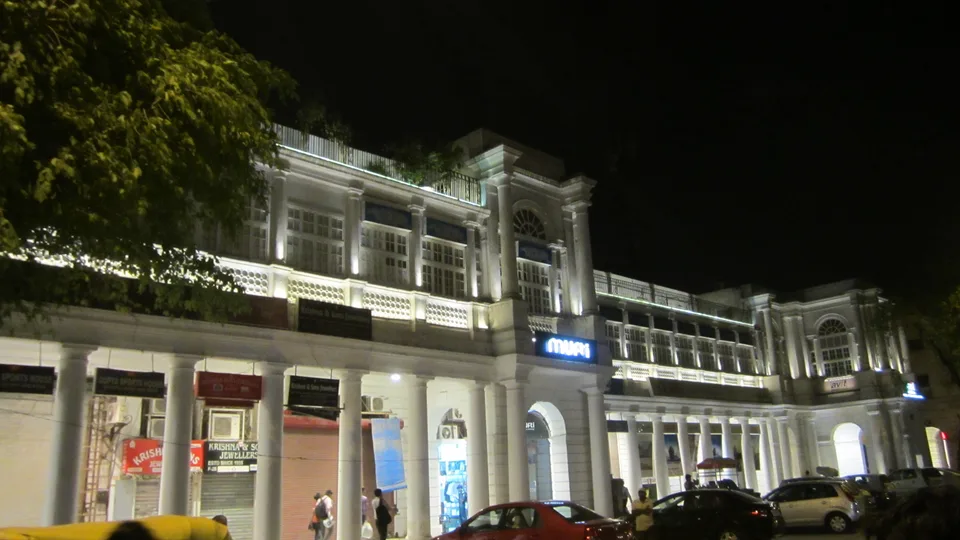
Connaught Place: a commercial district and useful meeting point
Connaught Place is recognisable by its rings of colonnaded buildings. The tourism board's Connaught Place page identifies it as a business and commercial centre with restaurants and cafes, and gives Rajiv Chowk on the Blue and Yellow Metro lines as its access point. That combination makes the district worth considering for a meal or meeting as well as a shopping walk.
Use the specific address when arranging to meet someone: a named circle, block or entrance is more useful than the district name alone. It offers a different architectural setting from Chandni Chowk, but commercial premises are separate businesses with their own hours and prices. A hotel advertised as near Connaught Place also needs a map check against the route you will actually use. Staying close to restaurants can be convenient, while the repeated journeys to your chosen monuments remain part of the accommodation decision.
Khan Market: boutiques and a sit-down meal
Khan Market offers a different shopping setting from Old Delhi's trading streets. Delhi Tourism's Khan Market description dates its U-shaped, two-storey complex to 1951 and identifies boutiques, branded shops and restaurants among its present uses. Its listed Metro access is Khan Market on the Violet Line.
Choose this area when browsing shops and having a sit-down meal is the intention, rather than expecting the same experience as Chandni Chowk. Compare the menu and total bill before selecting a restaurant; the district's upscale reputation is not a fixed price quote. Leave time for a small number of shops that interest you rather than treating every commercial area as a compulsory sightseeing stop. For someone considering a move, an enjoyable meal here also should not settle a housing decision: regular commuting, household services and the property's actual cost still need their own assessment.
Red Fort: a palace complex behind the sandstone walls
The Red Fort was built as Shah Jahan's palace fort for Shahjahanabad. Its red sandstone enclosure gives the site its familiar identity, but the architecture within is the reason to allow more than a brief exterior stop. UNESCO's account of the Red Fort Complex describes pavilions linked by a water channel, alongside the older Salimgarh fort that forms part of the heritage property.
The Archaeological Survey of India's Red Fort account gives a useful sequence for reading the palace complex. Chhatta Chowk is the vaulted arcade beyond the western gateway; the Naqqar Khana, or drum house, leads towards the Diwan-i-Am, the public audience hall. Contrast that public setting with the richly decorated Diwan-i-Khas, the private audience hall. The water channel through the palaces, Nahr-i-Bihisht, helps explain the connection between gardens, water and imperial apartments. Later British military use altered the ensemble, so this is a surviving and modified complex rather than an untouched seventeenth-century palace.
ASI lists Rs550 online or Rs600 cash for its other-foreign-visitor admission category. Its specified regional nationality categories have different rates, and children below fifteen enter free. Establish the category applicable to your passport before budgeting. The published entry fee should not be assumed to include every separate museum or evening programme offered around the fort.
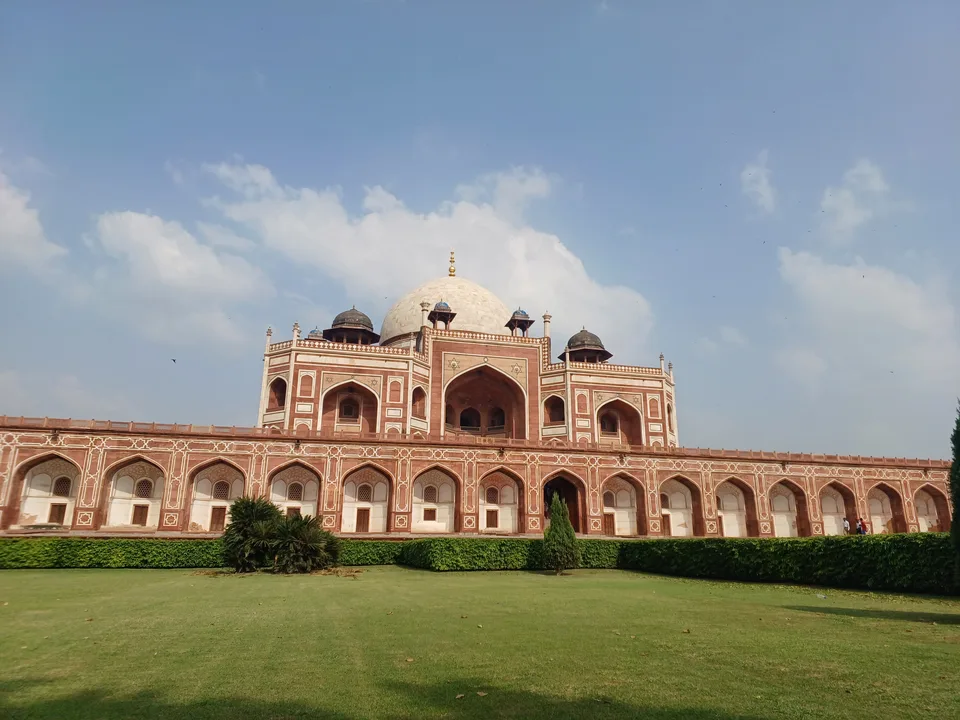
Humayun's Tomb: garden planning and Mughal architecture
Humayun's Tomb's World Heritage record places it at the beginning of the grand Mughal dynastic mausoleum tradition that later culminated in the Taj Mahal. Its charbagh layout divides the garden into four quadrants, with pools joined by water channels. The relationship between the tomb, formal planting and approach is the central experience, rather than simply recognising a famous silhouette.
The wider ensemble includes other sixteenth-century tombs, among them Isa Khan's, Nila Gumbad and the Barber's Tomb, as well as Arab Serai, associated with the craftsmen who built Humayun's Tomb. This is a different architectural subject from the Red Fort: a funerary landscape rather than a palace complex. Choosing both can make sense for a Mughal-focused stay, provided outdoor conditions and transfers leave time to look carefully. Establish the current ticket and any separate museum inclusions before booking; entry to one named attraction does not automatically cover every neighbouring experience.
Qutb Minar: look beyond the tower
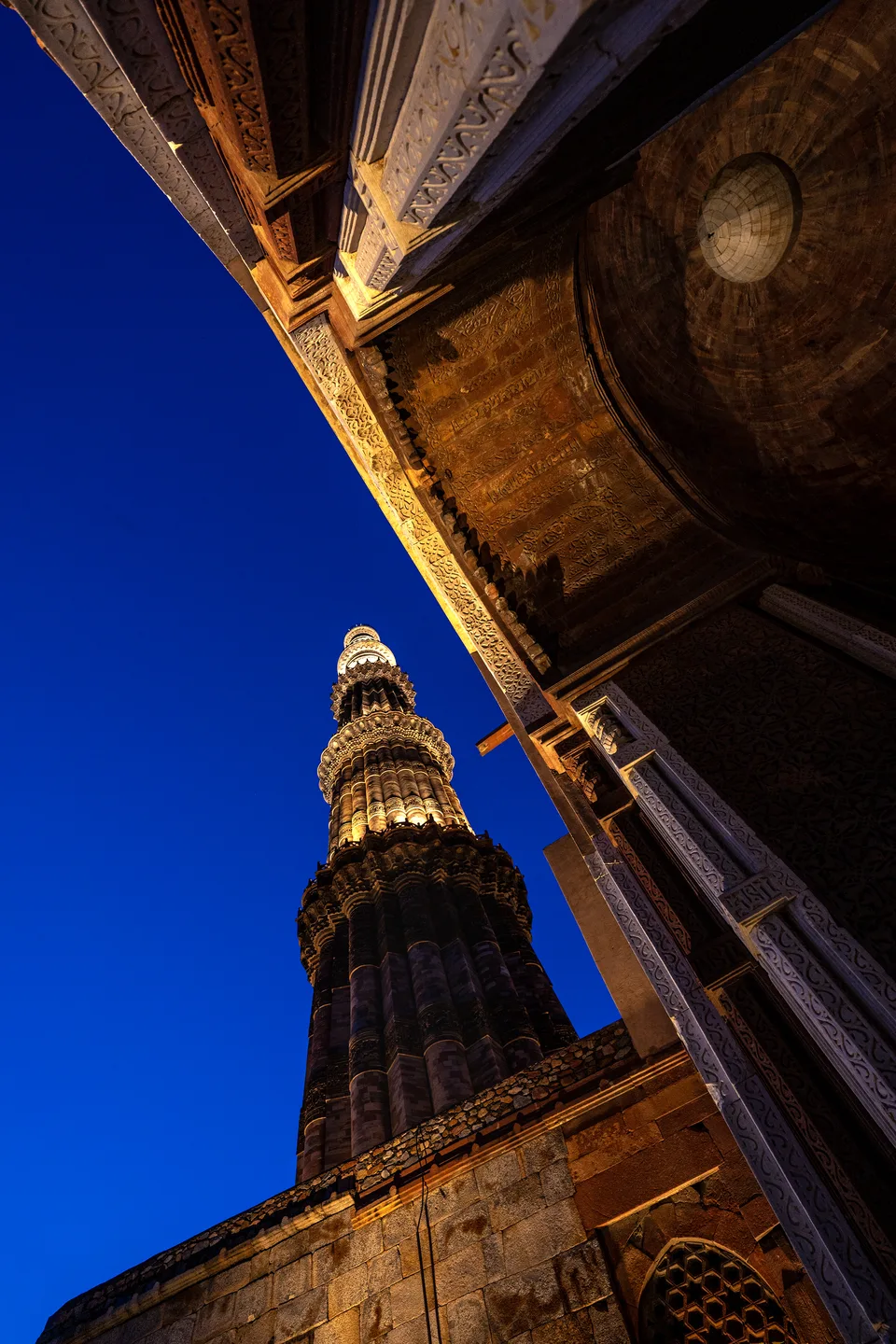
The red sandstone Qutb Minar dates to the early thirteenth century and rises to 72.5 metres, according to UNESCO's Qutb Minar and monuments entry. The listing concerns a group of monuments, not just the tower. A visitor interested in Delhi's earlier architectural history should look at the ensemble and its changing forms rather than treating the minaret as an isolated landmark.
Look for Alai Darwaza, the ceremonial gateway built in 1311, and the carved tomb of Iltutmish. The iron pillar and mosque courtyard show how the complex combines multiple structures and periods. The unfinished Alai Minar adds a visible contrast with the completed Qutb Minar: an ambitious project that never reached its intended scale. Examine the ensemble from ground level; a tower photograph does not imply that visitors can climb it. Compare this earlier architectural chapter with the Mughal tomb and palace rather than treating all three World Heritage sites as interchangeable stops.
Lodhi Garden: a walk among earlier monuments
Lodhi Garden provides another way to encounter historic architecture without making the day a sequence of major fort and tomb admissions. The tourism board's Lodhi Garden monument information identifies tombs, mosques and bridges from the Sayyid and Lodhi periods, with its location on Lodi Road near the India International Centre.
Choose this as a walking commitment when outdoor conditions suit, leaving time to notice the structures rather than treating the park only as a shortcut. It can replace an additional shopping stop for someone whose interests are architectural. Confirm the current access hours for the date and retain the weather and air-quality checks described below.
Dilli Haat: crafts and regional food in one planned stop
Dilli Haat's official introduction describes the INA venue as a developed version of the rural haat, combining crafts from different parts of India with regional cuisine. It gives a visitor a reason to shop that differs from branded retail: look at the materials, workmanship and origins of an item rather than buying solely because the venue is on a sightseeing list.
Specify the venue when arranging transport. Dilli Haat is not the name of a single interchangeable location, and the official page also identifies a separate site at Pitampura. For a limited visit, the INA venue can provide one deliberate craft-and-food commitment instead of a string of shopping stops. Establish the current admission and any event conditions before going; an old leaflet's price is not used here. Allow a purchase budget that includes the item you choose and any packing or onward carriage it needs.
Choosing accommodation around the journeys you repeat
Choose a room around the purpose of the stay. A short heritage visit benefits from workable routes to the sites you have selected; an airport overnight needs a clear terminal transfer; a business trip should begin with the actual meeting address. These are different priorities, and no single hotel area answers all three equally well. Check the airport hotel listing carefully for which terminal it serves and whether any advertised transfer is included.
Compare hotels, guesthouses and apartment-style accommodation on their actual facilities and booking terms. Look for the room's window, bathroom, occupancy, cooling and any accessibility provision you need, rather than relying on a property's broad category. Price comparisons should use the same dates and show taxes and additional charges. Keep the cancellation terms visible while your plans are uncertain.
Match the airport Metro connection to your terminal
The airport's terminal information lists Magenta Line connectivity for T1 and Orange Line connectivity for T2 and T3. Terminal 3 handles both international and domestic flights, so the word domestic alone cannot identify where a traveller must go. Use the terminal shown for the booked flight and establish the connection from that point.
When choosing between rail and a road transfer, compare the entire route to the hotel's entrance. A rail journey may require another Metro connection or a final taxi; a road quote should specify the destination and any included charges. Keep the arrival plan practical for your luggage and arrival hour. For the return trip, build in check-in and security time separately from the transport leg. No universal airport-to-centre duration is quoted here: the journey you need depends on the terminal, service and final address.
Airport terminals require separate transfer planning
Delhi Airport has three terminals, so an itinerary that changes terminals needs more than a single airport arrival time. The airport operator's inter-terminal guide lists shuttle services and taxis for T1 connections, while its T3-to-T2 options also include walking and a buggy service. The right connection depends on the terminal pair, your luggage and the arrangements for the onward flight.
Use the flight's actual terminal when planning the city journey or a connection. Do not assume that a remembered airline assignment remains current, or that landing at the airport puts you immediately at the next check-in desk. Allow for immigration, baggage collection and any new security check as well as the transfer itself. The operator describes free inter-terminal shuttles, but a particular connection's departure point and conditions should be confirmed through its current information rather than inferred from a general airport map.
Metro tourist cards and practical budgeting
Delhi Metro's current tourist-card page lists a one-day card at Rs200 and a three-day card at Rs500. Both prices include a Rs50 security deposit, refundable when a readable card in good physical condition is returned; the travel amount itself is not refundable. The operator's ticket overview excludes the Airport Express Line from tourist-card travel. Budget that transfer separately. Compare the pass with the trips you will actually take: a day focused on one district may not justify unlimited travel. Keep the deposit distinct from the travel cost when comparing products, and retain the card in good condition if you intend to reclaim it.
Use current room and menu quotes rather than an unsupported daily average. Compare the same dates and occupancy, retain the taxes and extra charges in the calculation, and allow for the airport transfer in both directions. A shopping budget should also account for carrying or shipping a purchase home. For a move, deposits and initial furnishings belong in the first-month calculation separately from recurring rent and services. These distinctions make the budget useful for decisions even where reliable representative prices have not been established.
For broader planning, use VisaWand's India country guide, India destination page, India location directory and consultant listings. The Mumbai location page is another city to consider.
Weather and air quality belong in the itinerary decision
Delhi's seasons change the practicality of long outdoor visits. The tourism board's seasonal overview describes hot summer conditions, a wet monsoon period and cold winter weather, with milder transitions in spring and autumn. For a trip built around forts, tombs and market walks, temperature and rain affect how much ground you can comfortably cover. A shorter outdoor programme with breaks is more realistic than treating every season as equally suitable for uninterrupted walking.
Use the India Meteorological Department's Delhi forecasts and warnings to decide the day's order; the regional portal includes weather links for major monuments. Air quality deserves a separate check through the Central Pollution Control Board's Sameer app. This guide does not quote a cached index reading as today's conditions or promise clean air in a particular month. Keep flexibility in the booking and daily programme if outdoor conditions are central to your enjoyment, rather than choosing travel dates from a temperature recommendation alone.
Three days with time for the places you choose
On day one, give Old Delhi a coherent focus. Combine the Red Fort with a Chandni Chowk walk if both interest you, retaining time for food and browsing rather than adding more admissions. Someone more interested in street life can give the market the larger share of the day; an architectural visit needs time inside the fort.
Use day two for Humayun's Tomb as the main heritage commitment. Add a different kind of stop, such as browsing and a meal at Khan Market, while keeping transport and the actual restaurant hours in the plan. This balances an outdoor ensemble with a commercial area without pretending they are one continuous attraction.
Make Qutb Minar the principal visit on day three. Dilli Haat INA can be a separate craft-and-food choice if time and energy allow. Check the journeys from your own accommodation before settling that combination. Leave an alternative for unsuitable weather or air quality, and keep the airport departure day lighter if luggage collection, a terminal change or a long transfer is involved.
Agra is a separate destination, not another Delhi neighbourhood
Agra is worth considering if Mughal architecture is the organising interest of your journey. UNESCO's Taj Mahal description identifies the white-marble mausoleum commissioned by Shah Jahan in memory of his wife. It offers a different setting from the Delhi monuments, but seeing it requires a separate destination plan rather than adding its name to a city-centre itinerary.
Decide whether that visit warrants an overnight stay or a dedicated excursion, using the actual transport you intend to book. A train name or a road distance does not by itself establish how much time you will spend at the site after station transfers, admission and the return journey. Verify the current opening calendar and ticket inclusions with the monument's operator before committing to a date. If you have only three days in Delhi, replacing one of the planned city days is more realistic than retaining every Delhi stop and adding Agra on top.
Housing and commuting for a move
A housing search should start with the workplace or campus and the weekly routine it creates. Test the journey from the proposed building, including the walk to a station, transfers and the final leg. A room that works for sightseeing may require an awkward commute every working day. If responsibilities take you beyond Delhi's administrative area, establish the actual destination and route rather than treating every metropolitan address as central Delhi.
Inspect the home's cooling, ventilation, cooking and laundry provision, along with storage and any working space you need. Record rent, deposit, separate service costs and repair responsibilities in an agreement you understand. Compare the full monthly cost and the terms for leaving, with an initial allowance for household purchases. Use property-specific evidence instead of assuming a neighbourhood label guarantees price, quietness or a particular standard. Resolve practical move-in readiness alongside the appropriate immigration route before turning a viewing into a binding commitment.
Water connections and the property's existing arrangements
For a longer stay, establish whether the property already has an active water connection and how its charges are allocated. Delhi Jal Board's water guidance distinguishes individual connections from buildings using a bulk supply. A flat in a managed complex therefore should not be assumed to need its own new connection simply because a new tenant is moving in.
Where a new application is required, the Board lists identity and ownership or occupancy evidence, with an owner's no-objection certificate for a tenant, alongside technical feasibility and outstanding-dues conditions. Coordinate that process with the owner before committing to an assumption about move-in readiness. Ask how the building stores and distributes water, whom to contact for a fault, and which bills you will receive. A functioning utility account is a household requirement; it does not itself prove a right to occupy the property or confer immigration status.
Visiting Delhi uses India's nationality and purpose-specific entry rules
The Government of India e-Visa portal is the starting point for checking whether your passport and proposed activity fit an available electronic category. Tourism, business, medical treatment and study appear as separate categories, with their own conditions. A visitor's permission should not be treated as permission to take employment or establish permanent residence. Check the category that fits what you will actually do, and the conditions attached to the issued document.
The portal also identifies the online e-Arrival card as arrival information rather than a visa, with submission within 72 hours before arrival. Completing it does not replace an entry permission you need. Use the official application and payment instructions; the government expressly says it does not charge an emergency or express e-visa supplement. Do not buy travel on the assumption that an intermediary's urgency claim guarantees approval or that a visa's overall validity permits an uninterrupted stay of the same length.
Longer stays require the right permission and registration arrangements
A job, course or family move needs an immigration route matching that purpose, rather than a tourist permission selected for convenience. Establish the documents and approval sequence with the responsible Indian mission, employer or educational institution before building a move around a presumed start date. The fact that an online category exists does not prove that your nationality or circumstances meet its requirements.
Use the government e-FRRO portal for the services and registration instructions applicable after arrival. Read the issued visa's endorsements alongside those official instructions: the obligations for one category should not be copied onto every visitor. Keep your own contact details available for official communications, retain copies of submitted documents and respond to requests through the stated process. Registration is an administrative obligation where applicable, not a promise of permanent residence or unrestricted employment. A signed tenancy cannot substitute for an immigration permission, and approval should not be assumed because an application has been submitted.
Official planning resources
Reviewed 14 October 2026. Use the official resources linked throughout this guide for admission, transport, housing and immigration decisions. Prices, services and rules can change; confirm the details relevant to your dates. Photography illustrates the locations and is not a live view.
View all official resources
- Delhi Airport inter-terminal connections
- Government of India e-Visa categories and application instructions
- UNESCO Red Fort Complex history and significance
- UNESCO Humayun Tomb heritage record
- UNESCO Qutb Minar and its monuments
- Delhi Tourism Chandni Chowk food and access
- Delhi Tourism Khan Market layout and dining
- Official Dilli Haat craft and food overview
- Delhi Tourism seasonal planning overview
- India Meteorological Department Delhi forecasts and warnings
- CPCB official Sameer air-quality application for Android
- Delhi Tourism Connaught Place character and Metro access
- Delhi Jal Board connection and tenant requirements
- UNESCO Taj Mahal heritage description
- Government e-FRRO services and instructions
- Official Delhi Tourism city character
- Delhi Airport terminal-specific Metro connections
- Delhi Tourism Lodhi Garden historic monuments
- Delhi Metro tourist-card prices and deposit rules
- Delhi Metro ticket types and Airport Express exclusion
- Archaeological Survey of India Red Fort history and admission categories
Plan the next part of your journey
Explore the India guide, browse other cities or compare consultants for your travel and relocation questions.