Visa
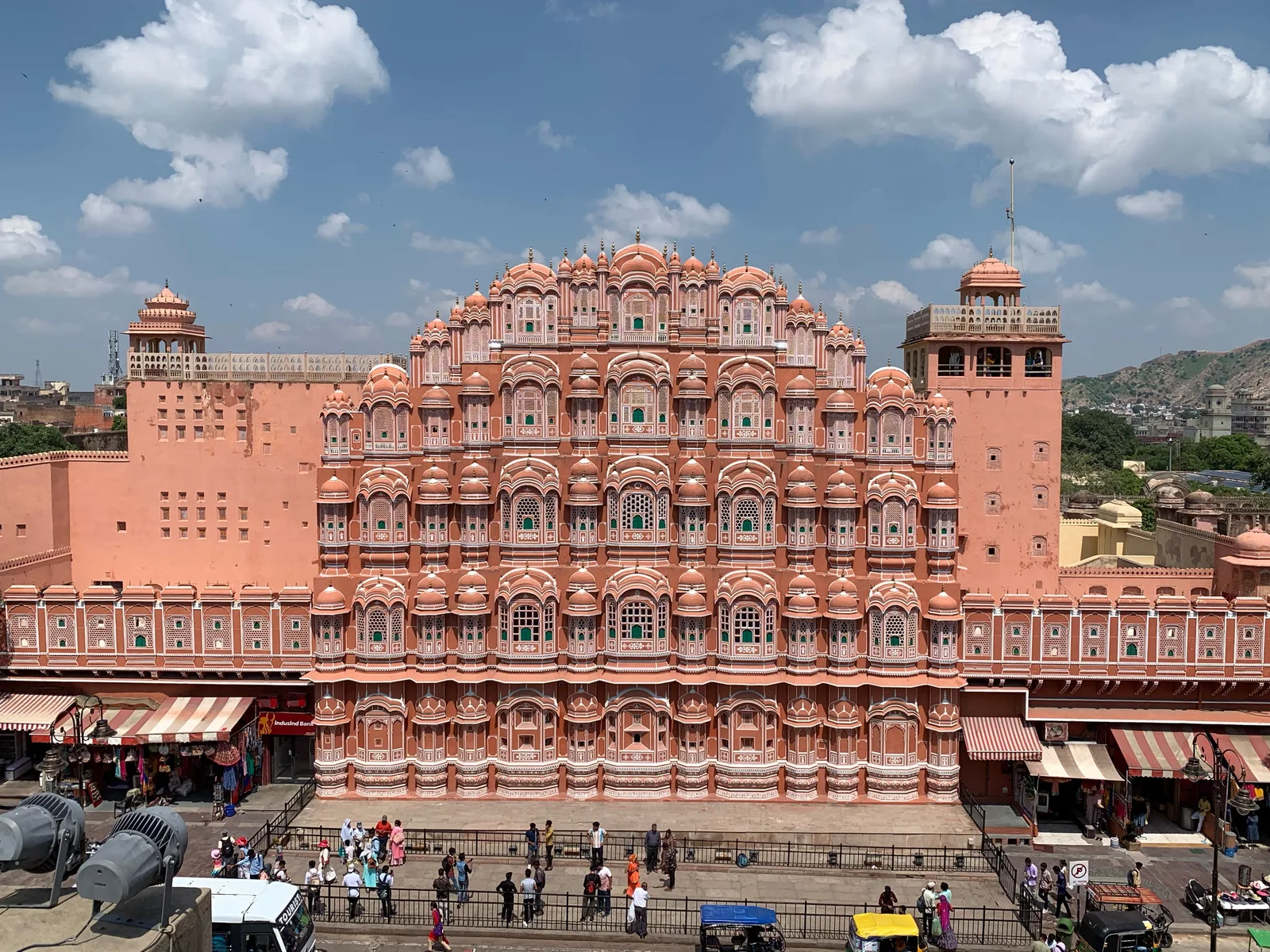
Jaipur rewards a slower look
Jaipur’s most familiar image is a pink palace screened with hundreds of windows. The more interesting city lies around it: a planned commercial centre where jewellery, textiles, worship and everyday journeys still share the streets. Rajasthan’s capital offers enough for a substantial visit, especially if you enjoy architecture and making things as much as photographing them.
Give Jaipur three full days if possible. Keep the walled city together, reserve another morning for Amer, and leave room for a museum or an unhurried meal. For a longer stay, the decisive questions change: where you work, how you commute, and whether your home handles heat, water and daily errands. VisaWand’s India country guide provides the wider context.
Read the city through its plan
Sawai Jai Singh II founded Jaipur in 1727, transferring his capital from Amber to a site on the plains. Its grid, broad streets, market frontages and public squares reveal an unusually deliberate urban project. UNESCO’s Jaipur City listing explains the exchanges between Indian planning traditions and other architectural influences; the walled city joined the World Heritage List in 2019.
The Pink City name refers particularly to that historic core, rather than a uniform colour across the modern metropolis. Rajasthan Tourism connects the famous repainting with the Prince of Wales’s visit in 1876. Look beyond individual façades to the repeated shopfronts and routes between squares. The design becomes easier to understand when you explore one manageable area on foot.
Choose a base before choosing a hotel
The walled city puts Hawa Mahal, City Palace and Jantar Mantar within the same sightseeing area. Stay here if proximity to those places matters most, but inspect vehicle access, room position and evening noise. A short distance on a map does not guarantee an easy luggage transfer through a busy market.
Bani Park offers another useful search area. Umaid Bhawan’s operator page identifies its heritage-style hotel there; this is Jaipur’s property, distinct from Umaid Bhawan Palace in Jodhpur. Around Civil Lines and Hawa Sadak, compare larger hotels and access to the Metro. Hilton Jaipur provides one concrete address on Hawa Sadak. These are examples for comparing locations, rather than claims that one property suits every budget.
Match accommodation to your actual days
A courtyard hotel can make a memorable base, but the heritage label alone tells you little about stairs, natural light or bathroom ventilation. Request photographs of the exact room category. Travellers with mobility needs should confirm the entire route from street to bedroom, including lifts and any unavoidable steps.
For an airport departure, weigh a southern base against the extra journeys into the historic centre. For a resort beyond the central neighbourhoods, calculate transport for every sightseeing day before treating the room rate as a bargain. Ask whether breakfast, taxes, transfers and cancellation are included. Families should verify bed arrangements, shaded space and pool supervision; longer-stay guests should ask about laundry and a usable work surface.
Start with Hawa Mahal, then step behind it
Hawa Mahal dates to 1799 and the reign of Sawai Pratap Singh. Its latticed façade allowed women of the royal household to watch street life while remaining screened from public view. The national tourism page for Hawa Mahal gives the architectural context. Viewing the exterior and entering the monument are different experiences; allow time for both if the interiors interest you.
The entrance is behind the celebrated street façade. Find it before joining a queue or paying anyone offering assistance. Across the road, a café viewpoint is a commercial premises, so check its purchase requirements rather than assuming a free public terrace. Photograph from a safe place clear of traffic, and resist turning the whole morning into a search for one familiar angle.
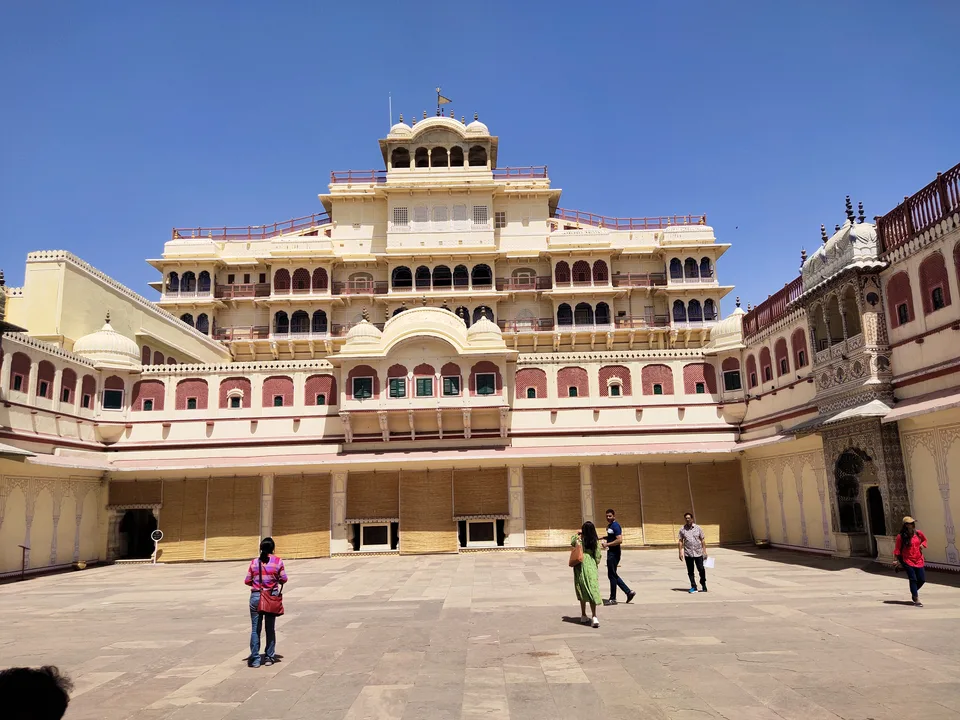
Give City Palace a considered visit
City Palace’s current visitor information lists museum admission at ₹400 for Indian nationals/residents and ₹1,200 in its international category. Its separate composite ticket costs ₹500 or ₹1,700 respectively and includes Jaigarh and the Royal Cenotaphs. Check the category and inclusions before buying; this is not a universal pass for Jaipur’s monuments.
Museum hours are 9:30am–6:30pm, with the last tickets at 6pm; Dhulandi is a closure day. Two notices materially affect plans: the Textile Gallery in Mubarak Mahal is temporarily closed for restoration from 27 March 2026, and Museum at Night is temporarily closed. Those notices take precedence over evening prices still displayed below them.
Spend time with the courtyards and collections rather than expecting unrestricted palace access. The Royal Tour is a separate product covering specified rooms within a continuing royal residence. Confirm accessibility for the areas you want to see, especially upper levels.
Understand what Jantar Mantar measures
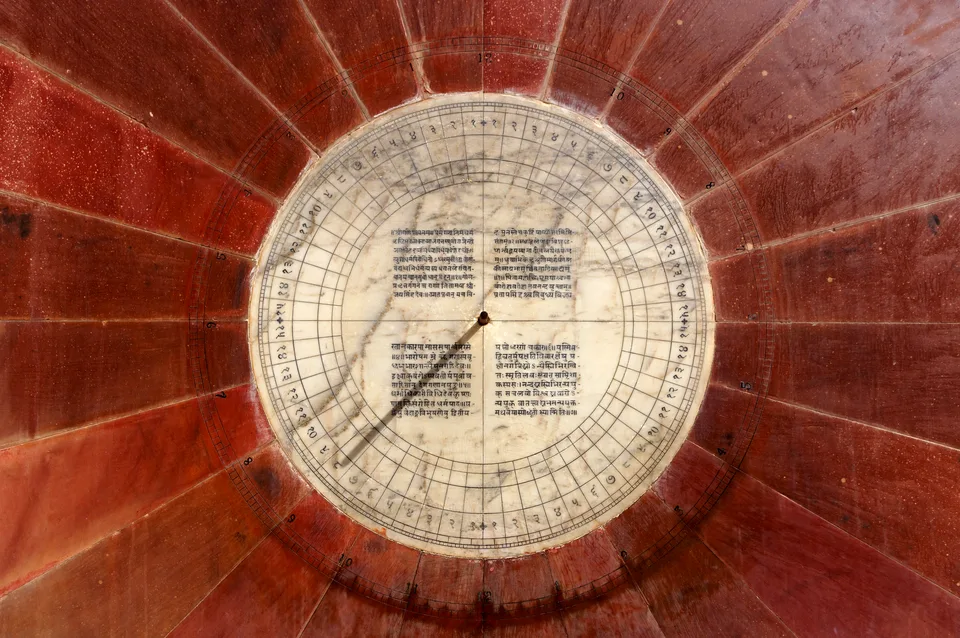
Jantar Mantar is an observatory whose masonry instruments turn sunlight and celestial positions into measurements. It is much more rewarding when someone explains what a particular scale or shadow means. Read UNESCO’s account of the observatory before arriving, then choose a guided explanation if you want help interpreting the instruments.
Its World Heritage inscription dates to 2010, separately from the city’s 2019 inscription. UNESCO describes about twenty main fixed instruments; counting every component is less useful than understanding their different functions. Allow a focused visit rather than squeezing it into the last few minutes before another booking. This is an outdoor site, so plan shade breaks and avoid assuming that the monumental structures provide much shelter.
Reserve a morning for Amer
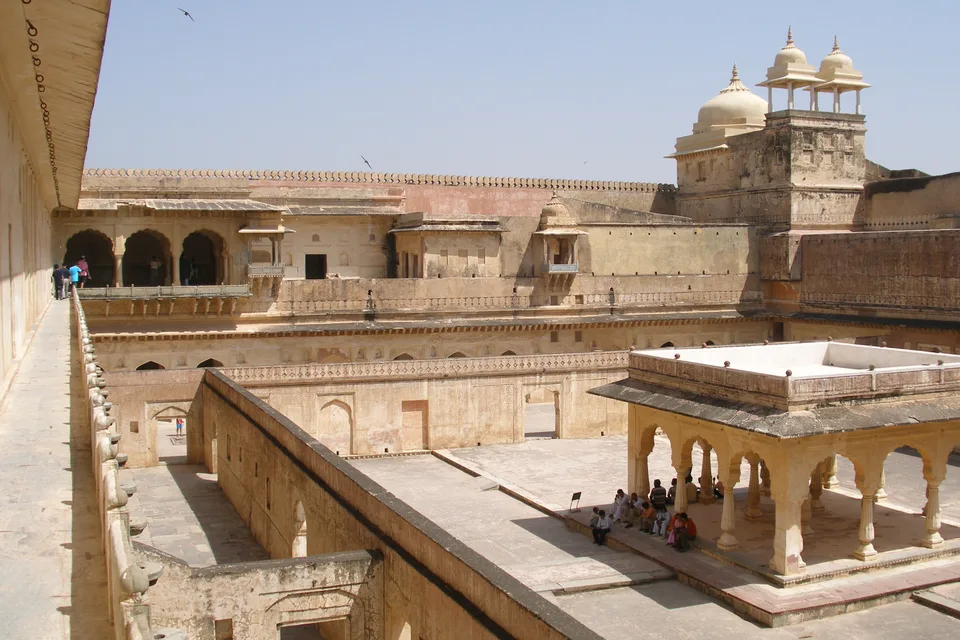
Amer, also called Amber, lies outside the walled city among the hills to the northeast. The palace complex belongs to the Hill Forts of Rajasthan World Heritage property, inscribed in 2013. Its courtyards, defensive setting and ceremonial spaces make a different architectural experience from the planned streets below.
Arrange your outward and return transport before committing to additional hilltop stops. Walking routes, steps and exposed surfaces require more effort than a photograph suggests; discuss an accessible approach with the operator if needed. A hired guide and admission are separate purchases unless your booking explicitly combines them. State monument prices are not quoted here because the current government booking portal could not be reliably accessed during verification. Confirm the displayed tariff and your ticket category at the official counter.
Add textiles at Anokhi
Close to Amer, the Anokhi Museum of Hand Printing offers a valuable change of scale: tools, cloth and printing processes in a restored haveli. It gives context to textiles you may later encounter in shops, helping you look at technique rather than simply colour or price.
The museum’s opening information lists Tuesday–Saturday, 10:30am–5pm, and Sunday, 11am–4:30pm. Mondays and specified holidays are closed; annual gallery maintenance also affects late May to mid-July. Confirm your date directly, since the page retains a summer 2026 reopening notice. Do not interpret that dated message as proof of an ongoing October closure. Demonstration breaks are listed separately, so ask when printing or carving will be visible before timing your visit around it.
Make room for a museum or a hill view
Albert Hall, in Ram Niwas Garden, gives another route into material culture through collections that include decorative arts and paintings. It works well as a separate visit after a demanding palace morning. Check the day’s access and admission before travelling specifically for an individual gallery.
Nahargarh provides an elevated perspective on Jaipur and a chance to see palace interiors within a fort setting. The national tourism description of Nahargarh identifies Madhavendra Bhawan among its principal features. Confirm closing times before building an evening around it: a sunset photograph does not establish that every interior remains open. Arrange the return journey rather than depending on finding a vehicle at the last moment. Jal Mahal can instead be appreciated from the lakeside; do not assume that an exterior photo stop includes palace entry.
Arrive with the correct terminal and station
Jaipur International Airport serves Sanganer, south of the historic centre. Check the terminal on your actual flight booking, and allow for road traffic when connecting with a train or another flight. The airport operator’s passenger guide says there is no inter-terminal shuttle; taxis or app-based cabs are used for transfers between terminals.
For rail travel, check the exact station name and train date on your confirmed ticket. Jaipur Junction and a Metro station called Railway Station are different facilities, even though they can form part of the same journey. Reserve time for moving between them with luggage. Intercity trains and road transfers can connect a wider India itinerary, but compare the whole journey, including arrival time and local transfer, rather than just the advertised travel duration.
Use the Metro where it fits
The official Jaipur Metro website describes the operating Mansarovar–Badi Chaupar corridor. It is particularly useful for reaching the historic centre from stations along that route. It does not provide a direct airport rail connection or take you to Amer’s palace entrance. Check the map against both ends of your journey before choosing accommodation on the strength of a station name.
The operator’s published fare notice revised token fares from 31 January 2025. Railway Station to Badi Chaupar costs ₹15; the full Mansarovar–Badi Chaupar journey costs ₹30. A one-day tourist card costs ₹150 upfront, including a ₹50 refundable security deposit. Compare that with your likely trips: a sightseeing day involving only two short rides may not justify a pass. Follow current station announcements for service changes.
Plan the journeys beyond the tracks
Auto-rickshaws, taxis and booked cars fill gaps between the Metro, accommodation and outlying attractions. Agree the destination and fare or use the quoted app price before setting off. For a car hired by the day, establish the included hours, kilometres, waiting time, parking and return arrangements in writing.
Group stops by geography. Amer and its surrounding sights make a coherent excursion; repeatedly returning to a central hotel between them wastes time. In the walled city, combine a rail arrival with walking and shorter onward rides. Travellers with children or limited mobility should budget for those last stretches rather than relying on an optimistic walking estimate. Save the hotel’s address and entrance location offline so a lost connection does not complicate the return.
Eat for the region, not a checklist
Rajasthan Tourism’s cuisine guide explains dal baati churma: lentils, wheat bread balls and a sweet cereal preparation, often accompanied by generous ghee. Kachori offers a smaller introduction; ask whether the filling is savoury onion or a sweet preparation. Ghevar is a distinctive disc-shaped sweet associated with regional festivals.
Vegetarian dishes do not automatically suit vegan diets: milk products and ghee need a specific question. Explain allergies clearly and ask about preparation as well as the main ingredient. Choose freshly prepared food and drinking water you trust. For a relaxed introduction to several vendors, consider Masala Chowk at Ram Niwas Garden, checking current entry arrangements. A substantial lunch followed by a lighter evening meal may fit a hot sightseeing day better than several elaborate restaurant bookings.
Shop with enough time to compare
Johari Bazaar, Bapu Bazaar and the streets around the chaupars are useful places to look at jewellery, textiles and other crafts. Decide whether you want a souvenir, a garment to use, or a significant jewellery purchase; each requires a different level of checking. A guide’s suggested shop is an introduction, not independent proof of quality.
For cloth, ask about fibre, printing method, colour care and dimensions. For valuable stones or precious metal, obtain a detailed invoice and independent assessment where appropriate. Establish delivery, shipping and return terms before paying. Leave space in the schedule to compare items without a waiting driver or a looming departure. Anokhi’s displays can make that comparison more informed, but museum exposure does not authenticate merchandise in unrelated shops.
Build a budget from actual choices
Start with a room quote for your dates, then add admission, meals and transport. City Palace alone illustrates why nationality categories matter: the standard adult international ticket is substantially more than its Indian-category counterpart. Add any guide fee separately. Treat combined tickets as purchases to evaluate against your intended visits, not automatic savings.
For transport, put the verified Metro fares alongside a written quote for the Amer excursion. Keep shopping outside the essential daily budget and maintain a reserve for changes. No single daily figure can fairly cover a hostel traveller, a family using a car, and a palace-hotel guest. Obtain current menus and accommodation totals instead of relying on a citywide average that conceals taxes, seasonality and very different comfort levels.
Choose a season for the way you travel
The India Meteorological Department’s 1991–2020 Jaipur normals put January’s average daily minimum and maximum at 8.4°C and 22.5°C. May’s corresponding figures are 27.1°C and 41.1°C. These are historical averages, not forecasts, but they explain why winter suits extended outdoor sightseeing and why summer needs a different pace.
July and August have the highest average rainfall in that table. Plan flexibility for wet days and check current weather before hill excursions. October can still be hot: its average daily maximum is 34.1°C. November through February is a sensible starting point for a first visit, with layers for cooler mornings. Festival dates can change access, crowding and room availability; verify the specific event rather than assuming a generic seasonal calendar.
A realistic three-day plan
Day one: begin with Hawa Mahal, visit Jantar Mantar, then take a proper lunch break before City Palace. Reverse the two paid visits if a booking requires it. Leave a short section of the nearby bazaar for later rather than trying to cover every market on arrival.
Day two: travel to Amer in the morning. Add Anokhi if it is open and textiles interest you, then make a brief lakeside stop on the return if conditions suit. Choose Jaigarh instead of the museum if fortifications matter more to you; attempting every northern attraction can turn the day into transfers.
Day three: visit Albert Hall or another collection, leave time for shopping, and consider Nahargarh only after checking access and return transport. Keep a departure buffer. With two days, drop optional additions rather than compressing all three days into rushed stops.
Test everyday Jaipur before committing to a move
A holiday base and a practical home solve different problems. Begin a relocation with temporary accommodation and test ordinary weekdays: the commute at working hours, the school journey if relevant, grocery access, and evenings around the building. Mansarovar’s Metro access is useful only when your destination also fits the corridor.
Compare central areas with southern or western options against your actual workplace or campus. Do not infer a short commute from a neighbourhood’s reputation or a straight-line distance. Ask about internet installation at the exact address and test mobile reception inside the room where you would work. A successful trial should include a realistic household budget and written confirmation of your immigration and employment arrangements, rather than a decision based on sightseeing convenience.
Inspect housing and clarify the contract
View the property, confirm the owner or authorised representative, and record the condition before paying a deposit. Clarify the rental term, notice, refund conditions, maintenance, furnishings and any brokerage. Request an inventory with photographs and specify who repairs air-conditioning, appliances and plumbing. Do not treat verbal assurances as part of the agreement unless recorded.
For a new development or purchase, consult the Rajasthan Real Estate Regulatory Authority’s project register and seek independent professional advice about the documents and transaction. Registration is a starting point for due diligence, not a guarantee that a property meets your needs. The register was intermittently inaccessible during our checks. No citywide rent or purchase-price estimate is offered here: compare current, genuinely comparable homes with their full recurring costs.
Check water, electricity and household services
Ask how water reaches the building, what storage exists, how tanks are maintained, and who pays any additional supply costs. Inspect taps, drainage and evidence of leaks. The state Public Health Engineering Department’s billing page provides official water-service links; a working account does not establish continuous supply to a particular apartment.
Inspect a prospective home during the warmer part of the day as well as in the evening. Check whether the bedroom receives direct afternoon sun, whether windows open safely, and whether the cooling equipment works without excessive noise. Ask for recent electricity bills from a comparable season. An attractive terrace or top-floor view should be assessed alongside the cost and comfort of living beneath an exposed roof.
Use Jaipur Vidyut Vitran Nigam’s official information to identify electricity services, and inspect recent bills with the landlord. Confirm meter arrangements and whether backup power serves the flat, lifts or only shared areas. Include cooling, internet, cooking, laundry and transport in the household budget. Identify nearby healthcare that your insurer covers and check school admissions directly where relevant. Avoid assuming that eligibility for local services follows automatically from having a rental address.
Separate a visit from work, study and residence
Use the Government of India’s e-Visa portal to check eligibility for your passport and purpose. Its current information lists a 30-day multiple-entry tourist option and longer tourist products with different validity rules. Fees vary by nationality. Read the conditions attached to your grant: visa validity, permitted stay and number of entries are separate questions.
A tourist permission does not automatically authorise employment, formal study or an indefinite move. Consult the official visa-category information and the relevant Indian mission about your proposed activity, including paid remote work. Employers and institutions should help establish the appropriate route before travel. Renting or buying a home does not itself provide residence rights.
The official portal also describes an e-Arrival card submitted within 72 hours before arrival; that form is not a visa. Check registration obligations, address reporting and any deadlines for your status. Begin broader planning through VisaWand’s India destination page or compare consultant listings for help with your circumstances.
Decide what comes after Jaipur
Delhi and Agra are natural comparisons for a wider architectural journey, but they deserve their own time and transport planning. Use the Delhi city guide and Agra city page to distinguish onward destinations from day trips. Check current connections before making a tight chain of bookings.
For nearby exploration, Rajasthan Tourism describes Samode northwest of Jaipur and the salt landscape around Sambhar. Choose an excursion for a particular interest and confirm access locally; neither is another neighbourhood of the capital. A longer stay in Jaipur can also be worthwhile without constant outings: return to a collection, explore one market carefully, and allow enough ordinary days to judge whether the city suits your life as well as your travel plans.
Official planning resources
Reviewed 15 October 2026. Use the official resources linked throughout this guide for admission, transport, housing and immigration decisions. Prices, services and rules can change; confirm the details relevant to your dates. Photography illustrates the locations and is not a live view.
View all official resources
- Rajasthan Tourism: Jaipur
- UNESCO: Jaipur City
- UNESCO: Jantar Mantar
- UNESCO: Hill Forts of Rajasthan
- City Palace: admission, opening hours and closures
- Jaipur Metro: official fares
- Jaipur Metro: operating network
- Jaipur Airport: passenger guide
- Anokhi Museum: visiting
- Anokhi Museum: opening times
- Rajasthan Tourism: regional cuisine
- IMD: Jaipur climate normals (PDF)
- PHED: official water billing and services
- Jaipur Vidyut Vitran Nigam: consumer information
- Rajasthan RERA: project register
- Incredible India: Hawa Mahal
- Incredible India: Nahargarh Fort
- Umaid Hotels: Umaid Bhawan Jaipur
- Hilton Jaipur: location and hotel information
- Government of India: e-Visa information and applications
- Government of India: visa categories
Plan the next part of your journey
Explore the India guide, browse other cities or compare consultants for your travel and relocation questions.