Visa
Give Antigua time beyond its famous arch
Antigua Guatemala rewards a visitor who looks past the postcard. Its convent ruins reveal how people built, rebuilt and adapted to earthquakes; its museums put colonial architecture beside a much longer story of Guatemalan art. Between those visits, there are coffee producers to meet, Spanish classes to consider and ordinary streets where a slower walk becomes part of the day.
This is the historic city in Guatemala’s Sacatepéquez department, not the Caribbean island of Antigua. The UNESCO World Heritage account places it about 1,500 metres above sea level in the Panchoy valley. The surviving street grid and monumental ruins make its history unusually readable on foot, although cobbles mean that a short distance is not necessarily an easy journey for everyone.
Plan three full days for an introduction without turning every morning into a departure. That is an editorial itinerary, rather than a minimum required stay: an architecture enthusiast may want longer, while someone combining several Guatemalan destinations may choose fewer nights. For a longer visit or a possible move, reserve time for housing inspections and practical errands alongside sightseeing. VisaWand’s Guatemala country guide provides the national context.
Understand the city that earthquakes reshaped
The settlement occupying the present site dates from 1543. Earlier foundations of Santiago de Guatemala were elsewhere; treating every founding date as the beginning of today’s street plan obscures that distinction. Antigua served as a regional capital until the Santa Marta earthquakes of 1773 brought destruction and the decision to relocate the capital to what became Guatemala City.
UNESCO describes the regional architectural style as Barroco antigueño, including decorative stucco, substantial buildings and relatively low bell towers responding to earthquake risk. Its World Heritage inscription dates to 1979. Those facts give a ruined arch or interrupted wall more meaning than a simple label of “colonial charm”.
Look for the difference between surviving fabric, restoration and buildings that borrow a historic appearance. A hotel courtyard may be appealing without being an untouched colonial interior. Equally, an open ruin is a protected place rather than an invitation to climb. Follow the marked visitor route and ask staff about any area whose access is unclear. Photography should record what is there without requiring people to move or religious activity to pause.
Choose a base around the Central Park and your daily route
For a first visit, start the accommodation search around the places you expect to use each day. The Central Park area provides a clear meeting point, with the cathedral and Palace of the Captains General helping you orient yourself. Northward, Calle del Arco connects a recognisable stretch of shops and cafés with the Santa Catalina Arch and the approach towards La Merced.
The tourism board’s Santa Catalina walking overview helps relate these landmarks to one another. Use it to sketch a route, then check the exact entrance of your accommodation. A room facing a busy street, an interior courtyard room and an upstairs room in the same building can offer very different stays. Ask about stairs, street noise, ventilation and the route from the vehicle drop-off.
The southern and southeastern residential streets also enter the picture for language students. Ixchel’s accommodation information places its host families in those areas and distinguishes family homestays from guest houses. For a longer stay, walk from a prospective address to your school, groceries and transport meeting point. Judge the complete route, including crossings and the pavement surface, instead of relying on a description such as “near the centre”.
Walk Calle del Arco and pause at La Merced
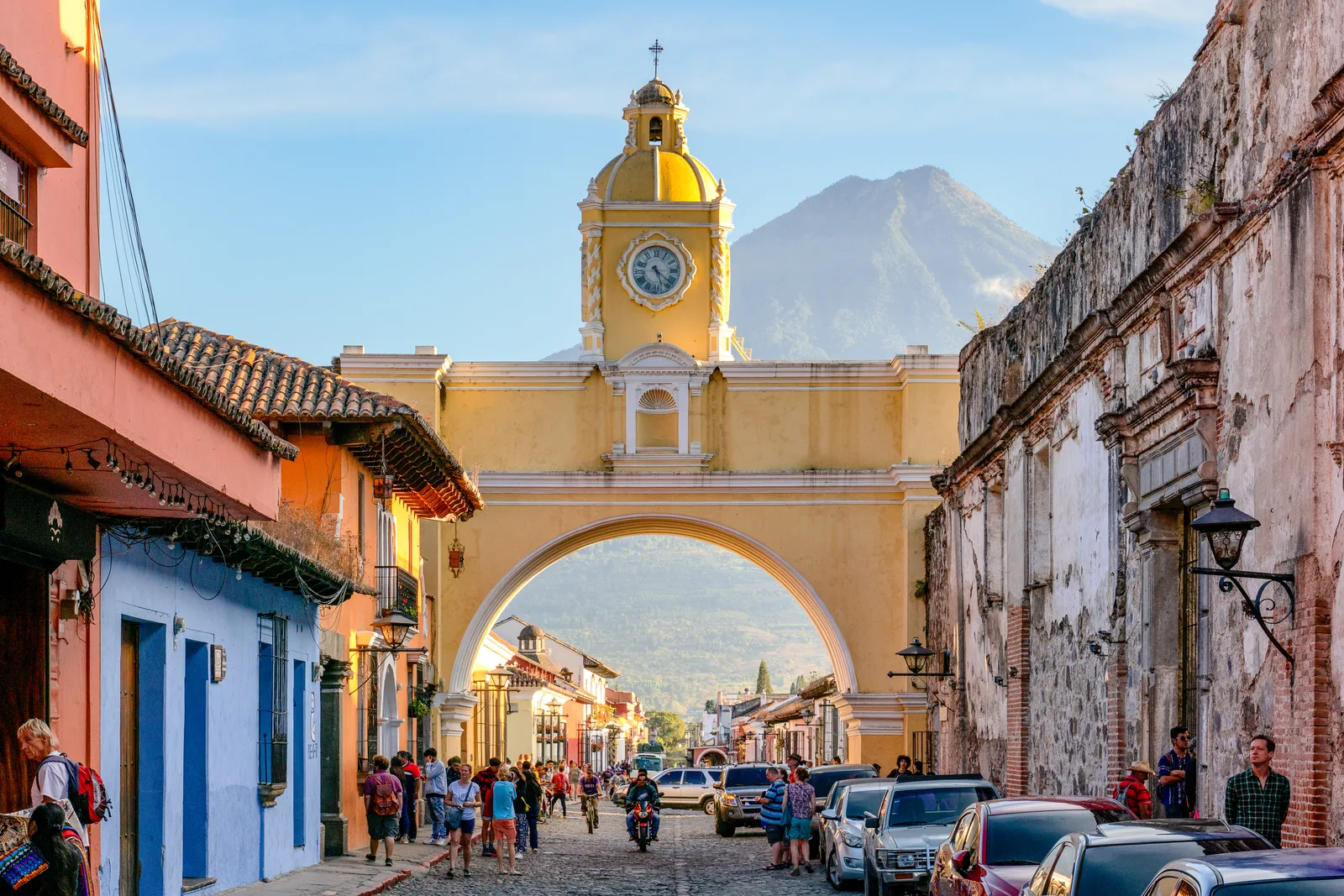
The Santa Catalina Arch began as a practical connection for a cloistered religious community. The Instituto Cervantes history of the convent explains how a proposed expansion across the street led to the elevated passage. Knowing its purpose changes the scene: the arch was an answer to the organisation of convent life before it became a photographic emblem.
The familiar view towards Volcán de Agua depends on visibility. Allow another opportunity later in your stay if cloud hides the mountain; there is no reason to spend an entire morning waiting for a particular photograph. Keep doorways and traffic routes clear, and ask before photographing an identifiable person at close range.
Continue to La Merced to examine a different architectural surface. The Cervantes account of La Merced dates the present church’s inauguration to 1767 and describes the elaborate plant and geometric ornament of its façade. Take time to follow those details rather than viewing the building only through a camera. Check worship arrangements and visitor access separately: an open church, convent area and any ticketed section need not operate on identical terms.
Compare Capuchinas with Santa Clara
Two convent visits can be more revealing than a long sequence of hurried ruins. Capuchinas brings together a church, cloister and the unusual Torre del Retiro, also associated with the novices’ quarters. Its circular arrangement makes the organisation of an enclosed community tangible. The historical account also draws attention to water engineering within the complex.
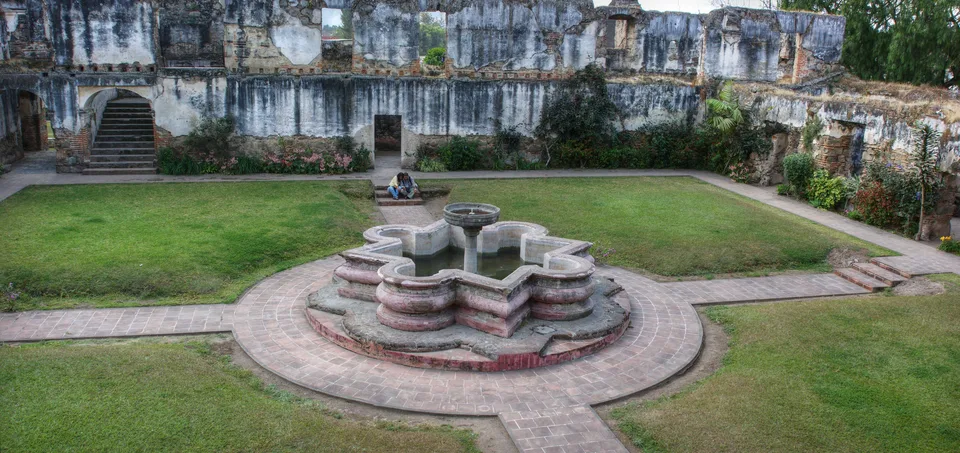
At Santa Clara, look instead at the relationship between the courtyard, fountains and church remains. Its history includes a foundation by nuns arriving from Puebla, rebuilding after the 1717 earthquake and further damage in 1773 and 1976. The resulting fabric reflects repeated intervention, not a single moment frozen in time.
Choose your second site after seeing the first. Someone interested in spatial planning may linger at Capuchinas; another visitor may prefer more time studying Santa Clara’s architectural detail. Both work best when you have room to pause and compare. Bring water and suitable shoes, but keep any rest or snack consistent with the site’s rules. Do not interpret an accessible-looking opening as permission to enter an unmarked room, stair or roof.

Use the monument tariff carefully
The National Council for the Protection of Antigua’s visitor page lists Capuchinas, Santa Clara, San Jerónimo, La Recolección, Santa Teresa de Jesús and the Holy Week Museum as monuments open for tourism. Its published visiting window is 09:00–17:00 daily, with closures on 1 January, 1 November, 24–25 December and 31 December. Recheck arrangements around your dates.
The listed admission categories are Q5 for Guatemalan visitors, Q15 for Central American tourists, Q20 for foreign students and Q40 for other foreign tourists, per person. Ask what identification supports a reduced category and how payment is taken. Budget separately for each chosen monument; do not assume this tariff covers every museum, church or private attraction in Antigua.
The council prohibits pets and alcohol within its monuments. Professional photographic sessions have separate authorisation and charges, so ordinary visitor admission should not be treated as permission for a commercial shoot. If you need step-free access, contact the particular site with your requirements. A historic complex can contain uneven ground and level changes even when part of its visitor route is manageable.
Add art and archaeology to the ruins
The National Museum of Guatemalan Art, or MUNAG, occupies the Real Palacio de los Capitanes Generales facing the Central Park. Its ministry information introduces Maya objects, colonial painting and sculpture, applied arts and republican-period art. It gives a visit to the palace a broader purpose than admiring the exterior alone.
Pick a theme to follow through the rooms: materials, religious imagery or the relationship between art and political change. Leave space to read the interpretation rather than trying to absorb every object. Confirm current opening arrangements and admission directly before building the day around a particular time; this guide does not quote an unverified ticket price.
For another collection, Casa Santo Domingo’s archaeological museum presents pottery and stone objects, particularly from the Maya Classic period. The operator publishes hours of 09:00–18:00 Monday–Saturday and 11:00–18:00 Sunday, while warning that closure can occur earlier without notice. Confirm the day’s access and ticket arrangements, and avoid leaving this visit until the final hour. Museum admission, hotel accommodation and access to other parts of the property should be checked as separate questions.
Make Cerro de la Cruz a flexible outdoor visit
Cerro de la Cruz offers a way to place Antigua within its landscape. Choose a period with promising visibility and enough daylight for the journey back. The point is to enjoy the outlook and the park, rather than to guarantee that a volcano will emerge from cloud at a scheduled moment.
The Ministry of Culture’s park information describes improvements including lighting, adapted walkways and ramps, toilets, an outdoor theatre and a viewing deck. Those facilities are useful reasons to investigate the visit, but a project description does not establish an uninterrupted accessible route from your hotel. Ask about the current approach, gradient, drop-off point and any closures before setting out.
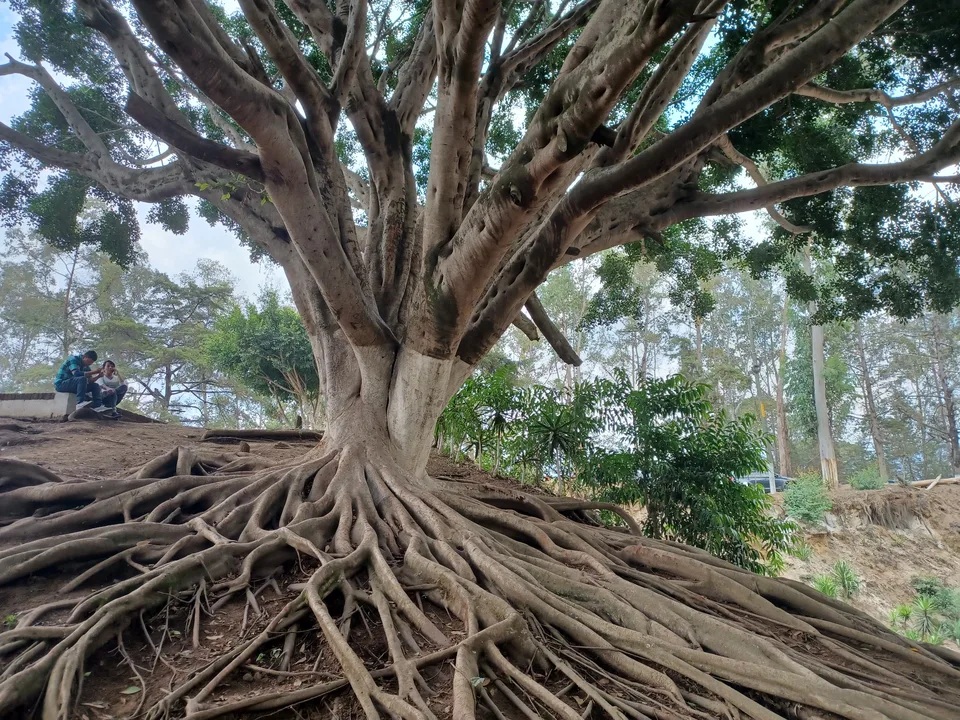
The photograph in this guide predates the later renovation and illustrates the park’s trees rather than today’s facilities. Treat photographs as context, not as a current access survey. Carry what you need for the conditions, leave room to turn back and arrange a vehicle if the return journey would exceed your group’s walking capacity. A viewpoint can be an enjoyable short outing without becoming a test of endurance.
Meet coffee producers outside the centre
For an experience beyond the monuments, De La Gente’s producer-led coffee tour visits San Miguel Escobar outside Antigua. The published programme follows coffee through the fields and processing stages, with traditional roasting and grinding, a cup at the producer’s home and a bag of roasted coffee. It includes return transport from an Antigua meeting point.
The operator lists US$45 per participant aged five or over and a minimum of two adult participants. A solo visitor who cannot join a group may face an additional US$25 charge. Confirm the total and availability before booking. The complete outing takes approximately three and a half to four hours; the walking description includes about five kilometres and some uneven or steep sections.
That makes it a substantial activity, not an effortless café stop. Discuss any walking limitations before paying and check the precise meeting location. Book at least the day before under the published terms, and read cancellation conditions. If your main interest is buying coffee rather than joining a field visit, say so when making enquiries: the two purposes may call for different plans.
Eat with curiosity and shop with specific questions
Pepián gives a useful introduction to Guatemalan cooking. De La Gente’s traditional cooking programme describes a sauce built from roasted tomatoes, dried chillies, pumpkin and sesame seeds, garlic and onion, served with protein and vegetables over rice. Its mole de plátano combines ripe plantain with a chocolate-based sauce. Ask how a particular kitchen prepares either dish, especially where allergies or dietary requirements matter.
The same operator offers a home-based class in San Miguel Escobar, including return transport, practical cooking and a meal. Its published price is US$45 per participant aged five or over, with minimum-participant and possible solo-supplement conditions. This is an organised activity to compare with other bookings, rather than a personal restaurant endorsement.
For shopping, the tourism board identifies textiles, jade, ceramics and coffee among Antigua’s visitor purchases. Ask who made an item, where it was produced and what the seller can substantiate about its materials. Obtain a receipt for a valuable purchase and check your destination’s import rules for food or plant products. Buy something because its workmanship or provenance matters to you, rather than assuming every object sold near a landmark was made locally.
Compare hotels, student rooms and homestays
Antigua allows different kinds of stays, and the accommodation arrangement should match your purpose. Casa Santo Domingo is an example of a hotel incorporating the former convent setting. Confirm the specific room’s location, stairs and facilities when booking; an attractive description of the property does not guarantee the same layout in every room.
A school-arranged homestay serves a different purpose. Ixchel describes opportunities for daily Spanish practice alongside a household’s existing routines. Its published meal schedule excludes Saturday evening, Sundays and national holidays. Ask for your own booking’s written inclusions, bathroom arrangements, laundry costs, dietary provision and cancellation terms. Do not assume that “meals included” means every meal throughout the week.
For an independent apartment, compare the full cost of the stay: utilities, cleaning, deposits, internet and any restrictions on guests or kitchen use. Inspect it before making a long commitment where possible. Test the shower, ventilation and actual connection at the desk where you would work. A short trial stay is useful evidence; a few attractive courtyard photographs provide much less information about an ordinary week.
Arrive through Guatemala City and plan the road transfer
Book flights to La Aurora International Airport, code GUA, in Guatemala City. Airport code ANU serves the Caribbean island of Antigua and is the wrong destination for this trip. You still need a road journey from GUA to Antigua Guatemala, so coordinate arrival and accommodation check-in together.
Ixchel’s airport-transfer service is open to travellers who are not enrolled at the school. It advertises private transfers at any time, including nights and holidays, with flight monitoring and a named arrival-area meeting. Its published one-way prices are US$55 for one passenger, US$30 each for two, and US$25 each for groups of three or more. These are per-person prices: two passengers would therefore total US$60 under that listing.
Confirm luggage capacity, child restraints where needed, the exact address and the final quote. Road times depend on traffic; do not treat an operator’s optimistic journey estimate as a reliable flight-connection buffer. On departure, ask for a pickup plan that includes road uncertainty and your airline’s check-in requirements. Keep the booking confirmation and meeting instructions available without depending on an immediate mobile-data connection.
Keep local journeys and spending realistic
The tourism board’s Antigua overview identifies walking, taxis and tuk-tuks as local options. Use walking where the surface and distance suit you, and agree the destination and price before a short vehicle journey. Ask whether a quote covers the whole vehicle or each passenger, particularly when comparing it with a shared service.
For onward journeys, the board’s national transport information distinguishes shared tourist shuttles, private vehicles and public buses. Compare the actual pickup, luggage allowance and final drop-off, not simply the headline fare. A service advertised to another town may still leave you with a further transfer to your accommodation. Mountain roads and traffic make map distance an unreliable measure of travelling time.
Guatemala’s currency is the quetzal, represented by Q. Keep quetzal expenses and dollar quotations separate until you know the exchange rate actually applied. Build a budget from dated accommodation quotes, selected admissions, meals, transfers and a contingency. The monument and activity prices earlier in this guide are specific published examples, not proof of a universal daily travel cost. Ask about taxes and payment charges before confirming a booking.
Choose your season and keep volcano plans conditional
The tourism board describes November–April as the drier season and May–October as the greener, rainier period, often with afternoon rain. Pack for cooler mornings and evenings as well as daytime walking. A seasonal pattern cannot promise clear views or rule out disruption on a particular day.
Holy Week can be a central reason for visiting, with processions and street carpets forming part of the city’s religious life. Check the dated programme and transport arrangements, book suitable accommodation early and allow your route to change around ceremonies. Watch respectfully from places where you will not obstruct participants or damage preparations.
Volcano excursions require a separate decision. CONRED’s notice of 4 August 2026 records restrictions on tourist ascent of Acatenango during heightened Fuego activity. That dated notice does not by itself establish today’s access status. Consult current official notices and local authorities before paying, and require the operator to explain the permitted route, cancellation policy, equipment and response arrangements. Keep an alternative city activity available. An advertised departure is not sufficient evidence that every route is open or that conditions will remain suitable.
Use three days without rushing every stop
On day one, orient yourself around the Central Park, then walk towards the arch and La Merced. Choose MUNAG if its confirmed opening arrangements suit the day. Allow time for lunch and a second look at a street or façade that caught your attention. Do not make the first afternoon depend on a distant excursion after an uncertain airport arrival.
On day two, compare Capuchinas and Santa Clara, adjusting the route to their confirmed opening hours and your walking capacity. Leave the afternoon for Casa Santo Domingo’s collection or a flexible Cerro de la Cruz outing. Choosing one allows more breathing space than treating both as compulsory additions.
Use day three for the coffee visit or cooking class, with the other half of the day available for rest, shopping or a missed museum. These are suggested combinations rather than a bookable package. If your trip continues to Guatemala City or Panajachel, compare the journey and arrival time before adding another activity. Those VisaWand links are location directory pages for exploring alternatives, rather than completed city travel guides.
Continue to the lake with time to spare
For a change of setting, consider Lake Atitlán in Sololá. Panajachel is a principal road gateway and departure point for boats to other lakeside communities. San Juan La Laguna offers art and textile cooperatives, while a stay elsewhere may require an onward boat journey. Compare the full transfer before choosing a hotel. An overnight visit gives more room to explore than a tightly scheduled return excursion, particularly when weather affects transport. Ask about the final boat connection before leaving Antigua.
Test ordinary life before making a move
A relocation visit needs a different timetable from a holiday. View potential homes in person, try the journey you would make for work or study and locate groceries, healthcare, pharmacy services and laundry. Ask how household water is supplied and stored, how rubbish is collected and which bills remain your responsibility. Verify internet at the exact address and discuss a backup connection if your work depends on it.
For electricity, EEGSA’s service guidance explains that changing the account holder involves a new contract. Agree responsibilities with the landlord before moving in. The company lists an Antigua service office on 4a Calle Poniente; confirm the current requirements for your particular supply. The municipality’s website provides resident-service and parking resources.
Tourism, study, employment and permanent relocation require separate immigration decisions. Review IGM’s admission requirements for your passport and purpose. A tourist extension must be requested before authorised stay expires; do not assume a regional border crossing resets permission. IGM provides distinct temporary residence categories for workers and students. Confirm the appropriate route before committing to a job, course or long lease, using official advice and, where useful, VisaWand’s Guatemala destination and consultant listings or consultant directory.
Official planning resources
Reviewed 16 October 2026. Use the official resources linked throughout this guide for admission, transport, housing and immigration decisions. Prices, services and rules can change; confirm the details relevant to your dates. Photography illustrates the locations and is not a live view.
View all official resources
- UNESCO: Antigua World Heritage identity and history
- INGUAT: Santa Catalina Arch and the walking route
- Ixchel Spanish School: student accommodation arrangements
- Instituto Cervantes: convent and arch history
- Instituto Cervantes: La Merced church
- Instituto Cervantes: Capuchinas architecture
- Instituto Cervantes: Santa Clara convent
- CNPAG: monument admission, hours and restrictions
- Ministry of Culture: National Museum of Guatemalan Art
- Casa Santo Domingo: archaeological collection and visitor hours
- Ministry of Culture: Cerro de la Cruz park
- De La Gente: San Miguel Escobar producer-led coffee tour
- De La Gente: traditional cooking class and ingredients
- Casa Santo Domingo: hotel accommodation
- Ixchel: private airport transfers and current per-person prices
- INGUAT: Antigua visitor orientation
- INGUAT: intercity transport options
- Banco de Guatemala: quetzal currency
- CONRED: 4 August 2026 Acatenango restriction
- INGUAT: Lake Atitlan and onward connections
- EEGSA: electricity contract changes
- EEGSA: Antigua customer-service office
- Municipality: resident services and parking
- IGM: admission requirements
- IGM: visas and tourist extensions
- IGM: temporary residence categories
Plan the next part of your journey
Explore the Guatemala guide, browse other cities or compare consultants for your travel and relocation questions.