Visa
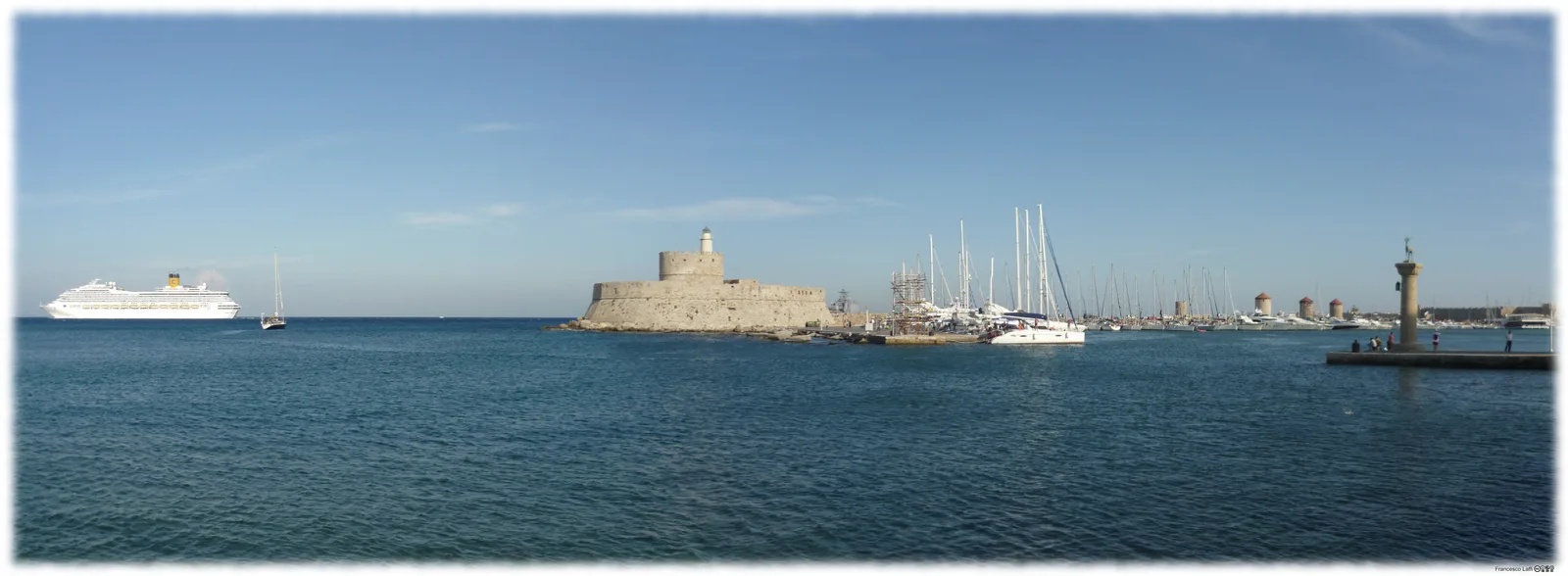
A city stay with an island around it
Rhodes town offers an unusually convenient combination: a substantial medieval city, museums, a working waterfront and beaches within the same urban stay. You can spend a morning among stone gateways and courtyards, eat in the modern centre and leave the afternoon open for the sea. That makes it particularly appealing if a holiday needs more variety than a resort alone provides.
The distinction is geographical. This guide covers the town at the northern end of Rhodes, with selected trips elsewhere. Lindos, Faliraki and the southern resorts are separate places, not neighbourhoods you can casually walk between. Use the Greek National Tourism Organisation’s Rhodes overview for the island-wide picture, then choose a base around your actual plans.
History is visible in several layers
The UNESCO-listed Medieval City of Rhodes is more than a picturesque collection of battlements. The Knights of St John developed its stronghold from the early fourteenth century; Ottoman rule followed, and Italian occupation later brought further building and reconstruction. The heritage designation dates from 1988. The city’s interest lies in the overlapping layers, rather than in imagining everything survived untouched from one period.
Gothic inns and institutional buildings dominate the upper medieval town, while the lower town includes Ottoman religious and domestic architecture. Beyond the walls, twentieth-century buildings and ordinary commercial streets shift the atmosphere again. Leave time to notice those changes: a visit limited to the palace and a souvenir street misses much of the city’s character.
Orient yourself by the walls and waterfront
Think of the Old Town, the modern centre around Mandraki and the northern beach area as connected but distinct parts of a stay. The walled streets favour slow exploration. The newer centre is practical for shops, transport connections and routine errands. The northern tip suits travellers who want beach time without making every cultural outing a vehicle journey.
A map pin is only a starting point. Check the route from the appropriate gate to your accommodation and the walk to your intended departure point. Harbours, excursion boarding places and ferry berths should be treated individually. “Near the port” is insufficient detail when you have luggage, limited time or a sailing that requires early check-in.
Walk the Street of the Knights with time to look
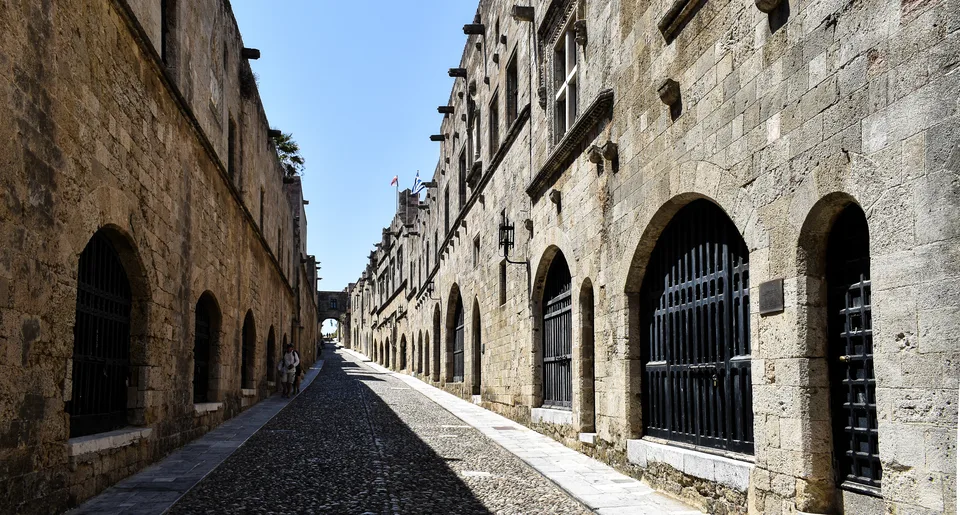
The Street of the Knights is one of the clearest places to understand the medieval city’s organisation. The Order’s different linguistic groups maintained inns here, leaving an architectural record in the stone facades, doorways and heraldic details. Walk it slowly, looking above shop-window level rather than treating it simply as the route to the palace.
Build a wider circuit through adjoining lanes and squares, then stop for a break outside the busiest pedestrian flow. Uneven paving is part of the experience: wear shoes with grip and allow more time with a pushchair or walking aid. A short route explored comfortably is better than an exhausting attempt to see every gate before lunch.
The palace reveals both medieval power and restoration
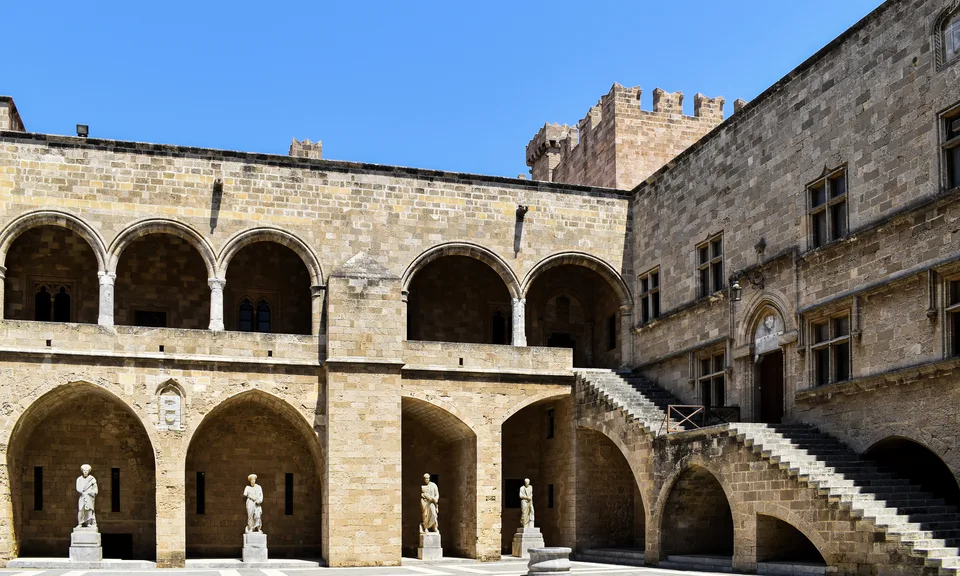
The Grand Master’s Palace is the major paid monument for many first-time visitors. Its scale communicates the authority of the Knights, while the culture ministry explains that restoration during the Italian occupation in the 1930s substantially shaped the building seen today. Read the displays with that history in mind rather than assuming every room is an untouched medieval interior.
Admission is €20 at review. The published main schedule is 8am–8pm in April–October, changing to 8.30am–3.30pm in November–March, with Tuesdays closed in winter. Individual exhibitions differ: the ministry’s latest notice lists the “Ancient Rhodes 2,400” exhibition as closed. Check the current page before buying, particularly if a specific collection is the reason for visiting.
The archaeological museum deserves a separate slot
The Archaeological Museum of Rhodes occupies the former Hospital of the Knights. Its collections include finds from Ialysos and Kamiros, sculpture and mosaics, making it a useful bridge between the island’s ancient history and the medieval building itself. Give the courtyard and quieter rooms some attention instead of rushing through between other bookings.
The standard ticket is €10. Published main hours are 8am–8pm in April–October and 8.30am–3.30pm in November–March, with a winter Tuesday closure. Particular collections have narrower schedules. Older references to an inexpensive combined palace-and-museum ticket should not replace the current official admission information. Check reductions and holiday arrangements against your eligibility and dates.
Jewish heritage adds an essential perspective
The Kahal Shalom Synagogue and Jewish Museum preserve a history that a Knights-focused itinerary can easily overlook. The Jewish Community of Rhodes’ visit information dates the synagogue to 1577 and explains the practical arrangements for entering the complex. Approach it as a place of religious and community memory, allowing time to engage with the interpretation.
Admission is €6, with children under twelve free. The April–October visitor schedule is Sunday–Friday, 10am–3pm, with Saturdays and specified holidays closed. Large bags are prohibited. Contact the community before a winter visit because its pages give differing appointment information. Its accessibility note limits step-free provision to the synagogue area; do not assume the entire museum route is accessible.
Monte Smith provides another historical viewpoint
The town’s ancient acropolis on Monte Smith is distinct from the famous acropolis at Lindos. The municipality’s monuments guide identifies the stadium, theatre and remains associated with the Temple of Apollo here. It offers a change of scale after enclosed medieval lanes, with the surrounding landscape helping explain the older city.
Plan for the uphill approach and exposed ground. In warm weather, an early visit is more comfortable than arriving after a long midday walk. Check current access, restoration barriers and transport arrangements rather than relying on an older description of an always-open site. You can appreciate the area without climbing restricted structures or squeezing it into the hottest part of the day.
Mandraki and the New Town suit an unhurried evening
The waterfront around Mandraki brings the city back to its maritime setting. Boats, harbour defences and the architecture beyond the medieval walls make a pleasant counterpoint to museum interiors. A walk here fits well after arrival, when a complicated ticketed attraction would be less useful than understanding the city’s layout.
The modern centre also makes sense for practical shopping, a café stop and planning onward journeys. Compare restaurant menus before sitting down and leave room for an independent choice rather than committing every evening to a hotel meal plan. Do not confuse a harbour landmark with a confirmed ferry meeting point: your operator’s ticket and departure instructions take precedence over a general waterfront description.
A beach break fits easily into a city stay
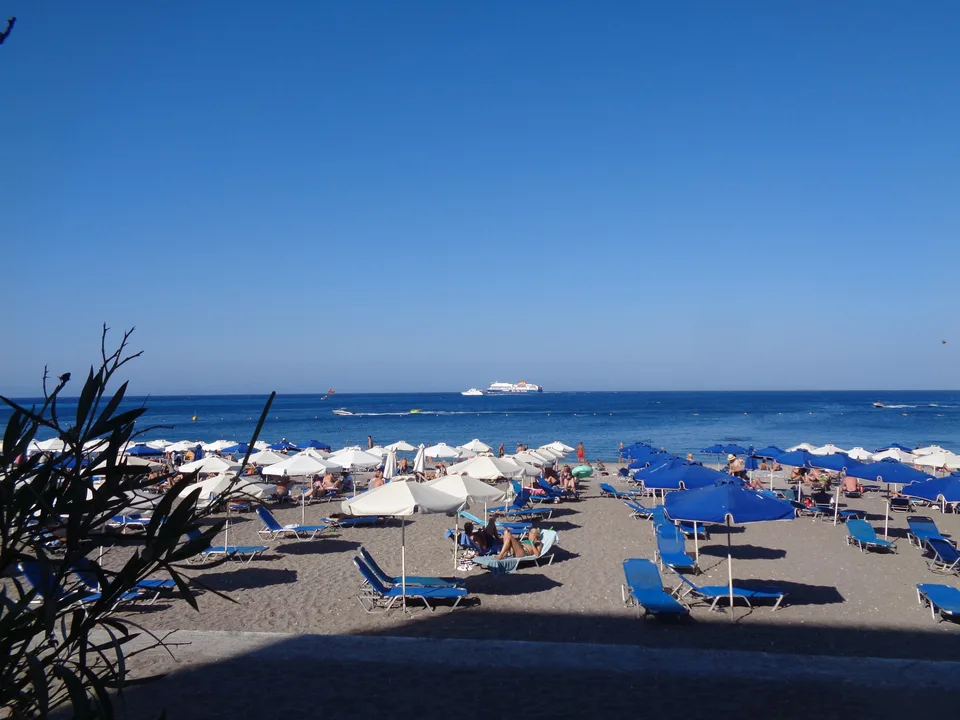
Elli is the obvious urban beach option near the northern end of town. The municipal beach directory helps distinguish it from beaches scattered around the wider island. This proximity is one of Rhodes town’s strengths: a beach afternoon can remain a modest part of the day rather than requiring a hired car and an expedition.
Check conditions at the particular stretch you use. Wind, waves, entry underfoot and your swimming confidence matter more than a photograph of clear water. Ask current prices and inclusions before using concession furniture; an old sunbed quotation is unreliable. Families should inspect the water entry and supervision arrangements directly. Keep an alternative café or museum plan available when the sea does not suit your group.
Choose accommodation for the way you travel
An Old Town guesthouse offers atmosphere and an appealing start to a walking itinerary. Before booking, establish the nearest practical vehicle drop-off, luggage assistance, stairs and reception hours. Historic interiors can be memorable, but a room reached by a narrow staircase may be unsuitable for a traveller who needs a lift.
The modern centre can simplify bus connections, shopping and short independent visits. Hotels near the northern beaches favour a mixed city-and-sea holiday. Properties along Ixia or farther down the coast require a different transport calculation. Compare the total stay, including breakfasts, cooling, parking, evening journeys and cancellation terms. Check noise exposure at the actual room, particularly if nearby bars or traffic would affect your sleep.
Arrive at Diagoras with a transfer plan
Rhodes Airport uses the code RHO and the name Diagoras. When booking a connecting journey, compare baggage arrangements and the protection offered by one ticket with the risks of separate reservations. Seasonal international services and domestic connections should be checked for the actual travel date rather than inferred from a summer route map.
The airport operator confirms a public bus connection to Rhodes town, with the stop between the old and new terminals. It directs passengers to RODA’s information. Check the municipal transport schedules for the appropriate day and season, including your arrival hour. For a taxi or booked transfer, obtain the total price and a realistic Old Town drop-off arrangement before relying on door-to-door access.
Ferries connect the town with a wider region
Rhodes is a useful starting point for a Dodecanese itinerary. Consult Dodekanisos Seaways’ routes and notices for connections such as Symi and Kos, and Blue Star Ferries’ booking information when comparing longer journeys. Departure times, intermediate calls and vessel arrangements vary; choose a sailing before deciding how many nights an island combination allows.
Verify the precise departure harbour, boarding deadline, baggage arrangements and vehicle reservation if relevant. Leave a sensible buffer before an independently booked flight, since a delayed or cancelled crossing can unravel a tight connection. For a day trip, confirm the return as carefully as the outward leg. A picturesque destination is less appealing when the proposed schedule leaves little useful time ashore.
Read the vessel name as well as the destination when arranging pickup or asking for directions. An excursion sold at a waterfront kiosk and a scheduled passenger ferry can have different boarding procedures. Keep identification and booking references accessible, and confirm any requirements for children or passengers needing boarding assistance directly with the carrier.
Use buses selectively and check the last return
Walking is usually the simplest approach within a central sightseeing day. For journeys beyond it, distinguish the RODA municipal network from KTEL Rodou’s intercity services. Read the destination, stop and timetable validity rather than assuming an online screenshot covers every week of the season.
Choose one substantial outing and work backwards from the final practical return. Confirm where to board and whether you need to obtain the ticket before joining the queue. For accommodation outside the centre, test the walk from the actual stop: a hotel bearing a nearby resort name may still sit some distance from the route. Keep enough flexibility for a missed departure without sacrificing a flight or sailing.
A car is useful for some days, cumbersome for others
A rental car can make sense for a wider island circuit, but it is not automatically an advantage for days spent inside the medieval town. Check the permitted approach and parking arrangements before driving towards a historic address. Ask the accommodation how access works for guests; do not interpret a navigation app’s proposed lane as permission to enter.
Compare hiring for selected excursion days with paying for the entire stay. Read the licence, age, insurance excess, fuel and vehicle-return conditions before booking. Allow for collecting the car and inspecting existing damage. If your plans consist of the palace, museum, waterfront and Elli, central accommodation may remove much of the reason to hire at all.
Build the budget around real admission and room costs
The palace, archaeological museum and Jewish complex total €36 for one adult paying the stated standard charges. That is a useful cultural budget benchmark, not a required package. Your eligibility for reductions, free-entry dates and the attractions you actually choose can change the total. Add transport, meals and any paid beach furniture separately.
Accommodation also carries Greece’s climate-resilience charge. Under AADE’s published rules, a four-star hotel’s April–October charge is €10 per room per daily use, so four such nights add €40. Other categories and seasons differ. Ask whether the quoted booking total includes the applicable charge and obtain the receipt. Compare complete prices rather than a room headline that conceals compulsory extras.
Choose the season around walking and swimming
Summer brings long outdoor days but makes shade and timing important. Visit Rhodes’ climate overview describes hot, dry summers and cooler spring and autumn conditions. For a visit with extensive walking, the shoulder seasons can offer a more comfortable balance; they do not guarantee beach weather or the full summer range of transport and business opening hours.
Winter is a different kind of city visit, with shorter museum schedules and fewer holiday services to rely on. Check each essential booking before committing. During hot or unsettled periods, follow Greek Civil Protection’s public alerts and 112 information. Move exposed walks to cooler hours, carry water and respect temporary access instructions rather than treating a previously published itinerary as fixed.
Four days leave room for the town to unfold
Day one can combine orientation around Mandraki with a gentle Old Town walk. Identify the right gate for your accommodation and leave the evening flexible. On day two, start with the palace and Street of the Knights, then give the archaeological museum its own visit rather than squeezing both around an excursion pickup.
Use day three for the synagogue and Jewish Museum during confirmed hours, followed by quieter lanes and a beach afternoon if conditions suit. Day four can remain a relaxed Monte Smith and waterfront day or become one carefully planned excursion. Swap days around closures and weather. On a short break, choosing the town well is more satisfying than spending successive days travelling away from it.
Kallithea, Lindos or Symi: choose one extension
Kallithea Springs is a relatively close excursion: the operator gives a nine-kilometre distance from Rhodes city. Its published cultural-monument entry is €5 in May–October and €3 in November–April, with shorter winter hours. Check separately what swimming facilities or furniture cost; monument admission should not be assumed to include every leisure service.
Lindos offers a different village setting and a separate acropolis, farther along the island’s southeast coast. Allow for the return journey and the climb rather than treating it as another city district. Symi is a ferry-based alternative. Choose according to whether architecture, beach time or a sea crossing is the priority, and resist combining all three into one hurried day.
Test ordinary routines before moving
A reconnaissance stay should include grocery shopping, pharmacy access, laundry and the journey to a possible workplace or school. Try the route at the relevant hour and consider the quieter months as well as the holiday season. A successful week in a serviced hotel does not establish that the same address works for year-round living.
Compare the modern centre, residential streets beyond it and coastal developments using actual daily needs. Confirm which businesses operate through winter. If working online, test the connection inside the intended home, including calls and uploads. Language support available in tourism businesses should not be assumed for every administrative, medical or contractual task; arrange assistance where you need a reliable explanation.
For a family move, establish school availability, teaching language, enrolment documents and the real journey from a prospective home before choosing housing. Ask employers about working hours and whether a role lasts beyond the visitor season. These details determine the suitable residential area more reliably than proximity to a holiday landmark or a favourite beach.
Inspect the lease and the home’s seasonal performance
Check whether an advertised rental is genuinely available for your intended full term or only outside the holiday season. Obtain written terms covering rent, deposit, notice, repairs, furnishings and any shared building charges. Verify the landlord’s authority and inspect the property before transferring a substantial deposit.
AADE’s long-term lease information explains the owner’s electronic declaration obligation. Ask how the tenancy will be recorded and obtain appropriate advice if the arrangement is unclear. Inspect cooling, winter heating, ventilation and signs of damp, then request representative utility bills. Check stairs, delivery access and parking at the actual building. A sunny summer photograph is a poor substitute for understanding how the home works in January.
Set up utilities and healthcare deliberately
Clarify which electricity, water and internet accounts you must establish and which remain with the landlord. Record meter readings at handover and agree responsibility for outstanding balances. DEYAR, the municipal water and sewerage company, provides customer information and fault notices; check your particular building’s supply arrangements rather than making assumptions from a town-wide description.
The regional health authority’s hospital directory lists Rhodes General Hospital and its contact details. Confirm access to any continuing treatment before moving, including prescriptions and specialist follow-up. Check your healthcare entitlement and insurance cover separately; the presence of a public hospital does not make all care automatically free for every visitor or resident. For an emergency in Greece, 112 is the free European emergency number.
Tourism follows Greece’s and Schengen’s entry rules
Check nationality and document requirements through the Greek Foreign Ministry’s visa resources. For relevant non-EU short stays, the European Commission explains the Schengen framework of up to ninety days in any 180-day period. Time elsewhere in Schengen matters, and an issued visa can authorise a shorter stay. The usual adult visa fee is €90, with exceptions and possible application-centre charges.
ETIAS is a separate system for eligible visa-exempt travellers. At review, the official EU ETIAS website says it is not operating and is not collecting applications. Check its live status before departure rather than paying an unofficial site based on an old launch forecast. VisaWand’s Greece country guide provides additional planning context.
Work, study and residence need their own route
For non-EU nationals planning employment, study or a longer move, investigate the appropriate Greek national visa and residence arrangements before committing to housing or accepting work. Tourist entry does not itself establish employment rights or permanent residence. An overseas employer and a laptop do not remove the need to check the correct status, tax position and healthcare arrangements.
EU, EEA and Swiss citizens have a different framework; Greek government guidance covers registration for stays exceeding three months and the relevant conditions. Compare VisaWand consultant listings when professional help would clarify your circumstances. For broader trip choices, browse the Greece location directory, destination page and Athens guide. Keep the final decision tied to official requirements and the everyday life you want in Rhodes.
Official planning resources
Reviewed 15 October 2026. Use the official resources linked throughout this guide for admission, transport, housing and immigration decisions. Prices, services and rules can change; confirm the details relevant to your dates. Photography illustrates the locations and is not a live view.
View all official resources
- Greek National Tourism Organisation: Rhodes
- UNESCO: Medieval City of Rhodes
- Culture Ministry: Grand Master’s Palace
- Culture Ministry: Archaeological Museum of Rhodes
- Jewish Community of Rhodes: synagogue and museum visits
- Municipality of Rhodes: monuments and Monte Smith
- Municipality of Rhodes: island beach directory
- Rhodes Airport: public bus connection
- Municipality of Rhodes: RODA transport schedules
- KTEL Rodou: intercity bus schedules
- Dodekanisos Seaways: ferries and notices
- Blue Star Ferries: routes and reservations
- Municipality of Rhodes: Rhodian dishes
- AADE: climate-resilience accommodation charge rules
- Visit Rhodes: seasonal climate overview
- Greek Civil Protection: 112 and public alerts
- European Commission: Schengen visa applications
- Greek Foreign Ministry: visa eligibility and consular resources
- European Union: official ETIAS status
- Greek Foreign Ministry: national long-stay visas
- Greek government: EU/EEA and Swiss residence registration
- AADE: long-term lease declarations
- DEYAR: Rhodes water and sewerage services
- Second Health Region of Greece: public hospital directory
- Kallithea Springs: admission and visitor information
Plan the next part of your journey
Explore the Greece guide, browse other cities or compare consultants for your travel and relocation questions.