Visa
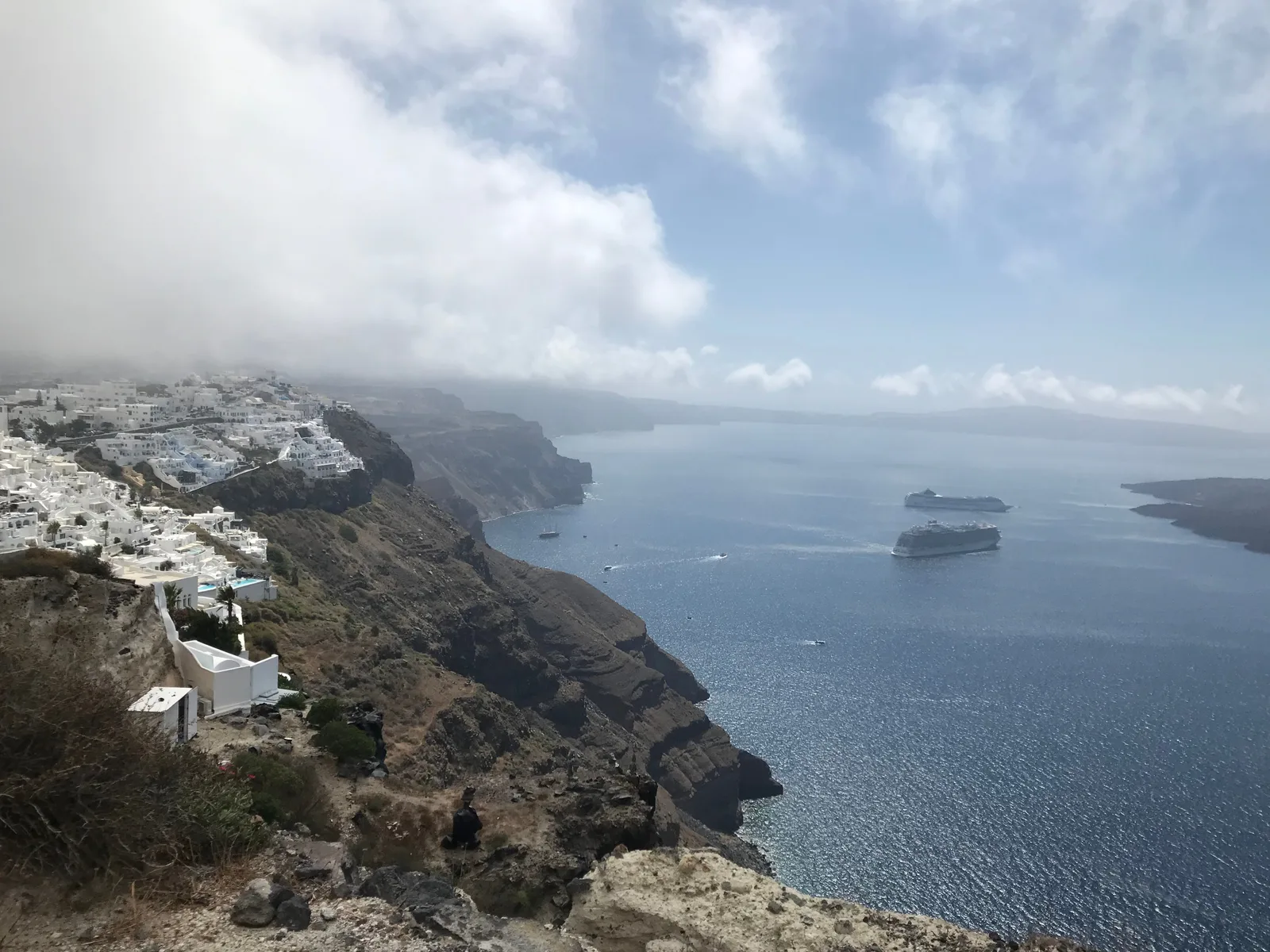
A small town with an extraordinary outlook
Fira is Santorini's capital, a settlement above the caldera rather than a large city with a beach at its centre. Its appeal is the combination of the view, a walkable concentration of cultural stops and connections to other parts of the island. You can spend a rewarding day here without travelling far, then use another day for a separate archaeological site, village or coast.
A property described as “Santorini” may be nowhere near Fira, and a boat departure may involve a different port from your ferry arrival. Establish the exact place before comparing prices. For prospective residents, check housing, work and essential services just as carefully. VisaWand's Greece country guide provides national context; local decisions begin with your accommodation entrance, transport stop and intended length of stay.
Read Fira's history at the right scale
The municipality's Fira history and visitor page traces the town's development to the eighteenth century, when people resettled from the Venetian fortress of Skaros. Fira became the island's capital in the nineteenth century. Chapels, cave houses and two cathedrals form part of its character, alongside museums interpreting much older island history. The modern settlement and prehistoric Thera should not be treated as the same place or period.
Explore on foot through the relationship between buildings, cliff edge and public routes. Follow signed access and distinguish a hotel terrace from a public viewpoint. Do not climb onto roofs or walls to copy a photograph. A slower walk leaves time to notice details beyond the horizon.
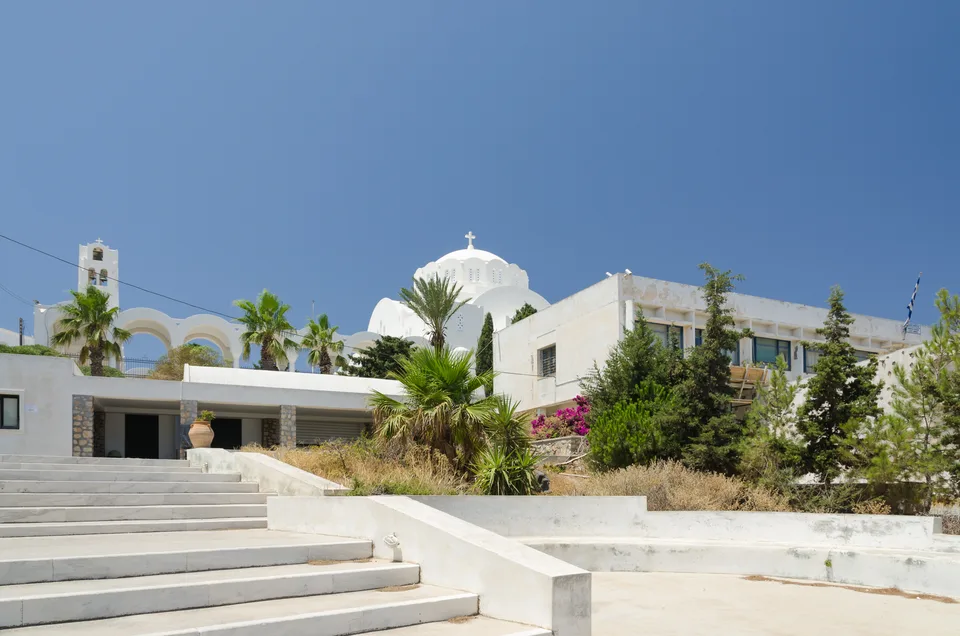
Choose between central Fira and surrounding settlements
Stay in central Fira if short walks to the town's museums and convenient onward transport matter most. A caldera-facing room may appeal for its outlook, but the view alone does not tell you about stairs, noise or the route from a vehicle drop-off. Ask for the entrance location and a description of every level between the road and the bedroom, particularly when travelling with heavy luggage or limited mobility.
The municipality's settlement directory distinguishes Firostefani, Imerovigli and Karterados from Fira, as well as more distant places elsewhere on Santorini. Compare actual properties across these areas rather than assuming a district name guarantees quietness or a better price. For an evening meal in Fira, check how you would return after dark. For a longer stay, test the journey to work and groceries at the time you will use it, including the last part on foot.
Ask what the accommodation price really buys
Compare a hotel, guesthouse or apartment by the things your party needs. A short stay may benefit from staffed reception and luggage storage; a longer visit may justify a kitchen, laundry and separate sleeping space. Confirm whether a terrace is private, shared or simply visible in the listing photograph. Ask whether a pool is open on your dates and whether any advertised heating or cooling reaches the whole room.
Greece's climate resilience fee applies per daily use and per room or apartment in the relevant accommodation categories. Its amount depends on category and season, so request the applicable charge and final payable total from the provider. Do not assume that one remembered “tourist tax” rate applies to every property. Compare cancellation terms, breakfast, transfers and the cost of reaching the entrance. A cheaper nightly rate can lose its advantage if the room needs an expensive transfer for every outing.
Start with the Museum of Prehistoric Thera
The Museum of Prehistoric Thera gives substance to the landscape outside. Its exhibitions interpret prehistoric island life through finds associated especially with Akrotiri, including household objects and wall paintings. Give yourself time to look at the scale and detail of the objects: the visit is an introduction to a society, not simply a room of souvenirs from an eruption.
The current official listing shows full admission at €10 and reduced admission at €5, subject to eligibility. Published hours are 8.30am–3.30pm, with Tuesday closed and last admission twenty minutes before closing. Holiday exceptions and designated free-entry dates require their own check. This museum is in Fira; the Akrotiri excavation is a separate journey and ticket. Visiting the museum first can help you decide whether to devote another day to the site, particularly if your group has mixed interests or only a short time on the island.
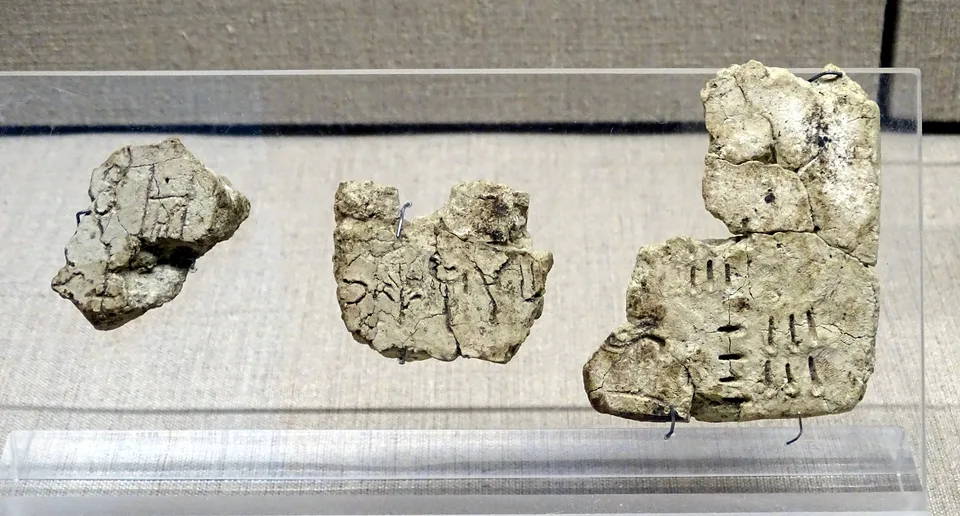
Keep the Archaeological Museum separate in your plan
The Archaeological Museum of Thera is a different institution. Its current visitor page describes the renovated museum and the return of the Kore of Thera, an imposing Archaic marble figure. That distinction matters when older listings describe a closure or when a booking simply says “Thera museum”. Check the name and address against the particular collection you want to see.
Full admission is currently listed at €10, with a €5 reduced category. Monday is the regular closure day. The published summer schedule includes a later Saturday opening, while other days and winter arrangements differ; consult the current listing for your date. Do not assume it follows the Prehistoric Museum's Tuesday closure. If visiting both, give them separate time rather than squeezing the second into the first museum's final hour. A rest between collections can make the differences in period and subject easier to appreciate.
Give the cathedral area time beyond a photograph
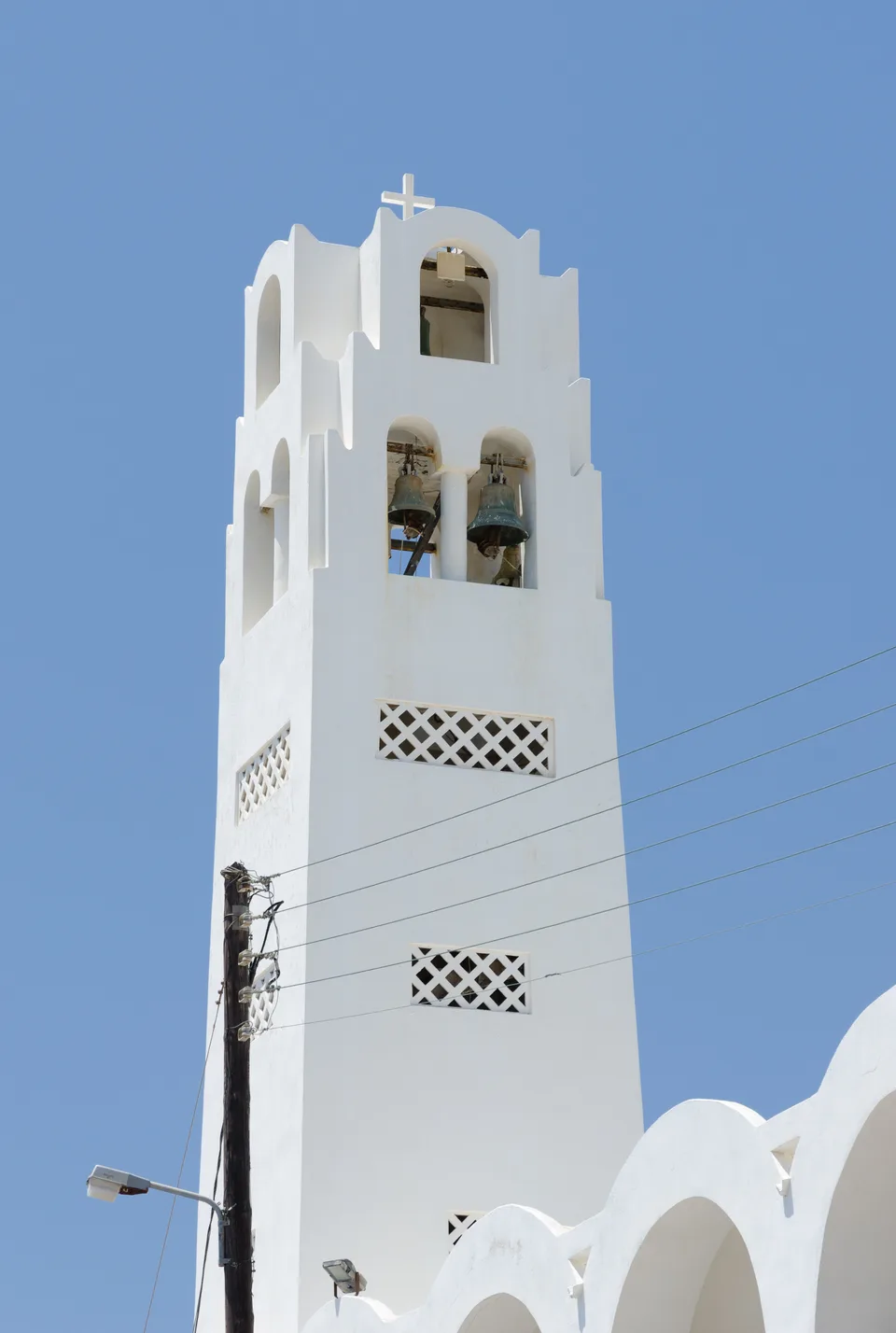
Fira's cathedral area offers another kind of visit, where the setting, architecture and religious use deserve consideration together. The municipality's church information is a starting point for identifying buildings; opening arrangements should be checked locally. An exterior walk is a sensible option when worship or another activity makes an interior visit inappropriate. Dress and behave with the same consideration you would give any working church.
Check where steps lead before committing someone with limited mobility to a route that is hard to reverse. If your group separates for shopping or a museum, choose a precise meeting point. Keep the approach clear for other people, and follow any photography restrictions. Looking from a public path does not create permission to enter an adjoining courtyard.
Know which port you are using
The Santorini Cable Car connects Fira with the island's Old Port. That is not the same arrival point as Athinios, used for ferry connections. Read the port name on every ferry, excursion and transfer booking. Confusing the two can leave you planning a cable-car ride for a departure that requires a road journey instead.
The operator describes a ride of around three minutes, but that is the journey in the cabins, not a complete transfer allowance. Include waiting, boarding and the walk at either end when planning your day. For a cruise visit, follow the ship's instructions about tender arrangements and the time to return; an attractive last-minute outing is not worth missing the required boarding window. Anyone needing assistance should confirm the complete route, including the landing and onward approach, before assuming the cable car solves every access difficulty.
Budget for the cable car as a separate experience
The cable car's April 2026 price list gives a €10 general-admission fare for a one-way, non-refundable ticket. A standard adult return therefore requires €20 at those listed rates. Reduced and free categories have conditions, and luggage is listed separately at €5. The operator accepts euros in cash and card payment. Check the current product before buying, especially if a reseller's description sounds different.
Decide whether going to the Old Port is part of the experience you want or simply an unnecessary detour from a town visit. Someone arriving by road can enjoy Fira without descending just to come back up. If your plan does include the cable car, check operating information for that day and leave flexibility around any later appointment. A short advertised ride time should not become the basis for a tight ferry or flight connection elsewhere on the island.
Use the airport bus with your arrival time in mind
The airport operator's public-bus page confirms a direct service between Santorini Airport and Fira, with tickets purchased from the conductor. Use the official airport signs to find the stop and the bus operator's current timetable for departures. An international flight booking does not establish whether a convenient bus will run after you have collected bags.
The KTEL timetable updated on 15 October 2026 lists the airport fare at €2.20 and gives an indicative ten-minute journey from Fira. Waiting, traffic and the final walk to your accommodation are additional considerations. Save the entrance instructions and identify your stop before arrival. If the flight arrives late or someone needs a transfer that avoids stairs and luggage handling, obtain a specific transfer quote and confirm the vehicle's actual drop-off point. A driver may reach the nearest road without reaching a room set below it.
Check island bus schedules for your dates
The same KTEL fare sheet lists Fira connections to destinations including Oia, Kamari, Akrotiri, Perissa and Athinios. At this review, Oia, Kamari and Akrotiri are €2.20, while Perissa and Athinios are €2.70. The published schedule is dated, so revisit it for the period you travel rather than saving a summer screenshot and assuming it applies throughout winter.
Check both directions before choosing an outing. The departure you need back to Fira may be earlier or less frequent than the one you noticed going out. If transferring between routes, allow time at the connection and establish whether another ticket is needed. Keep small cash available unless the operator confirms your preferred payment method. For a working household, test the actual shift journey, including an early start or late finish; a useful sightseeing network does not by itself prove that a particular job and home will fit together.
See the prehistoric town at Akrotiri
The Akrotiri archaeological site preserves part of a prehistoric town beneath a protective shelter. Streets, drainage and multi-storey buildings help explain the household objects and paintings seen in Fira. Choose it for the opportunity to understand that relationship, rather than because another island itinerary calls it compulsory. It is outside Fira and deserves its own travel allowance.
The official full ticket is currently €20. Opening hours vary by season and day: during the second half of October, Monday and Thursday have shorter published hours than the other days. Check the exact date before setting out, and note the last-admission time. Avoid adding a long walk or an uncertain boat excursion simply because they appear nearby on a small map. A focused site visit, lunch and a comfortable return can be a better day than several transfers that leave little time for the archaeology itself.
Make a boat outing a confirmed booking
The national tourism board's caldera itinerary describes excursions from several island departure points. Use it to identify the kind of outing that interests you, then check a specific operator's actual meeting place, sailing, inclusions and return arrangements. A description of Santorini's volcanic islands is not confirmation that every landing or swimming stop will be available on your date.
Ask about steps, boarding assistance, shade, toilets and the activity level expected ashore. Read cancellation arrangements for weather and establish how you will receive a service update. Follow local barriers and official directions around cliffs and landing areas; do not infer access from an older holiday photograph. If seas or winds make the outing unsuitable, an open museum and a shorter town walk give you a useful alternative. Keep essential onward travel separate from a recreational sailing whose return might be affected by conditions.
Taste the island through its produce
Santorini's official national visitor information highlights local crops including vines, yellow split peas and tomatoes, with dishes such as tomato fritters and white-aubergine dip. These give you concrete things to look for on a menu without pretending that every restaurant prepares them identically. Ask about ingredients, portion sizes and accompaniments, particularly when ordering several dishes to share.
Choose a meal by the current menu and full bill, including drinks and any stated extras. A caldera outlook may be part of what you are paying for; decide whether that matters for this meal or whether you would rather spend the money on another experience. Ask directly about dietary requirements with the people handling your order. For shopping, compare provenance and packaging, especially for fragile items. Someone staying longer should try an ordinary grocery trip as well: carry the purchase home and see how that routine fits the route.
Build a practical budget in separate parts
Start with accommodation and its applicable fee, then add the transport and admissions you genuinely plan to use. As a worked example, two €10 museum admissions and a €20 standard adult cable-car return total €40 before food and travel to the island. These are separate choices, not a minimum daily budget. Omitting the port descent or choosing one museum changes the calculation immediately.
Price meals from current menus and transfers from actual quotes. Keep a reserve for an altered connection. For a family, check ages and eligibility before multiplying adult prices. For a possible move, distinguish holiday spending from recurring rent, utilities and commuting, and set aside initial setup costs.
Pick a season for the activities you want
The municipality's Santorini climate information describes Mediterranean conditions, with warm summers and July–August as the peak season. Spring offers milder conditions for exploring. The national meteorological service's climate overview provides the broader Greek pattern of wetter winters and hotter, drier summers, but neither source is a forecast for your particular terrace or travel week.
For walking, consider heat, shade, wind and daylight as well as the month. Carry water and choose a manageable route; there is no obligation to complete a long caldera walk because it appears on a checklist. In winter or the quieter part of the year, confirm accommodation facilities, restaurant openings and bus schedules individually. A lower room quote is useful only if the services you need are operating. Consult current forecasts and Civil Protection notices before exposed walks or boat plans, and follow any local restrictions you encounter.
A realistic three-day stay based in Fira
Day one: settle in, identify the route from your room to transport and take a short central walk. Visit the Museum of Prehistoric Thera when open, then leave time for the cathedral area, a meal and the caldera view. The cable car can be an optional activity if you want an Old Port visit, with enough time for the return.
Day two: choose Akrotiri as the main outing, arranging travel around the site's hours. Return for an easy evening rather than booking another demanding excursion. If the weather or opening day makes that unsuitable, swap it with a Fira museum day.
Day three: visit the Archaeological Museum, or choose one other settlement or a confirmed boat trip. Keep the two Fira museums' different closure days in mind. On departure day, reserve the time needed for bags and the correct airport or port transfer before adding any final sightseeing.
Test a longer stay through housing and work
Ask whether a rental is available for the entire period you need, with the dates and payments clearly written into the agreement. A room suitable for a summer holiday may have different facilities or availability in another season. Inspect ventilation, heating, damp, cooking equipment, laundry, water arrangements and internet performance. Establish who can resolve a fault when a manager is not on the premises.
The tax authority's long-term rental guidance explains the landlord's obligation to declare lease information electronically. Ask how your agreement is recorded and check the relevant tenant process before accepting unclear paperwork. Verify the owner or agent's authority before paying. If housing comes with employment, get written answers about the accommodation cost, sharing arrangements and what happens if the job ends. Assess both home and job on their actual terms; a seasonal opportunity is not evidence of a secure year-round income or an immigration entitlement.
Arrange water, bills and everyday services
The municipal water and sewerage utility provides account services and notices about works and faults. Ask the accommodation provider how the building receives and stores water, which charges you pay and what current guidance applies to drinking water there. Avoid a blanket assumption about every tap on the island. Record meter readings where relevant and establish who handles interruptions or leaks.
Confirm electricity and internet arrangements before moving in, including whether accounts are separate and when a connection can actually be activated. Check mobile coverage inside the room where you intend to work, not only outdoors. Use the municipality's service information to find the right contact for household questions. Families should check school and childcare arrangements directly before choosing an address around an expected place. If a household member depends on a particular product, treatment or specialist service, confirm its availability independently of the accommodation booking.
Check healthcare access before relying on it
Santorini Hospital is in Karterados, outside central Fira. Its official information states that the emergency department operates around the clock throughout the year; outpatient visits require appointments. For an emergency, use the appropriate emergency service, including the European number 112. For planned care, contact the hospital or provider to establish the service available and the appointment process.
Arrange travel or resident health cover appropriate to your circumstances and ask how treatment is billed. A hospital on the island does not establish that every specialist, investigation or ongoing treatment is available locally whenever needed. Bring the information required for existing care and check medication arrangements before a long stay. Someone considering relocation should include the journey to appointments and any potential mainland travel in the household plan, rather than treating healthcare as a detail to solve after signing a tenancy.
Separate a visit from work, study and residence
Start with the Foreign Ministry's Schengen visa information and the responsible Greek consulate for your nationality and residence. Where the short-stay rules apply, the usual limit is 90 days in any 180-day period across the relevant Schengen area. It is not a separate allowance for Fira. A tourist booking does not confer general permission to take a local job.
For a longer purpose, consult the national visa resources and residence-permit categories. Greece's Labour Ministry explains work permission for third-country nationals, while the EU immigration portal covers study requirements. Remote workers should check the separate digital-nomad route. EU citizens have different free-movement and residence rules. Permanent residence has its own conditions. Use VisaWand's Greece destination assessment and consultant directory to prepare questions, then confirm your route officially before committing to a home, employer or course.
Compare nearby villages and a mainland alternative
The island's settlements offer different reasons to spend another day. Choose Oia for a separate caldera-town outing or investigate Pyrgos, Emporio and other villages through the official settlement information. Check their exact transport and walking requirements before deciding whether the excursion suits your group. Beaches elsewhere on Santorini are separate trips; staying in Fira does not place you on a beachfront.
If your main priority is sand or direct room access from a road, compare actual accommodation elsewhere against those needs. For a longer Greek journey, VisaWand's Athens guide provides a contrasting mainland option. The Greece location directory helps you find other places and consultant listings. Prospective residents should compare work, housing and recurring services as well as the visitor experience.
Official planning resources
Reviewed 16 October 2026. Use the official resources linked throughout this guide for admission, transport, housing and immigration decisions. Prices, services and rules can change; confirm the details relevant to your dates. Photography illustrates the locations and is not a live view.
View all official resources
- Municipal Fira visitor information
- Official Santorini settlement directory
- AADE climate resilience fee FAQ January2026
- Museum of Prehistoric Thera
- Archaeological Museum of Thera
- Municipal churches information
- Santorini Cable Car operator
- Cable car price list April2026
- Fraport Santorini public bus
- KTEL timetable updated15October2026
- Akrotiri archaeological site
- GNTO caldera itinerary
- Greek National Tourism Organisation Santorini
- Official Santorini climate and landscape
- Hellenic National Meteorological Service climate
- Greek Civil Protection
- AADE long-term rental obligations
- Thira municipal water and sewerage utility
- Municipality of Thira
- Santorini Hospital
- Greek Foreign Ministry Schengen visas
- Greek Foreign Ministry national visas
- Ministry of Migration lawful residence
- Greek Labour Ministry work permission
- EU immigration portal study in Greece
- Greek Foreign Ministry digital nomad route
- Your Europe EU residence rights
Plan the next part of your journey
Explore the Greece guide, browse other cities or compare consultants for your travel and relocation questions.