Visa
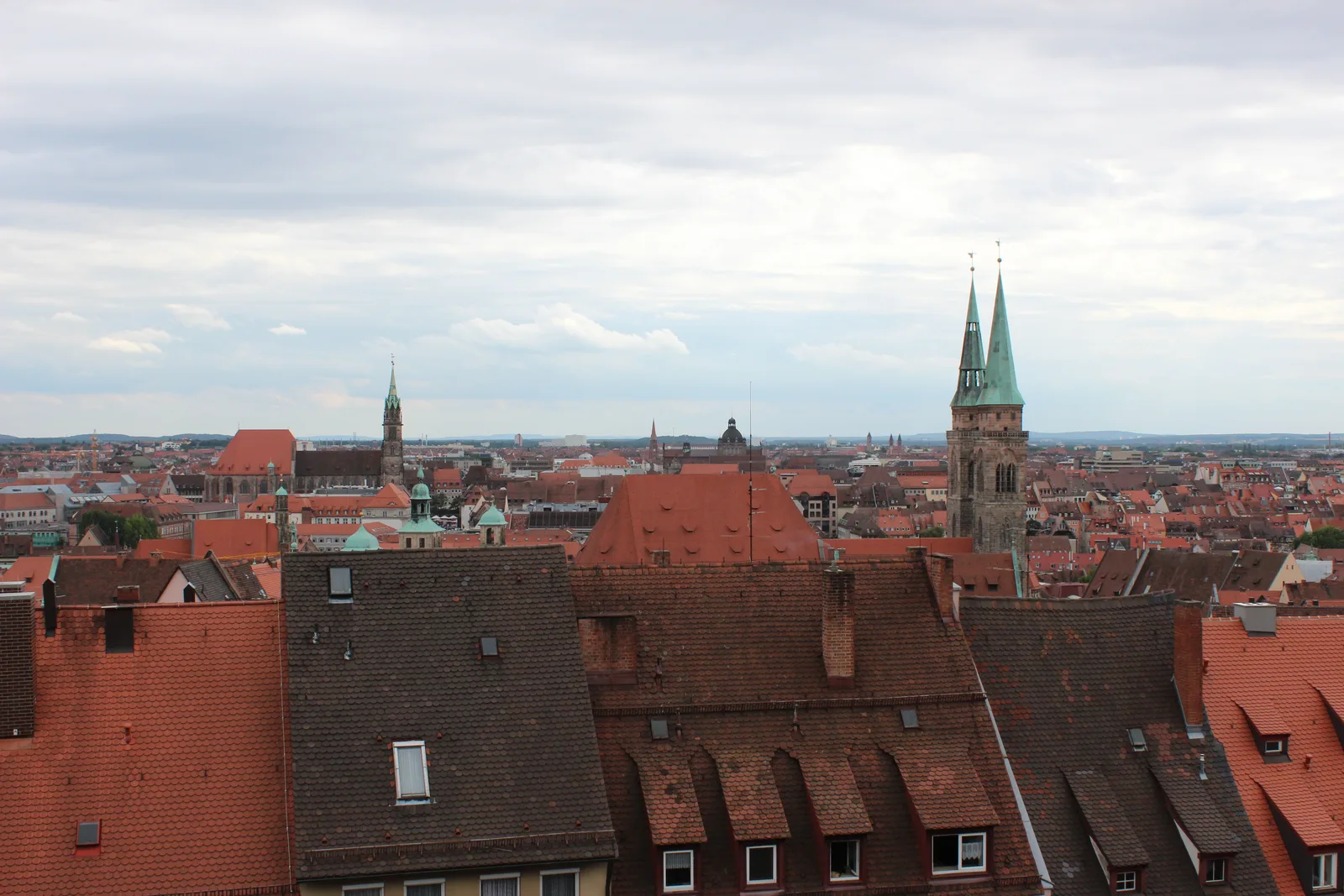
Decide which Nuremberg you want to explore
Nuremberg offers several quite different reasons for a visit: an old town beneath an imperial castle, museums that confront the Nazi past, regional food and a Christmas market with its own seasonal rhythm. It also functions as a place to work, study and run a household. A good visit gives those different identities enough space rather than treating them as interchangeable attractions.
Two full days make a useful first plan, with a third for more museums or a regional excursion. That is an editorial suggestion, not a rule about how long the city takes. A rail stopover can be worthwhile if you concentrate on the old town; someone assessing a move should add time for housing and the actual commute. Start with VisaWand’s Germany country guide for national context, and use the Germany destination directory when comparing possible bases. The best address will depend on the purpose of the stay, not simply its distance from the castle.
Understand the history behind the townscape
The Imperial Castle explains Nuremberg’s importance in the Holy Roman Empire, when rulers and assemblies used the city. The official tourism introduction to the castle is a useful starting point for that history. Looking up towards its buildings from the streets below makes the relationship between the fortified hill and the town particularly clear.
The attractive old town should not be mistaken for an entirely untouched medieval survival. The municipal museums’ account of wartime destruction and rebuilding describes extensive damage to old-town buildings during the Second World War and a long reconstruction. That context matters when looking at restored façades or comparing different architectural periods. Later history also requires more than a passing mention: the Nazi rally grounds and the Nuremberg Trials are distinct sites with different stories. Give them informed attention, rather than using them as a dramatic backdrop to a shopping itinerary. The city becomes more understandable when reconstruction, remembrance and present-day life are considered together.
Start with a manageable old-town walk
Use the tourism office’s self-guided old-town route as a map, then shorten it to fit your interests. St Lorenz, the Pegnitz crossings, the Hauptmarkt and the climb towards the castle provide a useful framework. You can enjoy the changing streets and river views without purchasing a ticket at every stop.
Choose a few places where you intend to go inside and leave the rest as orientation. The route towards the castle goes uphill; someone travelling with limited mobility or a pushchair should check the specific approach and entrance rather than assuming the whole walk has the same surface and gradient. Keep time for a meal and a pause by the river instead of measuring success by the number of landmarks passed. If you are arriving with luggage, arrange storage or check-in before a substantial walk. Ask the accommodation about its storage arrangements. A compact-looking route can feel quite different when you are carrying bags, coping with heat or looking for a step-free entrance.
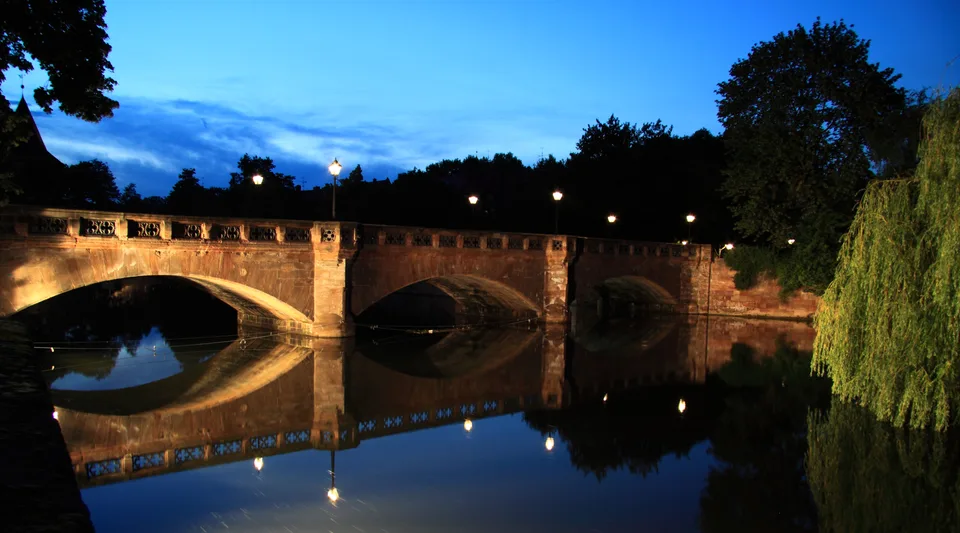
Visit the Imperial Castle with the right ticket
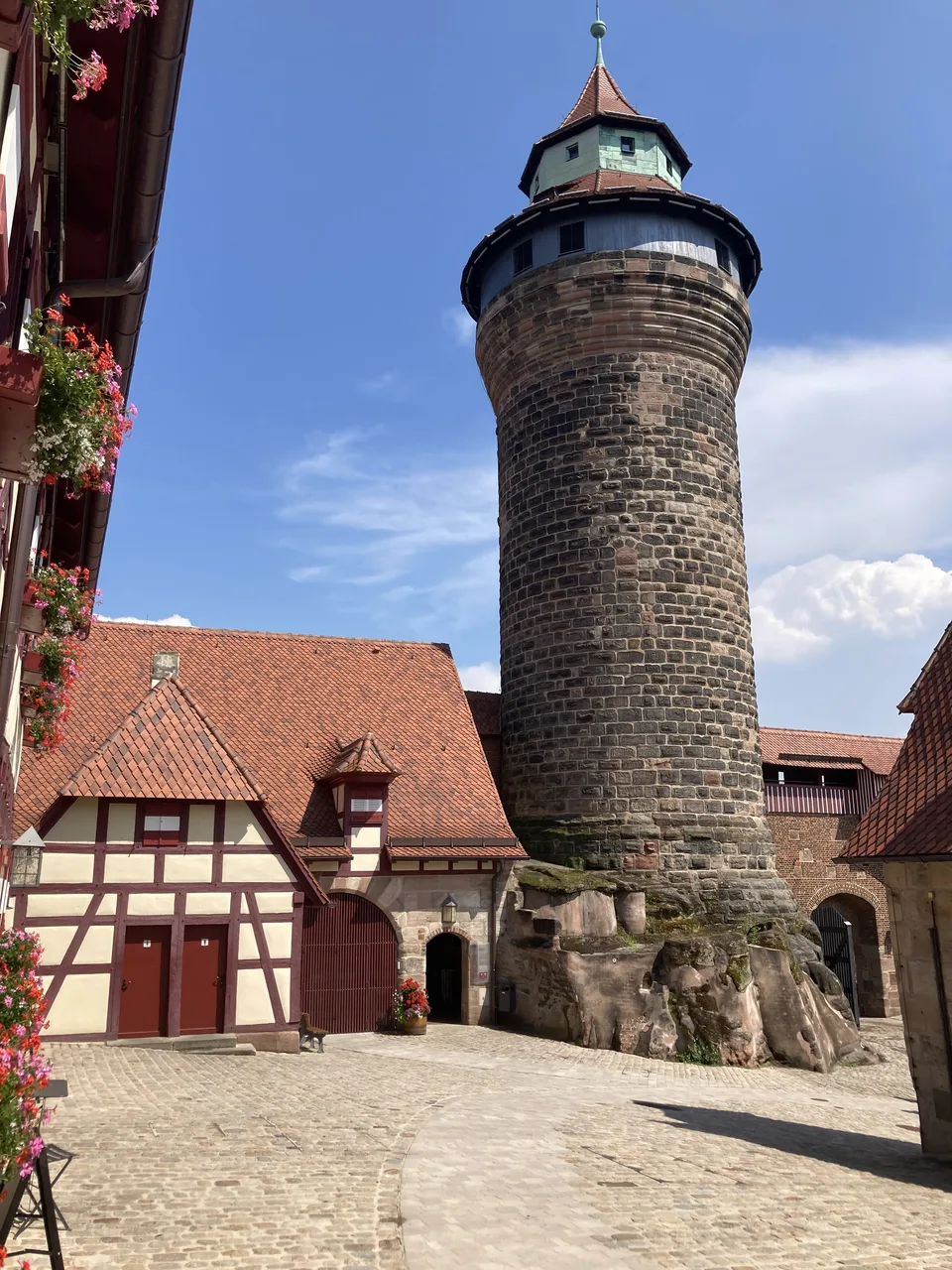
The Bavarian Palace Administration’s 2026 admission page lists the combined Imperial Castle ticket at €10 for an adult. It covers the Palas with double chapel, the Imperial Castle Museum, Deep Well and Sinwell Tower. Separate tickets are available for parts of the site, so compare what you actually want to see. Children under eighteen enter free, with adult supervision required for those under fourteen.
The operator says entrance tickets are sold at the outer-courtyard cash desk and cannot be ordered online. Do not build the day around an assumed online reservation. Check the current opening schedule and access information before travelling, especially for winter visits: gardens and individual spaces do not all follow the same pattern. A view from the castle area and an interior visit are different experiences. If stairs or restricted historic spaces are a concern, settle those questions before choosing the tower or planning a long sequence of interiors. Leave enough time to enjoy the site without hurrying downhill to another appointment.
Give the Nazi rally grounds their own time
The Documentation Center Nazi Party Rally Grounds interprets the rallies staged by the Nazi regime and the buildings that remain. Its new permanent exhibition, “Nuremberg and the Nazi Party Rallies”, opened in 2026. Advice describing the centre only as an interim exhibition is therefore out of date. The grounds cover a much larger area than an ordinary museum building; decide how much outdoor interpretation you want to include.
Read the current visitor hours and notices before making the journey. At the research check, the museum announced a closure on 3–4 November 2026. It also states that the exhibition is unsuitable for children under fourteen. That guidance should influence a family itinerary rather than being left until arrival. The admission page gives the current charges and municipal-museum upgrade conditions. Plan a substantial visit with time afterwards to process the material. Pairing this subject with another demanding history museum can work, but it should be a deliberate choice rather than a race between closing times.
Distinguish the Trials museum from Courtroom 600
The Memorium Nuremberg Trials examines the International Military Tribunal of 1945–46, the subsequent trials and their significance for international criminal law. Its exhibition and the historic courtroom are related, but access to one should not be assumed to guarantee uninterrupted access to the other.
The museum’s Courtroom 600 access notice says the room has no longer been used for trials since March 2020. Events can still restrict visits or the media installation, while the permanent exhibition remains available during normal opening hours. Check that notice for the date you intend to come; old event closures are not a reliable guide to a future visit. The museum is closed on Tuesdays. Consult the official admission information for tickets and the optional same-day municipal-museum upgrade. Treat the exhibition as the main reason to go, with enough time to understand the material, rather than regarding the visit only as a chance to photograph a famous room.
Look beyond the old town for everyday character
The tourism office’s introduction to Gostenhof and St Johannis offers a useful way to extend a walk beyond the main sightseeing circuit. Gostenhof is associated with independent shops, creative businesses and cafés. St Johannis combines a historic cemetery, gardens and nearby green spaces. These areas can help you see a different side of the city without requiring a distant excursion.
Use those descriptions as orientation, not as guarantees about every street or current business. A visitor might choose an afternoon of browsing and a meal; someone considering a move should investigate the nearest practical shops, public transport and the journey home after dark. Spend time at the actual address you are assessing rather than relying on a neighbourhood label. Check whether the atmosphere that appeals during a weekend walk suits a normal working week. Noise, entrance steps, bicycle storage and access to groceries are property-level questions that a broad district description cannot answer for you.
Choose accommodation around the daily journey
The official accommodation directory includes city and surrounding-area options, with filters for location and facilities. Start by deciding whether you need easy rail arrival, old-town walking access, a particular workplace connection or a room for an early flight. Those priorities can produce quite different shortlists.
Inspect the individual property and room category before booking. A parking or accessible-room filter does not establish that a particular room includes the space or entrance you require. For an extended stay, confirm cooking facilities, laundry, a usable work surface and the total cost after compulsory charges. A hotel kitchenette is not necessarily equivalent to a full apartment kitchen. Compare cancellation terms alongside the nightly figure, especially when your travel dates depend on a visa, course or work arrangement. If a cheaper room is farther out, add the transport cost and time before calling it a saving. Verify late check-in arrangements when arriving on an evening flight or train.
For a family, check the bed configuration and the age limits attached to any child rate. For a working visit, ask whether the room has a desk and whether the internet arrangements meet your needs. Property-wide amenities and a photograph of a shared lounge do not establish what is available inside your booked room.
Connect the airport to your actual address
Nuremberg Airport’s transport page describes a direct U2 underground connection with the main railway station, with a published journey time of twelve minutes. The station is outside the terminal. That makes rail a practical option to compare with a taxi, but the advertised train journey is only part of the arrival: allow for baggage, walking, ticket purchase and any onward connection.
Check the destination shown on the train and the current timetable, particularly for a very early departure or late arrival. Do not turn a daytime journey description into a claim of round-the-clock underground service. For a taxi, obtain a quote for the actual destination and party size rather than relying on an old city-centre estimate. If you are arriving through another German airport, compare the complete rail or bus connection before buying the flight. A connection to Nuremberg Airport is not automatically the best connection to a room, workplace or campus elsewhere in the city.
Compare transport products before buying
The VGN network is the place to check journeys and the ticket area required. For a day involving several rides, compare a day ticket with individual journeys rather than buying the first product whose name sounds suitable. Check the validity area when heading to a neighbouring city or a regional attraction.
The official TagesTicket Plus page lists the 2026 price for area A at €15.50, with the Solo alternative at €10.60. Plus covers up to six people, with a maximum of two aged eighteen or over; children under six are not counted. The Saturday product includes Sunday under the published weekend arrangement. This is not a ticket for any six adults, and area A is not the entire regional network. Read the date, area and validation instructions for the exact product you purchase. For commuting, test the journey at the time you would normally travel, including the return and any walking between stops and the building entrance.
Try the regional food without inventing a food budget
Nuremberg’s official bratwurst introduction explains the small local sausages and familiar ways of serving them, including plates with sauerkraut or potato salad. “Three in a roll” is another recognisable format. Choose according to appetite and dietary requirements, rather than treating a particular serving style as compulsory.
Nuremberg Lebkuchen adds a different part of the food story: the spiced gingerbread is closely associated with Christmas but is sold throughout the year. It can make a practical souvenir, provided you check ingredients and the quantity you actually want. Do not assume every variation meets the same dietary needs. For ordinary meals, compare displayed menus, portions and opening days. A snack, a café lunch and a booked restaurant dinner are different budget decisions. If a particular meal matters to the trip, confirm it with the venue directly. Leave enough flexibility around museum visits that an unexpectedly busy lunch stop does not cause you to miss a timed activity.
Budget from the places you will actually enter
Build a short list of paid visits before comparing museum upgrades or city passes. The castle and the municipal museums have different operators and ticket rules, so a product described as a museum ticket should not be assumed to include every cultural attraction. Check the exclusions, participating venues and the time you realistically have available.
For one adult, the published €10 castle combination ticket plus a €10.60 area-A Solo day ticket total €20.60 at the research check. That calculation excludes accommodation, meals, travel to Nuremberg and other admissions. It is an example based on two specified products, not a promised daily budget. For a couple or family, calculate again using the actual ages and relevant transport product. Quote accommodation for the intended dates, and keep a separate allowance for snacks, drinks and changes of plan. A low headline room rate may be less useful than a well-located room that removes several journeys or provides the facilities needed for a longer stay.
Choose the season for the experience
Spring and autumn are useful periods to compare for a walking-led visit, while summer gives more scope for outdoor evenings and longer excursions. Those are planning choices rather than a promise of mild, dry weather. The city’s climate information documents increasing heat exposure as well as continuing cold-weather conditions. Check a forecast close to departure and allow for rain in any season.
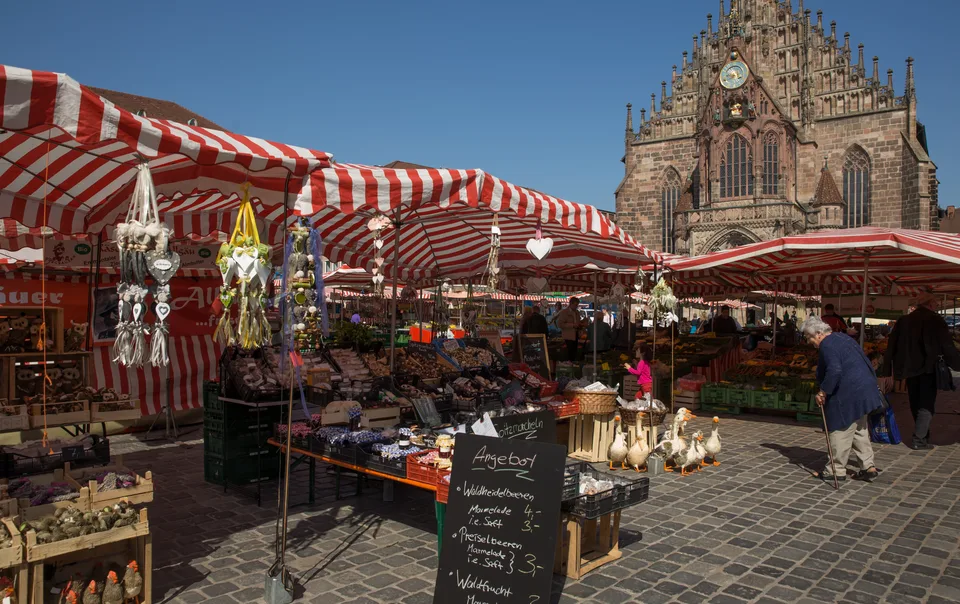
For summer accommodation, ask about the actual room’s cooling and ventilation rather than assuming air conditioning. In colder months, shorten outdoor sequences and check seasonal attraction access; castle gardens do not follow an all-year summer timetable. The official Christkindlesmarkt information lists 27 November–24 December for 2026, with an earlier finish on Christmas Eve. Choose those dates if the market is a priority, but do not expect its stalls at other times of year. Snow in a promotional photograph is not a weather guarantee. Book around the experience you want and retain an indoor alternative.
A two-day plan with room to think
On the first morning, orient yourself in the old town and walk towards the castle, adjusting the route to your mobility and the weather. Give the castle the main paid-visit slot, then take lunch without another immediate deadline. Use the afternoon for the river crossings and the Hauptmarkt area. Leave room to explore one shopping street or return to a place that caught your attention.
On the second day, choose the Documentation Center or the Memorium as the principal history visit. Add the other only if its opening pattern, your interests and your available energy make that sensible. These are substantial subjects, not obligatory quick stops. Alternatively, use part of the day for Gostenhof or St Johannis. This sequence is a suggested plan, not a claim that every venue opens on every date. For a family with younger children, replace the Documentation Center with an age-appropriate activity selected from current visitor information. For a single day, concentrate on the old town and one interior.
Assess a home by its full monthly cost
For a possible move, compare actual properties near the journey you need to make. The city’s 2026 Mietenspiegel is a useful official reference for comparable rents, accounting for a home’s characteristics. It is not a live list of available flats or proof that every asking rent will match a single citywide figure.
Ask what is included in the advertised rent and which charges are separate. Compare heating, utilities, internet and other household expenses explicitly instead of assuming the word “warm” means every bill is covered. During a viewing, inspect storage, ventilation, appliance provision and the entrance. Confirm whether the tenancy permits the intended length and use of the stay, and request the documents needed for registration. Before committing, test the commute and the nearest grocery trip. A central address may suit a holiday while an address with a better workplace connection suits everyday life. Keep the housing decision separate from any assumption that renting confers immigration rights.
If you cannot inspect a property yourself, establish who is offering it and what evidence supports the advertised terms before transferring money. Keep the inventory and handover record, including photographs of the condition and meter readings. These details matter just as much for a furnished temporary flat as for a longer tenancy.
Organise registration and healthcare early
The city’s address-registration instructions ask residents to register a new home within two weeks of moving in. Tenants need the accommodation provider’s confirmation, the Wohnungsgeberbestätigung, alongside the relevant identity documents. Registration is free. Online access has specific identity and technical requirements; do not assume a foreign passport alone will enable the digital route. Follow the city’s instructions for the appropriate appointment or online process.
Address registration and permission to live in Germany are different administrative matters. Arrange both where applicable. For healthcare, the official health-insurance guidance explains statutory and private systems and the need for continuous cover, including the gap between arrival and the start of employment-related arrangements. Check your own eligibility and coverage rather than assuming every newcomer enters the same system. When setting up the household, confirm utilities, internet, waste arrangements and the practical process for receiving post. Identify a suitable medical practice and pharmacy before a routine prescription becomes urgent.
Keep tourism, work and study permissions distinct
Germany is part of the Schengen area. The EU’s entry guidance for non-EU nationals explains the short-stay framework of up to ninety days in any 180-day period and the nationality-dependent visa requirement. Time spent in other Schengen countries counts towards the same ordinary short-stay allowance; crossing into Germany does not restart it. Passport and supporting-document conditions also apply.
Someone planning employment should check the relevant German work route, such as the visa for qualified professionals, rather than treating a sightseeing visit as permission to begin a job. For higher education, the study-visa guidance explains admission, funding and other requirements. Work during study has its own conditions. Permanent settlement is a further process, not an automatic consequence of obtaining a job, renting or buying a home. Use the Federal Foreign Office Visa Navigator for the appropriate personal route. VisaWand’s Germany consultant listings can help you compare services when individual advice is needed; verify credentials, scope and fees before booking.
Add a regional day or compare another base
The tourism office’s regional excursion suggestions include Fürth, Bamberg and the surrounding Franconian landscapes. Pick one destination rather than treating several towns as a checklist. Check the outward and return services, the correct transport ticket and opening times at the place you actually want to visit. A regional journey can require a different fare area from ordinary city travel.
Fürth can also be worth considering as an alternative base, depending on the address and the purpose of the stay. Use the Fürth destination page for location context, then compare accommodation and the commute you would really make. For a move, investigate the local services and administrative authority attached to that address. For tourism, keep a generous margin before the final train or flight. Nuremberg already offers enough different experiences for an unhurried short break; a day outside the city is most useful when it adds a change of setting without squeezing the main visit.
Official planning resources
Reviewed 24 October 2026. Use the official resources linked throughout this guide for admission, transport, housing and immigration decisions. Prices, services and rules can change; confirm the details relevant to your dates. Photography illustrates the locations and is not a live view.
View all official resources
- Imperial Castle – Nuremberg Convention and Tourist Office
- Rebuilding a destroyed city – Municipal museums
- Walk through the Old Town – Tourism office
- Admission fees2026 – Bavarian Palace Administration
- Documentation Center Nazi Party Rally Grounds
- Hours – Documentation Center
- Admission – Documentation Center
- Memorium Nuremberg Trials
- Closing Times of Courtroom600
- Admission – Memorium Nuremberg Trials
- Stadtglück in St.Johannis und Gostenhof – Tourism office
- Accommodation directory – Nuremberg tourism
- Getting Here – Nuremberg Airport
- TagesTicket Plus – VGN
- Nuremberg bratwurst – Tourism office
- Nuremberg Lebkuchen – Tourism office
- Climate change in Nuremberg – City council
- Nuremberg Christkindlesmarkt at a glance
- Nürnberger Mietenspiegel – Stab Wohnen
- Wohnung anmelden oder ummelden – Stadt Nürnberg
- Health insurance – Make it in Germany
- Travel documents for non-EU nationals – Your Europe
- Work visa for qualified professionals – Make it in Germany
- Visa for studying – Make it in Germany
- Visa Navigator – Federal Foreign Office
- Day trips – Nuremberg tourism
Plan the next part of your journey
Explore the Germany guide, browse other cities or compare consultants for your travel and relocation questions.