Visa
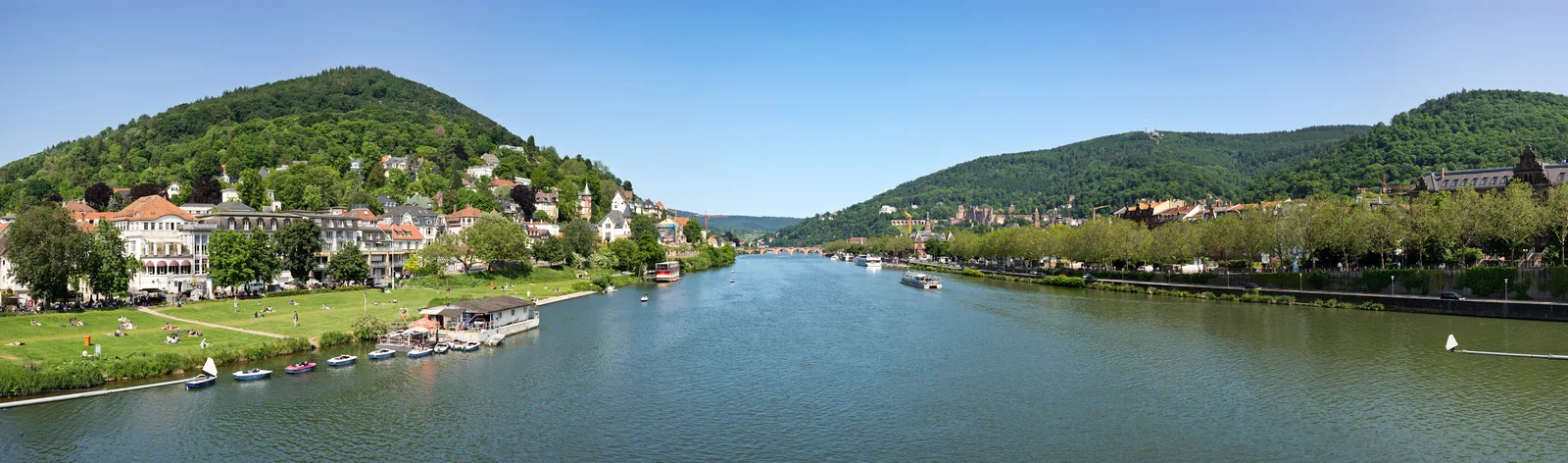
Choose Heidelberg for a city break with room to wander
Heidelberg brings its principal ingredients into one memorable landscape: a castle above the Old Town, the Neckar below, and wooded slopes across the water. A day trip can show you that composition. Two or three nights allow something more useful: time inside the castle complex, a university collection, an unhurried walk and an evening when you do not have to rush back to a train.
The historic centre is only part of a working university city. Someone considering a move should also investigate the neighbourhoods around their workplace or department, the station connections and the ordinary business of shopping and finding a home. A picturesque address and a convenient weekday routine are different questions. Use VisaWand’s Germany country guide for the national background, then let the city’s geography shape the details of your stay. This guide concerns Heidelberg on the Neckar in Baden-Württemberg, rather than another settlement sharing its name.
Understand the university city behind the view
The city’s historical overview records Heidelberg’s first documentary mention in 1196 and the university’s foundation in 1386. The relationship between scholarship, the former Electoral Palatinate and the surrounding landscape helps explain why there is more to explore here than a castle photograph. Look at the spaces between the landmarks: university buildings, squares and streets remain part of daily life.
Avoid equating historic character with an unchanged medieval town. Buildings and institutions have their own histories, and the university has expanded far beyond the Old Town. For a visitor, that means combining architectural sightseeing with one collection that provides context. For a prospective resident, it means locating the precise institution before choosing where to live. The university’s maps distinguish sites in the Altstadt, Bergheim and Im Neuenheimer Feld. An address described simply as near the university may therefore tell you very little about the journey you need.
Use the Old Town as a first walking route
Begin with a manageable circuit through the Altstadt rather than trying to cover the entire city on arrival. Follow Hauptstraße towards the market-square area, allow time around the Church of the Holy Spirit and Kornmarkt, and make the Old Bridge a separate pause. The castle remains a useful landmark above the streets, helping you understand the relationship between the hillside and river.
The official visitor portal provides an introduction to the Old Town and riverside experiences. Use its map alongside your own interests: a short architectural walk can become a museum afternoon, while a café stop can be the right decision after travel. The historic setting includes uneven surfaces and changes of level. For specific access needs, the official accessibility resources link to information about suitable accommodation, toilets and transport. Check the entrance and route you intend to use, rather than assuming that a central location guarantees an easy approach.
Buy the castle ticket that matches your plans
The standard Heidelberg Castle ticket currently costs €11 for an adult and €5.50 at the reduced rate. It includes the castle courtyard, barrel cellar and German Pharmacy Museum, plus a return journey on the lower funicular between Kornmarkt and Molkenkur, with the castle stop along the way. It does not take you all the way to Königstuhl.
Choose what you want to see before joining a ticket queue. The included courtyard visit and a guided tour of the interiors are different products. Someone interested mainly in the landscape may want more time in the gardens; someone interested in the building should leave room for a tour. Do not buy a second lower-funicular ticket without first checking what your castle admission already includes. A student card or disability document may be required.
Give the castle complex enough time
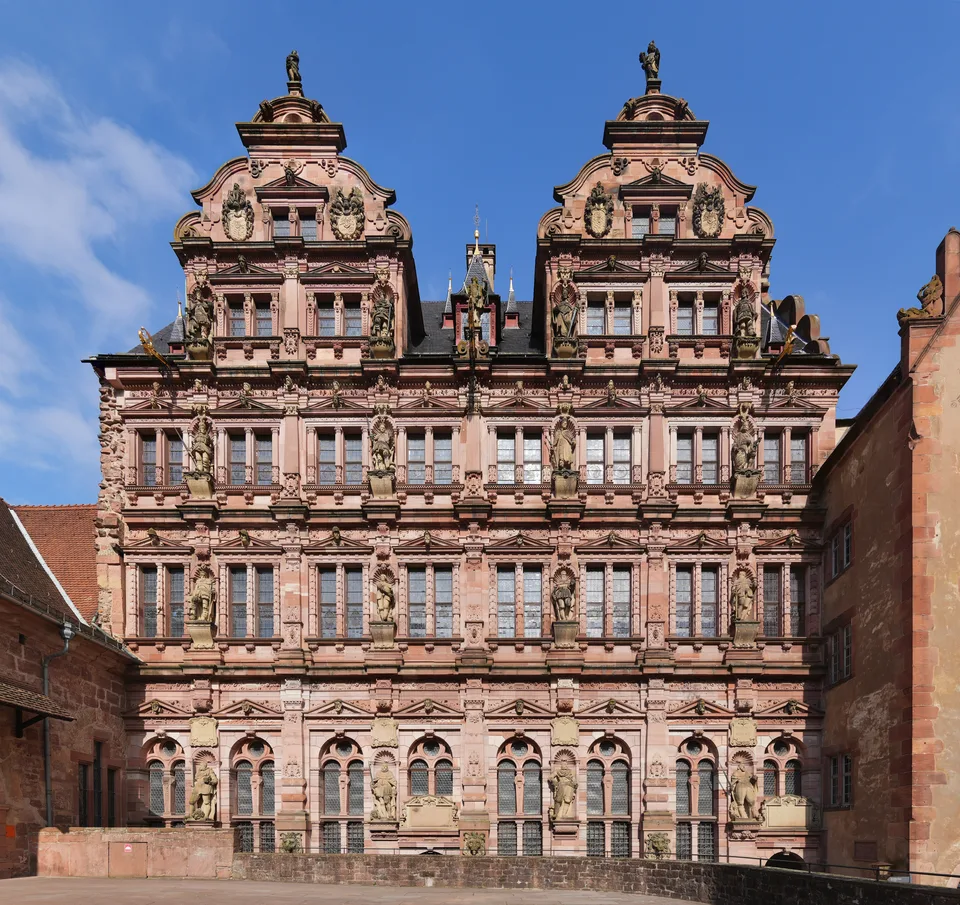
The castle’s visitor information lists normal courtyard and barrel-cellar opening from 9am to 6pm, with last admission at 5.30pm; the cash desk closes earlier, at 5.15pm. Interiors can be visited only on a guided tour, for an additional charge. The Pharmacy Museum has its own hours, so a 9am arrival does not mean every part of the complex is open.
Allow a substantial part of the day if you want the courtyard, museum and a tour, with breaks between them. Gardens and terraces add an outdoor dimension that is best enjoyed without watching the clock. Confirm the current English-language tour schedule if that matters to your visit; winter departures are less frequent than the summer pattern. Christmas and New Year arrangements also differ from normal hours. Wear footwear suited to historic surfaces and ask about the particular areas you can access if steps or long periods of standing present difficulties.
Separate the lower funicular from the summit outing
The funicular operator’s fare table distinguishes the lower railway from the upper journey to Königstuhl. In October 2026, an adult return Panorama ticket covering the full route and the castle inclusions costs €17. The upper section alone, between Molkenkur and Königstuhl, costs €10 return. These tourist railways use their own fares rather than ordinary rnv tickets.
There are dated changes to factor into future bookings. An operator announcement of 16 October 2026 says the standard castle ticket rises to €12 and the full-route adult return Panorama ticket to €19 from 1 January 2027. Separately, the current operating notices report that the wheelchair lift at Molkenkur is out of service. Both railways are scheduled to stop for bridge works from 4 October 2027 through 7 April 2028, with replacement buses planned between Kornmarkt, the castle and Molkenkur. That replacement route does not promise a service to the summit.
Cross the Neckar and choose your climb carefully
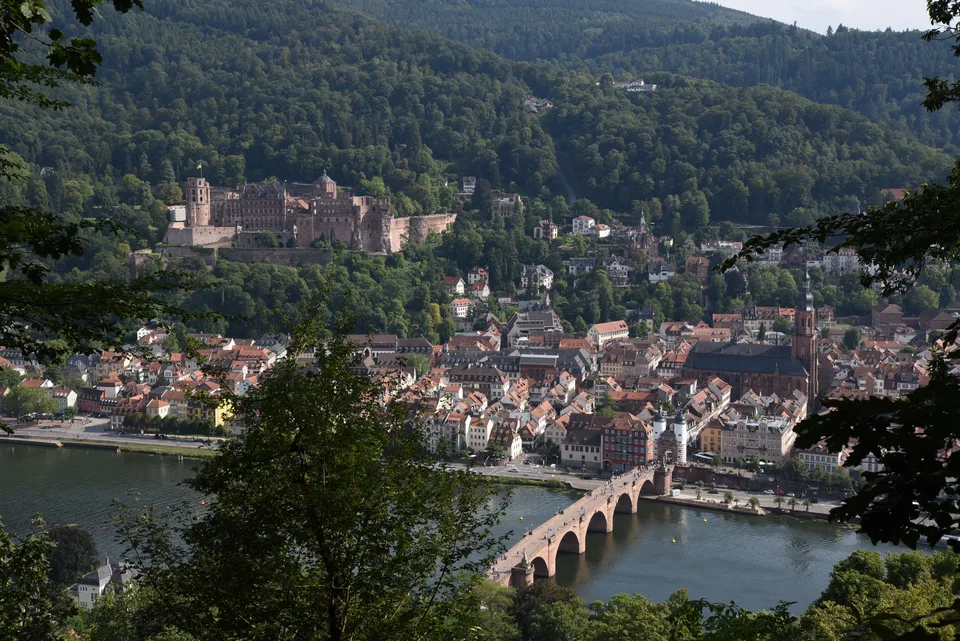
The Old Bridge offers a straightforward way to appreciate the relationship between the two banks without committing to a long hill walk. Spend time looking back towards the castle and Old Town, then decide whether the rest of the outing should stay beside the river or climb above it. The right choice depends on weather, mobility and how much walking remains in your day.
The city’s account of the Philosophers’ Way connects this hillside route with former vineyards and the Romantic-era appreciation of the view. Treat it as a distinct walk, not an effortless extension of a shopping circuit. Ask the tourist information office about an approach suited to your needs and current conditions. If a climb is unsuitable, river-level time can provide a satisfying change of scene before returning to the centre for food or a collection visit.
Visit the Student Karzer for a different university story
The university’s Student Karzer information describes five prison cells created in 1823, with paintings and writing made by the students confined there. The rooms offer a compact encounter with university discipline and student culture. Preserve the experience for other visitors by following the rule requiring jackets and bags to be stored in lockers.
Admission is timed, with tickets sold at the Unishop; advance arrangements are recommended for reliable planning. The adult combined special-exhibition and Karzer ticket costs €7.50. A €6 Karzer-only ticket is available on Mondays. From mid-October to May, published hours are Monday–Saturday, 10.30am–4pm. The cells are on the second floor and reached only by stairs. Check the university collection listings for other museums rather than assuming identical opening hours or accessibility. If Sunday is your only day, build a different plan instead of discovering the seasonal closure at the entrance.
Look beyond the postcard neighbourhood
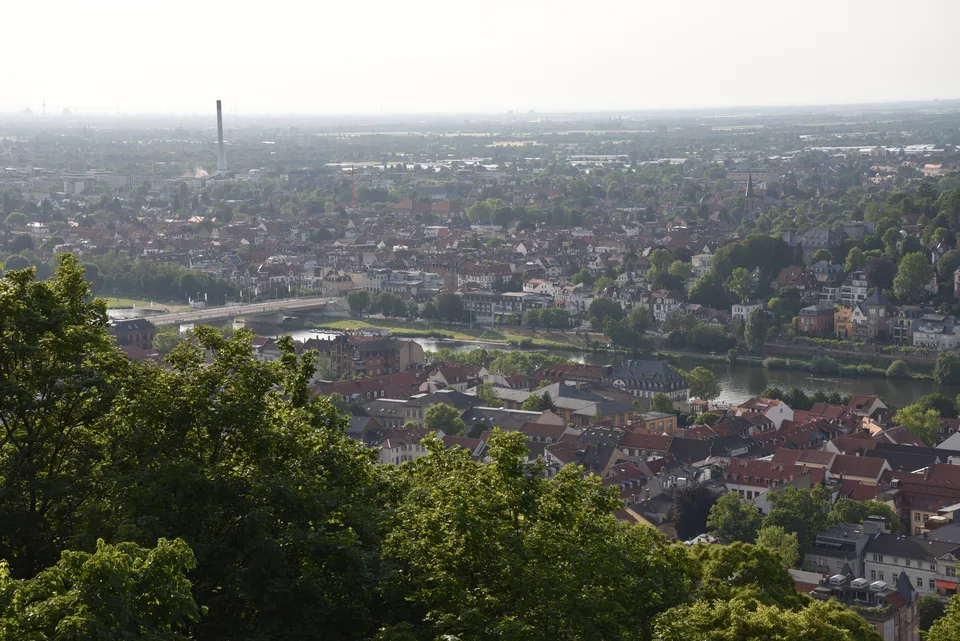
The official district overview introduces Heidelberg’s 15 neighbourhoods, including the historic Altstadt, Weststadt’s nineteenth-century architecture and the hillside settings of Schlierbach and Ziegelhausen. Choose one area beyond the centre for a slower look. It can give a short break more variety and a possible relocation visit more substance.
For a longer stay, compare the actual street and transport stop, not just the district’s reputation. Neuenheim and the wider northern-bank setting may enter your search because of a campus journey, while station access may pull you towards a different part of town. Check which side of the river your daily destination occupies and where the useful crossings are. Visit a grocery shop, look at shared building entrances and walk the final stretch from public transport. Those ordinary observations often reveal more about suitability than an attractive listing photograph or a broad neighbourhood description.
Choose accommodation around evenings and luggage
An Altstadt room puts the historic streets close at hand, which is valuable for a short stay focused on walking and meals. Accommodation nearer the main station can simplify early departures and regional trips. A property elsewhere can work equally well if its bus or tram connection matches your plans. The official accommodation portal provides a starting point for hotels and other stays.
Compare practical details before booking: access from the stop, lift availability, room location, breakfast, cancellation terms and luggage storage. Historic buildings may involve stairs before the lift or to a particular room. For an apartment, confirm cooking equipment and laundry facilities rather than reading them into the word apartment. If you plan to drive, establish where the vehicle can actually be parked and how you will unload. Check the accommodation’s full address on a map; a Heidelberg label does not necessarily mean an Old Town doorstep.
Add the overnight tax to your room comparison
The city’s overnight-tax FAQ confirms a charge of €3.50 per person per night, introduced on 1 October 2025. It applies to paid private and business stays, with only the first five nights of an uninterrupted stay in the same establishment taxed. Children under 16 are exempt; the city’s example makes clear that liability begins on the sixteenth birthday.
For two adults spending three taxable nights in one property, the tax totals €21. This is a calculation of the stated charge, not a hotel-rate estimate. Ask whether it is included in the price shown when comparing bookings, and check any eligibility questions with the property. For a scouting visit before moving, a flexible booking may be more valuable than a lower non-refundable rate if housing viewings change.
Plan the airport journey to the actual hotel
Frankfurt am Main Airport is an important international gateway for Heidelberg. The tourism board’s arrival information describes a rail option with a change in Mannheim, alongside road transfers. Check the itinerary for your landing date and allow for baggage collection, border formalities where applicable and the final local journey. Frankfurt Hahn is a different airport; compare the complete transfer before choosing a flight.
The official airport-transfer page also explains the TLS shared-shuttle arrangement. Pickups and departure times are organised in advance; it is not simply a bus you can assume will be waiting whenever you emerge from arrivals. Follow the stated booking deadline and wait for confirmation. Compare shared and private options according to party size, luggage and arrival time. A transfer to Heidelberg still needs a precise endpoint: the main station, an accommodation address and a tourist-information office are different destinations. Avoid using the shortest advertised journey as your connection allowance.
Use local transport for the gaps between walks
Heidelberg’s centre is well suited to walking in sections, but the main station, residential districts and campus destinations make buses and trams useful. The local-transport overview links the network and describes ticket purchases through machines, apps and online channels. Consult rnv’s travel information for the date and route you need, especially around maintenance or timetable changes.
Fares follow the regional VRN tariff system, so use the actual origin and destination rather than assuming one city-centre price covers every excursion. An important change is the abolition of Heidelberg’s short-distance and district tickets from July 2026; an older fare leaflet can therefore mislead. For cycling, check rental conditions, where a bicycle can be returned and whether your intended route suits your confidence. A riverside ride and an ascent into the hills are different undertakings. An ordinary transport ticket also does not automatically cover the tourist funicular.
Decide whether the HeidelbergCARD earns its place
The official HeidelbergCARD currently costs €25 for one day, €36 for two days or €40 for four days at the standard adult rate. Validity follows calendar days, not rolling 24-hour periods, and multi-day cards run consecutively. It is personalised and used with official identification.
The card includes the lower-funicular castle ticket, university and selected museum admission, and eligible second-class regional trains, buses and trams throughout VRN. It does not turn an ICE or IC journey into an included regional service, and the upper funicular is outside the standard castle inclusion. Compare the attractions and journeys you genuinely intend to use before buying. If your main plan is a walk, a meal and the castle, individual purchases may be the simpler comparison. For a museum-heavy stay with regional travel, the calculation changes. Reserve timed admissions where required: owning a visitor card does not remove an attraction’s capacity or opening-hour rules.
Try regional food and keep shopping practical
The official food-and-drink overview points to Baden-style Sauerbraten with Spätzle, Palatinate meat dishes and locally produced wine. Use that as an introduction to regional cooking, then inspect a restaurant’s current menu for ingredients, portions and prices. A familiar dish name does not settle allergy questions or guarantee a vegetarian version.
Leave some meals flexible. A bakery or café stop can fit between visits more naturally than a lengthy lunch reservation, while self-catering accommodation can be useful for breakfast and a quieter evening. Look beyond the busiest sightseeing stretch when comparing menus, without assuming another street must be cheaper. A prospective resident should test grocery access from the likely home address, including the journey with bags in poor weather.
Match the season to the kind of visit
Spring and autumn are sensible periods to consider for a break built around streets, gardens and walking, subject to the forecast. Summer brings opportunities to spend longer outdoors, but heat should affect the timing of a climb. The city’s urban-climate information addresses heat and measures taken in response to hot-weather episodes; a shaded rest and water belong in a walking plan.
In winter, shorter daylight makes the order of activities more important. Put a hillside or garden visit before an indoor stop, and check seasonal hours rather than carrying a summer schedule into a colder month. Wet or frosty surfaces can also change which walk is sensible. Consult the official weather and webcam page shortly before heading out. A clear day may favour the summit; low cloud may make an extra museum visit more rewarding. No month guarantees the castle view you have seen in photographs, so preserve room to rearrange the programme.
A workable two-day itinerary
Day one: leave your bags, explore the Old Town and have lunch before making the castle the main afternoon visit. Include the Pharmacy Museum if its hours fit, and arrange a guided interior tour if that is your priority. Return for dinner without adding the summit simply because it lies farther along the railway.
Day two: visit the Student Karzer when open, then cross the Old Bridge and choose between river-level time and a hillside walk. Add one neighbourhood beyond the centre rather than another distant attraction. If the weather is poor, substitute a collection suited to your interests and its current opening arrangements.
With a third day, choose Königstuhl or a regional excursion. Keep departure day lighter, particularly with an airport transfer ahead. Sunday visitors should move the Karzer to another day during its winter season. Families and visitors who tire easily can divide the castle and Old Town across separate mornings, leaving the afternoons adaptable.
Investigate housing before committing to a move
For a relocation visit, begin with the workplace or exact campus building, then test possible home locations at commuting time. Include the walk to the stop and any change of vehicle. A home farther from the tourist centre can be a good fit, but a distance measured on a map does not reveal the daily journey.
The city’s Mietspiegel is a useful tool for understanding comparable rents. The 2025 edition applies from October 2025 through September 2027, with calculations reflecting characteristics such as size, age, condition and location. Its net cold rent is not an all-inclusive monthly bill or a promise about available listings. Compare current properties like for like, and clarify heating, operating charges and electricity. Inspect ventilation, signs of damp, storage and the shared parts of the building. Ask for an itemised account of what is furnished and what must be bought before treating the advertised rent as the household budget.
Handle registration and essential services separately
Follow the city’s residence-registration instructions after moving into a home: the normal deadline is two weeks, with identity documents and the landlord’s confirmation among the required paperwork. Address registration is distinct from immigration permission. The university’s current registration guidance also explains limits on online registration, so a new arrival from abroad should not assume the entire process is available through the domestic-move service.
Under German residential deposit rules, the usual maximum is three months’ rent excluding the specified operating-cost payments. Cash deposits can be paid in three equal monthly instalments. Keep the agreement, inventory and payment evidence. Arrange utility accounts through the relevant supplier; Stadtwerke Heidelberg’s moving service is one local resource. Confirm meter readings and the start date. For healthcare, the government’s health-insurance guidance explains the need for suitable continuous cover. Organise the period between arrival and any employment-linked cover rather than assuming a future job resolves the first weeks.
Keep tourism, study and employment permissions distinct
Start with the Federal Foreign Office’s visa information and the requirements of the German mission responsible for your application. Nationality and purpose determine the route. For many short-stay visitors, the relevant Schengen limit is 90 days in any rolling 180-day period across the area, rather than a new allowance every time a border is crossed.
A tourist visit is not general permission to start work or establish permanent residence. The government’s work-and-study application guidance explains when a visa is needed before entry and where nationality-specific exceptions apply. Even an entry exemption should not be read as immediate employment authorisation. Explore the appropriate work, study or research category before accepting a start date. Renting a flat, registering an address and being admitted to a course are separate steps. VisaWand’s consultant listings can help identify professional assistance; confirm its scope and fees, while using official requirements to establish the route that fits your circumstances.
Choose a regional outing or a different base
For a contrast to Heidelberg’s hillside castle, consider Schwetzingen Palace and Gardens, checking its current visitor information and any partial garden closures. The city’s regional-tour overview also introduces places such as Speyer and the Odenwald. Pick one direction, then check the full outward and return journey rather than treating the entire region as a single afternoon.
If rail connections and a larger working-city setting matter more than immediate access to the Old Town, compare Mannheim’s location page when choosing a base. For a wider itinerary, VisaWand’s Frankfurt am Main guide provides another city comparison. The Germany location directory helps you explore further places, while the Germany destination page brings together national planning options.
Official planning resources
Reviewed 17 October 2026. Use the official resources linked throughout this guide for admission, transport, housing and immigration decisions. Prices, services and rules can change; confirm the details relevant to your dates. Photography illustrates the locations and is not a live view.
View all official resources
- City of Heidelberg: city and history
- Heidelberg University: campus maps
- Heidelberg Marketing: visitor information
- Heidelberg Marketing: accessibility
- Heidelberg Marketing: castle ticket
- Heidelberg Castle: visitor information
- Heidelberg funicular: current fares
- Heidelberg funicular: announced 2027 fare changes
- Heidelberg funicular: current operating notices
- City of Heidelberg: Philosophers’ Way
- Heidelberg University: Student Karzer
- Heidelberg University: collections visiting information
- Heidelberg Marketing: districts
- Heidelberg Marketing: accommodation
- City of Heidelberg: overnight tax FAQ
- Heidelberg Marketing: arrival
- Heidelberg Marketing: airport transfers
- Heidelberg Marketing: local transport
- rnv: travel information
- rnv: fare system
- Heidelberg: short and district ticket abolition
- Heidelberg Marketing: HeidelbergCARD
- Heidelberg Marketing: food and drink
- City of Heidelberg: urban climate
- Heidelberg Marketing: weather and webcams
- City of Heidelberg: rent index
- City of Heidelberg: register a residence
- Heidelberg University: address registration
- German Civil Code: residential deposit rules section 551
- Stadtwerke Heidelberg: moving and utility accounts
- German government: health insurance
- Federal Foreign Office: visas for Germany
- German government: applying for work and study visas
- German government: visa categories
- State Palaces and Gardens: Schwetzingen
- City of Heidelberg: tours and regional excursions
Plan the next part of your journey
Explore the Germany guide, browse other cities or compare consultants for your travel and relocation questions.