Visa
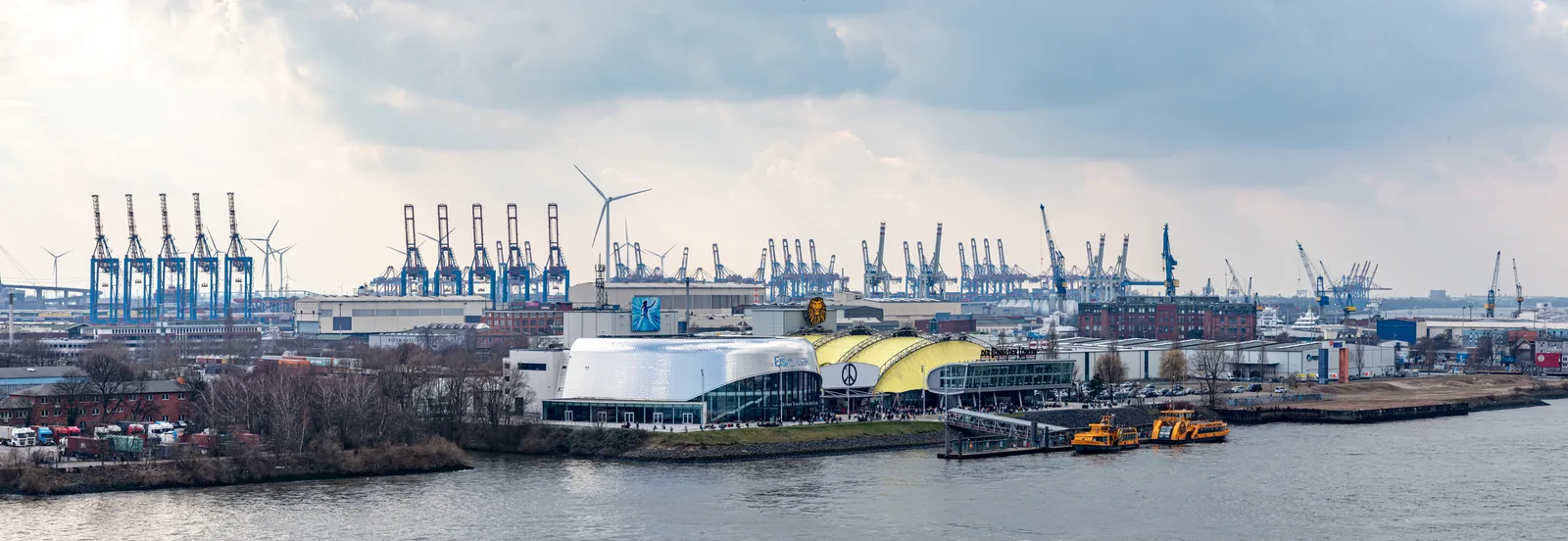
Hamburg is best understood from the water
Hamburg's defining view is a working one: container cranes across the Elbe, ferries crossing between neighbourhoods, and warehouse walls rising straight from narrow waterways. The northern German city combines that maritime scale with lakeside paths, substantial art collections and a music scene that ranges from concert halls to late bars. Come for architecture and culture, but leave room to watch the port rather than treating it as scenery between attractions.
Three days make a useful first visit. Two can cover the central waterfront and one major indoor attraction; a longer stay allows the western Elbe suburbs and a day outside Hamburg. For relocation, its appeal depends as much on the journey to work and the housing search as on the postcard waterfront. Start broader planning with VisaWand's Germany country guide and use Hamburg Tourism's visitor information for current events.
Read the history in brick and stone
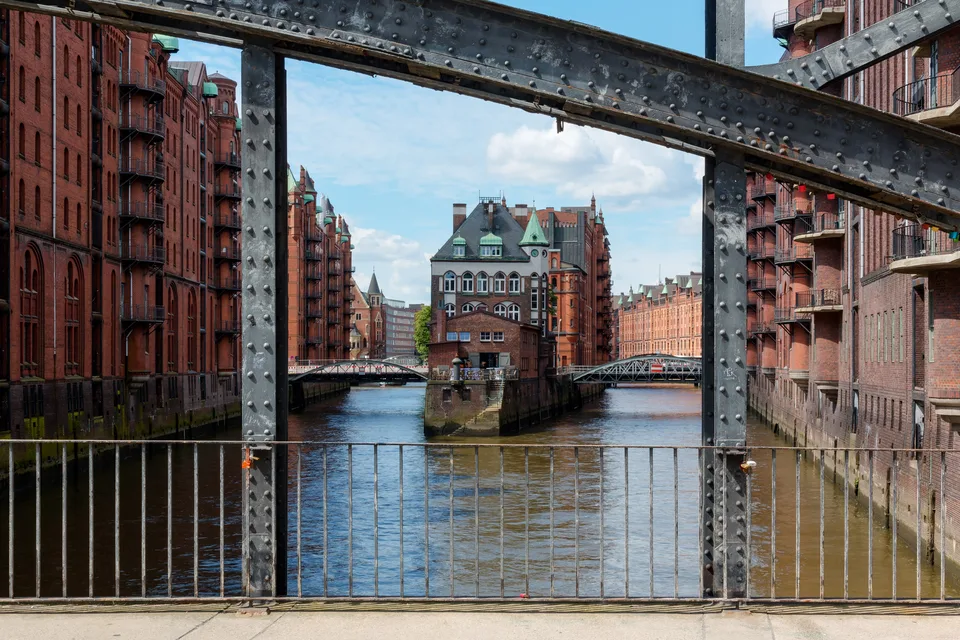
Hamburg's commercial identity is particularly legible in the Speicherstadt and neighbouring Kontorhaus district. UNESCO's World Heritage description dates the warehouse complex to 1885–1927, with postwar reconstruction, and identifies the office buildings, including Chilehaus, with the growth of international trade. These are monuments to modern commerce rather than a surviving medieval warehouse town. Look at loading doors, canal edges and the changing scale between storage blocks and offices.
The central city also carries the marks of destruction and rebuilding. Deichstraße preserves a different, older merchant streetscape, while St Nikolai's ruined church is a place of remembrance associated with the 1943 air raids. The official Altstadt and Neustadt overview helps connect those places with the Rathaus and Jungfernstieg. A walking route through them explains more than collecting isolated architectural photographs.
Choose a base by the evenings you want
Altstadt and Neustadt work well for visitors who want central walks, shopping and straightforward connections. HafenCity puts modern waterfront architecture beside the Speicherstadt; check the actual walk from your hotel to a station, especially with luggage. The HafenCity and Speicherstadt neighbourhood portrait is useful for understanding that relationship. A harbour-facing room can be appealing, but proximity to the water does not guarantee proximity to every attraction.
St Georg, behind the main station, offers convenient rail access and routes towards the Alster; assess the particular street rather than judging the entire area from a station address. St Pauli suits travellers prioritising performances and nightlife, provided they choose a room with suitable sound insulation. Around Sternschanze, evening restaurants and bars matter more than harbour views. Families and light sleepers should ask about courtyard rooms and nearby late venues before booking.
Make accommodation comparisons on the total price
Hotels, hostels and serviced apartments serve different trips. A hostel bed may lower the accommodation bill, while an apartment with cooking facilities can make a longer family stay easier. Confirm whether a quoted apartment has a private kitchen, laundry access and an actual reception or self-check-in arrangement. For a brief stay, a reliable station connection may save more usable time than a larger room farther out.
Compare the final payable amount, cancellation deadline, breakfast, local charges and luggage storage. Event dates can change availability sharply, so check your exact nights before building a budget around a headline rate. An airport hotel makes most sense for a demanding flight time; the airport's rail connection means it is not automatically the best base for central sightseeing. Avoid a non-refundable booking until the essential timed visits are available.
For accessibility, ask specific questions: whether the entrance has steps, whether a lift reaches the booked room, and how the bathroom is arranged. A property's general accessibility label may not answer those questions. Travellers arriving late should confirm the last staffed check-in time and what happens if the train is delayed. Those details are especially important in a small apartment operation where there may be nobody at a desk overnight.
Arrive by rail without an unnecessary airport transfer
Hamburg Airport's official arrival information gives the S1 journey to Hauptbahnhof as approximately 25 minutes, with trains generally every ten minutes during the day. The airport station connects to terminals 1 and 2 by lifts, escalators and stairs. Add walking, waiting and luggage time when judging a flight connection. A published train journey time is not a promise of a door-to-door transfer.
On the return journey, pay attention at Ohlsdorf: the S-Bahn operator's S1 explanation describes the front section continuing to the airport and the rear section to Poppenbüttel. Follow the destination displays and announcements, particularly during alterations. Arriving by intercity train can remove the airport transfer altogether. Check the arrival station and onward connection on your actual booking, rather than assuming every Hamburg train finishes beside your hotel.
Buy the right HVV ticket
The current HVV single and day ticket table lists Hamburg AB adult fares of €4.10 for a single journey, €8.20 for a day ticket and €16.40 for a group ticket covering up to five people. The adult day ticket includes up to three children aged six to fourteen and lasts until 6 a.m. the following day. It is not a rolling 24-hour product. Single tickets do not allow a return or round trip.
Eligible single, day and group purchases through HVV's online shop or apps receive a seven-percent discount. Machines provide another buying option; do not expect to pay cash on an ordinary Hamburg bus. Use the journey planner for the correct fare area and lift information. A cheaper hotel beyond AB can lose some of its advantage through extra fares or changes, particularly when several people travel together.
Use harbour ferries for transport and perspective
HADAG's public ferries are part of the transport network: its passenger information confirms that relevant HVV tickets are accepted. Buy before boarding. On line 62, the published route starts at Landungsbrücken bridge 3 and runs via Altona Fischmarkt, Dockland and Neumühlen/Övelgönne towards Finkenwerder. Choose a stretch that fits your day rather than boarding without checking where the boat finishes.
A ferry is useful for seeing the river at public-transport prices, but it does not reproduce a narrated commercial harbour cruise. Cruises have their own tickets, routes and operating conditions. If commentary or close views of particular port features matter, compare those products explicitly. Allow for wind on exposed decks and check service information before a connection. For a simple outing, combine a waterfront walk with a ferry journey instead of adding another paid tour automatically.
Visit the Speicherstadt with one anchor booking
Walking the warehouse district costs nothing and rewards an unhurried approach: bridges, brickwork and canal views are the main experience. Combine it with one substantial indoor visit rather than scheduling several adjacent museums back to back. Miniatur Wunderland is the obvious choice for travellers interested in elaborate model landscapes and engineering; it deserves sustained attention rather than a hurried gap between lunch and a concert.
The attraction's current German admission page lists €22 standard entry and €13 for visitors through age fifteen; children under one metre enter free with a parent or grandparent. Check the applicable category before paying. Use the official planning questions and book a suitable entry slot: being indoors does not make it a dependable last-minute rain option. Backstage experiences are separate products, so read whether ordinary admission is included in the particular offer.
Separate an Elbphilharmonie view from a concert
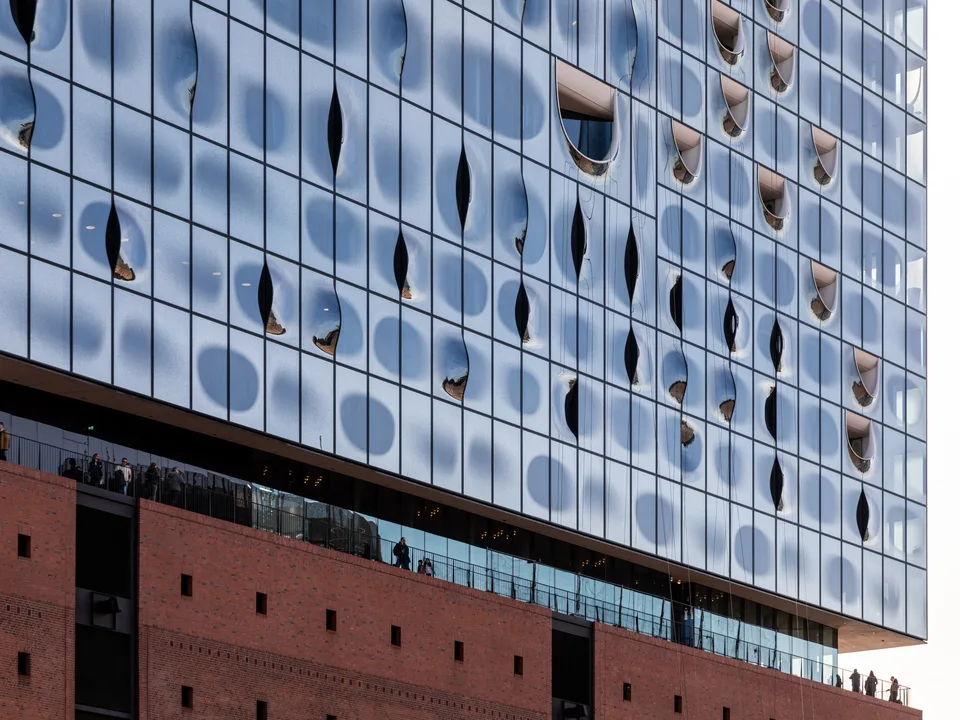
The Elbphilharmonie's Plaza is a viewing level between the brick warehouse base and glass upper building, 37 metres above ground. Its current official access page lists €5 for an individual Plaza ticket bought online or on site, with qualifying concessions at €3. Older advice about free walk-up access can mislead. Normal opening is 10 a.m. to midnight, with last admission at 11.30 p.m.; holiday exceptions apply.
A Plaza ticket does not admit you to a concert auditorium. If music is your priority, choose the performance first: Grand Hall and Recital Hall concert tickets include Plaza admission from two hours before the event. That can remove the need for a separate viewing booking. Leave time to enjoy the building without rushing into the performance. The balcony views and the musical programme are different reasons to visit, each worth planning on its own terms.
Give art and the Michel different kinds of time
Hamburger Kunsthalle is a strong choice for a concentrated indoor afternoon rather than another quick stop. Its admission page currently lists standard entry at €18 and free admission for under-eighteens, who still need a zero-price ticket. The opening calendar normally runs Tuesday to Sunday, with Thursday evenings and Monday closure; check holiday arrangements. Choose a collection or exhibition focus before arriving so that the visit has a manageable scale.
At St Michaelis, the church itself is free, while the official visitor prices distinguish the tower at €8, crypt at €6 and combined adult ticket at €10. Worship and events affect church and crypt access; evening tower visits have different arrangements. Choose the tower for an elevated city view, the crypt for its exhibitions, and the church for its interior. They need not all become obligatory purchases.
Leave space for ordinary neighbourhood life
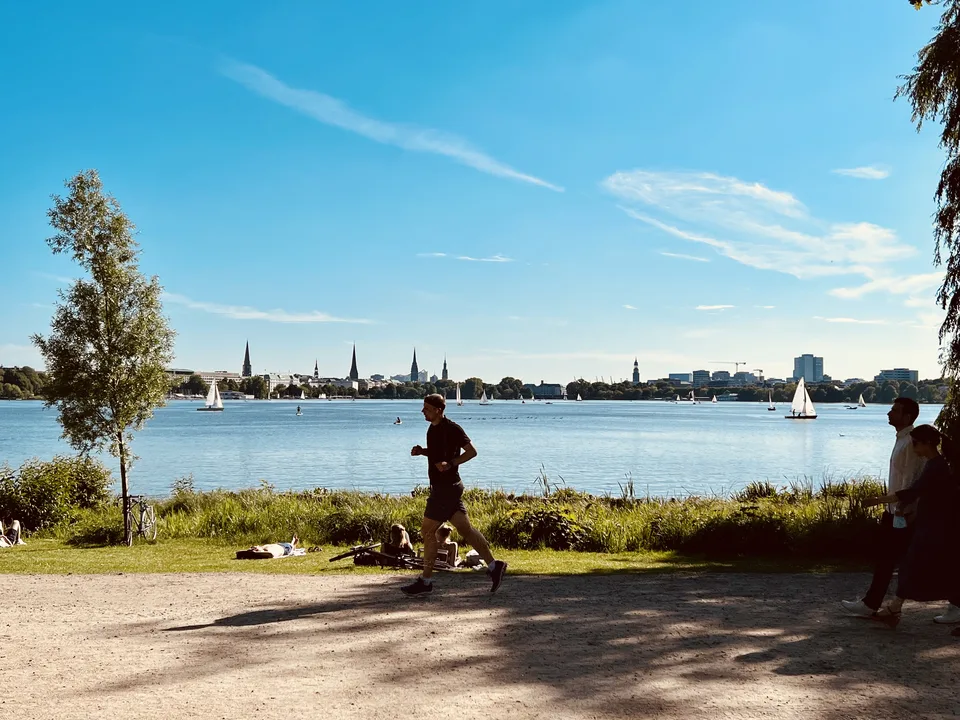
The Alster offers a useful counterweight to the industrial river: lakeside paths, benches and views that do not depend on a ticket slot. Make a short out-and-back walk if the weather or energy does not favour a longer circuit. There is no need to complete an entire waterfront route to enjoy it. Keep pedestrian paths and cycle routes distinct, and choose an indoor alternative when the wind makes lingering uncomfortable.
For a different afternoon, the Sternschanze and Karolinenviertel overview points towards Schulterblatt's restaurants and bars and Marktstraße's independent shops. Browse rather than expecting another monumental sightseeing district. Planten un Blomen provides a park alternative nearby. These areas work particularly well when you have already covered the central waterfront and want to see where people spend an ordinary afternoon or evening.
Eat regionally without turning every meal into an attraction
Hamburg's regional food overview highlights fish rolls, Franzbrötchen and Labskaus. A Franzbrötchen is a sweet cinnamon pastry, convenient for a bakery breakfast or a break between walks. Fish rolls vary substantially by filling, so look at the description rather than ordering solely by appearance. Ask about fish, egg and dairy ingredients if relevant to your diet; a traditional-looking dish is not necessarily straightforward for allergies.
Labskaus belongs to a broader northern seafaring tradition: expect a preparation involving salted beef, potatoes, beetroot and onion, with accompaniments varying by kitchen. It is worth trying if those ingredients appeal, but Hamburg also offers plenty beyond regional dishes. Compare menus near your accommodation with waterfront prices, and use a supermarket or bakery for some meals if you want to reserve more of the budget for performances or museums.
For an evening concert, decide whether to eat before or after it and check the kitchen's actual serving hours. A restaurant remaining open does not necessarily mean it is still taking food orders. With children, a substantial lunch can be easier than relying on a late dinner after sightseeing. Keep meal plans geographically close to the day's final activity so that a modest saving does not create another cross-city journey.
Shop before Sunday and calculate sightseeing costs
Central shopping streets suit a conventional shopping trip; the Karoviertel offers a smaller-scale browse. Most shops close on Sundays, subject to specific Sunday-shopping exceptions. Buy household basics and groceries ahead if you arrive over a weekend. Airport shopping has different opening arrangements, but making a special airport journey is rarely an efficient substitute for planning an ordinary grocery stop near your accommodation.
The transport-inclusive Hamburg CARD starts at €12.90 for one day and provides AB travel plus participating discounts. A version without transport is different. Compare actual savings against an €8.20 ordinary day ticket; the card is not general free admission to every attraction. As a transparent example, a standard day ticket, Plaza visit and Kunsthalle admission total €31.20 before food and accommodation. This is arithmetic using published individual prices, not an average daily spending claim.
Pick a season for the activities you value
Hamburg's seasonal visitor overview suggests a useful division: terraces and returning outdoor life in spring, parks and waterside outings in summer, autumn walks and cultural evenings, then winter markets and museums. Summer gives outdoor plans more flexibility, but book accommodation against actual dates. For a concert-focused break, programme availability may matter more than choosing the warmest season.
Expect changeable conditions rather than building the trip around guaranteed clear skies. A waterproof layer, comfortable shoes and an extra layer for the river make practical packing choices. Keep one museum or indoor booking in reserve, while remembering that popular timed attractions may sell out. Winter waterfront walks are best paired with nearby indoor stops. Do not assume that cold weather makes lake ice safe or that a riverside beach implies safe swimming.
A realistic three-day first visit
Day one: begin around Rathausmarkt and Jungfernstieg, then walk towards Deichstraße and the Speicherstadt. Have lunch before a pre-booked Miniatur Wunderland visit, allowing the attraction to occupy the main afternoon. Finish with a waterfront walk if you still have energy. If your arrival is late, reduce the central walk instead of squeezing the timed booking against a flight or train connection.
Day two: visit St Michaelis if its calendar permits, then head to Landungsbrücken. Use a suitable ferry journey for the river perspective, keeping time for a stop around Övelgönne rather than treating the service as a continuous sightseeing loop. Reserve the Plaza or a concert for later, with enough transfer time. A windy day is a reason to shorten the exposed section, not to force the original plan.
Day three: give the Kunsthalle the morning or early afternoon, then choose an Alster walk or Sternschanze and Karoviertel. On a Monday, swap the museum day with another part of the itinerary. Leave the last evening free for a performance, dinner or simply returning to a neighbourhood you liked. Travelling with children or limited mobility may mean dropping a stop; this schedule is a framework, not a completion test.
For a single day, choose between the model railway and the art museum, then connect that visit with the central waterfront. Trying to include both, a lengthy ferry outing and a concert usually leaves little margin for meals or delays. An extra day is better spent enjoying one district properly than repeatedly crossing the city to satisfy a checklist.
Moving starts with a workable housing search
For prospective residents, a short visit can double as a neighbourhood test, but holiday accommodation and a long-term tenancy serve different purposes. Compare several areas by your actual workplace or campus journey, evening connections and grocery access. A waterfront address can be less useful than a straightforward commute. Ask an employer or university what arrival support exists before committing to temporary housing for an uncertain search period.
The Hamburg Welcome Center's first steps links housing, registration and essential services. Its housing and registration package explains application documents, cooperative housing and rental terminology. Prepare evidence of income and ask what alternatives a landlord accepts if you lack a German rental history. View the property, check who is authorised to let it and read the agreement before transferring money. Avoid assuming that a polished online listing proves an available, legitimate home.
Understand the rent beyond the headline figure
Kaltmiete is the base rent; Warmmiete adds specified charges, but does not mean every household bill is covered. Ask separately about heating, water, electricity and internet, and establish whether payments are advances subject to later reconciliation. Check whether a kitchen, appliances and furniture belong to the tenancy or require a separate purchase. A lower advertised rent can become less attractive once installation and furnishing costs are included.
For an ordinary residential tenancy, section 551 of the German Civil Code limits the security deposit to three months' rent excluding operating costs and provides instalment rights for a cash deposit. Read the agreement carefully if its terms appear inconsistent with those protections. Keep a documented handover and meter readings. Build an arrival reserve for overlapping accommodation, deposit, essential furniture and utility setup rather than treating one monthly rent as the complete moving cost.
Arrange registration, healthcare and daily services
When establishing a new main residence, Hamburg's guidance requires registration within two weeks of moving in. Book the appropriate appointment and obtain the accommodation provider's confirmation; check the full document list for your circumstances. Registration and a residence permit are separate processes. Before choosing temporary accommodation, ask whether it can provide the documentation needed for your intended stay rather than discovering the problem after arrival.
Use the Welcome Center's health and insurance information to identify suitable coverage and local medical arrangements. Travel insurance should not simply be assumed sufficient for living and working in Germany. Arrange electricity and internet where required, check household broadcasting-contribution obligations, and plan school or childcare applications early. For commuting, compare current subscription terms and employer support with your real travel pattern. Language support can make housing, appointments and everyday administration substantially easier.
Keep tourism and immigration plans distinct
Germany applies Schengen short-stay rules: the Federal Foreign Office's guidance explains the maximum of ninety days in any 180-day period for the relevant short-stay framework. Count time across the Schengen area, and check nationality-specific visa requirements. Permission for a visit is not permission to take employment or establish a permanent home. A sightseeing trip can help assess Hamburg, but does not settle the legal basis for moving.
For work, study, training or family residence, use the federal visa-purpose overview and application guidance before making binding plans. EU and EFTA nationals have different arrangements from other nationals; exceptions also depend on nationality and purpose. Permanent residence has its own settlement-permit requirements. VisaWand's Germany destination page and consultant listings can support planning, while official authorities determine eligibility and issue permissions.
Consider the western suburbs or a separate Hanseatic city
Within Hamburg, Blankenese and the Elbe suburbs offer winding lanes, river views and a different pace. The Treppenviertel's stairs make route selection important for anyone avoiding steps. Treat it as a deliberate outing, allowing for the journey from central Hamburg; it need not be attached to an already full museum day. A stroll beside the Elbe can be enough without adding another booked activity.
For a day outside Hamburg, Lübeck's Old Town island provides brick architecture, courtyards and a distinct Hanseatic setting. Hamburg Tourism describes the rail journey as around an hour; check the actual service and fares, since an AB ticket does not cover the whole trip. Compare the Berlin city page or Bremen city page when choosing a wider itinerary, and use VisaWand's Germany location directory to explore further places without assuming every listing contains a completed guide.
Official planning resources
Reviewed 15 October 2026. Use the official resources linked throughout this guide for admission, transport, housing and immigration decisions. Prices, services and rules can change; confirm the details relevant to your dates. Photography illustrates the locations and is not a live view.
View all official resources
- Hamburg Tourism: official visitor information
- UNESCO: Speicherstadt and Kontorhaus district with Chilehaus
- Hamburg Tourism: Altstadt and Neustadt
- Hamburg Tourism: HafenCity and Speicherstadt
- Hamburg Tourism: Sternschanze and Karolinenviertel
- Hamburg Tourism: Blankenese and the Elbe suburbs
- Hamburg Airport: arrival and departure
- S-Bahn Hamburg: the S1 route
- HVV: single and day tickets
- HADAG: harbour ferry questions
- HADAG: ferry line 62
- Hamburg Tourism: Hamburg CARD prices and conditions
- Elbphilharmonie: Plaza tickets and access
- Miniatur Wunderland: current admission prices
- Miniatur Wunderland: planning and ticket questions
- Hamburger Kunsthalle: prices and tickets
- Hamburger Kunsthalle: opening hours
- St Michaelis: visit times and prices
- Hamburg: seasonal visitor planning
- Hamburg: regional food
- Hamburg: Labskaus ingredients and history
- Hamburg Tourism: Sunday shopping exceptions
- Hamburg Welcome Center: first steps
- Hamburg Welcome Center: housing and registration package
- German Civil Code: residential tenancy deposits
- Hamburg Welcome Center: health and insurance
- Federal Foreign Office: short stays and Schengen visas
- Make it in Germany: visa and residence purposes
- Make it in Germany: applying for a visa
- Make it in Germany: settlement permits
- Luebeck Tourism: the Old Town island
- Hamburg Tourism: a day trip to Luebeck
Plan the next part of your journey
Explore the Germany guide, browse other cities or compare consultants for your travel and relocation questions.