Visa
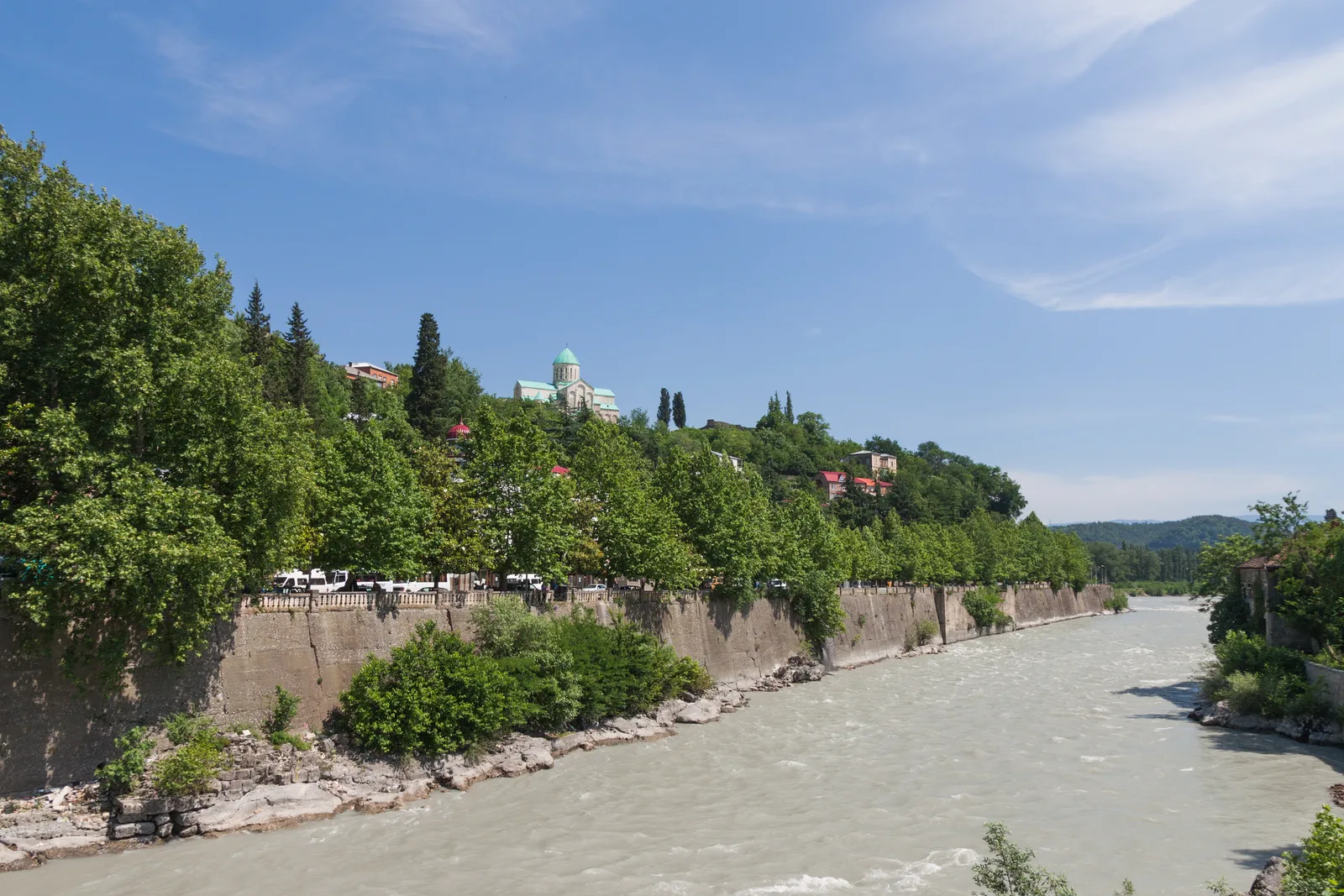
A river city worth more than an airport stop
Kutaisi rewards travellers who give western Georgia a few unhurried days. The Rioni runs beneath bridges beside a compact historic centre; above it, Bagrati Cathedral provides a very different perspective on the town. Beyond the streets are medieval monasteries and the limestone landscapes around Tskaltubo. This is a practical base for exploring Imereti, provided you distinguish a walk across town from a regional excursion requiring transport.
The national tourism board’s Kutaisi introduction establishes the setting, but the best reason to stay is the combination: an architectural morning, a substantial Imeretian lunch and time to cross the river again without rushing towards another city. Three nights suit a first visit. A longer stay deserves a different assessment, centred on housing quality, your actual commute and access to services.
Understand the history beneath the scenery
Kutaisi’s historical identity reaches well beyond its modern airport. Georgia’s tourism authority connects it with ancient Colchis and subsequent royal history. Stories of the Argonauts and the Golden Fleece belong to mythology; they add cultural context without establishing a literal account of events. Avoid choosing a tour simply because it presents legend as archaeological proof.
The visible city is layered rather than uniformly medieval. The Royal District’s architectural history describes nineteenth-century streets and the surviving Okros Chardakhi building, a remnant of a royal residence. That survival matters: visitors should expect a fragment within the modern town, rather than an intact palace complex. Look at the buildings between celebrated stops, where domestic scale and changing architectural influences make the walk more revealing.
Choose your base by the route you will actually walk
For a short visit, start your search around the Royal District and White Bridge. This puts an evening stroll and central eating places within the same manageable area. The district includes Tsisperqantselebi, St Nino, Akaki Tsereteli and Alexander Pushkin streets. Compare the precise entrance of each property with your planned walks; a central-looking map pin can conceal stairs or an inconvenient approach with luggage.
The Bagrati side offers a hillside setting, which makes the walk home part of the accommodation decision. Travellers prioritising level access should ask about gradients before booking. Properties farther towards transport facilities or a university may make sense for a specific purpose. They provide a different stay from sleeping beside the historic centre, even when the listing uses the same city name.
If travelling with a wheelchair, limited stamina or a pushchair, request photographs of the complete entrance route, including the pavement, threshold and lift. Ask whether a taxi can stop at the door. A room described as accessible can still involve an awkward final approach. For a group, agree whether everyone wants to stay together near evening meals or whether a quieter setting matters more. Resolving that preference before comparing nightly prices avoids paying for repeated journeys back into the centre.
Walk the Royal District and the Rioni bridges
Make White Bridge an orientation point and follow the streets around it before committing to a long sightseeing circuit. The Royal District source dates the bridge to 1872 and explains its later enlargement. Its value today is also practical: crossing the river changes the view and helps you understand how the central streets fit together.
Pause around Okros Chardakhi and leave space for an unscheduled detour. An architectural walk works best when it includes a seat, a drink and a second look at a building rather than continuous photography. At the tourist information centre on Rustaveli Avenue, number 9a, ask about current exhibitions, transport and access conditions. That conversation is especially useful before paying for an outing whose main interior may be affected by conservation.
Visit Bagrati with the UNESCO distinction clear
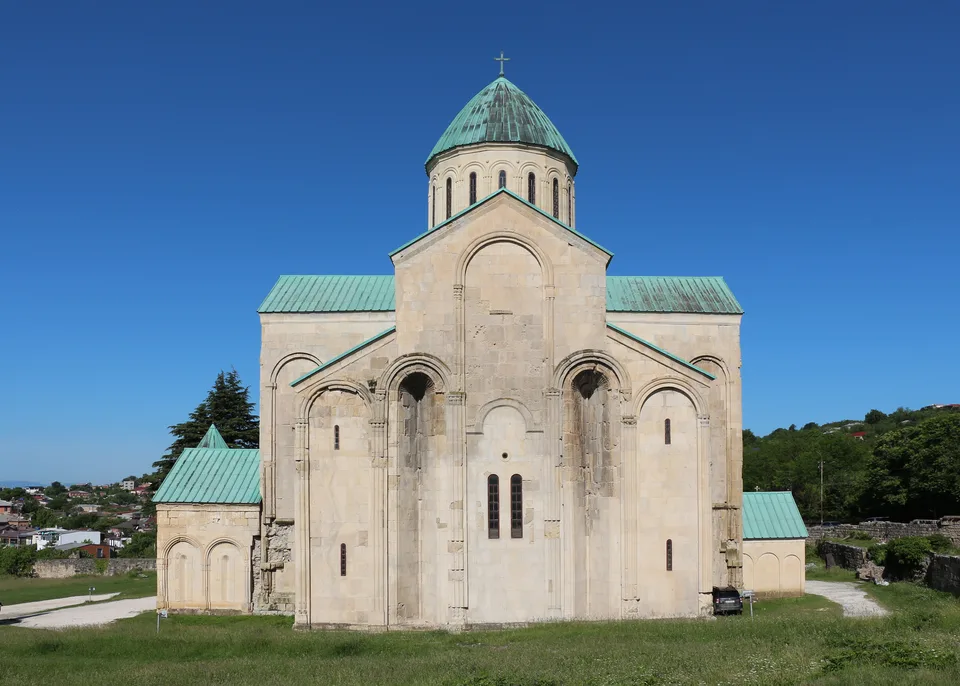
Bagrati Cathedral stands above the river and is one of Kutaisi’s defining landmarks. The tourism board dates it to 1003. Approach it as an architectural and religious site, allowing time for the ascent and the surrounding outlook. A shorter visit is more enjoyable than arriving tired at the end of an overfilled regional tour.
Its heritage designation needs care. UNESCO’s 2017 decision records the exclusion of Bagrati from the World Heritage property, which retained Gelati Monastery under its revised name. Some tourism and hotel pages still combine the two as currently listed sites. Bagrati remains worth visiting, but that older description is inaccurate. Respect worshippers, follow posted photography rules and choose clothing suitable for an active church rather than treating the interior as a viewing platform.
Make Gelati a deliberate excursion
Gelati Monastery’s UNESCO record identifies a foundation in 1106 and its importance as a medieval centre of learning. That context gives the visit substance beyond another church photograph: the complex belongs to Georgia’s intellectual as well as religious history. Give it a dedicated outing rather than squeezing it between several distant natural attractions.
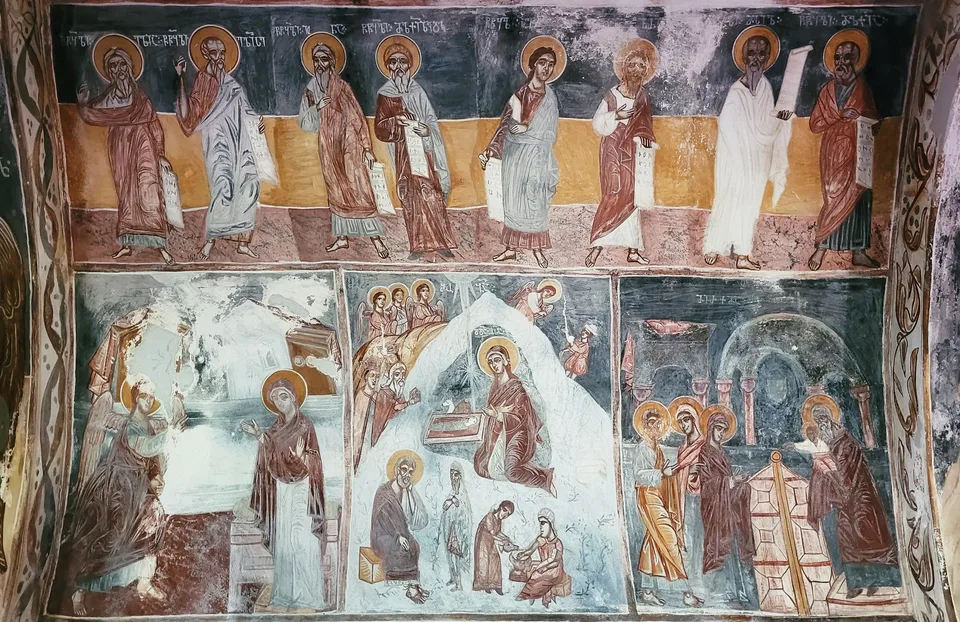
Access is a live planning issue. The Gelati Rehabilitation Committee’s conservation update reports completion of a preventive phase to stabilise the mosaic, while explaining that further restoration activities remain necessary. Completion of that phase does not establish unrestricted visitor access. Confirm which areas can be entered and what can currently be seen. The accompanying interior photograph was taken in 2024 and documents the artwork; it is not a promise of today’s viewing conditions.
Prometheus Cave: separate admission from the boat
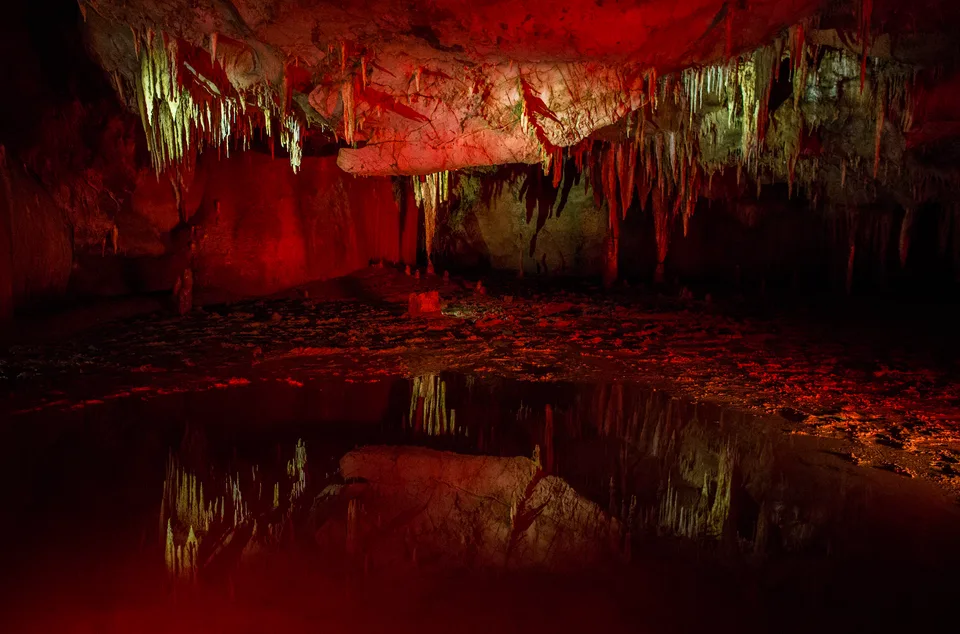
Prometheus Cave is in Kumistavi, in Tskaltubo municipality. The Agency of Protected Areas’ current visitor page (source unavailable) publishes a foreign-adult admission price of GEL 40, including guide service. The optional boat costs another GEL 30 for foreign visitors. Georgian citizens and residents have different published tariffs. Check the age categories directly when buying family tickets.
The operator describes an approximately one-hour cave route and a fifteen-minute boat experience, with daily hours of 10:00–17:00. Allow additional time for arrival, tickets and waiting. Boating stops when water levels rise, and tickets are non-refundable. Plan to enjoy the cave walk independently of the boat. Ask the operator about steps and route suitability if mobility, enclosed spaces or managing young children could affect the visit.
Where to stay, from guesthouse to conventional hotel
The Imereti destination organisation’s accommodation categories include family hotels, apartments, hostels and hotels. Choose the operating style that fits your trip. A staffed hotel can simplify an unfamiliar late arrival; an apartment can make cooking and laundry easier; a guesthouse may suit travellers who prefer a smaller property. None of those labels establishes soundproofing, reliable heating or an accessible bathroom.
For a concrete central comparison, Best Western Kutaisi City Center lists its address at 11 Grishashvili Street, close to White Bridge, with Wi-Fi and breakfast among its advertised facilities. Check the rate conditions rather than assuming every booking includes identical benefits. For any property, verify check-in after your actual flight, cancellation terms, stairs, room ventilation and whether the quoted price covers everyone travelling.
Arriving at Kutaisi Airport
Consult the airport’s Kutaisi city shuttle page before paying for a private transfer. Its published timetable connects the airport with the Kutaisi Tourism Center and includes overnight departures. Listed journeys take about forty minutes. The two directions have separate schedules, so a departure you saw for the airport is not evidence of an equivalent return departure.
The page reviewed did not clearly display a fare. Confirm the current price, boarding point and payment method directly, rather than relying on an old blog figure. For a late arrival, send your accommodation the scheduled landing time and an allowance for border formalities. If booking a driver, obtain the total price, waiting policy and meeting instructions in writing. An overnight shuttle does not make an unattended accommodation entrance open all night.
On departure, work backwards from the airline’s reporting time rather than the time printed on the boarding pass for take-off. Add the published journey, a realistic wait for the service and a margin for disruption. Keep the accommodation address and airport name saved offline, especially if your phone connection fails after checkout. If continuing directly to another Georgian city after landing, compare the complete onward journey with staying in Kutaisi first; the apparent saving from skipping a hotel can disappear in an expensive unplanned transfer.
Regional transport and getting around town
The Imereti destination organisation’s transport schedule lists minibuses to Tbilisi at GEL 20 and Batumi at GEL 15, departing from Chavchavadze Avenue 67. It also lists GEL 2 services to Tskaltubo. These are published route prices, not guaranteed quotations for every departure; verify them locally and identify the station before setting out.
Its Gelati listing uses a different departure point, behind the Meskhishvili Theatre, with a GEL 2 fare. Confirm the return before boarding: the displayed last outbound service is later than the last listed return. For rail travel, use Georgian Railway’s regional-train information and its linked ticket service to check the actual station and date. Within the historic centre, walking reduces transfers; a taxi becomes useful for luggage, hills or an address beyond your comfortable walking range.
Travelling with children or several bags changes the comparison between a minibus and a private transfer. Confirm space for luggage and any required child restraint before paying. For a hired vehicle, distinguish a point-to-point ride from a driver waiting while you visit a site. Agree the return location and a working contact method, especially where your visit ends somewhere different from the entrance. Those details determine whether a cheaper quotation provides the service you actually need.
Eat with Imereti in mind
The national tourism board’s Imereti overview highlights Imeretian khachapuri, pkhali, lobio and chicken satsivi. Together they suggest a better introduction than ordering the same familiar dish at every meal: cheese bread, vegetable preparations with walnuts, beans and a poultry dish offer different textures and appetites. Ask what is available in a sensible portion for your table.
Walnuts, cheese and other dairy ingredients matter for allergies and dietary preferences. A vegetable-based dish is not automatically suitable for every vegan or allergy-sensitive diner. Explain restrictions clearly and check sauces as well as the main ingredient. For a self-catering stay, make the first grocery shop small enough to test the kitchen and fridge before buying several days of food. Choose a restaurant from an actual menu and current service, without treating a directory entry as a personal endorsement.
Build a budget around complete days
Use Georgian lari, abbreviated GEL, when comparing local costs. A cave outing for one foreign adult starts at GEL 40 for admission, or GEL 70 with the optional boat if operating, before transport and meals. A driver’s excursion price may cover only the vehicle. Ask specifically about attraction tickets, parking, waiting time and extra stops.
Accommodation is too sensitive to dates and room conditions for an unsupported citywide average to be useful. Compare three properties for the same nights and party size, then add breakfast, transfers and cancellation flexibility. Keep a little cash for small transactions while checking whether each supplier accepts your card. When shopping for food gifts or crafts, ask about ingredients, provenance and packing. The cheapest purchase is poor value if it cannot travel safely in your luggage.
Weather and choosing your season
Imereti’s tourism information describes a humid climate with substantial seasonal differences. Plan Kutaisi as a place where weather can change the shape of a day. Choose spring or autumn if your preference is walking without designing the entire visit around summer heat; carry a rain layer whenever you travel. These are planning preferences, not guarantees of clear skies.
In warmer periods, put the uphill walk early and leave a longer lunch break. For winter stays, room heating and a dry bathroom deserve more attention than a terrace photograph. A cave visit may feel like a weather alternative, but heavy water conditions can still affect its boat operation. Check the forecast for the actual excursion area as well as the city, particularly when extending a trip into higher terrain.
A realistic three-day first visit
Day one: settle into a central base, walk the Royal District and White Bridge, then visit Bagrati if your arrival leaves enough energy and daylight. Keep the evening for an Imeretian meal. If an overnight flight has left you exhausted, move the hill to another morning instead of turning the first day into an endurance exercise.
Day two: make Gelati the main outing, after checking current access and return transport. Leave the afternoon flexible for central streets, an exhibition recommended by the information centre or simply a slower meal. Day three: visit Prometheus Cave, allowing time for the transfer and any queue; add Tskaltubo only if the connection and remaining energy make it comfortable. Keep airport departure logistics separate from ambitious sightseeing. With only two days, choose the monastery or cave rather than compressing both into a hurried checklist.
Moving to Kutaisi: inspect the home before the view
A reconnaissance stay should test ordinary life. Book temporary accommodation first and visit prospective rentals in person. Ask to see heating operate, test hot water at more than one tap and check window seals, damp, ventilation and street noise. A pleasant short-stay room and a comfortable winter home answer different needs.
Request written terms covering the rent currency, deposit, notice period, inventory, repairs and responsibility for utility arrears. Record meter readings and photograph the condition together at handover. A furnished listing should specify actual cooking equipment, washing facilities, storage and bedding. Ask for recent bills for the same home; a sunny viewing cannot establish winter running costs. Online asking prices are invitations to investigate a particular property, not verified evidence of the rent you will ultimately pay.
Commuting, connectivity and household routines
Test the journey to your workplace or institution at the time you expect to travel. A centre-based holiday can disguise the cost of a regular cross-town commute. Check where the return vehicle stops, how much walking the route requires and what happens after evening classes or a late shift. Keep a backup transport allowance in the household budget.
For internet, ask the provider about service at the exact address and test a video call inside the property. Advertised building coverage does not prove the quality of a particular router or room. Establish how electricity, gas and water accounts are billed, which charges the landlord pays and whom to contact for faults. Identify a nearby grocery shop and pharmacy during the trial stay. Families should confirm school language, admissions and available places directly before choosing a long lease.
Healthcare and essential assistance
The local destination organisation’s medical-service directory is a starting point for locating facilities, rather than an assessment of specialist capability. Before a long stay, ask a prospective clinic about the services you need, appointment language, payment arrangements and referrals. An insurance logo on a website does not confirm that your own policy will settle a particular bill directly.
The UK government’s Georgia health advice gives 112 for an ambulance and warns that facilities outside Tbilisi can be limited. Arrange coverage appropriate to your health and itinerary, including any necessary transfer or evacuation. Check medicine import restrictions before departure, particularly for controlled ingredients, and carry the documentation required for your own prescription. A tourist insurance minimum should not be mistaken for comprehensive cover for every treatment or long-term condition.
Tourist entry and the 2026 insurance requirement
Start with the Georgian Ministry of Foreign Affairs’ Geoconsul visa information and use the official electronic-visa portal where applicable. Eligibility depends on nationality and circumstances. For example, UK government entry guidance states that British citizens can visit for up to one year without a visa; that nationality-specific rule is not a universal entitlement.
The Georgian Embassy’s insurance notice explains the requirement effective from 1 January 2026 for tourists to hold health and accident insurance with at least GEL 30,000 coverage for the whole stay, including arrival and departure. Evidence may be electronic or paper, in Georgian or English. Consult the underlying government decree for scope and exceptions. Check your policy against the requirement before travelling rather than assuming a payment-card benefit qualifies.
For visitors combining city walks with rural excursions, save the accommodation contact, insurer’s assistance number and the day’s route before leaving. Ask an excursion supplier how cancellations are handled when an attraction stops operating, and whether it offers an alternative or simply changes the itinerary. A clear answer is more useful than an assurance that every advertised activity always runs. If someone in the party needs regular medication or predictable rest breaks, discuss those needs before agreeing to a shared vehicle’s fixed schedule.
Work, study and residence require separate decisions
Georgia’s current consolidated Labour Migration Law introduces a right-to-work framework relevant to foreign employment and self-employment, with statutory scope and exemptions. Where applicable, that permission is distinct from the appropriate immigration status. The 2027 transitional deadline concerns qualifying workers actively registered on 1 March 2026; it is not a general grace period for newcomers. Obtain advice on your own arrangement before starting paid activity, including remote work performed while in Georgia.
For study, Kutaisi International University’s foreign-applicant guidance separates admission stages, education recognition and visa documentation. Confirm the next intake: a deadline shown for the 2026 autumn intake has already passed at this review. Use the Public Service Development Agency’s residence-permit service for official procedures. VisaWand’s Georgia country guide and consultant directory can help structure questions; an admission letter, rental contract or consultation does not itself grant work or residence permission.
Before committing to relocation, price the transition itself: temporary accommodation, document preparation, translations where required, rental deposits, household purchases and travel for appointments. Ask the relevant authority which documents must be prepared before departure, since replacing a missing original from abroad can delay the entire process. Keep those one-off costs separate from the monthly household budget. A trial stay provides evidence about the neighbourhood and home; it cannot establish eligibility for a permit or the tax treatment of your particular income.
Extend the trip according to your priorities
Choose Tbilisi if you want to compare the capital’s urban offer with Kutaisi, or Batumi for a different trip focused on the Black Sea. VisaWand’s Georgia destination directory helps place these options within a wider itinerary. Compare the time available after transfers, rather than adding stops simply because they share a country.
For regional outings, ask the information centre to match suggestions to weather, access and the people travelling. A monastery visit, cave tour and long drive have different demands. Before extending towards sensitive areas, read current government travel advice: the UK advises against travel to Abkhazia and South Ossetia and restricts its advice for adjacent boundary areas. Those warnings need geographical attention; a general western-Georgia itinerary is not permission to improvise across a disputed boundary.
Official planning resources
Reviewed 21 October 2026. Use the official resources linked throughout this guide for admission, transport, housing and immigration decisions. Prices, services and rules can change; confirm the details relevant to your dates. Photography illustrates the locations and is not a live view.
View all official resources
- Georgian National Tourism Administration: Kutaisi
- GNTA: Kutaisi Royal District
- GNTA: visitor centres
- UNESCO 2017 decision: Bagrati excluded, Gelati retained
- UNESCO: Gelati Monastery
- Gelati Rehabilitation Committee: preventive mosaic conservation
- Agency of Protected Areas: Prometheus Cave prices and access (source unavailable)
- Imereti Destination Management Organization: stays and visitor services
- Best Western Kutaisi City Center: hotel facilities
- Kutaisi Airport: city shuttle
- Imereti DMO: regional minibus schedules
- Georgian Railway: regional trains and ticket links
- Georgian National Tourism Administration: Imereti
- Imereti DMO: medical-service directory
- UK government: Georgia health advice
- Georgian Ministry of Foreign Affairs: consular and visa information
- Georgia official electronic-visa portal
- UK government: Georgia entry requirements
- Georgian Embassy: tourist insurance notice
- Government Decree602: mandatory tourist insurance
- Labour Migration Law: final consolidated version
- Kutaisi International University: foreign undergraduate applicants
- Public Service Development Agency: residence permits
- UK government: Georgia travel advice
Plan the next part of your journey
Explore the Georgia guide, browse other cities or compare consultants for your travel and relocation questions.