Visa
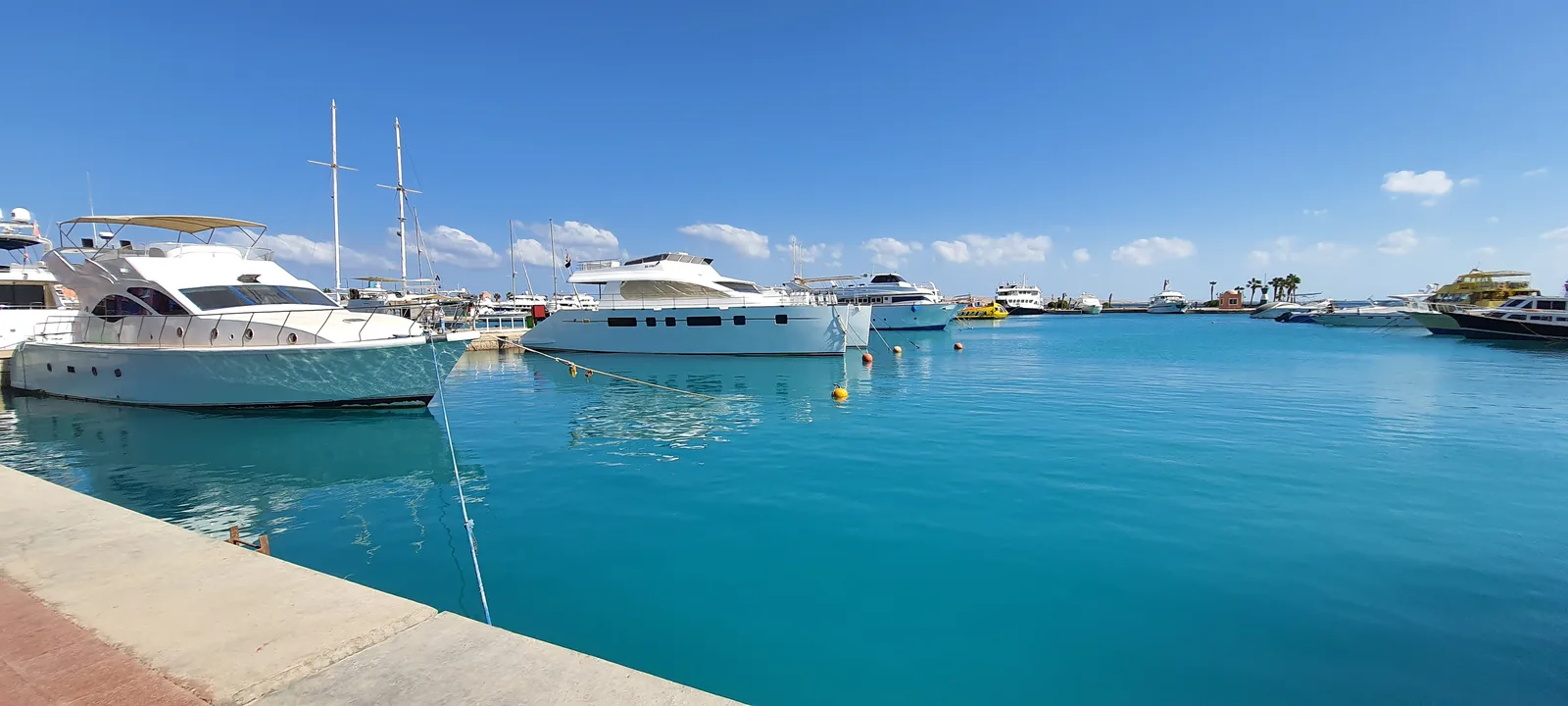
Choose Hurghada for the sea, then choose your base
Hurghada makes most sense when the Red Sea is the purpose of the trip. Beaches, boat outings and diving shape its visitor economy, while markets, a working harbour and residential streets give the destination a life beyond hotel grounds. The experience changes substantially with your address: a central hotel can support evenings on foot, whereas a distant resort may turn every independent outing into a transfer.
Start with three decisions: how much beach time you want, whether you intend to spend days at sea, and how often you want to leave the property. Egypt’s official Hurghada overview provides the broad picture. This guide helps turn that picture into a workable visit or an informed reconnaissance stay before a move.
A coastal city shaped by modern tourism
Hurghada stands on Egypt’s western Red Sea coast. Its history as a fishing settlement helps explain the harbour’s continuing importance, but the expansive resort landscape is comparatively recent. The Red Sea Governorate’s background information describes the growth of beach and diving tourism from the early 1980s. Today, hotels, excursion businesses and services occupy a long coastal corridor rather than a single compact sightseeing centre.
That history sets expectations. Hurghada is a base for maritime experiences and contemporary coastal life; its museum provides historical context without turning the surrounding city into a pharaonic archaeological site. For a trip centred on monumental antiquities, compare the time available here with a separate stay in Cairo.
Read the resort address before the headline
“Hurghada” in a package description can cover a wider holiday region than the city streets you imagined. El Gouna lies to the north; Sahl Hasheesh and Makadi Bay are separate resort areas farther south. An attractive advertised beach does not establish easy access to the marina, El Dahar or a particular dive centre.
Look up the exact property entrance and ask for an actual transfer quotation. Compare the cost of three or four outings, rather than judging the room price alone. If friends are booking separately, check both addresses before assuming you can walk between hotels. This matters particularly with children, limited mobility or a short stay when long pickup circuits would consume useful holiday time.
El Dahar offers a different rhythm
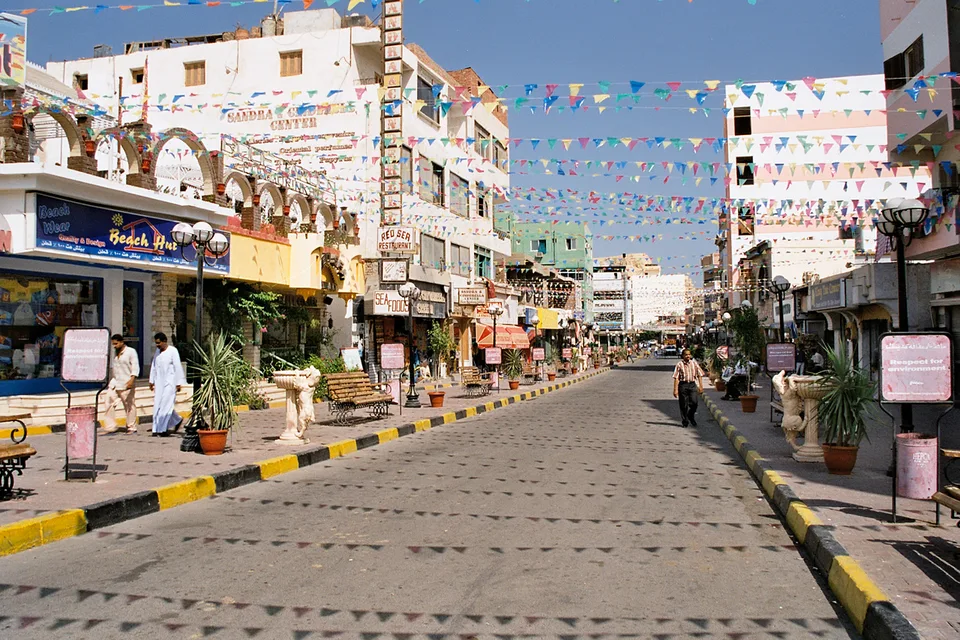
El Dahar is the older urban area visitors often seek when they want shops, market activity and ordinary errands beyond a resort compound. Allow time to browse rather than expecting a neatly curated attraction with a fixed circuit. A modest purchase, a meal and a walk can be more rewarding than trying to turn every street into a sightseeing stop.
Shopfronts and services change, so treat historical photographs as context rather than a current shopping directory. Ask prices before ordering or accepting a service; where bargaining is expected, keep it courteous and agree the total before paying. For accommodation, inspect the immediate street as well as the room: traffic, deliveries and evening activity can matter more than a broad neighbourhood label.
Sakala and the marina favour independent evenings
The Sakala area and waterfront around the Hurghada Marina suit visitors who want restaurants and an evening outing close to their accommodation. The marina, operating since 2008, is a modern leisure development with a yacht basin and commercial waterfront. It offers a useful contrast with the older market streets.
Choose this area when the ability to step out matters more than being enclosed in a large resort. Check whether the route from your hotel is genuinely comfortable to walk, including road crossings. A marina visit is an easy first evening after arrival; it need not become an expensive dining commitment. Look at menus and service charges before choosing a table, and confirm individual businesses’ opening arrangements directly.
Beachfront hotels require a facilities comparison
Along the developed coastal strip, the practical differences between hotels can outweigh their star labels. Ask about the swimming entry, steps, shade, beach access conditions and any building works. A photograph of turquoise water tells you little about a child’s access to it or whether your booked room faces a road.
As one concrete example, Hilton Hurghada Plaza lists a private beach and direct access to City Center shopping mall. Those are property features, not a guarantee that another nearby hotel offers the same access. Compare meal plans, evening transport and room location in writing. For a mixed sightseeing and beach trip, a smaller central property may work better than a larger hotel with more facilities but fewer independent outings.
The harbour mosque belongs to modern Hurghada
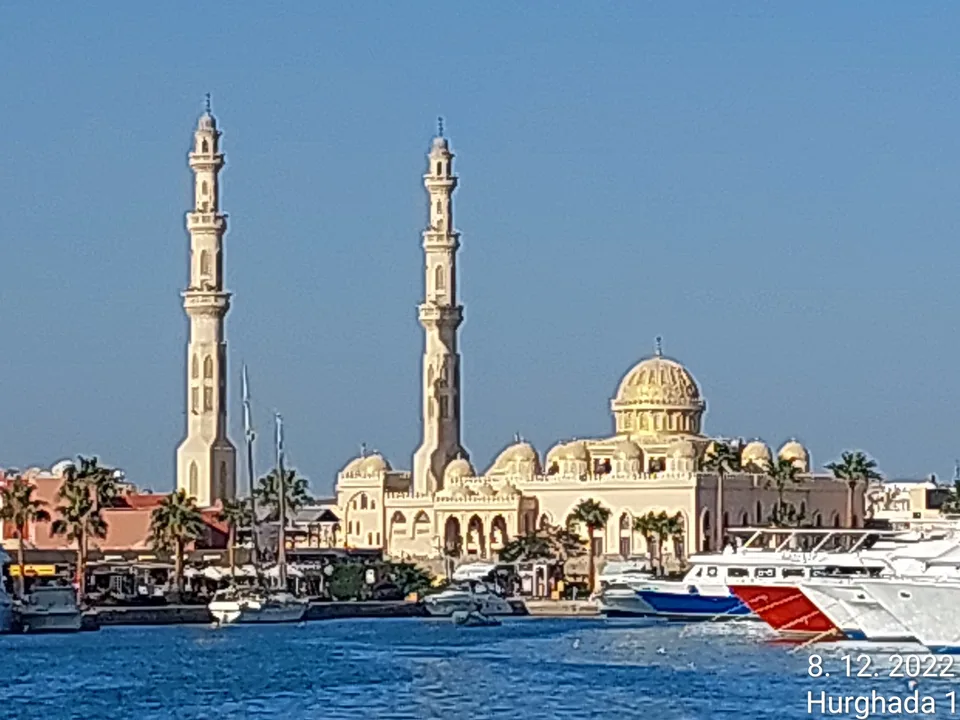
Al Mina Grand Mosque is an important visual landmark beside the harbour. Egypt’s Ministry of Awqaf records its inauguration on 27 January 2012, making it a contemporary religious building rather than an ancient monument. Its domes and minarets form a distinctive waterfront view, especially when approached as part of a harbour walk.
It remains a place of worship. Dress respectfully, ask about visitor access and photography, and give prayer activities priority. Do not build an itinerary around an assumed tourist opening time or admission price: those details should be checked locally. If access is unavailable, appreciate the exterior and continue to the waterfront instead of treating entry as an entitlement.
Give the museum a properly timed visit
Hurghada Museum’s official visitor page presents Egyptian art and ideas of beauty across ancient, Greco-Roman, Jewish, Christian, Islamic and modern contexts. It is a useful cultural counterpoint to days at the beach, particularly for travellers who are not combining the coast with a longer Nile itinerary.
At review, foreign adult admission is EGP300 and foreign student admission EGP150. Standard opening periods are 10am–1pm and 5pm–11pm, with final ticket sales at noon and 10pm respectively. Ramadan has different hours: 10am–noon and 8pm–11pm, with sales ending an hour before closing. Recheck the current schedule and student-document requirements before travelling; arriving near the afternoon gap can waste a transfer.
Plan a reef day around the operator and conditions
A successful marine outing starts with the company, boat and actual route, not a photograph of an island. Use the Chamber of Diving and Water Sports’ Hurghada directory to check the business you are considering. Match the listed legal operator to the company taking your booking, and ask who provides the vessel and in-water supervision.
Confirm swimming expectations, equipment sizes, group arrangements and cancellation terms before paying. A beginner snorkeller, a certified diver and a passenger who wants to remain aboard need different provisions. Ask what happens if wind changes the route or a participant cannot enter the water. A responsible alternative plan is more useful than a promise that every advertised stop will happen.
Treat protected waters as managed places
Giftun and other offshore names appear prominently in excursion marketing, but a name alone does not establish landing rights, permitted activities or today’s operating conditions. The Egyptian Environmental Affairs Agency’s protected-area information provides the conservation context, while CDWS explains operator trip notifications used for authority approval. Ask the operator what permissions and conservation charges apply to your actual outing.
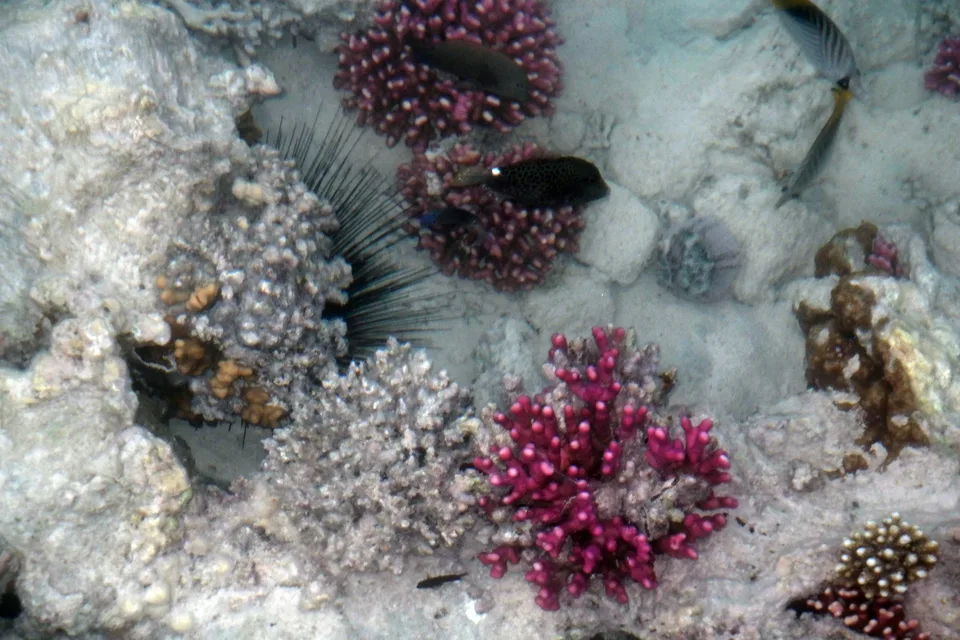
Follow the CDWS environmental guidance: listen to briefings, maintain control in the water and avoid contact with coral. Do not feed or pursue wildlife for a photograph. No sighting is guaranteed, and an old underwater photograph cannot certify present reef condition. Carry rubbish back and choose a boat day whose pace suits the least confident swimmer in your group.
Make the beach day easy rather than crowded
Leave unstructured time between excursions. A hotel beach, a shaded lunch and a quiet afternoon can be the reason to choose Hurghada rather than a gap that needs another attraction. Confirm whether access is included for every member of your party and whether visiting friends need a separately arranged day pass.
For families, ask about supervised activities, pool access and meal times instead of assuming “family friendly” answers every question. For travellers with mobility needs, request specific information about the route from the room to the beach, lifts, accessible bathrooms and boarding a transfer vehicle. An explicit answer about a step or ramp is more valuable than a general assurance about accessibility.
Arriving by air and arranging the first transfer
Hurghada’s airport uses the code HRG. Check the actual operating flight and baggage conditions with your airline; EgyptAir’s booking and flight information is useful for domestic connections. If combining international and domestic tickets, allow for separate baggage collection and disruption rather than assuming the airline will protect an independently booked connection.
Arrange the airport transfer around your precise hotel, flight arrival and luggage needs. Request the total charge, waiting policy, meeting point and child-seat arrangements where required. Hotel transfers are not automatically complimentary: verify the service before relying on it. Keep the hotel name and address available offline, and retain the provider’s contact details in case the arrival time changes.
For late arrivals, check reception availability and whether dinner will still be served under your booked plan. Compare a private transfer with any shared option on the basis of stops and luggage space as well as price. Before departure, reconfirm the pickup time and terminal with the carrier and transfer provider, particularly when a changed flight could invalidate the original arrangement.
Intercity travel deserves its own day
For an overland connection, compare the actual departure and arrival stations using the Go Bus booking service. A route labelled Cairo–Hurghada does not mean every departure uses the same Cairo terminal or has the same duration. Add the time and cost of reaching both stations, luggage handling and onward transport to your accommodation.
Avoid planning an ambitious activity immediately after a long road journey. If considering Luxor or Cairo, compare a separate overnight stay with the fatigue and limited sightseeing time of a long return excursion. The UK government’s road and excursion advice is a useful additional planning reference, including concerns about travel outside resorts after dark. Choose arrangements that leave realistic rest and disruption margins.
Local journeys: agree the destination and total
Within the holiday corridor, a nearby place on a map may still require a vehicle because of distance, road layout or the position of hotel gates. Ask your accommodation about the actual route before setting off on foot. For taxis or arranged cars, establish the destination, total fare and whether waiting or a return journey is included.
Do not rely on an unverified airport bus timetable or assume a transport app operates everywhere you want to go. Check available services for your address and travel date. For a longer stay, make the likely commute during the hours you would actually use it. A manageable journey for an occasional restaurant visit may be an expensive daily routine.
Eat Egyptian food as well as hotel buffets
Meals can help a resort stay connect with the country around it. Egypt Tourism Authority’s food overview introduces ful, made with fava beans, taameya, Egypt’s fava-bean falafel, and koshary, combining rice, pasta, lentils and chickpeas with tomato sauce and onions. These dishes offer a useful starting point when a menu is unfamiliar.
Ask about ingredients and preparation if you have allergies or dietary restrictions; a familiar dish name does not guarantee a particular recipe or stock. With fish sold by weight, establish the weight, preparation charge and accompanying dishes before ordering. Compare the final restaurant bill with your hotel’s meal-plan inclusions, especially drinks, rather than assuming every meal outside represents either a saving or a premium.
For an independent food outing, choose a small number of dishes and leave time to understand the menu. Ask whether accompaniments are included and whether the quoted portion serves one person or several. An informal lunch can introduce everyday food without requiring a long restaurant itinerary or an unsupported claim about the city’s “best” kitchen.
Budget by inclusions, not headline prices
Build your budget in Egyptian pounds for local spending and keep separately quoted foreign-currency charges clear. The museum provides one verified benchmark; accommodation and marine excursions require quotations for your dates and party. Avoid adding a generic “daily cost” that hides the difference between an inclusive resort holiday and independently paid meals, transfers and activities.
Request a breakdown covering taxes, meals, drinks, equipment, pickups, conservation charges and cancellation terms. The official practical-information page notes the usefulness of cash for smaller purchases. Keep manageable denominations and retain receipts for larger transactions. When shopping, choose items for their value to you, ask about materials and export restrictions where relevant, and avoid pressure to decide immediately.
Match the season to the activities
Hurghada’s heat is a significant planning factor. The World Meteorological Organization’s climate table, supplied by Egypt’s meteorological authority, gives historical 1981–2010 averages: January daily temperatures range from an average minimum of 11.2°C to a maximum of 21.7°C; August averages are 27.1°C and 35.1°C. These are climate normals, not a forecast for your travel dates.
Summer calls for shaded breaks and less demanding midday plans. Winter evenings may need an extra layer, and comfortable air temperatures do not guarantee comfortable swimming for everyone. Spring or autumn can suit a mixed programme, but wind and sea conditions still determine individual boat days. Check the forecast and the operator’s decision close to departure; low average rainfall does not mean weather never disrupts a trip.
A realistic four-day first visit
On day one, settle into the accommodation and understand beach access, meal arrangements and transfer options. Keep the evening simple with the marina if it is convenient to your base. On day two, take a prearranged reef or snorkelling outing if conditions and the operator’s provisions suit your group; leave the evening uncommitted.
Use day three for El Dahar, a harbour walk and the mosque exterior, allowing for heat and prayer activity. Place the museum in a confirmed opening period. Day four can remain a beach day or a separately priced El Gouna visit. Keep the marine day movable within the stay, and agree its position relative to your onward flight with your dive provider if scuba diving is involved.
Extend the stay without overloading it
A week allows you to separate diving, sightseeing and rest instead of compressing everything into successive early starts. Repeat an activity you enjoyed or explore a different part of the urban coast. There is no need to purchase an excursion every day to make the destination worthwhile.
If desert activities appeal, check the operator, route, required permissions, protective equipment and insurance coverage. A short promotional description does not explain vehicle condition or supervision. Avoid adding unsupervised off-road adventures to a casual rental arrangement. Families or mixed-interest groups may get more value from a shared beach morning and separate afternoon plans than from an expensive activity that only half the party wants.
Moving begins with a trial of everyday life
For a possible move, use the initial stay to test ordinary routines beyond holiday facilities. Identify groceries, pharmacies, laundry, delivery access and the journey to a likely workplace. Visit potential residential streets at different times and check the practical route to services, rather than choosing a home from balcony photographs alone.
Tourist convenience and residential suitability overlap only partly. A resort meal plan conceals the cost and effort of regular shopping; included Wi-Fi does not demonstrate a reliable home connection. Compare a central rental with a quieter development using actual monthly transport and household costs. Keep a temporary base while investigating, so that a promising first impression does not force an immediate long lease.
Inspect the home and its operating costs
Before paying a deposit, verify who is entitled to let the property and obtain clear written terms. Record the inventory, existing damage, deposit conditions, currency, payment schedule and responsibility for repairs. Ask specifically about cooling, ventilation, water supply arrangements, drainage, pests, building maintenance and internet installation at that unit.
Clarify whether electricity and water are independently metered or collected through the landlord or development. The Red Sea Water and Wastewater Company publishes customer-service and utility information; your building’s arrangements still need inspection. Test the connection you would use for work and check mobile reception indoors. A lower rent can lose its advantage through cooling bills, service charges or repeated paid journeys.
Ask to see recent bills for the particular unit and have any outstanding balance resolved before handover. Photograph meter readings with the landlord, establish who reports faults and agree access for repairs. For furnished accommodation, operate the air conditioning and major appliances during inspection. These small checks make a more reliable comparison than a landlord’s estimate of what previous occupants usually spent.
Healthcare, schooling and household continuity
Identify medical services before you need them. Nile Hospital’s own information (source unavailable) describes its Hurghada location and departments, providing a starting point for direct questions about specialists, appointments and billing. Confirm whether your insurer recognises the provider and whether payment is required upfront; a private hospital’s presence does not guarantee every treatment or language service.
For children, contact prospective schools about curriculum, eligibility, fees and the actual transport route before choosing housing. Carry prescriptions and check medicine-import requirements through official channels. For diving or other specialist activities, verify the policy’s activity and depth provisions separately. These checks belong in the moving budget alongside housing and travel, particularly when an employer’s package leaves dependants or specialist care uncovered.
Entry permission is separate from permission to live or work
Use the official Egypt e-visa FAQ to check nationality eligibility and application conditions. At review, the portal lists US$30 for single entry and US$65 for multiple entry. Confirm the visa category, permitted stay and passport requirements for your circumstances; visa validity and allowed duration are different concepts. The limited Sinai resort permission does not cover Hurghada.
The UK government’s entry page explains conditions for British passport holders and should not be generalised to every nationality. Tourism permission does not itself authorise employment, study or permanent residence. Consult the Ministry of Labour’s foreign-worker services, the relevant educational institution and Egyptian authorities for the intended activity. VisaWand’s Egypt country guide and consultant directory can support planning without replacing official decisions.
Compare nearby alternatives with the trip you want
El Gouna’s official destination information describes a separate planned resort town north of Hurghada. Compare it when a lagoon setting and a more self-contained resort environment appeal. Sahl Hasheesh or Makadi Bay may suit a property-focused beach holiday, but check the transfer implications rather than treating them as interchangeable central addresses.
If the central aim is history, consider allocating nights to Cairo or a Nile destination rather than repeatedly travelling inland from the coast. Browse VisaWand’s Egypt location directory and Egypt destination page for further options; a directory listing is not necessarily a completed guide. Before committing, consult the current official travel advice and recheck the operator, entry and weather information relevant to your particular journey.
Official planning resources
Reviewed 15 October 2026. Use the official resources linked throughout this guide for admission, transport, housing and immigration decisions. Prices, services and rules can change; confirm the details relevant to your dates. Photography illustrates the locations and is not a live view.
View all official resources
- Egypt Tourism Authority: Hurghada
- Red Sea Governorate: regional background
- Hurghada Marina: location and visitor information
- Hilton Hurghada Plaza: beach and facilities
- Ministry of Awqaf: Al Mina Grand Mosque
- Ministry of Tourism and Antiquities: Hurghada Museum
- Chamber of Diving and Water Sports: Hurghada diving directory
- CDWS: environmental guidelines
- CDWS: activity trip notifications
- Egyptian Environmental Affairs Agency: protected areas
- EgyptAir: flights and travel information
- Go Bus: intercity booking
- El Gouna: destination and access
- UK government: current Egypt travel advice
- UK government: transport, diving and boat precautions
- Egypt Immigration: official e-visa FAQ
- UK government: entry rules for British passport holders
- Ministry of Labour: foreign-worker permits
- Red Sea Water and Wastewater Company: customer services
- Nile Hospital: Hurghada healthcare information (source unavailable)
- Egypt Tourism Authority: Egyptian food
- Egypt Tourism Authority: practical visitor information
- World Meteorological Organization: Hurghada climate
Plan the next part of your journey
Explore the Egypt guide, browse other cities or compare consultants for your travel and relocation questions.