Visa

Aarhus brings a substantial city break into manageable reach
Aarhus is a good choice when you want major museums, an interesting waterfront and neighbourhoods worth walking through without building the whole trip around transfers. The central streets, historic quarters and harbour give a first visit an accessible shape. Moesgaard, farther south, adds a different sort of day: archaeology and exhibitions in a landscape that deserves time outside as well as indoors.
Three full days allow a useful first look, provided you choose between competing interests. A weekend can work with fewer museums; a longer stay opens up the surrounding region. The mistake is to count every museum as a brief stop and leave no room for the city between them.
For someone assessing a move, add ordinary weekdays and the actual journeys that work, study or family life would require. This guide uses official information checked in October 2026. Prices are in Danish kroner, abbreviated DKK; compare the total cost of a trip in that currency before converting it.
Read the old city alongside the new harbour
Aarhus developed from the Viking settlement of Aros into a trading city. The official tourism history overview offers a useful introduction, including the relationship between the early town, the cathedral area and the streets around it. You do not need to memorise a chronology to notice how differently the older centre and the contemporary waterfront organise space.
The cathedral area and Latin Quarter make a sensible first walk. Leave room to look along smaller streets rather than following only the route between booked attractions. Religious buildings remain working places of worship, so check visitor arrangements and respect services rather than assuming unrestricted sightseeing access.
The harbour provides the other half of the introduction. Dokk1 and Aarhus Ø reflect a city making new uses of its waterfront. Together, these areas help explain why Aarhus should be treated as a destination with its own character, rather than simply a smaller substitute for Copenhagen.
Choose a neighbourhood around the shape of your stay
The centre is the natural starting point for a first visit. Compare the property's position against the railway station, bus station and the places you actually want to visit. A centrally described address may still involve an inconvenient luggage walk or face a busy evening street.
The Latin Quarter suits an itinerary built around older streets, cafés and independent shopping. Frederiksbjerg adds another useful option around Jægergårdsgade, M.P. Bruunsgade and neighbouring streets. The tourism board's district introduction identifies its mix of shops and places to eat; explore menus and opening hours rather than taking promotional praise as a guarantee.
For a different urban setting, examine Aarhus Ø's waterfront neighbourhood. Its contemporary architecture and waterside spaces justify a visit, but a room there should be judged by its actual transport and walking connections. Prospective residents need to compare a precise address with a precise workplace or campus, not choose solely between attractive district names.
Give Den Gamle By a generous part of the day
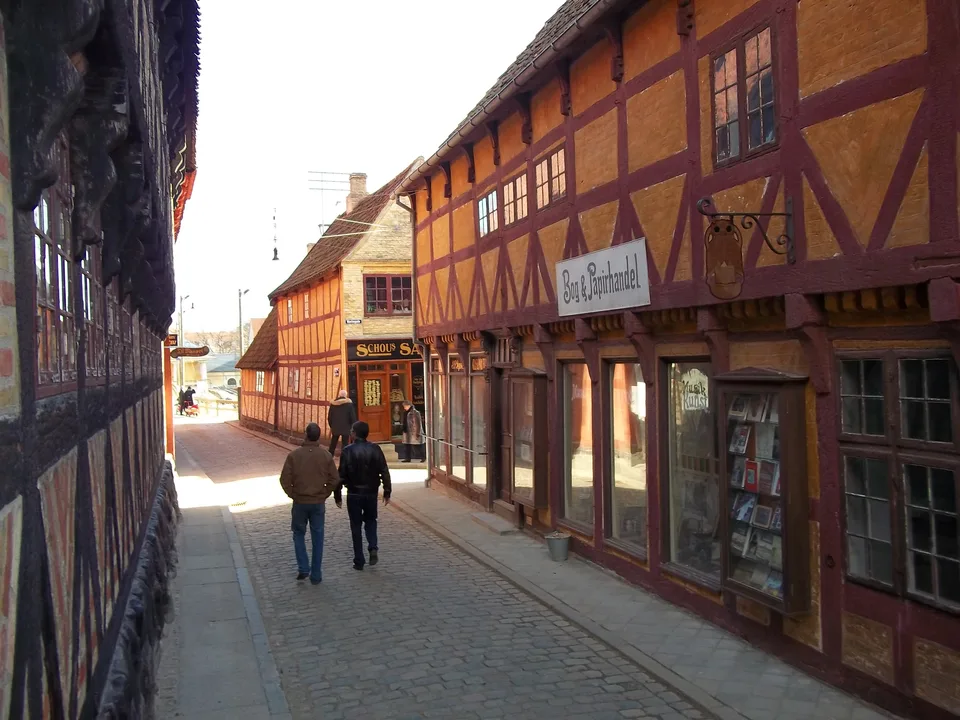
Den Gamle By is a museum, not simply the name of a freely accessible old-town district. Its streets and interiors present different periods of Danish life. The museum's historical introduction ranges from the older market town through the twentieth century to recent everyday life, giving the visit more variety than a collection of picturesque façades.
The Danish admission table lists adult entry at DKK 205 from 28 March to 31 December, with free entry for ages 0–17. Student admission for that period is DKK 105 and must be bought on arrival with valid student identification. The English page presents approximate euro figures; the kroner tariff is the clearer basis for budgeting.
The museum recommends four to five hours or more for a comprehensive visit. That makes it a principal appointment rather than a spare half-hour between meals. Choose the periods and interiors that interest you, take breaks, and leave flexibility for the programme operating on your date. Check opening hours separately for late visits and Christmas events.
Visit ARoS for more than its rooftop photograph
ARoS is an art-museum visit with a prominent architectural and artistic landmark above it. Allow time for the exhibitions as well as Your rainbow panorama. If your companions have different interests, agree beforehand whether you are making a substantial museum visit or a shorter shared outing.
The museum's practical information lists standard adult admission at DKK 200, with DKK 150 for people under 31 and students, and free admission for under-18s. Its current page says admission includes As Seen Below, while the special dawn or sunset Tusmørke experience requires advance reservation. Read the product selected before paying rather than treating every appearance of an artwork's name as the same ticket.
Seasonal hours and exceptions matter. The museum publishes Monday closures in its cooler-season schedule alongside holiday variations and specific restrictions affecting As Seen Below. Use the dated calendar for your visit. If a search result shows DKK 500, inspect the context: the practical page uses that figure for arranged coach parking, not ordinary individual admission.
Make Moesgaard a separate outing
Moesgaard is south of central Aarhus in Højbjerg. Its archaeological and ethnographic displays include Grauballe Man, while temporary exhibitions give repeat visitors another reason to check the programme. Avoid designing a day around an old exhibition description: the museum's current exhibition information is the place to establish what is running now.
The published ticket prices distinguish online and desk purchases. Adults pay DKK 190 online or DKK 200 at the museum; students pay DKK 105 online or DKK 115 at the desk, with the required identification. Visitors aged 0–17 enter free. Compare the applicable category and purchase channel before making a family budget.
Keep a useful block of time for the visit, including the journey. If the exhibits are your main interest, do not spend the morning racing through another major museum first. Travellers who prefer architecture and landscape can make a different plan, but should distinguish access to the building's public areas from paid exhibition admission.
Add the landscape without confusing it with admission
Moesgaard's building and surroundings make a valuable counterpoint to a day in galleries. The museum's landscape introduction describes the relationship between its architecture, roof and wider grounds. Choose a walk that fits the available daylight and conditions rather than assuming every visitor needs a long route.
The official access information says the shop, café and roof can be visited without an exhibition ticket. It also identifies city bus 18 from central Aarhus as a direct connection, with an indicative journey of around 25 minutes and a two-zone ticket. Check the current journey planner for your departure, return and any changes.
Accessibility also deserves precise planning. The museum publishes lift access and information for visitors using wheelchairs, but an accessible exhibition route does not establish that every outdoor path suits the same visitor. Ask about the route you need. Consider weather, footwear and the final return connection when deciding how much landscape time to add.
Use Dokk1 to understand everyday Aarhus
Dokk1 is useful to both visitors and prospective residents because it connects the harbour with ordinary civic life. It contains the main library and Citizen Service among its functions. The building's own introduction explains its role as a cultural venue and meeting place; a pause here can reveal more about the city than another hurried exterior photograph.
Check Dokk1's opening information for the part you need. The building, library information desk and Citizen Service do not necessarily share the same timetable. A door being open does not mean that an appointment-based administrative service is available immediately.
For a casual visit, combine the building and adjacent waterfront with a walk through the centre. For a moving assessment, use it as a starting point for understanding local services, then arrange the correct appointment separately. Families can also use a library visit to test whether an area feels practical for a slower, ordinary day between more demanding museum sessions.
Reach Aarhus with the right airport and arrival point
Aarhus Airport and Billund Airport are different gateways with different ground journeys. Compare the complete trip to the accommodation when choosing flights. A cheaper airfare is not necessarily a cheaper or easier arrival once transfers, waiting and a late check-in are included.
Midttrafik's airport-bus fare table lists adult single fares of DKK 128 for Aarhus Airport and DKK 166 between Aarhus and Billund Airport. These are separate airport journeys, not benefits automatically included with the ordinary city day ticket. Check current fares and the service for your dates before booking around a connection.
For Aarhus Airport, the 925X service information identifies Banegårdspladsen beside the central railway station as its central arrival and departure point. Timetables are coordinated with flights and may change; the operator says departures are normally planned only two to four weeks ahead. Recheck near travel rather than treating an empty search several months ahead as proof that the route has disappeared.
Buy local tickets before boarding
Midttrafik's tourist ticket guidance says cash tickets cannot be bought aboard Aarhus city buses or Letbanen. Have a valid ticket when boarding, using an appropriate purchase channel such as Rejsebillet. Set this up before reaching the stop rather than discovering an app or payment problem as the vehicle arrives.
The Aarhus day ticket costs DKK 59 for adults and seniors or DKK 29.50 for children. It covers the stated Aarhus zones, 301–313, on buses and Letbanen and is valid until 11:59pm on the purchase day. It is not a rolling 24-hour pass. Airport buses and DSB trains are excluded.
Check the ticket's territory, mode and duration against every journey. A regional outing, airport connection and short central trip can require different products. Keep your phone charged if the ticket is digital, and retain the actual travel document for inspection. A card payment notification alone should not be assumed to substitute for the ticket.
Walk centrally and plan longer journeys properly
Use walking to connect central streets and waterfront stops, with public transport where it improves the day. Plot the route you intend to take rather than assuming that two places advertised as central are adjacent. For someone with limited mobility, the surface, crossings and final entrance may matter more than a headline walking time.
A cycle can widen the area you explore, but judge it against traffic confidence, weather and the route. Ask a rental operator about a suitable itinerary and the equipment included. A visitor who rarely cycles should not make a tightly timed museum connection the first test of an unfamiliar bicycle.
For a longer stay, trial the actual commute in both directions at the relevant times. Include walking to the stop, changes and the evening return. A room that works well for a sightseeing weekend can be less convenient for regular travel to a particular campus, workplace or school.
Choose accommodation for evenings as well as sightseeing
Hotels near your main arrival point can simplify a short trip, while apartments may suit a longer stay needing cooking and laundry. Compare complete prices and cancellation terms, including breakfast, cleaning, parking and other charges. The lowest nightly figure is not enough to establish the best option.
Before booking, ask where the room faces and how it is reached. A lively street can be convenient for dinner but unsuitable for someone who needs an early night. If steps or narrow access are a concern, request specific confirmation about the entrance, lift and room rather than relying on a general accessibility label.
For a relocation visit, flexible temporary accommodation can leave room for viewings and administrative appointments. Test a desk, internet connection and grocery routine if you intend to work or study from the property. A listing's photograph of a laptop is less useful than a clear description of what is provided.
Eat across the centre rather than following one reputation
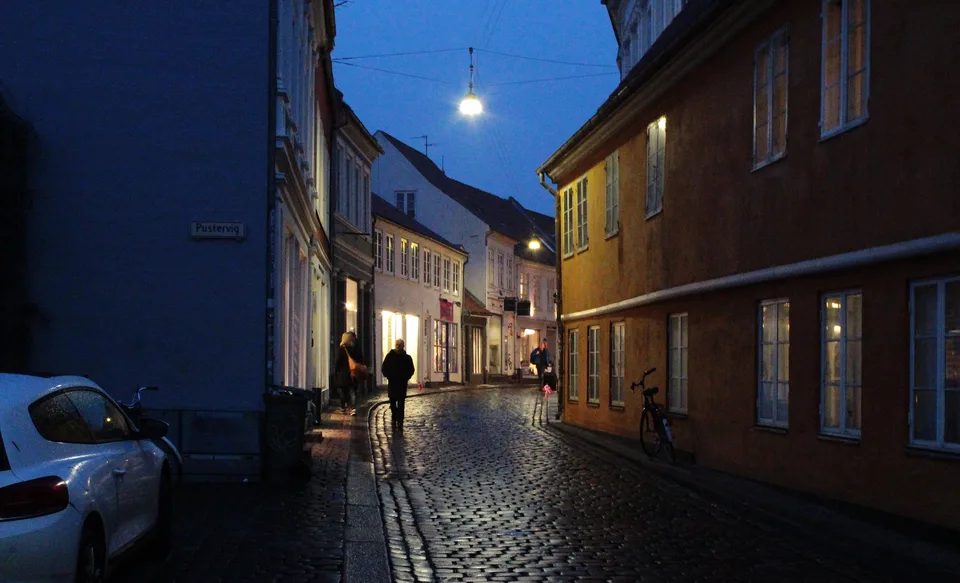
Frederiksbjerg and the Latin Quarter offer useful streets for comparing menus and stopping when something appeals. Leave meals some flexibility, particularly on a museum-heavy day. A substantial exhibition followed by an unhurried lunch often works better than another timed appointment squeezed into the gap.
For groups wanting different dishes, Aarhus Street Food on Ny Banegårdsgade offers multiple kitchens and shared tables. Its operator publishes the current menu and opening arrangements. Treat it as an option with a convenient format, not an independent guarantee about every stall or the cheapest meal in the city.
Check ingredients and preparation directly if allergies or dietary restrictions matter. Include drinks and extras when comparing a quick meal with a restaurant menu. Self-catering travellers should identify grocery options near the room and check their hours before an early departure. Shopping streets and food markets are also useful for exploring everyday routines during a longer-stay assessment.
Build a budget from the museums you will use
Start with accommodation on your dates, then add selected admissions, transport and meals. The principal museums can each absorb a generous session; buying entry everywhere is poor value if the schedule leaves no time to use it. Free admission for a child does not remove transport, meals or the need for a realistic pace.
Separate museum-entry costs from cafés, shops and public areas that can be visited independently. Conversely, an attractive public building does not establish free access to every exhibition or event within it. Read the current product description before buying any pass or combined offer.
Keep a contingency for changed plans. Rain may move a waterfront afternoon indoors, while a delayed arrival may make a prepaid visit impractical. For several travellers, calculate each person's eligibility and identification requirements.
Match the season to your priorities
Aarhus can support an indoor cultural trip in cooler months and a more outdoor programme when conditions suit. The coastal setting matters to the experience, particularly on an exposed waterfront walk. Carry layers and rain protection, and decide the length of an outdoor outing from the day's conditions rather than the season's reputation.
Summer gives more room for evening wandering, while autumn and winter put greater weight on daylight and attraction timetables. Check holiday exceptions as well as ordinary weekly opening patterns. A museum that closes on a normal Monday may publish a different arrangement for a holiday week, and special evening events can have separate admission.
Use DMI's weather information and warnings for current planning. This guide does not turn a short forecast into a climate average. If considering a move, experience an ordinary week in the season that concerns you most and assess the commute, clothing, heating and household routine alongside the attractions.

A three-day itinerary with room to enjoy it
Day one: walk the cathedral area and Latin Quarter, continue towards Dokk1 and the harbour, and make time for a proper meal. Depending on arrival and opening hours, add a focused ARoS visit or leave it for another day. Do not force a major exhibition into the final minutes before closing.
Day two: make Den Gamle By the main appointment. Choose the historical periods that interest you and allow the visit to develop at its own pace. Keep the evening less structured, perhaps with a meal in Frederiksbjerg rather than another attraction across the city.
Day three: visit Moesgaard, combining exhibitions with a manageable amount of time outside if weather permits. Alternatively, choose ARoS and Aarhus Ø if art and contemporary architecture are your priorities. Reorder the sequence around actual opening dates. With another day, add the museum you omitted or a regional excursion rather than simply making the first three days more crowded.
Understand the upfront cost of renting
For a move, distinguish an ordinary residential lease from visitor accommodation. Confirm the full rental period and whether the address can be used for the registration you need. The municipality's pre-rental guidance recommends inspecting the property, verifying ownership, getting terms in writing and documenting defects. Follow those steps before transferring substantial money.
The official renting-costs page distinguishes a deposit from prepaid rent and utilities. Ask for an itemised breakdown: the deposit and rent paid ahead serve different purposes, and the recurring monthly payment may not include heating, water, electricity or internet. Clarify how any advances are reconciled and what happens at departure.
Inspect the facilities that will shape daily life: heating, ventilation, laundry, storage and a usable workspace. Record the property's condition and meter readings at handover. Compare equivalent properties and a real commute instead of treating a single online rental average as a reliable household budget.
Arrange registration and services in the right order
The city's moving-to-Aarhus guidance separates routes for Nordic citizens, people relying on EU rules and people arriving from outside those categories. Select the relevant route before assembling documents. A process that works for a colleague of another nationality may have a different starting point for you.
Use Aarhus's international-resident portal for Citizen Service, childcare, schools, MitID, Digital Post and other household needs. Citizen Service at Dokk1 requires an appointment. Building opening hours are not a substitute for that booking. Families should investigate school placement and language support alongside the housing decision.
The municipal healthcare pages distinguish the Danish health-insurance card, European cover and other arrangements. Establish your own coverage and provider access rather than assuming a visitor policy or another country's card settles a resident's needs. Keep important documents available, check how official correspondence will reach you and allow time for the administrative work of arriving.
Separate tourism from permission to work or settle
For relevant non-EU visitors, ordinary short stays generally follow the Schengen 90-days-in-180 rule, with a visa where required. The Danish Immigration Service's visa-free guidance also identifies nationality-specific arrangements, so check your own position rather than assuming a general summary covers every passport. Entry conditions and permission to work are separate questions.
The official work-permit gateway explains the schemes for people who need Danish residence and work permission. Study has its own requirements, and permanent residence is a separate process. Renting a home, making a scouting trip or receiving an informal job offer does not itself supply those rights. Nordic and EU routes also need to be assessed under their applicable rules.
Use VisaWand's Denmark guide and Denmark destination page for broader preparation, and its consultant directory to identify help with a particular immigration question. Arrange the appropriate permission before organising the trip around employment or an extended stay.
Consider a contrasting day in the wider region
Silkeborg offers a different setting in the Danish Lake District. The official visitor introduction helps turn that idea into a particular outing rather than a vague plan to “see the lakes”. Decide the activity, arrival point and return journey before setting off.
Ebeltoft offers another contrast, with an older small-town streetscape. Use the official Ebeltoft visitor information to choose a manageable visit and check any attraction you particularly want to enter. A regional excursion should not be treated as automatically covered by an Aarhus city transport ticket.
VisaWand's Silkeborg city page, Ebeltoft city page and Copenhagen city page provide locations to compare. These are destination entries, not a claim that every one already contains a completed guide. The Danish city directory provides the wider location list if you are weighing several possible bases.
Official planning resources
Reviewed 17 October 2026. Use the official resources linked throughout this guide for admission, transport, housing and immigration decisions. Prices, services and rules can change; confirm the details relevant to your dates. Photography illustrates the locations and is not a live view.
View all official resources
- Official Aarhus historical introduction
- VisitAarhus Frederiksbjerg district
- Official Aarhus Ø neighbourhood guide
- Den Gamle By historical periods
- Den Gamle By kroner prices and opening dates
- ARoS practical visitor information
- Moesgaard current exhibitions
- Moesgaard admission prices
- Moesgaard building and landscape
- Moesgaard transport and visitor access
- Dokk1 civic and cultural functions
- Dokk1 building and service hours
- Midttrafik airport-bus fares
- Aarhus Airport 925X service instructions
- Midttrafik visitor ticket purchases
- Midttrafik Aarhus day-ticket prices and coverage
- Aarhus Street Food menus and visiting
- DMI weather forecasts and warnings
- Aarhus municipal checks before renting
- Aarhus rental deposit, prepaid rent and utilities
- Aarhus registrations by citizenship route
- City of Aarhus international-resident services
- Aarhus official healthcare information
- Danish Immigration Service visa-free entry
- Official Danish residence and work permit schemes
- Official Silkeborg visitor information
- Official Ebeltoft visitor information
Plan the next part of your journey
Explore the Denmark guide, browse other cities or compare consultants for your travel and relocation questions.