Visa
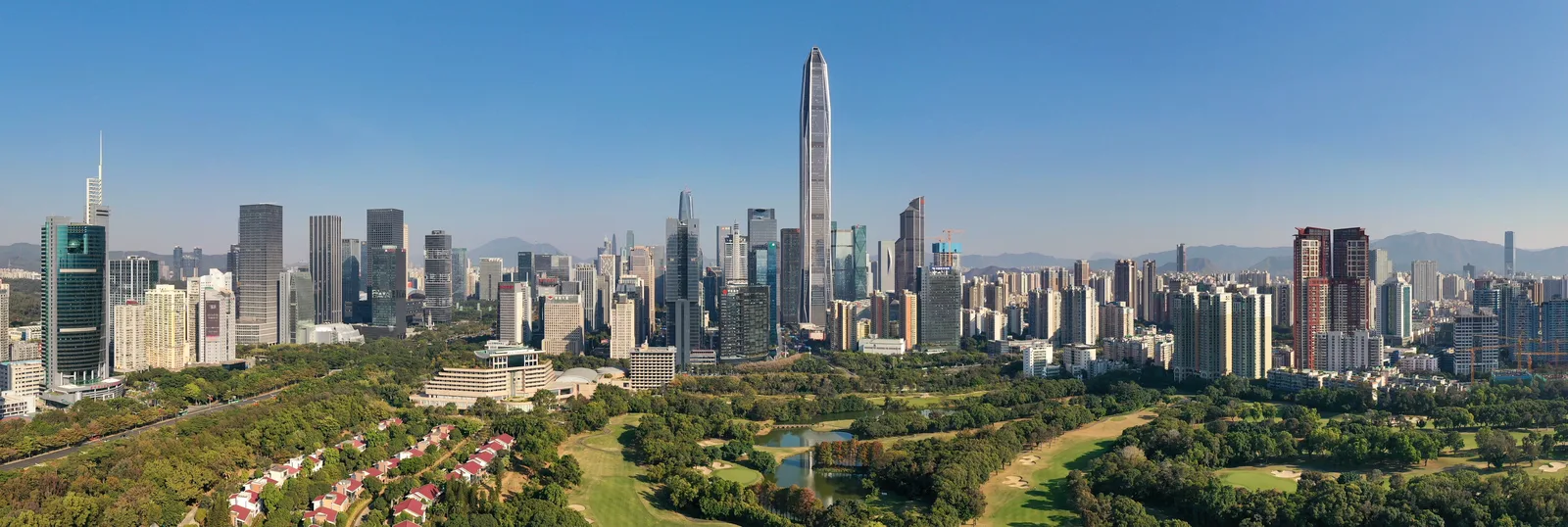
Shenzhen: plan around the city you want to explore
Shenzhen offers a different perspective on southern China from a trip built mainly around imperial monuments. Its contemporary identity is tied to the special economic zone established in 1980, but older coastal settlements and fortifications complicate the familiar story of a city created from nothing. A good visit puts those layers together: modern districts, a museum explaining local change, and time in an older neighbourhood or along the bay.
This guide concerns the Guangdong metropolis adjoining Hong Kong, rather than the smaller places that share its name. Treat geography as an early planning decision. A coastal outing and an appointment in another district need a realistic route between them. For someone considering a move, the same approach applies to the journey between a prospective home and the actual workplace or campus.
Choosing an area: connect the sights with your arrival route
Start with the places you most want to visit. Futian provides a base for the Civic Center museum branch and Lianhua Hill; Nanshan includes Nantou and the Shekou waterfront cultural complex. Use the municipal district information and current transport map to locate each address before drawing up a daily route.
For a short stay, a convenient base is the one that connects well with your main commitments and arrival station. Compare the actual walk to a Metro entrance, the number of changes and the final journey back after dinner. Avoid choosing solely from a hotel's description of itself as central. Someone visiting for a meeting or exhibition should put that venue on the map first, then fit sightseeing around it.
Nantou: look for the older city within the newer one
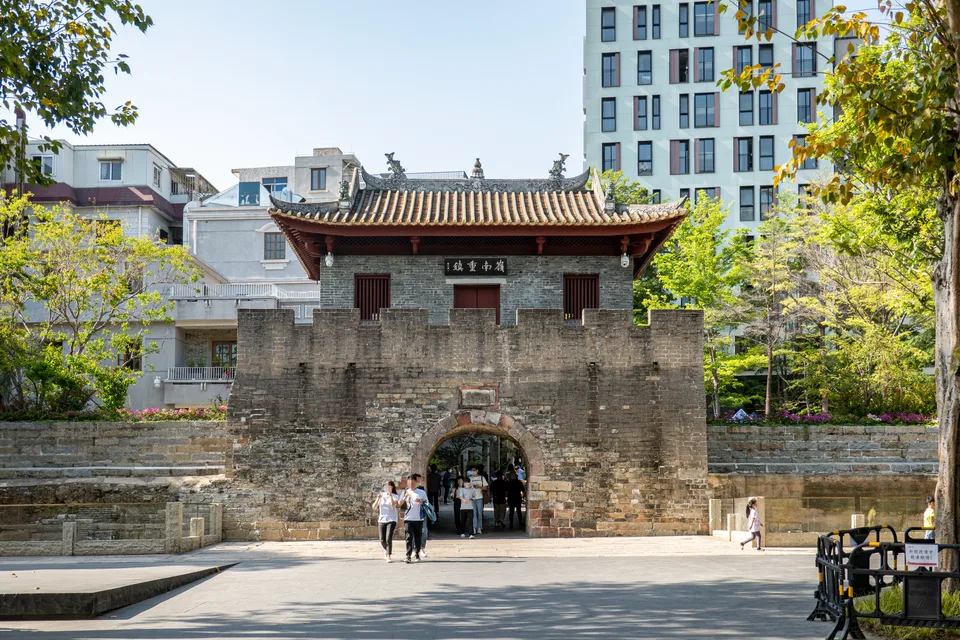
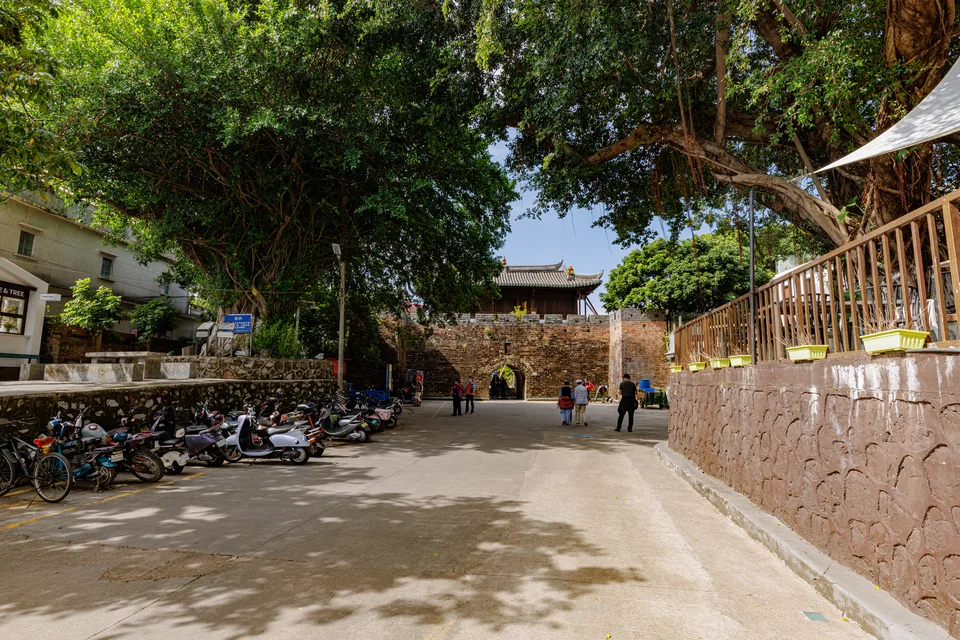
Nantou's official historical introduction identifies the settlement, also known as Xin'an Old Town, as a former administrative centre, coastal fortress and trading hub. Its history is a useful counterpoint to the city's modern skyline. Explore it with that context in mind: a place whose role changed over time, rather than a decorative old street added to a shopping itinerary.
The site's long history should not be taken to mean that every visible structure survives unchanged from its earliest period. Look at individual buildings and interpretation rather than assigning one age to the whole district. Allow time for the surrounding streets as well as the principal historical features. Nantou makes more sense as a focused neighbourhood visit than as a brief photograph stop between distant attractions.
Shenzhen Museum: choose the branch before planning the journey
The museum's official visiting information distinguishes several addresses. The Jintian Road branch at the Civic Center covers history and folk culture; the Tongxin Road branch focuses on ancient art. Other sites include the Reform and Opening-up Exhibition Hall and the former Dongjiang guerrilla command location. Check the address of the exhibition you want, rather than navigating to an unspecified museum name.
The operator describes free public admission and security checks, with routine Monday closures and holiday exceptions. Its visitor pages contain conflicting opening times, so confirm the hours for the particular branch shortly before visiting. The Reform and Opening-up Exhibition Hall shares a building with another institution, whose entry arrangements also matter. Keep your passport available for identification; do not assume an old reservation page means every visit still requires an advance slot.
Lianhua Hill: a park with a view of the civic district
Lianhua Hill Park's municipal introduction describes a hilltop plaza with a bronze statue of Deng Xiaoping and views across the city. A walk here can add an outdoor perspective to a visit focused on Futian's civic institutions. Combine it with a nearby museum only if the route and weather suit your group; the ascent deserves its own time rather than being inserted into a tight admission schedule.
Choose comfortable footwear and check current access notices before setting out. For someone investigating a move, the surrounding walk also offers a chance to compare transport connections and daily amenities with the impressions formed during indoor visits.
Sea World Culture and Arts Center: architecture and exhibitions
In Shekou, the Sea World Culture and Arts Center's architect describes a waterfront cultural complex completed in 2017, with exhibition spaces, plazas and roof gardens. Its relationship with the surrounding coastline makes the building itself part of the interest. Consider it when you want an architectural visit alongside contemporary culture, rather than another historical collection.
Check the venue's current exhibition programme and admission arrangements before travelling there. Architectural descriptions explain how a building was conceived; they do not confirm that every terrace or gallery is open on a particular day. Decide whether you want to see a specific exhibition or spend time in the surrounding area, and choose the appropriate ticket if admission is required. Keep the visit distinct from any similarly named attraction when searching for the address.
Shenzhen Bay: choose a section of the coastal walk
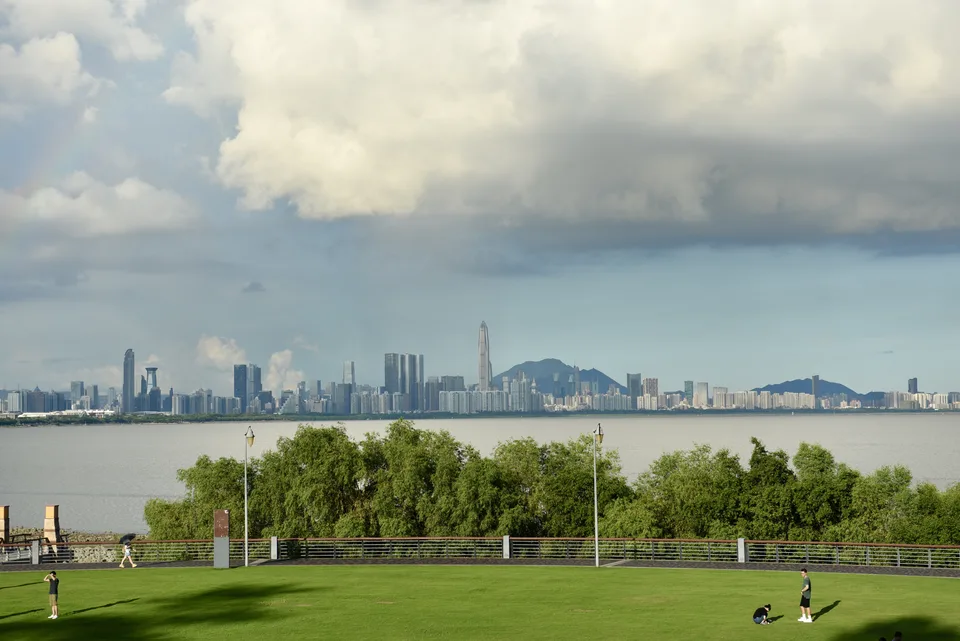
Shenzhen Bay Park's official introduction describes a coastal corridor of roughly thirteen kilometres, combining a mangrove ecological park with the coastal leisure belt. It connects with other recreational areas, including Shenzhen Talent Park. For a first visit, select an access point and a manageable section rather than treating the entire park as a short walk around one landmark.
The bay provides a useful change of pace after indoor visits, with room to appreciate the relationship between the city and its waterfront. Check the forecast and current park notices before setting out. The public coastal park and protected ecological areas should not be treated as interchangeable access zones. Keep to the permitted routes, and give an outdoor visit enough flexibility to move to another part of the day when heat or rain affects the plan.
Dapeng Fortress: give the eastern outing its own day
The municipal tourism bureau's historical account identifies Dapeng Fortress as a maritime-defence stronghold of the Ming and Qing periods and links it with Shenzhen's nickname, Pengcheng. It offers a substantial historical contrast to the modern districts. Its location in Dapeng New District should be part of the decision: treat the outing as a separate eastern-area visit, with a current route and return plan.
Choose the fortress and nearby time deliberately rather than adding them after a full central-city morning. Check current visiting arrangements for the particular museum or interior you want to enter. A historic settlement can be explored through streets and interpretation without assuming every building is open. For a first trip with limited days, compare this outing with spending longer in Nantou; the two offer different historical settings and different transport commitments.
Huaqiangbei: explore the trading district before buying
Official reporting on Huaqiangbei describes a district of specialised electronics markets, including SEG and the Electronic Technology Building.
If you intend to buy something, start with the exact specification and intended use. Compare the product, accessories, language settings and warranty terms, and ask for a written receipt. A low price does not establish compatibility with your home network or support after you leave China. For a substantial purchase, research the manufacturer's current regional terms before paying. Avoid treating the district as a source of guaranteed bargains or assuming every seller offers the same product and after-sales service.
Accommodation: check the property and the complete price
The Nanshan government's hotel directory offers a starting point for identifying properties in that district. Its listings are information, rather than a live guarantee of availability or an endorsement of the room you will receive. Compare current options through the properties' own booking pages and confirm the address, room category, cancellation terms and arrival arrangements for your dates.
Ask about cooling, lift access and room noise if these affect your comfort. For a longer stay, compare laundry and kitchen facilities with the price of a hotel room; do not assume an apartment includes both. Tell the property which travel document you will use and confirm its check-in requirements. Accommodation suited to an airport departure may be less convenient for several sightseeing days, so include daily travel in the comparison.
Bao'an airport: plan the final leg before landing
The municipal airport transport information identifies Metro Line 11 as an airport connection, with its entrance in the ground-transport centre. The municipal network listing distinguishes Airport, serving Terminal 3, from Airport North. Check the station and onward route for your terminal rather than assuming that any stop with airport in its name is the right one for your flight.
Use the current Metro timetable for your arrival time and compare an alternative road transfer if you land after the relevant services. Include baggage collection and the walk to ground transport in the plan. Line 11's ordinary and business carriages have different charges, as explained above. Keep the accommodation address available in Chinese as well as English when arranging a road transfer, and confirm the destination and payment method before starting the journey.
From Hong Kong by train: allow time for the border process
High-speed services from Hong Kong West Kowloon connect with Shenzhen stations including Futian and Shenzhen North. The operator's connection guide identifies their local Metro interchanges. Compare the station with your accommodation address before buying: choosing a Shenzhen destination by name alone can leave you with a less convenient onward journey.
The West Kowloon departure instructions require the identification document used to buy the ticket, with real-name verification, security checks and immigration formalities before boarding. Ticket verification closes thirty minutes before departure. Passport holders and passengers travelling at busy periods are advised to allow extra processing time. The short train journey is therefore only part of the transfer. Arrange mainland entry permission independently of the rail ticket, and check the full return journey before planning a visit from Hong Kong around a late departure.
Local fares: ordinary and business carriages differ
The Metro operator's fare policy starts ordinary-carriage journeys at RMB2 for the first four kilometres, with further charges based on distance. That is a starting fare, not a flat price for every trip. Use the fare calculation for your destination, particularly when comparing a hotel near the places you will visit with one requiring longer daily journeys.
Line 11 also has business carriages with a separate fare calculation. The operator combines the ordinary fare for the whole route with an additional charge for the business-carriage portion. Choose the appropriate carriage consciously. A photograph of spacious seating or a description of the airport connection should not lead you to assume that every seat is covered by an ordinary ticket.
Overseas contactless cards: a recent practical change
A September 2026 announcement from the Qianhai authority confirms that all Shenzhen Metro fare gates now accept supported overseas contactless bank cards. The listed networks include Visa, Mastercard, American Express, JCB and UnionPay. The card must support contactless use with the relevant small-value, password-free payments enabled. The announcement also covers the business carriage on Line 11.
This gives many visitors an option beyond arranging a local transit card immediately after arrival. Check your issuer's overseas-payment settings and charges, and keep another payment method available if a card is declined. The Metro announcement does not establish that every shop, taxi or attraction takes the same card. Ask station staff for help with a failed payment rather than assuming the fare has been recorded successfully.
Food: look beyond a single city signature
Shenzhen's older communities provide specific food traditions alongside the modern city. A municipal account of local culinary heritage describes Kuichong's Hakka chaguo, steamed rice-dough buns with fillings, and Nan'ao's sea-urchin zongzi. These connect food with the Dapeng Peninsula's settlement history. They are useful things to investigate when exploring that area, without assuming every restaurant serves them or that a festival food is available year-round.
For everyday meals, read the menu and portion information before ordering. Check the filling, stock, seafood and sauces when dietary requirements matter, and ask about preparation rather than relying on a dish's translated name. Compare simpler meals with planned restaurant visits in the daily budget. A market or shopping-area meal can fit naturally into a walk.
Budget from the trip you intend to take
Accommodation, meals and inter-district travel should form the starting budget. Ordinary Metro fares begin at RMB2, but longer journeys cost more and business-carriage travel adds a separate charge. A free museum visit can balance paid exhibitions or other activities. Check the particular exhibition's admission policy instead of treating the word museum as proof that every part of a venue is free.
Put airport transfers and any Hong Kong rail journeys on separate lines: they have different products and booking conditions from ordinary city travel. Compare the cost of staying nearer your main activities with repeated transfers from a cheaper address. Keep shopping outside the essential daily allowance, especially for electronics purchases. Leave a reserve for an altered journey or an additional admission, and use current quoted prices rather than a generic daily-spend figure from a different traveller's trip.
Seasons: heat, rain and coastal weather affect the plan
The Shenzhen Meteorological Bureau's climate description explains a long, hot and wet summer and generally drier autumn and winter conditions. Much of the rain falls between April and September, with tropical cyclones particularly relevant later in that period. These are seasonal patterns, not a forecast for your dates. Cooler months can suit longer walks, but cold spells and occasional disruptive weather remain possible.
For a summer trip, combine outdoor time with indoor visits and confirm the cooling arrangements at your accommodation. Check the bureau's current warnings before a coastal outing, particularly when wind or heavy rain is forecast. Keep booked activities and airport transfers flexible enough to accommodate changing conditions. A park, beach or ferry visit needs its own current operating information; a normal opening schedule does not establish that it will operate during severe weather.
A realistic first three days
On the first day, explore the Futian civic area, choosing the history and folk-culture museum branch and, if the weather suits, Lianhua Hill. Keep the evening flexible after arrival rather than committing to a distant excursion. On the second day, focus on Nanshan: choose Nantou or the Shekou cultural waterfront as the main visit, with enough time for the area around it.
For day three, choose between a focused Dapeng Fortress outing and a shorter city day combining Huaqiangbei with a selected section of Shenzhen Bay Park. Do not try to fit all of them into the same day. Rearrange museum visits around branch hours, holiday arrangements and exhibitions. Check travel between the exact addresses before booking timed events, and retain an indoor alternative when the weather makes a coastal walk impractical.
Moving to Shenzhen: test an ordinary weekday
For a potential move, begin with a real workplace or campus address and the route from a prospective home. Test the journey when you would normally travel, including the walk from the station and the return after evening commitments.
During a viewing, examine cooling, ventilation, daylight, noise, storage and the condition of fixtures. Ask which utility costs are included, how repairs are reported and what happens when the contract ends. Locate routine food shopping and any household services you need. Families should check the particular school's admission requirements and journey rather than treating a nearby school as an available place. Compare these practical findings with the complete housing cost and expected income before committing.
Renting a home: compare the contract as well as the neighbourhood
The municipal Housing Rental Supervision Service Platform instructions describe listing filters for district, Metro access, rent, apartment type, area and orientation. These are useful questions to carry into a search even when arranging viewings through another route. The platform's account and identification process also needs attention; an English information page does not guarantee that every function can be completed in English or through a foreign visitor's existing accounts.
Before committing, identify the landlord or authorised agent, the full monthly cost, deposit, contract duration and responsibility for repairs. Ask about utility accounts, internet, cooling and laundry arrangements, and record the condition of the property at handover. Check the lease and accommodation-registration process separately. The existence of a general rental service does not establish eligibility for foreign-resident immigration procedures, employment or public benefits.
Accommodation registration: arrange it for the actual address
The government's practical guide for foreign residents and visitors explains that hotels handle accommodation registration using the guest's passport or other valid international travel document. For accommodation elsewhere, the foreign visitor or host must arrange registration with the local police within twenty-four hours of arrival, with identification and proof of the address. Confirm the local process when staying in a private home or rented apartment.
Arrange this with the accommodation provider before arrival rather than assuming a booking confirmation completes it. Accommodation registration records where you are staying; it does not replace a visa, establish permission to work or create permanent-residence status. If you change accommodation, check the registration requirements for the new address. Keep the relevant record available when dealing with immigration procedures that require it.
Healthcare, communications and household arrangements
The HKU–Shenzhen Hospital's International Medical Center lists contacts and service information. Confirm appointments, language assistance and payment arrangements with your chosen provider. Check your insurance cover directly, including any requirements for authorisation or reimbursement. A local address does not by itself establish what treatment an insurer will pay for, and access to an international service should not be confused with free care.
For communications, the government's practical daily-services guide explains that foreign customers can use their passports at telecom operators' service branches to arrange a SIM card. Compare the plan and registration requirements with your expected usage. At home, confirm utility accounts, meter readings, internet installation, waste arrangements and the building-management contact. Record who is responsible for each task at handover instead of assuming it is completed by the agent.
Entry permission: tourism is separate from employment or study
Check the entry rules for your nationality, travel document, route and purpose before paying for the trip. The National Immigration Administration's current transit guidance describes a conditional 240-hour visa-free option requiring an eligible ordinary passport, designated ports, travel within permitted areas and confirmed onward travel to a third country or region. It is not a general permission for every visitor or every Hong Kong-to-Shenzhen itinerary.
The authority explicitly states that work and study require prior approvals and appropriate visas under this transit framework. A tourist visit, business meeting and job are therefore distinct planning questions. Establish the correct work, study or family route before a relocation commitment, including the relevant residence procedures. Permanent residence has separate requirements. Use VisaWand's China country guide and consultant listings alongside the official resources, without treating a consultation or hotel booking as an assurance of admission.
Hong Kong and other destinations: compare the whole journey
Hong Kong can complement Shenzhen with a separate city stay, but its entry arrangements and transport belong in the plan. VisaWand's completed Hong Kong guide provides a practical comparison. Before deciding on a short visit in either direction, allow for border formalities, the journey to the departure station and the final connection to your accommodation. Check eligibility independently for each destination.
For a Shenzhen-based trip, another district or a longer coastal visit may be more useful than adding a second city to an already full itinerary. Decide whether the missing experience is history, contemporary art, shopping or outdoor time. Use the China destination page and location directory to compare locations, while distinguishing directory listings from completed guides.
Official planning resources
Reviewed 14 October 2026. Use the official resources linked throughout this guide for admission, transport, housing and immigration decisions. Prices, services and rules can change; confirm the details relevant to your dates. Photography illustrates the locations and is not a live view.
View all official resources
- Shenzhen official district directory
- Official Nantou historical visitor information
- Shenzhen Museum official branch and visitor information
- Lianhua Hill municipal park information
- Sea World Culture and Arts Center architect project information
- Shenzhen Bay municipal park information
- Dapeng Fortress official historical visitor information
- Official current reporting on Huaqiangbei electronics markets
- Nanshan official hotel directory
- Municipal airport ground-transport information
- MTR high-speed rail station and Metro connections
- MTR West Kowloon departure and border procedures
- Shenzhen Metro official fare and carriage rules
- Official September 2026 overseas-card Metro announcement
- Official Dapeng culinary heritage account
- Shenzhen Meteorological Bureau climate and seasonal guidance
- Municipal housing rental supervision platform instructions
- Official 2025 practical residence and daily-services guide
- HKU–Shenzhen Hospital International Medical Center information
- NIA current visa-free transit eligibility and restrictions
Plan the next part of your journey
Explore the China guide, browse other cities or compare consultants for your travel and relocation questions.