Visa
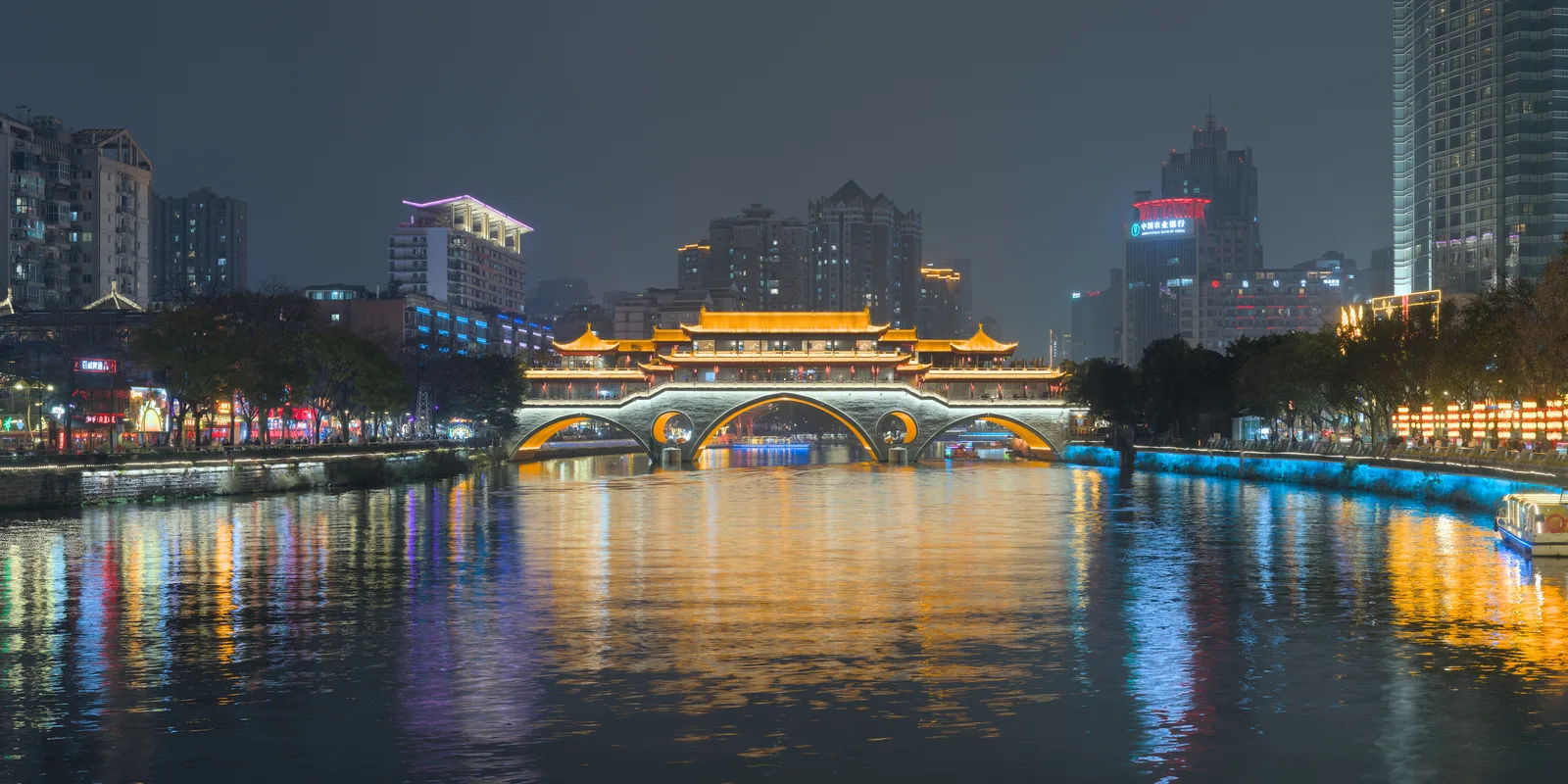
A city to explore between the headline sights
Chengdu makes its strongest case through variety. A morning watching giant pandas can give way to a museum afternoon, a long conversation over tea and an evening built around Sichuan food. The appeal lies in combining those experiences, rather than treating the provincial capital as a brief stop before a wildlife photograph. Allow at least three full days for a first visit, with extra nights for excursions beyond the central city.
This is Chengdu in Sichuan, southwest China. Its administrative territory extends well beyond the urban neighbourhoods most visitors see, so an address described simply as “Chengdu” does not establish a convenient sightseeing base. Start with a map of your actual hotel, transport arrival point and intended attractions. The same discipline helps prospective residents: a pleasant holiday circuit says little about the journeys an ordinary working week will require.
Find the history behind the modern skyline
Chengdu’s cultural story becomes more interesting when approached through particular places. The Chengdu Museum’s introduction describes collections covering the city’s history, folk life, shadow play and puppetry. Its present building opened in 2016. Begin there to give context to the older commemorative sites rather than expecting every historic association to survive in an untouched original building.
Du Fu’s connection is an instructive example. The poet arrived in the winter of 759 and established his cottage the following spring, according to the museum’s historical account. The gardens and halls visited today reflect centuries of rebuilding and expansion. They preserve a literary memory, rather than an intact Tang-period home. That distinction enriches a visit: poetry, later patronage and the changing interpretation of heritage are all part of the landscape. Contemporary shopping streets and illuminated riverside buildings reveal another chapter alongside it.
Choose neighbourhoods around your priorities
Tianfu Square is a useful reference point for a first visit, particularly with Chengdu Museum on its western side and Metro Lines 1 and 2 serving the square. An accommodation search around this central area can make museum visits and onward metro journeys straightforward, though the exact station entrance and walking route still matter.
Chunxi Road offers a shopping-led alternative around pedestrian streets, dining and major retail developments. IHG’s own Chunxi Road hotel information places its property in the Yanshikou commercial area, near Chunxi Road, Taikoo Li and IFS. Use that as a geographical reference, then compare several properties on their actual merits. The western city around Du Fu Thatched Cottage suits a different sightseeing emphasis, while the panda base in Chenghua requires its own journey. Avoid repeatedly crossing the city simply because attractions appear close together on a small overview map.
Plan the panda visit before leaving your hotel
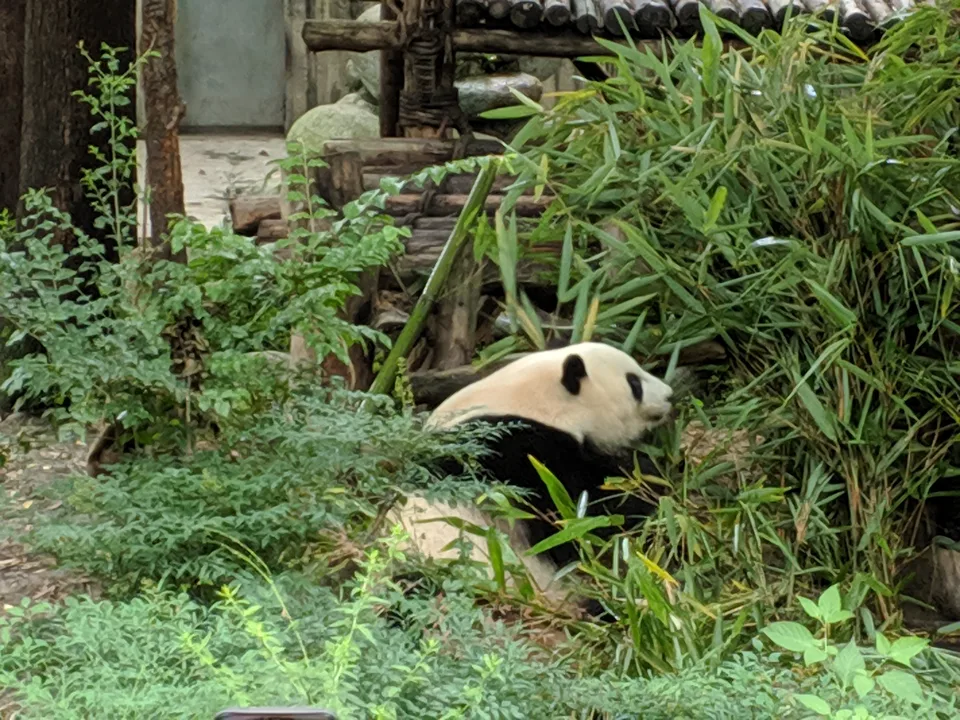
The Chengdu Research Base of Giant Panda Breeding uses real-name reservations and dated morning or afternoon admission. Its standard adult ticket is CNY55. Booking information allows reservations up to 14 days ahead; bring the original passport used for the reservation. Read the applicable concession conditions carefully rather than assuming an overseas student or child qualifies under every translated rule.
The published seasonal timetable opens at 7.30am from March through October and 8am from November through February. Last entry and site clearance are different deadlines, so check both for your date. Arriving early leaves more flexibility for a substantial site, but animal activity and visibility cannot be guaranteed. The separately charged sightseeing bus costs CNY30 for passengers above the stated height threshold. Admission does not include that bus or entry to Dujiangyan Panda Valley. If online payment fails, ask the base about its stated on-site exception; availability is still required.
Give Chengdu Museum an unhurried session
Chengdu Museum provides a useful indoor anchor, especially when outdoor plans encounter rain. The English visitor guide lists Tuesday to Thursday and Sunday opening from 9am to 5pm, with last admission at 4.30pm; Friday and Saturday extend to 8.30pm, with last entry at 8pm. Monday is normally closed, except public holidays. Consult current notices before relying on a late opening or a holiday exception.
Passport holders should pay attention to the booking process. The museum’s published reservation instructions introduced an email option for overseas visitors without WeChat or a Chinese mobile number. They also explain exchanging a passport reservation at the ticket consultation window using the original document. This is more useful preparation than assuming an online confirmation alone completes entry. Choose a few galleries to explore properly, and check any special exhibition’s separate arrangements. Photography permissions vary by gallery; flash, tripods and selfie sticks are restricted by the visitor guidance.
Read Du Fu’s landscape as a literary memorial
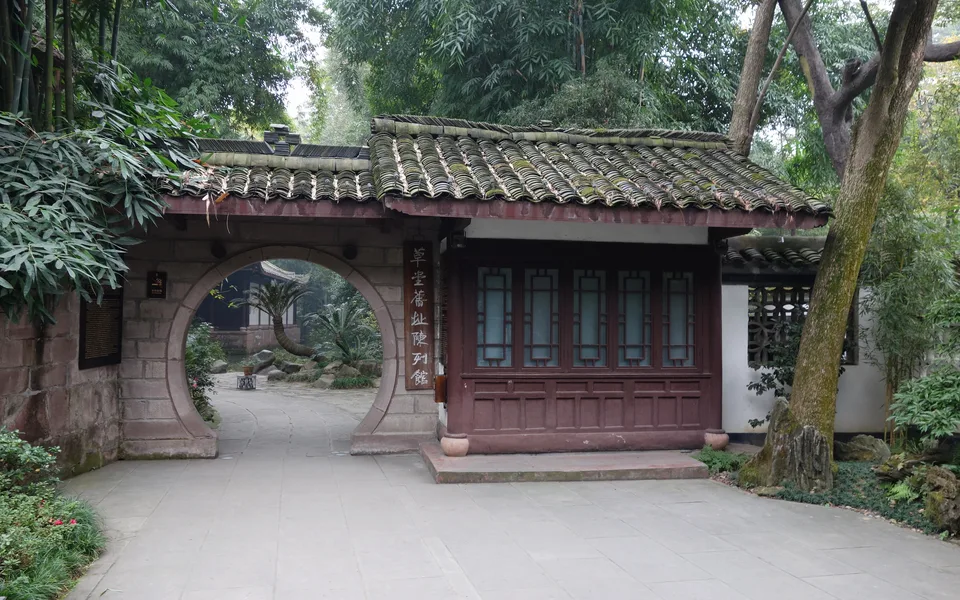
Du Fu Thatched Cottage is a place to slow down among gateways, trees, halls and water, with the poet’s life providing a thread through the grounds. Read some contextual interpretation before concentrating on photographs. The museum’s account credits his Chengdu period with more than 240 poems, making the connection more substantial than a passing visit by a famous name.
The official ticket page lists standard adult admission at CNY50 and ordinary opening from 9am to 6pm, with ticket sales ending at 5pm. Special holiday hours may differ. Concession translations do not always state every nationality condition consistently, so confirm eligibility directly before budgeting for free entry. Wear shoes suited to wet paths: the visitor rules specifically identify slippery moss and surfaces as a concern. Give the gardens a proper part of the day, followed by a nearby meal, instead of placing them between two distant timed reservations.
Approach Wuhou Shrine with the booking details ready
Wuhou Shrine provides another historical focus, associated with the Three Kingdoms story. Its official foreign-visitor booking page accepts passport information and describes online reservations using an email address. It also explains a cash-and-passport purchase route for visitors unable to use the specified online payment methods. Confirm the current arrangements before travelling there, particularly around busy holidays.
The page contains older pandemic material alongside booking instructions, so do not mistake every paragraph for a current entry requirement. Use the institution’s present notices and reservation confirmation to settle admission conditions. Inside, interpretation matters more than accumulating names: take time to understand how the people commemorated relate to the wider historical narrative. If choosing between this site and the poet’s memorial on a short visit, decide whether political history or literature interests you more. Seeing one carefully can be more rewarding than hurrying through both.
Make time for tea in People’s Park
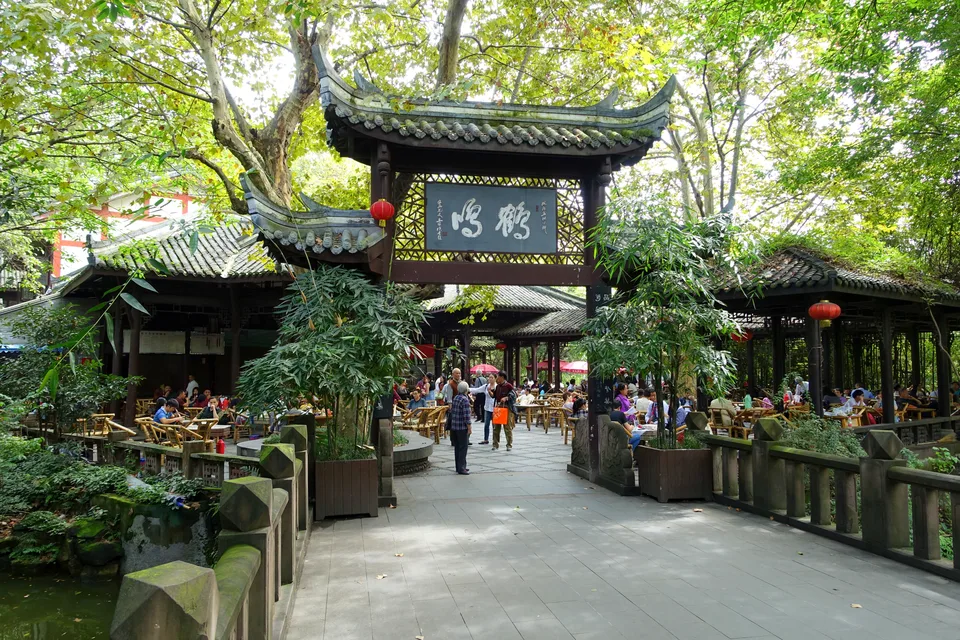
People’s Park gives a central-city day a different pace. Heming Teahouse, founded in 1923, is documented in Xinhua’s original report on its centenary. Its setting among park trees makes tea a worthwhile activity in itself, rather than a refreshment stop to squeeze between attractions. Allow time to sit and watch the shared space around you without turning other visitors into photographic subjects.
Check the menu and price before ordering, including whether the charge covers an individual tea or something shared. Ask about additional services separately; accepting a seat should not leave the price of everything else unclear. Travellers with food or health requirements can keep the visit simple and decline optional services. For someone considering a move, the park also offers a useful prompt: look beyond the famous teahouse to the ordinary public spaces, groceries and transport connections that might support daily life near a potential home.
Stay where the room and the route both work
Chengdu offers city hotels, smaller properties and apartments, but accommodation categories conceal important differences. Compare the total charge, cancellation deadline, breakfast and room occupancy before comparing nightly headlines. A lower rate can lose its advantage if every outing requires an additional transfer. For an early flight, compare a final night near the correct airport with remaining in your sightseeing base.
Ask practical questions before paying: can reception handle a late arrival, is luggage storage available, and how will the property complete foreign-guest registration? Families should confirm bed arrangements rather than infer them from a room photograph. Travellers needing step-free access should ask about the entire route from the street to the bathroom. For a longer apartment stay, establish whether cooking equipment, laundry and cleaning are included. Save the full address in Chinese and English, plus the property’s contact details, somewhere accessible without a working data connection.
Separate Tianfu from Shuangliu when booking flights
Chengdu has two distinct airports: Tianfu, identified by TFU, and Shuangliu, CTU. Check the airport code on every booking, including connections and the return journey. A transfer between them is a separate journey, with time needed for the onward terminal and airline procedures. Do not interpret a shared city name as an airside connection.
The International Union of Railways’ airport transport instructions for its Chengdu conference document Metro Line 18 from Tianfu and Line 10 from Shuangliu. Those instructions were prepared for 2025 conference hotels, so their quoted fares and journey times should not be applied to every city address. Shuangliu’s own metro access information identifies terminal connections to its station. Check today’s route and operating window before committing to rail after a late arrival. For a car transfer, obtain a destination-specific quote and establish waiting, luggage and delayed-flight arrangements.
Use the metro with a complete route in hand
Plan journeys from an actual station entrance to the destination entrance, including transfers and the final walk. Large roads, multiple exits and luggage can make the last part of a trip more significant than the number of stops. Keep a usable map and the Chinese destination name available offline. Save the return route as well as the outward trip. If travelling together, agree a meeting point outside the busiest exits and keep the accommodation address on each person’s phone. A station connection that works with a small day bag may be less comfortable with suitcases or a pushchair. For buses, establish the correct stop and direction before boarding.
The national guide to daily services for international visitors explains transport booking and passport-based identity arrangements. Do not assume that a foreign bank card can be tapped directly at every Chengdu metro gate because another Chinese city advertises that facility. Check accepted ticket and payment options locally. Travellers with mobility needs should confirm lifts and accessible entrances for the whole route. For a relocation assessment, repeat a possible commute during the relevant working hours, then consider how the same journey works in heavy rain or after an evening shift.
Explore Sichuan food beyond a heat challenge
Chengdu joined UNESCO’s Creative Cities Network for gastronomy in 2010. The UNESCO profile describes a culinary tradition with a range of flavours, giving a better starting point than reducing every meal to chilli intensity. Hotpot, noodles, dumplings and shared dishes can form different kinds of meals; choose according to appetite, company and the time available.
Ask about chilli and Sichuan pepper separately if their heat and numbing sensation affect your enjoyment. A milder request does not settle an allergy: establish ingredients, stocks, sauces and shared preparation directly. Vegetarian and halal requirements need similarly precise discussion. For hotpot, clarify broth, ingredients and other charges before ordering a large selection. Avoid building a whole day around an unverified restaurant superlative. A satisfying meal close to your route leaves more time for the city, while a written list of dietary requirements helps make ordering less dependent on improvised translation.
Shop with luggage and household needs in mind
Chunxi Road and the surrounding commercial area offer a straightforward place to compare contemporary shops and dining. Museum shops provide another possibility for gifts connected to what you have seen. Examine workmanship, materials and provenance before treating a souvenir as a locally made craft. For tea, ask about weight, packaging and brewing instructions rather than comparing containers by appearance alone.
Food gifts require a second check against the import rules at your destination. Keep receipts for substantial purchases and establish any warranty or return conditions while still in the shop. Prospective residents can make this outing more informative by taking an ordinary household list: groceries, cleaning supplies, bedding and kitchen equipment. Compare what is available near the actual residential address, including delivery and transport. A famous shopping district can be enjoyable to visit without being the most practical place to furnish a home or buy the weekly groceries.
Build a budget from actual choices
Use Chinese yuan consistently when comparing costs. Published adult admission of CNY55 at the panda base and CNY50 at Du Fu Thatched Cottage provides two concrete reference points; the panda sightseeing bus is an additional purchase. These figures do not establish a whole-day budget. Add your accommodation, meals, station connections and any paid guidance or performances you choose.
Set up payment before relying on it. The government’s visitor-services guide explains linking overseas cards to mobile payment services, subject to verification and applicable conditions. Check your issuer’s charges and keep another usable payment method, including some cash. A working app at home does not prove every merchant transaction will succeed. Compare a centrally located room with a cheaper alternative using the total transport cost for your party. Keep a reserve for changed plans and confirm dated prices before payment instead of treating an online average as a guaranteed local rate.
Choose seasons using the city’s climate
The World Meteorological Organization’s Chengdu climate table gives average January daily minima and maxima of 2.4°C and 9.5°C. July averages 22°C to 29.6°C, with 231mm of monthly rainfall; August is similarly warm and wet. These are climate averages, not a forecast, and the page does not identify an averaging period to attach to them.
Spring and autumn offer useful alternatives to peak summer heat, but pack for the actual forecast rather than an idealised season. Carry rain protection and keep a museum session available when outdoor plans become uncomfortable. In winter, ask about room heating before assuming the indoor temperature will suit you. Around public holidays, check reservations and transport availability early. Anyone adding mountain scenery beyond the city should assess that destination’s separate weather and terrain: conditions in central Chengdu are not a reliable description of a higher-altitude excursion.
A three-day itinerary with space between visits
On day one, start around Tianfu Square and Chengdu Museum, choosing a day when the museum opens. Leave time for lunch, then spend part of the afternoon in People’s Park with tea. Use the evening for a meal near your accommodation or a look at the Chunxi Road commercial area, according to energy and weather.
Give day two’s morning to the panda base with the correct reservation and passport. Return for lunch and a flexible afternoon rather than adding another distant timed attraction. Day three can centre on Du Fu Thatched Cottage, followed by a slower western-city afternoon; substitute Wuhou Shrine if that history interests you more. Consider the riverside around Anshun Bridge for an evening outing, checking your return route first. This is a suggested sequence, not a package promise. Shift days around reservations, closures and rain, and count late arrivals or early departures as travel time.
Test a home through an ordinary week
Begin a possible move with temporary accommodation and inspect homes around the workplace or school you would actually use. Test the commute, mobile signal, broadband, heating and cooling. Ask who pays utilities, how meters are read, what building management covers and how repairs are requested. Check noise at the hours when you need to sleep or work.
Read the lease before transferring a deposit, identifying the authorised landlord or agent, payment schedule, inventory, notice and refund conditions. Arrange translation or independent advice where needed. Confirm foreign-resident address registration before committing. The National Immigration Administration’s March 2026 pilot notice includes Sichuan in online accommodation registration: hotels register guests, while people staying elsewhere must arrange registration within 24 hours. Ask the host for help when needed and use 12367 for immigration-service questions. Accommodation registration records an address; lawful residence and employment still require their appropriate permissions.
Arrange services before making a permanent commitment
The government visitor-services guide explains obtaining a local SIM at a telecom operator’s service outlet with a passport. Compare data allowance, contract length and cancellation conditions, and confirm the connection works before leaving. For a household, establish internet installation, laundry, refuse arrangements and access for deliveries. Families should confirm school eligibility, curriculum, fees and transport directly with the institution before choosing a long lease.
Healthcare deserves the same advance planning. Government health advice for China identifies 120 for an ambulance and explains the importance of insurance covering treatment and evacuation. Identify suitable routine care, payment arrangements and support for any ongoing condition. Check medication availability and import requirements before departure. A residential trial should include these ordinary tasks, not just sightseeing. The result may support moving, choosing another neighbourhood or postponing a commitment until an employer, school or clinician has answered the questions that matter.
Match entry permission to your real purpose
Visa-free tourism depends on nationality, documents and current policy. British-citizen passport holders, for example, have a 30-day arrangement through 31 December 2026 under the UK government’s China entry guidance; that example does not establish eligibility for every reader. Check the Chinese embassy or consulate responsible for your application before booking around a waiver.
The NIA’s August 2026 transit policy separately provides qualifying travellers up to 240 hours with confirmed onward travel to a third country or region. Both Chengdu airports appear in its port list, but the permitted Sichuan area is limited to specified cities. It is not unrestricted provincial access. Paid work, study and long-term residence need their own permissions; the government services guide describes employer-led work permits and related residence procedures. Seek the appropriate official assessment rather than treating a short visit as relocation permission. VisaWand’s China guide and consultant listings help organise further questions.
Give nearby destinations enough time
Dujiangyan and Mount Qingcheng offer a different emphasis from the central city. Their UNESCO World Heritage listing connects an ancient irrigation system that remains in use with a mountain landscape important to Taoism. Choose whether engineering history, temple visits or walking is your priority, then check present admission, transport and the physical demands of the route.
Allow a separate full day rather than attaching both destinations to a panda morning. For a longer China itinerary, compare VisaWand’s Beijing city guide and Shanghai city guide with your available travel days. The China location directory helps identify further bases, while the China destination page supports consultation searches. Confirm intercity stations and connections before buying tickets: a railway station bearing the city name may still require a substantial onward journey. Leave the final night and departure plan realistic, especially when an international flight makes a missed connection expensive.
Official planning resources
Reviewed 15 October 2026. Use the official resources linked throughout this guide for admission, transport, housing and immigration decisions. Prices, services and rules can change; confirm the details relevant to your dates. Photography illustrates the locations and is not a live view.
View all official resources
- Chengdu Panda Base: tickets and reservations
- Chengdu Panda Base: sightseeing bus
- Chengdu Museum: visitor guide
- Chengdu Museum: collections and history
- Du Fu Thatched Cottage Museum: history
- Du Fu Thatched Cottage Museum: tickets
- Du Fu Thatched Cottage Museum: visitor rules
- Wuhou Shrine: official foreign visitor booking rules
- UNESCO: Chengdu Creative City of Gastronomy
- UNESCO: Mount Qingcheng and Dujiangyan
- NIA: visa-free transit policy,20August2026
- NIA: accommodation registration online
- Chinese government: practical working and living services
- UK government: China health advice
- UK government: living in China
- WMO/CMA: Chengdu climate information
- Shuangliu Airport: metro access
- Chengdu Museum: passport and overseas email reservations
- IHG: voco Chengdu Chunxi Road location
- Xinhua: Heming Teahouse centenary reporting
- UIC: Chengdu airport connections for WCRT 2025
- UK government: China entry requirements
Plan the next part of your journey
Explore the China guide, browse other cities or compare consultants for your travel and relocation questions.