Visa
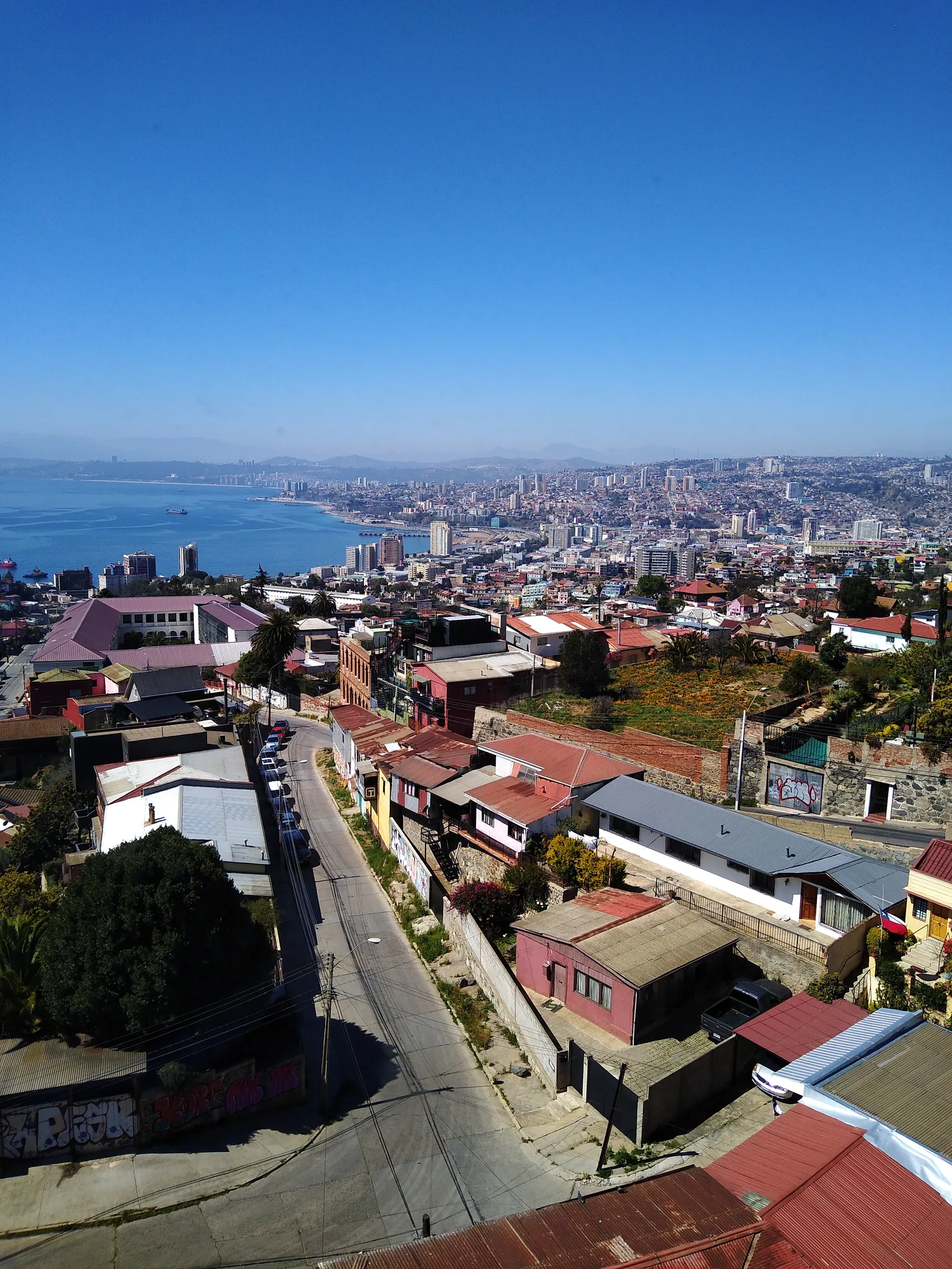
Choose Valparaíso for the hills and the port
Valparaíso is a city to explore in sections. Its appeal lies in the relationship between the working waterfront and the inhabited hills above it: roofs, stairs, viewpoints, lifts and streets that continually change your perspective. A visit works best when you leave time for those changes rather than treating the place as a quick collection of colourful photographs.
Choose it for urban character, art and maritime history. If your priority is spending most days beside a beach, compare nearby Viña del Mar before booking. If you want both, the coastal train makes a combined stay practical, provided your accommodation is conveniently connected to it. Two or three nights allow more flexibility than a tightly timed day trip from Santiago. For a possible move, allow longer and examine an ordinary weekday. The climb that feels enjoyable with a camera can become a different consideration when carrying groceries, accompanying children or returning from work.
Understand what the heritage designation covers
UNESCO’s historic-quarter listing recognises a particular part of the seaport city and its role in international maritime trade during the industrial era. It encompasses urban layout, buildings and public spaces adapted to the landscape, alongside port, naval and transport heritage. The designation applies to the inscribed historic quarter; it does not mean every street or building in modern Valparaíso is included.
This background helps explain why transport belongs in the sightseeing plan. A lift is part of the way the city has connected its steep residential areas with the lower streets, rather than simply an amusement ride. Look at the transition between those areas: a change of level can reveal how tightly housing, commerce and access fit together. Heritage also involves maintenance and everyday use. Follow barriers around works and respect private entrances, even when a stairway or painted façade appears in many visitor photographs.
At the lower level, Plaza Sotomayor provides a useful orientation point, with the naval headquarters and the monument to the Heroes of Iquique giving the square its civic setting. Towards the water, Muelle Prat connects the view with the working port. If considering a boat trip, establish the operator, departure conditions, duration and complete fare before boarding. A harbour excursion is a different experience from wandering freely through operational port areas; follow the access arrangements displayed at the waterfront and keep enough time to return to your next appointment.
Base yourself around the journeys you will make
For a first cultural visit, start by comparing accommodation around Cerro Alegre and Cerro Concepción with options closer to the lower city’s transport. The national tourism board’s hill guide introduces the two neighbouring areas as a concentration of architecture, art and visitor experiences. Their popularity makes them a useful place to begin researching accommodation, rather than a guarantee about every address.
Ask a host for the exact arrival route with luggage. Establish where a taxi can stop, how many steps remain and whether the suggested lift is operating. A short horizontal distance on a map can conceal a substantial climb. Consider your evening routine too: restaurants nearby are useful only if you are comfortable with the route back. Request the bedroom’s position if noise matters. Travellers who need step-free access should ask about the entire journey from the vehicle to the room, including thresholds and bathroom arrangements, rather than relying on a general accessibility label.
Walk Cerro Alegre and Concepción in a manageable circuit
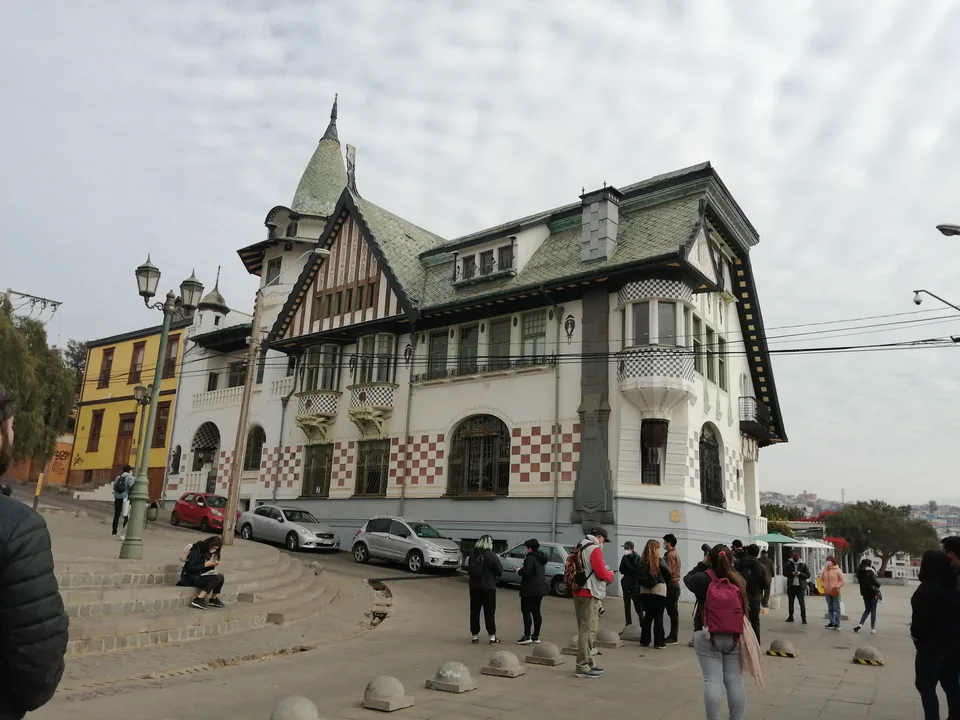
Chile Travel’s recent city-and-coast overview identifies Paseo Gervasoni and Paseo Atkinson on Cerro Concepción and the route through Cerro Alegre towards Palacio Baburizza. These give a first visit a more useful shape than a list of murals scattered across the city. Choose a small area, take time at a viewpoint and allow a café or museum stop to break up the walking.
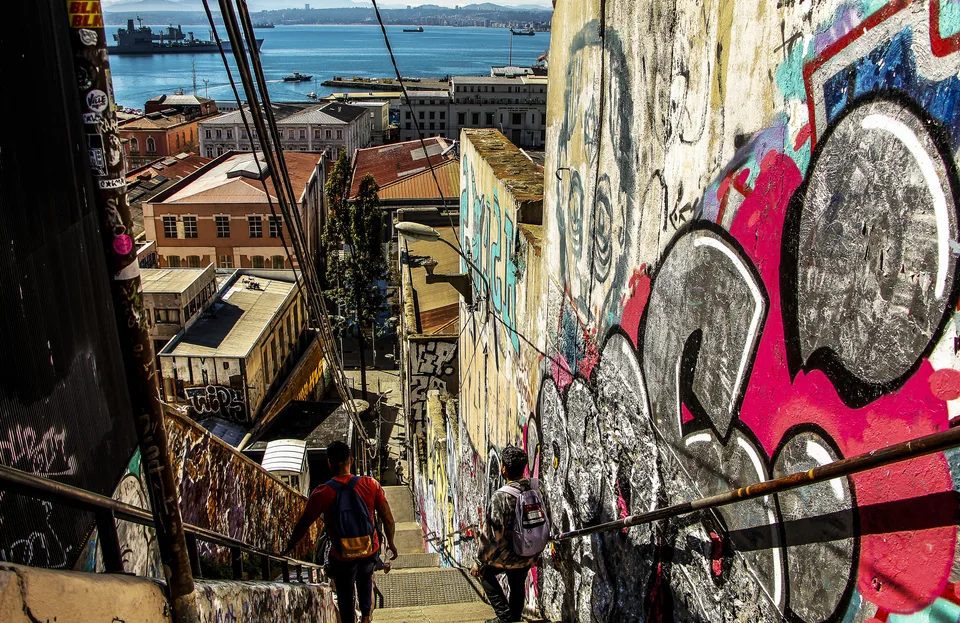
Before descending a long staircase, consider how you will get back to your next destination. Carry shoes with a reliable grip, keep one hand free where a handrail is available and adjust the walk to wet conditions. Ask locally about a route you do not understand instead of assuming that an online walking shortcut is appropriate. Photograph from public space and avoid blocking doorways or steps. The artwork and views are part of a residential environment, where other people still need to get home or carry out their daily work.
See paintings as well as the Baburizza palace
Museo Baburizza’s own visitor information places it at Paseo Yugoslavo 176, on Cerro Alegre. The palace houses Valparaíso’s municipal fine-arts museum, giving a hill walk an indoor cultural stop as well as an architectural landmark. Allow time for the collection rather than treating admission as a way to take another exterior photograph.
The published foreign-visitor admission is CLP6,000, compared with CLP4,000 for general adult admission. The museum lists accredited student and over-sixty-five rates at CLP1,500, with children under twelve admitted free. Eligibility for other concessions should be checked directly. The current opening hours are Tuesday to Sunday, 10am to 6pm. Consult the museum before travelling for a particular exhibition or if you need assistance. The published concessions involving disability and caregiver credentials do not by themselves describe an accessible route through every part of the building. Ask about the facilities relevant to your visit.
Give La Sebastiana its own journey
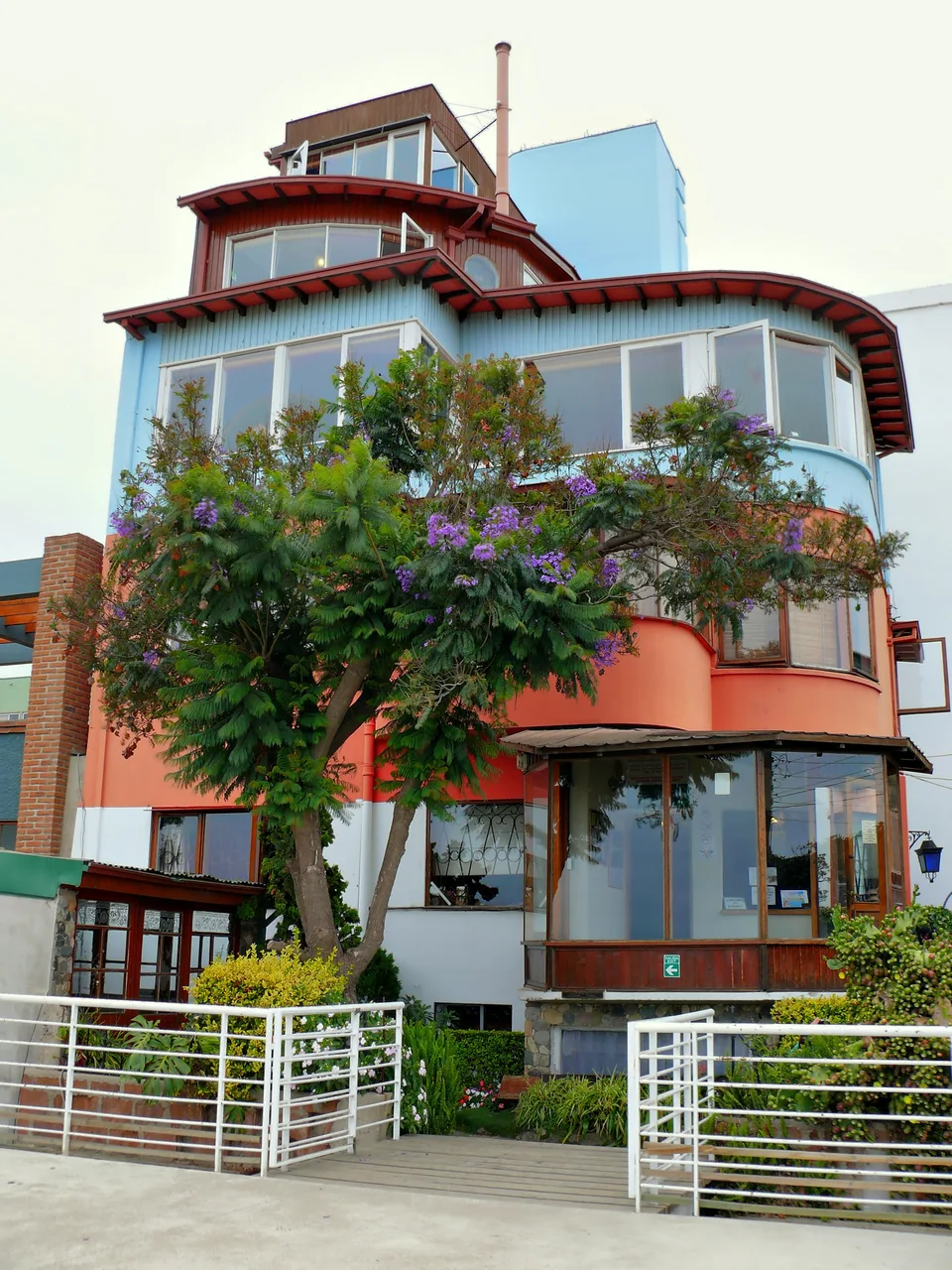
La Sebastiana is on Cerro Bellavista, rather than being another stop immediately beside the Alegre viewpoints. Chile Travel’s house-museum description explains its connection with Pablo Neruda and the personal collections inside. The building’s stairs and distinctive arrangement are part of the experience, so consider mobility and the journey uphill before committing to a visit.
The Pablo Neruda Foundation’s current 2026 information lists general admission at CLP11,000 and opening Tuesday to Sunday from 10am to 6pm. It says no reservation is required and clarifies that the closing time refers to the end of public entry. Audio guides are available in several languages, including English and Spanish. Leave enough time to visit properly rather than using the final admission time as your target arrival. Arrange the return journey before setting out if you are not comfortable walking back. Do not confuse the foundation’s Santiago contact address with the location of this Valparaíso house.
Treat the ascensores as individual services
Valparaíso’s historic lifts help explain its geography, but their names on a tourism route do not prove they are running. Check the service you intend to use that day, its fare category and the location of both stations. Keep an alternative way to reach your destination, especially when carrying luggage or attending a timed appointment.
Chile Travel’s September 2026 overview quotes CLP1,000 per journey for foreign tourists using the lifts it discusses. Do not assume a single price covers every lift, passenger category or connecting journey. Pay attention to the fare displayed at the station. Equally, a restoration announcement may concern design rather than reopening: the municipality’s June 2026 Lecheros announcement concerns the start of restoration design. It should not be used as evidence of an operating lift. A photograph of stairs beside Ascensor Cordillera illustrates the terrain, but this guide does not certify that lift’s daily operating status.
Reach the city through Santiago with a realistic connection
For most international arrivals, plan around Santiago’s Comodoro Arturo Merino Benítez airport, code SCL. Chile Travel’s Valparaíso information describes the road approach along Route 68 and coaches from Santiago terminals including Alameda and Pajaritos. The coastal train is a regional service; it does not provide a direct rail connection from Santiago airport to Valparaíso.
For an airport arrival, compare a booked transfer with an airport-to-terminal journey followed by an intercity coach. Check the current airport stop and operating hours through Nuevo Pudahuel’s official transport information, and confirm the coach departure point with its operator. Leave time for immigration, baggage and the change of vehicle. Avoid building a prepaid museum visit around a best-case road journey. For a late arrival, an overnight stay in Santiago may be more practical than an uncertain final connection. Ask your Valparaíso accommodation how late you can check in and how to reach the entrance with bags.
Use EFE’s actual fare calculator for coastal trips
The Limache–Puerto train provides a useful connection between Valparaíso and Viña del Mar. EFE’s journey planner returned CLP510 for a general passenger travelling from Puerto to Viña del Mar outside peak hours on the date checked, with a reference journey time of fifteen minutes. This is a specific example, rather than a flat price or guaranteed journey time across the network.
Consult EFE’s official tariff page for the stations, passenger type and time of your own trip. It distinguishes three fare zones and peak from off-peak travel; weekends and public holidays are in the off-peak category. The same page advertises a general transport card at CLP3,000 including CLP500 of initial credit, and a daily tourist option at CLP6,300 including a card, or CLP3,800 when using an existing card. Compare those products with the journeys you expect to make. Unlimited travel is not automatically the cheaper choice for one return excursion.
Spend on the experiences you actually want
Three foreign-visitor museum admissions make a useful starting point for a cultural budget: the current listed prices for Baburizza, La Sebastiana and the Naval Museum total CLP21,000. That calculation excludes transport, food and any other charges. You may prefer one museum explored carefully to buying all three tickets simply because they appear in a guide.
Add your real accommodation quotation, airport or coach connections and the likely number of hill transfers. Ask whether a tour price includes lift fares and museum admission. Check cancellation terms and the meeting point before comparing offers. Carry manageable denominations for small purchases while keeping a reserve separate. For art, prints or crafts, ask who made the item and whether you are buying an original, a reproduction or a locally produced souvenir. Obtain a receipt for a substantial purchase and consider packing needs. A shop’s location in a heritage district does not establish the origin or age of everything it sells.
Plan for the coast’s seasons and changing conditions
The coast needs its own expectations, rather than an assumption that weather in Santiago will be identical. Chile’s meteorological service explains central Chile’s winter-rainfall pattern, with the main wet period concentrated around May to September. Its historical discussion is useful seasonal context, not a forecast for the week you are travelling.
Summer falls in the Southern Hemisphere’s warmer part of the year, while a winter visit calls for more flexibility around exposed walks. Carry an additional layer for a long outing and footwear suited to wet steps. For the actual forecast, consult the Dirección Meteorológica de Chile. Keep one museum or other indoor option available when planning a short stay. If rain or an official warning changes conditions, adjust the route instead of trying to preserve a walking timetable. Accommodation heating and ventilation also deserve attention on a longer stay; ask about the specific room rather than inferring comfort from an attractive exterior photograph.
A three-day visit without repeated cross-city climbs
Use the first day for a manageable circuit around Alegre and Concepción, with Baburizza if its opening day fits. Keep the arrival morning flexible and spend time at a viewpoint instead of adding a distant attraction. Arrange dinner close enough to your base that the return is straightforward.
On the second day, make La Sebastiana the main cultural visit. Allow time for getting uphill and for the house itself, then leave the afternoon open for another small area or a rest. On the third day, choose between the Naval Museum and a coastal train outing to Viña del Mar according to your interests. Do both only if the connections and available time make the day comfortable. Monday visitors should notice the published closure days of Baburizza and the Neruda house when arranging the order. Keep an alternative for lift maintenance, weather or an unexpected closure, and reserve a proper margin for the final airport or coach connection.
Take safety advice seriously without abandoning the city
Use current Chile travel-safety guidance to prepare for the visit. UK advice specifically identifies Valparaíso in its discussion of theft and muggings, including incidents in daylight. It also describes distraction methods and warns about unlicensed airport taxis. Keep valuables out of easy reach, avoid leaving a phone on a café table and book transport through a recognised service when appropriate.
Choose a route while you can review it in a comfortable place rather than displaying your phone continuously on unfamiliar streets. Ask your accommodation about the way home after dark and make a transport plan before an evening out. No neighbourhood label provides a blanket guarantee of safety. If a route feels unsuitable, changing it is more sensible than following a saved itinerary simply to reach a viewpoint. Keep bags with you during transfers and check the amount on a card terminal before approving payment, particularly when organising a long journey after arrival.
Inspect housing for the route as well as the room
For a possible move, begin with temporary accommodation and inspect prospective rentals in person. Try the complete weekday journey to your workplace, campus or another regular destination. Test what happens when the lift you would normally use is unavailable. A property that seems close to a station can still involve a demanding climb at the end of the trip.
Inside, check damp, ventilation, heating arrangements, locks and window condition. Ask to see recent household bills and clarify responsibility for electricity, water, internet, building charges and repairs. Test the connection in the room where you would work, at a relevant time of day. Obtain a written agreement covering deposits, notice, furnishings and the procedure for reporting defects. A furnished holiday quotation does not establish a representative residential rent. For children, investigate school places and the daily route before signing near an assumed school. Anyone who needs regular medical treatment should examine access to care before choosing a home primarily for its view.
Make preparedness part of everyday coastal life
Before settling on a seafront address, consult SENAPRED’s Valparaíso-region evacuation maps and identify the correct map for the locality. Discuss the building’s emergency arrangements and the route you would use with children or anyone requiring help. This is ordinary preparation for a coastal stay, not a claim that an emergency warning is currently in force. Follow official instructions if an alert is issued.
For medical planning, UK health guidance for Chile identifies 131 as the ambulance number and recommends appropriate cover for treatment and unexpected evacuation. Confirm the services relevant to your needs directly with a provider and insurer. If moving, establish the healthcare arrangement that applies to your status rather than assuming a short holiday policy will cover ongoing residence. Keep prescriptions and medication documentation accessible. Prepare practical household needs too: a working phone, emergency contacts and a way to retrieve the accommodation address when an internet connection is unavailable.
Separate visitor permission from the right to work or settle
SERMIG’s Permanencia Transitoria guidance describes permission for a limited visit, generally for up to ninety days, without an intention to establish residence. Some nationalities require prior consular authorisation, and the period granted cannot exceed the validity of the travel document. Check your own nationality and the permission recorded at entry rather than treating the maximum as an entitlement.
Paid activity requires separate attention. SERMIG’s visitor-work information explains exceptional authorisation for specific, occasional activities; tourist admission does not provide a general right to take employment or assume that remote work is permitted. For a move, use the temporary-residence guidance and the category relevant to work, study or another purpose. Applications normally need to be made from abroad, subject to legal exceptions. Confirm the route before committing to a lease, job or course. Buying property or making repeated visits does not itself establish residence rights or resolve the conditions attached to work.
Compare Viña del Mar and Santiago before extending the trip
Viña del Mar is the most immediate comparison for a different coastal base, with the train making a reconnaissance visit possible. Compare your actual needs: access to transport, a particular daily destination, accommodation and the kind of evenings you want. VisaWand’s Santiago guide can help assess a capital-city stay alongside time on the coast, while the Viña del Mar location page provides another geographical starting point.
Use the Chile country guide and Chile destination page for broader planning, and the Chile location directory to explore other places. A directory entry is not necessarily a completed travel guide. For an individual immigration question, VisaWand’s consultant listings provide contacts whose credentials and scope of service you should assess directly. Return for a longer ordinary-week visit if relocation remains appealing, giving the practical journeys as much attention as the views that first attracted you.
Official planning resources
Reviewed 17 October 2026. Use the official resources linked throughout this guide for admission, transport, housing and immigration decisions. Prices, services and rules can change; confirm the details relevant to your dates. Photography illustrates the locations and is not a live view.
View all official resources
- UNESCO: historic quarter of the seaport city of Valparaiso
- Chile Travel: Plaza Sotomayor and Muelle Prat
- Chile Travel: Cerro Alegre and Concepcion
- Chile Travel: Valparaiso and Vina del Mar visitor planning
- Museo Baburizza: official admission and opening hours
- Chile Travel: La Sebastiana on Cerro Bellavista
- Pablo Neruda Foundation: house-museum visitor information
- Museo Maritimo Nacional:2026 hours and admission
- Valparaiso municipality: Lecheros restoration design
- Chile Travel: Valparaiso destination
- Santiago airport: official ground transport
- EFE Trenes de Chile: official journey planning
- EFE: Limache–Puerto fare calculator and tickets
- Chile tourism subsecretariat: gastronomy guidance
- Chile Travel: coastal Chilean food
- Direccion Meteorologica de Chile: winter rainfall pattern
- Direccion Meteorologica de Chile: current weather
- UK government: Chile travel safety
- SENAPRED: Valparaiso region evacuation maps
- UK government: Chile health and medical assistance
- SERMIG: temporary visitor permission
- SERMIG: exceptional work authorisation for visitors
- SERMIG: temporary residence categories
Plan the next part of your journey
Explore the Chile guide, browse other cities or compare consultants for your travel and relocation questions.