Visa
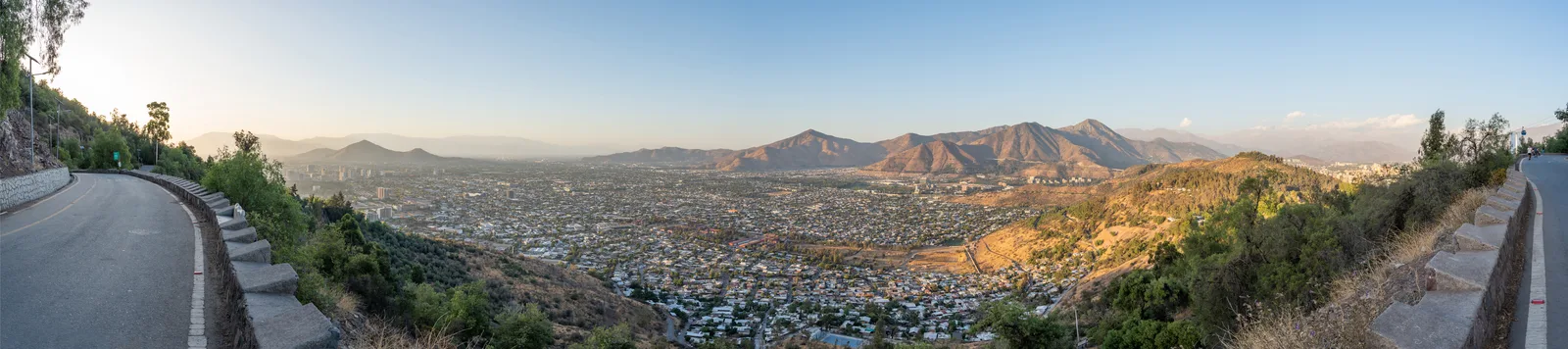
Santiago rewards a stay beyond the airport
Santiago is a working capital with mountains on its horizon, museums in its historic centre and neighbourhoods that feel noticeably different a few Metro stops apart. Its appeal lies in combining those experiences: a morning among civic buildings, lunch in a lively district, then a hilltop view that makes the scale of the city legible. Give it three full days before treating it simply as the gateway to the rest of Chile.
The practical choice is where to base yourself. A central address helps with heritage walks; a station near your accommodation makes a wider itinerary easier; a prospective resident needs to test the journey to work. This guide follows Chile Travel’s Santiago destination information alongside current operators and public agencies. Use VisaWand’s Chile country guide for wider planning and its Chile location directory to compare places.
Understand the capital’s geography and history
Santiago sits inland in central Chile, with the Andes shaping its eastern outlook. The name can mean the historic central municipality or the much larger metropolitan area. A hotel advertised as being in Santiago may therefore be well outside the streets around Plaza de Armas. Check the actual address, municipality and nearest station before comparing accommodation prices or journey estimates.
The municipality dates the Spanish foundation of Santiago to 12 February 1541 under Pedro de Valdivia. That event belongs to colonial history, rather than marking the beginning of human life in the area. The early street grid developed around Plaza de Armas between the Mapocho River and the southern channel known as La Cañada. Today, colonial and republican landmarks sit within a city that continues to grow and change.
Start with Plaza de Armas and the historic centre
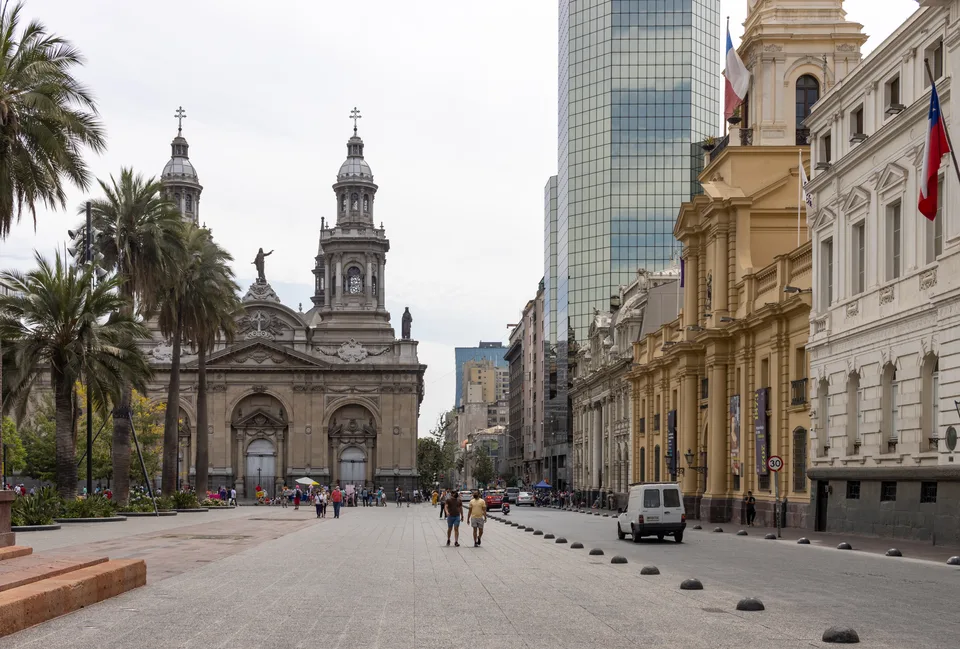
Plaza de Armas provides a useful first orientation: civic buildings, the Metropolitan Cathedral and busy pedestrian streets give a concentrated introduction to the centre. Visit in daylight, allow time to look rather than just photograph, and follow any access instructions at religious buildings. A functioning cathedral may have services or restricted visiting areas; an exterior photograph does not establish unrestricted interior access.
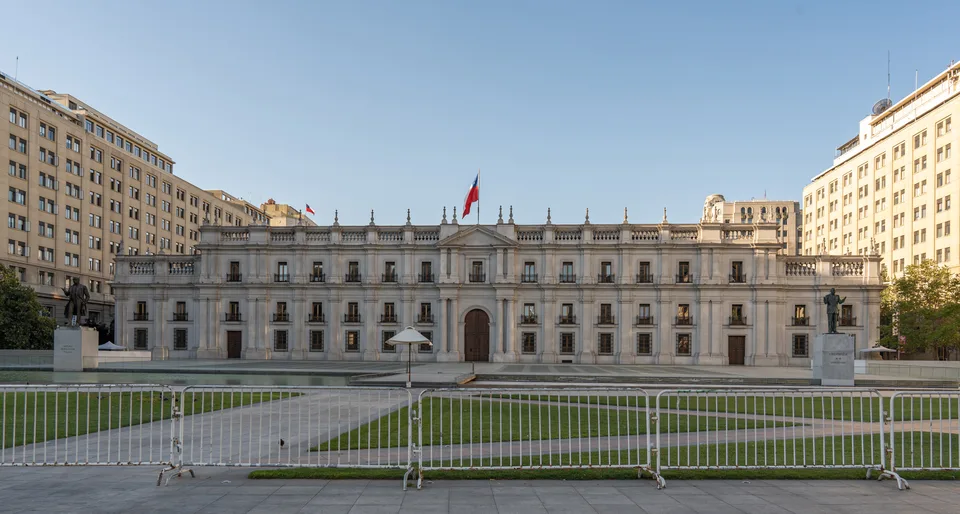
Continue towards La Moneda for another perspective on the capital’s civic identity. Treat the presidential palace primarily as an exterior stop unless you have independently confirmed a visitor arrangement. Carry a modest amount of cash and keep your phone secure when using maps in crowded streets. Plan a defined walking circuit, then stop for lunch, rather than trying to cover the entire centre without a break.
Choose a neighbourhood for the evenings you want
Lastarria and Bellas Artes work well for visitors who want galleries, cafés and time around Parque Forestal. Universidad Católica on Metro Line 1 and Bellas Artes on Line 5 provide different access points. Compare the final walk from each station to your exact property, especially if arriving with luggage. A neighbourhood name on a booking listing is less useful than its street address.
Barrio Italia and Bellavista offer different evenings: make room for browsing and meals in the former, and check noise carefully if staying near the latter’s nightlife. Providencia is another practical area to investigate when transport connections matter. These are starting points for comparison, not guarantees about every block. Look for recent property-specific reviews discussing street noise, entrances and the walk home after dinner.
Decide what accommodation needs to deliver
For a short visit, prioritise a usable location, reliable check-in and a room that lets you sleep. An airport-area stay can suit an awkward connection but adds travel to most sightseeing. A central hotel saves some walking journeys; an apartment may suit a longer stay if its kitchen, laundry and building rules meet your needs. Verify whether luggage storage is available before relying on it.
Compare the final payable total rather than the first nightly price. Ask about taxes, cleaning charges, deposits, cancellation terms and any documentation needed for an advertised exemption. Do not assume every foreign visitor receives the same tax treatment. For summer, check cooling and sun exposure; for winter, ask how the room is heated. Photographs of a bright apartment reveal little about its temperature after sunset.
Travelling with children or reduced mobility adds another set of checks. Ask whether the entrance has steps, whether the lift reaches your floor and whether the bathroom suits your requirements. Confirm room configuration in writing: a sofa bed, connecting room and separate bedroom are different arrangements, even when each listing advertises the same maximum occupancy.
Get from Santiago airport to the right part of town
Comodoro Arturo Merino Benítez Airport, commonly identified by SCL, has domestic and international terminal facilities. Arrange your arrival around the terminal on your flight documents and the address of your accommodation. The airport’s official transport information directs passengers towards authorised counters before entering the public arrivals area. Compare the full quoted fare and destination there rather than accepting an unsolicited approach as an official offer.
Public transport is possible, but it involves connections. Red’s airport services 555 and 444 link Pajaritos and La Cisterna respectively with the airport interchange. The airport describes a free shuttle between the interchange and passenger terminals. This is a bus-and-shuttle connection to Metro, not a Metro station inside arrivals. Allow for luggage, walking and waiting. The airport bus directory also identifies private operators; confirm their current terminal stops before buying.
Use Metro and buses with the fare rules in mind
The current Red Movilidad fare table lists a standard bus fare of CLP 795. Metro fares vary by time band: CLP 735, CLP 815 or CLP 895. Those amounts are Chilean pesos, not US dollars. Pay using an accepted Bip! or supported QR method, and arrange payment access before boarding. Do not assume that a bank card accepted somewhere on the rail network will work on every bus.
Integration allows up to two transfers within two hours under the system’s rules, including direction and repeated-route restrictions. It is not an unlimited sightseeing pass. A bus-to-Metro journey can require a fare adjustment according to the rail time band. For budgeting, four separate standard bus journeys cost CLP 3,180; that example excludes accommodation, meals and attractions. Check your actual route and service information before a time-critical departure.
Save the property address and station name offline, especially on arrival before your mobile connection is working. Check the direction of travel and the correct station exit before leaving the platform. With heavy luggage, compare the total effort of transfers with an authorised door-to-door option, rather than deciding solely on the cheapest advertised fare.
Give San Cristóbal a generous half-day
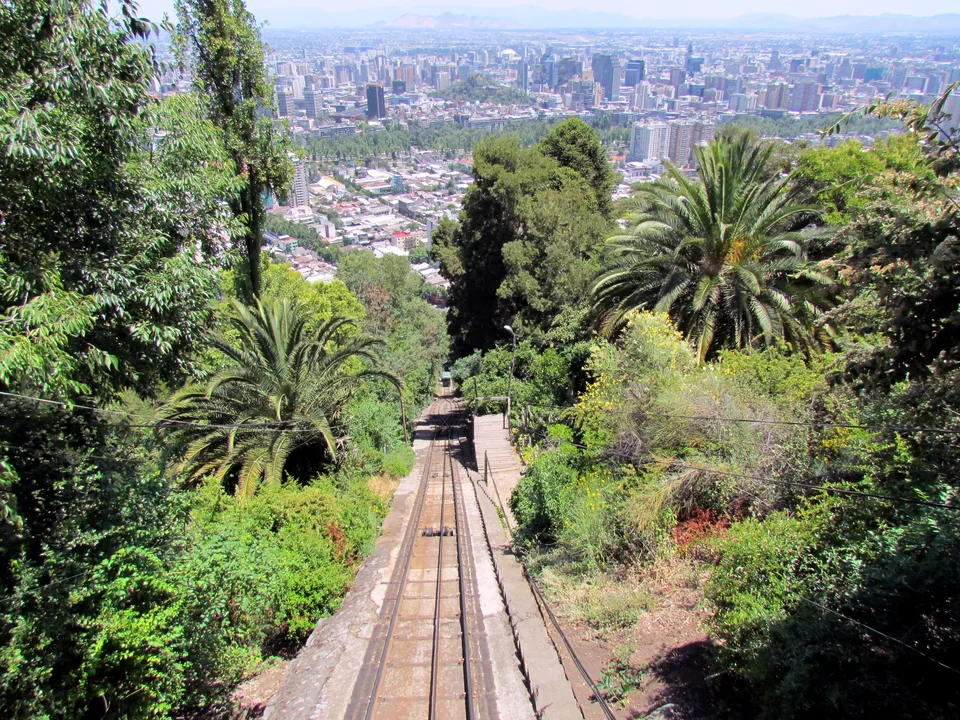
Cerro San Cristóbal offers a way to read the city from above, but the experience depends on weather, visibility and the route you choose. Walking, the funicular and cable cars should not be treated as interchangeable products. Check the funicular ticket options and the cable-car operator’s visitor information separately, especially if combining transport or starting from different entrances. A combination ticket needs to match your intended direction and return.
Leave time for queues, shade breaks and the descent. Seasonal timetables and maintenance can change what is possible, so confirm the last usable departure rather than simply the park’s general opening period. On a hazy day, a long ascent may deliver less of a panorama than expected. Choose comfortable footwear and water, and keep a museum alternative available if outdoor conditions are unsuitable.
Buy a skyline view for the conditions and ticket category
Sky Costanera is a different proposition: a high observation deck rather than a park outing. The operator’s rates and schedules lists daytime adult admission, for ages 13 and above, at CLP 25,000 and sunset admission at CLP 30,000. Two daytime adult tickets therefore cost CLP 50,000. That is a substantial optional expense alongside museums with free general admission.
Check the selected date and time in the booking system before paying. The operator’s language pages do not present an entirely consistent sunset window, so avoid planning from a universal hour quoted elsewhere. Look at visibility before committing, understand the cancellation terms and confirm accessibility needs directly. A high viewpoint can be memorable, but paying more does not guarantee clear mountains or a particular sunset.
For a family or group, price every traveller’s category separately instead of multiplying an adult headline rate. Check whether the ticket includes only the deck or additional services, and keep the booking confirmation available offline. If your schedule is tight, choose one major viewpoint and spend the saved time exploring at street level.
Make museums part of the plan, not a rainy-day afterthought
The National Fine Arts Museum offers free admission and fits naturally with time in Bellas Artes and Parque Forestal. Choose a manageable visit rather than rushing through several institutions. For another collection, the Chilean Museum of Pre-Columbian Art’s visitor notice should be checked before booking: its textile and South Andean rooms were listed as temporarily closed when reviewed. Do not assume every gallery shown in older photographs is accessible.
The Museum of Memory and Human Rights merits separate time and attention. Its permanent exhibition addresses human rights violations in Chile between 11 September 1973 and 10 March 1990. General individual admission is free; published hours are Tuesday to Sunday, 10am–6pm, with last entry at 5.30pm. Groups have separate arrangements. Allow space afterwards rather than positioning this serious visit as a quick stop between unrelated attractions.
Shop with luggage space and opening times in mind
Browse neighbourhood shops as part of a walking route instead of adding several long cross-city journeys purely for shopping. Barrio Italia can pair well with a leisurely meal; market areas suit a different kind of outing. Establish what you want to buy and whether you can transport it home. Check the rules in your destination country before purchasing food, seeds, wood or other natural materials.
Keep your daily budget in Chilean pesos and distinguish purchases from deposits or temporary card holds. Carry a second way to pay and keep it separate from your main wallet. For larger items, ask about delivery, returns and receipts before paying. Visitors furnishing a future home should wait until the tenancy is confirmed and measurements are checked, especially where lifts and doorways limit access.
Pick a season, then check the actual conditions
Central Chile’s Mediterranean seasonal pattern brings generally warmer, drier summers and cooler winters with more rain. January and February belong to summer; June and July to winter. The Chilean Meteorological Directorate’s regional climatology provides historical context, not a forecast for your travel dates. Pack for changes between sunny afternoons and cooler evenings, and check the forecast before hill or mountain outings.
Air quality also matters when planning exercise and viewpoints. Use the Environment Ministry’s Metropolitan Region information to check current conditions and restrictions rather than judging the day solely by blue sky overhead. A winter visit can still support a rich museum and neighbourhood itinerary. If your main objective is a mountain panorama, keep more than one possible viewing day instead of fixing every outdoor activity to the first morning.
A realistic three-day introduction
On day one, walk the historic centre from Plaza de Armas towards La Moneda, with a proper lunch break. Choose one museum or a relaxed afternoon in Lastarria according to opening days and your energy. This keeps the first day geographically coherent and leaves time to understand the centre rather than repeatedly crossing the metropolitan area. An overnight flight is a reason to shorten the plan.
Use day two for San Cristóbal and a neighbourhood meal, confirming the transport products and return timetable first. On day three, give the Museum of Memory and Human Rights an unhurried visit, then choose a contrasting afternoon: art, shopping or a booked observation-deck session. Move the order around Monday closures and weather. Keep an extra day for the coast or a specialist excursion instead of attaching a full-day trip to an already crowded city schedule.
Leave the last morning lightly booked if you are flying out. Work backwards from the airline’s required airport arrival time, adding the full transfer and a margin for disruption. Store luggage only where an arrangement is confirmed. A final café stop near your accommodation is easier to abandon than a prepaid excursion across town.
If moving, test an ordinary working week
A pleasant weekend address may create an awkward daily commute. Before signing a long tenancy, travel from the prospective building to work or study at the times you will actually use it. Include the station entrance, transfers and final walk. Check the evening return as carefully as the outward journey, and compare a slightly higher rent against the money and time spent travelling every month.
Start with temporary accommodation if possible. Inspect the property, confirm who has authority to rent it and obtain written terms covering the deposit, inventory, repairs and notice. Ask which recurring building expenses are separate from rent and request recent bills. If a figure is quoted in an indexed unit rather than pesos, establish how it is converted and when it changes. Avoid treating a single advertisement as a reliable citywide rent benchmark.
Build a move-in budget separate from monthly spending. Include any overlapping accommodation, deposits, transport, basic furniture and connection charges that your agreement actually requires. Photograph the condition of the property with permission and retain a signed inventory. Clarify how the deposit is returned and how disputed damage will be documented before handing over money.
Check the household details before accepting the keys
Verify electricity, water, hot water and internet arrangements for the actual address. Ask for account numbers, meter readings and any outstanding balance. Enel’s customer assistance and the water company named on a recent bill are useful starting points where those companies serve the property; provider coverage must be checked rather than assumed across the whole metropolitan area. Confirm whether utilities stay in the owner’s name or need transferring.
Ask the building administrator about waste collection, recycling, visitors and emergency access. If you need a parking space or bicycle storage, establish whether it belongs to the tenancy and whether an additional charge applies. Check access physically; an advertised facility may not suit the size or type of equipment you use.
Test internet availability with the precise apartment number, not merely the street. Check ventilation, heating, cooling, laundry and the building’s delivery rules. For earthquake preparedness, identify the building’s protection areas and evacuation arrangements using SENAPRED’s guidance. Secure heavy furniture appropriately and know whom to contact about maintenance. These ordinary household questions make a bigger difference to daily comfort than a distant view in a listing photograph.
Plan health, education and administration around your status
Before a longer stay, establish how you will pay for healthcare and which cover applies from arrival. Ask the relevant provider about eligibility, enrolment, waiting periods and dependants rather than assuming residence paperwork automatically activates insurance. Keep sufficient cover while arrangements are being confirmed. Identify a nearby pharmacy and suitable healthcare facility, and retain accessible copies of prescriptions and important documents.
Families should contact schools directly about places, calendars, fees and required records before choosing housing around a presumed admission. Ask employers or institutions which identity, tax and banking steps apply to your circumstances. Requirements can depend on immigration status and the organisation involved. Keep a practical document folder with translations or legalisations where requested, and avoid paying an intermediary who promises outcomes that only a public authority can decide.
Tourism entry is separate from permission to live or work
Chile’s Permanencia Transitoria rules cover limited visits without an intention to reside. Nationality and circumstances determine whether advance permission is needed; the period actually authorised at entry matters. Confirm requirements before departure and keep the entry record. A possible extension is not an automatic entitlement, and a flight reservation or accommodation booking does not itself grant admission.
Paid activity is normally outside this visitor status, with specific permission available for certain exceptional activities. Do not assume remote work becomes unrestricted simply because payment comes from abroad. On arrival, also follow the SAG declaration requirements for plant and animal products, including food and relevant natural materials. Declare items honestly and let inspectors determine admissibility. This agricultural process is separate from both immigration permission and customs obligations.
Match relocation plans to the appropriate immigration route
For employment, consult SERMIG’s temporary residence category for remunerated activities before moving; applications normally begin from abroad under the applicable conditions. A tourist visit is not a substitute for the correct permission. Students should review the student residence requirements, including the recognised institution, admission evidence and required supporting documents, early enough to prepare them properly.
Definitive residence has its own eligibility conditions after qualifying temporary residence. Neither buying a home nor simply remaining in Chile for a period automatically grants it. Rules, absences and individual circumstances matter. VisaWand’s consultant listings can help locate professional assistance to assess a case, but use official government resources for applications and decisions. The Chile destination page offers another starting point for comparing broader plans.
Add the coast when you have a spare day
Valparaíso offers a contrasting coastal setting, heritage streets and hills west of the capital. Decide whether you want a focused day visit or time to stay overnight; adding multiple coastal stops can leave little time to explore any of them. Check the outward and return transport before leaving, allow for traffic and choose a meeting point if travelling with a group. VisaWand’s Valparaíso location page provides a geographic reference for comparing the two cities.
For other excursions, distinguish a nearby landscape from an easy, guaranteed outing. Mountain access, weather and operator arrangements need their own checks; a city forecast does not establish conditions higher up. Keep Santiago as a flexible base rather than filling every day in advance. The strongest first visit balances its centre, neighbourhoods and cultural institutions, leaving room for the conditions and interests that emerge once you arrive.
Official planning resources
Reviewed 15 October 2026. Use the official resources linked throughout this guide for admission, transport, housing and immigration decisions. Prices, services and rules can change; confirm the details relevant to your dates. Photography illustrates the locations and is not a live view.
View all official resources
- Chile Travel: Santiago capital
- Santiago Turismo: foundation of Santiago
- Santiago Turismo: Plaza de Armas
- Chile Travel: Lastarria and Bellas Artes
- Chile Travel: Barrio Italia and Bellavista
- Red Movilidad: current fares and integration
- Red Movilidad: airport services 555 and 444
- Nuevo Pudahuel: Red bus and terminal shuttle
- Nuevo Pudahuel: official airport transport
- Nuevo Pudahuel: airport bus operators
- Teleferico Santiago: visitor questions
- Funicular Santiago: ticket options
- Sky Costanera: rates and schedules
- National Fine Arts Museum: plan your visit
- Museum of Memory and Human Rights: permanent exhibition
- Chilean Museum of Pre-Columbian Art: hours and closures
- SERMIG: transitory stay for visitors
- SERMIG: temporary residence for remunerated activities
- SERMIG: temporary residence for students
- SERMIG: definitive residence
- SAG: plant and animal product declaration
- Enel Chile: customer assistance
- Meteorological Directorate of Chile: Santiago flight-region climatology
- Environment Ministry: Metropolitan Region air quality
- Santiago Turismo: markets
- Chile Travel: Chilean empanadas
- SENAPRED: earthquake preparedness
- Chile Travel: Valparaiso
Plan the next part of your journey
Explore the Chile guide, browse other cities or compare consultants for your travel and relocation questions.