Visa
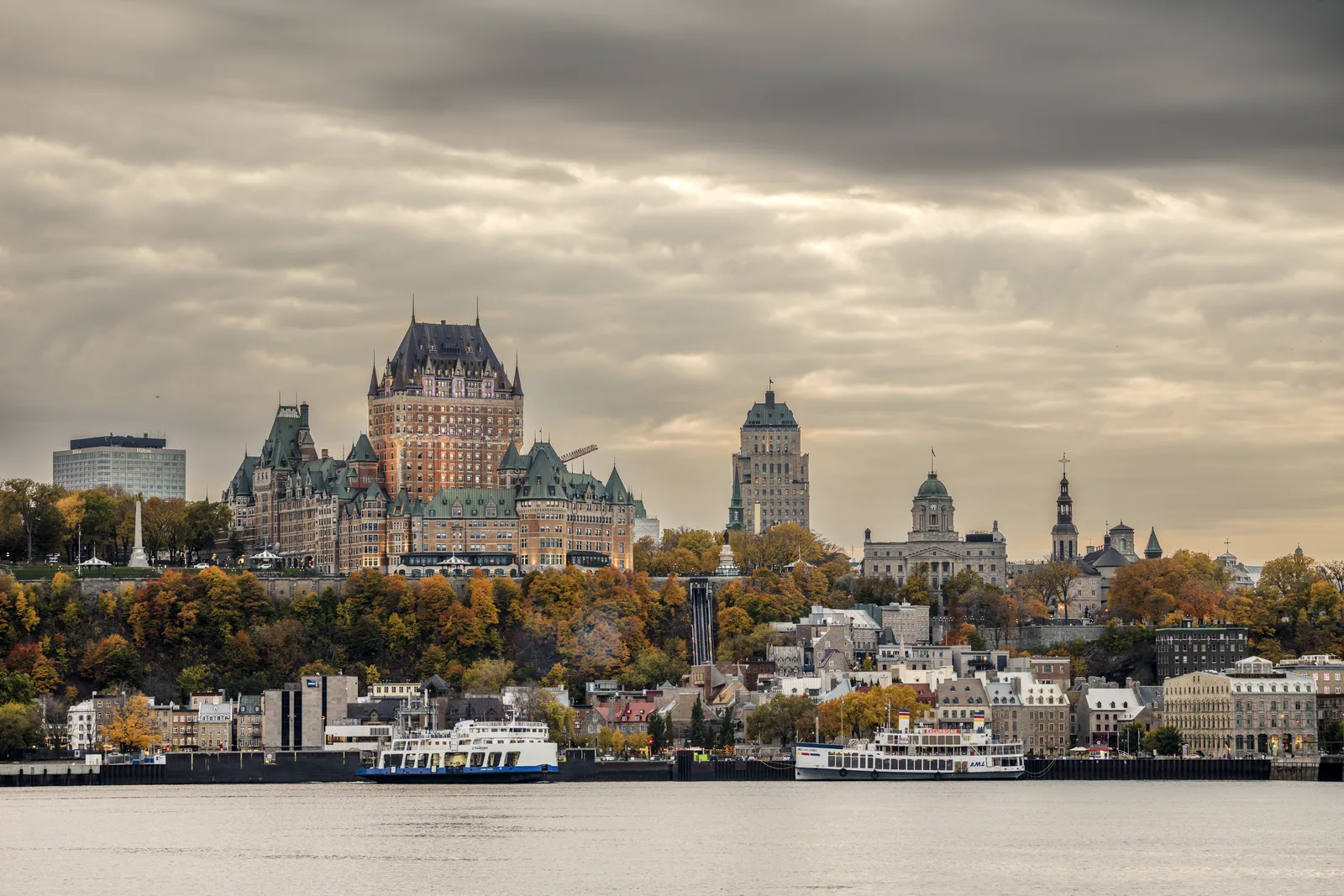
A city best understood one level at a time
Québec City rewards walking, but it also rewards knowing when to stop climbing. Stone streets, river views and fortified edges provide the memorable setting; choosing a sensible route lets you enjoy them without turning each outing into an endurance test.
This is Québec City, the city recorded as Québec in VisaWand’s geographical directory, in the Canadian province of the same name. The city and the province are different planning scales. A rural accommodation listing somewhere in Québec is not necessarily a convenient base for the historic centre.
Allow three days for a first visit if you want to combine the old city with museums or an excursion. A shorter stay can still work with a selective itinerary. Start with VisaWand’s Canada country guide for national context, then use the neighbourhood, transport and seasonal choices below to build a trip that suits your interests and mobility.
Read the landscape through its history
UNESCO’s Historic District of Old Québec description explains an urban ensemble divided between Upper Town on Cap Diamant and Lower Town around Place Royale and the harbour. Founded as a French colonial settlement in the early seventeenth century, Québec became the capital of New France and subsequently the British colony. The protected historic district was inscribed on the World Heritage List in 1985; that designation does not describe the entire modern city.
Read the walls, gates and defensive works as part of that layered history. Looking at them alongside the religious and administrative buildings gives more context than treating the Château Frontenac as the city’s sole landmark.
The Plains of Abraham and Parliament Hill area adds another perspective. The Plains were the site of the 1759 battle between French and British forces, while today’s park also serves ordinary recreation. A walk here can combine historical reading with time away from a crowded street. Contemporary Indigenous voices deserve their own place in the visit, including the Huron-Wendat cultural institutions at Wendake.
Choose a neighbourhood before choosing a room
The official accommodation-area guidance distinguishes Upper Town, with the Château, fortifications and nearby Parliament Hill, from Lower Town’s Petit-Champlain and Old Port. Choose Upper Town if much of your shortlist is on the heights. Choose Lower Town when you want to begin close to its shopping streets, waterfront setting and museum visits. The climb between the two remains part of the decision.
For another urban base, compare Saint-Jean-Baptiste, Saint-Roch and Montcalm. Saint-Jean-Baptiste is in Upper Town; Saint-Roch is a Lower Town district with shops, cultural venues and nightlife. Check the exact route to the places you plan to visit instead of interpreting “central” as “level” or “quiet”.
Before reserving, trace three journeys: arrival with luggage, the first morning’s outing and the return after dinner. Ask about stairs inside the property as well as outside. A picturesque address can be excellent for one traveller and awkward for another. For a longer stay, add groceries, laundry and a workday commute to the test. Saving a little on the room is less persuasive if the location adds transport costs or repeated exhausting climbs.
Explore Old Québec without rushing between levels
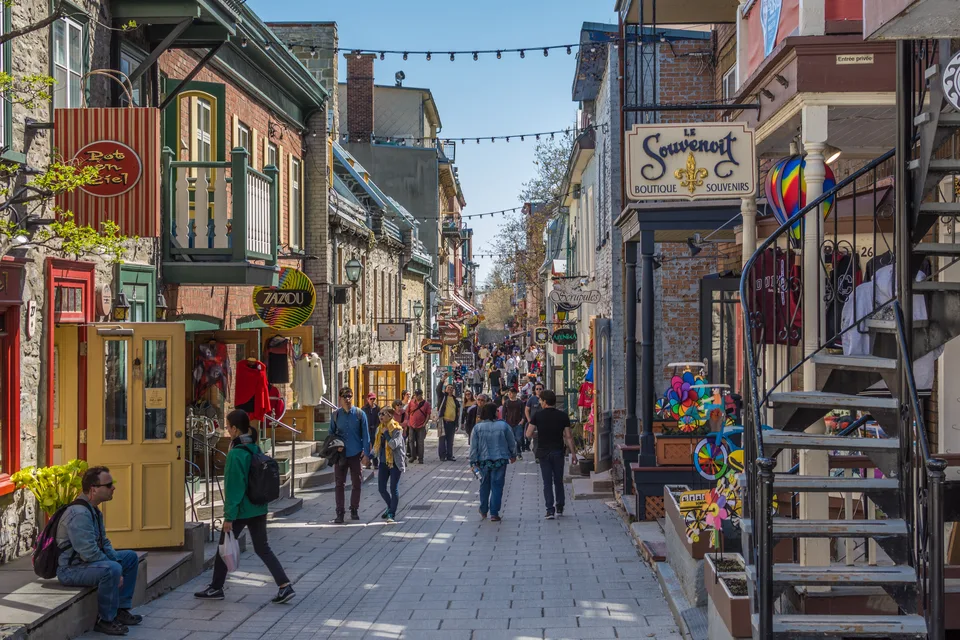
Québec City Tourism’s Old Québec overview places the fortified streets, Petit-Champlain, Old Port and Parliament Hill within a compact but varied historic visit. Start with a small area and leave time to look: a street’s changing perspective, an interpretive panel or a shop window can be more rewarding than racing through a long list of landmarks.
The tourism board’s walking guidance recommends grouping visits on one level before heading to the other. That is especially useful with children, a buggy or limited walking stamina. Choose a café or indoor visit between longer stretches, and use a street map to understand the slope rather than judging solely by horizontal distance.
Petit-Champlain offers a natural browsing stop. Decide what you want to buy before becoming absorbed in the displays: a book, a locally made object or a food product you can legally take home. Ask about the maker and materials, and keep receipts. A historic-looking shopfront is a setting, not proof that everything inside was produced locally. Residents also use these streets, so leave doorways clear and respect private entrances when taking photographs.
Use the funicular with its actual conditions in mind
The Old Québec funicular operator links Dufferin Terrace with 16 Rue du Petit-Champlain. Its published standard fare is CAD7 per person per passage, with no return journey included. Payment is in cash on site; the operator says it does not offer online ticketing. Keep that small practical requirement in mind before relying on a card-only day out.
Regular hours are published as 09:00–21:00, with a later summer closing between Saint-Jean-Baptiste Day and Labour Day. Reconfirm current operation before making an evening return depend on it. Children below 117 centimetres travel free; that is a height condition rather than an age category.
Wheelchair users should contact the operator about the intended date and approach. Its guidance says wheelchair access is available in spring, summer and autumn but closes in snowy winter conditions. Strollers must be folded. The funicular is therefore a useful route choice with specific limitations, rather than a universal solution to every access need. Ask accommodation staff to help identify a suitable alternative when those conditions do not match your visit.
Visit the Citadelle as an active military site
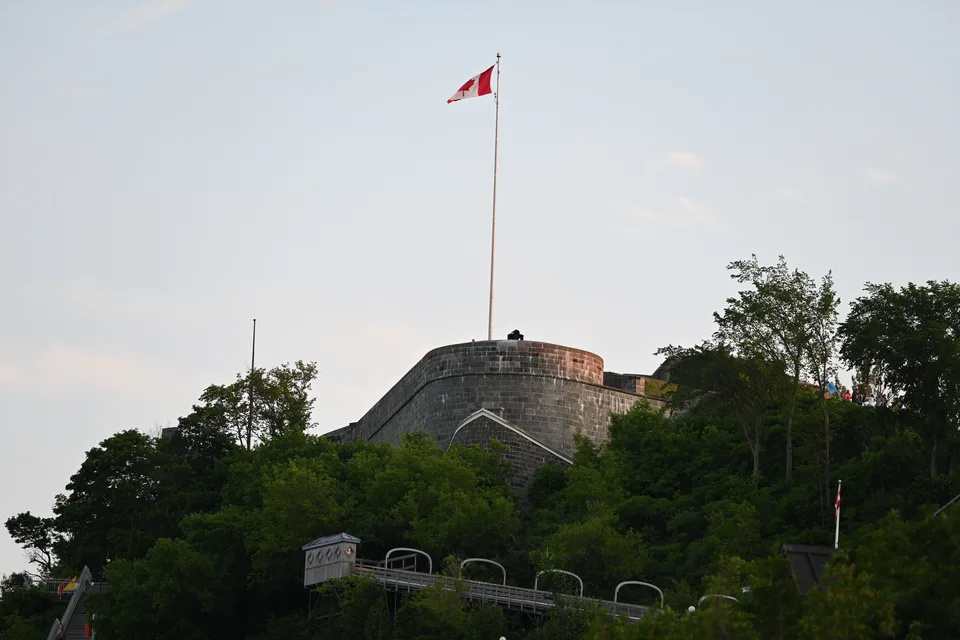
The Citadelle’s current visitor information describes an active military base that can be visited only with a guide. General admission includes an approximately hour-long outdoor guided tour and access to the Royal 22e Régiment Museum, where the museum visit is self-guided. Book it for the military and architectural history, allowing enough time to listen and look.
Published general admission is CAD22 for an adult, CAD20 for seniors aged 65 and over and students aged 18 and over, and CAD8 for ages 11–17. Children ten and under are free. Check the final booking amount and any eligibility evidence for reductions. Current autumn/winter hours are 10:00–17:30 from 1 September 2026 to 21 May 2027; the final available tour is a separate question to confirm.
Historic architecture can limit access in some areas, so explain particular needs before booking. Dress for the outdoor portion rather than assuming a museum ticket means an entirely indoor experience. Keep the rest of the morning or afternoon flexible enough that a guided departure does not compete with a distant reservation.
Add museums and Parliament to the outdoor streets
The Musée de la civilisation publishes age-based admission: CAD22 for ages 18–34, CAD27 for ages 35–64 and CAD26 for ages 65 and over. Younger visitors have different rates, including free admission for children five and under. Compare the applicable ticket and current exhibitions directly, especially for a mixed-age household. Opening calendars vary; check the selected date before using it as a wet-weather fallback.
The National Assembly offers free visitor activities, including guided or self-guided exploration of the Parliament Building and gardens. Reserve the activity you want, carry photo identification and allow for airport-style security screening. Its visitor information currently notes renovation closure of the National Assembly chamber, so do not assume every room is included.
Outdoor heritage and staffed interiors also have different seasons. Parks Canada confirms that regular admission resumed on 8 September 2026 after the summer Canada Strong Pass offer ended. Its Fortifications opening calendar limits Artillery Park buildings to a summer season. Walking past the fortifications in autumn does not establish that a particular building or welcome desk will be open. Match the itinerary to current access rather than an undated photograph or summer leaflet.
Make Montmorency Falls a separate outing
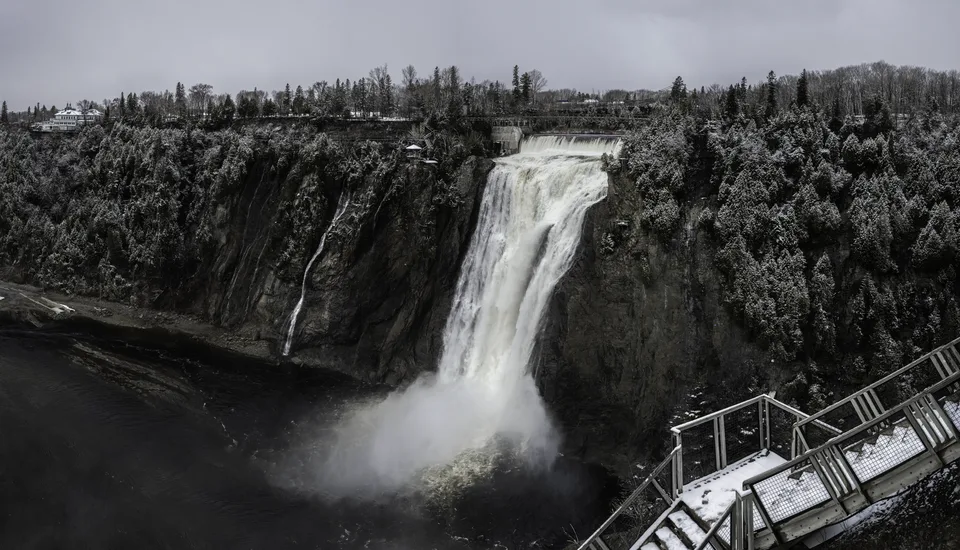
Sépaq’s Parc de la Chute-Montmorency information describes an 83-metre waterfall and provides current site updates, maps and opening information. Treat it as an outing with its own entrance, weather and return journey, rather than an item automatically squeezed into an Old Québec walking day. Select a route appropriate to the people travelling.
The published seasonal admission table distinguishes regular pricing from Québec-resident rates. For adults aged 18 and over paying the regular rate, daily access is CAD13.90 through 1 November 2026 and CAD10.42 in the low season beginning 2 November, before taxes. Québec residents have separate reductions, and metropolitan-area residents need proof for free access. Children through age 17 have free daily access.
Cable-car pricing is listed separately, including an adult round-trip product at CAD14.95 before taxes. Confirm the combination of access, transport, parking and activities in your purchase rather than reading one number as the entire excursion cost. Check which paths and activities are operating on the day. Wind, rain, snow and ice can change the sensible route; a photograph of a clear path is not evidence of current conditions.
Give Wendake its own cultural context
The Huron-Wendat Museum is a national institution of the Huron-Wendat people, dedicated to their heritage, history, culture and arts. Its permanent exhibition, Wendat Endi’, We the Wendat, presents the Nation through significant figures and their roles as cultural guardians. A visit offers contemporary cultural interpretation alongside historical material.
Choose the product deliberately. A guided museum visit, a self-guided visit and a Discovery Tour of Wendake are different experiences. The museum’s published rates and seasonal calendar list adult admission from age 13 at CAD19.69 for a guided visit, CAD17.16 self-guided and CAD24.75 for the Discovery Tour, before taxes. Confirm the language, meeting point and inclusions.
From 5 October 2026 to 20 June 2027, the stated schedule is Wednesday–Sunday, 10:00–18:00, closed Monday and Tuesday. Some spaces have access limitations for particular wheelchairs, so discuss needs in advance. Leave enough time for the journey and avoid treating a place of living community, worship and cultural work as scenery. Follow the institution’s guidance on photography and access rather than assuming every location on a tour is always open.
Compare accommodation by the complete stay
Historic hotels, smaller city properties and self-catering rentals meet different needs. Make a shortlist based on location, access and the room category, then compare the final price. If a river view matters, get confirmation for the exact category. A photograph of a suite or public terrace is not a promise about every room.
At Fairmont Le Château Frontenac, the published guest information lists valet parking at CAD55 per night, with higher charges for oversized vehicles and an additional electric-vehicle charging fee. It also lists a CAD40 experience fee per room per night, plus tax. These are property-specific examples that show why the base room price is an incomplete comparison.
Ask any accommodation about breakfast, parking, compulsory charges, cancellation terms and the actual route from arrival point to room. For a rental, establish who deals with a late lock problem, whether laundry is available and which household supplies are provided. Families should confirm sleeping arrangements and occupancy; travellers needing step-free access should request a precise description. Use written answers to narrow the choice before committing to a non-refundable rate.
Arrive by the correct station or airport route
VIA Rail’s Québec City station information identifies Gare du Palais at 450 Rue de la Gare du Palais. Check the station on your ticket, the dated service and the onward route to your accommodation. If assistance is needed, arrange it directly; the station information requests advance notice for curbside assistance. Do not assume that every rail stop advertised for the Québec area is interchangeable.
For Jean-Lesage airport, official tourism transport guidance identifies RTC route 76 towards Sainte-Foy’s bus and rail stations and route 80 towards downtown Saint-Roch, with onward connections. Use the operator’s current journey planner for your arrival time and luggage situation rather than treating a route description as a timetable.
The airport’s taxi information publishes fixed fares to its defined downtown zone of CAD41.40 by day and CAD47.60 between 23:00 and 05:00. A CAD0.90 levy plus its taxes is additional. Other journeys use the meter. Confirm that the destination qualifies for the zone and ask about the complete charge before leaving. These figures were checked on 16 October 2026; a fixed fare zone is not a guaranteed journey time.
Choose a transit ticket for your actual journeys
RTC’s fare schedule effective July 2026 lists a general single ticket at CAD3.85 and a cash fare of CAD4. A one-day pass is CAD10.50, five consecutive days CAD34.75 and a general monthly pass CAD102.50. The monthly pass follows the calendar month; it is not a rolling thirty-one-day product.
Compare the days and journeys you will actually use before buying. Check the payment method, activation rules and current transfer conditions, particularly when connecting services. Reduced fares have eligibility requirements; do not buy a discounted product simply because its price appears in a search result.
For a potential move, test the address at the time you would go to work and come home. Include the walk to the stop, the transfer and the last departure, not just the bus’s running time. Check a winter journey separately from a pleasant afternoon visit. Cycling and walking can be useful parts of daily life, but gradients, conditions, luggage and personal confidence should determine whether they suit a particular trip.
Try regional food and budget for taxes
Québec City Tourism’s regional-food coverage offers useful starting points: Buffet de l’Antiquaire in the Old Port for dishes such as cipaille and meatball stew, or La Bûche for interpretations of classics including cretons, baked beans and pouding chômeur. Check the current menu and booking arrangements rather than expecting every dish mentioned in an article to be available.
Balance a planned restaurant meal with simpler food near your base. State allergies clearly and confirm an answer you understand. Browsing a menu before sitting down helps compare the actual meal, while grocery shopping can make self-catering worthwhile only if the rental has the equipment you need.
Revenu Québec publishes GST at 5% and QST at 9.975%, with QST calculated on the selling price excluding GST. Most goods and services are taxable. Its lodging-tax guidance describes a general 3.5% tax on the room’s nightly price, with specific rules for intermediaries; GST and QST can also apply to the accommodation total including lodging tax. Request an itemised bill. Keep accommodation, ordinary transport, paid visits, meals and a contingency as separate budget lines instead of relying on an unsupported single daily average.
Match the season and language to your plans
The city’s weather information describes four distinct seasons. Make summer plans with room for outdoor wandering, autumn plans with changing temperatures in mind and winter plans around suitable clothing and shorter outdoor stretches. Spring can suit a slower visit, but check each attraction’s own calendar. Do not read a year-round destination as a promise that every route and activity operates throughout the year.
Comfortable, secure footwear matters on slopes and uneven streets. In winter, check conditions before choosing stairs or an exposed walk and leave time to warm up. Keep one indoor alternative without assuming it opens every Monday. Book any event for its confirmed dates rather than expecting an annual festival to run throughout a season.
Official visitor guidance identifies French as Québec’s official language, while English is widely spoken in tourist areas. Learn useful greetings and keep addresses in their local form. For a move, assess the language requirements of your work, school and essential services directly. The ease of ordering lunch in English during a holiday does not establish that every household task or professional situation will work the same way.
A three-day plan with room to change
Spend the first day in Upper Town: orient yourself around the Château and Dufferin Terrace, then choose the Citadelle or another booked visit. Leave a break between a guided activity and dinner. If arrival is late, move the paid visit to another day instead of making the trip start with a rush.
Use day two for Lower Town, grouping Petit-Champlain, Place Royale and the Old Port with a museum visit that interests you. Choose when to return uphill rather than repeatedly crossing levels. A café break and time to browse belong in the plan, especially with children or anyone who tires on slopes.
On day three, choose Montmorency Falls or Wendake according to interests, weather and the day’s opening arrangements. Trying to combine every regional outing can consume the time you hoped to spend at each. With an extra day, explore more of the central neighbourhoods. Keep departure day focused on the actual train or flight, with room for the connection from your accommodation. For a wider Canadian itinerary, compare the completed Montréal city guide before deciding how much time to divide between the two cities.
Test household life before signing a lease
A move calls for a different map from a holiday. Visit prospective addresses during the commute, in the evening and, where possible, in poor weather. Check shops, pharmacy access, building entrances, laundry, rubbish arrangements and parking. Ask who clears snow at the property and how deliveries reach the unit. Inspect heating, ventilation and the windows rather than judging a rental entirely from summer photographs.
Québec’s housing tribunal explains that landlords cannot require a security or key deposit, more than the permitted first payment in advance, or postdated cheques as a condition of the lease. Read the agreement and clarify utilities, repairs, appliances and the authorised recipient of rent before paying. Keep receipts and seek qualified advice when a proposed term is unclear.
RAMQ health coverage depends on status and eligibility. Tourists do not qualify; eligible arrivals from abroad commonly face a waiting period of up to three months, with exceptions. Register promptly with the required documents and arrange appropriate insurance until the confirmed start of coverage. Check medication and ongoing care needs separately. A lease, work offer or Canadian address does not by itself prove that the whole household is covered.
Separate visiting from work, study and relocation
Use IRCC’s current entry guidance for your passport and travel mode. Some travellers need a visa, others an eTA for air travel, and the rules for land arrivals can differ. Permission to visit is separate from permission to work: most foreign nationals require a work permit, subject to defined exemptions.
For study, Québec’s authorization guidance generally requires a Québec Acceptance Certificate and a federal study permit for programmes longer than six months, with exceptions that must be checked individually. Verify the institution, programme and permissions before paying tuition or a long rental deposit.
Permanent relocation requires its own assessment. Québec’s skilled-worker information describes provincial selection options and notes that the former Regular Skilled Worker Program has been replaced by the Skilled Worker Selection Program. Consult current provincial and federal requirements rather than assuming a tourist stay, course or job automatically leads to permanent residence. VisaWand’s Canada destination information and consultant directory can help you find support. The Canada location directory offers further destination pages, whose editorial coverage varies.
Official planning resources
Reviewed 16 October 2026. Use the official resources linked throughout this guide for admission, transport, housing and immigration decisions. Prices, services and rules can change; confirm the details relevant to your dates. Photography illustrates the locations and is not a live view.
View all official resources
- UNESCO: Historic District of Old Québec
- Québec City Tourism: Parliament Hill and Plains of Abraham
- Québec City Tourism: Upper and Lower Town accommodation areas
- Québec City Tourism: walking routes between Upper and Lower Town
- Old Québec funicular: current fares and practical conditions
- Citadelle de Québec: current hours, admission and access
- Musée de la civilisation: admission and calendars
- National Assembly of Québec: visitor activities and entry rules
- Parks Canada: Fortifications visitor planning
- Parks Canada: 2026 fortifications seasonal opening
- Sépaq: Montmorency Falls site and visitor updates
- Sépaq: Montmorency Falls seasonal admission and cable car prices
- Wendake Tourism: Huron-Wendat Museum
- Musée Huron-Wendat: schedules, tour types and admission
- Fairmont Le Château Frontenac: guest services and additional charges
- VIA Rail: Québec City Gare du Palais station
- Québec City Tourism: transport and airport routes
- Québec airport: taxi zones and tariffs
- RTC: fares effective July 2026
- RTC: transfer conditions
- Québec City Tourism: regional food and restaurant examples
- Revenu Québec: GST and QST rates
- Revenu Québec: lodging tax and sales taxes
- Ville de Québec: seasonal weather
- Québec City Tourism: language and practical visitor information
- Tribunal administratif du logement: rent and prohibited deposits
- RAMQ: Québec health insurance eligibility
- IRCC: eTA eligibility and travel mode
- IRCC: work permit exemptions
- Québec government: provincial and federal study authorizations
- Québec government: skilled-worker immigration options
- Québec City Tourism: Old Québec and its areas
Plan the next part of your journey
Explore the Canada guide, browse other cities or compare consultants for your travel and relocation questions.