Visa
Give Plovdiv more than a hurried stop
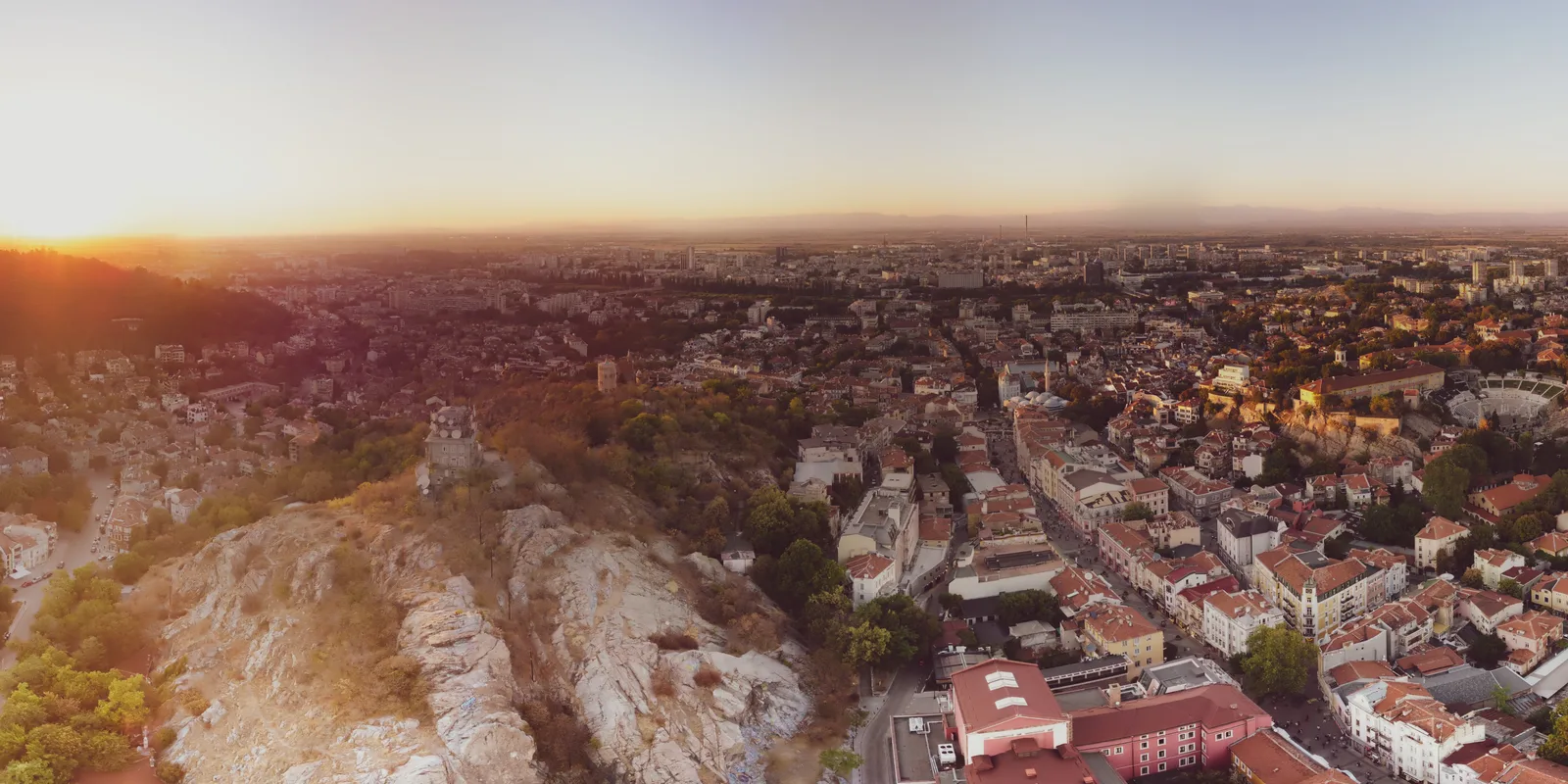
Plovdiv makes its strongest impression when you move between different levels of the city. Below the shopping street, Roman seating interrupts the modern centre. Above it, cobbled lanes climb towards painted houses and the hills of the Old Town. Nearby, Kapana offers a different sort of stop: a café, a small shop or an evening meal without another entrance ticket.
Allow three nights if you want to visit the principal sights without turning the trip into a series of opening-hour calculations. Two full days can cover a satisfying introduction, but an extra day gives you room for a museum, a viewpoint and a change of weather. If you are assessing a move, extend the stay into an ordinary working week and investigate housing and transport beyond the historic core.
Read the Old Town as a collection of different periods
The official Old Town overview describes a reserve across Nebet, Dzhambaz and Taksim hills, bringing archaeological remains, churches and Revival-era houses into a compact area. These are overlapping layers, not buildings from one uniform “ancient” period. Looking at how streets and structures relate is more rewarding than trying to attach a single age to the whole district.
Roman Philippopolis is visible in the theatre and stadium; later domestic architecture gives the Old Town much of its colour and detail. The reserve’s protected status dates to 1956. Buildings have been researched, conserved and restored, which is part of the story visitors see today.
Avoid making the visit depend on an “oldest city” ranking. Plovdiv has substantial historical depth without requiring a competition with other settlements. A house interior, a mosaic and an outdoor archaeological site reveal different aspects of its past.
Choose where to stay by the approach to the door
The Old Town suits visitors who want historic surroundings and early walks before the streets become busier. Its slopes and cobbles are also practical considerations. Ask how close a vehicle can legally get, whether luggage must be carried uphill and whether the room requires stairs. A short map distance does not establish an easy arrival.
Kapana puts cafés, shops and evening activity close by. If sleep matters more than stepping straight into nightlife, ask which direction the bedroom faces and what is immediately outside. The central pedestrian area offers another useful base, especially when you want to move between the lower centre and the historic hills.
North of the Maritsa, Severen, also known as Karshiyaka, includes several neighbourhoods rather than one interchangeable accommodation zone. Compare the precise address and river crossing you would use. For a long stay, the daily commute matters more than a broad district label.
Compare a hotel’s staffed arrival and luggage storage with an apartment’s extra space and cooking facilities. Confirm the features your party needs, including a lift, accessible bathroom or separate sleeping area, in writing. If arriving after reception hours, establish the key procedure before travelling rather than discovering it at a locked entrance.
Separate the Roman Stadium from the Ancient Theatre
The stadium and theatre are different monuments, serving different functions and occupying different places in the modern city. Start around the Roman Stadium on the central pedestrian route, where the surviving seating helps explain what lies beneath the streets. The official pedestrian-area guide connects this area with Dzhumaya Mosque, the route towards Kapana and the climb into the Old Town.
The stadium’s Sphendone visit is listed as free in the Ancient Plovdiv ticket information, while projection experiences and other areas have separate arrangements. Do not assume that every activity advertised beside a freely accessible monument is included.
Use this stop to orient yourself before heading uphill. A pause around the stadium and mosque is easier to combine with the lower centre than with a rushed return from the theatre just before closing. Read the ticket description carefully when several Roman attractions appear in the same booking menu.
See the Ancient Theatre as both archaeology and a working stage
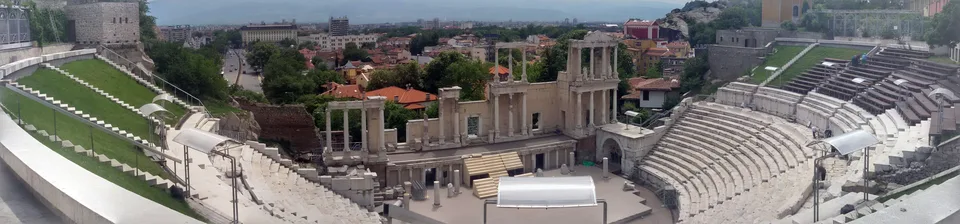
The site operator’s account places the theatre’s construction in the final decade of the first century AD. Its curved marble seating and surviving stage architecture make the scale legible, while the view beyond keeps it connected to the present city. Allow time to sit and look rather than treating it solely as a photograph.
The theatre is also used for performances. A sightseeing admission is not a ticket to an opera or concert, and rehearsals or event preparations may affect ordinary visits. Check the date-specific programme if seeing the monument is central to your trip.
The operator lists daily sightseeing hours with seasonal changes and a lunchtime closure. Consult the current entry before walking up, especially if arriving around midday. Think about the uneven surfaces and steps when planning for children or anyone with mobility needs; impressive ancient seating is not necessarily a straightforward route for every visitor.
Choose house interiors before buying a combined ticket
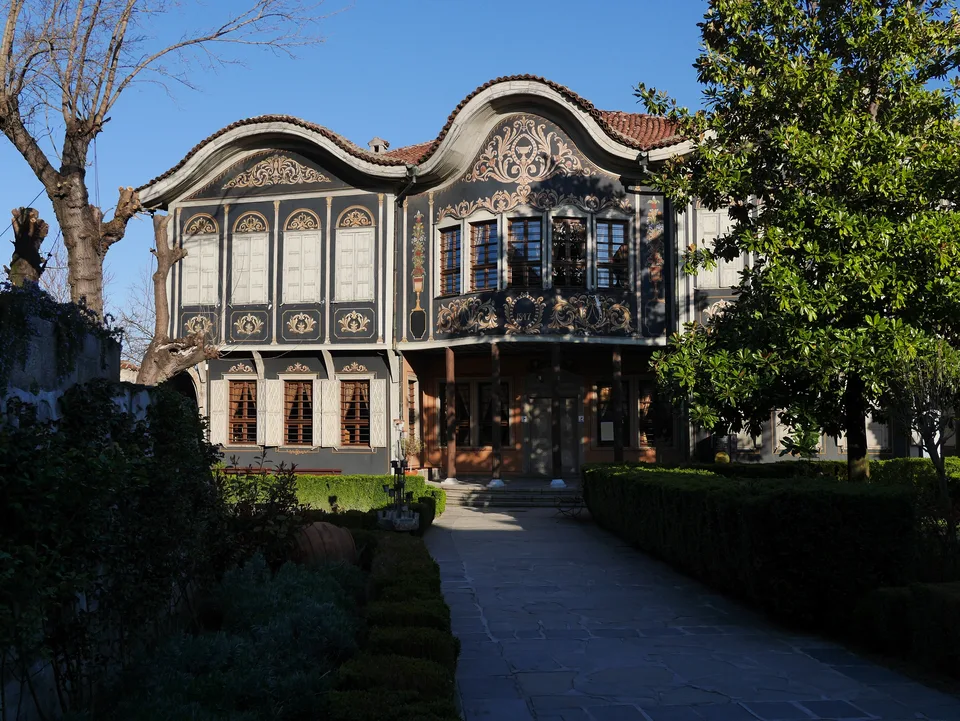
The Old Town offers several house museums and galleries, including Balabanov, Hindliyan and other named properties. Choose a few that match your interest in interiors, decorative painting or art rather than buying the largest package and feeling obliged to complete it. A slower visit to one house can be more useful than several quick circuits.
The institute publishes combined-ticket options, but their scope needs attention. The five-site product excludes the Bishop’s Basilica, Small Basilica and the late-antique Irini building in its Bulgarian description. Check the current list and conditions at purchase; “Old Town ticket” should not be understood as admission to every museum and archaeological attraction in Plovdiv.
Monday closures and lunchtime breaks can also differ between properties. Build your route around the places you actually want to enter. If a house is closed, use the surrounding streets or another open site rather than repeatedly crossing the hills to rescue a rigid checklist.
Make the mosaics a distinct part of the visit
The Bishop’s Basilica visitor information describes layered mosaic floors with birds, plants and geometric designs from the building’s late-antique life. This is a different experience from standing in an outdoor theatre. Leave enough time to follow the patterns and understand the archaeological presentation instead of adding it as a brief final stop.
The basilica and related mosaic sites appear on Bulgaria’s UNESCO Tentative List. That is a nomination-stage listing, not an inscription on the World Heritage List. Their archaeological importance does not need the stronger, inaccurate label.
Check the basilica’s own admission arrangements and opening information. It is excluded from the ordinary five-site Old Town product. If visiting several mosaic sites, compare the specifically named combination rather than assuming one basilica ticket covers another. Current access should be checked separately for each building, especially when conservation or maintenance affects part of a site.
Use the Ethnographic Museum to understand the houses
The Regional Ethnographic Museum brings domestic life, crafts and regional traditions into the visit. Its collections cover Thrace, the Rhodope Mountains and Sredna Gora, giving context to the elaborate house around them. The museum was founded in 1917 and has occupied the Kuyumdzhioglu house since 1938.
The museum’s current tariff lists €5 admission to the main permanent exhibition at 2 Dr Stoyan Chomakov Street. A separate exhibition at 20 Saborna Street has its own admission, with a combined option also listed. These are museum-specific products, not a general pass for the reserve.
The operator’s visitor guidance lists Monday closure, seasonal hours and an accessible entrance with lift access. It also notes that the uphill paved streets can be an obstacle. Contact staff about assistance and the complete approach before visiting; accessible exhibition rooms do not automatically make the surrounding route easy.
Leave room for Kapana and the craft streets
Kapana works best when you give it time between paid visits. The craft-related street names described in the municipal guide recall the district’s commercial past, while present-day shops and places to eat offer reasons to stay into the evening. Look into a few small businesses instead of walking through only to say you have seen the district.
The Street of Crafts on Strumna Street is another useful lead. The official listing identifies workshops in Revival houses along a narrow cobbled route descending from Hisar Kapia. Ask makers about the work on display, and confirm when a workshop is open rather than assuming every door is a shop throughout the day.
For purchases, consider what can travel safely and what requires protective packaging. A small piece selected with care may be more worthwhile than several souvenirs bought in a departure rush. Keep receipts and check your destination’s import rules when the purchase is food or drink.
Pause in Tsar Simeon Garden
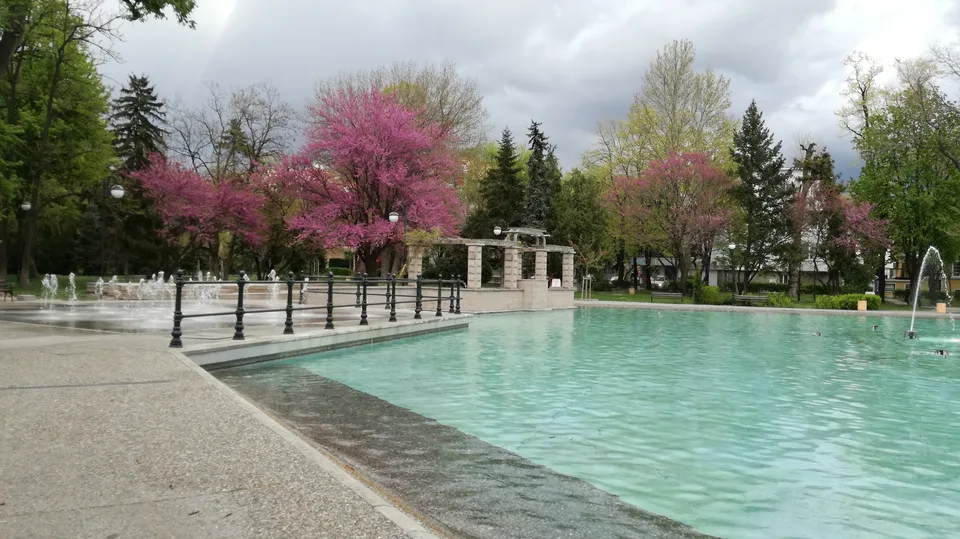
Tsar Simeon Garden provides a welcome change of pace after the Old Town’s slopes. The official garden description connects its creation with the 1892 exhibition and landscape architect Lucien Chevalas. Its paths, lake and fountains give you a reason to stop without adding another museum to the day.
Treat the Singing Fountains as a seasonal feature whose operating programme needs a current check. A photograph of a performance or a remembered summer timetable does not guarantee a show on your evening. The park remains worth considering as a place for an unhurried walk even when that programme does not fit.
Use a garden break to reassess the rest of the afternoon. If the hills have been tiring, stay in the lower centre rather than forcing another climb. Travelling with children, older relatives or different walking speeds is easier when a pause is part of the itinerary rather than an interruption to it.
Budget in euros and distinguish the ticket products
Bulgaria adopted the euro in January 2026; the European Central Bank’s changeover information confirms that euro cash became the sole legal tender from February. Older pages still showing lev amounts should not be treated as instructions to arrive with lev for everyday spending.
A small verified subtotal illustrates the value of separating purchases. Main Ethnographic Museum admission at €5 plus two ordinary €0.50 paper city-bus journeys makes €6, before food, accommodation and other attractions. The airport shuttle is a separate €6 per person on the operator’s published page. Neither figure is an all-inclusive daily budget.
Get a date-specific accommodation quote and compare cancellation terms, breakfast, parking and cleaning charges. Leave some flexibility for an unexpected journey or indoor visit. When buying several attraction tickets, add the total for your whole party, including concessions only where you can meet the proof requirements.
Compare Plovdiv and Sofia airport arrivals
The official arrival guide identifies both Plovdiv Airport and Sofia Airport as options. Plovdiv Airport is outside the city, at Krumovo. Compare the complete journey to your accommodation, including the transfer after landing, rather than choosing solely from the flight price.
The airport’s shuttle information describes a connection with South Bus Station tied to the flight schedule. The shuttle operator’s page lists €6 per person and flight-related departure times. Check the actual date and flight with the operator, especially if the displayed weekly timetable has not yet reached your travel week. This is not a bus running at a fixed interval throughout the day.
For Sofia arrivals, check the onward journey separately. A flight landing time is not the time you will reach a city bus or railway station. Allow for baggage, travel into Sofia and a connection you can realistically make.
Confirm the station as carefully as the departure time
The city’s municipal bus-station information distinguishes South, North and Rodopi stations. Confirm which one your service uses before arranging a taxi or setting off with luggage. “Plovdiv bus station” is not a sufficiently precise instruction for every intercity journey.
For rail travel, follow the national operator linked from the official arrival page and search for your intended date. Check changes, departure station and arrival time directly, particularly when combining the train with an airport transfer. A route on a national map does not establish that the service you need runs at a convenient hour.
Save the ticket, station name and accommodation instructions offline. If arriving late, establish key collection and a fallback contact before departure. Travellers with large bags, bicycles or pushchairs should also check carriage conditions rather than assuming every transport connection accepts the same equipment.
Use city buses without assuming free transfers
The municipal council’s 2026 fare decision sets the paper single-journey fare at €0.50 from 1 February, without a transfer. Keep that scope clear: it is not an airport-shuttle ticket, a regional fare or an unlimited period of travel.
Confirm the route and direction at the stop, and follow the current onboard payment instructions. Carry a practical payment alternative rather than relying on an unverified assumption about universal bank-card acceptance. Keep your ticket until the journey is complete.
Walking can cover much of the central sightseeing area, but the final slope to an address may still justify another arrangement. If you drive, ask your accommodation for a legal approach and a definite parking plan. Limited vehicle access in the Old Town makes “parking nearby” very different from an assured space at the door.
Choose your season around heat, hills and opening hours
The municipal climate description identifies hot summers and variable winter temperatures, with local differences influenced by the hills and river valley. For a warm-weather trip, give the steepest outdoor walks an earlier or later place in the day and keep water and shaded pauses in the plan.
Spring and autumn can suit a trip built around walking, while winter makes shorter attraction hours more significant. Check the forecast close to travel and choose shoes suited to wet or potentially slippery cobbles. None of these seasonal expectations guarantees conditions on an individual day.
Plan one indoor visit that can move when the weather changes. A museum afternoon is easier to arrange when it already fits the opening calendar; an improvised Monday replacement may be harder. For performances and fountain shows, use the programme for your dates rather than importing last summer’s times into a different season.
Spend three days with time to stop
On day one, orient yourself along the main pedestrian area, Roman Stadium and Dzhumaya Mosque surroundings. Explore Kapana, then choose an evening meal nearby. This first circuit tests the distance to your accommodation and gives you a sense of how the lower centre connects to the hills.
On day two, make the Old Town your focus. Choose the theatre and one or two interiors, allowing for lunch breaks and uneven walking surfaces. Include the Ethnographic Museum on a day when it is open. Do not spend the day pursuing every possible use of a combined ticket.
On day three, devote proper time to the Bishop’s Basilica, then slow down in Tsar Simeon Garden or return to a favourite street. Add a hill viewpoint when conditions and energy suit you. With another day, consider an excursion; without one, leave a comfortable margin for the departure journey.
Test the city as a home beyond the visitor route
A relocation visit should include a normal commute, grocery shopping, laundry and an evening at the prospective address. Compare the actual workplace or campus journey, including the river crossing if staying north of the Maritsa. Repeat it at the hours you would use rather than judging from a quiet sightseeing afternoon.
Inspect a flat for ventilation, heating, damp, window condition and summer cooling arrangements. Ask how utility and building charges are calculated and request recent bills that show seasonal differences. Confirm internet availability at the address and whether furniture, appliances and maintenance responsibilities are recorded in the lease.
Before transferring money, establish the landlord’s authority to let the property and obtain written rent, deposit-return and termination terms. Record the condition and meter readings at handover. A short holiday booking does not prove that a similarly priced year-round home is available, or that the same address will work for daily life.
For children, contact the relevant school or childcare provider about placement, language and required documents before choosing an address around an assumed vacancy. For adults, identify the nearest workable healthcare and pharmacy arrangements. Ask communications and utility providers what identification and payment details they require for a new account.
Arrange healthcare and permission before a longer stay
Consult Bulgaria’s National Health Insurance Fund about the cover relevant to your circumstances. Eligible visitors using an EHIC should read the EU’s Bulgaria healthcare guidance, including contracted providers and possible patient charges. Do not assume every private appointment is covered or that renting a flat creates insurance entitlement.
Bulgaria is part of Schengen, as the European Commission confirms. For affected non-EU visitors, the usual short-stay allowance is up to 90 days in any 180-day period across Schengen, subject to the permission granted. A trip to another member state does not restart it. Check nationality-specific requirements through the Bulgarian Foreign Ministry.
Employment, qualifying study and remote work need separate assessment. Use the official employment, student and consular long-stay guidance, then the consulate responsible for your residence. EU free-movement rules differ. Temporary permission is not a promise of permanent residence.
Extend the journey only when it adds something you want
Bachkovo Monastery offers an active religious setting south of Asenovgrad; check visitor access and behave accordingly. Hisarya provides another direction, with Roman remains and mineral-spring heritage. Choose an outing for its particular appeal, then verify transport and return arrangements instead of combining several places into one rushed day.
VisaWand’s Sofia destination page and Varna destination page offer other bases to consider. Use the Bulgaria country guide, destination page and consultant listings alongside official information when planning a longer stay. The Bulgaria location directory helps you explore places; it is not a completed guide to every entry. Keep enough time in Plovdiv itself for the small decisions that make a visit enjoyable: another house interior, a quiet garden pause or an evening without a timetable.
Official planning resources
Reviewed 28 October 2026. Use the official resources linked throughout this guide for admission, transport, housing and immigration decisions. Prices, services and rules can change; confirm the details relevant to your dates. Photography illustrates the locations and is not a live view.
View all official resources
- Bulgarian Ministry of Tourism Old Town overview
- Municipal northern district history
- Central pedestrian area and Kapana
- Ancient Plovdiv Bulgarian tariff information
- Ancient Theatre operator information
- Bishop Basilica visitor information
- UNESCO Tentative List submission
- Ethnographic Museum collections
- Ethnographic Museum prices
- Ethnographic Museum visitor access
- Official Street of Crafts
- Tsar Simeon Garden
- Dzhumaya pastry and coffee listing
- ECB Bulgaria euro changeover
- Official Plovdiv arrival information
- Airport shuttle information
- Airport shuttle operator current schedule
- Municipal bus station information
- Plovdiv Council2026 single bus fare
- Municipal climate description
- Bulgarian National Health Insurance Fund
- EU EHIC Bulgaria guide
- EU Bulgaria Schengen membership
- Bulgarian MFA visa information
- EU Bulgaria employment route
- EU Bulgaria study route
- Bulgarian consular long-stay guidance
- Bachkovo Monastery visitor overview
- Municipal Hisarya outing
Plan the next part of your journey
Explore the Bulgaria guide, browse other cities or compare consultants for your travel and relocation questions.