Visa
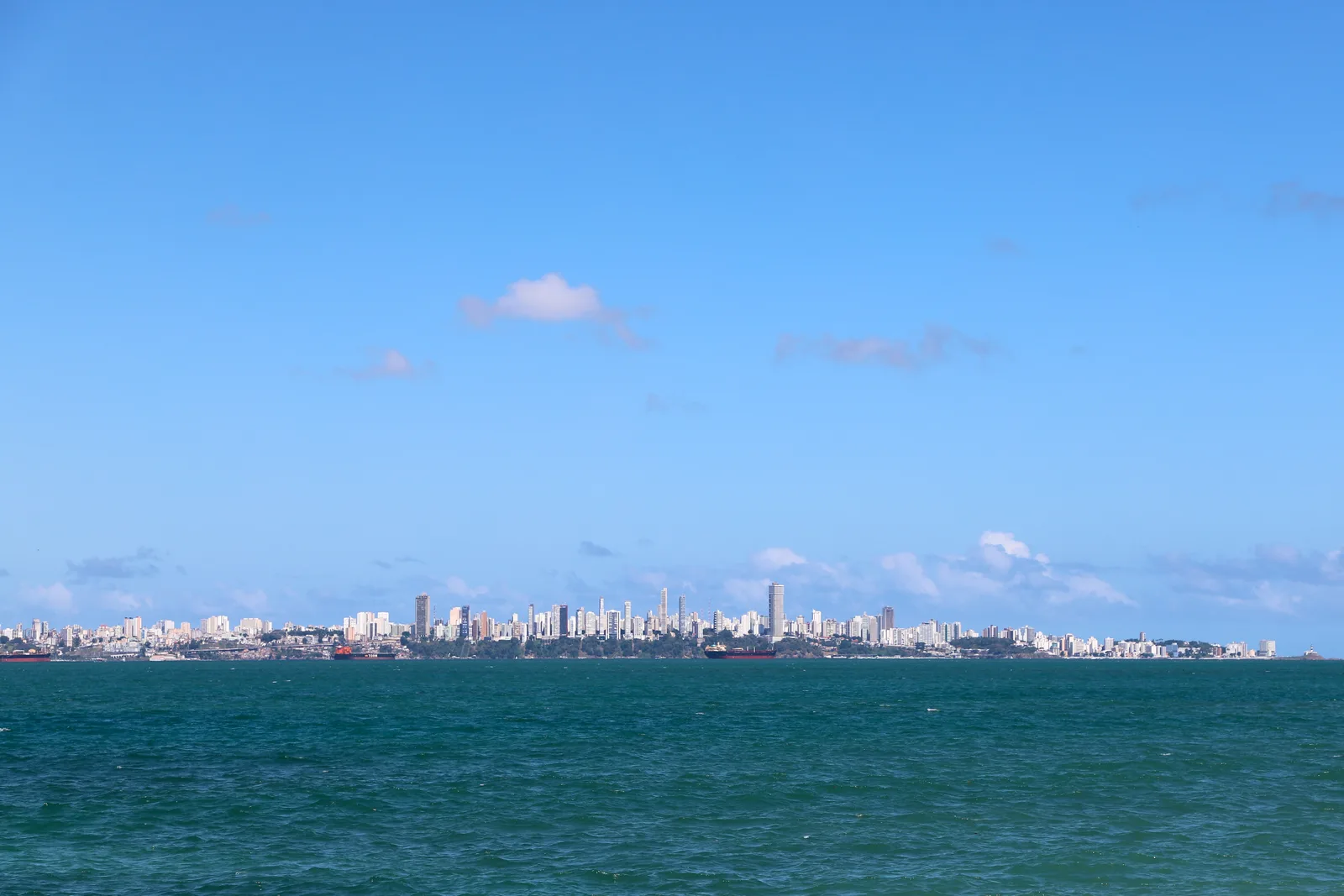
Plan around the bay, the heights and the coast
Salvador asks you to make a choice before you book: wake up close to the historic streets, or make the waterfront the centre of your stay. Both can work beautifully. Trying to treat the entire city as a single walkable neighbourhood is where a promising itinerary begins to unravel. Give the centre, Barra and Rio Vermelho their own stretches of time, with a deliberate journey between them.
This guide covers Salvador, the capital of Bahia in northeastern Brazil, rather than another settlement sharing its name. Its setting between Todos os Santos Bay and the Atlantic helps explain the different experiences on offer: colonial streets above a working waterfront, maritime collections beside a lighthouse, and neighbourhoods where food and music give a visit its evening shape.
Three full days make a useful first framework, with more time for cultural visits or a less hurried coastal stay. Start with VisaWand’s Brazil country guide for national context. Then choose your base according to what you actually want to do, the walking you find comfortable and the journeys you are willing to repeat.
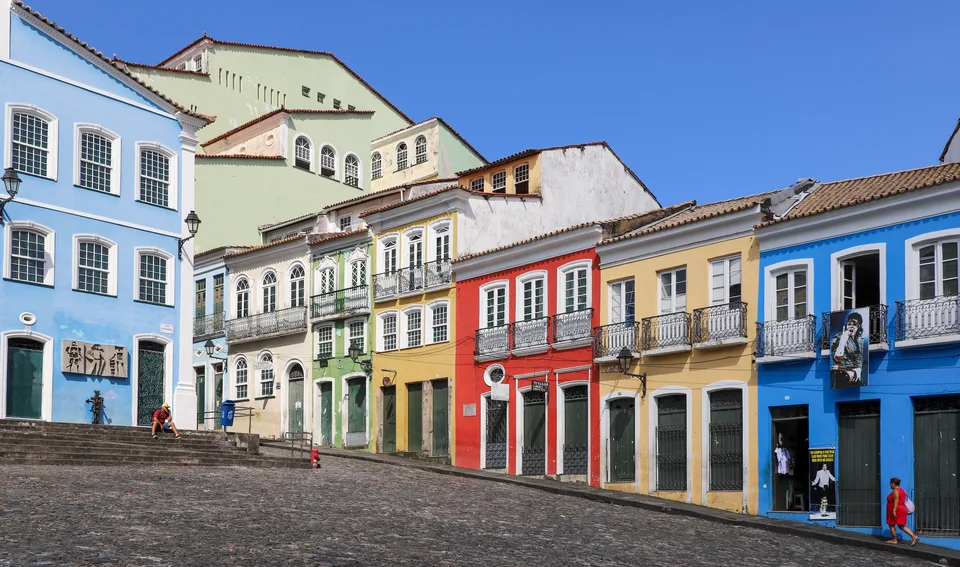
Read the historic centre beyond its façades
UNESCO’s Historic Centre of Salvador de Bahia account places the city’s founding in 1549 and its role as the first capital of Portuguese America through 1763. The historic ensemble brings together Upper Town’s defensive, administrative and residential setting and the commercial waterfront below. Its World Heritage inscription dates to 1985; the designation applies to the historic district, not every part of modern Salvador.
The history behind the coloured houses includes colonial power, sugar production and the enslavement and trading of African people. Keep those realities in view alongside the architecture. Sé, Pelourinho, Carmo and Santo Antônio belong to a connected historic landscape, although a day spent walking its streets cannot substitute for listening to the people and institutions interpreting it.
Build a visit around both historical material and contemporary Black cultural production. A guided walk can help when the guide explains the scope, language and route clearly. Ask what the fee covers and whether building entrances cost extra. Allow pauses for interpretation instead of collecting photographs of façades without understanding what happened around them.
Choose a base that fits the visit
Pelourinho and the surrounding historic centre suit a trip focused on heritage streets and museums. Inspect the exact location of a property rather than accepting “historic centre” as a complete description. Steps, gradients, the approach with luggage and the return after dinner all affect whether an address works for you. Ask the accommodation for a practical arrival route.
The tourism board’s Santo Antônio Além do Carmo coverage describes pousadas, restaurants, galleries, craft and independent fashion among the neighbourhood’s hills and old houses. It makes a sensible comparison for travellers who want to spend more time in this part of the city. A guesthouse can offer an appealing setting, but establish the room’s stairs, ventilation, bathroom and noise exposure individually.
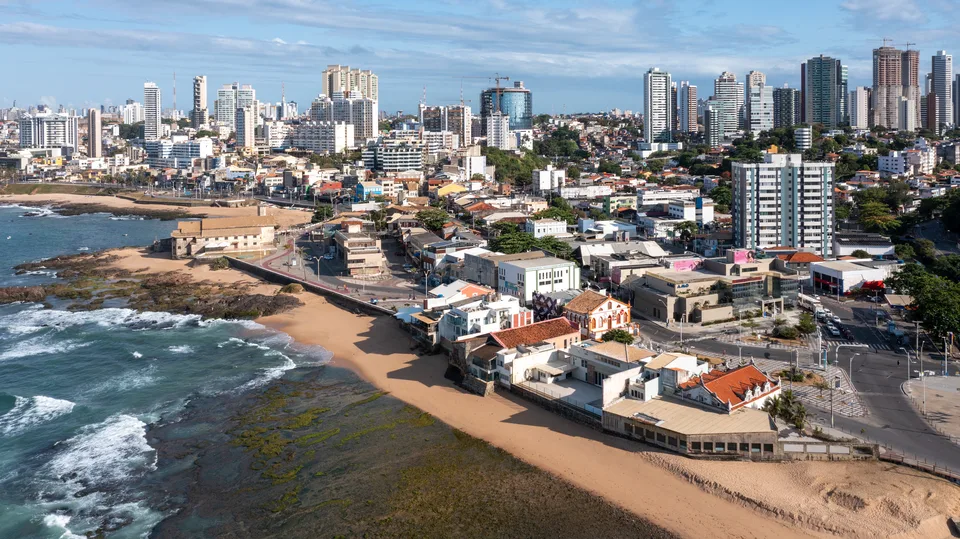
For a waterfront emphasis, compare Barra with Rio Vermelho. Official Porto da Barra information identifies hotels, bars and restaurants beside a coastal route towards the Farol da Barra. Rio Vermelho offers a different neighbourhood focus around its food, cultural places and evenings out. These are choices of daily rhythm, not interchangeable hotel labels. Check the distance to your actual appointments, particularly for work or study.
Walk Pelourinho with a selective shortlist
Begin with one manageable part of the historic centre and a museum booking, leaving space between them. Cobblestones and slopes reward footwear you can walk in comfortably. A route that looks short on a flat map can still be tiring with heat, luggage or a buggy. Travellers needing step-free access should ask about the complete entrance route, including any lift or ramp inside the building.
Use street names and a saved map to keep your bearings. Decide where you will meet a guide and where the walk ends, rather than assuming a circular route. If a visit finishes far from your accommodation, arrange the next journey before your phone battery becomes the day’s limiting factor.
Browse without treating every interaction as a purchase. Ask the price before accepting a service or posing for a commercial photograph, and agree what is included. Leave doorways clear, seek permission for close portraits and follow the rules of religious spaces. The historic centre is a place of work, worship and residence as well as a visitor destination.
Make contemporary Afro-Brazilian art part of the trip
The Museu Nacional da Cultura Afro-Brasileira, MUNCAB researches, preserves and presents Afro-Brazilian, African and diaspora visual arts. Its work includes modern and contemporary production, education and cultural mediation. That makes it a valuable counterweight to an itinerary concerned only with colonial buildings: the city’s cultural life belongs to the present as well as the past.
The museum’s visitor page lists Tuesday–Sunday opening from 10:00 to 17:00, with admission until 16:30, at Rua das Vassouras, 25. It recommends allowing at least two hours. Check the exhibitions and any special arrangements for your chosen day before reserving a narrow slot between other commitments.
Published tickets are BRL20 full price and BRL10 for eligible concessions, with proof required. Wednesdays and Sundays offer free admission to all visitors, subject to online reservation. Children through age eight and people with disabilities are among the free categories. Tickets are personal and valid for the selected time, so a free day still calls for planning rather than simply arriving whenever convenient.
Check São Francisco’s restoration status
The Church and Convent of São Francisco is an important part of Salvador’s heritage, but an old description of its interior is not evidence that it can currently be visited. The Bahia Tourism Secretariat’s July 2026 update describes the closure after the 2025 ceiling collapse and a wider restoration programme, with reopening projected for 2029. That is an estimate, not a guaranteed opening date.
Leave an ordinary interior visit out of a current itinerary unless the responsible institution confirms access. Do not confuse this complex with the neighbouring Church of the Third Order of São Francisco: similar names on maps can conceal different buildings and arrangements. Tell a guide exactly which place interests you before paying for a tour built around it.
This is also a useful reason to retain some flexibility in a heritage itinerary. A museum, exhibition or guided discussion can provide a worthwhile alternative when a building is closed. The aim is to understand Salvador’s history, not to force entry into every landmark on an outdated checklist.
Give Barra a day of its own
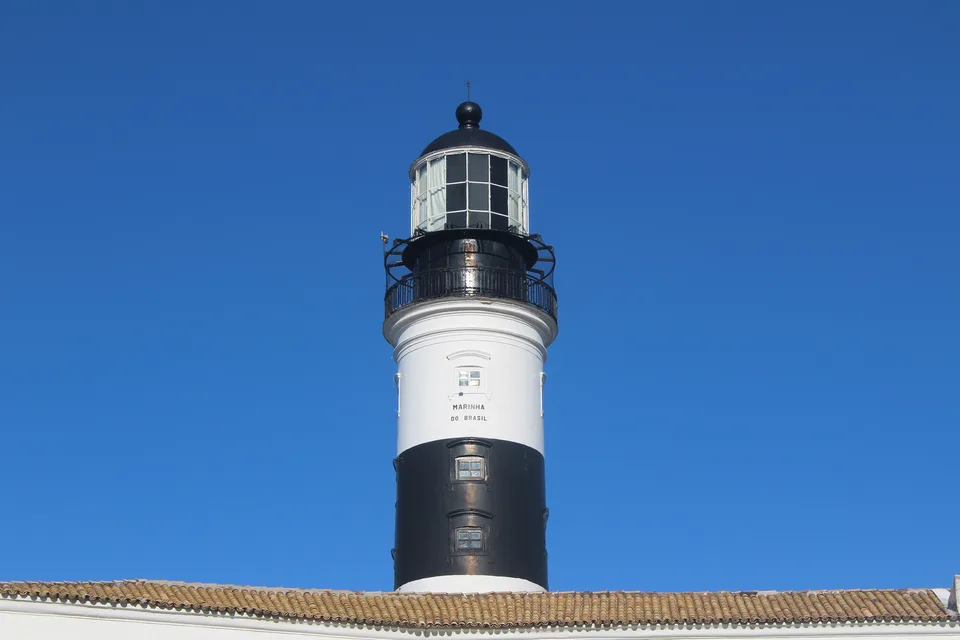
Barra works well as a distinct coastal day rather than a rushed addition after the historic centre. The Porto da Barra waterfront, nearby forts and Farol da Barra offer several ways to divide the time between outdoor wandering and an indoor visit. Choose the part that interests you and keep a break in the plan; an ambitious walking route is less enjoyable when everyone is hot and hungry.
At the Farol, the Museu Náutico da Bahia occupies the Forte de Santo Antônio da Barra. Its collection includes underwater archaeological finds, navigation instruments, model vessels and material interpreting the history and culture of Todos os Santos Bay. Objects recovered from the Santíssimo Sacramento wreck connect the display to the maritime world beyond the fort’s walls.
The operator lists daily opening from 09:00 to 18:00, with entry and ticket sales ending at 17:30. Full admission is BRL20; specified concessions are BRL10, and children under seven enter free. Confirm the documentation for any reduction and access to the particular spaces you want to see. Viewing the lighthouse from outside and visiting the museum are different plans.
Choose a beach by conditions, not a photograph
A coastal address does not establish suitable swimming conditions. Inema’s beach-monitoring guidance explains why readers should check the dated report for the exact stretch they intend to use. A classification can change between campaigns, and neighbouring sampling points can have different results. An attractive photograph or an old article cannot settle the question for your day.
The agency advises avoiding bathing during rainy weather, discoloured water and areas close to sewage outlets, urban river mouths and drainage channels. Water-quality information also does not assess every swimming hazard. Take account of the sea, local instructions and your own ability; ask on site rather than following somebody else into unfamiliar water.
For a relaxed coastal day, have an alternative that does not depend on swimming. The museum, a meal and a waterfront walk can still make Barra worthwhile. With children, decide who is watching them before unpacking, and keep the return journey simple. Do not make unattended belongings the price of everyone entering the sea together.
Explore Rio Vermelho through culture and food
Salvador Tourism’s Rio Vermelho overview places bars, restaurants, the Casa do Rio Vermelho and the Casa de Iemanjá within the neighbourhood’s cultural landscape. The former home of writers Jorge Amado and Zélia Gattai offers a different perspective from a fort or church. Check its current visitor arrangements separately before making it the anchor of an afternoon.
The neighbourhood is associated with the Festa de Iemanjá on 2 February. Approach religious meaning with the same respect you would bring to any place of worship. Ask before photographing people or ceremonies, and do not assume an ordinary day offers the same access or atmosphere as a major celebration.
An evening here is easier when you decide how to get home before going out. Choose a clear meeting or pickup point and keep enough battery for the journey. For accommodation, ask about music and street noise on the room’s side of the building. Being close to evening activity is useful only if that matches the hours you want to keep.
Understand the food before ordering
The tourism board’s account of the baianas de acarajé connects the preparation and sale of food with family livelihoods, African ancestry and religious traditions. The tabuleiro can include acarajé, abará, vatapá, caruru, shrimp, salad and pepper, although each vendor decides what to offer. Treat the seller as a person with knowledge and a business, not as a decorative element in a holiday photograph.
Ask what comes with the order and how much pepper you want. Confirm ingredients directly if you have an allergy or dietary restriction; removing a visible topping does not establish that the preparation is suitable. Choose a portion that leaves room to notice the flavour rather than turning the first order into a challenge.
For restaurant meals, compare menus before sitting down and ask about any service charge or minimum spend. Keep a simple meal option near your base for an arrival day or a late return. A useful food budget reflects your own combination of street food, groceries and restaurant meals, rather than an invented citywide daily average.
Compare the complete accommodation offer
A pousada, a conventional hotel and a furnished apartment solve different problems. A short heritage stay may reward atmosphere and location; a longer stay needs reliable space for laundry, meals and everyday tasks. Compare the final price for the same dates and occupancy, including breakfast, parking, compulsory charges and cancellation terms.
Accor’s ibis Salvador Rio Vermelho page, for example, lists Wi-Fi, air conditioning, parking and accessible facilities, with check-in from 15:00 and checkout by noon. Its buffet breakfast is described as an additional charge. Those are property-specific details to check against the rate you choose, not promises about all hotels in the neighbourhood.
Request the exact room category if an ocean view or adapted bathroom matters. For an apartment, establish who handles a late arrival, whether utilities are included and which household equipment is actually provided. Compare a refundable booking with a cheaper restricted rate using the amount you could lose if plans change. Do not spend a relocation budget on a long reservation before testing the location.
Arrive at the correct terminal
Salvador’s coach-terminal information needs particular care in 2026. AGERBA’s official resolution records the closure of the former Pernambués terminal on Avenida Antônio Carlos Magalhães and the transfer of relevant intermunicipal services to the new terminal at Águas Claras from 20 January 2026. Older visitor pages still describing the former terminal can send a traveller to the wrong place.
Read the terminal shown on your ticket and confirm it with the coach operator. Build the onward journey from that address, allowing for luggage and the time you arrive. Do not treat a familiar station name in an old map as proof that the long-distance coach still departs beside it.
For the airport, Metrô Bahia confirms a complimentary transfer linking the airport and its Line 2 connection. Line 2 runs between Aeroporto and Acesso Norte, where it connects with Line 1. Plan the final leg to your accommodation separately. Compare that complete journey with a prearranged transfer or taxi for your party; no fixed driving time or taxi fare is assumed here.
Buy transport for the journeys you will make
Metrô Bahia’s current fare information lists BRL4.10 for a metro-only journey and BRL5.90 for the integrated product involving urban buses, STEC and BRT. The published regular operating window is daily from 05:00 to midnight. These figures were checked on 16 October 2026; confirm updates before travelling.
The operator’s usage guide explains ticket purchase and integration conditions. Check the eligible payment product and transfer rules before assuming separate journeys qualify for the integrated fare. A contactless payment option at a gate does not by itself tell you how every onward connection will be charged.
For sightseeing, group visits geographically and compare the complete cost for your party. For a move, test a journey at the hour you would actually leave home, including the walk to the stop, waiting and transfers. A workable afternoon museum trip does not establish a dependable daily commute. Keep a different plan for a late finish, particularly when your destination is beyond the rail network.
Budget for the season and the purpose
Use the verified admission and transport prices as building blocks. Two full-price museum admissions at BRL20 each make BRL40 before meals and transport; choosing MUNCAB’s reserved free day changes that particular total. A metro-only fare and an integrated journey are different products, so count the tickets you actually need rather than multiplying the lowest number you find.
INMET’s Salvador climate bulletin illustrates why rainfall deserves attention: the 1991–2020 April normal is 284.9 millimetres, although individual years vary considerably. Its April temperature normals are 23.6°C for the average minimum and 29.6°C for the average maximum. These are historical monthly averages, not a forecast for your travel dates.
Plan outdoor visits around current conditions and keep an indoor alternative. Check confirmed festival dates before choosing a week, then price accommodation and cancellation terms for those exact nights. Someone seeking a cultural celebration and someone seeking a restful exploratory stay may sensibly choose different dates. Leave money and time for a changed route instead of committing every available hour and real to advance bookings.
A realistic three-day introduction
Use the first day for the historic centre and MUNCAB, respecting the museum’s opening day and reservation time. Begin with a manageable walk, stop for lunch and leave part of the afternoon for interpretation or browsing. São Francisco’s restoration is a reason to adjust the shortlist, not to rush elsewhere in an attempt to replace every closed interior.
Spend the second day in Barra, pairing the nautical museum with a coastal walk and a meal. Decide about swimming using the current report and conditions. If weather changes, shorten the outdoor section rather than treating the entire day as lost. Return to your base with enough time to rest before another evening out.
On day three, explore Santo Antônio Além do Carmo more slowly or give Rio Vermelho a cultural afternoon and dinner. Check individual opening arrangements before crossing the city. For a broader Brazilian trip, compare the completed Rio de Janeiro guide and São Paulo guide as separate destinations requiring their own travel days, rather than nearby excursions. An extra day in Salvador can be more rewarding than another rushed transfer.
Test household life before committing to a move
Start with a temporary base while you investigate addresses for daily life. Inspect ventilation, damp, plumbing, electrical arrangements, mobile reception and the internet connection inside the unit. Confirm laundry, rubbish collection, deliveries and building access. Add groceries, a pharmacy and the journey to work or study to the assessment; a sea view cannot answer those questions. Ask for an itemised monthly total covering rent, building charges and utilities, and record the condition of appliances when you take possession. Keep copies of the agreement, inventory and payment receipts so both parties can refer to the same information.
Brazil’s tenancy law distinguishes rental guarantees. Where the guarantee is a cash deposit, it cannot exceed three months’ rent, and the law provides for deposit in a savings account with the benefits accruing to the tenant. It also prohibits combining more than one guarantee type in the same contract. Seasonal rentals have separate provisions, so have unfamiliar terms reviewed before paying.
Receita Federal’s CPF services are available to foreigners living in Brazil or abroad. A CPF is a registration number, not permission to live or work in the country. For care, the Ministry of Health identifies primary care as an entry point to SUS for migrants. Locate the appropriate service and discuss continuing treatment early; check insurance, medication and private-care arrangements separately.
Separate a visit from work, study and residence
The Ministry of Labour’s migration guidance explains that entry requirements depend on nationality and that a visitor visa does not authorise paid work. Study and work have their own temporary categories and conditions. Confirm the route appropriate to your passport, intended activity and length of stay with the responsible Brazilian consular authority before making commitments.
For relocation, use the Ministry of Justice’s immigration portal to identify the relevant category, documentation and application process. Some routes involve prior residence authorisation and MigranteWeb; a course place, job discussion or rental agreement does not establish that permission has been granted. Avoid assuming that a visitor stay can simply become permanent residence.
VisaWand’s Brazil destination information and consultant directory can help you compare professional support. Prepare the purpose, dates and household circumstances before requesting advice. The Brazil cities and settlements directory offers further location pages with varying editorial coverage; check whether a page contains a completed guide before relying on it for detailed travel planning.
Official planning resources
Reviewed 16 October 2026. Use the official resources linked throughout this guide for admission, transport, housing and immigration decisions. Prices, services and rules can change; confirm the details relevant to your dates. Photography illustrates the locations and is not a live view.
View all official resources
- UNESCO: Historic Centre of Salvador de Bahia
- Salvador Tourism: Santo Antônio Além do Carmo neighbourhood
- Salvador Tourism: Porto da Barra and waterfront
- MUNCAB: Afro-Brazilian, African and diaspora visual arts
- MUNCAB: visitor hours and location
- MUNCAB: timed tickets and concession conditions
- Bahia Tourism Secretariat: São Francisco restoration and proposed reopening
- Museu Náutico da Bahia: maritime collection and lighthouse
- Museu Náutico da Bahia: visitor hours and tickets
- Inema: beach-water monitoring and precautions
- Salvador Tourism: Rio Vermelho cultural neighbourhood
- Salvador Tourism: baianas de acarajé and food traditions
- Accor: ibis Salvador Rio Vermelho facilities
- AGERBA Resolution 09/2026: Salvador coach-terminal relocation
- Metrô Bahia: airport line and complimentary transfer
- Metrô Bahia: current fares and operating hours
- Metrô Bahia: fares, ticketing and integration rules
- INMET: Salvador April climate and observed weather
- Brazilian tenancy law: rental guarantees
- Receita Federal: CPF services
- Ministry of Health: primary care for migrants
- Brazilian Ministry of Labour: visas, work and migration permissions
- Ministry of Justice: immigration routes and applications
Plan the next part of your journey
Explore the Brazil guide, browse other cities or compare consultants for your travel and relocation questions.