Visa
Give the falls a city-sized base
Foz do Iguaçu is a Brazilian city with an international landscape on its doorstep. The falls are the reason many visitors arrive, but a good stay also makes room for forest conservation, hydroelectric engineering and the meeting of Brazil, Argentina and Paraguay. The national tourism board’s destination overview introduces this combination without making a cross-border excursion compulsory.
Choose your priorities before choosing a hotel. A short trip can work entirely within Brazil, avoiding the extra documentation and transport decisions involved in crossing a frontier. A longer stay can include another country, provided everyone in the party meets its entry requirements and can return to Brazil. Leave some flexibility for weather and tired legs.
For prospective residents, the distinction is equally useful. Visiting attractions and managing an ordinary household are different exercises. Plan a scouting stay around an actual work or study address, essential services and a realistic commute, using VisaWand’s Brazil country guide for the wider national context.
Understand the landscape before collecting viewpoints
UNESCO’s Iguaçu National Park description places the Brazilian protected area beside Argentina’s Iguazú National Park. They share the waterfall system, but remain separate parks in separate countries. The Brazilian national park was established in 1939. Its importance extends beyond the viewpoints: this is also a protected forest landscape with threatened wildlife.
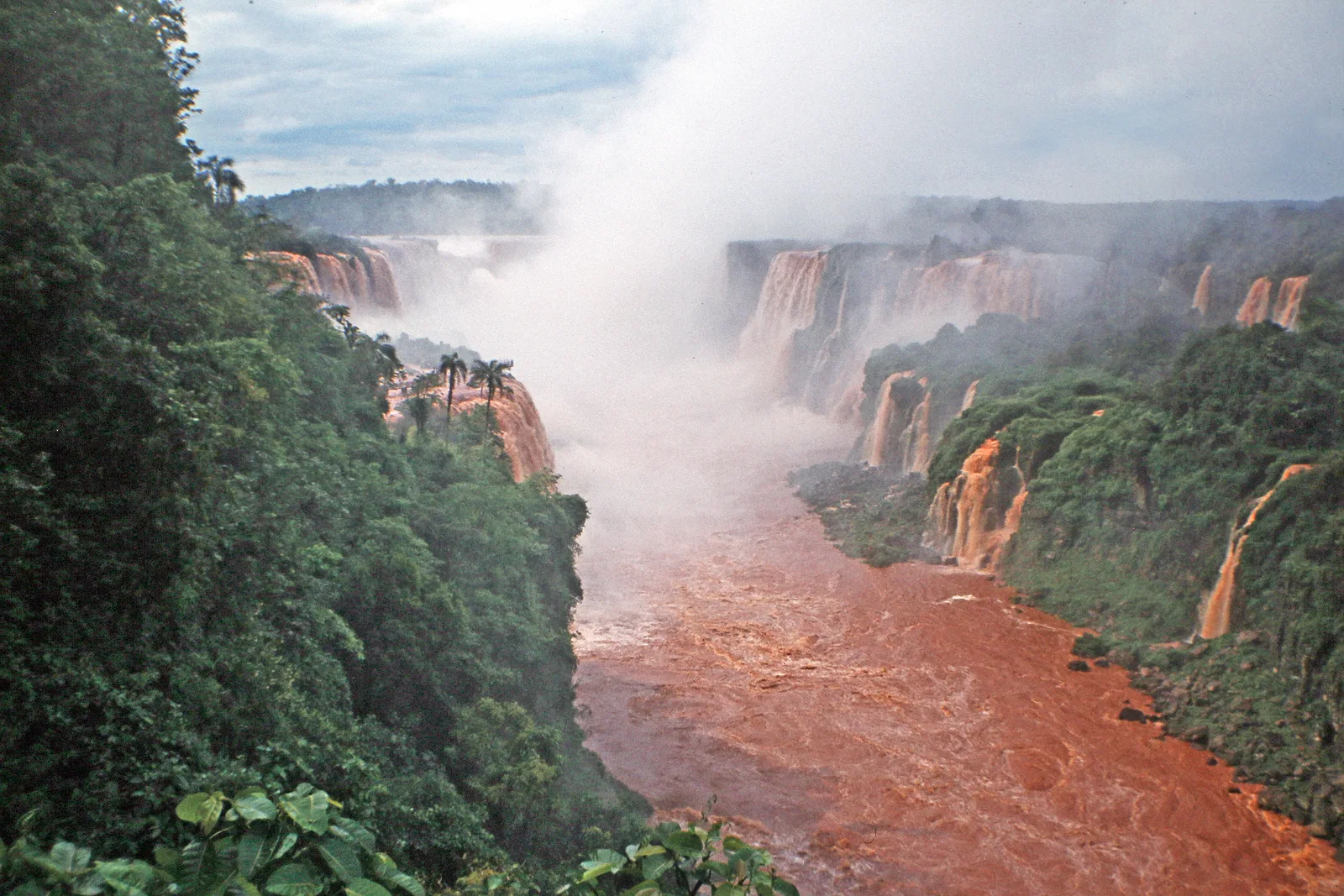
That context changes how to spend the day. Make time to look at the vegetation and the changing view as you move, rather than treating the walk as a queue for one photograph. A photograph can convey scale, but it cannot establish the volume, colour or visibility you will encounter. The banner shows conditions in March 2015.
The park’s visitor rules require you to remain on designated trails and leave natural objects where they belong. Do not feed wildlife. The operator specifically warns that coatis may approach food, so avoid presenting a snack as a wildlife encounter. Put rubbish away properly and keep your attention on the walking surface as well as the scenery.
Book the Brazilian falls ticket for your own category
Start with the official admission guidance, which says tickets are limited and sold online for a selected date and entry time. Each visitor needs the appropriate ticket and photo identification. Buying several tickets under one purchaser’s name does not remove the individual identification requirement at entry.
The official ticket catalogue currently advertises standard admission from R$118 for the listed Brazilian, Argentine, Paraguayan, Uruguayan and Venezuelan nationalities, and from R$131 for other foreign visitors. These are starting prices checked on 16 October 2026. Select the correct category and review the final price and terms for your dates; the category label is not a substitute for its stated eligibility list.
Standard admission includes internal return transport and the principal falls trail, walkway, viewpoints and elevators. Optional products such as special sunrise or sunset experiences are distinct purchases. Check what is included before comparing a package with an ordinary ticket, and do not assume that any Brazilian product admits you to the Argentine park.
For your phone, save the ticket somewhere you can access without relying on reception at the entrance. Keep identification protected from spray but available for inspection. If you need to change a booking, use the operator’s account process and current conditions instead of assuming that every product has the same cancellation policy.
Plan the falls day around access and energy
The park’s general visitor information lists entry hours of 09:00–16:00 on weekdays and 08:30–16:00 at weekends, with visitors allowed to remain until 17:30. Confirm these arrangements when booking, especially around operational changes. The operator estimates approximately two hours for the traditional visit; allow additional time for arrival, queues, photographs and a meal.
Accessibility deserves a separate decision. The operator’s accessible-route advice recommends the final internal-bus stop, Porto Canoas, for visitors using wheelchairs or with walking difficulties, with a viewpoint and panoramic elevator serving the walkway. It discourages the full kilometre-long trail for these visitors because of steps. Ask about the route and equipment relevant to your needs before arrival.
The published advice also describes an option to see the first viewpoint near the hotel stop and then reboard the bus for Porto Canoas. Conventional wheelchairs can be requested at the visitor centre. Availability and personal suitability still need checking; an accessible viewpoint does not mean every trail provides the same access.
Wear walking footwear, protect electronics and prepare for spray. Carry water, sun protection and insect repellent in line with park guidance. A compact rain layer is easier to manage than discovering that your only dry clothes are back at the hotel. Avoid scheduling a tightly timed departure flight immediately after the outing.
Give Parque das Aves its own attention
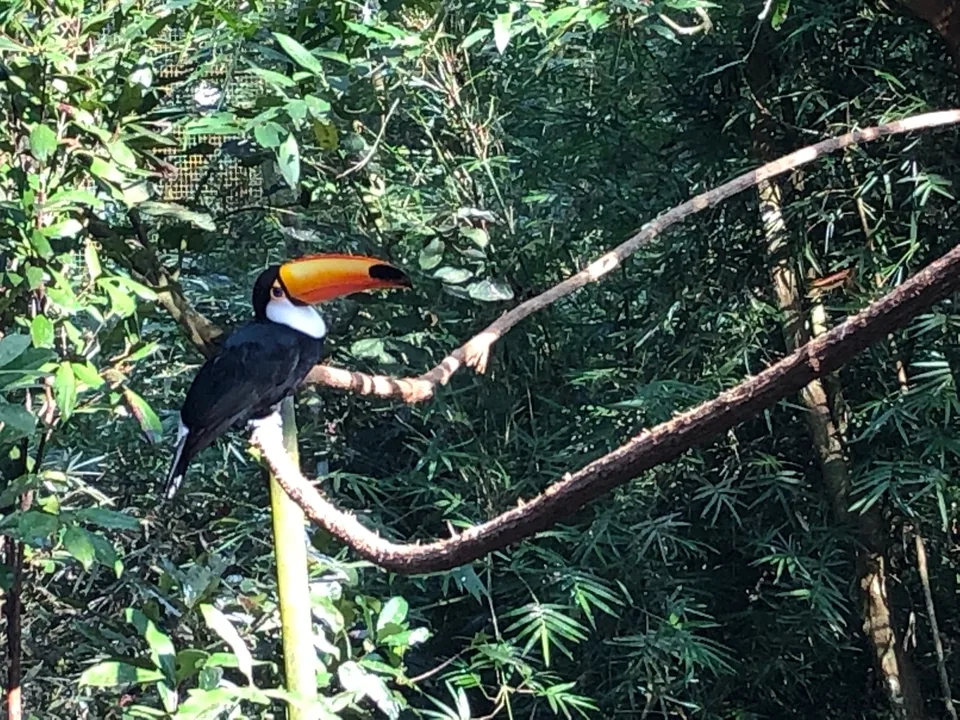
Parque das Aves describes a self-guided, two-kilometre route through Atlantic Forest and immersive aviaries. Toucans, macaws and other birds are part of a managed conservation setting. Approach it as a chance to learn about those animals and their care, rather than expecting the same encounter as watching wildlife in an open national park.
The published admission schedule lists R$110 full admission for Brazilian and foreign visitors, valid through 30 November 2026. Children up to and including eight enter free with a responsible adult and the required child identification or birth certificate, subject to the stated exclusions. Reduced tickets have specific eligibility rules; being a foreign student or older traveller does not automatically establish entitlement.
The attraction’s ticket and visit FAQ confirms online and gate purchases. It is beside the national park, making a combined day possible, but proximity alone does not decide whether that pace suits you. Someone keen on birds, travelling with children or managing limited stamina may prefer separate visits.
If combining them, reserve the falls entry time only after considering the walking involved in both attractions. Check the bird park’s current hours directly, since its published pages give differing closing times. Plan a break rather than trying to convert every minute between the two visits into another activity.
Choose the right Itaipu tour
The falls show moving water; Itaipu offers a different perspective on how this border region uses it. The official Itaipu tourism catalogue distinguishes the Panorâmica external tour from the longer Especial tour, which includes industrial interiors. Choose by interest, access requirements and the ages of your group, rather than assuming the higher-priced option is suitable for everyone.
The catalogue lists full-price Panorâmica admission at R$63, with an approximate duration of one hour and ten minutes and daily departures within 08:30–16:00. Especial is listed at R$185 and approximately two and a half hours, with limited slots. Check current availability and arrive at the visitor reception point specified in your booking.
Read the Especial tour’s conditions carefully. Under-14s cannot join, even with a responsible adult; the page’s wording around the exact age threshold warrants direct confirmation for a 14-year-old. Visitors need official photo identification, must arrive 30 minutes early for registration and a photograph, and must follow the secured-footwear requirements. The route includes stairs.
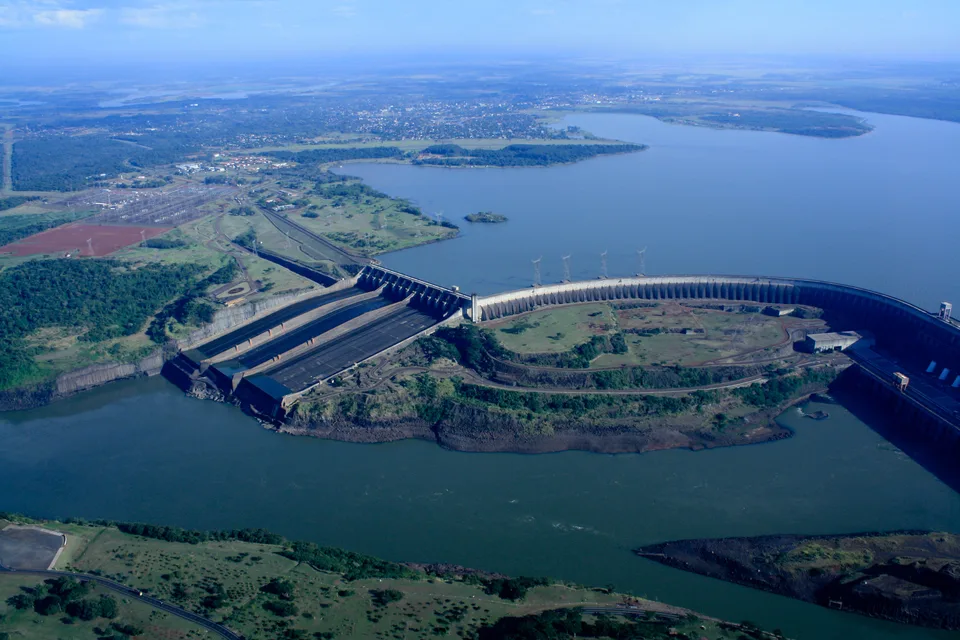
Contact the operator in advance about assistance or mobility requirements. Industrial operations can change the visiting programme. The aerial photograph illustrates the dam’s layout, not a view included in a ground tour. Keep that distinction in mind when judging advertising photographs or deciding whether the experience matches your interests.
Use Marco das Três Fronteiras for an evening
Marco das Três Fronteiras is a visitor attraction on the Brazilian side of the border landscape. Its published standard hours are Tuesday to Sunday, 14:00–21:00. The full-price ticket for visitors aged 12 and above totals R$60, made up of R$57 admission and a R$3 Fundo Iguaçu contribution. Verify the programme and price for your date.
Give an evening here enough space to enjoy the setting rather than arriving only to tick off a landmark. Arrange the return journey before settling down for a meal or performance. Check what is scheduled and whether dining is a separate expense; admission does not mean every possible purchase is included.
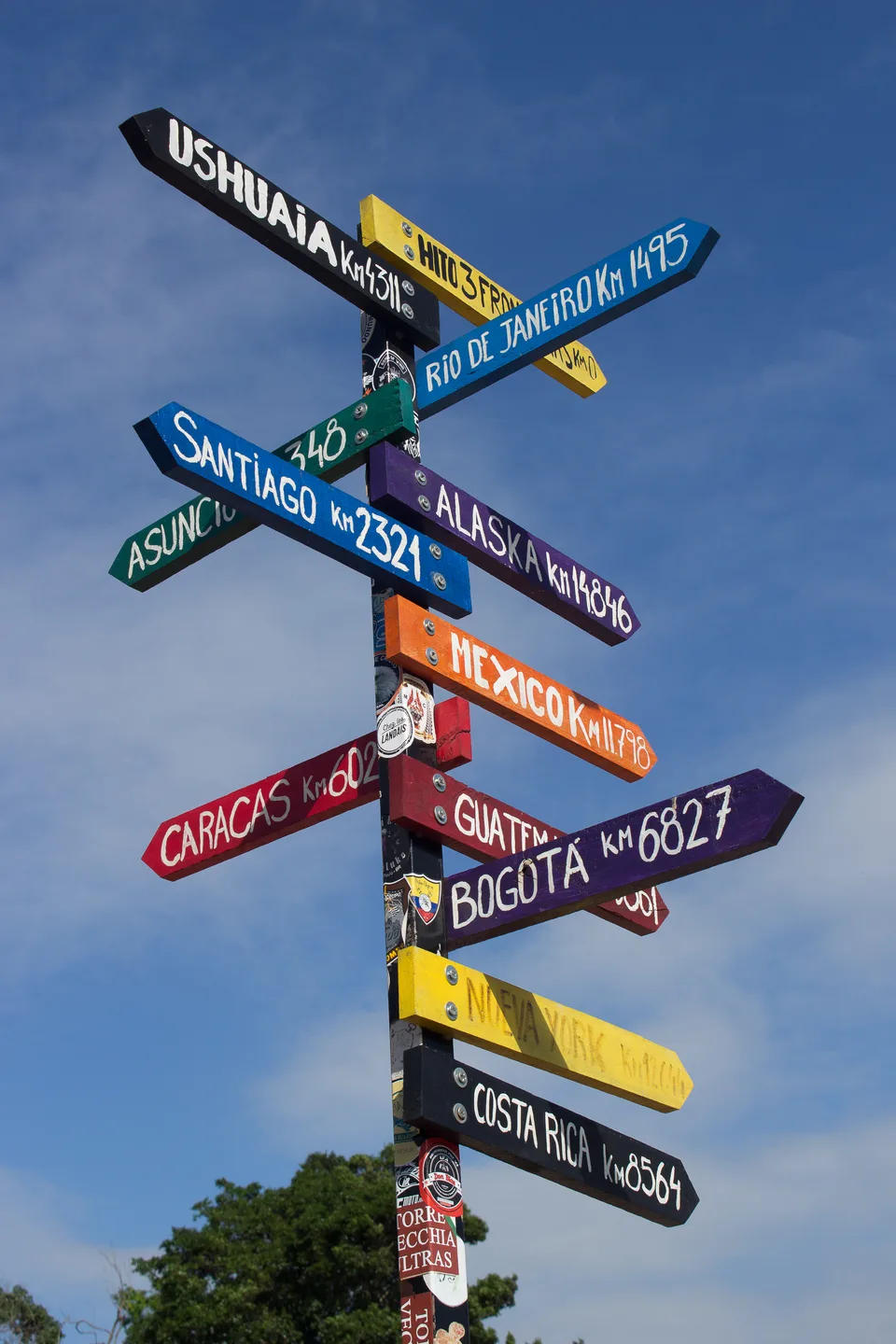
The signpost photograph shows part of the visitor setting in 2018. It is not an immigration checkpoint, and looking towards neighbouring countries is different from entering them. This can be a useful choice for a group that wants to experience the international geography while keeping the day’s travel within Brazil.
Compare the centre with the airport-and-park corridor
Think of accommodation as a choice between daily routines. A central address may suit a visitor who wants an urban base and separate excursions. An address along the airport-and-park approach may better match a trip focused on those visits. Plot the exact property, your intended outings and the transport connection between them before paying.
For a verifiable central example, ibis Foz do Iguaçu lists Rua Almirante Barroso, 866, in Centro. Its information includes Wi-Fi, air conditioning, accessible room categories and paid parking. Confirm the particular room and any assistance you require. Treat this as a documented option to compare, not a claim of personal experience or the best hotel for every traveller.
For any hotel, guesthouse or apartment, request the complete price for the whole party. Check breakfast, parking, cleaning charges and cancellation conditions separately. Ask how late arrival is handled and whether luggage can be stored if the room is unavailable. A vague transfer offer needs confirmation of the meeting point, direction, availability and price.
For a longer stay, look beyond a property's attraction photographs. Ask about a working desk, laundry, cooking facilities and internet performance in the actual unit. Then test whether you can buy ordinary groceries and return comfortably after dinner. A low nightly rate is only useful when the address supports your plans.
Arrive through the correct airport
Motiva’s airport access page identifies Foz do Iguaçu/Cataratas Airport, IGU, on BR-469, approximately 13 kilometres from the centre. Confirm the airport code on your booking and transfer instructions. An itinerary involving another country should not be treated as an ordinary arrival at the Brazilian airport.
The operator identifies bus 120 Parque Nacional for airport access, with a stop at the airport kerb, and lists Coopertaxi Cataratas as its taxi partner in the passenger terminal. The park’s own information describes route 120 between the urban transport terminal, airport and national park. Check the timetable and direction for the journey you actually need.
A reliable current official bus fare was not established for this guide, so no fare is quoted. Confirm payment arrangements before boarding. For a transfer, compare a written price with the full journey, including luggage, child seats where needed and any waiting charge. A kilometre figure does not establish a dependable journey time.
Keep a copy of your accommodation address offline. For an early flight or late arrival, confirm the actual transport available at that hour and retain a fallback. On departure, work backwards from the airline’s required airport arrival time, allowing for the journey and check-in rather than relying on a promotional driving-time estimate.
Treat a border excursion as international travel
Before adding Argentina, consult Argentina’s official tourist-entry guidance and the relevant consular requirements for your nationality. For Paraguay, use Migraciones’ entry and exit requirements. Check documents, any visa and applicable health requirements for every traveller, including children. Permission to visit Brazil does not settle entry elsewhere or your right to return.
Paraguay’s published guidance requires entry and exit registration through authorised controls and tells non-resident visitors to retain their entry evidence for departure. Regional identity-document arrangements apply to specified nationalities, rather than every visitor carrying a residence card or driving licence. Do not assume that a quick shopping trip removes those obligations.
Ask a cross-border transport provider how immigration stops, waiting and the return journey work. If hiring a vehicle, confirm the rental company’s written permission and the documentation required for that crossing. Build the day around these checks instead of attaching a border visit to a tightly timed flight or another prepaid excursion.
For the Argentine falls, research its park admission and opening arrangements separately. Decide whether your interest justifies the extra planning. Staying on the Brazilian side can still provide a substantial first visit; there is no requirement to cross a frontier to make the trip worthwhile.
Eat and shop with a clear total in mind
Embratur highlights river fish as part of the region’s food culture. Use that as an invitation to read menus and ask what is available, rather than a reason to invent a favourite local restaurant. Check portion sizes, accompaniments and preparation, and explain allergies or dietary restrictions before ordering.
For an attraction day, decide whether you want a sit-down lunch or a shorter break. Compare the actual menu price and the time it takes against the rest of your plan. A bundled meal can be convenient, but only if it covers food you want and does not force an awkward schedule.
If buying goods across the border, read Receita Federal’s accompanied-baggage rules before shopping. Its general allowance for qualifying goods on land entry is US$500, subject to the baggage rules and quantity limits. Allowances are individual and cannot be pooled, even within a family. A later domestic flight does not turn a land crossing into an international air arrival.
Keep receipts, distinguish personal purchases from commercial quantities, and check the treatment of the specific goods you intend to bring back. Compare the complete cost, including transport and any tax due. A price label abroad is not necessarily the final cost of getting an item home lawfully.
Budget by the activities you will actually book
Use the verified admission figures as individual planning anchors. Falls admission, Parque das Aves, an Itaipu tour and Marco are separate decisions. Check eligibility and dates before adding them together, then add your accommodation, meals and the transport needed to reach each place. An attraction total alone is not a daily travel budget.
For a family or group, work through each person's category instead of multiplying one adult ticket indiscriminately. Confirm the final checkout total before paying and retain the booking terms. If the overall cost is uncomfortable, drop a lower-priority excursion rather than planning an itinerary that depends on unverified discounts.
Expect humidity and plan for changing conditions
The national tourism board describes Foz do Iguaçu’s climate as subtropical, hot and humid for much of the year. Match the pace of your outdoor days to the forecast and your group’s stamina. The spray at the falls adds another reason to protect documents and electronics, even when the sky is clear.
Choose dates by the experience you want and the reservations you can obtain, without expecting a fixed waterfall appearance. Historical photographs do not promise a particular river colour or flow. Check current park notices and transport arrangements close to departure, and keep a little space in the itinerary for a change of plan.
A manageable four-day first visit
Day one: arrive, settle into your chosen base and confirm the following day’s transport. If timing and opening arrangements fit, consider Marco as the main evening outing. Keep arrival day flexible if you have a long journey or uncertain room access.
Day two: devote your principal sightseeing effort to the Brazilian falls. Follow the route suited to your mobility and allow time for a meal and the return. Combine the nearby bird park only if you have planned both walking distances and the falls entry slot realistically.
Day three: visit Itaipu on the tour your group is eligible for and wants to take. If Parque das Aves was not included earlier, give it a separate visit rather than treating it as an obligation to squeeze in before closing.
Day four: choose a properly researched international outing or use the day for an unhurried local visit and departure preparation. A cross-border trip needs its own transport and document plan. With less time, reduce the number of excursions; with more, separate the main outdoor visits and leave room for rest.
Test a household before committing to a move
Begin a relocation scouting stay with the address you will travel to regularly. Test the commute at the expected hour, including the walk to transport and the journey home. If employment or study involves another country, obtain advice on the permissions required on both sides before treating cross-border commuting as feasible.
Inspect a prospective rental in person where possible. Ask for an inventory, note existing defects and confirm who handles repairs. Compare rent with building charges, parking, utilities and any furniture costs. Check ventilation, water pressure, mobile reception and internet provision in the actual property, rather than relying on the condition of a demonstration unit.
Brazil’s tenancy law sets rules for rental security, including a three-month-rent ceiling for a cash deposit and a prohibition on combining several forms of security in one contract. Seasonal accommodation and ordinary residential leases have different provisions. Have the actual agreement reviewed if the terms or your obligations are unclear.
Use Sanepar’s household-service guidance and Copel’s official electricity site to investigate accounts and services for the address. Ask who pays existing bills and what must be transferred into your name. Locate groceries, a pharmacy and the services your household uses regularly before signing a long commitment.
The Ministry of Health’s migrant primary-care guidance explains access within SUS. Identify the appropriate local service and ask about registration and appointments. For children, confirm schooling arrangements directly with the relevant institution rather than assuming that accommodation in a particular area establishes admission or language support.
Keep visiting, working and settling legally distinct
Use the Brazilian government’s visa and migration guidance to identify the route for your purpose and nationality. Visitor status does not authorise paid employment. A hotel booking, rental contract or attraction discount does not change that position. Study and work plans need their own checks before you make commitments around them.
For a longer stay, the official immigration portal provides the starting point for the relevant residence category. Confirm supporting documents, any approval before travel and subsequent registration requirements. Temporary permission is not a promise of permanent residence. A border excursion should never be treated as a guaranteed way to extend permission to stay.
Receita Federal’s CPF service concerns tax identification, separate from immigration permission. Organise these administrative steps deliberately. VisaWand’s consultant directory and Brazil destination and consultant page can help you identify professional assistance for a specific case.
For onward travel, compare the existing Florianópolis city guide for a coastal alternative or the Rio de Janeiro guide for another major Brazilian stop. Use the Brazil cities and settlements directory to find further locations for research, while recognising that a directory listing is not itself a completed travel guide.
Official planning resources
Reviewed 16 October 2026. Use the official resources linked throughout this guide for admission, transport, housing and immigration decisions. Prices, services and rules can change; confirm the details relevant to your dates. Photography illustrates the locations and is not a live view.
View all official resources
- Embratur: Foz do Iguaçu overview
- UNESCO: Iguaçu National Park
- Urbia Cataratas: wildlife and trail rules
- Urbia Cataratas: admissions and what tickets include
- Official falls ticket catalogue
- Urbia Cataratas: park hours, local bus and services
- Urbia Cataratas: accessible viewpoints and route advice
- Parque das Aves: self-guided forest visit
- Parque das Aves: admission prices and eligibility
- Parque das Aves: admissions and practical visit FAQ
- Turismo Itaipu: current tours, prices and duration
- Turismo Itaipu: industrial-tour conditions
- Marco das Três Fronteiras: opening hours and admission
- Accor: ibis Foz do Iguaçu location and facilities
- Motiva: IGU airport access and transport
- Argentina Migraciones: tourist entry documentation
- Paraguay Migraciones: entry and exit requirements
- Receita Federal: accompanied baggage and customs limits
- Brazilian tenancy law: rental guarantees
- Sanepar: household water services
- Copel: electricity services
- Ministry of Health: primary care for migrants
- Brazilian Ministry of Labour: visas, work and migration permissions
- Ministry of Justice: immigration routes and applications
- Receita Federal: CPF services
Plan the next part of your journey
Explore the Brazil guide, browse other cities or compare consultants for your travel and relocation questions.