Visa
Choose Thimphu for culture within a working capital
Thimphu offers a useful introduction to Bhutan through places that serve several purposes at once: a fortress connected with government and monastic life, a museum concerned with living textile traditions, and a market supplying ordinary households. The city suits travellers who want time for interpretation and conversation alongside the views. Give it two full days, allowing the arrival journey and any onward travel their own space.
The practical framework matters here. Visitor fees, guide arrangements and approved accommodation influence the trip before you choose a restaurant or viewpoint. A move requires a different set of decisions again: permission to work or study, a suitable home and reliable access to everyday services. A successful holiday is useful reconnaissance, but it does not establish a right to settle.
Understand the valley before comparing addresses
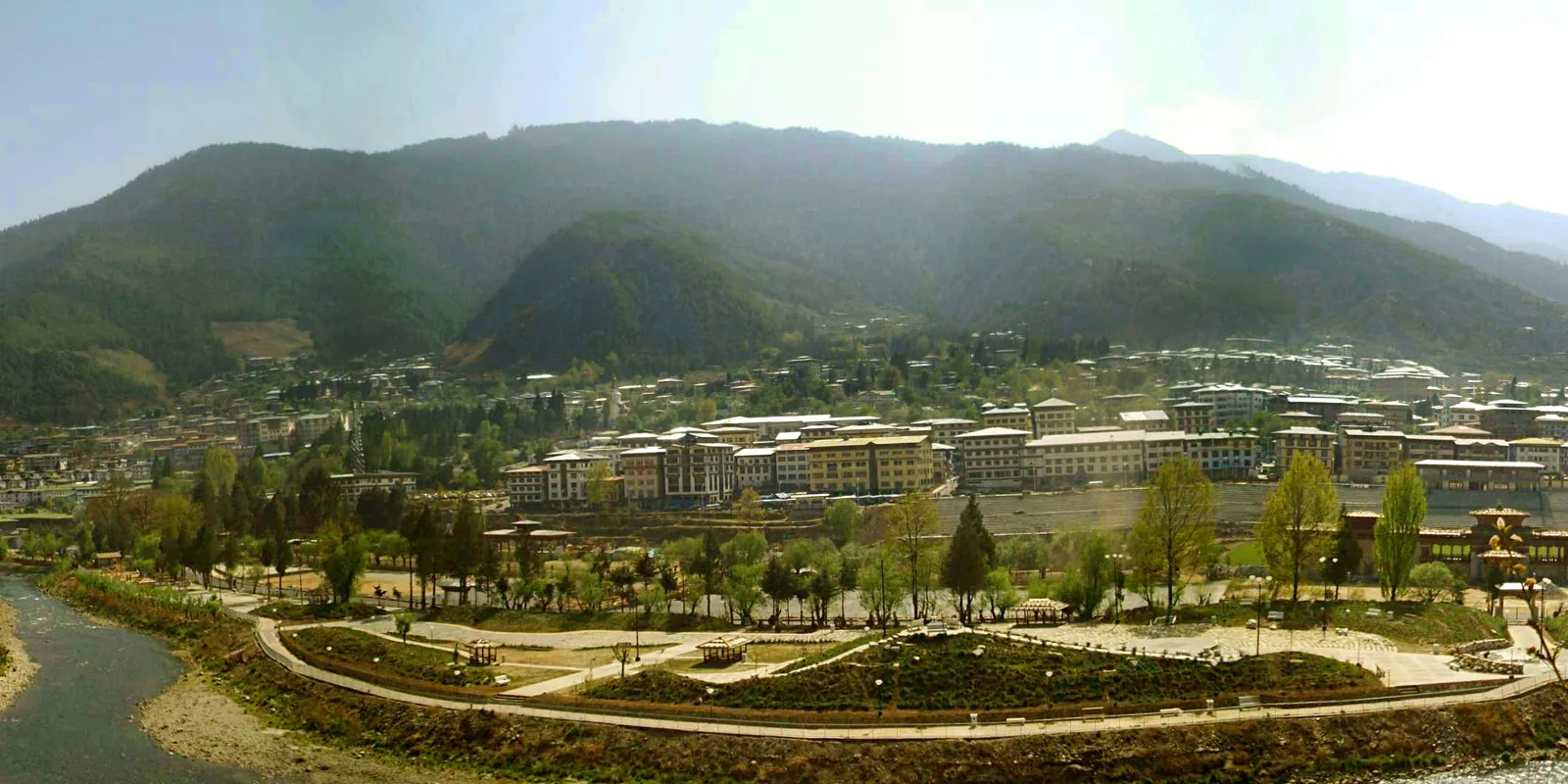
The municipality’s city profile places Thimphu along the Wang Chhu in west-central Bhutan. It gives the municipal altitude range as 2,248–2,648 metres, with the city extending from Dechencholing in the north to Babesa in the south. This is a valley city with changes in level; a short distance on a map may involve a less convenient walk than expected.
The profile also describes the city’s growth from several villages, followed by further expansion during the 1990s. That history helps explain why one hotel address cannot represent the whole capital. Compare central access with the actual journey to your appointments. Keep the wider Thimphu district distinct from the municipal area when interpreting a property listing, population figure or excursion description.
Pick a base around the journeys you will repeat
For a short visit, a central base can make meals, shopping and breaks between outings easier to organise. A hillside setting may offer a quieter-feeling stay or a wider view, but investigate the road approach and return transport before deciding. Ask whether the route to reception includes steep steps and whether luggage assistance is available.
For a longer stay, compare locations such as Motithang, Changangkha, Babesa and Dechencholing against the actual workplace or school. Avoid treating a neighbourhood name as a guarantee of convenience. Test the route at the time you would travel, including the final walk from a stop or parking space. An employer’s office address, the nearest useful grocery shop and routine healthcare may matter more than proximity to a photographed landmark.
Arrange a guide before building the sightseeing plan
The tourism department’s current FAQs state that visitors must be accompanied by a guide at all times in Bhutan. Older advice about exploring Thimphu independently should therefore not be used as the basis for a booking. Independent booking and travelling without a guide are different questions: arranging your own hotel does not remove the guide requirement.
Use the official tourism-services directory to check the provider, then agree on the language, dates, hours, itinerary and full charge. Establish whether transport, admission and the guide’s expenses are included. Ask how a museum closure or poor weather would change the day. A good written arrangement leaves room for your interests while making responsibilities clear; the guide should help interpret the place, rather than merely hurry the group between stops.
See Tashichho Dzong as an active institution
Tashichho Dzong brings together religious and governmental functions. The tourism department’s Thimphu and Paro booklet describes its seventeenth-century origins and reconstruction during the 1960s. Its scale and setting are worth appreciating even when access to particular interiors is restricted.
Have your guide confirm the current visiting window, ticket arrangements and dress requirements before you leave the hotel. Do not assume administrative buildings, courtyards and religious spaces share one access policy. Keep identity documents available if requested and follow instructions about photography. Allow enough time to look at the architecture without obstructing people using the site. If an official function changes the plan, move another activity into that part of the day rather than pressing for access. This is a working place whose visitor arrangements take account of other responsibilities.
Make the Memorial Chorten a respectful visit
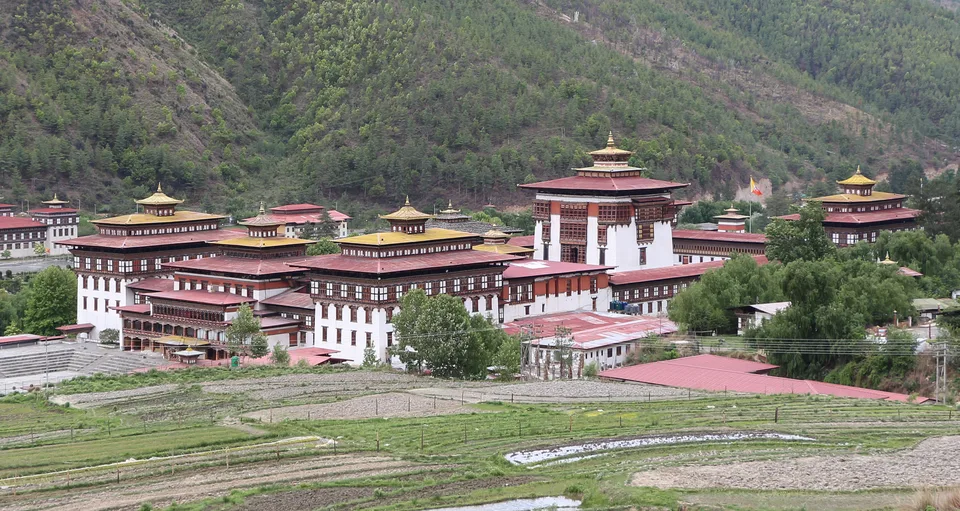
The National Memorial Chorten commemorates Bhutan’s Third King, Jigme Dorji Wangchuck, and dates from 1974. It is a place to notice devotional activity as well as architecture. Keep your visit quiet, follow your guide’s directions and allow worshippers to move freely. The photograph in this guide shows prayer wheels at the complex, rather than the main monument itself.
Before taking a close portrait, seek permission. Check whether photography is allowed in each space, and avoid positioning yourself between someone praying and the focus of their worship. The official guidance on respectful visiting provides useful preparation for sacred places. Ask about current entry charges and any restrictions before setting out. A short, attentive visit can be more rewarding than trying to photograph every detail while others wait to pass.
Give the Royal Textile Academy time for close looking
The Royal Textile Academy explains Bhutan’s textile traditions through its museum and weaving programmes. Its displays offer a different kind of visit from the large outdoor landmarks: look closely at weave, pattern and how a textile is worn or used. Ask your guide to help distinguish technique, regional style and the purpose of a garment.
Use the academy’s contact information to confirm current opening, admission and temporary exhibitions. A programme listed on the website does not establish that a class or conservation workspace is open for casual observation. If buying a textile afterwards, ask about the material, maker, production method and care. Compare pieces patiently; a lower price may describe a different process or fabric, rather than the same object at a better rate.
Plan Buddha Dordenma around visibility and access
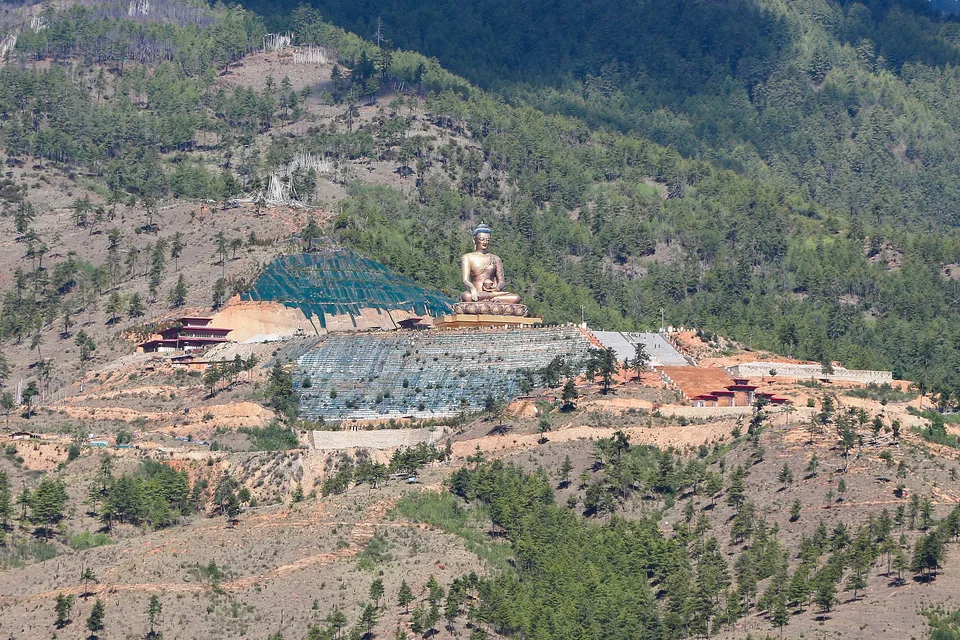
Buddha Dordenma stands on the hillside at Kuensel Phodrang, with views over the valley. Treat the outing as a distinct journey rather than assuming it is a short walk from any central hotel. Ask your guide about the approach, steps, exposed areas and how much walking the group wants to do.
Choose the timing with the weather in mind. A distant view can change considerably with cloud, and a clear photograph from another season does not establish what you will see. Confirm current access and any admission arrangements locally. The historical photograph here shows the statue from across the valley, with work visible around the complex in May 2018. It illustrates the setting, not today’s construction status. Keep an indoor alternative ready if conditions make the trip less worthwhile.
Browse Kaja Throm as part of the household’s city
Kaja Throm and the Centenary Farmers Market are useful places to look at produce and everyday trade. Go with a modest shopping plan and enough time to understand what is being sold. Ask which prices are by weight, by item or by portion, and check payment before selecting goods.
For a visitor, the interest lies partly in how the market fits into local routines. Leave room for customers and deliveries, and ask before photographing people closely. For someone considering a move, use the visit to investigate ingredients you would actually buy, then compare another shop near a prospective home. A sightseeing market stop alone gives limited evidence about the convenience or cost of weekly shopping. Confirm present trading arrangements with your guide instead of relying on an older weekend-market timetable.
Choose approved accommodation and compare the complete stay
Tourists must use accommodation approved by the Department of Tourism. Check the property in the official directory and confirm the exact room and dates directly. A private rental found online should not be assumed eligible for a tourist stay simply because a host accepts payment.
The official listing for Le Méridien Thimphu provides one central hotel to compare. Other approved properties may better suit a smaller budget or a different setting. Ask about heating, hot water, lift access, breakfast, cancellation and late arrival. Obtain the full price, including taxes and any extra occupant or transfer charges. Check whether the room faces a busy road and whether windows open. For winter, a photograph of thick bedding is less useful than a clear explanation of how the room is heated.
Put the visitor levy on its own budget line
The official visa information lists a standard Sustainable Development Fee of US$100 per adult per night, separate from the non-refundable US$40 visa-application fee. For an adult in that standard category, three nights means US$300 in SDF before accommodation, meals, guiding or transport. Do not treat the levy as an inclusive daily holiday package.
Indian nationals have a different arrangement: the Indian Embassy’s visitor information states an SDF of INR1,200 per day. The tourism FAQs list half-rate SDF for children aged six to under twelve, with children under six exempt. Confirm the applicable category for everyone travelling and the exact charge for your dates. Ask a provider’s quote to separate official charges from its own services, so that competing offers can be compared on the same basis.
Leave room in the budget for actual daily choices
After the official charges, the largest differences come from accommodation, private transport, guiding and the activities you select. Ask for dated quotes, specifying whether waiting time, extra stops, admission and meals are included. Confirm the currency and payment schedule rather than comparing two headline amounts that cover different things.
Keep usable local cash as well as a card, and ask your bank about overseas transactions and withdrawals. Check a merchant’s payment options before ordering or buying. A digital-payment logo does not establish that your particular account can use it. For a longer stay, build a separate household budget from rent, heating, electricity, internet, food and commuting. Visitor charges should not simply be extrapolated into a resident’s monthly costs without checking the person’s immigration category and obligations.
Try Bhutanese food with a realistic sense of heat
Bhutan Tourism’s food introduction describes ema datshi, a chilli-and-cheese dish, alongside dishes such as jasha maroo, a chicken stew. Rice commonly accompanies the meal. Ask the kitchen about the preparation and heat level; requesting something milder is more useful than assuming a familiar-looking dish will taste familiar.
Check dairy, meat, stock and other ingredients if dietary restrictions matter. A vegetable dish may still contain cheese, and an English menu description may omit garnishes or sauces. Start with a manageable selection and add more once you understand the portions. Suja, butter tea, is another distinctive choice to try. Ask how it is prepared before ordering. Choose food for enjoyment, with practical attention to hygiene and the household’s needs, rather than chasing an invented list of universally “best” restaurants.
Buy crafts for their making and intended use
Textiles and other crafts can make meaningful purchases when you understand what you are choosing. Ask who made the piece, which materials were used and whether it was produced locally. For clothing, check measurements, fit and care; for a fragile object, establish packing and the practicalities of taking it home.
Request a receipt for higher-value purchases and be cautious about unsupported claims of age or rarity. An object offered for sale is not automatically cleared for export. Ask your guide to help check the relevant rules before purchasing an item described as antique or culturally significant. Keep shopping stops optional in the agreed itinerary. Time spent comparing a few pieces thoughtfully is more useful than being moved through several shops without a clear idea of quality, price or provenance.
Use Paro flights and a road transfer for the capital
For a Thimphu stay, compare the dated Paro services offered by Drukair and Bhutan Airlines. Thimphu itself is reached by road. Confirm the operating route, baggage allowance and ticket conditions with the airline, rather than treating a list of possible international connections as a timetable.
Arrange the airport pickup with a named provider and give the flight details to the hotel and guide. Establish the meeting point, luggage capacity and response to a delay. The transfer is part of the arrival day; leave enough room to check in and rest before a substantial outing. On departure, allow a generous road and airport margin. Avoid placing a long excursion immediately before a flight, especially when weather or road conditions may affect the return.
Compare city buses with a booked vehicle and driver
The municipality’s smart-card information explains the city-bus system, but its illustrated charges date from 2022. The transport authority published a fare-revision notice in March 2026, so check the current route, payment method and charge before boarding. Do not build the budget around a historical example.
A booked vehicle with a driver may suit visits spread across the valley and hillside. Confirm the stops, waiting time and final destination in writing. The official tourism transport guidance says self-drive rental is not available; bringing a private vehicle has separate requirements and costs. For a prospective resident, test the commute with the transport you expect to use regularly. A convenient guided sightseeing transfer does not establish that the same journey will be equally easy every working morning.
Choose the season for the activities you value
Spring and autumn are useful periods to consider for outdoor visits, while winter requires attention to cold mornings, evenings and room heating. Summer travel needs flexibility for rain and road disruption. These broad choices do not guarantee a clear mountain view or an uninterrupted itinerary.
Check the National Centre for Hydrology and Meteorology for current forecasts and warnings, then discuss the actual route with your provider. Conditions in the southern lowlands do not describe the Thimphu valley, and a higher pass adds another environment again. Pack layers and rain protection that suit your planned activities. If a festival is central to the trip, verify the current dates and access arrangements before booking around it; a calendar from another year is insufficient evidence for a flight or non-refundable room reservation.
Make the first full day about the centre and interpretation
Arrange a guided day that combines the textile museum with a manageable central walk and a market visit. Leave time for lunch and a return to the hotel if needed. This gives the trip an interpretive starting point before adding the larger landmarks and longer drives.
Plan the dzong visit around its confirmed access window, with another activity ready if official arrangements change. Keep dinner convenient rather than automatically booking another transfer. If arrival has taken most of the day, use the remaining time for orientation and preserve the museum visit for the next morning. Two nights in a hotel do not necessarily provide two complete sightseeing days. Read the flight times and transfer arrangements together before deciding how many activities the stay can reasonably accommodate.
Give the second day a viewpoint and a quieter encounter
Use a suitable weather window for Buddha Dordenma and include the Memorial Chorten at an appropriate time. Keep the pace adjustable, particularly for children or anyone finding the changes in level tiring. A short return to an interesting museum, street or shop can be more rewarding than adding another long drive.
If the group wants a walk beyond the town, discuss the route, surface, ascent and weather with the accredited guide first. Trekking arrangements require more than a map pin and a free afternoon. Avoid treating a distant monastery as an easy substitute when a central attraction is unavailable. End the day with time to pack and confirm the following transfer, rather than leaving practical arrangements until the vehicle arrives. The itinerary should suit the group’s energy as well as its interests.
Begin a move with permissions and a test of daily life
For a move, establish the employment, study or family basis before paying a long lease. A property owner’s willingness to rent does not establish permission to remain. Ask the employer or institution to explain the relevant process and how housing relates to it, including what happens if the arrangement ends.
Inspect several homes with the actual commute in mind. Check heating, ventilation, sunlight, damp, water pressure and the final access from the road. Visit at a time that reveals traffic and household noise. Record the inventory, deposit, maintenance duties, notice period and refund conditions in an agreement you understand. The infrastructure ministry’s laws and policy library is a starting point for tenancy resources; obtain advice on the agreement itself rather than assuming every foreign household has identical rights or documentation.
Check water, electricity and the home’s working connections
Identify the electricity account and meter serving the property, record readings at handover and clarify responsibility for existing charges. Use Bhutan Power Corporation’s customer contacts for the relevant supply questions. Ask for previous bills to understand heating and electricity use, while remembering that another household’s consumption will differ from yours.
Establish the water source, storage and maintenance arrangements with the landlord, and clarify waste collection and any shared building charges. Test mobile reception inside the rooms where you will use it. Obtain an installation date and written terms for broadband before relying on it for work or study. Keep essential contacts and payment records accessible. A furnished apartment is useful only if the services and responsibilities behind the furniture are sufficiently clear for everyday living.
Resolve school suitability and healthcare before choosing the lease
The municipal education information can help identify relevant school contacts. Confirm available places, teaching arrangements, curriculum, support, fees and the actual school run directly. A nearby school does not establish eligibility for a foreign child, and an employer’s suggestion is not an admission decision. Ask how activities and the school calendar affect the household’s routine.
Jigme Dorji Wangchuck National Referral Hospital provides the main national referral point in the capital. Check patient access, specialist availability and charges relevant to your status rather than assuming all treatment is free. Review government health guidance for Bhutan, including insurance, medicines and evacuation planning. Anyone needing continuing treatment should arrange the practical handover before moving. The presence of a hospital does not guarantee every specialist service or an immediate appointment.
Keep tourist, employment and student permissions distinct
Use the official visa and permit portal through the tourism department’s guidance, checking the requirements for your nationality and purpose. Indian nationals use a permit arrangement; other nationalities may need advance visa approval, with specified exceptions. The British government’s entry checklist is useful for British passport holders, but its nationality-specific advice should not be applied to everyone.
The foreign-worker management rules require employment approval and state that a foreign national must not live in Bhutan while the employer or recruitment agent processes the application. Plan accordingly before relocating. The 2026 international-student guideline provides a separate institution-led process for recognised study. Ask about dependants and the duration of permission independently. Neither a visitor stay, a rented home nor a course enrolment automatically establishes permanent residence or permission for a partner to work.
Add another valley only when the journey fits
For an onward stay, compare VisaWand’s Paro location page and Punakha location page. Dochula, on the route towards Punakha, is a higher pass known for its chortens; visibility and road conditions matter more than a promise of a mountain panorama. Give excursions and onward transfers sufficient time rather than adding them to a crowded departure day.
Use the Bhutan country guide for broader preparation and the Bhutan location directory to explore other bases. For immigration questions, compare the Bhutan consultant listings and consultant directory, checking experience, scope and fees. Keep the final choice tied to the purpose: a cultural visit, an approved job, a course and a family move each require a different plan, even when they begin with the same valley view.
Official planning resources
Reviewed 17 October 2026. Use the official resources linked throughout this guide for admission, transport, housing and immigration decisions. Prices, services and rules can change; confirm the details relevant to your dates. Photography illustrates the locations and is not a live view.
View all official resources
- Thimphu Thromde municipal profile
- Bhutan Tourism current visitor rules and SDF categories
- Bhutan Tourism certified service-provider directory
- Bhutan Department of Tourism Thimphu and Paro travel booklet
- Bhutan Tourism transport and respectful visiting guidance
- Royal Textile Academy museum and weaving programmes
- Royal Textile Academy contact details
- Bhutan Tourism Le Meridien Thimphu listing
- Bhutan Tourism visa and permit information
- Indian Embassy Thimphu travel information for Indian nationals
- Bhutan Tourism introduction to Bhutanese food
- Drukair official schedules and booking
- Bhutan Airlines official flight information
- Thimphu Thromde city-bus smart-card information
- BCTA March 2026 transport-fare revision notice
- National Centre for Hydrology and Meteorology forecasts
- Bhutan infrastructure ministry laws and policy library
- Bhutan Power Corporation customer contacts
- Thimphu Thromde education information
- Jigme Dorji Wangchuck National Referral Hospital
- FCDO Bhutan health and evacuation guidance
- Bhutan official tourist visa and permit portal
- FCDO Bhutan entry checklist for British passport holders
- Bhutan foreign-worker management rules 2024
- Bhutan international-student visa and entry-permit guideline 2026
Plan the next part of your journey
Explore the Bhutan guide, browse other cities or compare consultants for your travel and relocation questions.