Visa
Decide what kind of Baku visit you want
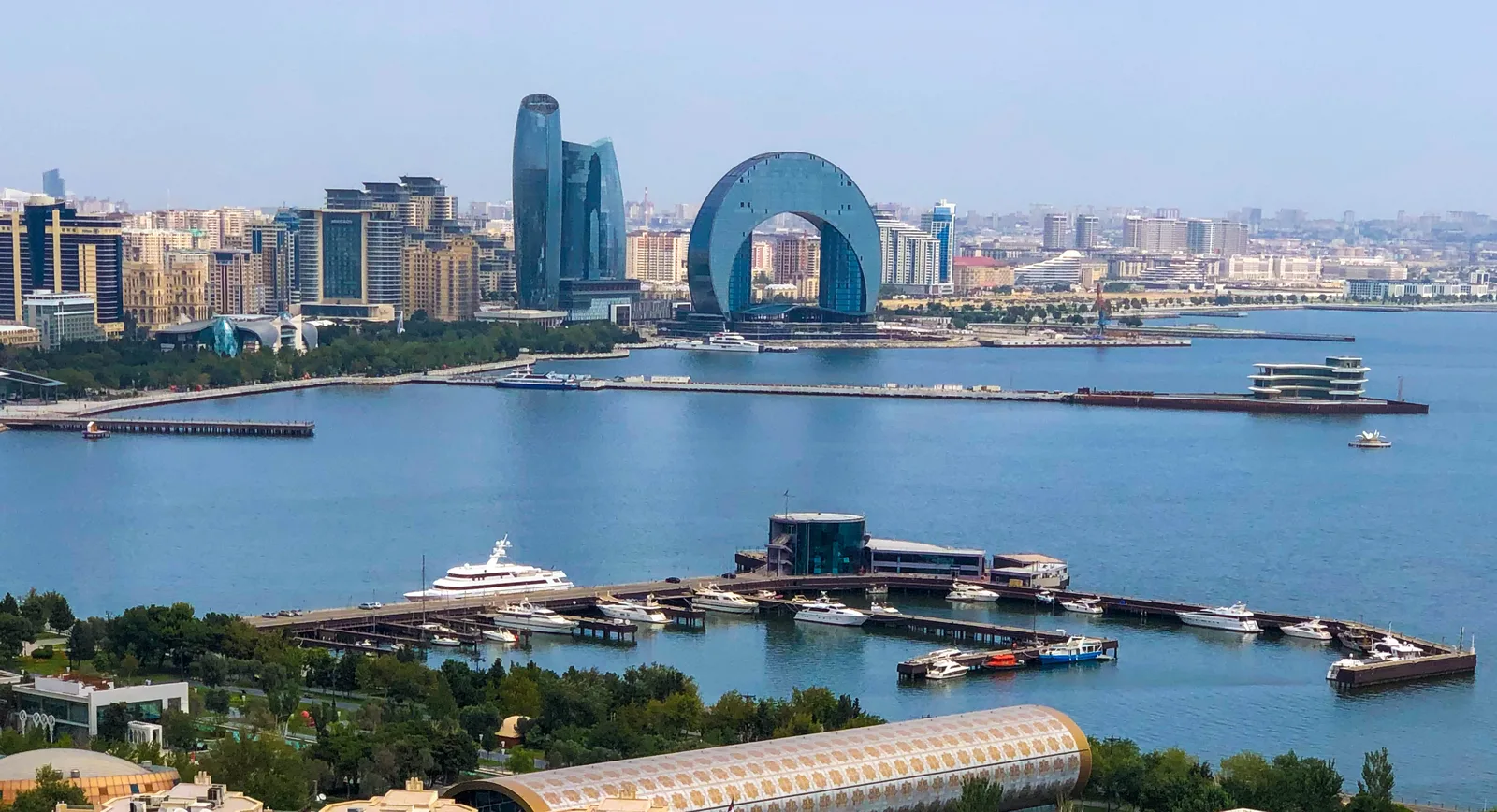
Baku offers three compelling ways to spend a city break: explore a walled historic neighbourhood, follow the architecture financed by an oil boom, or slow down beside the Caspian Sea. Its modern cultural buildings add another dimension, but the capital is more rewarding when you connect these layers than when you rush between isolated photo stops.
Allow three full days for a first visit, with a fourth for Gobustan or an outing around the Absheron Peninsula. Business travellers with a shorter stay can choose the Old City and one substantial museum without trying to cover the entire metropolitan area. The Azerbaijan Tourism Board’s Baku overview introduces the options; your choice of base and transport will determine how comfortably they fit together. Anyone considering a move should also reserve time for ordinary errands and a realistic commute.
Read the city in three architectural layers
Icherisheher, the Inner City, preserves a network of historic streets within defensive walls. Beyond it, late nineteenth- and early twentieth-century oil wealth helped finance elaborate houses and civic buildings. Contemporary landmarks express a different scale and ambition. Seeing these periods together explains more about Baku than assigning the whole city a single historic identity.
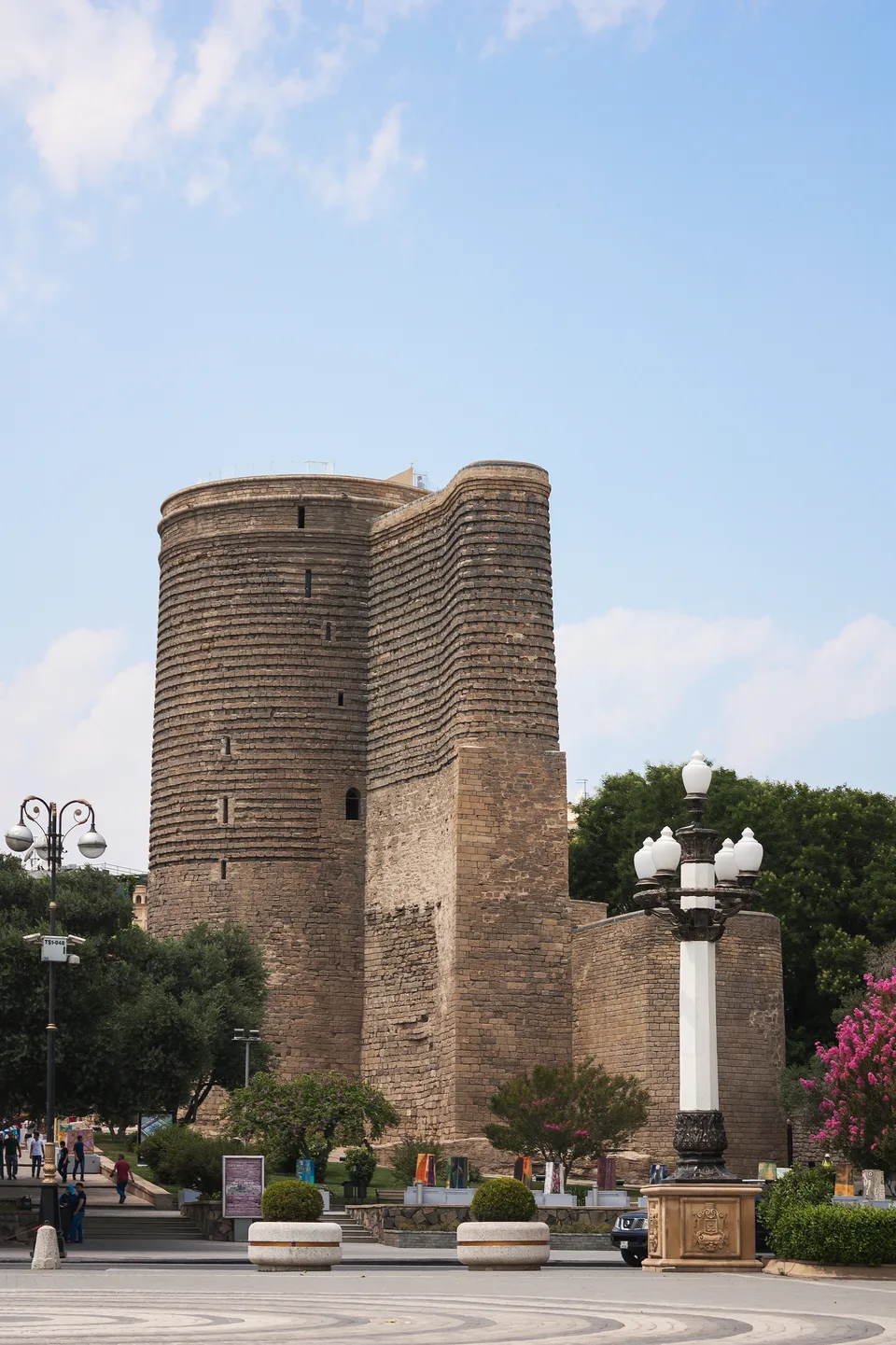
UNESCO’s Walled City listing includes the Shirvanshahs’ Palace and Maiden Tower and was inscribed in 2000. It also emphasises the continuing residential life of the historic ensemble. This is useful context when you encounter washing, deliveries and occupied doorways alongside monuments. Treat local homes with the same consideration as any other neighbourhood: keep entrances clear, ask before photographing people and do not assume that an ornamental doorway leads into a public attraction.
Choose a base for walking or for commuting
For a short visit, compare accommodation inside Icherisheher with the central streets around Fountain Square and Nizami Street. The former makes the historic quarter part of your daily routine; the latter is worth investigating if you prefer a wider choice of central shopping and evening stops. Check the actual entrance and vehicle drop-off point rather than relying on the neighbourhood label.
A boulevard-facing property can suit travellers who want waterfront walks, while an address around 28 May may be useful for particular transport connections. Bayil deserves consideration if the museums and waterfront attractions at that end of the city dominate your plans. None is automatically the best base for every visitor. For relocation, let the workplace, school and current transport arrangements lead the search. A room with a remarkable view may still leave you with an inconvenient daily journey.
Give Icherisheher an unhurried morning
Begin with a walk that connects a gateway, the smaller streets and the area around Maiden Tower. Notice the changes in scale between a defensive wall, a courtyard entrance and a trading street. Choose one or two interiors after checking current admission arrangements with the Icherisheher reserve administration, rather than trying to turn every building on the map into a scheduled visit.
The Shirvanshahs’ Palace provides a different perspective from the tower: a complex of buildings and spaces that rewards looking at their relationship. UNESCO identifies its principal development with the medieval palace tradition, including the fifteenth-century ensemble. For the tower, distinguish the visible monument from earlier structures beneath it; its origins and historical uses are more complicated than a single romantic legend. Wear shoes suited to stone surfaces, leave steep or enclosed sections optional and build in a proper break outside the busiest sightseeing sequence.
Follow the oil-boom streets beyond the walls
The tourism board’s oil-boom architecture introduction explains how rapid growth in the late 1800s created another architectural layer around the Old City. Gothic, Baroque, Neoclassical and Art Nouveau influences appear in houses and public buildings, making this a useful theme for a guided walk or a carefully chosen independent route.
Spend time looking above shop level. Balconies, window surrounds and the transition between neighbouring facades can reveal as much as the name of a famous building. Choose a compact area and compare details rather than collecting a long list of addresses. A specialist guide can add historical context and help distinguish a public institution from a private property. For interiors, verify access separately: attractive architecture does not establish visiting hours, and a building used for official purposes may be best appreciated from outside.
Make the Carpet Museum a substantial visit
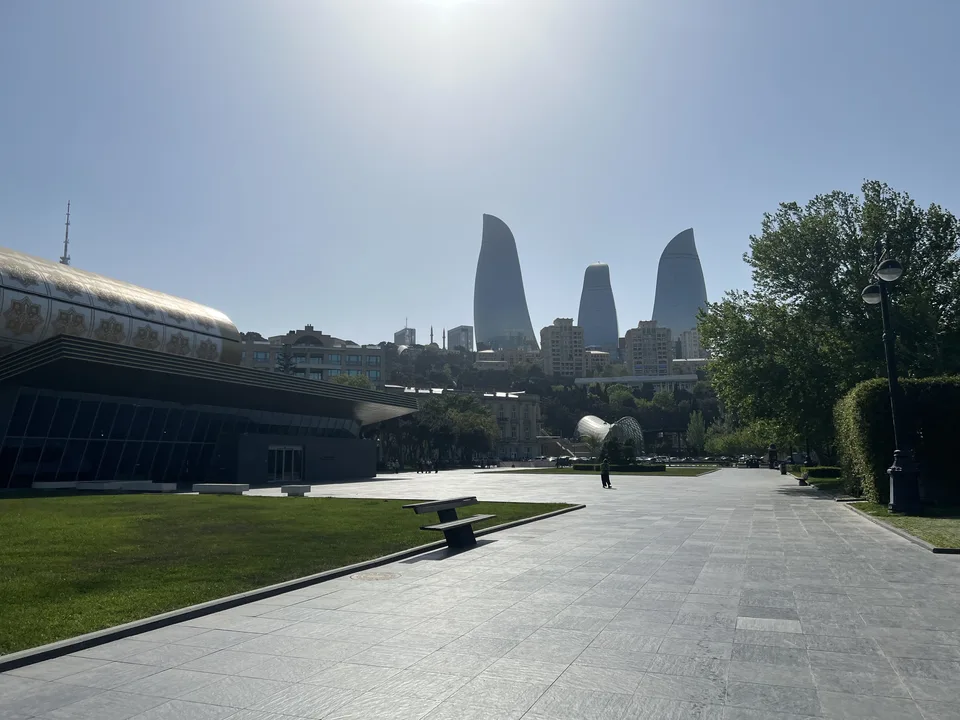
The Azerbaijan National Carpet Museum offers a focused way to explore a craft tradition rather than treating carpets simply as souvenirs. Its rolled-carpet exterior is a landmark on the waterfront. Inside, give yourself time to compare patterns, materials and displays instead of fitting the collection into a hurried gap between outdoor stops.
The museum’s current visitor page lists individual admission for foreign citizens at 10 AZN. Monday is the day off. From Tuesday to Friday, the ticket office operates 10:00–18:00 and the exhibitions 10:00–19:00; at weekends, the corresponding times are 11:00–19:00 and 11:00–20:00. Arriving just before the galleries close will therefore be too late to buy a ticket.
The jewellery collection has its own schedule and a separate 3 AZN admission. Confirm which spaces your ticket covers and ask about photography rules for the equipment you intend to use. The museum’s location also makes it a practical anchor for a waterfront afternoon.
Visit the Heydar Aliyev Center with a purpose
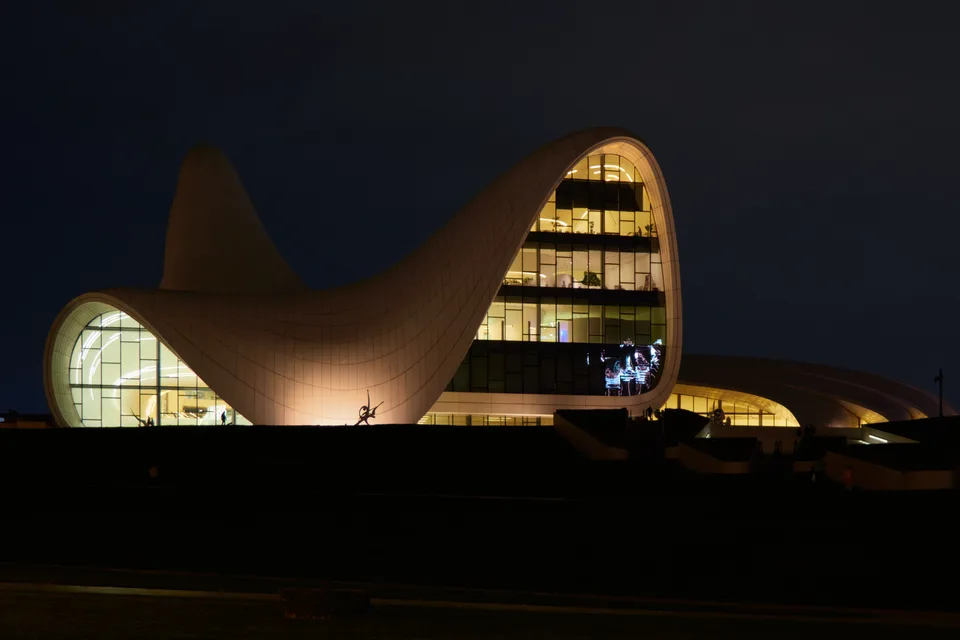
The Heydar Aliyev Center’s flowing exterior makes it an architectural destination in its own right. Decide whether your priority is seeing the building and its setting or spending time with a particular exhibition. The Center’s official website and ticket-selection portal provide the appropriate starting points for programmes and admission options.
Do not assume that one advertised ticket covers every exhibition or that a photograph taken outside establishes what is currently on display. Check the selected event, ticket category, date and any closing-day arrangements before travelling there. Plan the return connection as well, particularly if the visit follows a long museum morning. Architecture enthusiasts may want daylight to examine the relationship between the building and the surrounding open space; other visitors may prefer to reserve that time for the Old City or a longer waterfront walk.
Use the Boulevard as a place to linger
Baku’s waterfront is best approached as a series of possible walks. The tourism board’s Boulevard guide describes a promenade founded in 1909 and subsequently extended, with museums, green spaces, dining and other leisure attractions along it. Choose a section with a convenient beginning and end rather than assuming you should walk its entire length.
Pair the Carpet Museum with a shorter stroll, or investigate the Bayil end for a separate outing. A tea stop and somewhere to sit can be as worthwhile as another paid activity. Treat boat trips, rides and other attractions as optional additions whose operation needs checking on the day. Wind and visibility can change your plans. The central promenade is also a different proposition from a beach day: sea views beside the city do not guarantee a suitable or designated place to swim.
Get from the airport to the right city stop
Heydar Aliyev International Airport serves Baku, but the airport connection requires a separate ground journey. Baku Metro’s airport guidance identifies H1 express buses with stops at the exits of Terminals 1 and 2. This is a bus connection to the urban transport network, not a metro train departing from the terminal.
Check the actual destination stop, payment method and current departure information before boarding. Older airport notices and newer transport pages publish differing fare or frequency information, so a precise H1 fare and guaranteed interval are not quoted here. Use the operator’s current information or the airport information desk to confirm your particular journey. For a taxi or accommodation transfer, agree the pickup point and total charge, including luggage requirements. Save the property address and host’s contact details, and allow time for immigration and baggage before making a timed city reservation.
Check the metro disruption before choosing a route
There is a significant reason to use current instructions rather than an older network diagram. At this review, Baku Metro’s construction guidance states that train services between Nizami and 28 May are temporarily suspended, with express bus alternatives supporting affected journeys. Check the latest notice for your travel date and follow the replacement route actually advised.
This matters both for sightseeing and for housing decisions. An apartment near a station is useful only if its current route serves the journeys you need. Allow additional time for a surface transfer and check where replacement buses stop before setting out with luggage. Do not confuse Nizami metro station with the entire central shopping area bearing the same name. Ask your host to confirm the station and practical walking approach they mean when describing the property as close to transport.
Understand payment before entering the station
The metro operator’s BakıKart guidance currently lists a physical card at 3 AZN. Its machines do not give change: any amount above the card price is added to the balance. Keep the card and receipt, and make sure you have added travel credit rather than assuming the card purchase includes a day of unlimited journeys.
The operator also describes QR tickets and NFC bank-card payment, including supported local and foreign cards and mobile wallets. Check the particular payment method before relying on it for an essential journey. A QR ticket’s validity period is not an unlimited transfer pass. Confirm the current journey fare at the station, since superseded fare information remains searchable online. Keep a small transport contingency for a taxi when a late return, luggage or access needs make the ordinary route impractical.
Choose accommodation for comfort between outings
Compare hotels, smaller guesthouses and furnished apartments according to how you will use them. A hotel with dependable reception may be particularly valuable after a late flight; an apartment may suit a longer stay if its kitchen, laundry and workspace actually meet your needs. Compare final prices with breakfast, cleaning and cancellation conditions included.
For an Old City property, ask about stairs and the distance from the nearest usable drop-off point. Elsewhere, examine the bedroom’s position relative to traffic, nearby works and evening activity. Request recent photographs of the booked room category and clarify heating and cooling arrangements. Families should confirm beds, cooking equipment and any restrictions in writing. Travellers with mobility needs should describe the required route from pavement to bathroom; a central location or a general accessibility label cannot answer every question about thresholds, lifts and walking surfaces.
Start a meal with the dish rather than the label
Azerbaijani plov is a useful starting point for understanding the country’s cooking. The tourism board describes different preparation methods and accompaniments, so ask which version is being served instead of expecting one standard plate. A rice-based dish is not necessarily vegetarian, and an unfamiliar garnish may matter for an allergy.
For everyday meals, compare a clearly priced menu near your route with a destination restaurant requiring another journey. Ask whether portions are individual or intended for sharing, and check service charges before deciding that a menu is inexpensive. Allow time for tea without treating every pause as another scheduled tasting. If dietary requirements are important, request an ingredient explanation you can understand. This is more useful than relying on a translated dish name or an unsupported claim that an entire cuisine will suit a particular diet.
Shop with export rules in mind
The tourism board’s shopping guide distinguishes Old City souvenir shops, the central Nizami Street area, bazaars and modern malls. Choose according to what you want to buy. A produce market can be useful for a longer stay, while a craft shop requires a different conversation about materials, workmanship and provenance.
Before paying for a carpet, antique or other artwork, check the export documentation. The UK government’s entry and customs guidance notes certificate requirements for such purchases. A vendor’s reassurance does not replace the correct paperwork. Agree the final price, delivery terms and any packing charge, inspect the actual item and retain the receipt. Avoid treating every old-looking object as an authenticated antique. For ordinary household shopping, test the route from your proposed apartment and compare practical opening arrangements rather than judging convenience from one central shopping street.
Build a budget around confirmed purchases
Prices here use Azerbaijani manat, abbreviated AZN. A foreign individual’s standard Carpet Museum admission and a new physical BakıKart currently total 13 AZN, before any travel credit. Adding the separately listed jewellery collection would make those particular purchases 16 AZN, provided you visit when that collection is open. This is an illustration, not a complete daily allowance.
Accommodation, meals, airport transport, other admissions and excursions remain separate. Compare a private transfer’s total for your party with individual public-transport costs and the final connection to your hotel. For museums and exhibitions, confirm the exact category instead of multiplying a local-resident rate by the number of foreign visitors. No reliable citywide rent or hotel average is assumed here. Quotes for matching dates, room types and cancellation terms offer a more useful basis for decisions than a headline “cheap city” description.
Plan for wind as well as the season
Baku’s Caspian setting and reputation for wind are relevant to everyday planning. Spring and autumn are sensible periods to investigate for walking and museums; summer may suit travellers combining the city with a separate coastal stay. The tourism board’s seasonal information provides wider context, but check the local forecast rather than applying conditions elsewhere in Azerbaijan to the capital.
Bring a layer for an exposed waterfront walk and plan indoor time when conditions make lingering outside less appealing. In winter, ask about accommodation heating and leave daylight-dependent outings flexible. For a summer excursion, consider shade, drinking water and the time spent outside the vehicle. A pleasant city forecast does not establish the conditions of a mountain trip. Keep one museum or other indoor option available so that a change in weather alters the sequence of the day without wasting it.
A three-day introduction that leaves breathing room
On day one, explore Icherisheher and choose the palace or tower after checking current visiting arrangements. Pause for lunch, then add a compact oil-boom architecture walk outside the walls. End close enough to your base that you can keep the evening simple if arrival delays or walking take more time than expected.
On day two, visit the Carpet Museum during ticket-office hours and make the Boulevard your flexible afternoon. On day three, choose the Heydar Aliyev Center and a central shopping or food stop, leaving time to revisit whichever district interested you most. A fourth day can hold Gobustan or an Absheron excursion. This sequence is an editorial suggestion; museum closing days, exhibition availability and transport works should determine its final order. Avoid planning a distant outing immediately before a flight or other fixed departure.
Choose one excursion beyond the centre
Gobustan’s UNESCO-listed rock-art landscape offers a different scale of history from Baku’s urban monuments. Treat the engravings, the visitor facilities and any proposed mud-volcano visit as distinct parts of an outing. Confirm what a tour includes, which site it visits and how transport works between stops. A place name on a sales page does not establish that every activity lies within the protected heritage property.
For a different theme, consider Ateshgah in Surakhani and Yanardag near Mammadli. These are separate sites associated with the region’s fire heritage, requiring their own access and ticket checks. Choose the outing that interests you rather than assuming the city, both fire sites, Gobustan and mud volcanoes can all be appreciated in one rushed circuit. The official visitor information points can help establish current arrangements before you book.
Test a possible move against daily life
Begin with a temporary stay and test the real commute at working hours. Compare candidate homes with the precise office, campus or school address, including current metro changes and the walk from the stop. A central visitor base and a comfortable long-term home may solve different problems. Do not sign a long lease solely because the holiday version of the neighbourhood felt convenient.
View the apartment carefully. Check water pressure, heating, cooling, noise and internet performance inside the rooms, and ask who pays building charges and utility bills. Obtain a written inventory and clear deposit, repair and notice terms. Use qualified local advice for a contract you cannot fully assess. For children, establish school availability, language, fees and the journey before committing to an address. Include connectivity, transport, healthcare and periodic travel alongside rent when deciding whether the household budget works.
Arrange healthcare and essential services deliberately
Locate a suitable clinic and pharmacy from your proposed home, then confirm appointment languages and payment arrangements directly. The FCDO’s Azerbaijan health advice lists 103 for an ambulance and recommends appropriate cover for treatment and possible evacuation. Check the rules for bringing medicines before departure and keep prescriptions and insurer contact details accessible.
For a longer stay, ask the relevant provider about mobile-service and device-registration requirements rather than assuming that inserting a local SIM resolves every issue. Confirm broadband availability and installation at the actual apartment. Keep utility account numbers, emergency contacts and the building manager’s details together. These ordinary arrangements matter when work or family needs depend on a service functioning. A furnished listing that looks ready to occupy may still require time to establish reliable household routines and support.
Separate visitor permission from residence and work
Check nationality eligibility and your travel document against the official ASAN e-Visa conditions. The standard electronic visa is single-entry, with a 90-day validity window and permission for a stay of up to 30 days. Those periods are different. The passport must remain valid for three months beyond the e-Visa’s expiry, and the published conditions require a printed visa with the passport.
The State Migration Service’s visitor guidance requires registration for stays longer than 15 days and explains the host’s role. Confirm completion even when a hotel handles it. An e-Visa does not authorise paid employment; work and temporary residence involve separate requirements. Study and permanent relocation need the appropriate individual assessment, and a lease alone creates no residence entitlement.
Check current border restrictions as well: routine overland entry should not be assumed available simply because a road appears on a map. Use official consular advice for your route and circumstances. VisaWand’s consultant directory can help you identify professional support.
Compare other destinations before adding another transfer
For a longer Azerbaijani itinerary, use VisaWand’s Sheki location page or Ganja location page to identify alternatives, then research the journey and accommodation separately. These are destination directory entries, not completed travel guides. Give each additional stop enough time to justify moving luggage and changing your base.
For a wider regional comparison, the completed Tbilisi city guide offers a different urban experience, but check current entry routes rather than planning an ordinary land crossing between Georgia and Azerbaijan. VisaWand’s Azerbaijan country guide provides national context; its location directory and destination page offer other starting points. Keep Baku’s own days spacious enough for the city between the headline attractions. A shorter itinerary that accommodates meals, transfers and changing conditions usually provides a clearer impression than a succession of hurried arrivals.
Official planning resources
Reviewed 15 October 2026. Use the official resources linked throughout this guide for admission, transport, housing and immigration decisions. Prices, services and rules can change; confirm the details relevant to your dates. Photography illustrates the locations and is not a live view.
View all official resources
- Azerbaijan Tourism Board: Baku
- UNESCO: Walled City of Baku
- Icherisheher reserve administration
- Azerbaijan Tourism Board: oil-boom architecture
- Azerbaijan National Carpet Museum: plan your visit
- Heydar Aliyev Center: official programme
- Heydar Aliyev Center: official ticket selection
- Azerbaijan Tourism Board: Baku Boulevard
- Baku Metro: airport connection
- Baku Metro: BakıKart payment
- Baku Metro: NFC payment
- Baku Metro: Nizami–28 May construction changes
- Azerbaijan Tourism Board: Azerbaijani plov
- Azerbaijan Tourism Board: Baku shopping
- Azerbaijan Tourism Board: seasons
- ASAN Visa: official e-Visa conditions
- State Migration Service: visitor and work rules
- FCDO: Azerbaijan entry and customs
- FCDO: Azerbaijan health
- UNESCO: Gobustan Rock Art Cultural Landscape
- Azerbaijan Tourism Board: Ateshgah and Yanardag
- Azerbaijan Tourism Board: visitor information
Plan the next part of your journey
Explore the Azerbaijan guide, browse other cities or compare consultants for your travel and relocation questions.